• 검색 결과가 없습니다.

Differential Clinical Implications of High-Degree Atrioventricular Block Complicating ST-Segment Elevation Myocardial Infarction according to the Location of Infarction in the Era of Primary Percutaneous Coronary Intervention

N/A
N/A
Protected

Academic year: 2022

Share "Differential Clinical Implications of High-Degree Atrioventricular Block Complicating ST-Segment Elevation Myocardial Infarction according to the Location of Infarction in the Era of Primary Percutaneous Coronary Intervention"

Copied!
9
0
0

로드 중.... (전체 텍스트 보기)

전체 글

(1)

Korean Circulation Journal

Introduction

The incidence, predictors and prognosis of high-degree (second- and third-degree) atrioventricular block (HAVB) complicating ST- segment elevation myocardial infarction (STEMI) were investigated by several previous studies, which reported that HAVB was associated with increased short-term mortality in patients with anterior or inferior myocardial infarction (MI).

1-3)

However, most trials were carried out in the prethrombolytic or thrombolytic era. To our knowledge, only one study evaluated the incidence, predictors and prognosis of HAVB complicating STEMI in the era of primary percutaneous coronary intervention (PCI). This

Print ISSN 1738-5520 • On-line ISSN 1738-5555

Differential Clinical Implications of High-Degree Atrioventricular Block Complicating ST-Segment Elevation Myocardial Infarction

according to the Location of Infarction in the Era of Primary Percutaneous Coronary Intervention

Kyung Hwan Kim, MD 1 , Myung Ho Jeong, MD 1 , Youngkeun Ahn, MD 1 , Young Jo Kim, MD 2 , Myeong Chan Cho, MD 3 , Wan Kim, MD 4 , and Other Korea Acute Myocardial Infarction Registry Investigators

1
Division of Cardiology, Department of Internal Medicine, Chonnam National University Hospital, Gwangju,

2

Division of Cardiology, Department of Internal Medicine, Yeungnam University Hospital, Daegu,

3

Division of Cardiology, Department of Internal Medicine, Chungbuk National University Hospital, Cheongju,

4

Division of Cardiology, Department of Internal Medicine Gwangju Veterans Hospital, Gwangju, Korea

Background and Objectives: The clinical implication of high-degree (second- and third-degree) atrioventricular block (HAVB) complicating ST-segment elevation myocardial infarction (STEMI) is ripe for investigation in this era of primary percutaneous coronary intervention (PCI). We sought to address the incidence, predictors and prognosis of HAVB according to the location of infarct in STEMI patients treated with primary PCI.

Subjects and Methods: A total of 16536 STEMI patients (anterior infarction: n=9354, inferior infarction: n=7692) treated with primary PCI were enrolled from a multicenter registry. We compared in-hospital mortality between patients with HAVB and those without HAVB with anterior or inferior infarction, separately. Multivariate analyses were performed to unearth predictors of HAVB and to identify whether HAVB is independently associated with in-hospital mortality.

Results: STEMI patients with HAVB showed higher in-hospital mortality than those without HAVB in both anterior (hazard ratio [HR]=9.821, 95% confidence interval [CI]: 4.946-19.503, p<0.001) and inferior infarction (HR=2.819, 95% CI: 2.076-3.827, p<0.001). In multivariate analyses, HAVB was associated with increased in-hospital mortality in anterior myocardial infarction (HR=19.264, 95% CI:

5.804-63.936, p<0.001). However, HAVB in inferior infarction was not an independent predictor of increased in-hospital mortality (HR=1.014, 95% CI: 0.547-1.985, p=0.901).

Conclusion: In this era of primary PCI, the prognostic impact of HAVB is different according to the location of infarction. Because of recent improvements in reperfusion strategy, the negative prognostic impact of HAVB in inferior STEMI is no longer prominent. (Korean Circ J 2016;46(3):315-323)

KEY WORDS: Atrioventricular block; Myocardial infarction; Primary percutaneous coronary intervention; In-hospital mortality.

Received: June 9, 2015

Revision Received: August 10, 2015 Accepted: August 27, 2015

Correspondence: Myung Ho Jeong, MD, Heart Research Center Designated by Korea Ministry of Health and Welfare, Chonnam National University Hospital, 42 Jaebong-ro, Dong-ku, Gwangju 61469, Korea Tel: 82-62-220-6243, Fax: 82-62-228-7174

E-mail: [email protected]

• The authors have no financial conflicts of interest.

This is an Open Access article distributed under the terms of the Creative Commons Attribution Non-Commercial License (http://creativecommons.

org/licenses/by-nc/3.0) which permits unrestricted non-commercial use,

distribution, and reproduction in any medium, provided the original work

is properly cited.

(2)

study enrolled 2073 patients and evaluated the prognostic value of HAVB in STEMI patients treated with primary PCI. Despite improvements in reperfusion strategy, HAVB remains a significant adverse prognostic factor in the era of primary PCI.

4)

The impact of HAVB complicating STEMI on short-term mortality was prominent regardless of infarct location in the thrombolytic era. In patients with inferior infarction treated with thrombolysis, the increase in mortality was apparent.

1-3)5-8)

The increase in mortality was more prominent in anterior infarction than inferior infarction. The more extensive infarction area and higher incidence of hemodynamic compromise help to explain the poorer outcome in anterior infarction.

1)2)

However, although most patients with acute MI are currently treated with PCI, no study has evaluated the differential prognostic impact of HAVB complicating STEMI according to infarct location in the era of primary PCI. Therefore, we investigated the incidence, predictors and prognosis of HAVB in patients with either anterior or inferior infarction who were treated with primary PCI.

Subjects and Methods

Study population

From November 2005 to January 2012, 36580 patients with acute MI were registered in the Korea Acute Myocardial Infarction Registry (KAMIR).The KAMIR is a multi-center observational registry designed to collect the demographic and angiographic features of patients with acute MI and record cardiovascular outcomes. This trial was supported by a research grant from the Korean Society of Cardiology; the protocol of this trial was evaluated and recognized by the ethics committee at each hospital.

STEMI is characterized by symptoms of MI in association with persistent electrocardiographic ST-elevation and subsequent release of biomarkers of myocardial necrosis.

9)

Diagnostic ST- elevation was defined as new ST-elevation at the J point in at least 2 contiguous leads of ≥2 mm (0.2 mV) in men or ≥1.5 mm (0.15 mV) in women in leads V2-V3 and/or of ≥1 mm (0.1 mV) in other contiguous chest leads or the limb leads.

10)

New or presumably new left bundle branch block was recognized as a STEMI equivalent.

All STEMI patients in the KAMIR registry treated with primary PCI were included in this study. The exclusion criteria of this study were as follows: 1) non ST-segment elevation myocardial infarction, 2) treatment with thrombolysis, 3) not having undergone primary PCI, 4) missing records about the location of infarct, and 5) lack of significant coronary artery stenosis on angiography and MI due to coronary artery spasm. After excluding these patients, 9354 patients with STEMI on the anterior wall and 7692 patients with STEMI on the posterior wall were enrolled in this analysis. The location of

infarction was determined based on the location of ST-segment elevation on electrocardiogram and culprit lesion on angiography.

High-degree atrioventricular (AV) block in this study is defined as second- or third-degree AV block.

Procedure and medication

PCI was performed based on local standard protocol and the selection between pre-dilatation and direct stenting was chosen by the surgeon. For all enrolled patients, primary PCI was done with the intention of recovering blood flow to the target vessel as soon as possible. The diameter and length of stent used was determined based on the characteristics of the lesion on angiography. In cases with significant stenosis in multiple vessels, the selection between staged PCI and one-stage PCI was done according to the treatment team’s consensus. Other procedures, such as temporary pacing, intra-aortic balloon pump or extracorporeal membrane oxygenation, were also performed based on the clinical decision of the treatment team.

Anticoagulation agents such as unfractionated low molecular weight heparin or glycoprotein IIb/IIIa inhibitor were administered as directed by the clinician. Medications such as anti-platelet agents, renin-angiotensin system blockers, beta-blockers, statins, or aldosterone antagonists in hospital or at discharge were given based on the clinical status of patients.

Study end point and statistical analysis

Because the mechanism and prognosis of HAVB in acute MI

were known to be different according to the location of infarction,

all analyses were performed for anterior and inferior infarction

separately. Incidence, predictors, and in-hospital mortality

were evaluated. The cumulative all-cause death for 2 years was

compared between patients with HAVB and those without HAVB

among in-hospital survivors. Categorical baseline characteristics

are presented as counts and percentages and continuous variables

are presented as average value±standard deviation. Continuous

baseline characteristics were compared and evaluated by Student’s

t-test and categorical baseline variables were compared by Pearson

chi-square test. The hazard ratio (HR) of in-hospital mortality

between patients with and without HAVB was calculated using a

binary logistic regression model. Multivariate logistic regression

analysis was performed to clarify the independent factors which

influence the incidence of HAVB in patients with STEMI. The

variables available in this analysis were the following: old age

(≥65 years), gender, low systolic blood pressure (<90 mmHg),

Killip classification on presentation (≥Class II), previous history of

hypertension and diabetes mellitus, complexity of culprit lesion

(Type C), pre-Thrombolysis In Myocardial Infarction (TIMI) flow (0 or

(3)

1), decreased left ventricular ejection fraction (LVEF), and smoking.

For in-hospital mortality, the presence of HAVB was also included as a co-variant in the multivariate analysis.

The long-term survival rate of in-hospital survivors was evaluated by a life table scale and compared using the Wilcoxon method.

The HR of HAVB in anterior or inferior STEMI was calculated by Cox-regression analysis. HR and 95% confidence interval (CI) were calculated and all tests were two-tailed. p<0.05 was considered significant. All analyses were performed using SPSS Version 21 (SPSS Inc., Chicago, IL, USA).

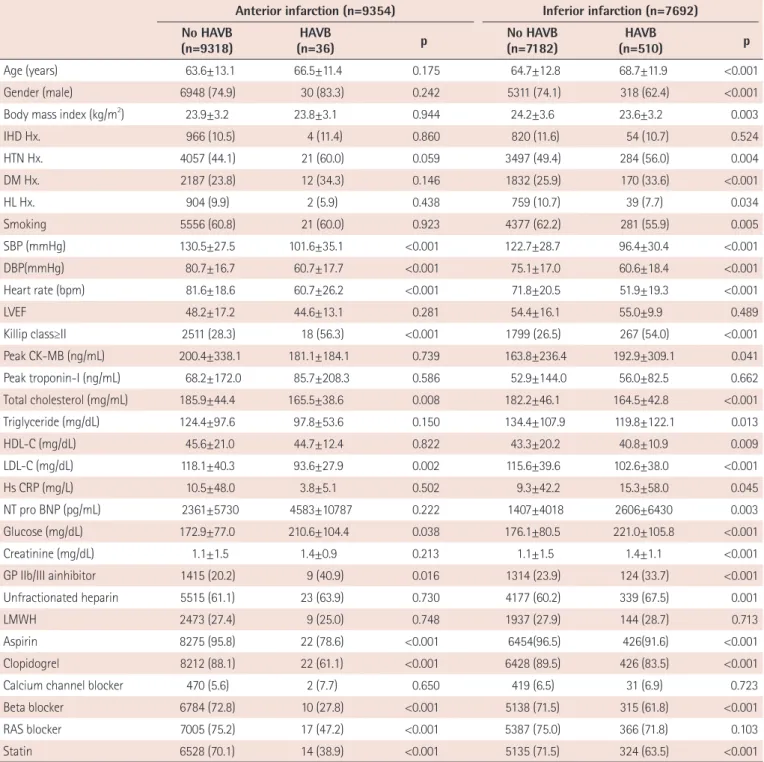
Table 1. Comparison of clinical baseline characteristics

Anterior infarction (n=9354) Inferior infarction (n=7692) No HAVB

(n=9318) HAVB

(n=36) p No HAVB

(n=7182) HAVB

(n=510) p

Age (years) 63.6±13.1 66.5±11.4 0.175 64.7±12.8 68.7±11.9 <0.001

Gender (male) 6948 (74.9) 30 (83.3) 0.242 5311 (74.1) 318 (62.4) <0.001

Body mass index (kg/m

2

) 23.9±3.2 23.8±3.1 0.944 24.2±3.6 23.6±3.2 0.003

IHD Hx. 966 (10.5) 4 (11.4) 0.860 820 (11.6) 54 (10.7) 0.524

HTN Hx. 4057 (44.1) 21 (60.0) 0.059 3497 (49.4) 284 (56.0) 0.004

DM Hx. 2187 (23.8) 12 (34.3) 0.146 1832 (25.9) 170 (33.6) <0.001

HL Hx. 904 (9.9) 2 (5.9) 0.438 759 (10.7) 39 (7.7) 0.034

Smoking 5556 (60.8) 21 (60.0) 0.923 4377 (62.2) 281 (55.9) 0.005

SBP (mmHg) 130.5±27.5 101.6±35.1 <0.001 122.7±28.7 96.4±30.4 <0.001

DBP(mmHg) 80.7±16.7 60.7±17.7 <0.001 75.1±17.0 60.6±18.4 <0.001

Heart rate (bpm) 81.6±18.6 60.7±26.2 <0.001 71.8±20.5 51.9±19.3 <0.001

LVEF 48.2±17.2 44.6±13.1 0.281 54.4±16.1 55.0±9.9 0.489

Killip class≥II 2511 (28.3) 18 (56.3) <0.001 1799 (26.5) 267 (54.0) <0.001

Peak CK-MB (ng/mL) 200.4±338.1 181.1±184.1 0.739 163.8±236.4 192.9±309.1 0.041

Peak troponin-I (ng/mL) 68.2±172.0 85.7±208.3 0.586 52.9±144.0 56.0±82.5 0.662

Total cholesterol (mg/mL) 185.9±44.4 165.5±38.6 0.008 182.2±46.1 164.5±42.8 <0.001

Triglyceride (mg/dL) 124.4±97.6 97.8±53.6 0.150 134.4±107.9 119.8±122.1 0.013

HDL-C (mg/dL) 45.6±21.0 44.7±12.4 0.822 43.3±20.2 40.8±10.9 0.009

LDL-C (mg/dL) 118.1±40.3 93.6±27.9 0.002 115.6±39.6 102.6±38.0 <0.001

Hs CRP (mg/L) 10.5±48.0 3.8±5.1 0.502 9.3±42.2 15.3±58.0 0.045

NT pro BNP (pg/mL) 2361±5730 4583±10787 0.222 1407±4018 2606±6430 0.003

Glucose (mg/dL) 172.9±77.0 210.6±104.4 0.038 176.1±80.5 221.0±105.8 <0.001

Creatinine (mg/dL) 1.1±1.5 1.4±0.9 0.213 1.1±1.5 1.4±1.1 <0.001

GP IIb/III ainhibitor 1415 (20.2) 9 (40.9) 0.016 1314 (23.9) 124 (33.7) <0.001

Unfractionated heparin 5515 (61.1) 23 (63.9) 0.730 4177 (60.2) 339 (67.5) 0.001

LMWH 2473 (27.4) 9 (25.0) 0.748 1937 (27.9) 144 (28.7) 0.713

Aspirin 8275 (95.8) 22 (78.6) <0.001 6454(96.5) 426(91.6) <0.001

Clopidogrel 8212 (88.1) 22 (61.1) <0.001 6428 (89.5) 426 (83.5) <0.001

Calcium channel blocker 470 (5.6) 2 (7.7) 0.650 419 (6.5) 31 (6.9) 0.723

Beta blocker 6784 (72.8) 10 (27.8) <0.001 5138 (71.5) 315 (61.8) <0.001

RAS blocker 7005 (75.2) 17 (47.2) <0.001 5387 (75.0) 366 (71.8) 0.103

Statin 6528 (70.1) 14 (38.9) <0.001 5135 (71.5) 324 (63.5) <0.001

Data are expressed as mean±standard deviation or number (%). HAVB: high-degree atrioventricular block, IHD: ischemic heart disease, Hx.: history, HTN:

hypertension, DM: diabetes mellitus, HL: hyperlipidemia, SBP: systolic blood pressure, DBP: diastolic blood pressure, LVEF: left ventricular ejection fraction,

CK-MB: creatinine kinase-MB, HDL-C: high-density lipoprotein cholesterol, LDL-C: low-density lipoprotein cholesterol, Hs CRP: high sensitive C-reactive

protein, NT pro BNP: N-terminal pro B type natriuretic peptide, GP: glycoprotein, LMWH: low molecular weight heparin, RAS: renin-angiotensin system

(4)

Results

Incidence and baseline characteristics

The overall incidence of HAVB was 3.2% (546/17046) in patients with STEMI treated with primary PCI. Among the 546 patients, 274 patients had second-degree AV block and 158 patients had third-degree AV block. The severity of AV block in the remaining 114 patients was unspecified.

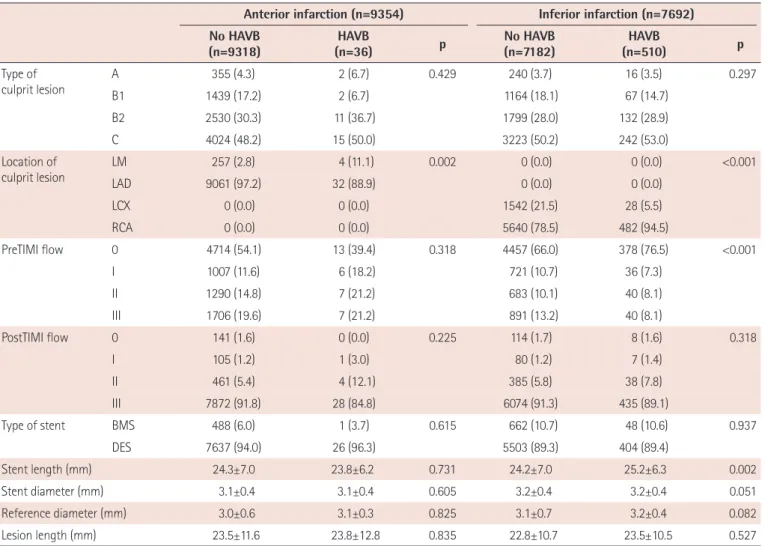
The incidence rate of HAVB was significantly higher in patients with inferior wall STEMI (510/7692, 6.6%) than in those with anterior wall STEMI (36/9354, 0.3%) (HR: 18.380, 95% CI: 13.090- 25.807, p<0.001). Comparisons of demographic and clinical baseline characteristics between patients with and without HAVB in anterior and inferior wall STEMI showed that many baseline variables were different between the two groups being compared (Table 1). Angiographic and procedural characteristics were also different (Table 2).

Predictors of high-degree atrioventricular block

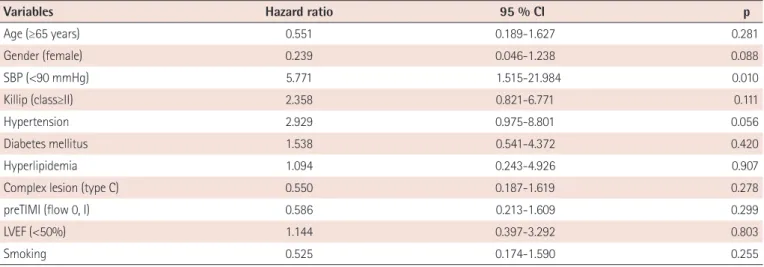
To investigate the predictors for HAVB in STEMI patients, we performed multivariate regression analyses. In the analysis of the population with anterior wall STEMI, low systolic blood pressure (<90 mmHg) was independently associated with development of HAVB (Table 3). The analysis of patients with inferior wall infarction showed somewhat different result. In this analysis, old age, female gender, low systolic blood pressure (SBP) (<90 mmHg), Killip classification (II, III, IV), diabetes mellitus, and pre-TIMI flow (0, 1) were independent factors for the development of HAVB (Table 4).

In-hospital and long-term mortality

Among 36 patients with HAVB complicating STEMI on the anterior wall, 13 patients died in the hospital and 23 patients were alive at discharge. During the follow-up period, 3 patients died.

For 510 patients with HAVB caused by inferior wall STEMI, 54 patients died in the hospital and 9 patients died after discharge.

Table 2. Comparison of coronary angiographic and procedural characteristics

Anterior infarction (n=9354) Inferior infarction (n=7692) No HAVB

(n=9318) HAVB

(n=36) p No HAVB

(n=7182) HAVB

(n=510) p

Type of

culprit lesion A 355 (4.3) 2 (6.7) 0.429 240 (3.7) 16 (3.5) 0.297

B1 1439 (17.2) 2 (6.7) 1164 (18.1) 67 (14.7)

B2 2530 (30.3) 11 (36.7) 1799 (28.0) 132 (28.9)

C 4024 (48.2) 15 (50.0) 3223 (50.2) 242 (53.0)

Location of

culprit lesion LM 257 (2.8) 4 (11.1) 0.002 0 (0.0) 0 (0.0) <0.001

LAD 9061 (97.2) 32 (88.9) 0 (0.0) 0 (0.0)

LCX 0 (0.0) 0 (0.0) 1542 (21.5) 28 (5.5)

RCA 0 (0.0) 0 (0.0) 5640 (78.5) 482 (94.5)

PreTIMI flow 0 4714 (54.1) 13 (39.4) 0.318 4457 (66.0) 378 (76.5) <0.001

I 1007 (11.6) 6 (18.2) 721 (10.7) 36 (7.3)

II 1290 (14.8) 7 (21.2) 683 (10.1) 40 (8.1)

III 1706 (19.6) 7 (21.2) 891 (13.2) 40 (8.1)

PostTIMI flow 0 141 (1.6) 0 (0.0) 0.225 114 (1.7) 8 (1.6) 0.318

I 105 (1.2) 1 (3.0) 80 (1.2) 7 (1.4)

II 461 (5.4) 4 (12.1) 385 (5.8) 38 (7.8)

III 7872 (91.8) 28 (84.8) 6074 (91.3) 435 (89.1)

Type of stent BMS 488 (6.0) 1 (3.7) 0.615 662 (10.7) 48 (10.6) 0.937

DES 7637 (94.0) 26 (96.3) 5503 (89.3) 404 (89.4)

Stent length (mm) 24.3 ± 7.0 23.8 ± 6.2 0.731 24.2 ± 7.0 25.2 ± 6.3 0.002

Stent diameter (mm) 3.1 ± 0.4 3.1 ± 0.4 0.605 3.2 ± 0.4 3.2 ± 0.4 0.051

Reference diameter (mm) 3.0 ± 0.6 3.1 ± 0.3 0.825 3.1 ± 0.7 3.2 ± 0.4 0.082

Lesion length (mm) 23.5 ± 11.6 23.8 ± 12.8 0.835 22.8 ± 10.7 23.5 ± 10.5 0.527

Data are expressed as number (%). HAVB: high-degree atrioventricular block, LM: left main, LAD: left anterior descending, LCX: left circumflex, RCA: right

coronary artery, TIMI: thrombolysis in myocardial infarction, BMS: bare metal stent, DES: drug eluting stent

(5)

In the population with anterior wall infarction, the in-hospital mortality of STEMI patients with HAVB was higher than that of patients without HAVB (HR=9.821, 95% CI: 4.946-19.503, p<0.001).

Although the magnitude of the hazard ratio was relatively small, the result was similar in patients with inferior wall STEMI (HR=2.819, 95% CI: 2.076-3.827, p< 0.001). In patients with HAVB complicating STEMI, patients with anterior wall infarction showed higher in-hospital mortality than those with inferior wall infarction (HR=4.742, 95% CI: 2.271-9.901, p<0.001) (Fig. 1).

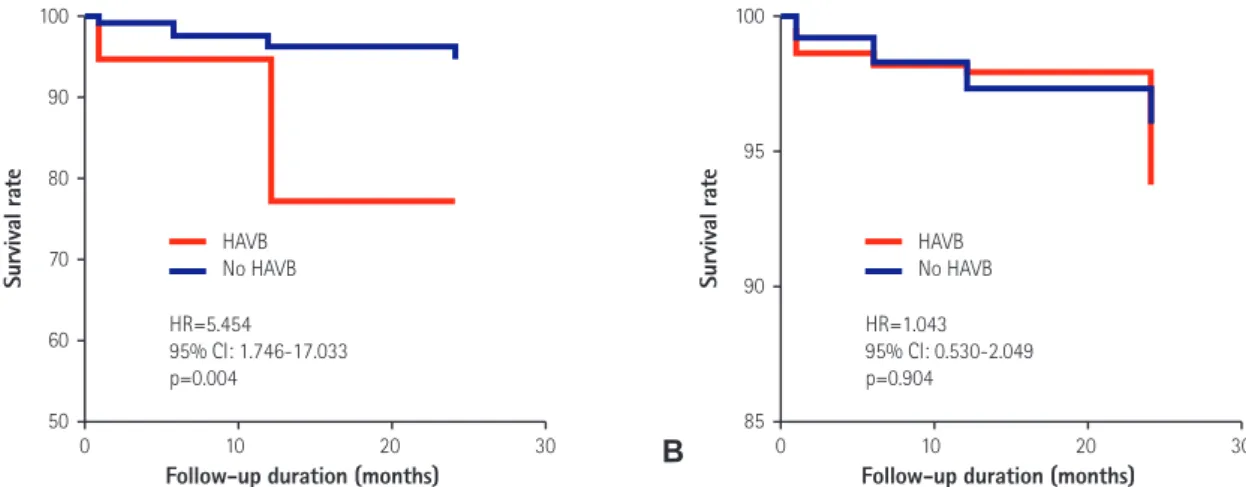
Among in-hospital survivors, long-term cumulative all-cause mortality was compared between patients with and without HAVB in anterior or inferior wall STEMI. In the population with anterior wall STEMI, survival analysis showed that patients with HAVB had a higher rate of all-cause death than those without HAVB (HR=5.454, 95% CI: 1.746-17.033, p=0.004). In patients with inferior wall Table 3. Multivariate analysis for predictors of high-degree atrioventricular block in patients with anterior ST-segment elevation myocardial infarction

Variables Hazard ratio 95 % CI p

Age (≥65 years) 0.551 0.189-1.627 0.281

Gender (female) 0.239 0.046-1.238 0.088

SBP (<90 mmHg) 5.771 1.515-21.984 0.010

Killip (class≥II) 2.358 0.821-6.771 0.111

Hypertension 2.929 0.975-8.801 0.056

Diabetes mellitus 1.538 0.541-4.372 0.420

Hyperlipidemia 1.094 0.243-4.926 0.907

Complex lesion (type C) 0.550 0.187-1.619 0.278

preTIMI (flow 0, I) 0.586 0.213-1.609 0.299

LVEF (<50%) 1.144 0.397-3.292 0.803

Smoking 0.525 0.174-1.590 0.255

CI: confidence interval, SBP: systolic blood pressure, TIMI: thrombolysis in myocardial infarction, LVEF: left ventricular ejection fraction

Table 4. Multivariate analysis for predictors of high-degree atrioventricular block in inferior ST-segment elevation myocardial infarction

Variables Hazard ratio 95 % CI p

Age (≥65 years) 1.302 1.010-1.678 0.042

Gender (female) 1.401 1.044-1.879 0.024

SBP (<90 mmHg) 5.879 4.581-7.544 < 0.001

Killip (class≥II) 1.972 1.555-2.500 < 0.001

Hypertension 1.203 0.952-1.520 0.121

Diabetes mellitus 1.560 1.229-1.981 < 0.001

Hyperlipidemia 0.790 0.528-1.181 0.251

Complex lesion (type C) 1.039 0.827-1.305 0.744

preTIMI (flow 0, I) 1.396 1.040-1.875 0.026

LVEF (<50%) 0.810 0.631-1.040 0.098

Smoking 1.110 0.840-1.467 0.463

CI: confidence interval, SBP: systolic blood pressure, TIMI: thrombolysis in myocardial infarction, LVEF: left ventricular ejection fraction

Fig. 1. Comparison of in-hospital mortality between patients with and without HAVB in anterior and inferior STEMI. HAVB: high-degree atrioventricular block, STEMI: ST-segment elevation myocardial infarction, HR: hazard ratio.

In-hospital mortality

HAVB

Anterior infarction Inferior infarction

No HAVB HR=4.742

p<0.001

HR=2.819 p<0.001 HR=9.821

p<0.001 80

60

40

20

0

(6)

STEMI, there was no significant difference in long-term survival between the two groups (Fig. 2).

Multivariate analysis

Multivariate logistic regression analysis was carried out in order to clarify the impact of HAVB on in-hospital mortality in Fig. 2. Comparison of cumulative long-term all-cause survival between patients with and without HAVB in anterior (A) and inferior (B) STEMI among in- hospital survivors. HAVB: high-degree atrioventricular block, STEMI: ST-segment elevation myocardial infarction, HR: hazard ratio, CI: confidence interval.

100

95

90

85 0 10

Follow-up duration (months)

Survival rate

20 30

100 90 80 70 60

50 0 10

HR=5.454 95% CI: 1.746-17.033 p=0.004

Follow-up duration (months)

Survival rate

20 30

HAVB No HAVB

HR=1.043 95% CI: 0.530-2.049 p=0.904

HAVB No HAVB

Fig. 3. Multivariate logistic regression analysis for in-hospital mortality in patients with anterior STEMI. STEMI: ST-segment elevation myocardial infarction, HAVB: hgh-degree atrioventricular block, LVEF: left ventricular ejection fraction, TIMI: thrombolysis in myocardial infarction, SBP: systolic blood pressure, HR: hazard ratio, CI: confidence interval.

HAVB Smoking LVEF<50%

Pre-TIMI flow 0, 1 Complex lesion (type C) Hyperlipidemia Diabetes mellitus Hypertension Killip class≥Ⅱ SBP<90 mmHg Gender (female) Age≥65 years

0.1 1 10 100

HR 95% CI p

19.264 5.804-63.936 <0.001

0.983 0.673-1.437 0.930

3.214 2.084-4.957 <0.001

1.677 1.174-2.394 0.004

1.157 0.851-1.573 0.351

0.786 0.512-1.312 0.789

1.309 0.939-1.825 0.112

0.191 0.868-1.635 0.280

4.341 3.139-6.003 <0.001 4.406 2.849-6.814 <0.001

1.160 0.790-1.702 0.449

3.960 2.637-5.948 <0.001 Log HR

A B

(7)

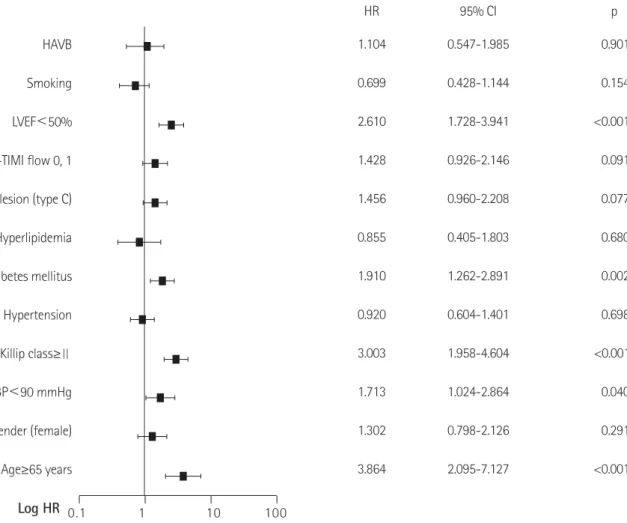
STEMI patients. In the population with anterior wall STEMI, HAVB was significantly associated with increased in-hospital mortality (HR=19.264, 95% CI: 5.804-63.936, p<0.001). Other factors such as old age, low systolic blood pressure, Killip classification, pre-TIMI flow and low LVEF were also associated with in-hospital mortality (Fig. 3). In patients with inferior wall infarction, HAVB was not independently associated with in-hospital mortality (HR=1.104, 95%

CI: 0.547-1.985, p=0.901). Old age, low systolic blood pressure, Killip classification, diabetes mellitus, and low LVEF were independently associated with increased in-hospital mortality (Fig. 4).

Discussion

This study revealed that HAVB in patients with inferior wall STEMI is not independently associated with increased in-hospital mortality in the era of primary PCI. Because of improvements in reperfusion strategy and medical devices, the adverse prognostic

impact of HAVB in inferior STEMI has been reduced.

Several previous studies revealed that thrombolytic therapy increases the rate of HAVB.

5)11)

However, Gang et al.

4)

reported that the incidence is reduced in the era of primary PCI; our study agrees with that conclusion by finding a similar rate of HAVB.Other studies reported that the overall incidence of HAVB was 7 to 10 percent in the era of thrombolysis.

2)12)

These studies reported that HAVB occurred in approximately 3.2% in anterior MI and 9.8% in inferior MI when patients were treated with thrombolysis. However, no previous study examined the incidence of HAVB according to the location of infarct in the era of primary PCI. In our study, the rate of HAVB was 0.3% in anterior MI and 6.6% in inferior MI.

Improvements in reperfusion strategy have markedly reduced the incidence of HAVB in patients with anterior wall STEMI. Primary PCI as the standard therapy for STEMI has reduced the risk of extensive necrosis involving the conduction system. On the other hand, the reduction in the incidence of HAVB in inferior infarction was modest in our study.

Fig. 4. Multivariate logistic regression analysis for in-hospital mortality in patients with inferior STEMI. STEMI: ST-segment elevation myocardial infarction, HAVB: high-degree atrioventricular block, LVEF: left ventricular ejection fraction, TIMI: thrombolysis in myocardial infarction, SBP: systolic blood pressure, HR: hazard ratio, CI: confidence interval.

0.1 1 10 100 Log HR

HAVB Smoking LVEF<50%

Pre-TIMI flow 0, 1 Complex lesion (type C) Hyperlipidemia Diabetes mellitus Hypertension Killip class≥Ⅱ SBP<90 mmHg Gender (female) Age≥65 years

HR 95% CI p

1.104 0.547-1.985 0.901

0.699 0.428-1.144 0.154

2.610 1.728-3.941 <0.001

1.428 0.926-2.146 0.091

1.456 0.960-2.208 0.077

0.855 0.405-1.803 0.680

1.910 1.262-2.891 0.002

0.920 0.604-1.401 0.698

3.003 1.958-4.604 <0.001

1.713 1.024-2.864 0.040

1.302 0.798-2.126 0.291

3.864 2.095-7.127 <0.001

(8)

The mechanism of conduction disturbance in MI is different according to the location of infarction. HAVB in anterior MI is thought to result from extensive myocardial damage affecting the bundle branch traveling within the interventricular septum.

Therefore, HAVB with anterior MI is often preceded by bundle branch block, rendering the escape rhythm unstable.

13)

Conduction disturbance in inferior MI occurs more frequently, since the atrioventricular node is mainly supplied by the right coronary artery (RCA).

14)

Occlusion of the RCA increases acetylcholine release from the inferoposterior myocardium and makes the AV node hypersensitive to acetylcholine. HAVB in inferior MI is usually transient and benign, resolving within five to seven days.

Gang et al.

4)

reported that RCA culprit lesion, old age, female gender, hypertension, and diabetes are important factors that contribute to the development of HAVB in all STEMI patients treated with primary PCI. However, because of different mechanisms of conduction disturbance according to location, we thought that the predictors for HAVB may be different in anterior vs. inferior MI. Multivariate analysis in the population with anterior STEMI revealed that low SBP (<90 mmHg) is independently associated with the development of HAVB. In this analysis, old age, gender, hypertension, and diabetes did not have a significant impact on the occurrence of HAVB. The analysis in patients with inferior STEMI showed that old age, gender, diabetes mellitus, low SBP, Killip classification and pre-TIMI flow are independent contributors that increase the rate of HAVB. Thus, we demonstrate that the predictors for development of HAVB are different according to the location of infarction in the era of primary PCI.

The prognostic value of HAVB in MI was demonstrated in several studies which were conducted in prethrombolytic or thrombolytic therapy. These studies reported that HAVB was associated with an increase in short-term mortality in patients with acute MI.

1-3)

Although HAVB in patients with inferior MI is usually transient, the increase in in-hospital mortality was prominent in patients with inferior STEMI in the prethrombolytic and thrombolytic eras.

1-3)5-7)15-18)

Several trials reported that HAVB in patients with anterior wall MI causes a greater increase in in-hospital and 30-day mortality than in patients with inferior wall infarction.

1)

This increase in mortality was demonstrated in a systemic review of four randomized trials.

2)

A trial conducted in STEMI patients treated with primary PCI revealed that patients with HAVB had a significantly higher 30-day mortality compared to patients without HAVB. In this study, HAVB independently contributed to an increase in short-term mortality.

4)

However, this trial analyzed all patients with STEMI and did not divide the patients according to the location of infarct. In our study, patients with HAVB had higher in-hospital mortality than those without HAVB regardless of location of infarction. However,

in multivariate analyses, HAVB was not significantly associated with higher in-hospital mortality in patients with STEMI on the inferior wall. In this analysis, old age, diabetes mellitus, pre-TIMI flow, low SBP, and Killip classification were important factors that determined short-term clinical outcome. Because these factors were more frequent in patients with HAVB, these patients had a higher mortality rate than those without HAVB.

The impact of HAVB on long-term mortality was questionable. In the studies conducted in the thrombolytic era, an increase in long- mortality was not apparent in patients with HAVB among 30-day survivors.

2)3)

Investigations in the era of primary PCI also revealed that the rate of long-term mortality was not different according to the presence of HAVB among in-hospital survivors.

4)

In our study, HAVB did not have a significant impact on long-term outcome in patients with inferior STEMI. However, although the number of patients analyzed was small, patents with HAVB had higher cumulative long-term mortality compared with patients without HAVB in the population with anterior STEMI. To fully understand the impact of HAVB in patients with anterior STEMI, it is necessary to perform a larger-scaled study.

This study has several limitations. First, a substantial number of records did not include information about the type of HAVB.

The types of HAVB in 114 patients were not specified and the subtype of second-degree AV block was omitted in this registry.

Second, although many important variables were included in the multivariate analyses, we cannot confirm that optimal adjustment was done in the multivariate logistic regression. Third, although all HAVB cases were documented during hospitalization, the registry had incomplete data on the timing of the development of HAVB. Fourth, the frequency of use of temporary or permanent pacemakers was not recorded.

Conclusion

Because of the development of better reperfusion strategies, the incidence of HAVB has been reduced. As primary PCI became a standard treatment method, the clinical implication of HAVB complicating STEMI changed. In particular, the development of HAVB in patients with inferior STEMI is not independently associated with increased in-hospital mortality in the era of primary PCI.

Additionally, the impact of HAVB in patients with STEMI on long- term mortality is different according to the location of infarct.

Acknowledgments

This study was supported by grants from The Korean Society of

Cardiology, The Korean Centers for Disease Control and Prevention

(9)

(2013-E63005-01), and The Korean Health Technology R&D Project (HI13C1527), Ministry of Health & Welfare, Republic of Korea.

Korea Acute Myocardial Infarction (KAMIR) Investigators: Myung Ho Jeong, MD, Young Keun Ahn, MD, Shung Chull Chae, MD, Jong Hyun Kim, MD, Seung Ho Hur, MD, Young Jo Kim, MD, In Whan Seong, MD, Dong Hoon Choi, MD, JeiKeonChae, MD, Taek Jong Hong, MD, Jae Young Rhew, MD, Doo Il Kim, MD, In Ho Chae, MD, Jung Han Yoon, MD, Bon Kwon Koo, MD, Byung Ok Kim, MD, Myoung Yong Lee, MD, Kee Sik Kim, MD, Jin Yong Hwang, MD, Myeong Chan Cho, MD, Seok Kyu Oh, MD, Nae Hee Lee, MD, Kyoung Tae Jeong, MD, Seung Jea Tahk, MD, Jang Ho Bae, MD, Seung-Woon Rha, MD, KeumSoo Park, MD, Chong Jin Kim, MD, Kyoo Rok Han, MD, Tae Hoon Ahn, MD, Moo Hyun Kim, MD, Ki BaeSeung, MD, Wook Sung Chung, MD, Ju Young Yang, MD, Chong Yun Rhim,MD, Hyeon Cheol Gwon, MD, Seong Wook Park, MD, Young Youp Koh, MD, Seung Jae Joo, MD, Soo Joong Kim, MD, Dong KyuJin, MD, Jin Man Cho, MD, Yang Soo Jang, MD, Jeong Gwan Cho, MD and Seung Jung Park, MD.

References

1. Goldberg RJ, Zevallos JC, Yarzebski J, et al. Prognosis of acute myocardial infarction complicated by complete heart block (the Worcester Heart Attack Study). Am J Cardiol 1992;69:1135-41.

2. Meine TJ, Al-Khatib SM, Alexander JH, et al. Incidence, predictors, and outcomes of high-degree atrioventricular block complicating acute myocardial infarction treated with thrombolytic therapy. Am Heart J 2005;149:670-4.

3. Aplin M, Engstrom T, Vejlstrup NG, Clemmensen P, Torp-Pedersen C, Køber L. Prognostic importance of complete atrioventricular block complicating acute myocardial infarction. Am J Cardiol 2003;92:853-6.

4. Gang UJ, Hvelplund A, Pedersen S, et al. High-degree atrioventricular block complicating ST-segment elevation myocardial infarction in the era of primary percutaneous coronary intervention. Europace 2012;14:1639-45.

5. Harpaz D, Behar S, Gottlieb S, Boyko V, Kishon Y, Eldar M. Complete atrioventricular block complicating acute myocardial infarction in the thrombolytic era. SPRINT Study Group and the Israeli Thrombolytic Survey Group. Secondary Prevention Reinfarction Israeli Nifedipine Trial. J Am Coll Cardiol 1999;34:1721-8.

6. Berger PB, Ruocco NA Jr, Ryan TJ, Frederick MM, Jacobs AK, Faxon DP.

Incidence and prognostic implications of heart block complicating inferior myocardial infarction treated with thrombolytic therapy: results from TIMI II. J Am Coll Cardiol 1992;20:533-40.

7. Clemmensen P, Bates ER, Califf RM, et al. Complete atrioventricular block complicating inferior wall acute myocardial infarction treated with reperfusion therapy. TAMI Study Group. Am J Cardiol 1991;67:225-30.

8. Sgarbossa EB, Pinski SL, Topol EJ, et al. Acute myocardial infarction and complete bundle branch block at hospital admission: clinical characteristics and outcome in the thrombolytic era. GUSTO-I Investigators. Global Utilization of Streptokinase and t-PA [tissue- type plasminogen activator] for Occluded Coronary Arteries. J Am Coll Cardiol 1998;31:105-10.

9. O’Gara PT, Kushner FG, Ascheim DD, et al. 2013 ACCF/AHA guideline for the management of ST-elevation myocardial infarction: executive summary: a report of the American College of Cardiology Foundation/American Heart Association Task Force on Practice Guidelines: developed in collaboration with the American College of Emergency Physicians and Society for Cardiovascular Angiography and Interventions. Catheter Cardiovasc Interv 2013;82:E1-27.

10. Thygesen K, Alpert JS, Jaffe AS, et al. Third universal definition of myocardial infarction. Circulation 2012;126:2020-35.

11. Rathore SS, Gersh BJ, Berger PB, et al. Acute myocardial infarction complicated by heart block in the elderly: prevalence and outcomes.

Am Heart J 2001;141:47-54.

12. An international randomized trial comparing four thrombolytic strategies for acute myocardial infarction. The GUSTO investigators.

N Engl J Med 1993;329:673-82.

13. Hindman MC, Wagner GS, JaRo M, et al. The clinical significance of bundle branch block complicating acute myocardial infarction. 1.

Clinical characteristics, hospital mortality, and one-year follow-up.

Circulation 1978;58:679-88.

14. Feigl D, Ashkenazy J, Kishon Y. Early and late atrioventricular block in acute inferior myocardial infarction. J Am Coll Cardiol 1984;4:35-8.

15. Berger PB, Ryan TJ. Inferior myocardial infarction. High-risk subgroups. Circulation 1990;81:401-11.

16. Nicod P, Gilpin E, Dittrich H, Polikar R, Henning H, Ross J Jr. Long- term outcome in patients with inferior myocardial infarction and complete atrioventricular block. J Am Coll Cardiol 1988;12:589-94.

17. Behar S, Zissman E, Zion M, et al. Complete atrioventricular block complicating inferior acute wall myocardial infarction: short- and long-term prognosis. Am Heart J 1993;125:1622-7.

18. Abidov A, Kaluski E, Hod H, et al. Influence of conduction disturbances

on clinical outcome in patients with acute myocardial infarction

receiving thrombolysis (results from the ARGAMI-2 study). Am J Cardiol

2004;93:76-80.

수치

Table 1. Comparison of clinical baseline characteristics
Table 2. Comparison of coronary angiographic and procedural characteristics
Table 4. Multivariate analysis for predictors of high-degree atrioventricular block in inferior ST-segment elevation myocardial infarction
Fig. 3. Multivariate logistic regression analysis for in-hospital mortality in patients with anterior STEMI
+2

참조

관련 문서

2재화 2요소 헥셔-올린 모형에서는 어느 한 경제에서 어느 한 요소의 양이 증가하면, 그 요소를 집약적으로 사용하는 산업의 생산량은 증가하고 다른

웹 표준을 지원하는 플랫폼에서 큰 수정없이 실행 가능함 패키징을 통해 다양한 기기를 위한 앱을 작성할 수 있음 네이티브 앱과

The index is calculated with the latest 5-year auction data of 400 selected Classic, Modern, and Contemporary Chinese painting artists from major auction houses..

In this group of high-risk patients with severe COVID-19 pneumonia, treatment with lenzilumab was associated with a significantly shorter time to clinical improvement compared

1 John Owen, Justification by Faith Alone, in The Works of John Owen, ed. John Bolt, trans. Scott Clark, &#34;Do This and Live: Christ's Active Obedience as the

영문 : Histomorphometric analysis of bone formation in the bone defects around the implant in adult dogs according to grafts of low or high heat treated autogenous

Therefore, cTnT is a recommended biomarker for use in the detection of myocardial infarction (MI) and in acute coronary syndromes.[8] Indeed, several authors

The result of this study on the intervention of function words in children with language development delay shows that intervention of function words by grammatically