Alternative Energy Sources for Surgical Treatment of Atrial Fibrillation in Patients Undergoing Mitral Valve Surgery:
Microwave Ablation vs Cryoablation
The study aim was to compare maze outcomes using microwave ablation or cryoablation in patients with mitral disease and atrial fibrillation (AF). Between 1999 and 2005, 340 patients underwent mitral valve surgery and concomitant maze procedure involving either microwave ablation (n=96, MW group) or cryoablation (n=244, Cryo group). Mean age at operation was 50.0±12.5 yr. Follow-up period was 46.1±28.2 months. The Cryo group showed a longer aortic clamping time than the MW group (P=0.005). There were no differences in operative mortality and morbidity rates. The unadjusted 5-yr AF free rate was 61.3±1.2% in the MW group and 79.9±3.2% in the Cryo group (P=0.089). After
adjustment, the MW group only showed a tendency toward more frequent AF recurrence than the Cryo group (Hazard ration 1.66, 95% confidence interval 0.89 to 3.07).
Multivariate analysis revealed that older patient age (P<0.001) and greater left atrial size (P<0.001) were independent risk factors for AF recurrence. Although the use of microwave ablation results in shorter aortic clamping time, it has a tendency toward more frequent late AF recurrence than with cryoablation.
Key Words: Atrial Fibrillation; Mitral Valve; Ablation Therapy; Surgery Joon Bum Kim, Won-Chul Cho,
Sung Ho Jung, Cheol Hyun Chung, Suk Jung Choo, and Jae Won Lee Department of Thoracic and Cardiovascular Surgery, Asan Medical Center, University of Ulsan College of Medicine, Seoul, Korea
Received: 9 February 2010 Accepted: 30 April 2010 Address for Correspondence:
Jae Won Lee, M.D.
Department of Thoracic and Cardiovascular Surgery, Asan Medical Center, 86 Asanbyeongwon-gil Songpa-gu, Seoul 138-736, Korea
Tel: +82.2-3010-3584, Fax: +82.2-3010-6966 E-mail: [email protected]
DOI: 10.3346/jkms.2010.25.10.1467 • J Korean Med Sci 2010; 25: 1467-1472 Cardiovascular Disorders
INTRODUCTION
The maze procedure described by Cox (1, 2) is an accepted, ef- fective therapeutic option for patients with atrial fibrillation (AF).
In recent years, the conventional cut-and-sew Cox Maze proce- dure has been replaced by other procedures using alternative energy sources such as radiofrequency, microwaves, ultrasound, laser, and cryothermia to rapidly produce maze lesion sets with minimal risk of bleeding (3-5). Several studies have investigated the effectiveness of these energy sources and have shown vary- ing results in terms of restoration of sinus rhythm (6).
However, previous comparative analyses of clinical outcomes according to different energy sources have had limitations, in- cluding short follow-up durations (<1 yr) and small patient pop- ulations (6-9). Furthermore, different definitions of procedural success may have contributed to the difficulties in interpreting or comparing the reported outcomes.
We therefore compared the long-term clinical outcomes of maze procedures using microwave ablation or cryoablation in patients with mitral disease and AF. In reporting the rhythm outcomes, we followed the consensus of reporting standards made by the Heart Rhythm Society Task Force on Catheter and Surgical Ablation of AF (10).
MATERIALS AND METHODS Patients
Between January 1999 and January 2005, 340 consecutive pa- tients underwent a mitral valve operation and concomitant maze procedure involving microwave ablation (n=96, MW group) or cryoablation (n=244, Cryo group) by a single cardiac surgeon in Asan Medical Center, Seoul, Korea. This patient population in- cludes 158 patients (46.5%) who were analyzed in a previous report regarding the influence of mitral valve function on AF recurrence after mitral repair and maze procedure (11). Further follow-up data from the patients included in the previous study, and the addition of data from mitral replacement patients formed the subject of the present study to focus on the comparison be- tween cryoablation and microwave ablation.
Surgical techniques
Myocardial protection was achieved with antegrade and retro- grade tepid blood cardioplegia. After aortic cross-clamping, mi- tral valve exposure was obtained by a left atrial (LA) incision. A modified version of the Cox Maze III procedure was performed, the details of which have been described previously (12). Cryo- ablation was applied at –60°C with a 15-degree-angled, 30-mm or 70-mm long freeze tip with a diameter of 9 mm (Frigitronics
Cardiac Cryosurgical System 200; Frigitronics, Inc, Coopersur- gical, Shelton, CT, USA). The probe was usually applied for 2 min. Microwave energy was applied endocardially using FLEX 4 microwave ablation probes (Afx Inc, Fremont, CA, USA). The energy level used was 65 watts and duration of ablation was 2 min. LA size was reduced by generous resection of redundant atrial tissue off the posterior LA wall parallel to the posterior mitral annulus. During the study period, the lesion set of abla- tion procedure was maintained uniformly regardless of energy sources used.
Echocardiography and rhythm follow-up
Preoperative echocardiography (both transthoracic and trans- esophageal) was performed in all patients (within 2 months before surgery). Transthoracic echocardiographic evaluation was performed at 3 and 6 months and every year thereafter. All patients underwent two-dimensional echocardiography and Doppler color-flow imaging using a Hewlett-Packard Sonos 2500 or 5500 imaging system equipped with a 2.5-MHz trans- ducer (Hewlett-Packard, Andover, MA, USA).
During postoperative hospitalization, each patient’s rhythms were assessed daily using standard 12-channel surface electro- cardiography (EKG). Follow-up EKGs were performed at 3–6- month intervals during the first 2 yr and every year thereafter.
Any AF events during the initial post-ablation blanking period of 3 months were defined as “early events.” Failure of the maze procedure included any recurrent AF, atrial tachycardia, or atri- al flutter at least 3 months after stopping amiodarone treatment beyond the initial blanking period (“late event”). The results are presented in ‘Freedom from AF without antiarrhythmic agent’
(10).
All data were collected prospectively and stored for later anal- ysis in a specially designed and regimented database.
Postoperative management
Indications for amiodarone treatment included: failure of post- operative sinus conversion, persistent AF, atrial tachycardia, fre- quent atrial premature beat and recurrent atrial tachyarrhyth- mia. Amiodarone was commenced at 1,200 mg/day and tapered within 1 or 2 weeks. Patients who underwent valve repair or bio- prosthetic valve implantation were routinely administered an- ticoagulant therapy with warfarin for 3–6 months postoperative- ly, with a target international normalized ratio (INR) of 1.5–2.5 at the discretion of the attending surgeon. Maintenance of anti- coagulation therapy thereafter was determined according to the presence of thromboembolic risks and cardiac rhythm status in each patient.
Statistics
Categorical variables are presented as frequencies and percent- ages, and were compared using the chi-square test or Fisher’s
exact test. Continuous variables are expressed as mean±SD or medians with ranges, and were compared using the Student’s unpaired t-test or the Mann-Whitney U test, as appropriate. Ka- plan-Meier curves were employed to delineate freedom from AF, and log-rank test was used to compare the differences in AF- free rates between groups.
To reduce the impact of treatment selection bias and potential confounding in an observational study, we performed rigorous adjustment for significant differences in patient characteristics by using inverse-probability-of-treatment weighting (IPTW) (13, 14). With that technique, weights for patients receiving micro- wave ablation were the inverse of (1 minus propensity score), and weights for patients receiving cryoablation were the inverse of propensity score. The propensity scores were estimated by multiple logistic-regression analysis (14). All prespecified covari- ates were included in full nonparsimonious models for micro- wave ablation versus cryoablation (Tables 1, 2). The discrimina- tion and calibration abilities of each propensity score model were assessed by C statistics and the Hosmer-Lemeshow test.
The model was well calibrated (Hosmer-Lemeshow test; P=
0.866) with reasonable discrimination (C statistic=0.702).
For multivariate analyses, the Cox proportional hazards mod- el was fitted with time to AF recurrence. Variables with a proba- bility value ≤0.20 in univariate analyses were candidates for the
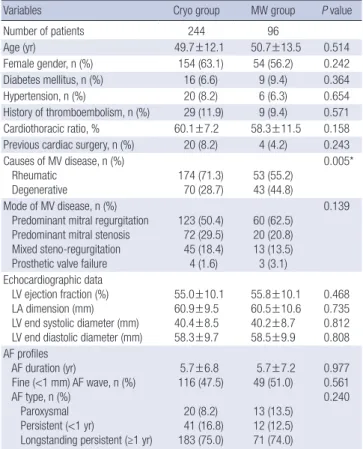
Table 1. Preoperative profiles of patients
Variables Cryo group MW group P value
Number of patients 244 96
Age (yr) 49.7±12.1 50.7±13.5 0.514
Female gender, n (%) 154 (63.1) 54 (56.2) 0.242 Diabetes mellitus, n (%) 16 (6.6) 9 (9.4) 0.364
Hypertension, n (%) 20 (8.2) 6 (6.3) 0.654
History of thromboembolism, n (%) 29 (11.9) 9 (9.4) 0.571 Cardiothoracic ratio, % 60.1±7.2 58.3±11.5 0.158 Previous cardiac surgery, n (%) 20 (8.2) 4 (4.2) 0.243 Causes of MV disease, n (%)
Rheumatic
Degenerative 174 (71.3)
70 (28.7) 53 (55.2) 43 (44.8)
0.005*
Mode of MV disease, n (%) Predominant mitral regurgitation Predominant mitral stenosis Mixed steno-regurgitation Prosthetic valve failure
123 (50.4) 72 (29.5) 45 (18.4) 4 (1.6)
60 (62.5) 20 (20.8) 13 (13.5) 3 (3.1)
0.139
Echocardiographic data LV ejection fraction (%) LA dimension (mm) LV end systolic diameter (mm) LV end diastolic diameter (mm)
55.0±10.1 60.9±9.5 40.4±8.5 58.3±9.7
55.8±10.1 60.5±10.6 40.2±8.7 58.5±9.9
0.468 0.735 0.812 0.808 AF profiles
AF duration (yr)
Fine (<1 mm) AF wave, n (%) AF type, n (%)
Paroxysmal Persistent (<1 yr)
Longstanding persistent (≥1 yr)
5.7±6.8 116 (47.5)
20 (8.2) 41 (16.8) 183 (75.0)
5.7±7.2 49 (51.0) 13 (13.5) 12 (12.5) 71 (74.0)
0.977 0.561 0.240
Data represent mean±SD. *P<0.05.
MV, mitral valve; LV, left ventricle; LA, left atrium; AF, atrial fibrillation.
multivariable models. Multivariate analyses involved a back- ward elimination technique and only variables with a P value of <0.10 were used in the final model. Results were expressed as hazard ratios (HR) with 95% confidence intervals (CI). All report- ed P values are two-sided, and P values of less than 0.05 were considered to indicate statistical significance. SAS software, ver- sion 9.1 (SAS Institute, Cary, NC, USA) and SPSS version 12 were used for the statistical analysis.
This study was approved by our institutional review board (IRB No. 2008-0638). The informed consent was waived by the board because of the retrospective nature of our study.
RESULTS
Mean age at the time of operation was 50.0±12.5 yr, and 208 (61.2
%) patients were female. There were seven early deaths. Among the early survivors (n=333), follow-up EKG analysis beyond 12 months postoperation was possible in 319 patients (95.8%); this analysis was not possible in 4 patients due to death within 12 months and 10 patients who were lost to follow-up. The mean follow-up period was 46.1±28.2 months.
Preoperative patient characteristics are listed in Table 1. Pa- tients in the Cryo group were more likely to have rheumatic MV disease than those in the MW group, significantly. Otherwise, the two groups were similar in terms of preoperative patient
demographic profiles, clinical features of mitral valve disease and AF, and preoperative echocardiographic data.
The aortic clamping time was significant longer in the Cryo group than the MW group (Table 2). There were no significant between-group differences in other operative parameters includ- ing duration of cardiopulmonary bypass, type of mitral valve pro- cedure and concomitant cardiac procedure (Table 2). There were four cases of late stroke (1.2%) and seven late deaths (2.1%; Table 3). Overall 3-yr and 5-yr survival rates were 96.1±1.1% and 95.6±
1.2%, respectively. Three patients (0.9%) failed to regain normal sinus rhythm and nine patients (2.6%) required permanent pace- maker implantation. The rates of sinus rhythm restoration and rhythm at last follow-up were similar for the two groups (Table 3).
Ninety patients (26.5%) experienced early AF events (58 in the Cryo group and 32 in the MW group, P=0.320). Sixty patients (17.6%) experienced late AF recurrence during the follow-up period (43 in the Cryo group and 17 in the MW group, P=0.755).
All of these 60 patients with late AF recurrence received amiod- arone medication, which resulted in sinus rhythm conversion in all patients. Of them, 32 experienced AF recurrence after discon- tinuation of amiodarone medication, and subsequently restart- ed the amiodarone medication. None of the patients who expe- rienced late AF recurrence progressed to persistent AF. An ad- ditional 21 patients had received amiodarone medication since the early postoperative period and 14 of these patients eventu- ally discontinued amiodarone therapy without experiencing late AF recurrence. Other three patients had been receiving amiod- arone at the time of analysis but without experiencing AF recur- rence.
Table 2. Operative procedures
Operation types Cryo group
(n=244) MW group
(n=96) P
value Cardiopulmonary bypass time (min) 163.7±50.4 164.7±36.4 0.850 Aorta cross clamping time (min) 119.5±34.0 109.2±28.6 0.005*
Type of mitral valve procedure, n (%) Repair
Replacement 131 (53.7)
113 (46.3) 57 (59.4) 39 (40.6)
0.342
Concomitant tricuspid valve repair, n (%) 120 (49.2) 48 (50.0) 0.892 Other cardiac co-operation
None
Aortic valve surgery Coronary artery bypassing Others
184 (75.4) 39† (16.0) 17† (7.0) 8 (3.3)
74 (77.1) 14 (14.6) 2 (2.1) 6 (6.3)
0.447
Data represent mean±SD.
*P<0.05; †Four patients underwent aortic valve surgery plus coronary artery bypassing.
Table 3. Operative outcomes
Outcomes Cryo group MW group P value
Early mortality, n (%) 5 (2.0) 2 (2.1) >0.999 Late mortality, n (%) 5 (2.0) 2 (2.1) >0.999
Stroke, n (%) 3 (3.1) 1 (1.0) >0.999
Sinus conversion date, days 1.2±6.5 0.4±1.9 0.149 Recent follow up rhythm, n (%)
Normal sinus rhythm Atrial fibrillation or flutter Junctional
Pacemaker rhythm
210 (86.1) 17 (7.0) 3 (1.2) 7 (2.9)
79 (82.3) 9 (9.4) 3 (3.1) 2 (2.1)
0.531
Data represent mean±SD. *P<0.05.
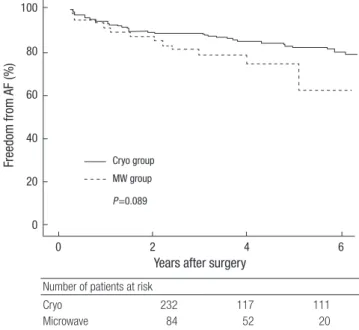
Fig. 1. Freedom from AF without administration of antiarrhythmic agents. In the Cryo group, the AF-free rates were 87.8%±2.2% at 3 yr and 79.9%±3.2% at 5 yr. In the MW group, the AF-free rates were 79.9%±4.9% at 3 yr and 61.3%±1.2% at 5 yr (P=0.089).
AF, atrial fibrillation.
Freedom from AF (%)
Years after surgery
0 2 4 6
100
80
60
40
20
0
Number of patients at risk
Cryo 232 117 111
Microwave 84 52 20
Cryo group MW group P=0.089
Overall unadjusted 3-yr, 5-yr and 7-yr AF-free rates in patients who did not receive antiarrhythmic agents were 85.9±2.1%, 78.1±
2.9% and 70.2±4.4%, respectively. The MW group had a greater tendency of AF-recurrence rate than the Cryo group (Fig. 1). After adjustment for baseline patients’ characteristics with IPTW, the MW group only showed a tendency toward more frequent AF recurrence than the Cryo group (Hazard ration 1.66, 95% confi- dence interval 0.89 to 3.07). Univariate and multivariate analy- ses for a range of variables revealed that older patient age (P<
0.001) and greater LA size (P<0.001) were independent factors for late AF recurrence (Table 4).
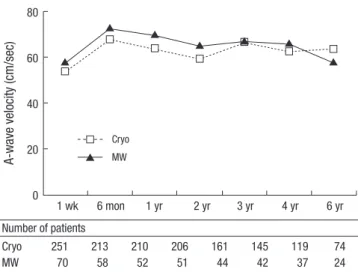
Transmitral A-wave prevalence and velocity plots are shown in Figs. 2, 3, respectively. There were no significant differences in transmitral A-wave prevalence and velocity between groups at each postoperative time point.
DISCUSSION
Alternative energy sources are being increasingly used in the field of AF ablation surgery owing to their convenience in appli- cation, shorter procedural time and minimal risk of postopera- tive bleeding. Endocardial ablations have demonstrated a 70–
80% long-term success rate when used together with other open heart procedures. Progress has focused on rapidly, efficiently, and safely creating therapeutic ablative lesions without incision.
Delivery systems are designed to be precise, flexible and able to access any anatomic location. Owing to the development of these delivery systems, AF ablation surgery has evolved to become an endoscopic, off-pump, robotically assisted successful procedure for the treatment of AF (6).
Cryoablation was the first alternative approach to be used in AF ablation surgery (15), and thus has the advantage that it is the most time-tested and has a well-characterized safety pro- file. Several studies have reported long-term results of cryoab- lation for treatment of AF and have shown that it has similar re- sults as the conventional ‘cut and sew’ Cox Maze procedure in terms of restoration and maintenance of sinus rhythm (16-18).
Microwave ablation has several advantages, in that, shielded probes enable a minimally invasive off-pump epicardial ap- proach, potentially no cardiac ischemic time requirement, bet- ter handling of anatomic variation, avoidance of a left atrioto- my, and a less risk of pulmonary vein stenosis (19). It can accom- modate a variety of lesion sets. However, in contrast to cryoab- lation, most studies have recorded follow-up rhythm data after microwave ablation for less than 1 yr (6-9). Determining the clin- ical effectiveness of AF ablation therapy based on 1 yr follow-up data seems inadequate, particularly because in 2007 the Heart Rhythm Society Task Force on Catheter and Surgical Ablation of AF recommended that all patients in a clinical investigation Fig. 2. Transmitral A-wave prevalence (%). Inter-group comparisons of A-wave preva-
lence show no differences during the postoperative period (P values ranged from 0.18 to 1.0 for each postoperative point).
A-wave prevalence (%)
1 wk 6 mon 1 yr 2 yr 3 yr 4 yr 6 yr 100
80
60
40
20
0
Cryo MW
Number of patients
Cryo 251 213 210 206 161 145 119 74
MW 70 58 52 51 44 42 37 24
Fig. 3. Transmitral peak A-wave velocity (cm/sec). Inter-group comparisons of A-wave velocity show no differences during the postoperative period (P values ranged from 0.16 to 0.84 for each postoperative point).
A-wave velocity (cm/sec)
1 wk 6 mon 1 yr 2 yr 3 yr 4 yr 6 yr 80
60
40
20
0
Cryo MW
Number of patients
Cryo 251 213 210 206 161 145 119 74
MW 70 58 52 51 44 42 37 24
Table 4. Univariate and multivariate analyses for late atrial fibrillation recurrence
Variables Univariate
P value
Multivariate HR 95.0% C.I. P value
Age (yr) 0.004* 1.04 1.02–1.06 <0.001*
Diabetes mellitus 0.045*
Cardiothoracic ratio 0.018*
Left ventricular ejection fraction 0.166
Left atrial dimension <0.001* 1.06 1.03–1.08 <0.001*
AF duration 0.002*
Fine (<1 mm) AF wave 0.007*
AF type (paroxysmal vs persistent) 0.070 Concomitant tricuspid valvuloplasty 0.046*
Energy source (cryoablation vs.
microwave) 0.089*
*P<0.05.
AF, atrial fibrillation.
should be followed for a minimum of 12 months (10). To our knowledge, only one study has investigated the long-term (>1 yr) outcomes of left atrial endocardial microwave ablation (20).
In this previous study, 41 patients were enrolled and the mean duration of postoperative follow-up was 5.37±0.91 yr. After 5 yr, only 39.3% of patients were in sinus rhythm. The investigators concluded that microwave ablation is not a reliable method for achieving long-term conversion to sinus rhythm. Although the AF ablation procedure used in this previous study was not a bi- atrial full maze procedure, the results were significant because they were the first reported data on the long-term outcomes of microwave ablation and because they were quite different from previous relatively short-term data indicating that the technique is excellent (7-9). The authors suggested that an important rea- son for the modest conversion rate to sinus rhythm in their study was a lack of lesion transmurality.
In support of their hypothesis, a postmortem histologic study was conducted in which three patients underwent microwave ablation for the treatment of AF (21). All three patients had im- mediate successful sinus rhythm restoration, and autopsies per- formed within 22 days of surgery showed that in most tissue sam- ples, the lesions were not transmural and the extent of myocar- dial damage was highly variable.
In the present study, the analyses showed a trend toward fa- voring the use of cryoablation than the microwave ablation in terms of the restoration and maintenance of sinus rhythm dur- ing a long-term follow-up. This difference in late outcomes has not been reported previously. Although histologic examinations of ablated atrial tissue were not performed in this study, we as- sume the differences in long-term rhythm outcomes between microwave and cryoablation are due to differences in the ability to produce transmural necrosis, in agreement with a previous proposal (20). Application of a nitrous-oxide-based cryoabla- tion probe at -60°C to atrial tissue for 2 min creates a transmural lesion that can be visually verified (22). However, the current microwave ablation approach lacks a transmural feedback mech- anism, making it difficult to verify the transmural necrosis dur- ing the procedure.
In the present study, the microwave energy level used was 65 watts and the duration of ablation was 2 min per lesion; this level of energy delivery is above the level which has been suggested and used by other researchers. Tissue shrinking of lesion lines on endocardial surface with dark yellow discoloration could be observed following the procedure and this finding was regard- ed as the indication of satisfactory injury in our practice. If the microwave energy is applied endocardially, most researchers use an energy power of 40 watts and an ablation time of 25 sec per lesion at a frequency of 2.45 GHz (9, 23). One research group (24) proposed 65 watts and 60 seconds of ablation time per le- sion, and this energy level is also recommended by the device manufacturer for ‘epicardial’ application of microwave energy
for beating-heart AF ablation (25). However, to investigate the long-term rhythm outcome, we suggest that the level of energy and the duration of ablation should be evaluated and determin- ed according to the long-term rhythm status in the clinical set- ting. Further investigations are needed to address this issue.
In this study, the aortic clamping time was longer in the Cryo group than the MW group. When a microwave probe is applied, it takes about 2 min to create each linear lesion, whereas cryo- ablation takes 2 min of freezing plus about 20 sec of warming.
Furthermore, the flexible nature of microwave probes makes it easier to rapidly generate the lesions, so additional time can be saved.
This study is subject to the limitations inherent to retrospec- tive observational studies. Although the analyses showed a def- inite trend toward favoring the use of cryoablation than the mi- crowave ablation in terms of freedom from AF, the results were statistically marginal. Studies on a larger population or a longer follow-up duration are necessary to verify the current study re- sults.
We could not identify the reason for the different AF recur- rence rate seen with different energy sources. Documentation of online electrophysiologic evaluation during microwave abla- tion may have given an indication of the device to create trans- mural lesions acutely.
In conclusion, both the MW and Cryo groups show excellent early operative results, although the aortic clamping time is longer in the Cryo group compared with the MW group. Rates of atrial contractility restoration after surgery are similar in the two groups. However, patients who underwent microwave ab- lation exhibit tendency toward more frequent AF recurrence than those who underwent cryoablation. We assume the differ- ences in long-term rhythm outcomes between these two energy sources are due to the difference in the ability to produce trans- mural necrosis. Further investigations involving histologic eval- uations are needed to address this issue.
REFERENCES
1. Cox JL, Boineau JP, Schuessler RB, Kater KM, Lappas DG. Five-year ex- perience with the maze procedure for atrial fibrillation. Ann Thorac Surg 1993; 56: 814-23.
2. Cox JL, Schuessler RB, Lappas DG, Boineau JP. An 8 1/2-year clinical experience with surgery for atrial fibrillation. Ann Surg 1996; 224: 267-73.
3. Chiappini B, Di Bartolomeo R, Marinelli G. The surgical treatment of atrial fibrillation with microwave ablation: preliminary experience and results. Interact Cardiovasc Thorac Surg 2003; 2: 327-30.
4. Knaut M, Spitzer SG, Karolyi L, Ebert HH, Richter P, Tugtekin SM, Schul- er S. Intraoperative microwave ablation for curative treatment of atrial fibrillation in open heart surgery--the MICRO-STAF and MICRO-PASS pilot trial. MICROwave Application in Surgical treatment of Atrial Fibril- lation. MICROwave Application for the Treatment of Atrial Fibrillation in Bypass-Surgery. Thorac Cardiovasc Surg 1999; 47 Suppl 3: 379-84.
5. Melo J, Adragao P, Neves J, Ferreira MM, Pinto MM, Rebocho MJ, Parreira L, Ramos T. Surgery for atrial fibrillation using radiofrequency catheter ablation: assessment of results at one year. Eur J Cardiothorac Surg 1999;
15: 851-4.
6. Comas GM, Imren Y, Williams MR. An overview of energy sources in clin- ical use for the ablation of atrial fibrillation. Semin Thorac Cardiovasc Surg 2007; 19: 16-24.
7. Knaut M, Tugtekin SM, Spitzer SG, Jung F, Matschke K. Intraoperative endocardial microwave ablation for treatment of permanent atrial fibril- lation during coronary artery bypass surgery: 1-year follow-up. Europace 2006; 8: 16-20.
8. Topkara VK, Williams MR, Barili F, Bastos R, Liu JF, Liberman EA, Russo MJ, Oz MC, Argenziano M. Radiofrequency and microwave energy sourc- es in surgical ablation of atrial fibrillation: a comparative analysis. Heart Surg Forum 2006; 9: E614-7.
9. Wisser W, Khazen C, Deviatko E, Stix G, Binder T, Seitelberger R, Schmi- dinger H, Wolner E. Microwave and radiofrequency ablation yield simi- lar success rates for treatment of chronic atrial fibrillation. Eur J Cardio- thorac Surg 2004; 25: 1011-7.
10. European Heart Rhythm Association (EHRA); European Cardiac Arrhy- thmia Scoiety (ECAS); American College of Cardiology (ACC); Ameri- can Heart Association (AHA); Society of Thoracic Surgeons (STS), Calkins H, Brugada J, Packer DL, Cappato R, Chen SA, Crijns HJ, Damiano RJ Jr, Davies DW, Haines DE, Haissaguerre M, Iesaka Y, Jackman W, Jais P, Kottkamp H, Kuck KH, Lindsay BD, Marchlinski FE, McCarthy PM, Mont JL, Morady F, Nademanee K, Natale A, Pappone C, Prystowsky E, Raviele A, Ruskin JN, Shemin RJ. HRS/EHRA/ECAS expert Consensus Statement on catheter and surgical ablation of atrial fibrillation: recommendations for personnel, policy, procedures and follow-up. A report of the Heart Rhythm Society (HRS) Task Force on catheter and surgical ablation of atrial fibrillation. Heart Rhythm 2007; 4: 816-61.
11. Kim JB, Lee SH, Jung SH, Yun SC, Choo SJ, Chung CH, Song H, Lee JW.
The influence of postoperative mitral valve function on the late recurrence of atrial fibrillation after the maze procedure combined with mitral val- vuloplasty. J Thorac Cardiovasc Surg 2010; 139: 1170-6.
12. Lee JW, Choo SJ, Kim KI, Song JK, Kang DH, Song JM, Song H, Lee SK, Song MG. Atrial fibrillation surgery simplified with cryoablation to im- prove left atrial function. Ann Thorac Surg 2001; 72: 1479-83.
13. Robins JM, Hernan MA, Brumback B. Marginal structural models and causal inference in epidemiology. Epidemiology 2000; 11: 550-60.
14. Normand SL. Evaluating the optimal timing of angiography: landmark or off the mark? Circulation 2007; 116: 2656-7.
15. Cox JL, Ad N, Palazzo T, Fitzpatrick S, Suyderhoud JP, DeGroot KW, Pirovic EA, Lou HC, Duvall WZ, Kim YD. Current status of the Maze procedure for the treatment of atrial fibrillation. Semin Thorac Cardio- vasc Surg 2000; 12: 15-9.
16. Itoh A, Kobayashi J, Bando K, Niwaya K, Tagusari O, Nakajima H, Ko- mori S, Kitamura S. The impact of mitral valve surgery combined with maze procedure. Eur J Cardiothorac Surg 2006; 29: 1030-5.
17. Bando K, Kobayashi J, Kosakai Y, Hirata M, Sasako Y, Nakatani S, Yagi- hara T, Kitamura S. Impact of Cox maze procedure on outcome in pa- tients with atrial fibrillation and mitral valve disease. J Thorac Cardio- vasc Surg 2002; 124: 575-83.
18. Nakajima H, Kobayashi J, Bando K, Niwaya K, Tagusari O, Sasako Y, Nakatani T, Kitamura S. The effect of cryo-maze procedure on early and intermediate term outcome in mitral valve disease: case matched study.
Circulation 2002; 106: I46-I50.
19. Whayne JG, Nath S, Haines DE. Microwave catheter ablation of myocar- dium in vitro. Assessment of the characteristics of tissue heating and in- jury. Circulation 1994; 89: 2390-5.
20. Vicol C, Kellerer D, Petrakopoulou P, Kaczmarek I, Lamm P, Reichart B.
Long-term results after ablation for long-standing atrial fibrillation con- comitant to surgery for organic heart disease: is microwave energy reli- able? J Thorac Cardiovasc Surg 2008; 136: 1156-9.
21. Accord RE, van Suylen RJ, van Brakel TJ, Maessen JG. Post-mortem his- tologic evaluation of microwave lesions after epicardial pulmonary vein isolation for atrial fibrillation. Ann Thorac Surg 2005; 80: 881-7.
22. Gillinov AM, Blackstone EH, McCarthy PM. Atrial fibrillation: current surgical options and their assessment. Ann Thorac Surg 2002; 74: 2210-7.
23. Schuetz A, Schulze CJ, Sarvanakis KK, Mair H, Plazer H, Kilger E, Reich- art B, Wildhirt SM. Surgical treatment of permanent atrial fibrillation using microwave energy ablation: a prospective randomized clinical tri- al. Eur J Cardiothorac Surg 2003; 24: 475-80.
24. Venturini A, Polesel E, Cutaia V, Asta A, Mangino D, Moretti R, Terrini A, Zussa C. Intraoperative microwave ablation in patients undergoing valvular surgery: midterm results. Heart Surg Forum 2003; 6: 409-11.
25. Williams MR, Argenziano M, Oz MC. Microwave ablation for surgical treatment of atrial fibrillation. Semin Thorac Cardiovasc Surg 2002; 14:
232-7.