http://crossmark.crossref.org/dialog/?doi=10.14474/ptrs.2020.9.3.197&domain=pdf&date_stamp=2020-9-25
Received: 28 August, 2020 Revised: 22 September, 2020 Accepted: 22 September, 2020 Corresponding author: GyuChang Lee (ORCID https://orcid.org/0000-0001-6404-203X)
Department of Physical Therapy, Kyungnam University, 7 Gyungnamdaehak-ro, Changwon 51767, Republic of Korea Tel: 82-55-249-2739 Fax: 82-505-999-2173 E-mail: [email protected]
This is an Open-Access article distributed under the terms of the Creative Commons Attribution Non-Commercial License (http://creativecommons.org/licenses/ by-nc/4.0) which permits unrestricted non-commercial use, distribution, and reproduction in any medium, provided the original work is properly cited.
Copyright © 2020 Korean Academy of Physical Therapy Rehabilitation Science https://doi.org/10.14474/ptrs.2020.9.3.197
pISSN 2287-7576 eISSN 2287-7584
Phys Ther Rehabil Sci 2020, 9 (3), 197-200 www.jptrs.org
Development of sit-to-stand assistive chair using a
pneumatic cylinder: a feasibility test
SoungKyun Honga , GyuChang LeebaSports Rehabilitation Center, Haeundae Bumin Hospital, Pusan, Republic of Korea bDepartment of Physical Therapy, Kyungnam University, Changwon, Republic of Korea
Objective: The purpose of this study was to develop and investigate the feasibility of a sit-to-stand assistive chair using a
pneu-matic cylinder.
Design: Cross-sectional study.
Methods: The sit-to-stand assistive chair was developed to assist the sit-to-stand movement by rising up of the chair by a
pneu-matic cylinder. After the user is seated on the chair, if the pneupneu-matic cylinder pulls the seat plate when standing up, the spring of the pneumatic cylinder, which has been stretched, assists in rising the rear end of the seat plate so that the user can stand conveniently and comfortably. A feasibility test was performed in 10 heathy adults. The electromyographic muscle activation of the trunk and lower extremity muscles was analyzed, which included the erector spinae, rectus abdominis, quadriceps, tibialis anterior, gastro-cnemius when standing up from sitting using the developed chair and standing up without using the developed chair.
Results: As a result, the sit-to-stand assistive chair using a pneumatic cylinder was developed. In the feasibility test, the use of the
developed chair had a decrease in rectus abdominis, quadriceps, tibialis anterior activation compared to those who did not use the device in the healthy adults.
Conclusions: The sit-to-stand assistive chair using a pneumatic cylinder may be helpful to reduce the activation of the rectus
ab-dominis, quadriceps, tibialis anterior muscles when performing a sit-to-stand movement. Through the results, the efficacy of the sit-to-stand assistive chair can be confirmed. In the future, further studies are warranted to investigate for the safety and efficacy of its use in the elderly population or those who are disabled.
Key Words: Assistive device, Disabled, Elderly, Pneumatic, Standing
Introduction
Movements that occur from a standing or sit-to-stand po-sition are movements performed repeatedly used more often than walking in daily life [1,2], and requires more muscle strength and movement than walking or climbing stairs. Therefore, these movements are one of the most difficult movements for used during daily life activities [2].
This motion involves the following steps: moing the cen-ter of the body forward, the hip joint is flexed to the max-imum as the buttocks are removed from the chair, the flexed knee joint begins to go into extension and as the ankle joint
goes into dorsiflexion, the ankle moves to maximum plantar flexion as the knee and hip joint are almost extended and the standing position takes place, and the posture is stabilized in a total of five stages [3]. In order to perform these move-ments, the erector spinae, quadriceps femoris, the ham-strings, and the gluteus maximus musclces play the most im-portant roles [4].
However, when the muscle strength of the lower ex-tremities is weakened or pain occurs due to degenerative or chronic diseases caused by aging, it is difficult to perform these movements [5]. In addition, persons who is handi-capped with hemiplegia or hemiparalysis due to a stroke or
198 Phys Ther Rehabil Sci 9(3)
(A) (B)
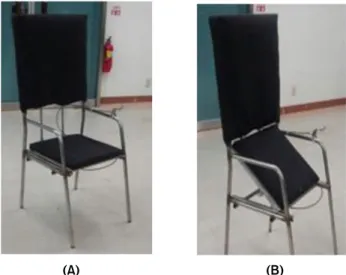
Figure 1. Prototype of sit to stand assistive chair (A) When the seat is lowered. (B) When the seat is raised.
(A) (B)
Figure 2. Analyzing of muscle activ-ity according to the use of a sit-to- stand assistive chair. (A) Sit-to-stand movement without using the chair. (B) Sit-to-stand movement with using the chair.
with quadriplegia or lower limb paralysis due to spinal nerve damage, etc. also have difficulty performing these move-ments. In the past, devices that can assist with standing have been developed [6-8], but there is a limit to commercializa-tion due to relatively cumbersome use and expensive pur-chase cost due to use of an electric motor.
The pneumatic cylinder used in this device is a device op-erated by compressed air and has a disadvantage in that it ex-hibits a limitation in mechanically high pressure [9], but it has the advantage of being able to control the force and speed without limitations, and it is economical and reliable and so it is widely used in the industry [10]. In this study, in order to compensate for the limitations of the existing de-vice, a sit-to-stand assistive chair device was developed us-ing an economical and easy-to-use pneumatic cylinder, and the feasibility of the device was investigated.
Methods
Sit-to-stand assistive chair
Device structure
The device consists of the leg components, a seat plate, seat plate moving slide, back frame, handle for fixing and re-leasing, and a pneumatic cylinder (Figure 1).
A standing seat plate is installed on the upper part of the leg which slides to allow the seat plate to move when stand-ing on both sides, a handle for fixstand-ing and releasstand-ing are at-tached, and a pneumatic cylinder that can pull the seat plate behind the back frame is attached (Figure 1). The standing seat plate was designed so that the rear end of the seat plate can be raised from 25° to 35° so that patients with problems such as knee joint disease, low back pain, and general weak-ness can sit in a stable manner without strain applied on the knee joint and lower limbs. In addition, it is possible to fixate or release the cylinder by using the operation handle.
Device algorithm
When the user operates the fixing and release handle after sitting on the seat plate of the standing assistance device, the pneumatic cylinder pulls the seat plate and the back of the seat plate rises in the vertical direction, allowing the user to stand with little force. In addition, when seated, the spring of the pneumatic cylinder is stretched by the user’s weight, and the seat plate is lowered to the original position (Figure 2). Feasibility test
In this study, the activity of the trunk and lower extremity muscles when standing without using the developed device and when standing with the developed device was analyzed using surface electromyography (EMG) in 10 healthy adults, and the general characteristics of the participants in this study are shown in Table 1.
Hong and Lee: Sit to stand assistive chair 199
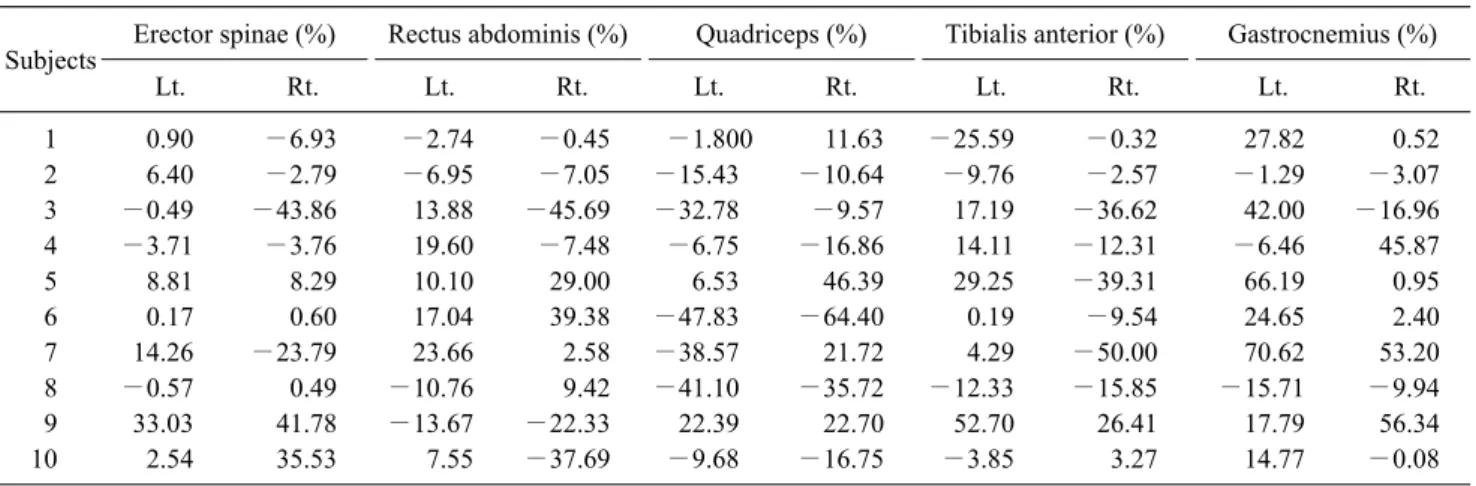
Table 2. Differences in electromyographic muscle activation between non-used and used the developed device (N=10)
Subjects Erector spinae (%) Rectus abdominis (%) Quadriceps (%) Tibialis anterior (%) Gastrocnemius (%)
Lt. Rt. Lt. Rt. Lt. Rt. Lt. Rt. Lt. Rt. 1 0.90 −6.93 −2.74 −0.45 −1.800 11.63 −25.59 −0.32 27.82 0.52 2 6.40 −2.79 −6.95 −7.05 −15.43 −10.64 −9.76 −2.57 −1.29 −3.07 3 −0.49 −43.86 13.88 −45.69 −32.78 −9.57 17.19 −36.62 42.00 −16.96 4 −3.71 −3.76 19.60 −7.48 −6.75 −16.86 14.11 −12.31 −6.46 45.87 5 8.81 8.29 10.10 29.00 6.53 46.39 29.25 −39.31 66.19 0.95 6 0.17 0.60 17.04 39.38 −47.83 −64.40 0.19 −9.54 24.65 2.40 7 14.26 −23.79 23.66 2.58 −38.57 21.72 4.29 −50.00 70.62 53.20 8 −0.57 0.49 −10.76 9.42 −41.10 −35.72 −12.33 −15.85 −15.71 −9.94 9 33.03 41.78 −13.67 −22.33 22.39 22.70 52.70 26.41 17.79 56.34 10 2.54 35.53 7.55 −37.69 −9.68 −16.75 −3.85 3.27 14.77 −0.08 Lt.: light, Rt.: right.
Table 1. Characteristics of subjects (N=10)
Items Value
Sex (male/female) 4 (40.0)/6 (60.0)
Age (y) 20.50 (1.08)
Height (cm) 166.00 (7.16)
Weight (kg) 65.00 (11.48)
Dominant side (right/left) 10 (100.0)/0 (0.0)
Values are presented as n (%) or mean (SD).
Natick, MA, USA) was used to assess the muscle activity of the trunk and lower extremities when standing. According to the DELSYS guidelines, an EMG sensor was attached to the erector spinae, rectus abdominis, quadriceps femoris, tibia-lis anterior, and the gastrocnemius muscles and was set to 1,926 HZ using 12 channels of the surface EMG.
The order of the use of the standing assistance device was randomly determined to prevent bias, and each subject per-formed 3 repetitions of standing for a total of 6 times (Figure 2). A rest-period of at least 10 minutes was provided for each set of standing.
In order to minimize skin resistance, the skin was cleaned at the electrode attachment sites prior to application of the electrodes. All collected data were analyzed using descrip-tive statistics.
Results
When using the standing assistance device, the activity of the right rectus muscle was 4.4%, the activity of the left quadriceps muscle was 2.1%, and the activity of the right
fe-mur was found to decrease by 16.9%. In addition, the activ-ity of the right anterior tibialis muscle was decreased by 16.3% (Table 2).
Discussion
In this study, a standing assistance device was developed using a pneumatic cylinder that can assist with standing, which is a movement that includes sitting and standing, and the activity of the trunk and lower extremity muscles that ap-pear when standing up was analyzed using the device for 10 healthy adults. The validity of the device was investigated.
As a result, it was found that the activity of the right rectus abdominis, the right and left quadriceps femoris, and right anterior tibialis muscles decreased when standing with the device compared to standing without the device. The crease in muscle mass that occurs as aging progresses de-creases by about 10%-15% every 10 years until the person reaches their 70s, and decreases more rapidly to 25%-40% every 10 years after the 70s age range [11]. In addition, de-generative arthritis of the knee, one of the most common dis-eases caused by aging, is known to occur in 30% of the eld-erly [12]. Due to such aging effects, sitting and standing, which requires more muscle strength and movement than walking or climbing stairs, is one of the most difficult move-ments performed in the daily activities of the elderly [2].
This difficulty in standing can be seen similarly to those with disabilities such as hemiplegia and lower limb para-lysis. Various types of assistive devices have been developed to assist with standing for the elderly or the disabled pop-ulation who have limited standing abilities [6-8]. In order to
200 Phys Ther Rehabil Sci 9(3)
supplement the limitations of existing devices, this study at-tempted to develop a standing assist device using a pneu-matic cylinder, and also investigated the validity of the de-veloped device.
In the device developed in this study, when the user sits on the seat plate of the device and operates the control panel, the pneumatic cylinder pulls the seat plate and the rear of the seat plate rises in the vertical direction. By attaching a cam-era follower, the front part slides backwards when the rear part of the seat plate rises to assist the vertical elevation of the rear seat plate so that the user can stand up with little force, and even when the user sits on the device, as the at-tached pneumatic cylinder is pushed back, the angle of the seat plate is reduced so that it can descend downward. Because the device operates only with the power of a pneu-matic cylinder, the elderly or a person who is disabled who have difficulty standing due to paralysis, muscle weakness, and degenerative arthritis can use it easily without re-strictions on the use of electricity or location, and the price is also cheaper compared to the other device used.
In addition, as a result of examining the feasibility of the developed device, it was found that the activity of the right rectus abdominis, the right and left quadriceps femoris, and right anterior tibialis when standing with the device de-creased compared to when standing without using the device. This reduces the use of the rectus abdominis muscle, the quadriceps muscle [4], and the anterior tibialis muscle [16], which are one of the most important muscles used when the development device is standing up. It shows the possibility that it can be used as an assistive device that can assist with the standing movement of the elderly or the dis-abled population.
However, since this device cannot provide assistance ac-cording to the user’s weight or physical disability, it will have to be continuously improved and developed, and the improved and developed device will be compared with other similar devices for differentiation and verification for excellence.
In addition, since the evaluation for the validity of this de-vice was conducted on healthy adults only, it is necessary to continue to investigate for the validity of its use within the elderly population or those who are disabled who have diffi-culties with standing.
In this study, a standing assist device using a pneumatic cylinder was developed, and as a result of the validity evalu-ation of the developed device, it was found that the activity of muscles used when standing was decreased. These results
show the potential that the device can be used for standing assistance.
However, as many studies have not been conducted yet, in the future, along with the improvement and development of this device, it will be necessary to verify the effectiveness and safety of the device by conducting an evaluation for val-idity on subjects who have difficulty with standing.
Conflict of Interest
The authors declared no potential conflicts of interest with respect to the authorship and/or publication of this article.
References
1. Smith MT, Baer GD. Achievement of simple mobility mile-stones after stroke. Arch Phys Med Rehabil 1999;80:442-7. 2. Yamako G, Chosa E, Totoribe K, Fukao Y, Deng G.
Quantification of the sit-to-stand movement for monitoring age-related motor deterioration using the Nintendo Wii Balance Board. PLoS One 2017;12:e0188165.
3. Kerr KM, White JA, Barr DA, Mollan RAB. Standardization and definitions of the sit-stand-sit movement cycle. Gait Posture 1994;2:182-90.
4. Chou SW, Wong AM, Leong CP, Hong WS, Tang FT, Lin TH. Postural control during sit-to stand and gait in stroke patients. Am J Phys Med Rehabil 2003;82:42-7.
5. The Korean Orthopaedic Association. Orthopaedics. 5th ed. Seoul: The New Medical Journal; 1999.
6. Kim JH, Hong JS, Chun KJ, Jung KT. The development of lift chair for older adults' safety. J Ergon Soc Korea 2009;28:161-6. 7. Kim HJ, Yeo HJ, Kim SS, Chang SH, Lee SH, Bae IS.
Development of non-motorized lifting chair for the elderly. J Soc Korea Ind Syst Eng 2015;38:226-32.
8. Ahrary A, Yang WS, Inada M, Nakamatsu K. Development of the lift assist chair for the elderly people “Rakutateru”. Procedia Comput Sci 2018;131:31-7.
9. Deppert W, Stoll K. Pneumatic control. Wurzburg: Vogel; 1975. 10. Croser P. Pneumatics: basic level TP 101: textbook. Esslingen:
Festo Didactic; 1989.
11. Hughes VA, Frontera WR, Wood M, Evans WJ, Dallal GE, Roubenoff R, et al. Longitudinal muscle strength changes in old-er adults: influence of muscle mass, physical activity, and health. J Gerontol A Biol Sci Med Sci 2001;56:B209-17.
12. Guccione AA, Felson DT, Anderson JJ, Anthony JM, Zhang Y, Wilson PW, et al. The effects of specific medical conditions on the functional limitations of elders in the Framingham Study. Am J Public Health 1994;84:351-8.
13. Camargos AC, Rodrigues-de-Paula-Goulart F, Teixeira-Salmela LF. The effects of foot position on the performance of the sit-to- stand movement with chronic stroke subjects. Arch Phys Med Rehabil 2009;90:314-9.