Veterinary Science
DOI: 10.4142/jvs.2010.11.3.205
Received: 06 May 2009, Accepted: 17 Feb. 2010
Original Article
*Corresponding author
Tel: +82-31-467-1821; Fax: +82-31-467-1814 E-mail: [email protected]
Antigenic and immunogenic investigation of the virulence motif of the Newcastle disease virus fusion protein
Kang-Seuk Choi*, Eun-Kyoung Lee, Woo-Jin Jeon, Jun-Hun Kwon
Avian Diseases Division, National Veterinary Research and Quarantine Service, Anyang 430-757, Korea
Newcastle disease (ND) caused by virulent Newcastle disease virus (NDV) is a highly contagious viral disease of poultry.
Virulent NDVs characteristically have a multibasic amino acid sequence (virulence motif) such as
112RRQKRF
117at the cleavage site of the precusor fusion (F0) protein. The antigenic and immunogenic characteristics of the virulence motif
112
RRQKRF
117in the F0 protein of virulent NDVs were investigated. Epitope mapping analysis revealed that a RRQKRF-specific monoclonal antibody 4G2 recognized the KRF section of the motif. A synthetic peptide bearing the RRQKRF motif reacted strongly with sera from virulent NDV (with RRQKRF motif)-infected chickens. These sera also showed reactivity to peptides bearing other virulence motifs (
112KRQKRF
117,
112RRQRRF
117and
112RRRKRF
117) but not an avirulence motif (
112GRQGRL
117) by ELISA. The synthetic bearing RRQKRF motif reacted with 60% to 91%
of sera taken from surviving chickens on ND outbreak farms but not with sera from vaccinated birds, even though most of the sera had antibody to NDV due to vaccination. This indicates that the virulence motif has the potential to differentiate virulent NDV infected birds from vaccinated birds.
Keywords: B-cell epitope, fusion protein, Newcastle disease virus, virulence motif
Introduction
Newcastle disease virus (NDV) is a member of the avian paramyxovirus (APMV) group belonging to the Avulavirus genus in the family Paramyxoviridae [26]. There are currently nine known antigenic serotypes of AMPV, designated APMV-1 through -9. NDV is the sole member of APMV-1 and is an enveloped virus with a negative-sense, single stranded RNA genome which codes for six structural
and two non-structural proteins [7,14]. The structural proteins include nucleocapsid (N), phospho- (P), and matrix (M) proteins, fusion (F) and hemagglutinin-neuraminidase (HN) glycoproteins, and a large polymerase (L). Of these, the HN and F proteins are membrane anchored viral glycoproteins that enable cell binding and infection. The HN glycoprotein recognizes sialic acid containing receptors on cell surfaces and acts as a neuraminidase, removing sialic acid from progeny virus particles. The F protein is presumed to mediate membrane fusion either at the cell surface [8] or through receptor-mediated endocytosis [5].
Newcastle disease (ND) caused by virulent ND virus is one of the most devastating infectious diseases of poultry and induces up to 100% mortality as well as a decrease in egg production and poor egg quality [4]. NDV strains are classified into lentogenic, mesogenic, and velogenic categories, a nomenclature which reflects increasing levels of virulence for chickens based on biological parameters such as mean intracerebral pathogenicity index.
The molecular determinant for NDV virulence is known to be related to the cleavability of precusor F (F0) to active F1 and F2 polypeptides by cellular proteases [13,18,23].
Virulent NDVs have a multibasic amino acid sequence (i.e.
112
RRQKRF
117) at the F0 cleavage site (virulence motif), whereas low virulent NDVs have a monobasic amino acid sequence (i.e.
112GRQGRL
117) in the same region (avirulence motif) [2,6,21]. Most of the recent virulent NDV strains bear the virulence motif
112RRQKRF
117at the cleavage site of their F0 protein [1,15,17,21].
Polyclonal anti-peptide sera to peptides whose sequences
mimic the F2-polypeptide C-termini (i.e.
112RRQ
114) have
been used to detect specifically virulent NDV isolates [12,
16,25]. Despite the usefulness of its diagnostic applications,
the antigenic and immunogenic properties of the motif still
remain unclear. In this study, we map a B-cell epitope of the
virulence motif
112RRQKRF
117and investigate whether the
antibody response to the B-cell epitope on the virulence
motif is induced in virulent NDV-infected chickens.
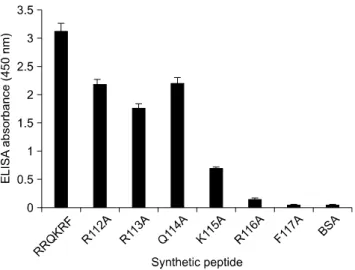
Fig. 1. Fine mapping of the epitope within the virulence motif
112
RRQKRF
117which is recognized by the anti-RRQKRF monoclonal antibody 4G2, using indirect ELISA. The BSA- conjugated peptides are designated in terms of the alanine substitution that was made, e.g. peptide R112A bears an arginine (R) to alanine (A) substitution at residue 112 of the fusion protein.
BSA: bovine serum albumin.
Materials and Methods Synthetic peptides
The synthetic peptide RRQKRF (CAARRQKFRI) containing the virulence motif RRQKRF was synthesized by a commercial company (Peptron, Korea) using Fmoc (9- fluorenylmethoxycarboxyl) solid-phase synthesis chemistry on Rink amide resin (Novabiochem, USA). The peptide was subjected to C-terminal amidation to stabilize its structure.
Six peptides were prepared by an alanine substitution of the
112
RRQKRF
117motif with at each position (e.g. R112A represents an arginine to alanine substitution at residue 112;
Fig. 1). Four synthetic peptides containing other virulence motif (KRQKRF, RRQRRF and RRRKRF) or avirulence motif (GRQGRL) sequences were also synthesized in the same manner. Each peptide was then conjugated to bovine serum albumin (BSA) for enzyme-linked immunosorbent assay (ELISA).
Anti-RRQKRF antibodies
Anti-RRQKRF monoclonal antibody (mAb) 4G2 was used in this study. The hybridoma cell line producing mAb 4G2 (IgG1, kappa) was generated from mice immunized with the keyhole limpet haemocyanin (KLH)-conjugated synthetic peptide CGGRRQKRFI in our laboratory. Ascitic fluids were produced following inoculation of 10
7hybridoma cells into the peritoneal cavities of pristine-primed Balb/c mice as described elsewhere.
Anti-RRQKRF sera were prepared from chickens (n = 2) by two subcutaneous inoculations with the KLH- CAARRQKFRI peptide conjugate (100 μ g per bird in
complete Freund’s adjuvant for the primary inoculation and in incomplete Freund’s adjuvant for the booster) at three week intervals. Sera were taken from immunized birds 3 weeks after the last inoculation. Sera were diluted in pre-immune chicken sera and then titrated by ELISA.
Diluted serum having 25% of the highest optical density (OD) value in ELISA was used as positive serum control.
Pre-immune chicken sera served as negative serum control.
Virus
NDV strain Kr-005/00 was used in this study. This strain is a highly virulent NDV strain having the virulence motif
112
RRQKRF
117at the cleavage site of the F0 protein [15].
NDV was propagated by using SPF chicken eggs, and stored at 70
oC until use.
Animal experiment
Six week-old specific pathogen-free (SPF) chickens from White Leghorn parents (Lohmann, Germany) were used in this study. The SPF birds were maintained in air-filtered bio-security isolation units (ThreeShine, Korea) with feed and water ad libitum for the duration of the study. All animals were kept at animal facilities and we followed the ethical guidelines of the Animal Welfare Committee recommended by the National Veterinary Research and Quarantine Service during the experiment. A total of 24 six-week old SPF chickens in this experiment were divided into two groups for the experiment. The infection group was challenged with Kr-005/00 (10
4.5EID
50/100 μ L) (n = 12, 100 μ L per bird) via the eye drop and intranasal (ED/ IN) routes. Control birds (n = 12) were sham challenged with the same volume (100 μ L) of PBS via the ED/IN route. All birds were monitored daily for overt clinical signs (depression, respiratory signs, diarrhea etc.) and mortality. Serum and cloacal samples were taken twice on days 0 and 7 post-inoculation.
Virus re-isolation
The swab samples collected for virus isolation were placed in 3 mL transport medium (Micro Test M4RT; Remel, USA) and stored at 70
oC until use for virus isolation. For this, the samples were first clarified by centrifugation at 3,000 g for 10 min and then 100 μ L of the supernatant was inoculated into allantoic cavity of 9 to 11 day-old SPF embryonated chicken eggs.
Hemagglutination inhibition (HI) test
Serum titers to NDV were determined by HI tests in V-
bottom microtiter plates as described elsewhere [3]. Thus,
two-fold dilutions of test sera in PBS, pH7.4, were mixed
with the same volume containing 4 HA units of NDV HA
antigen (Daesung Microbiological Laboratory, Korea). The
mixture (50 μ L per well) was then incubated at room
temperature for 30 min. An equal volume of 0.5% chicken
RBC in PBS was added. The HI endpoint was determined
Table 1. ELISA results of sera from chickens on Newcastle disease (ND) outbreak farms and normal farms as compared with hemagglutination inhibition (HI) test results
Farm Breed* Age (day old) ND vaccination HI result
†ELISA result
‡With ND outbreak A B C D E
Br Ly Kn Kn Br
35 39 50 28 42
Yes Yes Yes Yes Yes
90% (18/20) 82% (18/22) NT
NT NT
90% (18/20)
a91% (20/22)
a65% (13/20)
a60% (9/15)
a88% (14/16)
aWithout ND outbreak
F G
Br Br
35 32
Yes Yes
85%(17/20) 55%(11/20)
5% (1/20)
b0% (0/20)
b*Br, broiler chicken; Ly, layer chicken; Kn, Korean native chicken. †The data in parentheses represent the number of positive chicken sera/number of tested chicken sera. Sera having HI titers of 2 or greater were considered positive. NT, not tested. ‡The data in parentheses represent the number of positive chicken sera/number of tested chicken sera. Sera having PP values of 20% or greater were considered positive.
a,bValues with different superscripts within a column are significantly different (p<0.05).
as the last dilution that showed complete inhibition of HA activity. All tests were repeated twice. The HI titers are expressed as reciprocal log2 in this study.
Peptide based ELISA (pELISA)
The BSA (diluted in 0.01M PBS, pH7.4) was coated on an ELISA plate (Maxisorp; Nunc, France) at 37
oC for 2 h. Each serum or mAb sample (50 μ L per well) was incubated in two test wells in the ELISA for 1 h. Here, sera and mAb 4G2 were used at dilutions of 1 : 100 and 1 : 2,500, respectively, in blocking buffer (0.2% Tween 20 and 2% BSA in 0.01 M PBS).
The antigen-antibody reaction was visualized by use of horseradish peroxidase-conjugated 5D2 antibody (BioNote, Korea) or horseradish peroxidase- conjugated anti-mouse IgG (H + L) antibody (Kirkegaard & Perry Laboratories, USA) (100 μ L/well, diluted 1:1,500 in blocking buffer) and then TMB (3, 3´, 5, 5´-tetramethylbenzidine) solution (Sigma, USA). ELISA OD was measured at a wavelength of 450 nm. The net OD of each serum was calculated by subtracting the OD value of the control negative well from the mean OD value of the peptide-coated wells. The OD of each well was converted to a percent positive (PP) value of mAb bound to serum antibodies using the following formula: PP = (net OD of test serum/net OD of positive control serum) × 100. Sera having a PP value of 20% or more were considered positive.
Field samples
The sera (n = 93) taken from surviving chickens on five farms with ND outbreak were used in this study (Table 1).
At the time of sampling, virulent NDV (bearing the RRQKRF motif) was isolated from tissue samples (trachea, cecal tonsil and kidney) from the dead birds (data not shown).
For comparison, normal sera (n = 40) taken from apparently
healthy chickens on two farms with no ND outbreak were also used. All chickens had received at least two vaccinations with live NDV vaccines (1 and 10 to 14 days) before bleeding. All sera were tested by pELISA using synthetic peptide bearing RRQKRF motif. The results obtained by pELISA were compared with the HI test.
Statistical analysis
The pELISA and HI data from serum samples are presented as mean ± SD. Differences in the antibody titers between groups were analyzed by using the Mann-Whitney U test.
Significance was accepted at p<0.05.
Results
Epitope mapping of virulence motif of NDV F protein using monoclonal antibody 4G2
Virulence motif specific-monoclonal antibody 4G2 was used for mapping B-cell epitope on virulence motif
112RRQKRF
117. The peptide antigens (RRQKRF, R112A, R113A, Q114A, K115A, R116A and F117A) were tested at a concentration of 4 μ g/mL by indirect ELISA using mAb 4G2. As expected, the 4G2 antibody reacted strongly with peptide RRQKRF.
It also reacted strongly (ELISA absorbance of >1.5) with peptides R112A, R113A and Q114A, and weakly (ELISA absorbance of 0.68) with peptide K115A. It did not react detectably (ELISA absorbance of <0.2) with peptides R116A, F117A and BSA alone (Fig. 1). This indicates that the 4G2 antibody recognizes the amino acid sequence of the 115KRF117 sequence in the virulence motif of the F protein.
Reactivity of RRQKRF motif to sera from NDV infected chickens
The immune response to the virulence motif was then
Fig. 2. Reactivity of synthetic peptide RRQKRF to sera obtained from four chickens 0 and 7 days post-infection (dpi) with a virulent Newcastle disease virus (NDV) strain. Four (5-1, 5-2, 5-5 and 5-12) of 12 infected birds with virulent NDV survived 7 dpi. Surviving birds were tested 0 and 7 dpi. ELISA results of each serum tested was compared to HI titer (log
2). Serum having PP value ≥ 20% in the pELISA was considered positive.
Fig. 3. Reactivity of anti-NDV chicken sera to synthetic peptides mimicking four virulence motifs (KRQKRF, RRQRRF and RRRKRF) and one avirulence motif (GRQGRL), as determined by indirect ELISA. These sera were obtained from four chickens 0 and 7 dpi after they were challenged with a virulent NDV strain.
examined by pELISA using the BSA-conjugated peptide RRQKRF and sera obtained from virulent NDV infected SPF chickens. SPF chickens were challenged with virulent NDV Kr005 with RRQKRF motif. Prior to the NDV challenge, none of the birds exhibited clinical signs of overt ND and the virus could not be isolated from oral/cloacal swabs. On the day of inoculation, all of the birds had HI antibody titers of <2 and ELISA absorbance of <0.2. All the virulent NDV-infected birds displayed severe depression between 2 and 5 days postinoculation (dpi). Sixty seven percent (8/12) of affected birds died showing severe depression between 3 and 5 dpi. The remaining four birds (chicken Nos. 5-1, 5-2, 5-5 and 5-12) survived up to 7 dpi.
They were humanely sacrificed after sampling (sera and cloacal swabs) 7 dpi. Virulent NDV was re-isolated 7 dpi from all of the affected birds when cloacal swab samples were inoculated into SPF embryonated chicken eggs. No virus was isolated from cloacal swabs taken 7 dpi from mock-infected control birds.
Sera taken 0 dpi and 7 dpi from infected and control chickens were employed to detect the peptide-bound antibodies. Anti-NDV antibodies were detected in all of the four birds surviving to 7 dpi and their average HI titers ranged from 32 to 256. The 7 dpi sera of the four chickens (5-1, 5-2, 5-5 and 5-12) had significantly increased ELISA PP values (PP value of ranging from 84 to 314) compared to the 0 dpi sera (PP value of ranging from 2 to 14) (p< 0.05) (Fig. 2).
All control chickens (n = 12) had HI antibody titers of <2 and ELISA PP values of <20 during the experiment.
Reactivity of other virulence motif to sera from NDV infected chickens
We next used pELISA to examine how sera obtained 7 dpi from virulent NDV infected chickens reacted to four synthetic peptides containing three virulence motif (KRQKRF, RRQRRF and RRRKRF) or avirulence motif (GRQGRL) sequences.
Four 7 dpi sera (chicken Nos. 5-1, 5-2, 5-5 and 5-12) were tested. A peptide containing avirulence motif (
112GRQGRL
117) was also included. All of the pre-infection (0 dpi) sera (HI titers of <2) had a mean absorbance of <0.2 for peptides KRQKRF, RRQRRF, RRRKRF and GRQGRL. However, the 7 dpi sera for the three peptides KRQKRF and RRQRRF, RRRKRF showed significantly increased ELISA absorbance compared to the 0 dpi sera (p<0.05); 1.64 ± 0.05 vs. 0.10
± 0.05 for peptide RRQRRF, 1.11 ± 0.08 vs. 0.10 ± 0.05 for peptide RRRKRF and 2.01 ± 0.15 vs. 0.10 ± 0.19 for peptide RRQKRF (Fig. 3). However, peptide GRQGRL had ELISA absorbance of <0.2 with the 7 dpi sera as well as the 0 dpi.
Reactivity to sera taken from surviving chickens on NDV outbreak farms
We tested the sera taken from surviving birds (n = 93) on five ND outbreak farms and apparently healthy birds (n = 40) on vaccinated farms without ND outbreak by pELISA (Table 1). Synthetic peptide bearing RRQKRF virulence motif was used as antigen for pELISA. The pELISA positive signals (PP value >20%) were detected in all of five ND outbreak farms. The ELISA-positive rates of farms A, B, C, D and E were 90% (18/20), 91% (20/22), 65% (13/20), 60%
(9/15) and 88% (14/16), respectively. When the sera taken
from farms A and B were subjected to the HI test, all except
two of the ELISA positive samples of farm B also had HI antibody (HI titer of ≥2) to NDV. ELISA negative sera (2 for farm A and 2 for farm B) were also HI antibody negative.
In commercial farms F and G without ND outbreak, none but one of the sera reacted with synthetic peptide in the pELISA even though 85% and 55% of the sera tested positive for HI test.
Discussion
Our epitope mapping of virulence motif
112RRQKRF
117revealed that the mAb 4G2 specific for the virulence motif was directed to
115KRF
117. Synthetic peptides RRQRRF, KRQKRF, RRQRRF and RRRKRF reacted with sera obtained from chicken after infection with virulent NDV having the RRQKRF motif in indirect ELISA, indicating that the difference of lysine (K) and arginine (R) at position 115 of the virulence motif is acceptable to antisera against virulent NDV. In addition, anti-virulent NDV antisera did not react with peptide GRQGRL having avirulence motif, indicating that the R to G and/or F to L substitutions result in lack of reactivity with peptide RRQKRF. Collectively, our findings suggest that the K/R-R-Fsequence of the virulence motif RRQKRF may have the potential to serve as a B-cell epitope and, significantly, that a phenylalanine (F) at position 117 may be critical for B-cell immune response as demonstrated in mAb 4G2.
The paramyxovirus F protein is a type I integral membrane glycoprotein which is synthesized as a precursor (F0) in the cytoplasm of the cell. During transit to the cell surface through the trans-Golgi network, the F0 precursor is cleaved by a host cell protease to produce two biologically active subunits, F1 and F2, held together by disulfide bonds [20].
In virulent NDV, cleavage usually takes place between R
116and F
117[4,5,24] and then the basic amino acids (i.e.,
115