Received July 25, 2019, Revised November 21, 2019, Accepted for publication November 27, 2019
Corresponding author: Hai-Jin Park, Department of Dermatology, Inje University Ilsan Paik Hospital, 170 Juhwa-ro, Ilsanseo-gu, Goyang 10380, Korea. Tel: 82-31-910-7224, Fax: 82-31-910-7227, E-mail: stratum@paik.
ac.kr
ORCID: https://orcid.org/0000-0002-9274-9371
This is an Open Access article distributed under the terms of the Creative Commons Attribution Non-Commercial License (http://creativecommons.
org/licenses/by-nc/4.0) which permits unrestricted non-commercial use, distribution, and reproduction in any medium, provided the original work is properly cited.
Copyright © The Korean Dermatological Association and The Korean Society for Investigative Dermatology
Ann Dermatol Vol. 32, No. 2, 2020 https://doi.org/10.5021/ad.2020.32.2.115
ORIGINAL ARTICLE
Validity of Diagnostic Codes for Identification of Psoriasis Patients in Korea
Seung Pil Ham, Jae Hong Oh, Hee Jae Park, Jong Uk Kim1, Ho Young Kim2, So Young Jung3, Sun Young Choi4, Jung Eun Seol1, Hyojin Kim1, Myoung Shin Kim2, Un Ha Lee2, Mira Choi, Hai-Jin Park
Department of Dermatology, Ilsan Paik Hospital, Inje University College of Medicine, Goyang, 1Department of Dermatology,
Busan Paik Hospital, Inje University College of Medicine, Busan, 2Department of Dermatology, Sanggye Paik Hospital, Inje University College of Medicine, Seoul, 3Department of Dermatology, Haeundae Paik Hospital, Inje University College of Medicine, Busan,
4Department of Dermatology, Seoul Paik Hospital, Inje University College of Medicine, Seoul, Korea
Background: Recently, the number of nationwide medical researches on psoriasis using the National Health Insurance Service database has been on the rise. However, identi- fication of psoriasis using diagnostic codes alone can lead to misclassification. Accuracy of the diagnostic codes and their concordance with medical records should be validated first to identify psoriasis patients correctly. Objective: To validate the diagnostic codes of psoriasis (International Classification of Diseases, 10th Revision L40) and to find the algorithm for the identification of psoriasis. Methods: We collected medi- cal records of patients who received their first diagnostic co- des of psoriasis during 5 years from five hospitals. Fifteen per- cent of psoriasis patients were randomly selected from each hospital. We performed a validation by reviewing medical records and compared 5 algorithms to identify the best algo- rithm. Results: Total of 538 cases were reviewed and classi- fied as psoriasis (n=368), not psoriasis (n=159), and ques- tionable (n=11). The most accurate algorithm was including patients with ≥1 visits with psoriasis as primary diagnostic
codes and prescription of vitamin D derivatives. Its positive predictive value was 96.5% (95% confidence interval [CI], 93.9%~98.1%), which was significantly higher than those of the algorithm, including patients with ≥1 visits with psor- iasis as primary diagnostic codes or including ≥1 visits with diagnostic codes of psoriasis (primary or additional) (91.0%
and 69.8%). Sensitivity was 90.8% (95% CI, 87.2%~
93.4%) and specificity was 92.5% (95% CI, 86.9%~
95.9%). Conclusion: Our study demonstrates a validated al- gorithm to identify psoriasis, which will be useful for the na- tionwide population-based study of psoriasis in Korea. (Ann Dermatol 32(2) 115∼121, 2020)
-Keywords-
Electronic medical record, International Classification of Disease Codes, National Health Insurance, Psoriasis
INTRODUCTION
Psoriasis is a chronic immune-mediated inflammatory dis- order, which affects approximately 0.5%~3% of the gen- eral population1. Recently, we saw a significant increase in the number of psoriasis researches using the nationwide health insurance and claims databases2. Population-based studies can facilitate research on the psoriasis-associated comorbidities, and their psychosocial and economic im- pact on the patients and produce more useful and quali- fied results1,3.
In Korea, two nationwide databases gathered respectively by the National Health Insurance System (NHIS) and the Health Insurance Review and Assessment Service (HIRA)
cover nearly 98% of the Korean population. Researches based on insurance claims data identify psoriasis patients usually by using the diagnostic codes4,5. However, since electronic medical charts are not directly linked with the NHIS and HIRA databases, identifying patients with diag- nostic codes alone can result in the misclassification of the concerned patients. According to a report from HIRA, the inconsistency rate between diagnostic codes used for in- surance claims and the final diagnosis stated in the elec- tronic medical records (EMR) varies from 23.6% to 61.4%, depending on the diseases6. Therefore, in order to ensure the credibility of any research efforts using these data- bases, the accuracy of the diagnostic codes and their con- cordance with the EMR should be validated first.
In countries such as Taiwan7, Sweden8, and Denmark9, which have an established nationwide or provincial health- care database system, diagnostic code validation tests pre- cede any population-based cohort studies of psoriasis.
However, not much effort has been made to verify the val- idity of psoriasis codes used in cohort studies in Korea.
In this study, we aimed to validate psoriasis’ diagnostic code used in insurance claims by comparing them with the final diagnosis in EMR. We also analyzed the validity of several algorithms using diagnostic codes and prescrip- tion data to develop the most accurate algorithm for the identification of psoriasis patients in Korea.
MATERIALS AND METHODS
Data source
This research is a retrospective, multicenter study partici- pated by Inje University of Korea’s five affiliated hospitals (four secondary- and one tertiary-level) located in three different cities of Seoul, Goyang, and Busan. It used the diagnostic codes from the International Classification of Diseases, 10th Revision (ICD-10) because both NHIS and HIRA databases are based on these codes. Psoriasis pa- tient data, including their diagnostic codes, age, sex, and prescribed treatments (topical vitamin D derivatives and narrow band ultraviolet B [UVB] phototherapy) was re- trieved from each hospital’s EMR. Topical vitamin D de- rivatives includes both single and combination agents with topical steroid.
This study was approved by the institutional review board of Inje University Hospitals: Ilsan Paik hospital (IRB no.
2018-02-010), Busan Paik hospital (IRB no. 2018-0125), Sanggye Paik hospital (IRB no. 2018-07-024), Haeundae Paik hospital (IRB no. 2018-07-005), and Seoul Paik hospi- tal (IRB no. 2018-06-009).
Study population
We collected the medical records of outpatients who vis- ited the dermatology department and were assigned a psoriasis code for the first time during 5 years from Jan- uary 1, 2012 to December 31, 2016. The diagnostic codes which we considered as describing psoriasis were L40.0 (psoriasis vulgaris), L40.1 (generalized pustular psoriasis), L40.2 (acrodermatitis continua), L40.4 (guttate psoriasis), L40.5 (arthropathic psoriasis), L40.8 (other psoriasis) and L40.9 (psoriasis, unspecified) of ICD-10. The diagnostic codes of M07.0 (distal interphalangeal psoriatic arthrop- athy), M07.1 (arthritis mutilans), M07.2 (psoriatic spondy- litis), M07.3 (psoriatic arthropathies) and M09.0 (juvenile arthritis in psoriasis) were also regarded as representing the same disease as the one by L40.5. Patients coded as L40.3 (palmoplantar psoriasis) were excluded as it can be easily confused with other diseases like palmoplantar ker- atoderma, pompholyx and hand eczema8. We also ex- cluded the inpatient data as well as those from the other departments, including rheumatology.
Psoriasis cases ascertainment and validation
From each hospital, we randomly sampled 15% of the pa- tients as described in the section above. Then, dermatol- ogy specialists of each hospital reviewed the EMR of the sampled patients. After reviewing all the sampled patients’
medical records, clinical photos, pathologic reports, and prescribed drugs, we classified them into three groups:
psoriasis, not psoriasis, and questionable to diagnose (Fig.
1). We compared positive predictive value (PPV), sensi- tivity, and specificity of several algorithms to identify psor- iasis patients by using diagnostic codes and insurance claim data. We analyzed the type of psoriasis diagnostic code, whether psoriasis code was a primary diagnosis or additional diagnosis in each visit. Furthermore, we count- ed the number of visits in which the psoriasis was re- corded as a primary diagnosis and additional diagnosis, respectively. ICD-10 guidelines divide patients’ diagnosis into primary diagnosis and additional diagnosis. Primary diagnosis is defined as the condition primarily responsible for the treatment. Additional diagnosis is the conditions that develop or coexist with primary diagnosis and affects the management of the patients6. We also analyzed the al- gorithms including the vitamin D derivatives prescription data together with the diagnostic codes, because topical vitamin D derivatives are widely and prescribed specifi- cally for psoriasis than for any other dermatosis. Total of five algorithms were analyzed: 1) ≥1 visits with diag- nostic codes of psoriasis (primary or additional); 2) ≥1 visits with psoriasis as a primary diagnostic code; 3) ≥2
Fig. 1. Flow chart of study population selection. Total 3,587 patients with psoriasis diagnostic codes were included. Random samples of 538 cases were collected (15% of total cases from each hospital). After the review, 368 (68.4%) were psoriasis, 159 (29.6%) were not psoriasis, and 11 (2.0%) were questionable to diagnosis. ICD: International Classification of Diseases.
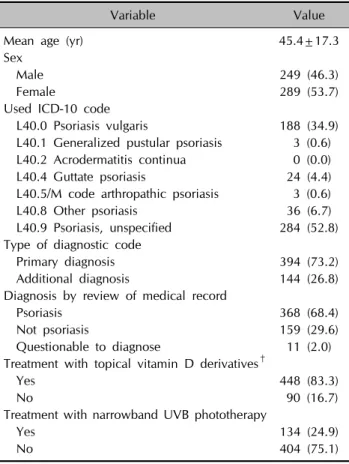
Table 1. Patient demographics and clinical characteristics (n=538)
Variable Value
Mean age (yr) 45.4±17.3
Sex
Male 249 (46.3)
Female 289 (53.7)
Used ICD-10 code
L40.0 Psoriasis vulgaris 188 (34.9)
L40.1 Generalized pustular psoriasis 3 (0.6) L40.2 Acrodermatitis continua 0 (0.0)
L40.4 Guttate psoriasis 24 (4.4)
L40.5/M code arthropathic psoriasis 3 (0.6)
L40.8 Other psoriasis 36 (6.7)
L40.9 Psoriasis, unspecified 284 (52.8) Type of diagnostic code
Primary diagnosis 394 (73.2)
Additional diagnosis 144 (26.8)
Diagnosis by review of medical record
Psoriasis 368 (68.4)
Not psoriasis 159 (29.6)
Questionable to diagnose 11 (2.0)
Treatment with topical vitamin D derivatives†
Yes 448 (83.3)
No 90 (16.7)
Treatment with narrowband UVB phototherapy
Yes 134 (24.9)
No 404 (75.1)
Values are presented as mean±standard deviation or number (%).
ICD-10: International Classification of Diseases, 10th Revision, UVB: ultraviolet B. M code: M07.0 Distal interphalangeal psoriatic arthropathy, M07.1 Arthritis mutilans, M07.2 Psoriatic spondylitis, M07.3 Psoriatic arthropathies, M09.0 Juvenile arthritis in psoria- sis. †Topical vitamin D derivatives: include single and combina- tion agents with topical steroids.
visits with psoriasis as a primary diagnostic code; 4) ≥3 visits with psoriasis as a primary diagnostic code; and 5)
≥1 visits with psoriasis as a primary diagnostic code and prescription of vitamin D derivatives, including single and combination agents with topical steroids.
Statistical analysis
Collected data were analyzed by IBM SPSS Statistics ver.
22.0 (IBM corp., Armonk, NY, USA). A p<0.05 was re- garded as statistically significant. PPV, sensitivity, and spe- cificity were estimated with 95% confidence intervals (CI).
As PPV is the percentage of patients captured by an algo- rithm who actually have the disease of interest, the algo- rithm with higher PPV can more successfully identify whether the patients do or do not have the target dis- ease10,11. Additionally, both sensitivity and specificity are concerned as secondary factors to determine a more val- uable algorithm12.
RESULTS
Characteristics of sampled patients
The sampled data had a total of 3,587 patients who have either a primary or additional psoriasis diagnostic codes.
Randomly selected 538 cases or 15.0% of the whole sam- ple were reviewed. Table 1 shows the characteristics of those sampled patients. The data were comprised of 249 males (46.3%) and 289 females (53.7%). After reviewing the medical record of each patient, we classified 368 pa-
tients (68.4%) as psoriasis; 159 (29.6%) as not psoriasis;
and 11 (2.0%) as questionable to diagnose. The most commonly used diagnostic code was L40.9 ‘psoriasis, un- specified’ as found in the case of 284 patients (52.8%), fol- lowed by L40.0 ‘psoriasis vulgaris’ as in 188 patients (34.9%), and L40.8 ‘other psoriasis’ as in 36 patients (6.7%). A total of 394 patients (73.2%) had psoriasis as a primary diagnostic code, while 144 patients (26.8%) had as additional diagnostic codes. While topical vitamin D derivatives, including single and combination agents, were prescribed to 448 patients (83.3%), only 134 (24.9%) were treated with narrowband UVB phototherapy.
Analysis of algorithms
We assessed the PPV, sensitivity, and specificity of each algorithm and compared one another. Since only 11 pa- tients (2.0%) were classified as questionable to diagnose after the medical chart review, they were excluded from
Table 2. Comparing algorithm of primary diagnostic code with algorithm with both primary and additional diagnostic code
Algorithm PPV %
(95% CI)
Sensitivity % (95% CI)
Specificity % (95% CI)
≥1 visits with diagnostic codes of psoriasis (primary or additional) 69.8 100 -
≥1 visits with psoriasis as a primary diagnostic code 91.0 (87.6~93.6)
96.2 (93.6~97.8)
78.0 (70.6~84.0) Values are presented as percentage. PPV: positive predictive value, CI: confidential interval, -: not available.
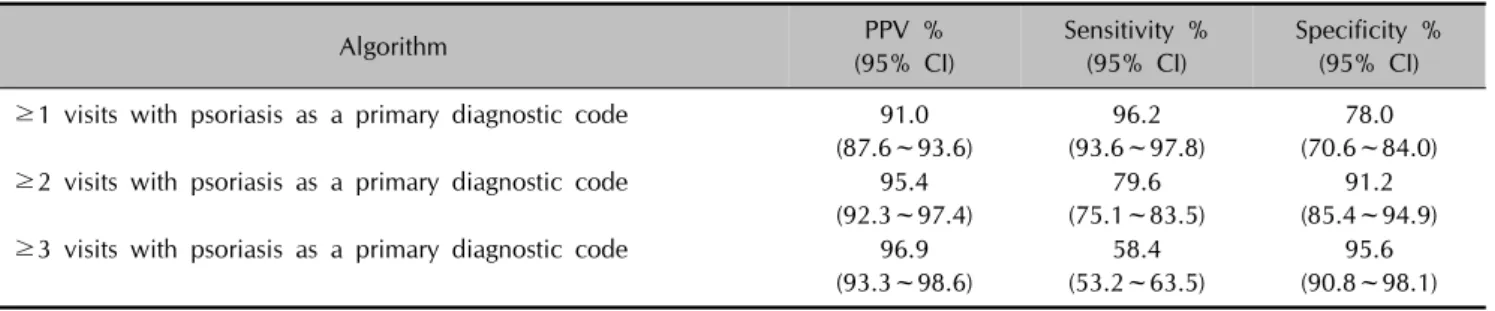
Table 3. Validation of algorithms according to the number of visits with psoriasis as a primary diagnostic code
Algorithm PPV %
(95% CI)
Sensitivity % (95% CI)
Specificity % (95% CI)
≥1 visits with psoriasis as a primary diagnostic code 91.0 (87.6~93.6)
96.2 (93.6~97.8)
78.0 (70.6~84.0)
≥2 visits with psoriasis as a primary diagnostic code 95.4 (92.3~97.4)
79.6 (75.1~83.5)
91.2 (85.4~94.9)
≥3 visits with psoriasis as a primary diagnostic code 96.9 (93.3~98.6)
58.4 (53.2~63.5)
95.6 (90.8~98.1) Values are presented as percentage. PPV: positive predictive value, CI: confidential interval.
Table 4. Validation and comparison of algorithm including prescription data of topical vitamin D derivatives
Algorithm PPV %
(95% CI)
Sensitivity % (95% CI)
Specificity % (95% CI)
≥1 visits with psoriasis as a primary diagnostic code 91.0 (87.6~93.6)
96.2 (93.6~97.8)
78.0 (70.6~84.0)
≥1 visits with psoriasis as a primary diagnostic code and prescription of vitamin D
96.5 (93.9~98.1)
90.8 (87.2~93.4)
92.5 (86.9~95.9) Values are presented as percentage. PPV: positive predictive value, CI: confidential interval, vitamin D: topical vitamin D derivatives including single and combination agents with steroids.
this study. The PPV of the algorithm including the patients with ≥1 visits with psoriasis as a primary diagnostic code was much higher than that of the algorithm, including ≥1 visits with diagnostic codes of psoriasis (primary or addi- tional; 91.0% vs. 69.8%) (Table 2).
The validation results of algorithms by the number of visits with psoriasis as a primary diagnostic code are shown in Table 3. Requiring ≥1 visits with psoriasis as a primary diagnostic code revealed a PPV of 91.0% (95% CI, 87.6~93.6) with sensitivity 96.2% (95% CI, 93.6~97.8) and specificity 78.0% (95% CI, 70.6~84.0). While the PPVs and specificity of the algorithms increased in pro- portion to the number of visits at which psoriasis was a primary diagnostic code, the sensitivity decreased accord- ing to the number of visits. The PPV of the algorithm, in- cluding patients with ≥3 visits with psoriasis as a primary diagnostic code, was 96.9% (95% CI, 93.3~98.6) and the specificity was 95.6% (95% CI, 90.8~98.1), but the sensi- tivity was 58.4% (95% CI, 53.2~63.5).
We also analyzed the algorithms, including the pre- scription of topical vitamin D derivatives as single and combination agents with a topical steroid (Table 4).
Algorithm including patients with ≥1 visits with psoriasis as a primary diagnostic code and prescription of vitamin D derivatives showed higher PPV (96.5%, 95% CI, 93.9~
98.1) with sensitivity 90.8% (95% CI, 87.2~93.4) and specificity 92.5% (95% CI, 86.9~95.9) than the one in- cluding the patients with ≥1 visits with psoriasis as a pri- mary diagnostic code only (91.0%, 95% CI, 87.6~93.6).
DISCUSSION
Nationwide health insurance databases provide pop- ulation-based information of patients and healthcare serv- ices accumulated over a long period of time13. In South Korea, two nationwide databases gathered respectively by NHIS and HIRA provide population-based health in- surance data, which cover almost 98% of the Korean pop-
ulation14-16. However, these databases have some limita- tions. First, as they were not established for medical re- searches, their structures were not explicitly designed to facilitate the identification of prevalence and incidence of a disease. Second, NHIS and HIRA databases have both primary and additional diagnoses along with the pre- scriptions and claims data, which makes it further chal- lenging to identify a particular disease16.
Psoriasis researches using health insurance records are in- creasing around the world. The validation of diagnostic code is very important in the study using this data to re- duce the risk of bias. Several countries, including the USA, Sweden, and the UK, performed studies to validate the algorithms to identify psoriasis patients by using their nationwide databases8,17-20. In the UK, Huerta et al.17 re- ported that the PPV was 82%, when they selected patients who were referred to a specialist or hospitalized; received psoriasis treatment including topical and/or systemic; or was diagnosed with psoriasis one or more times during their research period. In Sweden, Löfvendahl et al.8 re- ported that when based on the data from the Skane Health- care Register, requiring patients with ≥2 diagnostic codes in specialized care could increase the PPV up to 100%.
Seminara et al.18 performed a validation study using Read Codes of the UK’s Health Improvement Network. They va- lidated an algorithm of ≥2 Read Codes of psoriasis in oth- er dates with high PPV (95%) but lower sensitivity (74%) and specificity (67%).
Several nationwide psoriasis studies used the database of NHIS in Korea21. In these studies, researchers identified psoriasis patients by including those who had at least one diagnostic code of psoriasis without validation. However, identifying psoriasis patients in this way can cause bias be- cause many non-psoriasis patients can be included in the study population4,5,21.
In our study, the algorithm, including ≥1 visits with psor- iasis as a primary diagnostic code showed a higher PPV than the one including ≥1 visits with diagnostic codes of psoriasis (primary or additional) (91.0% vs. 69.8%). General- ly, additional diagnosis is considered when the conditions develop or coexist with primary diagnosis and all other disease than primary diagnosis. Therefore, the inclusion of the patients who have psoriasis as an additional diagnostic code can raise the possibility of misclassification. The PPV of an algorithm increased proportionally to the frequency of visits with diagnostic codes of psoriasis, as found sim- ilarly in the Swedish study8. However, the sensitivity de- creased significantly according to the number of visits.
Because some patients visited only 1 or 2 times with psor- iasis diagnostic code during the study period and some patients’ diagnostic code changed from psoriasis to other
diseases during follow-up. It can cause a decrease in sensi- tivity but an increase of specificity.
However, identifying patients with a primary diagnostic code alone still has some potential for misclassification. In other words, even if a patient has received a primary diag- nostic code for psoriasis at the initial visit or follow-ups, the patient can still be false-positive if the diagnosis ren- dered is not final. Icen et al.19 and Ahlehoff et al.22 sug- gested an algorithm of combining the topical vitamin D derivatives prescription data with the diagnostic codes to improve the validity of the data. Our result also showed that the PPV hit the highest (96.5%) when the algorithm included patients of ≥1 visits with psoriasis as a primary diagnostic code and prescription of topical vitamin D derivatives. However, as our study includes the patients diagnosed as psoriasis by dermatology specialists at secon- dary or tertiary hospitals only, the prescription rate of vita- min D derivatives can be higher than the cases in which the patients diagnosed by general physicians, rheumatolo- gists, or dermatologists in primary medical care are included. Therefore, the algorithm, including patients with
≥1 visits with psoriasis as a primary diagnostic code, could be an option for the studies, including general phy- sicians and dermatologists in primary medical care, to in- crease the sensitivity of the algorithm. In our study, the sensitivity of the algorithm, including patients with ≥1 visits with psoriasis as a primary diagnostic code was 96.2%, which was higher than that of the algorithm in- cluded the prescription data of topical vitamin D de- rivatives (90.8%).
Moreover, in our study, patients treated with phototherapy were fewer than we expected (24.9%). Therefore, in- corporating phototherapy into the algorithm may result in a significant loss of actual psoriasis patients, especially those with mild symptoms.
Meanwhile, this study should be read with the following limitations in mind. First, confirmation of psoriasis diag- nosis was based on the review of medical record, which is subject to the uncertainty and bias of retrospective review.
Second, this study used the data from the dermatology de- partment of a general hospital only, which means that the diagnoses rendered by general physicians, rheumatolo- gists, or dermatologists in primary medical care were not considered. Notwithstanding these limitations, however, this study is meaningful in many ways. First, it is the na- tion’s first report on the validity of diagnostic codes used for the identification of psoriasis patients in Korea. Sec- ond, as a multi-centered study using the data from differ- ent cities of the country, it produced a result neutral to the selection bias and geographical differences.
In conclusion, the algorithm, including patients with ≥1
visits with psoriasis as a primary diagnostic code and pre- scription of vitamin D derivatives, is the best-validated al- gorithm to identify psoriasis patients with high PPV (96.5%) and high specificity (92.5%). Furthermore, the al- gorithm including patients with ≥1 visits with primary di- agnostic code of psoriasis, is another option when the study needs higher sensitivity or includes the diagnoses rendered by general physicians, rheumatologists, or der- matologists in primary medical care because it also has relatively high PPV (91.0%) and sensitivity (96.2%). These algorithms can help enhance the credibility of nationwide medical researches on psoriasis, which obtain their data from either NHIS or HIRA database.
CONFLICTS OF INTEREST
The authors have nothing to disclose.
ORCID
Seung Pil Ham, https://orcid.org/0000-0002-4472-2043 Jae Hong Oh, https://orcid.org/0000-0003-3394-860X Hee Jae Park, https://orcid.org/0000-0002-3998-9042 Jong Uk Kim, https://orcid.org/0000-0001-8430-0323 Ho Young Kim, https://orcid.org/0000-0002-1029-3287 So Young Jung, https://orcid.org/0000-0003-0155-5473 Sun Young Choi, https://orcid.org/0000-0003-0248-7708 Jung Eun Seol, https://orcid.org/0000-0002-3029-9635 Hyojin Kim, https://orcid.org/0000-0003-0987-4938 Myoung Shin Kim, https://orcid.org/0000-0002-0660-8098 Un Ha Lee, https://orcid.org/0000-0003-1626-5583 Mira Choi, https://orcid.org/0000-0003-2464-9675 Hai-Jin Park, https://orcid.org/0000-0002-9274-9371
REFERENCES
1. Parisi R, Symmons DP, Griffiths CE, Ashcroft DM; Identi- fication and Management of Psoriasis and Associated Com- orbidiTy (IMPACT) Project Team. Global epidemiology of psoriasis: a systematic review of incidence and prevalence.
J Invest Dermatol 2013;133:377-385.
2. Wilchesky M, Tamblyn RM, Huang A. Validation of diag- nostic codes within medical services claims. J Clin Epide- miol 2004;57:131-141.
3. Kim ES, Han K, Kim MK, Park YM, Baek KH, Moon SD, et al. Impact of metabolic status on the incidence of psoriasis:
a Korean nationwide cohort study. Sci Rep 2017;7:1989.
4. Han JH, Lee JH, Han KD, Seo HM, Bang CH, Park YM, et al. Epidemiology and medication trends in patients with psoriasis: a nationwide population-based cohort study from Korea. Acta Derm Venereol 2018;98:396-400.
5. Lee JY, Kang S, Park JS, Jo SJ. Prevalence of psoriasis in
Korea: a population-based epidemiological study using the Korean National Health Insurance Database. Ann Dermatol 2017;29:761-767.
6. Park BJ, Suh SW, Sung JH, Park GD, Kim SH. Improvement plan for validity of health insurance disease code and esta- blishment of data application plan. Seoul: Health Insurance Review Agency Research Service, 2003.
7. Lee MS, Yeh YC, Chang YT, Lai MS. All-cause and cause-specific mortality in patients with psoriasis in Taiwan:
a nationwide population-based study. J Invest Dermatol 2017;137:1468-1473.
8. Löfvendahl S, Theander E, Svensson Å, Carlsson KS, Englund M, Petersson IF. Validity of diagnostic codes and prevalence of physician-diagnosed psoriasis and psoriatic arthritis in southern Sweden--a population-based register study. PLoS One 2014;9:e98024.
9. Ahlehoff O, Gislason GH, Jørgensen CH, Lindhardsen J, Charlot M, Olesen JB, et al. Psoriasis and risk of atrial fibrillation and ischaemic stroke: a Danish nationwide co- hort study. Eur Heart J 2012;33:2054-2064.
10. Trevethan R. Sensitivity, specificity, and predictive values:
foundations, pliabilities, and pitfalls in research and prac- tice. Front Public Health 2017;5:307.
11. Parikh R, Mathai A, Parikh S, Chandra Sekhar G, Thomas R.
Understanding and using sensitivity, specificity and predic- tive values. Indian J Ophthalmol 2008;56:45-50.
12. Hawass NE. Comparing the sensitivities and specificities of two diagnostic procedures performed on the same group of patients. Br J Radiol 1997;70:360-366.
13. Raghupathi W, Raghupathi V. Big data analytics in health- care: promise and potential. Health Inf Sci Syst 2014;2:3.
14. Kim JA, Yoon S, Kim LY, Kim DS. Towards actualizing the value potential of Korea Health Insurance Review and Assessment (HIRA) data as a resource for health research:
strengths, limitations, applications, and strategies for optimal use of HIRA data. J Korean Med Sci 2017;32:718-728.
15. Kim L, Kim JA, Kim S. A guide for the utilization of Health Insurance Review and Assessment service national patient samples. Epidemiol Health 2014;36:e2014008.
16. Cheol Seong S, Kim YY, Khang YH, Heon Park J, Kang HJ, Lee H, et al. Data resource profile: the national health information database of the National Health Insurance Service in South Korea. Int J Epidemiol 2017;46:799-800.
17. Huerta C, Rivero E, Rodríguez LA. Incidence and risk factors for psoriasis in the general population. Arch Derma- tol 2007;143:1559-1565.
18. Seminara NM, Abuabara K, Shin DB, Langan SM, Kimmel SE, Margolis D, et al. Validity of The Health Improvement Network (THIN) for the study of psoriasis. Br J Dermatol 2011;164:602-609.
19. Icen M, Crowson CS, McEvoy MT, Gabriel SE, Maradit Kremers H. Potential misclassification of patients with pso- riasis in electronic databases. J Am Acad Dermatol 2008;59:
981-985.
20. Asgari MM, Wu JJ, Gelfand JM, Salman C, Curtis JR, Har- rold LR, et al. Validity of diagnostic codes and prevalence of psoriasis and psoriatic arthritis in a managed care pop-
ulation, 1996-2009. Pharmacoepidemiol Drug Saf 2013;22:
842-849.
21. Oh EH, Ro YS, Kim JE. Epidemiology and cardiovascular comorbidities in patients with psoriasis: a Korean nation- wide population-based cohort study. J Dermatol 2017;44:
621-629.
22. Ahlehoff O, Gislason GH, Charlot M, Jørgensen CH, Lindhardsen J, Olesen JB, et al. Psoriasis is associated with clinically significant cardiovascular risk: a Danish nation- wide cohort study. J Intern Med 2011;270:147-157.