http://dx.doi.org/10.5534/wjmh.2013.31.1.64
Original Article
Received: Jan 15, 2013; Revised: (1st) Jan 15, 2013, (2nd) Feb 6, 2013; Accepted: Feb 18, 2013 Correspondence to: Kyung Seop Lee
Department of Urology, College of Medicine, Dongguk University, 123 Dongdae-ro, Gyeongju 780-714, Korea Tel: +82-54-770-8266, Fax: +82-54-770-8378, E-mail: [email protected]
Copyright © 2013 Korean Society for Sexual Medicine and Andrology
This is an Open Access article distributed under the terms of the Creative Commons Attribution Non-Commercial License (http://creativecommons.
org/licenses/by-nc/3.0) which permits unrestricted non-commercial use, distribution, and reproduction in any medium, provided the original work is properly cited.
Effect of Transurethral Resection of the Prostate on Storage Symptoms in Patients with Benign Prostatic Hyperplasia of Less than 30 ml
Yu Jin Kang, Ki Ho Kim, Youngjin Seo, Kyung Seop Lee
Department of Urology, College of Medicine, Dongguk University, Gyeongju, Korea
Purpose: Many patients with benign prostatic hyperplasia (BPH) have not only voiding symptoms but also storage symptoms.
Despite the many types of treatment that have been developed for BPH, storage symptoms persist. We conducted an assessment of the efficacy of transurethral resection of the prostate (TURP) and the change in the International Prostate Symptoms Score (IPSS) storage sub-score after the procedure according to prostate size in patients with BPH.
Materials and Methods: Men aged 50 years or older who had BPH were enrolled in this study. 186 patients were divided into two groups according to prostate size measuring using transrectal ultrasonography: In group 1, prostate size was less than 30 ml (51 patients), and in group 2, prostate size was greater than 30 ml (135 patients). All of the patients underwent TURP. We examined whether the degree of change in the IPSS, voiding symptoms, storage symptoms, and quality of life (QoL) differed before and after TURP and according to prostate size.
Results: After three months of TURP, the subjects in both groups showed significant improvement in the IPSS, voiding symptoms, storage symptoms, QoL, and maximum flow rate (p<0.05). The scores for the IPSS, voiding symptoms, storage symptoms, and QoL of group 1 and 2 after three months of TURP were 16.36, 14.25 (p=0.233), 8.21, 8.24 (p=0.980), 8.11, 5.16 (p=0.014), 2.89, and 2.10 (p=0.030), respectively.
Conclusions: TURP is an effective treatment for patients with BPH, regardless of prostate size. However, while the improvement in the storage symptoms of patients with a prostate size of less than 30 ml was not significant, it was in patients with a prostate size greater than 30 ml.
Key Words: Transurethral resection of prostate; Prostatic hyperplasia; Lower urinary tract symptoms
INTRODUCTION
Benign prostatic hyperplasia (BPH) is a disease that causes bladder outlet obstruction (BOO) resulting from functional obstruction due to an increase in the size of the
prostate gland. Current pharmacological treatments for BPH include α1-receptor antagonist and 5-α reductase inhibitors. In surgical treatment for BPH, transurethral re- section of the prostate (TURP) is now considered the gold standard for treatment of BPH. Lower urinary tract symp-
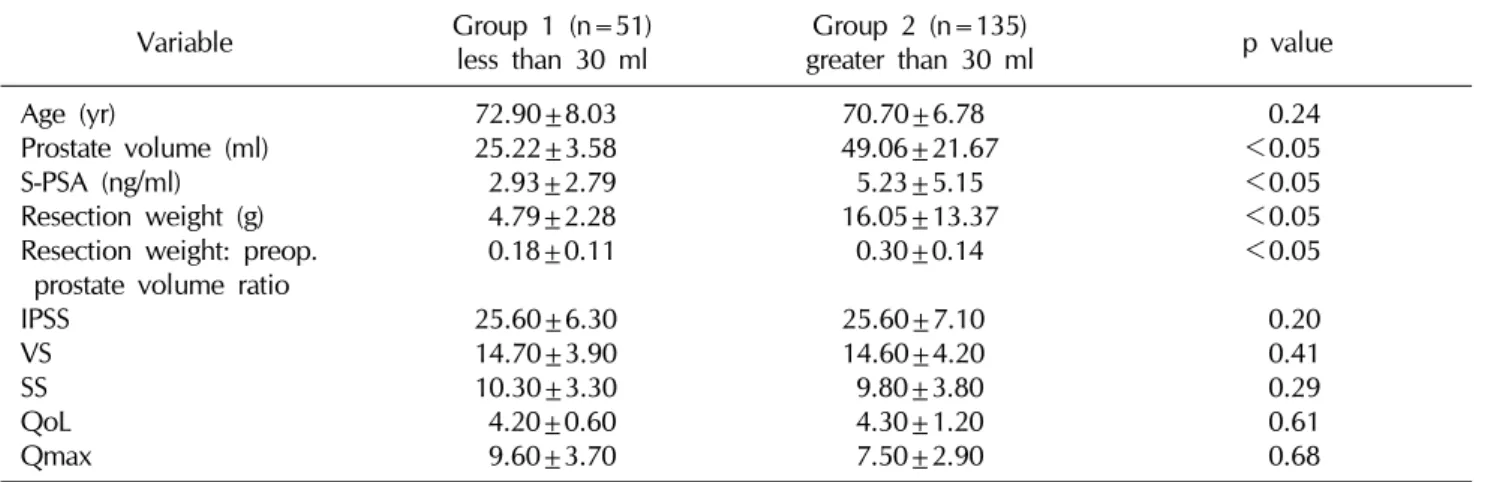
Table 1. Baseline clinical characteristics of each group
Variable Group 1 (n=51)
less than 30 ml Group 2 (n=135)
greater than 30 ml p value
Age (yr)
Prostate volume (ml) S-PSA (ng/ml) Resection weight (g) Resection weight: preop.
prostate volume ratio IPSS
VS SS QoL Qmax
72.90±8.03 25.22±3.58 2.93±2.79 4.79±2.28 0.18±0.11 25.60±6.30 14.70±3.90 10.30±3.30 4.20±0.60 9.60±3.70
70.70±6.78 49.06±21.67
5.23±5.15 16.05±13.37
0.30±0.14 25.60±7.10 14.60±4.20 9.80±3.80 4.30±1.20 7.50±2.90
0.24
<0.05
<0.05
<0.05
<0.05 0.20 0.41 0.29 0.61 0.68
S-PSA: serum prostate-specific antigen, Preop.: preoperative, IPSS: International Prostate Symptoms Score, VS: voiding symptoms, SS: storage symptoms, QoL: quality of life, Qmax: maximum flow rate.
toms (LUTS) of BPH can be classified into voiding symp- toms and storage symptoms. Many pharmacological treat- ments and surgical treatments have focused on alleviation of voiding symptoms. However, as reported by Irwin et al,1 among LUTS, storage symptoms are more common than voiding symptoms, and are known to have a more sig- nificant effect on quality of life (QoL).2,3 Alleviation of stor- age symptoms after pharmacological and surgical treat- ments of patients with BPH is an important issue. The aim of this study was to conduct a retrospective evaluation of the change in the International Prostate Symptoms Score (IPSS) storage sub-score after TURP in patients with BPH according to prostate size.
MATERIALS AND METHODS
The current study was a single center, retrospective analysis; it was approved by the institutional review board of our medical institution. We retrospectively enrolled 186 patients with LUTS secondary to BPH who were treat- ed from January 2008 to December 2011. Patients with LUTS (IPSS≥8 points), aged ≥50 years, who were treated with mono-polar TURP due to recurrent urinary retention, recurrent urinary tract infection, or hematuria, and who wanted to undergo surgery were enrolled in this study.
Evaluations 3 months postoperatively included clinical determination of completion of the IPSS questionnaire, QoL index, serum prostate-specific antigen (S-PSA) meas- urement, maximum flow rate (Qmax), postvoid residual
urine (PVR), and transrectal ultrasonography (TRUS). The IPSS was divided into two subgroups, voiding symptoms and storage symptoms. A TRUS-guided 10- or 12-core bi- opsy was recommended for patients whose S-PSA level was elevated by more than 4 ng/ml. Patients who had con- firmed prostate cancer, urethral stricture, or another pre- vious surgical intervention related to BPH including TURP and laser surgery, were excluded.
The patients were divided preoperatively into two groups according to prostate size. Group 1 was classified as having a prostate size less than 30 ml, and group 2 as having a prostate size greater than 30 ml. We compared the two groups preoperatively and three months postoperatively.
The Student’s t-test and paired t-test were used to assess the prognostic significance of the variables; statistical soft- ware SPSS version 19 for Windows (IBM Co., Armonk, NY, USA) was used in performance of all of the statistical analyses and a p value <0.05 was considered statistically significant.
RESULTS
Of the 186 patients, 51 (27.4%) patients had a prostate volume less than 30 ml (group 1) and 135 (72.6%) patients had a prostate volume greater than 30 ml (group 2). The age of the subjects in each group (groups 1 and 2) were 72.90±8.03 yr (50∼90 yr) and 70.70±6.78 yr (53∼85 yr); prostate volume, 25.22±3.58 ml (14∼29 ml) and
Table 2. Comparison of IPSS, VS, SS, QoL, and Qmax of each group, before and after TURP
Variable Group 1 (n=51) less than 30 ml Group 2 (n=135) greater than 30 ml
Preop. Postop. p value Preop. Postop. p value
IPSS VS SS QoL Qmax
25.6±6.3 14.7±3.9 10.3±3.3 4.2±0.6 9.6±3.7
16.4±6.4 8.2±3.7 8.1±3.8 2.9±0.9 17.8±6.9
<0.001
<0.001
<0.001
<0.001
<0.001
25.6±7.1 14.6±4.2 9.8±3.8 4.3±1.2 7.5±2.9
14.4±7.3 8.2±4.9 5.8±3.2 2.1±1.5 14.2±5.0
<0.001
<0.001
<0.001
<0.001
<0.001 IPSS: International Prostate Symptoms Score, VS: voiding symptoms, SS: storage symptoms, QoL: quality of life, TURP:
transurethral resection of the prostate, Preop.: preoperative, Postop.: postoperative.
Table 3. Comparison of IPSS, VS, SS, and QoL of each group, after three months of TURP
Variable Group 1 (n=51) less than 30 ml Group 2 (n=135) greater than 30 ml p value Postop. IPSS
Postop. VS Postop. SS Postop. QoL
16.4±6.4 8.2±3.7 8.1±3.8 2.9±0.9
14.4±7.3 8.2±4.9 5.8±3.2 2.1±1.5
0.233 0.980 0.014 0.030 IPSS: International Prostate Symptoms Score, VS: voiding symptoms, SS: storage symptoms, QoL: quality of life, TURP:
transurethral resection of the prostate, Postop.: postoperative 49.06±21.67 ml (30∼140 ml); S-PSA, 2.93±2.79 ng/ml (0.24∼10.01 ng/ml) and 5.23±5.15 ng/ml (0.19∼35.36 ng/ml); resection weight, 4.79±2.28 g (2∼16 g) and 16.05±13.37 g (2∼90 g), respectively (Table 1). In group 1, the IPSS values before and after TURP were 25.6±6.3 and 16.4±6.4 (p<0.05); voiding symptoms, 14.7±3.9 and 8.2±3.7 (p<0.05); storage symptoms, 10.3±3.3 and 8.1±3.8 (p<0.05); QoL, 4.2±0.6 and 2.9±0.9 (p
<0.05), and Qmax, 9.6±3.7 and 17.8±6.9 (p<0.05), respectively. In group 2, the IPSS values before and after TURP were 25.6±7.1 and 14.4±7.3 (p<0.05); voiding symptoms, 14.6±4.2 and 8.2±4.9 (p<0.05); storage symptoms, 9.8±3.8 and 5.8±3.2 (p<0.05); QoL, 4.3±1.2 and 2.1±1.5 (p<0.05); and Qmax 7.5±2.9 and 14.2±5.0 (p<0.05) (Table 2). After three months of TURP, the IPSS values were 16.4±6.4 and 14.4±7.3 (p=0.233); voiding symptoms, 8.2±3.7 and 8.2±4.9 (p=0.980); storage symptoms, 8.1±3.8 and 5.8±3.2 (p
<0.014); and QoL 2.9±0.9 and 2.1±1.5 (p=0.030) in groups 1 and 2, respectively (Table 3).
With the results above, in BPH patients with prostates less than 30 ml in size, the IPSS, voiding symptoms, storage symptoms, and QoL were significantly improved after three months of TURP. For the storage symptoms and QoL,
however, the amount of improvement was not as great as that of patients with prostates greater than 30 ml in size.
DISCUSSION
BPH is a pathologic condition that contributes to, but is not the sole cause of, LUTS in aging men. It is also assumed that BOO results in bladder dysfunction leading to LUTS, impaired bladder emptying (e.g. postvoid residual urine), and urinary tract infection.4 In men older than 85 years, the prevalence of BPH increases from approximately 50%
at 60 years to 90%, and its prevalence has also shown a re- cent increase in Korea.5
The aims of treatment of BPH include the following: al- leviation of LUTS, elimination of hematuria secondary to BPH, improvement of bladder emptying, prevention of progression of LUTS, relief of acute urinary retention (AUR), and prevention of development of AUR.4
Over the past two decades, pharmacological treatment, including α1-receptor antagonists and 5-α reductase in- hibitors, has been the standard first-line treatment for BPH.6 α1-receptor antagonists are the most commonly used first line medication for treatment of BPH, and an im- provement of approximately 30∼45% in the IPSS total
score has been reported.7
The effectiveness of pharmacological treatment is well known. However, surgical treatment for BPH is still required. For patients with very bothersome symptoms who may wish to pursue the most effective treatment as a primary treatment, pharmacological treatments may not be viewed as a requirement.
Many types of minimally invasive treatments, such as laser surgery, have been introduced; however, the safety and efficacy of these other methods are controversial, compared to TURP. Despite advancements in techniques for performance of minimally invasive surgical proce- dures, TURP remains the gold standard surgical inter- vention for treatment of BPH.8 Techniques for perform- ance of TURP, including bipolar electrodes and improve- ment of the camera system, have been developed, and have resulted in decreased complication of the TURP procedure. According to a number of reports, the chance for improvement of a patients’ symptoms after TURP was a mean of 88% with a 70∼96% confidence interval. This was significantly better than the outcomes of other mini- mally invasive procedures. Jang et al9 reported that, de- spite the availability of other treatment modalities for BPH, the annual number of TURP procedures performed for treatment of BPH increased during the mid 2000s.
According to one study, following up on IPSS, after six years of TURP, the average decrease in IPSS was 14 points, representing a 67% reduction in symptoms.10 Surgical in- dications of BPH are still recommended under certain conditions, including the presence of refractory urinary re- tention, recurrent infection, recurrent hematuria, and azo- temia secondary to BPH.11 BPH patients with more severe IPSS (≥17) and a larger prostate volume (>40 ml) have a higher risk of having to undergo surgical treatment, sug- gesting that the IPSS and prostate volume may be useful predictors at the initial visit for surgical treatment.12 The extent of LUTS is typically assessed by symptoms as measured by the IPSS. The IPSS is a popular method for as- sessment of symptoms before and after treatment. The IPSS is subdivided into voiding and storage sub-scores.13 Notably, as four of the seven questions belong to the void- ing sub-score, the IPSS is somewhat biased toward voiding symptoms. Although the pathological link between BPH and associated obstruction and LUTS mainly implies the
presence of voiding symptoms, storage symptoms are also common.14
Although BPH is not a fatal disease, it is a bothersome condition influencing QoL. In general, treatments for BPH, such as surgical treatment, like TURP, or laser treat- ment and pharmacological treatment, like α1-receptor antagonists or 5-α reductase inhibitors, are focused on al- leviation of voiding symptoms. Even after alleviation of voiding symptoms by pharmacological and surgical treat- ment, storage symptoms remain in approximately 30% of cases.15-17 The storage symptoms that patients with BPH complain of are closely associated with the detrusor mus- cle as a secondary change to BOO. Several morphologic and functional modifications of the bladder detrusor have been described in patients with BPH and could play a di- rect role in determining symptoms.18 Therefore, use of sur- gical treatments such as TURP can result in reduction of BOO, leading to improvement of storage symptoms.
After long-term pharmacological treatment for BPH and TURP, the IPSS showed improvement, not only of voiding symptoms, but also storage symptoms. However, many patients experience storage symptoms predominantly.
The impact of LUTS on patients with BPH is directly re- lated to their QoL, and most troublesome are storage symptoms such as urgency, frequency, and nocturia. In a study conducted in Japan, urgency was the strongest QoL determinant in Japanese patients awaiting prostatic sur- gery after failure of conservative management, such as watchful waiting and α-adrenoreceptor antagonists.19 We observed significant improvement in the mean change not only in voiding symptoms but also storage symptoms after TURP in the two groups. However, those with a small prostate of less than 30 ml did not show sig- nificantly improved storage symptoms, while those with a prostate greater than 30 ml did. The QoL score also did not show significant improvement in prostates with a size less than 30 ml compared to a prostate greater than 30 ml.
Hakenberg et al20 reported that, in TURP, early im- provement of symptoms after TURP will depend on the amount of tissue removed during resection, and sympto- matic improvement after TURP is not primarily dependent on the relative completeness of resection. In addition, in TURP for patients with a large prostate, the volume of the removed prostate tissue is larger, leading to significant
symptomatic improvement after TURP, by creating a wid- er bladder outlet.
Chen et al21 reported on the prostate weight ratio, be- fore and after TURP; the smaller residual prostate weight ratio showed a better clinical outcome. Therefore, in pa- tients with a large prostate, increasing the volume of the prostate tissue removed by TURP can result in sympto- matic improvement after TURP. However, in this study, TURP showed no better postoperative symptomatic im- provement in patients with a small prostate, particularly in storage symptoms. Improvement of LUTS results from not only volume reduction of the prostate, but also destruction of the α1 sympathetic receptor, which is spread on the prostate stroma.22 In a small prostate, not only the smaller volume having been removed after TURP, but also the lesser effect of destruction of the α1 sympathetic re- ceptor, leads to less symptomatic improvement.23 Even if surgical treatment includes TURP, storage symptoms per- sist after TURP when the prostate is small. In addition, stor- age symptoms played a greater role in QoL irrespective of the form of treatment. If necessary, a preoperative urody- namic study will aid in decision making with regard to sur- gical treatment. Therefore, it is thought that, prior to TURP, patients, with a small prostate should be informed that storage symptoms might not be sufficiently improved after the operation.
The limitations of this study include the lack of a suffi- cient number of cases, and not performing a preoperative urodynamic study, but research on more cases and urody- namic studies will be presented later.
CONCLUSIONS
TURP is an effective treatment for patients with BPH re- gardless of prostate size. However, although in this study, the storage symptoms of patients with a prostate size of less than 30 ml had significantly improved after surgery, they improved less than those of patients with a prostate size greater than 30 ml. Therefore, it is thought that, prior to TURP, patients with a small prostate should be in- formed that storage symptoms might not be sufficiently improved after the operation.
REFERENCES
1. Irwin DE, Milsom I, Hunskaar S, Reilly K, Kopp Z, Herschorn S, et al. Population-based survey of urinary in- continence, overactive bladder, and other lower urinary tract symptoms in five countries: results of the EPIC study.
Eur Urol 2006;50:1306-14
2. Djavan B. Lower urinary tract symptoms/benign prostatic hyperplasia: fast control of the patient's quality of life.
Urology 2003;62(3 Suppl 1):6-14
3. Roehrborn CG. Current medical therapies for men with lower urinary tract symptoms and benign prostatic hyper- plasia: achievements and limitations. Rev Urol 2008;10:
14-25
4. Lepor H, Kazzazi A, Djavan B. α-Blockers for benign pro- static hyperplasia: the new era. Curr Opin Urol 2012;22:
7-15.
5. Wasserman NF. Benign prostatic hyperplasia: a review and ultrasound classification. Radiol Clin North Am 2006;44:
689-710
6. McConnell JD, Roehrborn CG, Bautista OM, Andriole GL Jr, Dixon CM, Kusek JW, et al; Medical Therapy of Prostatic Symptoms (MTOPS) Research Group. The long-term effect of doxazosin, finasteride, and combination therapy on the clinical progression of benign prostatic hyperplasia. N Engl J Med 2003;349:2387-98
7. Oelke M, Bachmann A, Descazeaud A, Emberton M, Gravas S, Michel MC, et al. Guidelines on the management of male lower urinary tract symptoms (LUTS), incl. benign prostatic obstruction (BPO). Arnhem: European Association of Urology; 2012
8. Reich O, Gratzke C, Stief CG. Techniques and long-term re- sults of surgical procedures for BPH. Eur Urol 2006;49:
970-8
9. Jang DG, Yoo C, Oh CY, Kim SJ, Kim SI, Kim CI, et al.
Current status of transurethral prostatectomy: a Korean mul- ticenter study. Korean J Urol 2011;52:406-9
10. Kallenberg F, Hossack TA, Woo HH. Long-term followup after electrocautery transurethral resection of the prostate for benign prostatic hyperplasia. Adv Urol 2011;2011:
359478
11. Fitzpatrick JM. Minimally invasive and endoscopic manage- ment of benign prostatic hyperplasia. In: Wein AJ, Kavoussi LB, Partin AW, Novick AC, Peters CA, editors. Campbell- Walsh urology. 10th ed. Philadelphia: Saunders; 2012;
2655-94
12. Lee KS, Kim ME, Kim SJ, Kim HK, Kim HS, Kim CI, et al. Pre- dictive factors of the long-term medical treatment failure in benign prostatic hyperplasia. Korean J Urol 2008;49:826-30 13. Welch G, Kawachi I, Barry MJ, Giovannucci E, Colditz GA,
Willett WC. Distinction between symptoms of voiding and filling in benign prostatic hyperplasia: findings from the Health Professionals Follow-up Study. Urology 1998;51:
422-7
14. Kaplan SA, Roehrborn CG, Chapple CR, Rosen RC, Irwin
DE, Kopp Z, et al. Implications of recent epidemiology stud- ies for the clinical management of lower urinary tract symptoms. BJU Int 2009;103 Suppl 3:48-57
15. Abrams PH, Farrar DJ, Turner-Warwick RT, Whiteside CG, Feneley RC. The results of prostatectomy: a symptomatic and urodynamic analysis of 152 patients. J Urol 1979;121:
640-2
16. Kakizaki H, Machino R, Koyanagi T. Clinical experience in lower urinary tract symptoms. BJU Int 2001;88 Suppl 2:23-6 17. Seaman EK, Jacobs BZ, Blaivas JG, Kaplan SA. Persistence or
recurrence of symptoms after transurethral resection of the prostate: a urodynamic assessment. J Urol 1994;152:935-7 18. Mirone V, Imbimbo C, Longo N, Fusco F. The detrusor
muscle: an innocent victim of bladder outlet obstruction.
Eur Urol 2007;51:57-66
19. Yoshimura K, Arai Y, Ichioka K, Terada N, Matsuta Y, Okubo K. Symptom-specific quality of life in patients with
benign prostatic hyperplasia. Int J Urol 2002;9:485-90 20. Hakenberg OW, Helke C, Manseck A, Wirth MP. Is there a
relationship between the amount of tissue removed at tran- surethral resection of the prostate and clinical improvement in benign prostatic hyperplasia. Eur Urol 2001;39:412-7 21. Chen SS, Hong JG, Hsiao YJ, Chang LS. The correlation be-
tween clinical outcome and residual prostatic weight ratio after transurethral resection of the prostate for benign pro- static hyperplasia. BJU Int 2000;85:79-82
22. Kobayashi S, Tang R, Shapiro E, Lepor H. Characterization and localization of prostatic alpha 1 adrenoceptors using ra- dioligand receptor binding on slide-mounted tissue section.
J Urol 1993;150:2002-6
23. Oh CS, Choi KY, Park RJ. Relationship between the amount of tissue removed at transurethral resection of the prostate and clinical improvement in benign prostate hyperplasia.
Korean J Urol 2003;44:866-70