J Cerebrovasc Endovasc Neurosurg.
2020 September;22(3):127-133
Received: 7 April 2020 Revised: 30 May 2020 Accepted: 1 June 2020
Correspondence to Yong Cheol Lim
Department of Neurosurgery, Ajou University School of Medicine, Ajou University Hospital, 164 World cup-ro, Yeongtong-gu, Suwon 16499, Korea
Tel +82-31-219-5230 Fax +82-31-219-5238 E-mail [email protected]
ORCID http://orcid.org/0000-0002-5719-2483
Original Article
Clinical analysis of young adult patients with ruptured intracranial aneurysms: a single-center study of 113 consecutive patients
Won Jae Lee, Mi Kyung Kim, Yong Cheol Lim
Department of Neurosurgery, Ajou School of Medicine, Ajou University Hospital, Suwon, Korea
Objective: Intracranial aneurysm most frequently occurs in old aged patients; how- ever, aneurysmal subarachnoid hemorrhage (SAH) has been occasionally reported in young adults. This study aimed to compare patients with intracranial aneurysms younger than 40 years with those ≥40 years and investigates the characteristics of their ruptured aneurysm.
Methods: We retrospectively collected the data of 389 patients (103 patients aged 20 to 39 years; 286 patients aged above 40 years) who were treated for ruptured cerebral aneurysms between January 2008 and December 2018 at our institution.
Results: The young adult patients were more often men and were smokers as com- pared to controls (63.1% vs. 39.2%, 40.5% vs. 36.0%, respectively). The young adult patients showed a tendency for lower Hunt and Hess grade, modified Fisher grade, less postoperative morbidity, and better clinical outcome. Aneurysm ruptures oc- curred most frequently in the anterior cerebral artery in both groups, but aneurysms ruptures in the internal carotid artery and posterior circulation was infrequent among young adult patients. The aneurysms in young adult patients were more often elon- gated or irregularly shaped (82.5% vs. 64.0%, respectively) and were significantly smaller (5.9 mm) than that in controls (6.8 mm).
Conclusions: Ruptured aneurysms of young adult patients have unique character- istics with regard to its preponderance in male smoker, elongated or irregular shape and relatively smaller size.
Keywords Adult, Aneurysm, Ruptured intracranial aneurysm, Subarachnoid hemorrhage
This is an Open Access article distributed under the terms of the Creative Commons Attribution Non-Commercial License (http://creativecommons.org/licenses/
by-nc/3.0/) which permits unrestricted noncommercial use, distribution, and reproduction in any medium, provided the original work is properly cited.
INTRODUCTION
Intracranial aneurysms most frequently occur in old aged patients.12) This tendency suggests that hemodynamic stress in the intracranial vasculatures is a causative factor
of the intracranial aneurysm formation and rupture in adults. However, rupture of aneurysms has been occa- sionally reported in patients younger than 40 years. The incidence of aneurysm rupture in patients younger than 40 years is 10-20% of all patients with ruptured aneu- rysm.2)12)19) Studies have reported the characteristics of ruptured aneurysms in the general population; however, studies on young adult patients are limited.8)21)27) We hy- pothesized that ruptured aneurysms in patients younger than 40 years may have unique characteristics associated with rupture, unlike those in patients aged more than 40 years, such as atherosclerosis, hypertension, etc. To in- vestigate the nature of these features, we aimed to com- pare between the characteristics of ruptured intracranial aneurysms in patients younger than 40 years and those in patients ≥40 years.
MATERIALS AND METHODS
We collected the data retrospectively from the medical records of 956 patients treated for ruptured intracranial aneurysms between January 2008 and December 2018 at our institution. Among them, 113 (11.8%) patients aged 20 to 39 years were selected as cases and 307 patients aged above 40 years were randomly selected as controls.
Seven patients with blister aneurysm and 24 patients with ruptured dissection were excluded because of diffi- culty in measuring the size of the aneurysm; eventually, 389 patients with saccular aneurysms were included for further analyses. The study cohort consisted of hospi- talized patients, and thus, cases of sudden death due to subarachnoid hemorrhage (SAH) were excluded from the analyses. The study was conducted with the ap- proval of our institutional review board (AJIRB-MED- MDB-18-433), and informed consent was obtained from each patient or their family.
The following data were collected for each patient: age, sex, body mass index (BMI), social history (smoking), medical history (hypertension/coronary artery occlusive disease/heart failure, diabetes mellitus, renal failure, and systemic lupus erythematosus), familial history of
cerebrovascular disease, initial systolic blood pressure, Hunt and Hess grade (HHG), modified Fisher grade, type of therapy, and radiologic characteristics of aneu- rysms (location, multiplicity, morphology, and size).
The morphology of intracranial aneurysms had been evaluated using a multi-detector computed tomography angiography (Brilliance; Philips Healthcare, Amsterdam, Netherlands) and three-dimensional digital subtraction angiography (Allura Xper FD20/10; Philips Healthcare, Amsterdam, Netherlands). The aneurysm size was de- fined as the broadest dimension on three-dimensional view.
The patients underwent endovascular procedure or aneurysm clipping. The endovascular procedures were performed under general anesthesia.
The clinical outcome for each patient was evaluated by measuring Glasgow Outcome Scale (GOS) score at dis- charge.
Statistical analyses
All statistical analyses were performed using IBM SPSS Statistics version 19 (IBM Corp., Armonk, NY, USA).
Categorical variables are expressed as proportions, and continuous variables are expressed as means and stan- dard deviations. Age differences were assessed using the Student’s t test for parametric variables, and using the Wilcoxon rank-sum test for nonparametric variables.
The study groups were analyzed using the χ2 test or Fisher’s exact test for cross-tabulation. The results of all statistical tests are reported with a 5% level of significance.
RESULTS
Clinical characteristics
Table 1 shows the clinical characteristics of patients with ruptured intracranial aneurysms.
One hundred and three (26.5%) patients were aged 20 to 39 years. The median age was 50 (range, 22-89) years and 177 (45.5%) patients were men. The mean BMI was 23.6 (13.3-35.9) kg/m2, and 153 (39.3%) of the patients were smokers.
One hundred and eight (27.8%) patients had SAH of HHG IV–V and 130 (33.4%) had SAH of modified Fischer grade IV.
Among all cases examined, 188 (48.3%) underwent endovascular coiling and 201 (51.7%) underwent surgical clipping.
One hundred and twenty-three (31.6%) patients showed
poor clinical outcomes on the GOS with scores below 3.
Ninety-seven (24.9%) patients experienced post- operative morbidity; hydrocephalus that required surgical treatment (n=51), severe brain swelling or va- sospasm-induced infarction that required surgical de- compression (n=25), central nervous system infections (n=1), intraprocedural thrombosis/unintended vessel occlusion (n=2), rebleeding (n=1), and other medical problems (e.g., pneumonia, sepsis, acute kidney injury) (n=17).
Radiologic characteristics
Table 2 shows the radiologic characteristics of patients with ruptured intracranial aneurysms.
The most commonly affected artery was the anterior cerebral artery (ACA) (n=169; 43.4%), followed by the internal carotid artery (ICA) (n=102; 26.2%), middle cerebral artery (MCA) (n=98; 25.2%), and posterior cir- culation (n=20; 5.1%). ACA aneurysms included aneu- rysms originating in the proximal ACA (n=4), anterior communicating artery (n=151), and distal ACA (n=14).
ICA aneurysms included aneurysms originating in the ICA bifurcation (n=5), anterior choroidal artery (n=20), posterior communicating artery (n=73) and paraclinoid ICA (n=4).
Fifty-three (13.6%) patients had at least two intracra- nial aneurysms.
Table 1. Demographics and characteristics of patients
Variables Value
Number of aneurysms 389
Number of young-aged patients 103 (26.5)
Median age (years) (range) 50 (22-89)
Sex (male:female) 177:212
BMI (kg/m2) (mean±SD) 23.6±3.4 (13.3-35.9)
Smoking 153 (39.3)
Medical history
Hypertension/CAOD/Heart failure 120 (30.8)
Diabetes mellitus 23 (5.9)
Renal failure 3 (0.8)
Systemic lupus erythematosus 2 (0.5)
Familial history 31 (8.0)
Initial SBP (mmHg) (mean±SD) 151.7±29.9 Hunt and Hess grade
I–III 281 (72.3)
IV–V 108 (27.8)
Modified Fisher grade
I 59 (15.2)
II–III 200 (51.4)
IV 130 (33.4)
Treatment
Coil 188 (48.3)
Clip 201 (51.7)
Glasgow Outcome Scale ≤3 123 (31.6)
Mortality 18 (4.6)
Morbidity 97 (24.9)
Hydrocephalus 51
Severe brain swelling/infarction 25
CNS infection 1
Intraprocedural thrombosis/unintended
vessel occlusion 2
Rebleeding 1
Pneumonia/sepsis/acute kidney injury 17 Values are presented as number (%) unless otherwise indicated.
BMI, body mass index; CAOD, coronary artery occlusive disease; CNS, central nervous system; SBP, systolic blood pressure; SD, standard deviation
Table 2. Radiologic characteristics of aneurysms
Variables Value
Location of aneurysm
Anterior cerebral artery 169 (43.4)
Middle cerebral artery 98 (25.2)
Internal carotid artery 102 (26.2)
Posterior circulation 20 (5.1)
Multiplicity 53 (13.6)
Morphology
Round or ovoid shape 121 (31.1)
Elongated or irregular shape 268 (68.9)
Size (mm) (mean±SD) 6.6±3.7 (2.0-40.5)
<5 mm 140 (36.0)
Values are presented as number (%) unless otherwise indicated.
SD, standard deviation
The morphology of aneurysms showed the following distribution: Round or ovoid shape (n=121; 31.1%) and elongated or irregular shape (n=268; 68.9%).
The mean size of aneurysms was 6.6 mm in all 389 pa- tients, and 140 (36.0%) aneurysms were smaller than 5 mm.
Clinical and radiologic characteristics in cases and controls
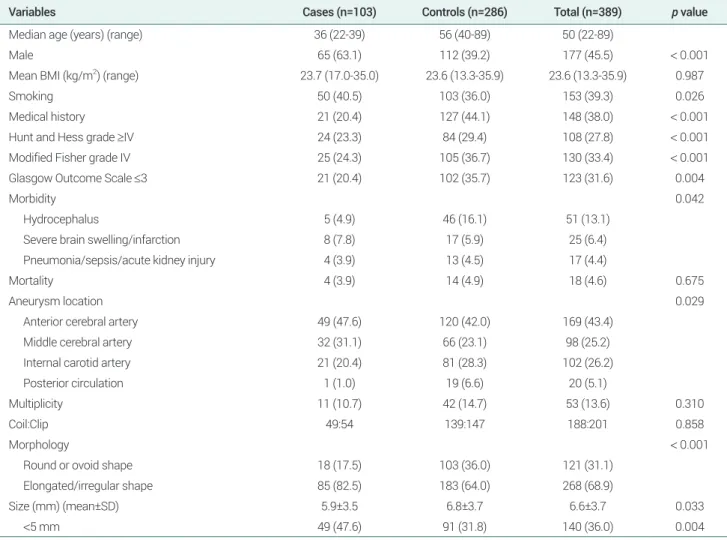
Table 3 shows the characteristics of patients with rup- tured aneurysms according to age.
The young adult patients significantly comprised more men and smokers (p<0.001; and p=0.026, respectively);
however, BMI of the patients showed no association with ruptured aneurysms. The patients’ medical history
correlated significantly with age (p<0.001).
The young adult patients showed a significant tenden- cy for lower HHG, modified Fisher grade, and higher GOS score (p<0.001, p<0.001, and p=0.004, respectively).
In addition, incidence of morbidity was significantly lower in young adult patients (p=0.042), and experi- enced less frequent presentations of postoperative hy- drocephalus and other medical complications.
Among the data of young adult patients examined, SAH secondary to the ruptured aneurysms developed in the ACA in 49 (47.6%) patients, in the MCA in 32 (31.1%) patients, in the ICA in 25 (20.4%) patients, and in the posterior circulation in 1 (1.0%) patients. In con- trast, among the control group patients, SAH secondary
Table 3. Characteristics of patients and aneurysms in cases and controls
Variables Cases (n=103) Controls (n=286) Total (n=389) p value
Median age (years) (range) 36 (22-39) 56 (40-89) 50 (22-89)
Male 65 (63.1) 112 (39.2) 177 (45.5) < 0.001
Mean BMI (kg/m2) (range) 23.7 (17.0-35.0) 23.6 (13.3-35.9) 23.6 (13.3-35.9) 0.987
Smoking 50 (40.5) 103 (36.0) 153 (39.3) 0.026
Medical history 21 (20.4) 127 (44.1) 148 (38.0) < 0.001
Hunt and Hess grade ≥IV 24 (23.3) 84 (29.4) 108 (27.8) < 0.001
Modified Fisher grade IV 25 (24.3) 105 (36.7) 130 (33.4) < 0.001
Glasgow Outcome Scale ≤3 21 (20.4) 102 (35.7) 123 (31.6) 0.004
Morbidity 0.042
Hydrocephalus 5 (4.9) 46 (16.1) 51 (13.1)
Severe brain swelling/infarction 8 (7.8) 17 (5.9) 25 (6.4)
Pneumonia/sepsis/acute kidney injury 4 (3.9) 13 (4.5) 17 (4.4)
Mortality 4 (3.9) 14 (4.9) 18 (4.6) 0.675
Aneurysm location 0.029
Anterior cerebral artery 49 (47.6) 120 (42.0) 169 (43.4)
Middle cerebral artery 32 (31.1) 66 (23.1) 98 (25.2)
Internal carotid artery 21 (20.4) 81 (28.3) 102 (26.2)
Posterior circulation 1 (1.0) 19 (6.6) 20 (5.1)
Multiplicity 11 (10.7) 42 (14.7) 53 (13.6) 0.310
Coil:Clip 49:54 139:147 188:201 0.858
Morphology < 0.001
Round or ovoid shape 18 (17.5) 103 (36.0) 121 (31.1)
Elongated/irregular shape 85 (82.5) 183 (64.0) 268 (68.9)
Size (mm) (mean±SD) 5.9±3.5 6.8±3.7 6.6±3.7 0.033
<5 mm 49 (47.6) 91 (31.8) 140 (36.0) 0.004
Values are presented as number (%) unless otherwise indicated.
BMI, body mass index; SD, standard deviation
to the ruptured aneurysms developed in the ACA in 120 (42.0%) patients, in the ICA in 81 (28.3%) patients, in the MCA in 66 (23.1%) patients, and in the posterior circulation in 19 (6.6%) patients. There was a significant difference in the location of the ruptured aneurysms.
The aneurysms ruptures occurred most frequently in the ACA in both groups, but aneurysms ruptures in the ICA and posterior circulation was infrequent among young adult patients.
The aneurysms were significantly more often elongat- ed/irregularly shaped in young adult patients (p<0.001).
The aneurysm size was also associated with age. The ruptured aneurysms in young adult patients were statis- tically significant smaller (mean size, 5.9 mm) than that in controls (mean size, 6.8 mm; p=0.033).
DISCUSSION
Demographic characteristics of young adult patients Intracranial aneurysms are influenced by environ- mental factors. Smoking showed statistically significant associations with an increased risk of SAH.5)15) Obesity, as a widely recognized risk factor for cerebrovascular disease, may also increase the risk of SAH. In the litera- ture,4) otherwise, low BMI is independent risk factor of SAH.
We hypothesized that smoking and being overweight/
underweight may be associated with aneurysm ruptures in young adult patients. In our cases series, smoking was more frequently observed among young adult patients, but had no significant difference on adjustment of con- founders. Additionally, all the patients with ruptured aneurysms were overweight, but there was no significant difference according to age.
Favorable outcomes in young adult patients
Young adult patients with ruptured aneurysm usually show good prognosis with rare cases of perioperative mortality.18)20) Clinical outcomes among young adults with ruptured aneurysms are generally favorable be- cause of the low incidences of hydrocephalus, severe
vasospasm, and other medical problems.12)13)19)
The present study showed similar findings; young adult patients had less medical problems such as hyper- tension or diabetes mellitus than the comparison group (20.4% vs. 44.1%, respectively). The only 20.4% of the young adult patients had poor clinical outcomes with GOS scores below 3, and the perioperative morbidity was only 17.5% compared to controls.
Male predominance in young adult patients and discrepancy of aneurysm location
Previous studies have reported a sex difference in the prevalence of intracranial aneurysm.7)8)19)27) Aneurysms in children and adolescents are more frequent in men, whereas in women, the predominance is more during adulthood.
In the present study, 63.1% of the young adult patients with ruptured aneurysms were men, outnumbering that in controls by nearly a factor of 1.5.
Female sex is an independent risk factor for the growth and rupture of aneurysm5)25) and estrogen deficiency, especially in postmenopausal women, has an important impact on the pathophysiology of the formation and rupture of aneurysms.5)24) Estrogen has been shown to influence vascular endothelial function, and enhance normal physiological vascular system.6)23) By preserving the vascular integrity, therefore, estrogen in young adult women appears to play a significant protective role in the formation and rupture of aneurysms. That is, rup- tured aneurysms were more predominant among young adult men with relatively low estrogen levels than women.
Moreover, the present study shows that the location of aneurysm differed among young adult patients. The an- eurysms ruptures occurred most frequently in the ACA in both groups, and in young adult patients, besides the affected artery, the MCA (31.1%) and ICA (20.4%) were prominent locations for the development of aneurysm.
Contrarily, among controls, the rupture of aneurysms was more likely to occur in the ICA (28.3%) and MCA (23.1%).
This anatomic discrepancy may be explained by the predominance of male sex among the young adult pa-
tients. Previous studies1)6)13)19) reported sex differences in the anatomical distribution of ruptured aneurysms;
aneurysms in the ACA were reportedly overrepresented in men, and that in the ICA were overrepresented in women.
Size and morphology of aneurysm in young adult patients
Recent studies have indicated that rupture of intracra- nial aneurysm is primarily dependent on the aneurysm size,9-11) and risk of rupture increases substantially with the increasing aneurysm size.17)26)
Recommendations of the American Heart Association suggest that the rupture risk of incidental aneurysms smaller than 10 mm is low.3) According to the Internation- al Study of Unruptured Intracranial Aneurysms 2 study,26) in the anterior circulation, the rupture rate of aneurysms smaller than 7 mm was 0-0.3% per year, while that of aneurysms of size 7-12 mm was 0.5% per year.
However, in the present study, 94.2% of ruptured aneu- rysms in young adult patients were smaller than 10 mm and 47.6% were smaller than 5 mm. In young adult pa- tients, the size of ruptured aneurysms was significantly smaller than that in controls.
The pathophysiology of intracranial aneurysm for- mation and development can explain the small size of the ruptured aneurysms among young adult patients in this study. Previous studies found that the rupture risk of intracranial aneurysms was highest at the first year of diagnosis and decreased thereafter. In the initial stage of aneurysm formation, aneurysm rupture can occur be- cause of the weak aneurysm wall. After this initial stage, healing of aneurysm wall occurs and the aneurysms may achieve some stability.14)22) Therefore, the small intracra- nial aneurysms of young adult patients who are first di- agnosed could be require thorough assessment and close follow-up.
In general, irregular shape indicates increased risk of aneurysmal rupture. Lindgren et al.16) reported that ir- regular shape is strongly associated with rupture in cere- bral aneurysms and independent of patient background including their age. The present study revealed a similar
finding, indicating that 68.9% of total ruptured aneu- rysms have elongated or irregular shape of aneurysms.
Limitations
This study was limited by its retrospective nature and selection bias. To further evaluate these observations, future studies that include young adult patients with un- ruptured aneurysms are needed.
CONCLUSIONS
The ruptured aneurysms of young adult patients have unique characteristics that include a strong predomi- nance for male smoker, elongated or irregular shape and small size.
Disclosure
The authors report no conflict of interest concerning the materials or methods used in this study or the find- ings specified in this paper.
REFERENCES
1. Aarhus M, Helland CA, Wester K. Differences in anatomical distribution, gender, and sidedness between ruptured and unruptured intracranial aneurysms in a defined patient pop- ulation. Acta Neurochir (Wien). 2009 Dec;151(12):1569-74.
2. Bonita R, Beaglehole R, North JD. Subarachnoid hemorrhage in New Zealand: an epidemiological study. Stroke. 1983 May- Jun;14(3):342-7.
3. Broderick JP, Adams HP Jr, Barsan W, Feinberg W, Feld- mann E, Grotta J, et al. Guidelines for the management of spontaneous intracerebral hemorrhage: a statement for healthcare professionals from a special writing group of the Stroke Council, American Heart Association. Stroke. 1999 Apr;30(4):905-15.
4. Broderick JP, Viscoli CM, Brott T, Kernan WN, Brass LM, Feldmann E, et al. Major risk factors for aneurysmal sub- arachnoid hemorrhage in the young are modifiable. Stroke.
2003 Jun;34(6):1375-81.
5. Choi JH, Park HS. The incidence and characteristics of patients with small ruptured aneurysms (<5 mm) in subarachnoid
hemorrhage. J Korean Neurosurg Soc. 2017 Jul; 60(4):424-32.
6. Ghods AJ, Lopes D, Chen M. Gender differences in cerebral aneurysm location. Front Neurol. 2012 May;3:78.
7. Horiuchi T, Tanaka Y, Hongo K, Kobayashi S. Aneurysmal subarachnoid hemorrhage in young adults: a comparison between patients in the third and fourth decades of life. J Neurosurg. 2003 Aug;99(2):276-9.
8. Hourihan MD, Gates PC, McAllister VL. Subarachnoid hemorrhage in childhood and adolescence. J Neurosurg.
1984;60(6):1163-6.
9. Ishibashi T, Murayama Y, Saguchi T, Ebara M, Arakawa H, Irie K, et al. Justification of unruptured intracranial aneurysm repair: a single-center experience. AJNR Am J Neuroradiol.
2013 Aug;34(8):1600-5.
10. Jagadeesan BD, Delgado Almandoz JE, Kadkhodayan Y, Derdeyn CP, Cross DT 3rd, Chicoine MR, et al. Size and ana- tomic location of ruptured intracranial aneurysms in patients with single and multiple aneurysms: a retrospective study from a single center. J Neurointerv Surg. 2014 Apr;6(3):169-74.
11. Juvela S, Hillbom M, Numminen H, Koskinen P. Cigarette smoking and alcohol consumption as risk factors for aneurys- mal subarachnoid hemorrhage. Stroke.1993 May; 24(5):639-46.
12. Kamitani H, Masuzawa H, Kanazawa I, Kubo T. Saccular cerebral aneurysms in young adults. Surg Neurol. 2000 Jul;54(1):59-66; discussion 66-7.
13. Kongable GL, Lanzino G, Germanson TP, Truskowski LL, Alves WM, Torner JC, et al. Gender-related differences in aneurysmal subarachnoid hemorrhage. J Neurosurg. 1996 Jan;84(1):43-8.
14. Lee GJ, Eom KS, Lee C, Kim DW, Kang SD. Rupture of very small intracranial aneurysms: incidence and clinical char- acteristics. J Cerebrovasc Endovasc Neurosurg. 2015 Sep;
17(3):217-22.
15. Lindekleiv HM, Valen-Sendstad K, Morgan MK, Mardal KA, Faulder K, Magnus JH, et al. Sex differences in intracranial arterial bifurcations. Gend Med. 2010 Apr;7(2):149-55.
16. Lindgren AE, Koivisto T, Bjorkman J, von Und Zu Fraunberg M, Helin K, Jaaskelainen JE, et al. Irregular shape of intracra- nial aneurysm indicates rupture risk irrespective of size in a population-based cohort. Stroke. 2016 May;47(5):1219-26.
17. UCAS Japan Investigators; Morita A, Kirino T, Hashi K, Aoki N, Fukuhara S, et al. The natural course of unruptured cerebral aneurysms in a Japanese cohort. N Engl J Med. 2012 Jun;366(26):2474-82.
18. Ostergaard JR, Voldby B. Intracranial arterial aneurysms in children and adolescents. J Neurosurg. 1983 Jun;58(6):832-7.
19. Park SK, Kim JM, Kim JH, Cheong JH, Bak KH, Kim CH.
Aneurysmal subarachnoid hemorrhage in young adults:
a gender comparison study. J Clin Neurosci. 2008 Apr;
15(4):389-92.
20. Pasqualin A, Mazza C, Cavazzani P, Scienza R, DaPian R.
Intracranial aneurysms and subarachnoid hemorrhage in children and adolescents. Childs Nerv Syst. 1986;2(4):185-90.
21. Proust F, Toussaint P, Garnieri J, Hannequin D, Legars D, Houtteville JP, et al. Pediatric cerebral aneurysms. J Neurosurg.
2001 May;94(5):733-9.
22. Sato K, Yoshimoto Y. Risk profile of intracranial aneurysms:
rupture rate is not constant after formation. Stroke. 2011 Dec;
42(12):3376-81.
23. Stirone C, Duckles SP, Krause DN. Multiple forms of estrogen receptor-alpha in cerebral blood vessels: regulation by estrogen.
Am J Physiol Endocrinol Metab. 2003 Jan;284(1): E184-92.
24. Tabuchi S. Relationship between postmenopausal estrogen deficiency and aneurysmal subarachnoid hemorrhage. Behav Neurol. 2015;2015:720141.
25. Turan N, Heider RA, Zaharieva D, Ahmad FU, Barrow DL, Pradilla G. Sex differences in the formation of intracranial aneurysms and incidence and outcome of subarachnoid hemorrhage: review of experimental and human studies.
Transl Stroke Res. 2016 Feb;7(1):12-9.
26. Wiebers DO, Whisnant JP, Huston J 3rd, Meissner I, Brown RD Jr, Piepgras DG, et al. International Study of Unruptured Intracranial Aneurysms Investigators. Unruptured intra- cranial aneurysms: natural history, clinical outcome, and risks of surgical and endovascular treatment. Lancet. 2003 Jul;362(9378):103-10.
27. Wojtacha M, Bazowski P, Mandera M, Krawczyk I, Rudnik A. Cerebral aneurysms in childhood. Childs Nerv Syst. 2001 Jan;17(1-2):37-41.