• 검색 결과가 없습니다.

The Whole Extract of Enterococcus faecalis Has Suppressive Effect on the Allergic Responses in Asthmatic Mouse Model

N/A
N/A
Protected

Academic year: 2021

Share "The Whole Extract of Enterococcus faecalis Has Suppressive Effect on the Allergic Responses in Asthmatic Mouse Model"

Copied!
8
0
0

로드 중.... (전체 텍스트 보기)

전체 글

(1)

The Whole Extract of Enterococcus faecalis Has Suppressive Effect on the Allergic Responses in Asthmatic Mouse Model

Jeong Hyun Chang

1

, EunJu Yang

1

, Sun Nyoung Yu

2

and Soon-Cheol Ahn

2

*

1

Department of Clinical Laboratory Science, Daegu Haany University, Gyeongsan 38610, Korea

2

Department of Microbiology and Immunology, Pusan National University School of Medicine, Yangsan 50612, Korea Received August 24, 2017 /Revised October 23, 2017 /Accepted October 25, 2017

Probiotics are usually defined as intestinal bacteria that provide healthy benefit to the host and may offer new therapeutic materials for the treatment of inflammatory diseases. Lactobacillus, Bifidobacterium and Enterococcus are known as typical probiotics. But, these bacteria have mostly a weak viability and thus decreased probiotics-mediated effects in the intestinal tract. Asthma is an inflammatory airway disease, which is characterized by the releases of inflammatory mediators including cytokine and IgE.

They are mainly associated with the recruitment, activation and disregulation of specific inflammatory cells, especially mast cells, monocytes, T cells, eosinophils and neutrophils in asthma. We performed these studies as in vitro and in vivo test the human inflammatory cell lines and ovalbumin (OVA)-induced asthma mouse model. And then the inhibitory effects of Enterococcus faecalis whole ex- tract on inflammatory responses were examined. For our examinations, the E. faecalis whole extract (Ef extract) was acquired from whole bacteria of E. faecalis using freeze/thawing after ultrasonication method. As results, OVA-mediated THP-1 cell viability was decreased by the treatment of Ef extract.

In the asthmatic mouse model, Ef extract inhibited the infiltration of inflammatory cells into the in- flammatory sites and blood. This whole extract may have anti-asthmatic effects associated with the regulation of IL-5 and IgE expression. It may also be a promising candidate in anti-allergic medicine for the treatment of asthma.

Key words : Asthma, Enterococcus faecalis, IgE, IL-5, inflammatory cell

*Corresponding author

*Tel : +82-51-510-8092, Fax : +82-55-382-8090

*E-mail : [email protected]

This is an Open-Access article distributed under the terms of the Creative Commons Attribution Non-Commercial License (http://creativecommons.org/licenses/by-nc/3.0) which permits unrestricted non-commercial use, distribution, and reproduction in any medium, provided the original work is properly cited.

Journal of Life Science 2017 Vol. 27. No. 10. 1168~1175 DOI : https://doi.org/10.5352/JLS.2017.27.10.1168

Introduction

Asthma is an inflammatory disease of the lungs charac- terized by increased infiltration of leukocytes, especially eo- sinophils, into the airways and reduced respiratory function.

The inflammation leads to bronchoconstriction, increased airway hyperresponsiveness, and mucus production [5]. In asthma, mast cells migrate into the inflammatory sites and are then activated by IgE, which is produced by activated plasma cells [18]. The activated mast cells secrete various pro-inflammatory mediators such as histamine, cytokines and prostaglandin, which induce eosinophilia and mucus production in lung tissue [1]. Eosinophils are infiltrated into the airways and act as primary effector cells by the release of specific granule proteins and reactive oxygen species [6].

T helper (Th) 2 cytokines induce elevation of IgE in serum and BAL fluid [7]. In Th2 cytokines, IL-4 plays important roles in immunoglobulin E (IgE) switching in B cells, mucus hypersecretion, and eosinophil infiltration into the lung tis- sues [10]. IL-5 promotes the proliferation and activation of eosinophils and increases eosinophil infiltration into the air- ways [16]. In addition to IL-5, the modulations of other cyto- kines are closely linked with the development of asthma.

The prevalence of asthma is rapidly increasing around the world, especially in young children, and it has become a significant cause of morbidity and mortality in developed countries [2]. However, because the absence of proper treat- ment, we have been needed the development of therapeutic agents without adverse effect.

Normal flora is a microorganism that resides on a number

of tissues and organs. In various normal flora, probiotics are

usually defined as intestinal bacteria that provide healthy

benefit to the host and may offer new therapeutic materials

for the treatment of inflammatory diseases. Lactobacillus,

known as common probiotics, reduced 50% of prevalence

in early atopic dermatitis in children [8], and suppressed

proliferation and inflammatory response of CD4+ T cells

(2)

[22]. But, because these bacteria have almost a weak viability in the intestinal tract, Lactobacillus-mediated probiotic effects lead to be decreased. Other probiotics, Enterococcus may also be founded in vaginal tract and can contribute to the acidic environment. However, this bacteria can easily acquire an antibiotic resistance ability and then transmit resistance fac- tor to other harmful bacteria [19]. For these reasons, WHO has avoided that Enterococcus is being used as a probiotics.

Nevertheless, in other study, it has been reported that Enter- ococcus has suppressive effect on superantigen toxic syn- drome toxin-1 induced IL-8 from vaginal inflammation [3].

In the present study, to investigate the inhibitory effects of Enterococcus faecalis whole extract on asthmatic responses, its cytotoxic effects on the asthma-related cell was de- termined in vitro. The effects of E. faecalis whole extract on leukocyte infiltration, IgE level and IL-5 level were de- termined using in vivo Ovalbumin-specific asthma mouse model.

Materials and Methods

Preparation of Enterococcus faecalis whole extract Enterococcus faecalis (ATCC® 19433™) was purchased from American Type Culture Collection (ATCC, Manassas, VA, USA). E. faecalis was grown overnight in brain-heart in- fusion broth (BD, Franklin lakes, NJ, USA) at 37℃. After 24 hr, cultured bacteria were concentrated by centrifugation at 20,000× g for 10 min. Cell pellets were washed three times with PBS and suspended in 1 ml of PBS. To obtain bacteria whole extract, E. faecalis suspension was disrupted ultrasoni- cally at 20 kHz for 10 cycles of 30 sec (at 4°C). And then bacterial debris was heated at 75℃ for 30 sec, and lyophi- lized. The E. faecalis (Ef) whole extract was resuspended in PBS at a concentration of 10 mg/ml.

Cell viability

Cell viability of THP-1 cells was determined using an MTT assay kit (Roche, Penzberg, Germany). In brief, 100 μl of these cells (1×10

6

cells/ml) were seeded in 96-well plate and incubated for 24 hr after treatment with various concen- trations (0, 30 and 60 μg/ml) of Ef extract and 3 μg/ml of dexamethasone (Dex), respectively. 10 μl of MTT solution (0.5 mg/ ml) was added, and the cells were incubated at 37℃ for 4 hr. 100 μl of solubilization solution was then add- ed to each well. After 24 hr incubation, the optical densities of 96-well culture plate were measured using a spectropho-

tometer (Bio-Tek Instruments, Winooski, VT, USA) at 540 nm. The optical density of untreated control cells was taken as 100% viability.

Induction of asthma in BALB/c mice

Six-week-old female BALB/c mice were obtained from DaehanBiolink Co. LTD (Seoul, Korea) and kept in an air-conditioned room at 22±1℃ and a humidity of 55±10%.

The mice were divided into five groups (n=4) and the aller- gic lung inflammation of the mice in four groups was in- duced by ovalbumin (OVA) (Grade III) (Sigma-Aldrich, MO, USA) using the established protocol in a previous study [23]. Asthmatic mice groups were induced four times OVA challenges with PBS or Ef extract. Briefly, mice were sensi- tized via intra-peritoneal injection with 75 μg of OVA ad- sorbed to 2 mg of aluminum hydroxide (Alum; Sigma- Aldrich) in 200 μl of 0.9% sterile saline on day 1, 2, 8 and 9. For challenge, 50 μg of OVA was intra-nasally ad- ministered to the mice on day 15, 16, 22.

The asthma-induced mice were treated 10 times with oral injection of 30 mg/kg and 60 mg/kg of Ef extract and 3 mg/kg of Dex during 20 days, respectively. The normal group was sensitized and challenged with PBS without OVA and Ef extract treatment.

Measurment of airway hyperresponsiveness And day 23 and airway hyperresponsiveness (AHR) was measured on day 24 and the mice were sacrificed on day 25. After last OVA challenges, airway responsiveness was monitored a change using whole-body plethysmography for animals (Allmedicus, Anyang, Korea) in response to aero- solized methacholine (Sigma-Aldrich). The enhanced pause (PenH) was evaluated at baseline (PBS) and after treatment with increasing doses of aerosolized methacholine (0-50 mg/ml) for measuring bronchoconstriction. The mice were permitted to acclimate for 3 min, exposed to nebulized PBS for 10 min, and then subsequently treated in methacholine using an ultrasonic nebulizer (Omron, Koyto, Japan). After each nebulization, the average of PenH values were meas- ured during each 150 sec periods. All procedure for the han- dling and care of animals were approved by animal ethics committee of Pusan national university (ED-PNU2016-1056).

Collection of blood and serum

At day 25 after the first ovalbumin (OVA) sensitization,

the mice were sacrificed. And the blood was collected by

(3)

A B

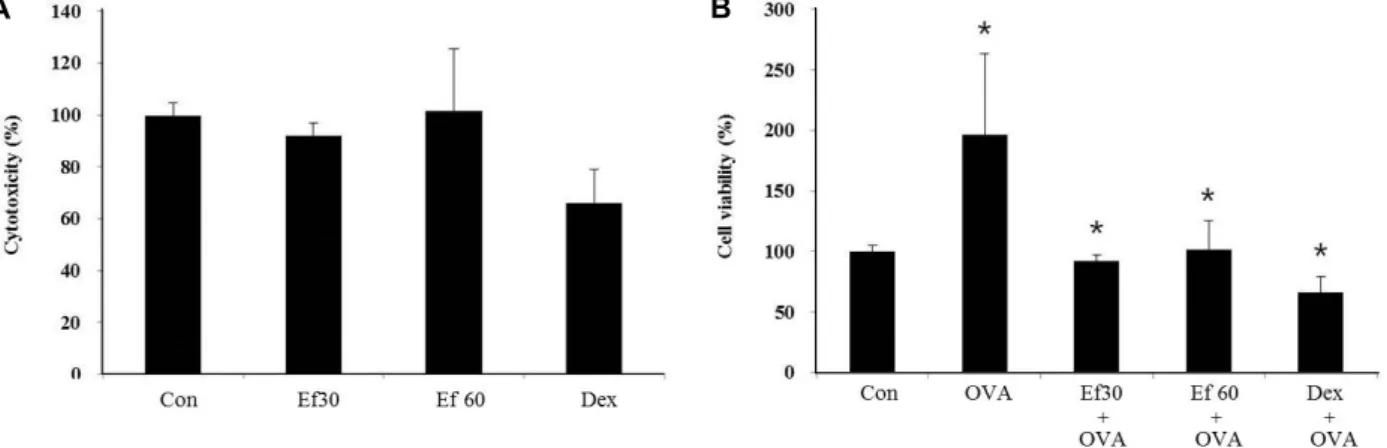
Fig. 1. The effect of Ef extract on the viability of THP-1 cells. THP-1 cells were seeded into 96-well plate at 5×10

4

cells/100 μl per well. (A) These cells were treated with Ef extract at the concentration of 30 μg/ml (Ef 30), 60 μg/ml (Ef 60), or with 1 μg/ml of dexamethasone (Dex) for 24 hr. (B) THP-1 cells were pre-treated with the Ef extract at the concentration of 30 μg/ml (Ef-30), 60 μg/ml (Ef 60), or with 1 μg/ml of dexamethasone (Dex) for 1 hr. And then the cells were treated with 100 μg/ml of OVA for 24 hr. The cell viability was measured by MTT assay as described in Materials and Methods section. The data were expressed as the relative ratio to the absorbance of the untreated cells (Con), which was set at 100%.

All data were expressed as the means ± S.D. of three independent experiments. *p<0.05 indicates statistically significant differences between the control group .

heart puncture. After blood sampling, the blood smear films were prepared for leukocyte differential counting and stained with Wright staining solution. The cells in blood smear film were divided into neutrophils, eosinophils, baso- phils, monocyte and lymphocyte according to general leuko- cyte morphology and staining features. The percentage of each cell was determined by counting 300 cells per slide.

Also, blood were concentrated by centrifugation at 2,000×

g for 10 min and the supernatant (serum) was stored at -70℃

until analysis of IL-5 and immunoglobulin E (IgE).

Collection of bronchoalveolar lavage (BAL) fluid After the mice were sacrificed, BAL fluid was collected by lavage of the lung via the trachea with 1 ml of PBS. After three lavages, the total cells were separated from the super- natant of BAL fluid. The BAL fluid were used for the deter- mination of total cells and differential counting. Total cell number was counted using a Neubauer hemocytometer.

And the cells were cytospined and stained with Wright stain solution for differential counting. The cells in BAL fluid were divided into neutrophils, eosinophils, lymphocyte, and al- veolar macrophage according to general leukocyte morphol- ogy and staining features. The percentage of each cell was determined by counting 300 cells per cytospined slide.

Determination of cytokine concentrations

In the serum, the concentrations of IL-5 and the total IgE

were measured using OptEIA Set mouse IL-5 and IgE (BD, Franklin lakes, NJ, USA) according to the manufacturer’s instructions. All assays were performed in triplicate. The concentration of each protein was calculated from the stand- ard curve of indicated protein.

Statistical analysis

All data were expressed as the means ± S.E.M. Data were analyzed by one-way ANOVA or Student’s t test using the SPSS statistical software package, Version 10.0 (SPSS Inc., Chicago, IL, USA). A p value less than 0.05 was considered significant.

Results

Ef extract has the inhibitory effect on cellular inflammation induced by OVA

Prior to examining the effect of Ef extract on asthma

mouse model, it was investigated whether Ef extract has a

cytotoxic effect. For this examination, we used the THP-1

cell, the human monocytic cell line. Monocytes act on the

pathogenesis of asthma. The survival rate of THP-1 cell was

not changed after treatment with Ef extract for 24 hr in a

dose-dependent manner (Fig. 1A). These results indicate that

Ef extract used in this study have no cytotoxic effect on the

cells. Also Ef extract considerably decreases the elevated rate

of survival by OVA in THP-1 cells (Fig. 1B). Dex was used

(4)

0 10 20 30 40 50

Dose of Methacholine (mg/ml)

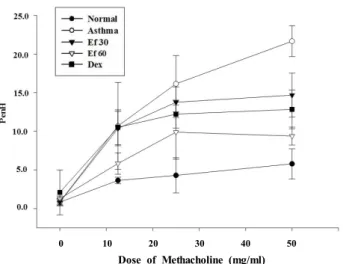
Fig. 2. The effect of Ef extract on airway hyperresponsiveness in OVA-induced asthma mouse model. The OVA-in- duced asthma model mice were divided into 5 groups with 30 mg/kg (Ef 30), 60 mg/kg (Ef 60), or 3 mg/kg of dexamethasone (Dex) after the sensitization and the negative control group (Normal) without drug admin- istration. The PenH was evaluated at baseline and after aerosolized administration with increasing doses of methacholine (0, 12.5, 25, 50 mg/ml). All data were ex- pressed as the means ± S.D. of three independent experiments.

A B

Fig. 3. The effect of Ef extract on the recruitment of inflammatory cells into BAL fluid in OVA-induced asthma mouse model.

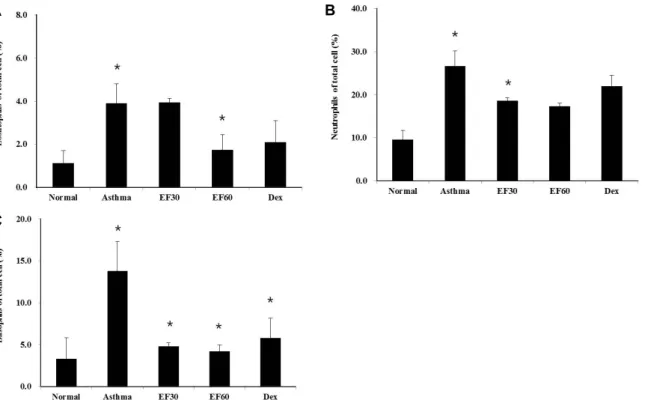
(A) The rate of eosinophils in total cells of BAL fluid. (B) The rate of neutrophils in total cells of BAL fluid. The OVA-induced asthma model mice were divided into 5 groups with 30 mg/kg (Ef 30), 60 mg/kg (Ef 60), or 3 mg/kg of dexamethasone (Dex) after the sensitization and the negative control group (Normal) without drug administration. The recovered cells in BAL fluid were used for differential counting after Wright’s staining. The results were the means ± S.D. of 4 independent experiments. *p<0.05 indicates statistically significant differences between the normal group and asthma group, or between the asthma group and Ef extract-treated group. (*p<0.05)

as a positive control for its inhibitory effects.

Ef extract inhibits the infiltration of eosinophils and neutrophils in a mouse model of asthma

To examine the pathogenesis in asthma, we induced asth- ma in BALB/c mice using OVA and evaluated the number

of eosinophils in the BAL fluid. In a mouse model of allergic asthma, we compared the effects of Ef extract, delivered by means of nebulization only or oral administration. Both Ef extract treatments were equally efficient at reduction AHR to methacholine, as measured on the basis of whole-body plethysmography. In OVA-sensitized and -challenged mice, the dose-response curve of Penh value was shifted to the upper of the image compared with that of normal mice (Fig.

2). As shown in Fig. 2, related to asthma group, AHR to methacholine was reduced in Ef extract treated mice.

In addition, the alteration of cellular components, espe- cially eosinophils, in the airway is an important step in the pathogenesis of asthma. In BAL fluid of normal subject, the macrophage is the most abundant cell and there are very little other cells, including neutrophil and eosinophils.

However, differential leukocyte counting showed that neu- trophil and eosinophils were increased in asthma-induced mouse group (Fig. 3). In the blood of asthmatic mouse, in- flammatory cells, such as eosinophils, neutrophils and baso- phils, were also increased (Fig. 4). Infiltration of these in- flammatory cells into BAL fluid and blood were significantly inhibited by Ef extract (Fig. 3 and Fig. 4). Dex was used as a positive control for its inhibitory effects on asthmatic response. Dex is one of the anti-inflammatory drugs used in the treatment of asthma and its action is associated with inhibition of pro-inflammatory transcription factors.

Ef extract decreases the release of total IL-5 and

IgE in serum in a mouse model of asthma

(5)

A B

C

Fig. 4. The effect of Ef extract on the recruitment of inflammatory cells into blood in OVA-induced asthma mouse model. (A) The rate of eosinophils in the total blood cells. (B) The rate of neutrophils in the total blood cells. (C) The rate of basophils in the total blood cells. The OVA-induced asthma model mice were divided into 5 groups with 30 mg/kg (Ef 30), 60 mg/kg (Ef 60), or 3 mg/kg of dexamethasone (Dex) after the sensitization and the negative control group (Normal) without drug administration. The slides of blood smear were used for differential counting after Wright’s staining. The results were the means ± S.D. of 4 independent experiments. *p<0.05 indicates statistically significant differences between the normal group and asthma group, or between the asthma group and Ef extract-treated group.

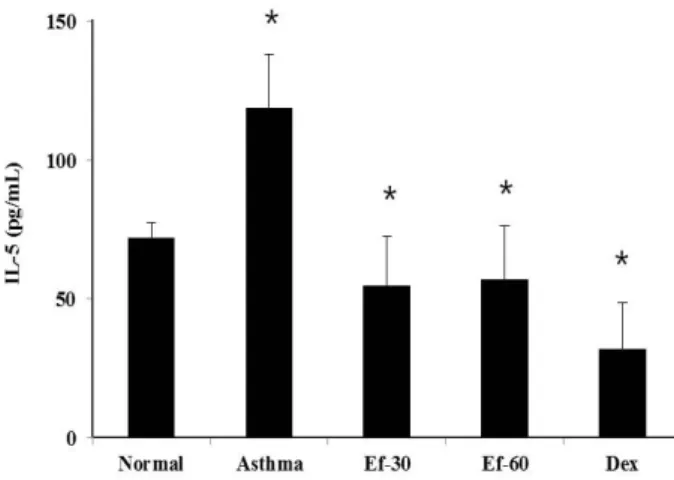
Since the activation and recruitment of inflammatory cells, especially eosinophils, are particularly modulated by IL-5 [6], the IL-5 expression in serum was evaluated. The IL-5 level increased after asthma induction and the increased expression was remarkably inhibited by the Ef extract (Fig.

5). These results indicated that the inhibitory effects of Ef extract on eosinophilia and the infiltration of inflammatory cells are associated with the modulation of IL-5 release.

It has been reported that IgE is associated with the patho- genesis of allergic asthma. To examine the effect of Ef extract on the level of total IgE, the total IgE in the serum were analyzed using ELISA. The total IgE in the serum were con- siderably increased in the asthmatic control as compared to the normal group (Fig. 6). As shown in Fig. 6, Ef extract suppressed the protein level of IgE in the serum.

Discussion

Asthma is an inflammatory disease of the airways charac- terized by infiltration of various inflammatory cells, rever-

sible airway obstruction and bronchial hyperresponsiveness [4]. As the prevalence of asthma increases around the world, the development of an effective therapeutic drug for asthma was needed. Recent studies have reported the anti-allergic mechanism regulated by several herbs both in vitro and in vivo models [9, 13, 14, 20]. In various probiotics, the whole extract of bacteria has been widely used as a therapeutic agent in various inflammatory diseases. In this study, the used Ef extract suppressed the ovalbumin OVA-induced THP-1 cell viability without cytotoxicity (Fig. 1A and Fig.

1B). OVA is the protein purified in egg white and acts as a representative stimulator for inflammatory reaction and al- lergic reaction of airway hyper-responsiveness [11]. THP-1 is the human monocytic cell line and these monocytic cells, such as alveolar macrophages in the lung tissue, are acti- vated by allergen and then produce inflammatory factors (chemokines, cytokines and toxic molecules). In these proc- esses, alveolar macrophages contribute to the airway in- flammation and remodeling responses during asthma [12].

We determined whether Ef extract has an inhibitory effect

(6)

Fig. 5. The effect of Ef extract on the level of IL-5 in OVA-in- duced asthma mouse model. The OVA-induced asthma model mice were divided into 5 groups with 30 mg/kg (Ef 30), 60 mg/kg (Ef 60), or 3 mg/kg of dexamethasone (Dex) after the sensitization and the negative control group (Normal) without drug administration. The se- rum was collected, the cells in the blood were eliminated.

The protein expression of IL-5 in serum was analyzed by ELISA. The results were expressed as the means ± S.D. of 4 independent experiments. *p<0.05 indicates statistically significant differences between the normal group and asthma group, or between the asthma group and Ef extract-treated group.

Fig. 6. The effect of Ef extract on the level of IgE in OVA-in- duced asthma mouse model. The OVA-induced asthma model mice were divided into 5 groups with 30 mg/kg (Ef 30), 60 mg/kg (Ef 60), or 3 mg/kg of dexamethasone (Dex) after the sensitization and the negative control group (Normal) without drug administration. The se- rum was collected, the cells in the blood were eliminated.

The protein expression of IgE in serum was analyzed by ELISA. The results were expressed as the means ± S. D. of 4 independent experiments. *p<0.05 indicates statistically significant differences between the normal group and asthma group, or between the asthma group and Ef extract-treated group.

on the OVA-induced inflammatory reaction. To confirm of anti-inflammatory effect of Ef extract, we induced asthma in BALB/c mice using OVA and treated Ef extract by oral injection. As a result, the number of inflammatory cells, in- cluding eosinophils and neutrophils, in the lung tissues were elevated in asthmatic mice, where were recovered by treat- ment with the Ef extract (Fig. 3). Also, eosinophils, neu- trophils and basophils were increased in the blood of asth- matic mice (Fig. 4) and its inflammatory cells were sup- pressed by treatment with the Ef extract (Fig. 4). In allergic diseases, an imbalance of Th1 and Th2 is important in the pathogenesis processes. Th2 cytokines produced by Th2 cells are typically increased in the serum and lung tissue of aller- gic disease and have important roles on infiltration of in- flammatory cells, eosinophil activation, production of IgE and the release of allergic mediators [21]. Among these Th2 cytokines, IL-5 in the serum was strongly elevated in asth- matic mice but was diminished by the Ef extract (Fig. 4).

IL-5 plays a pivotal role in the maturation and recruitment of eosinophils into the airways [17]. Eosinophils are known as effector cells in allergic disease by cytokine release, cyto- toxic granule proteins and tissue-damaging superoxide [16].

In addition, the elevated IgE in the early asthmatic re-

sponse induces the degranulation of mast cells by cross-link- age of allergen-specific IgE, and this process is an important step in the development of asthmatic responses [15]. The to- tal IgE in serum increased after the induction of asthma (Fig.

6). The total IgE was significantly suppressed by Ef extract in the serum (Fig. 6). Although the exact mechanism for this activity is unclear, these results suggest that Ef extract blocks specific IgE induction by certain allergens. Ef extract may provide a useful therapeutic approach for the treatment of allergic airway diseases.

References

1. Bisset, L. R. and Schmid-Grendelmeier, P. 2005. Chemokines and their receptors in the pathogenesis of allergic asthma:

progress and perspective. Curr. Opin. Pulm. Med. 11, 35-42.

2. Braman, S. S. 2006. The global burden of asthma. Chest 130, 4S-12S.

3. Brosnahan, A. J., Merriman, J. A., Salgado-Pabón, W., Ford, B. and Schlievert, P. M. 2013. Enterococcus faecalis inhibits superantigen toxic shock syndrome toxin-1-induced inter- leukin-8 from human vaginal epithelial cells through tetra- mic acids. PLoS One 8, e61255

4. Busse, W. W. and Rosenwasser, L. J. 2003. Mechanisms of asthma. J. Allergy Clin. Immunol. 111, S799-S804.

5. Djukanovic, R., Roche, W. R., Wilson, J. W., Beasley, C. R.,

(7)

Twentyman, O. P., Howarth, R. H. and Holgate, S. T. 1990.

Mucosal inflammation in asthma. Am. Rev. Respir. Dis. 142, 434-457.

6. Elsner, J. and Kapp, A. 1999. Regulation and modulation of eosinophils effector functions. Allergy 54, 15-26.

7. Gould, H. J. and Sutton, B. J. 2008. IgE in allergy and asthma today. Nat. Rev. Immunol. 8, 205-217.

8. Grüber, C. 2012. Probiotics and prebiotics in allergy pre- vention and treatment: future prospects. Expert Rev. Clin.

Immunol. 8, 17-19.

9. Kim, I. S., Kim, Y. S., Jang, S. W., Sung, H. J., Han, K. H., Na, D. S. and Ko, J. 2004. Differential effects of 9-cis retinoic acid on expression of CC chemokine receptors in human monocytes. Biochem. Pharmacol. 68, 611-620.

10. Kips, J. C. 2001. Cytokines in asthma. Eur. Respir. J. Suppl.

34, 24S-33S.

11. Kunio, S., Haneda, K., Haneda, G. and Shirato, K. 1999.

Ovalbumin (OVA) and Mycobacterium tuberculosis Bacilli co- operatively polarize anti-OVA T-helper (Th) cells toward a Th1-dominant phenotype and ameliorate murine tracheal eosinophilia. Am. J. Respir. Cell Mol. Biol. 20, 1260-1267.

12. Lee, H. S., Kwon, H. S., Park, D. E., Woo, Y. D., Kim, H.

Y., Kim, H. R., Cho, S. H., Min, K. U., Kang, H. R. and Chang, Y. S. 2015. Thalidomide inhibits alternative activa- tion of macrophages in vivo and in vitro: a potential mecha- nism of anti-asthmatic effect of thalidomide. PLoS One 23, e0123094.

13. Lee, S. K., Wong, C. K., Sung, R. Y., Leung, T. F., Fung, K. P., Leung, P. C. and Lam, C. W. 2005. In vitro anti-allergic activities of a newly concocted traditional Chinese medi- cine-the wheeze-relief formula. J. Ethnopharmacol. 103, 406- 412.

14. Li, G. Z., Chai, O. H., Lee, M. S., Han, E. H., Kim, H. T.

and Song, C. H. 2005. Inhibitory effects of Houttuynia cordata water extracts on anaphylactic reaction and mast cell activation. Biol. Pharm. Bull. 28, 1864-1868.

15. Owen, C. E. 2007. Immunoglobulin E: Role in asthma and allergic disease: lessons from the clinic. Pharmacol. Ther. 113, 121-133.

16. Palmqvist, C., Wardlaw, A. J. and Bradding, P. 2007.

Chemokines and their receptors as potential targets for the treatment of asthma. Br. J. Pharmacol. 151, 725-736.

17. Robinson, D. S., North, J., Zeibecoglou, K., Ying, S., Meng, Q., Rankin, S., Hamid, Q., Tavernier, J. and Kay, A. B. 1999.

Eosinophil development and bone marrow and tissue eosi- nophils in atopic asthma. Int. Arch. Allergy Immunol. 118, 98-100.

18. Romagnani, S. 2001. Cytokines and chemoattractants in al- lergic inflammation. Mol. Immunol. 38, 881-885.

19. Shimada, T., Cheng, L., Shi, H. B., Hayashi, A., Motonaga, C., Tang, J., Enomoto, K. and Enomoto, T. 2007. Effect of lysed Enterococcus faecalis FK-23 on allergen-induced im- mune responses and intestinal microflora in antibiotic-treated weaning mice. J. Investig. Allergol. Clin. Immunol. 17, 70-76.

20. Shin, H. Y., Jeong, H. J., Na, H. J., Hong, S. H., Lee, S. K., Lee, K. N., Song, Y. S., Kim, H. M. and Shin, T. Y. 2003.

Daeganghwal-tang inhibits the stem cell factor-induced mi- gration and inflammatory cytokines secretion in mast cells.

J. Ethnopharmacol. 85, 157-161.

21. Woodfolk, J. A. 2006. Cytokines as a therapeutic target for allergic diseases: a complex picture. Curr. Pharm. Des. 12, 2349-2363.

22. Yoshida, A., Yamada, K., Yamazaki, Y., Sashihara, T., Ikegami, S., Shimizu, M. and Totxuka, M. 2011. Lactobacillus gasseri OLL2809 and its RNA suppress proliferation of CD4+

T cells through a MyD88-dependent signalling pathway.

Immunology 133, 442-451.

23. Yuk, J. E., Woo, J. S., Yun, C. Y., Lee, J. S., Kim, J. H., Song, G. Y., Yang, E. J., Hur, I. K. and Kim, I. S. 2007. Effects of lactose-β-sitosterol and β-sitosterol on ovalbumin-in- duced lung inflammation in actively sensitized mice. Int.

Immunopharmacol. 7, 1517-1527.

(8)

초록:천식 마우스 모델의 알러지 반응에서 Enterococcus faecalis 전체 추출물의 억제 효과

장정현

1

, 양은주

1

, 유선녕

2

, 안순철

2

*

(

1

대구한의대학교 임상병리학과,

2

부산대학교 의학전문대학원 미생물학 및 면역학 교실)

프로바이오틱스(probiotics)는 숙주에 이로운 작용을 하는 장내세균으로 주로 알려져 있으며 꾸준히 염증치료

의 새로운 치료물질로 주목 받고 있다. 그러나 Lactobacillus나 Bifidobacterium과 같은 전형적인 프로바이오틱스는

장내에서 꾸준히 생존하기 어렵고 그로 인해 매개할 수 있는 다양한 효능이 줄어든다. 반면, Enterococcus는 다양한

물질을 분비하고 생물학적 활성을 지니고 있는 프로바이오틱스이긴 하나 동시에 기회감염균으로 항생제 내성능

을 쉽게 획득할 수도 있어 사용을 자제할 것을 권고하고 있으며, Vancomycin 내성인자를 원래부터 가지고 있어서

이 인자의 발현과 함께 타 독성균주에 전달할 가능성이 있다. 그러나 본 연구에서는 이러한 Enterococcus의 추출물

을 이용하여 항염증 물질을 확인해보고자 하였다. 특히, 호흡기계 질환인 천식의 치료효능을 보기 위해 human

monocytic cell line인 THP-1 세포를 이용한 in vitro test와 천식 유발 BALB/c mice를 이용한 in vivo test를 시행하

였다. 천식은 사이토카인과 IgE 등 세포 염증성 물질을 분비하고 호산구, 호중구, 호염기구, 비만세포, 단구, T 세

포 등 다양한 염증 세포가 폐 부위로 침윤되는 복합적인 염증 질환으로 잘 알려져 있다. 본 연구에서는 우선

Enterococcus faecalis 에서 초음파 처리를 통해 균체성분을 분해한 다음 동결건조하여 추출물을 획득하였다. E. fae-

calis에서 추출한 추출물(Ef extract)을 PBS에 부유시킨 다음, 염증유발을 위해 ovalbumin (OVA)를 처리한 THP-1

세포에 처리한 결과, OVA에 의해 증가한 THP-1 세포의 생존율이 감소하였다. 또한 OVA에 의해 천식이 유발된

BALB/c mice에서 염증부위인 폐의 세척액을 채취하여 폐 조직 내 세포 변화를 관찰하였다. 그 결과, Ef extract에

의해 호산구와 호중구가 Ef extract 농도에 따라 점차 감소하였고 혈액 내에서도 Ef extract에 의해 호산구, 호중구,

호염기구가 감소하였다. 이는 Ef extract에 의해 염증세포로부터 IL-5의 분비를 억제하고 IgE의 양을 감소시켜 이

와 관련된 염증세포의 침윤 및 증가를 억제한 것으로 사료된다. 이를 통해 Ef extract 가 천식 동물모델에서 항염

증효과가 있음을 관찰하였지만 Ef extract의 구성 물질 분석 및 작용 메커니즘에 대한 추가연구를 통해 천식 치료

물질로의 가능성을 규명할 것이다.

수치

Fig.  1.  The  effect  of  Ef  extract  on  the  viability  of  THP-1  cells.  THP-1  cells  were  seeded  into  96-well  plate  at  5×10 4  cells/100  μl  per  well
Fig.  2.  The  effect  of  Ef  extract  on  airway  hyperresponsiveness  in  OVA-induced  asthma  mouse  model
Fig.  4.  The  effect  of  Ef  extract  on  the  recruitment  of  inflammatory  cells  into  blood  in  OVA-induced  asthma  mouse  model
Fig.  6.  The  effect  of  Ef  extract  on  the  level  of  IgE  in  OVA-in- OVA-in-duced  asthma  mouse  model

참조

관련 문서

Effect of Forsythiae Fructus ethanol extract on inflammatory cytokine production and cellular signaling pathways in mouse macrophages.. Jung-Bum Nam 1 , Mi-Hwa

Effect of Penthorum chinense extract (PCE) on antigen (Ag)-stimulated degranulation in RBL-2H3 mast cells.. After incubating RBL-2H3 cells with 50 ng/ml DNP-specific IgE,

This study is aimed to investigate the anti-inflammatory effect of Euphorbiae kansui radix methanol extract (ERE) in lipopolysaccharide(LPS)-stimulated mouse

Effect of Zostera marina ethanolic extract (ZMEE) on LPS-induced iNOS, COX-2, and NF-κB p65 expression in LPS-induced RAW246.7 cells.. The levels of iNOS, COX-2 in the

Lipopolysaccharide-induced mouse peritoneal cells showed that cordycepin treatment increased the expression of the inflammatory cytokines interleukin (IL)-1β, IL-12, and tumor

In this study, we examined the effects of baicalein, wogonin, and Scutellaria baicalensis ethanol extract on ovalbumin (OVA)-induced asthma by evaluating Th1/Th2 cytokine

Effect of Agrimoniae Herba exthanol extract on LPS- induced expression of inflammatory cytokines in RAW264.7 cells.. (B) Each band was analyzed per a GAPDH as

Results : The treatment of CS extract in HMC-1 cells significantly inhibited C48/80-induced degranulation, and histamine release. The treatment of CS extract