• 검색 결과가 없습니다.

Synthesis and Thermoelectric Properties of Carbon Nanotube-Dispersed Bi<sub>2</sub>Te<sub>3</sub> Matrix Composite Powders by Chemical Routes

N/A
N/A
Protected

Academic year: 2021

Share "Synthesis and Thermoelectric Properties of Carbon Nanotube-Dispersed Bi<sub>2</sub>Te<sub>3</sub> Matrix Composite Powders by Chemical Routes"

Copied!
5
0
0

로드 중.... (전체 텍스트 보기)

전체 글

(1)

Synthesis and Thermoelectric Properties of Carbon Nanotube-Dispersed Bi 2 Te 3 Matrix Composite Powders by Chemical Routes

Kyung Tae Kim *, Injoon Son

a

and Gook Hyun Ha

Powder & Ceramic Materials Division, Korea Institute of Materials Science, 797 Changwon-daero, Seongsan-gu, Changwon, Gyeongnam 642-831, Korea

a

School of Materials Science and Engineering, Kyungpook National University, 80 Daehakro, Buk-gu, Daegu 702-701, Korea

(Received October 1, 2013; Accepted October 24, 2013)

···

Abstract Carbon nanotube-dispersed bismuth telluride matrix (CNT/Bi

2

Te

3

) nanopowders were synthesized by chem- ical routes followed by a ball-milling process. The microstructures of the synthesized CNT/Bi

2

Te

3

nanopowders showed the characteristic microstructure of CNTs dispersed among disc-shaped Bi

2

Te

3

nanopowders with as an average size of 500 nm in-plane and a few tens of nm in thickness. The prepared nanopowders were sintered into composites with a homogeneous dispersion of CNTs in a Bi

2

Te

3

matrix. The dimensionless figure-of-merit of the composite showed an enhanced value compared to that of pure Bi

2

Te

3

at the room temperature due to the reduced thermal conductivity and increased electrical conductivity with the addition of CNTs.

Keywords: Carbon nanotube, Bismuth telluride, Thermoelectric properties

···

1. Introduction

Bismuth telluride (Bi

2

Te

3

) has become a very attrac- tive thermoelectric material due to its superior combina- tion of electrical and thermal properties at ambient temperatures [1, 2]. It is well known that the perfor- mance of thermoelectric materials depends on the dimen- sionless figure-of-merit, ZT=T(α

2

/ρκ), where T is the absolute temperature, a is the Seebeck coefficient, and ρ and κ are respectively the electrical resistivity and ther- mal conductivity. In order to improve the ZT, exploiting nanoscale thermoelectric materials opens the field of a novel fabrication process and enhances the characteriza- tion of nanostructured Bi

2

Te

3

-based alloys [3-6]. Mostly, the high ZT values in these materials reportedly origi- nate from a large reduction in the thermal conductivity caused by the effect of lattice phonon scattering at the nano-grain boundaries. Recently, many studies have reported Bi

2

Te

3

-based composite materials exhibiting high ZT values after an addition of nano-sized dispers- ing agents for the effective reduction of the lattice ther-

mal conductivity caused by the creation of new nano- interfaces [7, 8].

Regarding the combination of increased electrical con- ductivity and reduced thermal conductivity, carbon nano- tubes (CNTs) can play a role as promising dispersing agents due to their extraordinary thermal and electrical properties. However, there are few reports [9, 10] on Bi

2

Te

3

-based composites with CNTs owing to the diffi- culties of homogeneously dispersing CNTs in a matrix by conventional methods such as melting and grinding.

Recently, we developed an another means of preparing composite powders with homogeneously dispersed CNTs in thermoelectric materials, but this composite also shows degradation of its electrical conductivity resulting from the interfacial oxygen atoms utilized for the bonding between the CNT and Bi

2

Te

3

interface [11].

In this study, we fabricate CNT/Bi

2

Te

3

nanopowders using a polyol reduction process of Bi and Te salt in which 3 vol.% CNTs are homogeneously dispersed rather than implanted to achieve an improvement of the electri- cal conductivity among disc-shaped Bi

2

Te

3

matrix pow-

*Corresponding Author : Kyung Tae Kim, TEL: +82-55-280-3289, FAX: +82-55-280-3506, E-mail: [email protected]

<PM리뷰>

(2)

ders and report the thermoelectric property of the composite.

To confirm the effect of the CNT addition, a disc-shaped Bi

2

Te

3

sample was also fabricated by the same process without CNTs. In an evaluation of the thermoelectric properties, the composite showed decreased electrical resistivity and reduced thermal conductivity originating from the addition of CNTs.

2. Experimental Details

To fabricate the CNT/Bi

2

Te

3

composites, multi-walled CNTs synthesized by a thermal CVD method were used as nano-dispersoids. The CNTs were chemically func-

tionalized by stirring in a mixed solution of H

2

SO

4

/HNO

3

(3:1 ratio) to attach mainly carboxyl groups onto their surfaces. 10 mg of the functionalized CNTs, 20 mmol of oleylamine and 20 mmol of trioctylphosphine (TOP) ([CH

3

(CH

2

)

7

]

3

P, Aldrich no.718165, 97%) were mixed with 100 ml of dioctyl ether as a solvent. The mixture was ultrasonicated for 30 minutes to form a stable sus- pension. Next, 6 mmol of Bi(CH

3

COO)

3

(Aldrich no.

401587, 99.99%) and 4 mmol of TeCl

4

(Aldrich no.

205338, 99%) as metal precursors along with 30 mmol of 1,2 hexadecanediol (CH

3

(CH

2

)

13

CHOHCH

2

OH, Aldrich no. 213748, 90%) as a reducing agent were inserted into the CNT suspension and ultrasonication was applied to

Fig. 1. (a) Schematic illustration of the synthetic process of the CNT/Bi

2

Te

3

nanopowders, (b) surface morphology of CNT/disc-

shaped Bi

2

Te

3

nanopowders prepared by a chemical route, (c) TEM image of nanopowders exhibiting the structure of multi-

walled CNTs, (d) Raman spectroscopy showing the change of the surface structure of the CNTs present in the nanopowders with

a ball-milling process, and (e) a comparison of the XRD patterns of the CNT/Bi

2

Te

3

nanopowders processed by a ball-milling

process.

(3)

the mixed solution, as shown in Fig. 1(a). The mixed solution was then heated to and held at 250

o

C for 2 hours under an Ar gas atmosphere. During the heating process, Bi and Te ions were reduced to Bi and Te atoms by the added reducing agents, as illustrated in Fig. 1(a), respec- tively, and Bi

2

Te

3

nanoparticles were then nucleated and grown into disc-shaped particles due to the stacking nature stemming from the hexagonal rhombohedral crys- tal structure [12-14]. The schematic shapes of the formed CNT/Bi

2

Te

3

nanopowders after the chemical reaction are shown in Fig. 1(a). The nanopowders prepared from the chemical route based on a polyol process were mechani- cally milled and heat-treated in order to remove organic residuals such as surfactants. A spark-plasma sintering process was used to consolidate the nanopowders at 573K for 10 minutes in a vacuum at 0.13 Pa with an applied pressure of 50 MPa. Here, it was calculated that 1.0 wt.% CNTs was corresponding to a 3 vol.% CNTs in Bi

2

Te

3

matrix when a density of 2.0 g/cm

3

of the multi- wall CNTs and a density of 7.0 g/cm

3

of Bi

2

Te

3

were applied. The microstructures of the CNT/Bi

2

Te

3

nanopo- wders and composites were analyzed by field emission scanning electron microscopy (FESEM, MIRA II LMH, Tescan, USA). The CNTs embedded into the Bi

2

Te

3

matrix were characterized by high-resolution transmis-

sion electron microscopy (FE-TEM, 200 kV, JEM2100F, JEOL, Japan). The thermal conductivities of the Bi

2

Te

3

and the CNT/Bi

2

Te

3

composites were calculated by the thermal diffusivity as measured by the laser flash method (LFA 457, Netzsch, Germany), the specific heat by a DSC (differential scanning calorimeter) and by the den- sity of the sintered body. Hall-effect measurements were used to obtain the electrical resistivity, carrier mobility, carrier density and Seebeck coefficient of both samples at room temperature.

3. Results and Discussion

The FE-SEM image of the synthesized 3 vol.% CNT/

Bi

2

Te

3

nanopowders shown in Fig. 1(b) indicates that the CNTs are randomly dispersed among the disc-shaped Bi

2

Te

3

nanopowders without severe agglomeration. The inset in Fig. 1(b) shows that the thickness of the disc is a few tens of nm and that the size is under 500 nm in- plane. The high-resolution TEM image shown in Fig.

1(c) reveals that one CNT is partly embedded, remaining in the multi-wall structure of the CNT in the Bi

2

Te

3

matrix. The selected area electron diffraction (SAED) pattern in the inset of Fig. 1(c) confirms that the disc- shaped nanopowder has a single-crystalline structure. As

Fig. 2. (a) FE-SEM image of the fracture surface of the sintered pure Bi

2

Te

3

, (b) surface SEM image of the CNT/Bi

2

Te

3

composite, (c) schematic illustration of the microstructure of the CNT/ Bi

2

Te

3

composite, (d) XRD pattern of the composite, (e)

TEM image of the composite showing the implanted CNTs, and (f) an HR-TEM image of the CNT/Bi

2

Te

3

interface enlarged at

the region denoted by the red box in (e).

(4)

a result of the mechanical milling process, Raman spec- troscopy of the CNT/Bi

2

Te

3

nanopowders shows a rela- tively high peak intensity of the D-band near 1320 cm

−1

, as shown in Fig. 1(d). This result indicates that the sur- face structures of the CNTs were partly broken by the milling process. Regardless of the change of the CNT surface structure, a comparison of the XRD patterns to the CNT/Bi

2

Te

3

nanopowders after clearly shows that the Bi

2

Te

3

phase stably remains but that all instances of the x-ray peak intensities of the two samples are similar even after the mechanical ball-milling process, as shown in Fig. 1(e).

Fig. 2(a) shows the fracture surface of the sintered pure Bi

2

Te

3

fabricated by the same process without CNTs. The Bi

2

Te

3

grains are revealed as having a faceted morphol- ogy according to the initial powder morphology with a disc shape. Compared to the pure Bi

2

Te

3

, the fracture sur- face of the CNT/Bi

2

Te

3

composite reveals randomly dis- persed CNTs that resemble a spider-web, also showing that they are well mixed with the matrix, as shown in Fig. 2(b). On the other hand, the relative densities of the CNT/Bi

2

Te

3

composite and the Bi

2

Te

3

materials are approximately 92% and 93%, respectively, indicating that that both samples have similar porosities. It was found that the XRD patterns of the sintered composite corre- spond to the Bi

2

Te

3

phase, similar to JCPDS card no. 08- 0021 (Fig. 2(c)). The microstructure of the CNT/Bi

2

Te

3

composite is illustrated in Fig. 2(d). The TEM image of the composite of Fig. 2(e) exhibits that CNTs are implanted into the Bi

2

Te

3

matrix. The high-resolution TEM image enlarged in the red box in Fig. 2(f) demonstrates that the CNT/Bi

2

Te

3

interface has no secondary phases or any other materials in the interfacial region.

Table 1 shows the result of Hall-effect measurements performed at room temperature. The characterized electri- cal resistivity decreased from 5.9×10

−5

Ωm to 2.8×10

−5

Ωm.

The measured room-temperature Seebeck coefficients of both samples show clear n-type values that slightly

change from -105 to -96 µV/K with the addition of CNTs. It was also noted that the electrical conductivity of the CNT/Bi

2

Te

3

composite was improved by the increased carrier density, at -5.4×10

18

/cm

3

compared to the values of -1.5×10

19

/cm

3

for pure Bi

2

Te

3

. Interestingly, the car- rier mobility decreases from 197 to 143 cm

2

/Vs while the carrier density increases due to the addition of CNTs. It is likely that the many interfaces generated from the CNTs dispersed in the Bi

2

Te

3

matrix cause the reduction of the carrier mobility. Furthermore, we speculate that the com-

Table 1. Comparison of the thermoelectric properties of the electric resistivity, carrier density, carrier mobility and Seebeck coefficient of both the CNT/Bi

2

Te

3

composite and the Bi

2

Te

3

as characterized by Hall-effect measurements

CNT Contents (Vol %)

Relative density (%)

Electrical resistivity (mΩ·cm)

Carrier density (/cm

3

)

Carrier mobility (cm

2

/Vs)

Seebeck coefficient (µV/K)

Bi

2

Te

3

0 93±0.3 5.9 -5.4×10

18

197 -96

CNT/Bi

2

Te

3

3 92±0.5 2.8 -1.5×10

19

143 -105

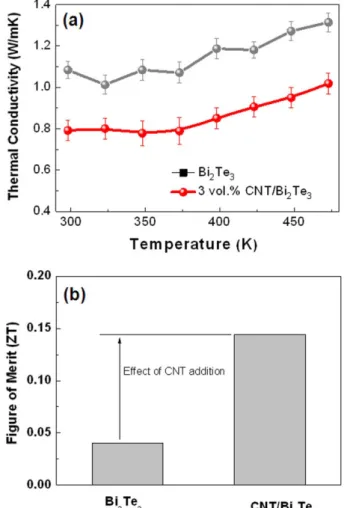
Fig. 3. (a) Comparison of the thermal conductivities between

the 3 vol.% CNT/Bi

2

Te

3

and Bi

2

Te

3

materials as a function of

the temperature when it ranges from 293 K to 473 K, and (b)

figure-of-merit of the CNT/Bi

2

Te

3

composite compared with

the Bi

2

Te

3

materials.

(5)

parably high value of 5.9×10

−5

Ωm of the electrical resistiv- ity of the Bi

2

Te

3

fabricated by this study as compared to the value of 1.0×10

−5

Ωm of the Bi

2

Te

3

ingot materials is caused by residual organic materials and the low relative density range of 92~93%. This is an open issue related to the full densification of thermoelectric materials prepared by chemi- cal routes. The thermal conductivity of the CNT/Bi

2

Te

3

com- posite was largely reduced compared to that of pure Bi

2

Te

3

in the temperature range of 293K to 473K, as shown in Fig.

3(a). This result implies that the reduction of the total ther- mal conductivity in the composites originates from the newly formed CNT/Bi

2

Te

3

interfaces, which cause lattice phonon dissipation, as reported previously by the authors in an alu- mina nanoparticle/Bi

2

Te

3

system [15]. It should be noted that the reduced value of the composite of the thermal conductiv- ity is closely related to the thermal resistance at the CNT/

Bi

2

Te

3

interface as well as the low relative density.

Fig. 3(b) shows a comparison of the figures-of-merit (ZT) of a Bi

2

Te

3

and CNT/Bi

2

Te

3

composite as calcu- lated from the thermoelectric property results measured at room temperature. This demonstrates that the ZT value of the n-type CNT/Bi

2

Te

3

composite significantly increases from 0.04 to 0.14 with the addition of CNTs due to the reduced thermal conductivity and decreased electrical resistivity at room temperature. The absolute ZT value, 0.14, of the composite is comparable to the values of n- type binary Bi

2

Te

3

materials fabricated by the chemical method [16]. This result indicates that CNTs can act as an important agent to achieve high ZT values by increas- ing the electrical conductivity while reducing the thermal conductivity of Bi

2

Te

3

-based thermoelectric materials.

Hence, we speculate that the ZT values may be greatly improved if highly conductive CNTs are utilized or if the matrix powders are more fully consolidated.

4. Conclusions

In summary, CNT/Bi

2

Te

3

composites were fabricated using a wet chemical process followed by spark-plasma sintering. The 3 vol.% CNT/Bi

2

Te

3

composite as created by the described process exhibited a microstructure of CNTs dispersed in a matrix. It was noted that the high values of the thermoelectric properties of the CNT/Bi

2

Te

3

composites originated from the Bi

2

Te

3

matrix, which was incorporated with homogeneously dispersed CNTs. The

reduction in the thermal conductivity of the composite was likely due to the interface thermal resistance, and the decrease of the electrical resistivity originated from the increased carrier density obtained from the added CNTs.

These results clarify that utilizing CNTs in thermoelec- tric materials is a promising means of ensuring a high figure-of-merit (ZT).

Acknowledgements

This work was supported by the principal R&D Pro- gram of the Korea Institute of Materials Science and One of authors (KTK) thanks to the support by Basic Science Research Program through the National Research Founda- tion of Korea (NRF) funded by the Ministry of Education, Science and Technology (grant No. 2013R1A1A2010377).

References

[1] F. J. Disalro: Science, 287 (2000) 1024.

[2] R. J. Mehta, Y. Zhang, C. Karthik, B. Singh, R. W. Siegel, T. Borca-Tascuic and G. Ramanath: Nature Mater. 11 (2012) 233.

[3] X. B. Zhao, X. H. Ji, Y. H. Zhang, T. J. Zhu, J. P. Tu and X. B. Zhang: Appl. Phys. Lett., 86 (2005) 062111.

[4] Y. Q. Cao, X. B. Zhao, T. J. Zhu, X. B. Zhang and J. P.

Tu: Appl. Phys. Lett., 92 (2008) 143106.

[5] W. Xie, X. Tang, Y. Yan, Q. Zhang and T. M. Tritt: Appl.

Phys. Lett., 94 (2009) 102111.

[6] X. A. Fan, J. Y. Yang, R. G. Chen, W. Zhu and S. Q. Bao:

Mat. Sci. Eng. A 438-440 (2006) 190.

[7] B. Poudel et al,: Science, 320 (2008) 634.

[8] L. Zhao, B. Zhang, J. Li, M. Zhou, W. Liu and J. Liu: J.

Alloys Comp., 455 (2008) 259.

[9] G. Zhan, J. D. Kuntz, A. K. Murkherjee, P. Zhu and K.

Koumoto: Scripta Mater., 54 (2006) 77.

[10] Y. Zhang, X. L. Wang, W. K. Yeoh, R. K. Zeng and C.

Zhang: Appl. Phys. Lett., 101 (2012) 031909.

[11] K. T. Kim, S. Y. Choi, E. H. Shin, K. S. Moon, H. Y. Koo, G.

Lee and G. H. Ha: Carbon., 52 (2013) 541.

[12] K. T. Kim, D. Kim and G. H. Ha: Res. Chem. Inter., 36 (2010) 835.

[13] K. T. Kim, H. M. Lee, D. W. Kim, K. J. Kim and G. H.

Ha: J Kor Phys Soc., 57 (2010) 1037.

[14] J. Jiang, L. Chen, S. Bai, Q. Yao and Q. Wang: Scripta Mater., 52 (2005) 347.

[15] K. T. Kim, H. Y. Koo, G. Lee, G. H. Ha: Mater. Lett., 82 (2012) 141.

[16] M. Scheele, N. Oeschler, K. Meier, A. Kornowski, C.

Klinke and H. Weller: Adv. Func. Mater., 19 (2009) 3476.

수치

Fig. 1. (a) Schematic illustration of the synthetic process of the CNT/Bi 2 Te 3  nanopowders, (b) surface morphology of CNT/disc- CNT/disc-shaped Bi 2 Te 3  nanopowders prepared by a chemical route, (c) TEM image of nanopowders exhibiting the structure of
Table 1 shows the result of Hall-effect measurements performed at room temperature. The characterized  electri-cal resistivity decreased from 5.9×10 −5 Ωm to 2.8×10 −5 Ωm.

참조

관련 문서