726
Major Bleeding in Patients With Acute Stroke and Atrial Fibrillation by a Risk Stratification Schema
The ALESSA Score Study
Maurizio Paciaroni, MD; Giancarlo Agnelli, MD; Valeria Caso, MD, PhD;
Georgios Tsivgoulis, MD; Karen L. Furie, MD; Prasanna Tadi, MD; Cecilia Becattini, MD;
Nicola Falocci, PhD; Marialuisa Zedde, MD; Azmil H. Abdul-Rahim, MD;
Kennedy R. Lees, MD; Andrea Alberti, MD; Michele Venti, MD, PhD;
Monica Acciarresi, MD; Cataldo D’Amore, MD; Maria Giulia Mosconi, MD;
Ludovica Anna Cimini, MD; Antonio Procopio, MD; Paolo Bovi, MD; Monica Carletti, MD;
Alberto Rigatelli, MD; Manuel Cappellari, MD; Jukka Putaala, MD;
Liisa Tomppo, MD, PhD; Turgut Tatlisumak, MD; Fabio Bandini, MD;
Simona Marcheselli, MD; Alessandro Pezzini, MD; Loris Poli, MD;
Alessandro Padovani, MD, PhD; Luca Masotti, MD; Vieri Vannucchi, MD;
Sung-Il Sohn, MD, PhD; Gianni Lorenzini, MD; Rossana Tassi, MD;
Francesca Guideri, MD; Maurizio Acampa, MD; Giuseppe Martini, MD; George Ntaios, MD;
Efstathia Karagkiozi, MD; George Athanasakis, MD; Kostantinos Makaritsis, MD;
Kostantinos Vadikolias, MD; Chrysoula Liantinioti, MD; Maria Chondrogianni, MD;
Nicola Mumoli, MD; Domenico Consoli, MD; Franco Galati, MD; Simona Sacco, MD;
Antonio Carolei, MD; Cindy Tiseo, MD; Francesco Corea, MD, PhD; Walter Ageno, MD;
Marta Bellesini, MD; Giovanna Colombo, MD; Giorgio Silvestrelli, MD, PhD;
Alfonso Ciccone, MD; Umberto Scoditti, MD; Licia Denti, MD;
Michelangelo Mancuso, MD; Miriam Maccarrone, MD; Giovanni Orlandi, MD;
Nicola Giannini, MD; Gino Gialdini, MD; Tiziana Tassinari, MD;
Maria Luisa De Lodovici, MD; Giorgio Bono, MD; Christina Rueckert, MD;
Antonio Baldi, MD; Sebastiano D’Anna, MD; Danilo Toni, MD, PhD; Federica Letteri, MD;
Martina Giuntini, MD; Enrico Maria Lotti, MD; Yuriy Flomin, MD; Alessio Pieroni, MD;
Odysseas Kargiotis, MD; Theodore Karapanayiotides, MD, PhD; Serena Monaco, MD;
Mario Maimone Baronello, MD; Laszló Csiba, MD; Lilla Szabó, MD; Alberto Chiti, MD;
Elisa Giorli, MD; Massimo Del Sette, MD; Davide Imberti, MD; Dorjan Zabzuni, MD;
Boris Doronin, MD; Vera Volodina, MD; Patrik Michel, PD-MER; Peter Vanacker, MD;
Kristian Barlinn, MD; Lars-Peder Pallesen, MD; Jessica Kepplinger, MD;
Ulf Bodechtel, MD; Johannes Gerber, MD; Dirk Deleu, MD, PhD; Gayane Melikyan, MD;
Faisal Ibrahim, MD; Naveed Akhtar, MD; Vanessa Gourbali, MD; Shadi Yaghi, MD
Received October 18, 2016; final revision received December 5, 2016; accepted December 19, 2016.
From the Stroke Unit and Division of Cardiovascular Medicine, University of Perugia, Italy (M.P., G. Agnelli, V.C., C.B., N.F., A.A., M.V., M. Acciarresi, C.D., M.G.M., L.A.C., A. Procopio); Department of Neurology, Democritus University of Thrace, University Hospital of Alexandroupolis, Greece (G.T., K.V.);
International Clinic Research Center, St Anne’s University Hospital Brno, Czech Republic (G.T.); Second Department of Neurology, “Attikon” Hospital, University of Athens, School of Medicine, Greece (G.T., C.L., M. Chondrogianni); Division of Stroke and Cerebrovascular Diseases, Department of Neurology, The Warren Alpert Medical School of Brown University, Providence, RI (K.L.F., P.T., S.Y.); Neurology Unit, Stroke Unit, Arcispedale Santa Maria Nuova, IRCCS, Reggio Emilia, Italy (M.Z.); Medical School and Institute of Cardiovascular and Medical Sciences, University of Glasgow, United Kingdom (A.H.A.-R., K.R.L.); Unità Semplice Dipartimentale (USD) Stroke Unit, DAI di Neuroscienze, AOUI Verona, Italy (P.B., M. Carletti, A.R., M. Cappellari); Department of Neurology, Helsinki University Central Hospital, Finland (J.P., L.T., T. Tatlisumak); Institute of Neuroscience and Physiology, Sahlgrenska Academy at University of Gothenburg and Department of Neurology, Sahlgrenska University Hospital, Sweden (T. Tatlisumak); Department of Neurology, Ospedale San Paolo, Savona, Italy (F.B.); Neurologia d’urgenza e Stroke Unit, Istituto Clinico Humanitas, Rozzano, Milano, Italy (S. Marcheselli); Department of Clinical and Experimental Sciences, Neurology Unit, University of Brescia, Italy (A. Pezzini, L.P., A. Padovani); Internal Medicine, Santa Maria Nuova Hospital, Firenze, Italy (L.M., V. Vannucchi); Department of Neurology, Keimyung University School of Medicine, Daegu, South Korea (S.-I.S.); Stroke Unit, AOU Senese, Siena, Italy (G.L.); SC Medicina e Chirurgia d'Accettazione e d'Urgenza, Pontedera o Volterra, Azienda USL Toscana Nord Ovest, Italy (R.T., F. Guideri, M. Acampa, G. Martini); Department of Medicine, University of Thessaly, Larissa, Greece (G.N., E.K., G. Athanasakis, K.M.); Department of Internal Medicine, Ospedale Civile di Livorno, Italy (N.M.); Stroke Unit, Jazzolino Hospital, Vibo Valentia, Italy (D.C., F. Galati); Department of Applied Clinical Sciences and Biotechnology, University of L’Aquila, Italy (S.S., A. Carolei,
© 2017 American Heart Association, Inc.
Stroke is available at http://stroke.ahajournals.org DOI: 10.1161/STROKEAHA.116.015770
by guest on April 9, 2018http://stroke.ahajournals.org/Downloaded from by guest on April 9, 2018http://stroke.ahajournals.org/Downloaded from by guest on April 9, 2018http://stroke.ahajournals.org/Downloaded from by guest on April 9, 2018http://stroke.ahajournals.org/Downloaded from by guest on April 9, 2018http://stroke.ahajournals.org/Downloaded from
Paciaroni et al ALESSA Score 727
A
nticoagulation is highly beneficial for long-term sec- ondary stroke prevention in patients with atrial fibrilla- tion (AF); nonetheless, there is a paucity of data addressing when anticoagulation can be effectively and safely initiated after acute stroke. Data from the recently published observa- tional multicenter RAF study (Early Recurrence and Cerebral Bleeding in Patients With Acute Ischemic Stroke and Atrial Fibrillation) suggested that the optimal time for initiating anticoagulation treatment for secondary stroke prevention is between 4 and 14 days after an acute stroke.1 However, the specific risk/benefit balance for any given patient and which type of strokes is associated with the highest risk and benefit by early anticoagulation remains unclear. Risk stratification could help to drive clinician decisions on anticoagulant treat- ment in this clinical setting.The aim of this prospective multicenter study was to develop and validate a score to predict ischemic events and major bleedings at 90 days from an acute ischemic stroke in patients with AF.
Methods
The risk factors that correlated with outcome events were isolated and included in a new risk stratification score from a prospective cohort of patients (derivation cohort). The validation of the results obtained in the derivation cohort was performed in different patients included in prospective series (validation cohort). Patients included in the derivation cohort were not eligible for inclusion in the valida- tion cohort.
Derivation Cohort
The derivation cohort was extracted from the database of the RAF study, a prospective observational study performed between January 2012 and March 2014 that enrolled consecutive patients with acute ischemic stroke with either known or newly diagnosed AF. The meth- ods and results of RAF study have been described in details.1,2
On admission, the severity of acute stroke was assessed using the National Institutes of Health Stroke Scale; all investigators were cer- tified about the use of this scale.
AF was classified as paroxysmal (episodes terminating spontane- ously within 7 days), persistent (episodes lasting >7 days requiring pharmacological or electric stimulation), or permanent (persisting for
>1 year, either because cardioversion failed or was not attempted).
C.T.); UO Gravi Cerebrolesioni, San Giovanni Battista Hospital, Foligno (F.C.); Department of Clinical and Experimental Medicine, Insubria University, Varese, Italy (W.A., M.B., G.C.); S.C. di Neurologia e S.S. di Stroke Unit, ASST di Mantova, Mantova, Italy (G.S., A. Ciccone); Stroke Unit, Neuroscience Department, University of Parma, Italy (U.S.); Stroke Unit, Dipartimento Geriatrico Riabilitativo, University of Parma, Italy (L.D.); Clinica Neurologica, Azienda Ospedaliero-Universitaria, Pisa, Italy (M. Mancuso, M. Maccarrone, G.O., N.G., G.G., A. Chiti); Neurologia, Ospedale Apuano, Massa Carrara, Italy (G.O., M.G.); Stroke Unit, Department of Neurology, Santa Corona Hospital, Pietra Ligure (Savona), Italy (T. Tassinari); Stroke Unit, Department of Neurology, Insubria University, Varese, Italy (M.L. D.L., G.B.); Abteilung für Neurologie, Oberschwabenklinik gGmbH, Ravensburg, Germany (C.R.);
Stroke Unit, Ospedale di Portogruaro, Portogruaro (Venice), Italy (A.B., S.D.); Department of Neurology and Psychiatry, Sapienza University of Rome, Italy (D.T., F.L., A. Pieroni); U.O. Neurologia Stroke Unit, Ospedale SM delle Croci, Ravenna, Italy (E.M.L.); Stroke and Neurorehabilitation Unit, MC
‘Universal Clinic ‘Oberig’ Kyiv, Ukraine (Y.F.); Stroke Unit, Metropolitan Hospital, Piraeus, Greece (O.K.); 2nd Department of Neurology, AHEPA University Hospital, Thessaloniki, Greece (T.K.); Stroke Unit, Ospedale Civico, Palermo, Italy (S. Monaco, M.M.B.); Stroke Unit, University of Debrecen, Hungary (L.C., L.S.); Stroke Unit, Department of Neurology, Sant’Andrea Hospital, La Spezia, Italy (A. Chiti, E.G., M.D.S.); Divisione di Neurologia, Ospedale Galliera, Genoa, Italy (M.D.S.); Department of Internal Medicine, Ospedale Civile di Piacenza, Italy (D.I., D.Z.); City Hospital No. 1, Novosibirsk State Medical University, Russia (B.D., V. Volodina); Centre Cérébrovasculaire, Service de Neurologie, Département des Neurosciences Cliniques Centre Hopitalier Universitaire Vaudois, Lausanne (Switzerland) (P.M.); Department of Neurology, Born Bunge Institute, Antwerp University Hospital, Antwerp, Belgium (P.V.); Department of Neurology, Dresden University Stroke Center, Germany (K.B., L.-P.P., J.K., U.B., J.G.); Neurology, Hamad Medical Corporation, Doha, Qatar (D.D., G. Melikyan, F.I., N.A.); and Department of Neurology, Evangelismos Hospital, Athens (V.G.).
Guest Editor for this article was Tatjana Rundek, MD, PhD.
The online-only Data Supplement is available with this article at http://stroke.ahajournals.org/lookup/suppl/doi:10.1161/STROKEAHA.
116.015770/-/DC1.
Correspondence to Maurizio Paciaroni, MD, Stroke Unit and Division of Internal and Cardiovascular Medicine, University of Perugia, Santa Maria della Misericordia Hospital, Via G. Dottori 1, Perugia. E-mail [email protected]
Background and Purposes—This study was designed to derive and validate a score to predict early ischemic events and major bleedings after an acute ischemic stroke in patients with atrial fibrillation.
Methods—The derivation cohort consisted of 854 patients with acute ischemic stroke and atrial fibrillation included in prospective series between January 2012 and March 2014. Older age (hazard ratio 1.06 for each additional year; 95%
confidence interval, 1.00–1.11) and severe atrial enlargement (hazard ratio, 2.05; 95% confidence interval, 1.08–2.87) were predictors for ischemic outcome events (stroke, transient ischemic attack, and systemic embolism) at 90 days from acute stroke. Small lesions (≤1.5 cm) were inversely correlated with both major bleeding (hazard ratio, 0.39; P=0.03) and ischemic outcome events (hazard ratio, 0.55; 95% confidence interval, 0.30–1.00). We assigned to age ≥80 years 2 points and between 70 and 79 years 1 point; ischemic index lesion >1.5 cm, 1 point; severe atrial enlargement, 1 point (ALESSA score). A logistic regression with the receiver-operating characteristic graph procedure (C statistic) showed an area under the curve of 0.697 (0.632–0.763; P=0.0001) for ischemic outcome events and 0.585 (0.493–0.678; P=0.10) for major bleedings.
Results—The validation cohort consisted of 994 patients included in prospective series between April 2014 and June 2016.
Logistic regression with the receiver-operating characteristic graph procedure showed an area under the curve of 0.646 (0.529–0.763; P=0.009) for ischemic outcome events and 0.407 (0.275–0.540; P=0.14) for hemorrhagic outcome events.
Conclusions—In acute stroke patients with atrial fibrillation, high ALESSA scores were associated with a high risk of ischemic events but not of major bleedings. (Stroke. 2017;48:726-732. DOI: 10.1161/STROKEAHA.116.015770.)
Key Words: atrial fibrillation ◼ myocardial infarction ◼ risk stratification ◼ stroke
by guest on April 9, 2018http://stroke.ahajournals.org/Downloaded from
A cerebral computed tomography or magnetic resonance was performed on admission in all patients to exclude intracranial hem- orrhage. A second cerebral computed tomographic scan or magnetic resonance was performed 48 to 72 hours from stroke onset. The sizes of the qualifying infarcts were classified as follows: (1) small, when a lesion was ≤1.5 cm, and (2) medium-large, when a lesion was >1.5 cm.
Transthoracic echocardiogram was performed within 7 days from index stroke. Left atrial enlargement and its severity was defined following the American Society of Echocardiography guidelines measuring the left atrial diameter or volume, taking into account the difference between sexes.3
Differences in the characteristics of patients with or without out- come events were tested using χ2 test. Specifically, univariate tests were applied to compare both clinical characteristics on admission and preexisting risk factors for stroke. An exploratory analysis of all variables was performed with a divisive hierarchical clustering method. Cluster analysis is used to construct smaller groups with similar properties from a large set of heterogeneous data. This form of analysis is an effective way to discover relationships within a large number of variables or observations; the identification of potential predictors for outcome events was subsequently made with a series of multiple logistic regression models. These variables included risk factors, reperfusion therapy, severity of stroke on admission accord- ing to National Institutes of Health Stroke Scale score, CHA2DS2- VASc score (2 points for a history of stroke or age ≥75 years, and 1 point each for age 65 to 74 years, a history of hypertension, diabetes mellitus, cardiac failure, vascular disease and sex [female]), and the dimension of the ischemic lesions. The day of starting anticoagulant treatment was inserted into the models as a continuous or a dichoto- mized categorical variable either.
Description of the Risk Stratification Schema (ALESSA Score)
In the cohort of patients included in the RAF study (derivation cohort), older age (hazard ratio 1.06 for 1 added year, standard error 0.0207, β-coefficient 0.055, P=0.0025) and severe atrial enlargement (hazard ratio 2.05, standard error 0.389, β-coefficient 0.989, P=0.027) were shown to be predictive factors for ischemic outcome events occurring within 90 days from acute stroke. The characteristics of the patients in the derivation cohort with and without outcome events are described in Tables I and II in the online-only Data Supplement. Small lesions (≤1.5 cm) on computed tomographic scan or magnetic resonance imaging were inversely correlated with both hemorrhagic (hazard ratio 0.39, standard error 0.491, β-coefficient −1.420, P=0.03) and ischemic outcome events (hazard ratio 0.55, standard error 0.314,
β-coefficient −0.594, P=0.05).1,2 Based on the magnitude of the effect (β-coefficient) associated with these variables, we assigned to age
≥80 years 2 points; age between 70 to 79 years 1 point; the presence of an ischemic index lesion >1.5 cm 1 point; and presence of severe atrial enlargement 1 point (ALESSA score).
Figure 1. The risk of ischemic outcome events and symptom- atic intracranial bleedings/major extracranial bleeding according to ALESSA score in the derivation cohort. ALESSA indicates age ≥80 years (2 points) and between 70 to 79 years (1 point), ischemic index lesion >1.5 cm (1 point), severe atrial enlargement (1 point).
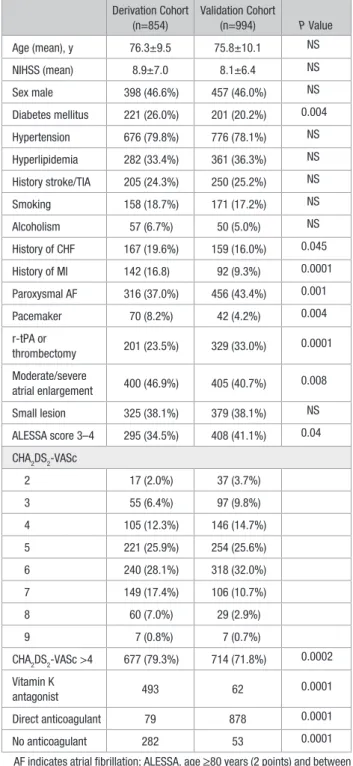
Table 1. Characteristics of Patients Included in the Derivation and Validation Cohorts
Derivation Cohort (n=854)
Validation Cohort
(n=994) P Value
Age (mean), y 76.3±9.5 75.8±10.1 NS
NIHSS (mean) 8.9±7.0 8.1±6.4 NS
Sex male 398 (46.6%) 457 (46.0%) NS
Diabetes mellitus 221 (26.0%) 201 (20.2%) 0.004
Hypertension 676 (79.8%) 776 (78.1%) NS
Hyperlipidemia 282 (33.4%) 361 (36.3%) NS History stroke/TIA 205 (24.3%) 250 (25.2%) NS
Smoking 158 (18.7%) 171 (17.2%) NS
Alcoholism 57 (6.7%) 50 (5.0%) NS
History of CHF 167 (19.6%) 159 (16.0%) 0.045 History of MI 142 (16.8) 92 (9.3%) 0.0001 Paroxysmal AF 316 (37.0%) 456 (43.4%) 0.001
Pacemaker 70 (8.2%) 42 (4.2%) 0.004
r-tPA or
thrombectomy 201 (23.5%) 329 (33.0%) 0.0001 Moderate/severe
atrial enlargement 400 (46.9%) 405 (40.7%) 0.008
Small lesion 325 (38.1%) 379 (38.1%) NS
ALESSA score 3–4 295 (34.5%) 408 (41.1%) 0.04 CHA2DS2-VASc
2 17 (2.0%) 37 (3.7%)
3 55 (6.4%) 97 (9.8%)
4 105 (12.3%) 146 (14.7%)
5 221 (25.9%) 254 (25.6%)
6 240 (28.1%) 318 (32.0%)
7 149 (17.4%) 106 (10.7%)
8 60 (7.0%) 29 (2.9%)
9 7 (0.8%) 7 (0.7%)
CHA2DS2-VASc >4 677 (79.3%) 714 (71.8%) 0.0002 Vitamin K
antagonist 493 62 0.0001
Direct anticoagulant 79 878 0.0001
No anticoagulant 282 53 0.0001
AF indicates atrial fibrillation; ALESSA, age ≥80 years (2 points) and between 70 to 79 years (1 point), ischemic index lesion >1.5 cm (1 point), severe atrial enlargement (1 point); CHA2DS2-VASc, 2 points for a history of stroke or age
≥75 years, and 1 point each for age 65 to 74 years, a history of hypertension, diabetes mellitus, cardiac failure, vascular disease and sex (female); CHF, congestive heart failure; MI, myocardial infarction; NIHSS, National Institutes of Health Stroke Scale; r-tPA, recombinant tissue-type plasminogen activator; and TIA, transient ischemic attack.
by guest on April 9, 2018http://stroke.ahajournals.org/Downloaded from
Paciaroni et al ALESSA Score 729
Validation Cohort
The validation cohort consisted of 994 ischemic stroke patients with acute stroke and AF seen between April 2014 and June 2016 deriving from several international prospective stroke series. Patients included in the validation cohort were those with a reported echocardiogram within 7 days among 1161 consecutive patients. Inclusion criteria, outcome definition, and statistical analysis were as in the derivation cohort.
Patients treated with revascularization (systemic recombinant tissue-type plasminogen activator or intravascular thrombectomy) were assumed as having a final lesion >1.5 cm if they had a National Institutes of Health Stroke Scale score ≥10 prior to treatment.4
Definition of Outcome Events
Outcome events for this study were ischemic outcome events (com- bination of stroke, transient ischemic attack, and systemic embolism) and hemorrhagic outcome events (combination of symptomatic intra- cranial bleeding and major extracranial bleeding) occurring within 90 days. Stroke was defined as the sudden onset of a new focal neu- rological deficit of vascular origin in a site consistent with the terri- tory of a major cerebral artery and categorized as ischemic. Transient ischemic attack was defined as a transient episode of neurological dysfunction caused by focal brain ischemia without acute infarction at neuroimaging. Systemic embolism was defined as an acute vascu- lar occlusion of an extremity or organ confirmed by imaging, surgery, or autopsy. Hemorrhagic transformation found on neuroimaging 24 to 72 hours after onset was not considered an outcome event, unless they were symptomatic. Major extracranial bleeding was defined as a reduction in the hemoglobin level of at least 2 g/dL, requiring a blood transfusion of at least 2 U, or symptomatic bleeding in a critical area or organ.5
Statistical Analysis Derivation Cohort
A descriptive analysis with proportions was used to describe the derivation cohort and the event rates of ischemic outcome events and hemorrhagic outcome events. The 95% confidence interval (CI) of event rates using the binomial approximation was calculated. A logistic regression analysis was performed with ALESSA risk factors as independent variables and ischemic events and major intra- and extracranial bleeding as dependent variables. The probability that this model would predict the correct classification of individual patients (with or without ischemic or hemorrhagic outcome events) was saved.
Thereafter, the probabilities in a receiver-operating characteristic curve against ischemic or hemorrhagic outcome events as dependent
variables were plotted. The areas under the curves for these receiver- operating characteristic curves represent the ability of the ALESSA score to correctly classify risks for ischemic or hemorrhagic outcome events, which are also referred to as the C statistic (Harrell’s C).6 Validation Cohort
The same statistical analysis performed in the derivation cohort was used in the validation cohort.
Results Derivation Cohort
In the RAF cohort (Table I in the online-only Data Supplement), high scores of the ALESSA score (3 and 4) were correlated with ischemic outcome events but not with hemor- rhagic outcome events (Figure 1). Patient’s characteristics for both cohorts are reported in Table 1. Multivariable analysis confirmed that ALESSA score, as continuous variable, was an independent predictor of ischemic outcome events (odds ratio [OR], 1.83 for 1 added point; 95% CI, 1.17–2.87; P=0.008), while it was not correlated with hemorrhagic outcome events (OR, 1.07 for 1 added point; 95% CI, 0.48–2.40; P=0.8).
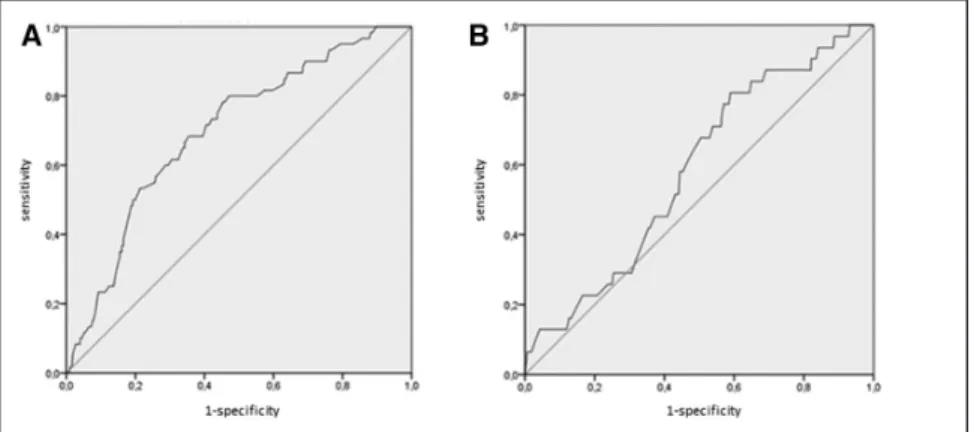
Logistic regression with the receiver-operating character- istic graph procedure to obtain the C statistic showed that the area under the curve was 0.697 (0.632–0.763; P=0.0001) for ischemic outcome events and 0.585 (0.493–0.678; P=0.10) for hemorrhagic outcome events (Figure 2A and 2B). On multivariate regression analysis, a score >2 was found to be correlated with ischemic outcome events (OR, 2.5; 95%
CI, 1.4–4.4; P=0.001), while it was found not to correlated with hemorrhagic outcome events (OR, 1.1; 95% CI, 0.5–2.4;
P=0.9).
Validation Cohort
The features of the validation cohort and the relative differ- ences with the derivation cohort are shown in Table 1. The main differences between derivation and validation cohorts were that the validation cohort had lower CHA2DS2-VASc score compared with the derivation cohort and that 88% of the patients in the validation cohort were treated with direct anticoagulants compared with 10% in the derivation cohort.
Figure 2. Logistic regression with the receiver operating characteristic graph procedure to obtain the C statistic for ischemic outcome events within 90 days (A) and for major intra- and extracerebral bleedings (B) in the derivation cohort.
by guest on April 9, 2018http://stroke.ahajournals.org/Downloaded from
A lower risk of composite outcome event was observed in the validation cohort (4.9%) compared with the derivation cohort (11.5%; Table 2).
In the validation cohort, high scores of the ALESSA score were correlated with ischemic outcome events but not with hemorrhagic outcome events (Figure 3). Study outcomes are reported in Tables 1 and 2.
Multivariable analysis confirmed that ALESSA score as continuous variable was an independent predictor of isch- emic outcome events (OR, 1.69 for 1 added point; 95% CI, 1.00–2.85; P=0.048), while it was not correlated with hemor- rhagic outcome events (OR, 1.19 for 1 added point; 95% CI, 0.68–2.09; P=0.5).
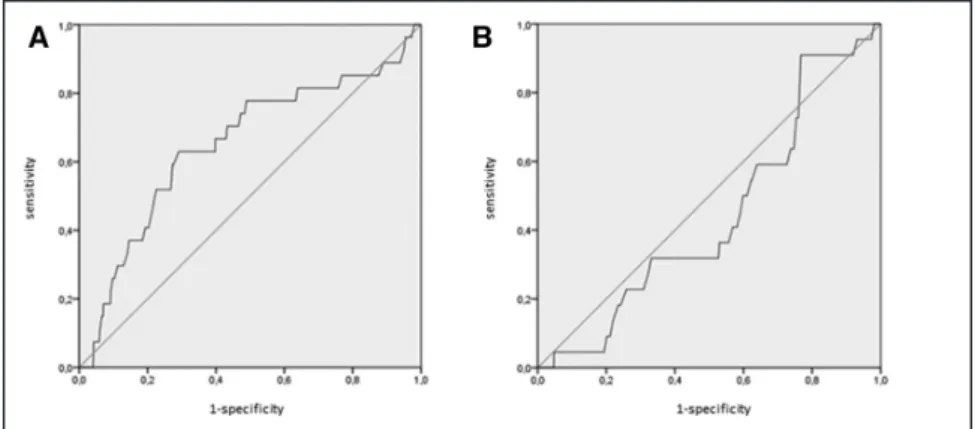
Logistic regression with the receiver-operating character- istic graph procedure to obtain the C statistic showed that the area under the curve was 0.646 (0.529–0.763; P=0.009) for ischemic outcome events within 90 days and 0.407 (0.275–
0.540; P=0.14) for hemorrhagic outcome events (Figure 4A and 4B).
On multivariate regression analysis, a score >2 was margin- ally found not to be associated with ischemic outcome events (OR, 2.07; 95% CI, 0.93–4.67; P=0.07), while it was found not to be correlated with hemorrhagic outcome events (OR, 0.7; 95% CI, 0.3–1.8; P=0.4).
Discussion
In patients with ischemic stroke with AF, the risk of stroke recurrence has been found to be particularly high in the first 2 weeks after the acute event.7 Despite this observa- tion, in these patients, there are no comparative studies on the optimal timing of starting of anticoagulation. Thus, such a decision hinges on the assessment of the competing risks for early thromboembolic recurrences and hemorrhagic transformation.
The RAF study suggested that in patients with acute stroke and AF, the best time for initiating anticoagulation treatment for secondary stroke prevention ranges from 4 to 14 days from stroke onset. In patients with acute stroke and AF, clinicians would like to be able to identify those patients who may be candidates to prompt anticoagulation, with a risk of early recurrence high enough to justify the risk of cerebral bleed- ing associated with early anticoagulant treatment. Several risk factors could be used to estimate the risk of recurrence or cerebral bleeding.8 In this study, a novel risk factor–based approach to stroke risk stratification in patients with acute stroke and AF has been validated. Within 90 days from index stroke, patients with ALESSA score between 0 and 2 have a low risk for both ischemic recurrent events and bleeding.
During the same period of time, patients with scores 3 or 4 have a statistically significantly increase in the risk of isch- emic recurrent events but not of the risk of bleeding. These results may be explained by the fact that the ALESSA score was built picking up from the derivation cohort the variables that correlated with ischemic recurrence and not with hem- orrhagic transformation. Our clinical interpretation is that patients with score 3 or 4 could have the best benefit from an early anticoagulation. The optimal time of starting anticoagu- lant treatment might not be the same with all anticoagulants because of the different promptness of action. Indeed, direct anticoagulants reach therapeutic level in ≈2 hours, while vita- min K antagonists may take days to achieve it.
The C statistic showed a 0.646 predictive value of the ALESSA score for ischemic events. This value, although not outstanding, is of the same order of magnitude of the 0.606 predictive value of the CHA2DS2-VASc for long-term risk of thromboembolism in patients with AF.9 Notably, CHA2DS2- VASc score is currently considered the best score to choose the type of antithrombotic treatment for long-term stroke prevention in patients with AF. Indeed, in patients with acute stroke and AF, it was found that CHA2DS2-VASc score was a predictive factor for ischemic recurrence occurring as early as within 90 days from stroke onset.8 However, in this study, Table 2. End Points in the Derivation and Validation Cohorts
by Different Oral Anticoagulants
Derivation Cohort (n=854)
Validation Cohort (n=994) Recurrent ischemic event (90 days) 66 (7.7%) 27 (2.7%)
Ischemic stroke 50 22
TIA 9 4
Systemic embolism 7 1
Hemorrhagic event (90 days) 31 (3.6%) 22 (2.2%) Symptomatic intracranial
bleeding
29 14
Major extracranial bleeding 2 8
Recurrent ischemic event (at 90 days)
Vitamin K antagonist 35/493 (7.1%) 3/62 (4.8%) Direct anticoagulant 4/79 (5.1%) 21/878 (2.4%) Hemorrhagic event (at 90 days)
Vitamin K antagonist 15/493 (3.0%) 6/62 (9.6%) Direct anticoagulant 2/79 (2.5%) 21/878 (1.6%)
TIA indicates transient ischemic attack.
Figure 3. The risk of ischemic outcome events and symptomatic intracranial bleedings/major extracranial bleeding according to ALESSA score in the validation cohort. ALESSA indicates age ≥80 years (2 points) and between 70 to 79 years (1 point), ischemic index lesion >1.5 cm (1 point), severe atrial enlargement (1 point).
by guest on April 9, 2018http://stroke.ahajournals.org/Downloaded from
Paciaroni et al ALESSA Score 731
CHA2DS2-VASc score was a predictive factor, along with isch- emic recurrent event, of early symptomatic cerebral bleeding.
Therefore, CHA2DS2-VASc score cannot be used to identify those patients with acute stroke and AF who benefit the most of early anticoagulation.
This study has some limitations. The validation cohort had a lower CHA2DS2-VASc score compared with the derivation cohort; furthermore, ≈88% of the patients in the validation cohort were treated with direct oral anticoagulants compared with ≈10% of the patients in the derivation cohort. These dif- ferences because of different time periods of data collection, probably, lead to a lower rate of outcome events (the com- bination of ischemic and hemorrhagic events) in the valida- tion cohort compared with the derivation cohort (4.9% versus 10.8%, respectively). The low rates of events in the validation cohort may have led to reduce statistical power in the study.
However, the study has the advantage to mirror the changes in clinical practice in this clinical setting. In the patients of derivation cohort treated mainly with vitamin K antagonists, a key determinant of hemorrhagic risk (and also efficacy of infarct prevention) would be the international normalized ratio. Unfortunately, the international normalized ratio at the moment of the outcome event was not available.
Our study has also some strengths as the sample size and the prospective design. In view of the absence of any randomized trial, the ALESSA score based on simple and easily available variables could assist stroke physicians in better managing acute cerebral ischemia in patients with AF. Furthermore, the score may be used as a selection criteria for trials evaluating early anticoagulation in patients with acute stroke and AF.
Conclusions
ALESSA is a novel, simple risk stratification score for patients with acute stroke and AF based on age, lesion size, and the presence of severe atrial enlargement. High scores of this schema are associated with the risk of ischemic recurrent events but not with bleeding. Therefore, patients with acute stroke and AF and an ALESSA score higher than 2 are candi- dates to an early anticoagulation treatment.
Disclosures
Dr Paciaroni received honoraria as a member of the speaker bureau of Sanofi-Aventis, Boehringer Ingelheim, Bayer, Bristol Meyer Squibb, and Pfizer. Dr Agnelli received honoraria as a member of the speaker bureau of Boehringer Ingelheim and Bayer. Dr Becattini received honoraria as a member of the speaker bureau of Bristol Meyer Squibb and Bayer. Dr Caso received honoraria as a member of the speaker bureau and as consultant or advisory board of Boehringer Ingelheim. P. Michel received Research Grant by Swiss National Science Foundation and Swiss Heart Foundation; he received speaker fees by Bayer, Boehringer Ingelheim, Covidien, St Jude Medical; he received honoraria as advisory relationship by Pierre-Fabre, Bayer, Bristol Meyer Squibb, Amgen, and Boehringer Ingelheim. Dr Putaala received honoraria for lectures related to atrial fibrillation and anti- coagulants for Orion Pharma, Bristol Meyer Squibb, Pfizer, Bayer, and Boehringer Ingelheim. Dr Tatlisumak received honoraria as consultant or advisory relationship by Lundbeck and Boehringer Ingelheim. Dr Tsivgoulis had research support by European Regional Development Fund—Project St. Anne´s University Hospital, Brno—International Clinical Research Center (FNUSA-ICRC) (No.
CZ.1.05/1.1.00/02.0123). Dr Toni received honoraria as a member of speaker bureau and as advisory board of Boehringer Ingelheim, Pfizer, Bristol Meyer Squibb and Bayer. The other authors report no conflicts.
References
1. Paciaroni M, Agnelli G, Falocci N, Caso V, Becattini C, Marcheselli S, et al.
Early recurrence and cerebral bleeding in patients with acute ischemic stroke and atrial fibrillation: effect of anticoagulation and its timing: the RAF study.
Stroke. 2015;46:2175–2182. doi: 10.1161/STROKEAHA.115.008891.
2. Paciaroni M, Agnelli G, Falocci N, Caso V, Becattini C, Marcheselli S, et al. Prognostic value of trans-thoracic echocardiography in patients with acute stroke and atrial fibrillation: findings from the RAF study. J Neurol.
2016;263:231–237. doi: 10.1007/s00415-015-7957-3.
3. Lang RM, Bierig M, Devereux RB, Flachskampf FA, Foster E, Pellikka PA, et al; Chamber Quantification Writing Group; American Society of Echocardiography’s Guidelines and Standards Committee; European Association of Echocardiography. Recommendations for chamber quan- tification: a report from the American Society of Echocardiography’s Guidelines and Standards Committee and the Chamber Quantification Writing Group, developed in conjunction with the European Association of Echocardiography, a branch of the European Society of Cardiology. J Am Soc Echocardiogr. 2005;18:1440–1463. doi: 10.1016/j.echo.2005.10.005.
4. Fischer U, Arnold M, Nedeltchev K, Brekenfeld C, Ballinari P, Remonda L, et al. NIHSS score and arteriographic findings in acute ischemic stroke. Stroke. 2005;36:2121–2125. doi: 10.1161/01.STR.0000182099.
04994.fc.
Figure 4. Logistic regression with the receiver operating characteristic graph procedure to obtain the C statistic for ischemic outcome events within 90 days (A) and for major intra- and extracerebral bleedings (B) in the validation cohort.
by guest on April 9, 2018http://stroke.ahajournals.org/Downloaded from
5. Schulman S, Kearon C; Subcommittee on Control of Anticoagulation of the Scientific and Standardization Committee of the International Society on Thrombosis and Haemostasis. Definition of major bleed- ing in clinical investigations of antihemostatic medicinal products in non-surgical patients. J Thromb Haemost. 2005;3:692–694. doi:
10.1111/j.1538-7836.2005.01204.x.
6. Strbian D, Meretoja A, Ahlhelm FJ, Pitkäniemi J, Lyrer P, Kaste M, et al.
Predicting outcome of IV thrombolysis-treated ischemic stroke patients:
the DRAGON score. Neurology. 2012;78:427–432. doi: 10.1212/
WNL.0b013e318245d2a9.
7. Micheli S, Agnelli G, Caso V, Paciaroni M. Clinical benefit of early anticoagulation in cardioembolic stroke. Cerebrovasc Dis. 2008;25:289–
296. doi: 10.1159/000118372.
8. Paciaroni M, Agnelli G, Ageno W, Caso V. Timing of anticoagulation therapy in patients with acute ischaemic stroke and atrial fibrillation.
Thromb Haemost. 2016;116:410–416. doi: 10.1160/TH16-03-0217.
9. Lip GY, Nieuwlaat R, Pisters R, Lane DA, Crijns HJ. Refining clinical risk stratification for predicting stroke and thromboembolism in atrial fibril- lation using a novel risk factor-based approach: the euro heart survey on atrial fibrillation. Chest. 2010;137:263–272. doi: 10.1378/chest.09-1584.
by guest on April 9, 2018http://stroke.ahajournals.org/Downloaded from
Gayane Melikyan, Faisal Ibrahim, Naveed Akhtar, Vanessa Gourbali and Shadi Yaghi Barlinn, Lars-Peder Pallesen, Jessica Kepplinger, Ulf Bodechtel, Johannes Gerber, Dirk Deleu,
Dorjan Zabzuni, Boris Doronin, Vera Volodina, Patrik Michel, Peter Vanacker, Kristian Laszló Csiba, Lilla Szabó, Alberto Chiti, Elisa Giorli, Massimo Del Sette, Davide Imberti, Odysseas Kargiotis, Theodore Karapanayiotides, Serena Monaco, Mario Maimone Baronello,
Toni, Federica Letteri, Martina Giuntini, Enrico Maria Lotti, Yuriy Flomin, Alessio Pieroni, De Lodovici, Giorgio Bono, Christina Rueckert, Antonio Baldi, Sebastiano D'Anna, Danilo Maccarrone, Giovanni Orlandi, Nicola Giannini, Gino Gialdini, Tiziana Tassinari, Maria Luisa
Silvestrelli, Alfonso Ciccone, Umberto Scoditti, Licia Denti, Michelangelo Mancuso, Miriam Tiseo, Francesco Corea, Walter Ageno, Marta Bellesini, Giovanna Colombo, Giorgio Nicola Mumoli, Domenico Consoli, Franco Galati, Simona Sacco, Antonio Carolei, Cindy Kostantinos Makaritsis, Kostantinos Vadikolias, Chrysoula Liantinioti, Maria Chondrogianni,
Athanasakis, Maurizio Acampa, Giuseppe Martini, George Ntaios, Efstathia Karagkiozi, George
Masotti, Vieri Vannucchi, Sung-Il Sohn, Gianni Lorenzini, Rossana Tassi, Francesca Guideri, Bandini, Simona Marcheselli, Alessandro Pezzini, Loris Poli, Alessandro Padovani, Luca Alberto Rigatelli, Manuel Cappellari, Jukka Putaala, Liisa Tomppo, Turgut Tatlisumak, Fabio
Giulia Mosconi, Ludovica Anna Cimini, Antonio Procopio, Paolo Bovi, Monica Carletti, Kennedy R. Lees, Andrea Alberti, Michele Venti, Monica Acciarresi, Cataldo D'Amore, Maria
Prasanna Tadi, Cecilia Becattini, Nicola Falocci, Marialuisa Zedde, Azmil H. Abdul-Rahim, Maurizio Paciaroni, Giancarlo Agnelli, Valeria Caso, Georgios Tsivgoulis, Karen L. Furie,
Score Study
With Acute Stroke and Atrial Fibrillation by a Risk Stratification Schema: The ALESSA Prediction of Early Recurrent Thromboembolic Event and Major Bleeding in Patients
Print ISSN: 0039-2499. Online ISSN: 1524-4628
Copyright © 2017 American Heart Association, Inc. All rights reserved.
is published by the American Heart Association, 7272 Greenville Avenue, Dallas, TX 75231 Stroke
doi: 10.1161/STROKEAHA.116.015770
2017;48:726-732; originally published online February 9, 2017;
Stroke.
http://stroke.ahajournals.org//subscriptions/
is online at:
Stroke Information about subscribing to Subscriptions:
http://www.lww.com/reprints
Information about reprints can be found online at:
Reprints:
document.
Permissions and Rights Question and Answer process is available in the
Request Permissions in the middle column of the Web page under Services. Further information about this Once the online version of the published article for which permission is being requested is located, click
can be obtained via RightsLink, a service of the Copyright Clearance Center, not the Editorial Office.
Stroke in
Requests for permissions to reproduce figures, tables, or portions of articles originally published Permissions:
by guest on April 9, 2018http://stroke.ahajournals.org/Downloaded from
http://stroke.ahajournals.org/content/48/3/726
http://stroke.ahajournals.org/content/suppl/2017/02/09/STROKEAHA.116.015770.DC1
Data Supplement (unedited) at:
http://stroke.ahajournals.org//subscriptions/
is online at:
Stroke Information about subscribing to Subscriptions:
http://www.lww.com/reprints
Information about reprints can be found online at:
Reprints:
document.
Permissions and Rights Question and Answer process is available in the
Request Permissions in the middle column of the Web page under Services. Further information about this Once the online version of the published article for which permission is being requested is located, click
can be obtained via RightsLink, a service of the Copyright Clearance Center, not the Editorial Office.
Stroke in
Requests for permissions to reproduce figures, tables, or portions of articles originally published Permissions:
by guest on April 9, 2018http://stroke.ahajournals.org/Downloaded from
Supplemental materials
Table 1 supplemental file: characteristics of patients in the derivation cohorts with and without ischemic outcome events
With ischemic outcome events
(n=63)
Without ischemic outcome events
(n=791)
p
Age (mean, years) 79.3 ± 8.8 76.0 ± 9.5 0.011
NIHSS (mean) 10.3 ± 7.3 8.8 ± 6.9 ns
ns
Sex male 26 (41.3%) 373 (47.1%) ns
Diabetes mellitus 22 (34.9%) 199 (25.2%) ns
Hypertension 56 (88.9%) 620 (78.4%) ns
Hyperlipidemia 22 (34.9%) 260 (32.9%) ns
History stroke/TIA 21 (33.3%) 184 (23.3%) ns
Smoking 19 (30.2%) 198 (25.0%) ns
Alcoholism 4 (6.4%) 53 (6.7%) ns
History of CHF 18 (28.6%) 149 (18.8%) ns
History of MI 10 (15.9%) 132 (16.6%) ns
Paroxysmal AF 18 (28.6%) 298 (37.7%) ns
Pacemaker 10 (15.9%) 60 (7.6%) 0.03
rtPA and/or thrombectomy 16 (25.4%) 185 (23.4%) ns
Moderate/Severe atrial enlargement 23 (36.5%) 174 (22.0%) 0.013
Small lesion 16 (25.4%) 309 (39.1%) 0.03
Alessa score 3-4 38 (60.3%) 257 (32.5%) 0.0001
CHA2DS2-VASc >4 55 (87.3%) 622 (78.6%) ns
Table 2 supplemental file: characteristics of patients in the derivation cohorts with and without hemorrhagic outcome events
With hemorrhagic outcome events
(n=31)
Without hemorrhagic outcome events
(n=823)
p
Age (mean, years) 75.1 ± 9.8 76.3 ± 9.5 ns
NIHSS (mean) 9.1 ± 6.6 8.9 ± 7.0 ns
ns
Sex male 15 (48.4%) 383 (46.5%) ns
Diabetes mellitus 10 (32.2%) 211 (25.6%) ns
Hypertension 27 (87.1%) 649 (78.8%) ns
Hyperlipidemia 10 (32.2%) 272 (33.0%) ns
History stroke/TIA 4 (12.9%) 201 (24.4%) ns
Smoking 10 (32.2%) 217 (26.4%) ns
Alcoholism 4 (12.9%) 53 (6.4%) ns
History of CHF 8 (25.8%) 159 (19.3%) ns
History of MI 8 (25.8%) 134 (16.3%) ns
Paroxysmal AF 10 (32.2%) 306 (37.2%) ns
Pacemaker 5 (16.1%) 65 (7.9%) ns
rtPA and/or thrombectomy 6 (19.3%) 195 (23.7%) ns
Moderate/Severe atrial enlargement 9 (29.0%) 188 (22.8%) ns
Small lesion 5 (16.1%) 320 (38.9%) 0.01
Alessa score 3-4 11 (35.5%) 284 (34.1%) ns
CHA2DS2-VASc >4 27 (87.1%) 650 (79.0%) ns