• 검색 결과가 없습니다.

The Effect of a Balance Training Program to Improve the Balance of Aged Patients with Diabetes Mellitus

N/A
N/A
Protected

Academic year: 2021

Share "The Effect of a Balance Training Program to Improve the Balance of Aged Patients with Diabetes Mellitus"

Copied!
8
0
0

로드 중.... (전체 텍스트 보기)

전체 글

(1)

Yong-Woo Lee, PT, MS; Se-Jong Choi, PT, MS; Chang-Ho Song, PT, PhD

Department of Physical Therapy, College of Health & Welfare, Sahmyook University

Purpose: The purpose of this study was to determine whether a balance training program could improve the balancing ability of elderly patients with type II diabetes mellitus. If yes, the results could lead to development of a method to prevent falls in elderly patients with type II diabetes mellitus (DM).

Methods: Subjects were 28 elderly patients with type II DM. Subjects were divided into a control and an experimental group with 14 patients in each group. The experimental group had a balance training program consisting of balance training and lower extremity muscle strengthening exercises. The exercise group met twice a week for 8 weeks. All subjects were evaluated using a force plate for the amount of postural sway. To determine the degree of diabetes, we measured Hemoglobin A1c.

Results: Balance in the experimental group (p<0.05) increased significantly compared to the control group.

Conclusion: The results suggest that a balance training program should be recommended for improving balance and preventing falls in elderly type II DM patients.

Keywords: Postural balance, Aged, Diabetes mellitus, Exercise Received: April 30, 2010

Revised: June 8, 2010 Accepted: June 16, 2010

Corresponding author: Chang-Ho Song, [email protected]

Balance of Aged Patients with Diabetes Mellitus

The Journal Korean Society of Physical Therapy

I. Introduction

The increasing population of elderly people has become a worldwide phenomenon based on the development of medicine and the economy growth. South Korea has an aging society with 7.2 % of elderly people. The prognosis is that the society will become aged with 14.1% of elderly people in 2019 and turn into a post-aged society with 23.1% in 2026.

1

As Korea enters aging society, the elderly concern about health more than other problem.

2

When people become older, their musculoskeletal, respiratory and digestive system is weakened.

As the musculoskeletal system ages, the reduction of muscle dimen- sion shows up and muscles degenerate 5% per a day.

3

Aniansson et al.

4

reported that the muscle capability of people in their eighties is 40% smaller than that of people in their thirties. Moreover, the change of nervous system delays time to respond to stimuli, lowers velocity of nerve conduction and degrades function of nerve system thus reduce balancing ability. Those lowered physical

functions can cause not only the reduction of leg muscle, balancing ability and flexibility but leads to a fall when walking.

5

Fall is not only cause hospitalization in nursing homes but one of the serious problems threatening the health of the elderly.

6

One-third of the elderly aged over 65 experiences a fall in lifetime. Moreover, half of them have more than once in their lifetime. Particularly, hospitalized elderly patients fall frequently when trying to lie down and arising from bed.

7,8

Falls which happen to the elderly can be serious complications

such as traumatic injury, fracture, decrease quality of life, and

death.

9

In the United states, fracture of femur from fall happens

two hundred fifteen thousand times a year as 4 % of them die in

hospital and 23 % of them die within a year after accident.

10

The

medical cost for hip fracture is expected to be 62 billion dollars

in year 2040.

11

It is necessary that falls should be prevented by

finding its causes because the damage from falls is personally and

socially serious. Besides the physical damage from falls, the fear

of falls results in the decrease of social activities which leads to

(2)

reduce of physical activities.

12

The decreased balancing ability, nerve disease and the weakened muscles can result in abnormal gait due to the abnormal pressure distribution of feet. The above mentioned medical conditions tend to cause slow gait and the simultaneous occurrence of circumduction in the swing phase.

13

Diabetes is closely related to aging. Also, the increasing of prevalence rate and mortality of type II diabetes is a serious health problem for the elderly. Worldwide 38% of the elderly aged over 65 has diabetes.

14

Elderly people with Type II diabetes can incur serious health problems when they fall.

Yamamoto et al.

15

claimed that people with type II diabetes have weaker sense of equilibrium in the relationship between diabetes neuropathy and posture sway. The loss of somatic sen- sation is one of the characteristics of patients who have the diabetic neuropathy.

16

For those patients, the sway in standing posture increases relatively compared with normal person.

17

According to these reasons, the elderly with type II diabetes experiences the fall fifteen times more compare with normal elderly person. Therefore the stimulus of somatic sensation is the way to improve sense of equilibrium.

18

According to previous studies, the physiologic cause of falls proved to be vertigo, unstable posture, orthostatic hypotension, lack of equilibrium, abnormal gait, weakening of legs muscle and reduction of legs joint’s flexibility.

18,19

Particularly Wolfson et al.

20

reported that leg muscles have a closed relation with gait ability and the sense of equilibrium. Brown et al.

21

reported that the weakened leg muscles deteriorate the velocity of gait, sense of equilibrium and ability to climb stairs. Province et al.

22

reported that loss of strength and range of motion increases the risk of falls and injury from falls. Methods to prevent falls include exer- cise, and combination programs that are a mixture of exercise, training and environmental control.

23,24

Many methods have been developed but exercise has been used most often.

A study in exercise intervention as a mean to prevent falls of the elderly started in 1998 in Korea and it has since been active.

However, just 9 (36%) out of the total 25 studies of exercise intervention chose to assess only elderly people who are likely fall.

25

In the study of elderly patients hospitalized by falls, Eom et al.

26

reported that diabetes is the second most common cause of falls after hypertension (50%). The study applies a balance training program to elderly persons with diabetes for 8 weeks in order to find the effect of the balance training program on

balancing ability of the elderly patients with diabetes mellitus.

The results of this study are used to reduce the risk of falls.

II. Methods

1. Setting and participants

The subjects of study were the 32 elderly persons who showed symptoms of nerve disease after were diagnosed of the type II diabetes by physicians. Among them persons who has disease relating orthopedics, vestibular or cerebellum, has difficulty in communication due to cognitive disorder and cannot accomplish activities of balancing were excluded. By the standard of selection, 2 of them were excluded. Only the persons who agreed to join the study after explaining the purpose of study were selected.

The 28 elderly persons with diabetes were divided into experimental group and control group consisted of 14 persons each.

The group was divided into experimental group and control group after pre-examination. The control group is one in which no treatment and twice 50 minute exercises were applied to experimental group twice a week for 8 weeks. The exercise was practiced according to designated schedule and daily report for each exercise was made. The person whose personal exercise completion rate is less than 80% was excluded from study group.

For control group, in 8 weeks a person was excluded from control group due to personal occasion and deterioration of health and 14 persons got post-test. For experimental group a person whose completion rate was less than 80% was excluded from group and 13 persons got the post-test due to personal occasion (Figure 1).

2. Intervention

The balance training program consists of warm-up, main exer-

cise and cool-down. Warm-up consists of stretching and relaxa-

tion and main exercise consists of muscle strengthening exercise

and balancing exercise while cool-down consists of breathing

exercise. The exercise to improve balancing ability is proved to

be more efficient when muscle strengthening and balancing

exercise is made simultaneously through previous study.

25

So we

organized main exercise with muscle strengthening and balancing

exercise. Two or three times of practice of exercise improve muscle

strength and one time practice of exercise supports it. Generally

it needs 4∼6 weeks of resistance exercise to improve muscle

strength.

25

In the previous study, we generally designated the

(3)

Figure 1. Procedure of study.

period as 4∼12 weeks and the effect of improvement of balancing showed up in 8 weeks.

25

Accordingly this exercise program was organized with exercise teaching of twice a week for 8 weeks and self-exercises.

The warm-up stretching in was performed on the shoulder, arm, trunk, hip and legs. Also relaxation method was applied on upper limbs to lower limbs with repetitive muscle contraction and relaxation along with deep breathing. Elastic band was used in muscle strengthening exercise. Elastic band was used often because it has low risk of damage from exercise and easy to use.

The color of elastic band indicates the elastic strength. So the elastic band of yellow and red color, which is for lighter resi- stance, was used for female elderly persons while blue, which is for more advanced exercisers needing more resistance, and green, which is good for starting a strengthening program, one was used for male elderly person. In order to find appropriate elastic strength, the feeling of tension in 10th stretch was chosen as the standard to fit their physical strength.

26

The exercise program was based on the study by Gu et al.

25

which analyzed the im- provement of balancing ability of elderly person and the resi- stance exercise using elastic band was applied by modifying and complementing exercise programs verified in the studies by Kim,

27

Park,

28

and Jung.

29

The resistance exercise using elastic

band was applied to adductor, abductor, and extensor, flexor muscle in hip joint; flexor, extensor muscle in knee joint;

dorsiflexor and plantarflexor of ankle joint. As a balancing exercise, standing on single leg, walking from side to side and lifting heel was done and elastic band was used to increase the load. In the posture of sitting, bending forward, leaning back- ward and exercise for abdominal muscle through breathing was practiced according to the previous study which proclaims the exercise for stable trunk improves balancing.

30

The purpose and process of each exercise was explained and actions were demonstrated before starting exercise. To decrease risk of falls during exercise, exercise was performed seated the first week then was practiced in standing posture. The strength of exercise was increased step by step. For the first 1∼2 weeks, four actions of resistance exercises for strengthening muscle was practiced and six actions for 3∼5 weeks and eight actions for 6

∼8 weeks. In case of balancing exercise, the time for action was increased step by step and the distance was increased.

3. Outcomes

1) Hemoglobin A1c (HbA1c) test

In order to find degree of diabetes, we examined HbA1c.

HbA1cis the quantity of glucose combined with hemoglobin and it is the indicator which shows average concentration of blood sugar for last 2∼3 months. The method of MEIA (Micro- paticle Enzyme Immunoassay) was applied by use of variant II HbA1c T kit after gathering of 3 cc blood from vein and asked the consultation center of Korean Green Cross Corporation to analyze it. Concentration of less than 6.5% is considered to be normal. On the other hand people with diabetes, target concen- tration of HbA1cis considered to be more than 7.0%.

2) Estimate of balancing ability

We recorded the center of pressure and used pressure plate (PDM Multifunction Force Measuring Plate, Germany, Zebris) to find balancing ability according to sway of posture.

In order to get rid of the disorder variable, eye bandage was

worn and posture sway index was measured by practicing stand-

ing on both feet gathered. Every subject wore eye bandage,

practiced 5 times to learn how to stand on both feet gathered and

practice on the ground. Break time was given after practice and

minimized the change on the standard point during repeated

measuring by marking it with masking tape on pressure plate

(4)

Table 1. General characteristics of subject

Experimental group (n=14) Control group (n=14)

t/x

2

p

mean±standard deviation mean±standard deviation

Age (years) 72.9±3.9 72.1±3.7 0.54* 0.60

Height (cm) 156.92±8.39 155.15±8.14 0.57* 0.57

Weight (kg) 61.11±8.61 60.22±8.86 0.27* 0.79

HbA1c 6.89±0.83 6.80±0.95 0.27* 0.79

Sex male 3, female 11 male 4, female 0 0.43

0.67

*Independent sample t-test,

Kai sq meter test

prior to measuring.

We had person under examination to step on the pressure plate after calibration. The subject faced forward with both hands put downward in parallel with both legs on surface of legs.

The subject was under examination to wear eye bandage and put both hands comfortably downward and make effort to keep maximum balancing on both feet gathered.

During measuring, the subject used arms to keep balance to prevent posture sway, we measured again if arms were away from body more than 10 cm. we gave 30 seconds for accomplishing a task equally and calculated average from repeated measurement of 3 times.

31,32

4. Data analysis

This study calculated out statistics analysis by use of SPSS (v.12).

This study used independent sample t-test to compare the sway distance and sway velocity between groups and hired the paired t-test to compare the sway distance and sway velocity between pre-treatment and pro-treatment. The statistic decision was made with level of significance not higher than 0.05.

III. Results

1. General characteristics of subject

Diabetic patients were randomly divided into two groups. One was experimental group composed of 14 members and the other was control group of 14 members. General characteristics of the sample in both groups were quite similar (Table 1). The average age of experimental group was 72.9 and the average of control group was 72.1. There was insignificant difference between two groups. The average height of experimental group was 156.9 cm and the average height of control group was 155.2 cm. The average weight of experimental group was 61.1 kg and the

average weight of control group was 60.2 kg. There was insigni- ficant difference between both groups. The mean percentage of HbA1c in experimental group was 6.89 and the mean percen- tage of HbA1c in control group was 6.80. There was insignificant difference between both groups. The experimental group of 14 members included 3 males and 11 females. The control group of 14 members included 4 males and 10 females. There was in- significant difference between both groups (Table 1).

2. The comparison of sway distance and sway velo-

city between pre-exercise and post-exercise

The study showed difference in sway distance and velocity

between experimental group and control group before and after

8 weeks of exercise (p<0.05). The distance of side sway in

experimental group was 39.74 cm before exercise and changed

into 27.11 cm after exercise. The distance of side sway in control

group was 40.79 cm before exercise and changed into 40.56 cm

after exercise. The distance of forward and backward sway in

experimental group was 39.48 cm before exercise and changed

into 24.30 cm after exercise. The distance of forward and

backward sway of control group was 40.52 cm before exercise

and changed into 40.39 cm after exercise. The total distance of

sway in experimental group was 62.56 cm before exercise and

changed into 40.29 cm after exercise. The total distance of sway

in control group was 64.22 cm before exercise and changed into

63.57 cm after exercise. The velocity of side sway in experimental

group was 2.03 cm/s before exercise and changed into 1.37 cm/s

after exercise. The velocity of side sway in control group was

2.15 cm/s before exercise and changed into 2.12 cm/s after

exercise. The velocity of forward and backward sway in experi-

mental group was 1.98 cm/s before exercise and changed into

1.23 cm/s after exercise. The velocity of forward and backward

sway in control group was 2.04 cm/s before exercise and changed

into 2.03 cm/s after exercise. The total velocity of experimental

(5)

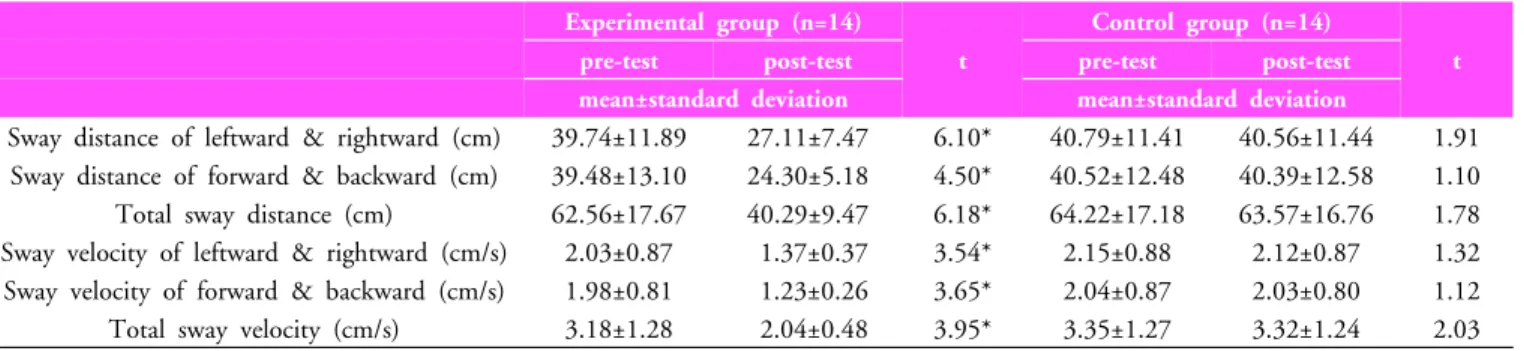
Table 2. Variation of sway distance and sway velocity between pre-exercise and post-exercise Experimental group (n=14)

t

Control group (n=14)

t

pre-test post-test pre-test post-test

mean±standard deviation mean±standard deviation

Sway distance of leftward & rightward (cm) 39.74±11.89 27.11±7.47 6.10* 40.79±11.41 40.56±11.44 1.91 Sway distance of forward & backward (cm) 39.48±13.10 24.30±5.18 4.50* 40.52±12.48 40.39±12.58 1.10 Total sway distance (cm) 62.56±17.67 40.29±9.47 6.18* 64.22±17.18 63.57±16.76 1.78 Sway velocity of leftward & rightward (cm/s) 2.03±0.87 1.37±0.37 3.54* 2.15±0.88 2.12±0.87 1.32 Sway velocity of forward & backward (cm/s) 1.98±0.81 1.23±0.26 3.65* 2.04±0.87 2.03±0.80 1.12 Total sway velocity (cm/s) 3.18±1.28 2.04±0.48 3.95* 3.35±1.27 3.32±1.24 2.03

*p<0.05

Figure 2. Chang of total sway distance between pre-exercise and post-exercise. *p<0.05 EG: Experimental group, CG:

Control group.

Figure 3. Chang of total sway velocity between pre-exercise and post-exercise. *p<0.05 EG: Experimental group, CG:

Control group.

group was 3.18 cm/s and changed into 2.04 cm/s. The total velocity of control group was 3.35 cm/s and changed into 3.32 cm/s. The change in total sway velocity were statistically signi- ficant in experiment group before and after exercise (p<0.05).

The change of control group was statistically insignificant before and after exercise (Table 2)(Figure 2, 3).

IV. Discussion

This study was intended to prevent the fall of elderly diabetic patients and improve their balancing ability after verifying the effect of the balance training program which diabetic patients practice during 8 weeks. We were to evaluate and compare the posture sway to measure the balancing ability of a group of patients which have got the balance training program for 50 minutes twice a week and another group without any inter- vention by using a force plate and discuss it on the base of the

result.

As a result of the experiment, the experience group increased their balance ability in comparison with the control group.

However, there was no previous study about the balance im- provement of diabetic patients with peripheral neuropathy and the direct comparison with other studies was difficult; so the result of previous study about the similar aged may be referred.

Many previous studies were conducted in conjunction with a program of balance improvement to prevent the fall of the aged.

The previous researchers found that practicing the exercise of

balance improvement combined with various motions (straight-

standing on the foot, backward walking, walking on toes, walking

on heel, side-walking, walking on the stairs) influenced the

balance improvement.

33-35

Reinsch et al.

36

found that repeatedly

practicing one motion of stepping on the footboard to improve a

balance took no effect. Accordingly, it may be necessary for

patients to practice an exercise combined with various motion

for improving their balance. Weight was mainly used for streng-

thening the muscle of the legs.

35

The study demonstrated that

(6)

the aching joint (knee) was a most negative factor which prevents the exercise in 100 elderly persons above 60 years in Korea.

37

In this study, the exercise with elastic band which may decrease the overwork of joint was adapted for the sample of elderly persons.

In the previous study, Patients who had experienced an injury by fall practiced strengthening the muscle of the legs with elastic bands during 8 weeks and recorded the increase of average 3.60 seconds in one-foot-standing which is used for measuring the balancing ability.

38

On the other hand, the study of Gu et al.

38

was about strengthening the muscle of the legs and balance improvement. Twenty-nine elderly persons living in a nursing home practiced lowering the center of the body and the motion of front-rear movement and left-right movement which is one of Tai Chi motions and showed the 175.1% improvement in a static balance. Barnett et al.

39

found the similar effect in the study of balance improvement and lowering the injury from fall down. One hundred sixty three local elderly persons practiced the program of home exercise combined with elastic band, Tai Chi motion and aerobic exercise during sixmonths and improved in posture sway and showed 40% decrease of the injury from falls in contrast with a compared sample.

40

On considering these studies, the development and appliance of the exercise patterns which are adequate to each elderly person may effectively improve the balancing ability. We think that diabetic patients need subtle exercise treatments and management because of complications associated with their diabetes such as a nervous disease, a diabetic retinopathy, a hypoglycemia and a physical change caused by the aging. In this study, we examined the stability of static balance.

In the previous study, we examined the mixture of dynamic balance and static balance. In the follow-up study, we may need various methods to evaluate balancing ability.

V. Conclusion

This study was intended to decrease the fall of diabetic patients who have more posture sway than normal elderly persons with help of balance. As a result of this study, a balance training program decreased the posture sway which may cause the fall of diabetic patients.

Author Contributions Research design: Song CH

Acquisition of data: Lee YW

Analysis and interpretation of data: Choi SJ Drafting of the manuscript: Lee YW, Choi SJ

Administrative, technical, and material support: Choi SJ Research supervision: Song CH

Acknowledgement

This article is some part of master’s dissertation of Yong-Woo, Lee

References

1. Statistics Korea. Population projection. 2007.

2. Kim JH. A prediction of demographic changes in seoul metropolitan area with aging society. Journal of the Korean Urban Geographical Society. 2008;11(1):31-42.

3. Donoghue D, Stokes EK. How much change is true change?

The minimum detectable change of the berg balance scale in elderly people. J Rehabil Med. 2009;41(5):343-6.

4. Aniansson A, Hedberg M, Henning GB et al. Muscle morpho- logy, enzymatic activity, and muscle strength in elderly men: A follow-up study. Muscle Nerve. 1986;9(7):585-91.

5. Mills EM. The effect of low-intensity aerobic exercise on muscle strength, flexibility, and balance among sedentary elderly persons. Nurs Res. 1994;43(4):207-11.

6. Faber MJ, Bosscher RJ, Chin A Paw MJ et al. Effects of exercise programs on falls and mobility in frail and pre-frail older adults: A multicenter randomized controlled trial. Arch Phys Med Rehabil. 2006;87(7):885-96.

7. Kool B, Ameratunga S, Robinson E et al. Hospitalisations and deaths due to unintentional falls at home among work- ing-aged new zealanders. Injury. 2007;38(5):570-5.

8. Delbaere K, Close JC, Menz HB et al. Development and validation of fall risk screening tools for use in residential aged care facilities. Med J Aust. 2008;189(4):193-6.

9. Morris R. Predicting falls in older women. Menopause Int.

2007;13(4):170-7.

10. Duque G, Demontiero O, Troen BR. Prevention and treat- ment of senile osteoporosis and hip fractures. Minerva Med.

2009;100(1):79-94.

11. Cummings SR, Rubin SM, Black D. The future of hip frac- tures in the united states. Numbers, costs, and potential effects of postmenopausal estrogen. Clin Orthop Relat Res.

1990;(252):163-6.

12. King MB, Tinetti ME. Falls in community-dwelling older

(7)

persons. J Am Geriatr Soc. 1995;43(10):1146-54.

13. Mueller MJ, Sinacore DR, Hoogstrate S et al. Hip and ankle walking strategies: effect on peak plantar pressures and im- plications for neuropathic ulceration. Arch Phys Med Rehabil.

1994;75(11):1196-200.

14. Resnick HE, Stansberry KB, Harris TB et al. Diabetes, peripheral neuropathy, and old age disability. Muscle Nerve.

2002;25(1):43-50.

15. Yamamoto R, Kinoshita T, Momoki T et al. Postural sway and diabetic peripheral neuropathy. Diabetes Res Clin Pract.

2001;52(3):213-21.

16. Carey LM, Matyas TA, Oke LE. Sensory loss in stroke pa- tients: effective training of tactile and proprioceptive discri- mination. Arch Phys Med Rehabil. 1993;74(6):602-11.

17. Bonnet C, Carello C, Turvey MT. Diabetes and postural stability: review and hypotheses. J Mot Behav. 2009;41(2):

172-90.

18. Richardson JK. Factors associated with falls in older patients with diffuse polyneuropathy. J Am Geriatr Soc. 2002;50(11):

1767-73.

19. Gillespie LD, Gillespie WJ, Robertson MC et al. Withdrawn:

Interventions for preventing falls in elderly people. Cochrane Database Syst Rev. 2009;(2):CD000340.

20. Wolfson L, Judge J, Whipple R et al. Strength is a major factor in balance, gait, and the occurrence of falls. J Gerontol A Biol Sci Med Sci. 1995;50 Spec No:64-7.

21. Brown M, Sinacore DR, Host HH. The relationship of strength to function in the older adult. J Gerontol A Biol Sci Med Sci. 1995;50 Spec No:55-9.

22. Province MA, Hadley EC, Hornbrook MC et al. The effects of exercise on falls in elderly patients. A preplanned meta- analysis of the ficsit trials. Frailty and injuries: Cooperative studies of intervention techniques. JAMA. 1995;273(17):

1341-7.

23. Campbell AJ, Robertson MC, Gardner MM et al. Ran- domised controlled trial of a general practice programme of home based exercise to prevent falls in elderly women. BMJ.

1997;315(7115):1065-9.

24. Rubenstein LZ, Josephson KR, Trueblood PR et al. Effects of a group exercise program on strength, mobility, and falls among fall-prone elderly men. J Gerontol A Biol Sci Med Sci.

2000;55(6):M317-21.

25. Gu MO, Jeon MY, Kim HJ et al. A review of exercise interventions for fall prevention in the elderly. J Korean Acad

Nurs 2005;35(6):1101-12.

26. Eom JY. A study on the elderly patients hospitalized due to fall injuries. Ewha Womans University. Dissertation of Master’s Degree. 2005.

27. Kim HS. Effect of progressive low intensity exercise on the activities and functional performance of the elderly. Catholic University. Dissertation of Doctorate Degree. 2000.

28. Park HJ. The effects of elastic band progressive resistive exercise on glucose, lipid profiles, muscle power and muscle endurance of elderly patients with niddm. Korea University.

Dissertation of Master’s Degree. 2001.

29. Jung JH. The effects of aerobic exercise and muscle strengthen exercise of elderly patients with diabetes mellitus. Chungnam University. Dissertation of Master’s Degree. 2003.

30. Oppenheim U, Kohen-Raz R, Alex D et al. Postural charac- teristics of diabetic neuropathy. Diabetes Care. 1999;22(2):

328-32.

31. Shin WS, Song CH. Effects of virtual reality-based exercise on static balance and gait abilities in chronic stroke. J Kor Soc Phys Ther. 2009;21(3):33-40.

32. Lee SW, Shin WS, In TS et al. Immediate effects of load stimulation on static balance and muscle activities in chronic stroke patients. J Kor Soc Phys Ther. 2009;21(1):19-26.

33. Hauer K, Rost B, Rutschle K et al. Exercise training for rehabilitation and secondary prevention of falls in geriatric patients with a history of injurious falls. J Am Geriatr Soc.

2001;49(1):10-20.

34. Feltner ME, MacRae PG, McNitt-Gray JL. Quantitative gait assessment as a predictor of prospective and retrospective falls in community-dwelling older women. Arch Phys Med Rehabil.

1994;75(4):447-53.

35. Robertson MC, Gardner MM, Devlin N et al. Effectiveness and economic evaluation of a nurse delivered home exercise programme to prevent falls. 2: Controlled trial in multiple centres. BMJ. 2001;322(7288):701-4.

36. Reinsch S, MacRae P, Lachenbruch PA et al. Attempts to prevent falls and injury: a prospective community study.

Gerontologist. 1992;32(4):450-6.

37. Jung SN. Effect of strengthening exercise with elastic band on the improvement of balance and gait in the falls experienced elderly. Dankook University. Dissertation of Master’s Degree.

2007.

38. Gu MO, Jeon MY, Eun Y. The development & effect of a

tailored falls prevention exercise for older adults. J Korean

(8)

Acad Nurs. 2006;36(2):341-52.

39. Barnett A, Smith B, Lord SR et al. Community-based group exercise improves balance and reduces falls in at-risk older people: a randomised controlled trial. Age Ageing. 2003;32(4):

407-14.

40. Dempsey J. Falls prevention revisited: A call for a new app-

roach. J Clin Nurs. 2004;13(4):479-85.

수치

Table 1. General characteristics of subject
Table 2. Variation of sway distance and sway velocity between pre-exercise and post-exercise Experimental group (n=14)

참조

관련 문서

The purpose of this study is to come up with a method to evaluate Virtual Reality Art. To suggest the method, Noël Carroll's category-relative evaluation

Based on the above results, the 12-week complex type correction program had a positive effect on the shoulder angle, trunk rotation angle, and body shape

The purpose of this study was to investigate how the Da Vinci body board exercise program affects the body balance and physical stress of women with body imbalance.. For

The purpose and necessity of this study was to investigate the effect of the 8-week GX complex exercise program on the stress index, blood lipid and APG

Third, for the change in balance ability according to core training and plyometric training, the core group showed a significant difference in travel area

The purpose of this study was to investigate the change of body composition and physical fitness after 12 weeks of practice with middle-aged women centered

Second, with regards to the human resource development measures to improve the qu ality of life of the lower-income classes, general agreement was reached on the need

The effect of the stress management program on the stress coping and perceived stress of the patients with finger replantation. Unpublished master's