교신저자: 황 금
220-701, 강원도 원주시 일산동 162번지 원주기독병원 신경외과
Tel: 82-33-741-0592, Fax: 82-33-746-2287 E-mail: [email protected]
두개골 천공술 및 폐쇄적 혈종 배액술로 치료한 만성 경막하 혈종의 예후인자
연세대학교 원주의과대학 신경외과학교실
김종연ㆍ백승정ㆍ김헌주ㆍ변진수ㆍ한용표ㆍ황 금
The Predictive Factors for Resolution of Chronic Subdural Hematoma after Burrhole Trephination with Closed Drainage
Jong Yeon Kim, M.D., Seung Jung, M.D., Hun Joo Kim, M.D., Jhin Soo Pyen, M.D., Yong Pyo Han, M.D., and Kum Whang, M.D.
Department of Neurosurgery, Wonju College of Medicine, Yonsei University, Wonju, Korea
Objective: The aim of this study is to evaluate the outcome of chronic subdural hematoma by correlating the clinical characte- ristics and radioligical findings in the chronic subdural patients who underwent burrhole trephination with closed drainage
Methods: The clinical, radiological, and operative factors related to resolution of chronic subdural hematoma (CSDH) were analyzed in 42 patients with CSDH 50 hemispheres, treated by burrhole trephination with closed drainage. The correlation with resolution was evaluated using personal and clinical factors such as age, sex, history of seizure, alcohol abuse, DM; computed tomography (CT) findings such as hematoma density, brain atrophy and hematoma thickness; Operative findings such as postope- rative residual air; and laboratory findings such as platelet counts, INR and blood glucose levels.
Results: The non-total resolution group (NTR) included 35 hemispheres (70%) in 29 patients (69.1%) Density of hematoma on CT was classified into five types: low, iso, and high density, layering, mixed, and the incidence of total resolution was 85.7%, 81.3%, 60%, 71.4% and 53.3%, respectively. Brain atrophy, postoperative residual air and the location of drainage catheter tip were not associated with resolution of CSDH. But age of 60 less years, normal range INR, patients with DM, narrow hematoma thickness
(<20 mm) and the absence of high density on CT scan were associated with total resolution of CSDH at 6 month follow up.
Conclusion: In our study, patients aged 60years of less, prolonged INR levels, patients with DM, narrow hematoma thickness (<20 mm), and the absence of high density on CT scan had a greater possibility of total resolution at 6 month .
Key Words: Chronic subdural hematoma․Burrhole trephination․Resolution
서 론
만성 경막하 혈종은 두개강내 출혈의 가장 흔한 원인 중 의 하나이며, 특히 노년층에서 발생 빈도가 높다3,4,9,16). 수술
적 치료가 널리 받아들여지며12.19), 가장 효과적인 방법으로 두개골 천공술 후 세척을 하거나, 폐쇄적 혈종배액을 하는 것으로 알려져 있다12,19,20). 이런 방법의 가장 중요한 장점은 노년층 및 수술의 높은 위험성을 가진 군에서도 비교적 안전 하게 시행할 수 있으며, 치료 성적도 좋다는 것이다16). 그러 나 일부 보고들에 따르면, 이 치료 방법의 재발률이 9.2%에 서 26.5%까지 다양하게 보고되고 있으며3,12), 여러 저자들이 재발에 영향을 미치는 다양한 요소를 보고한 바 있다3,8,9,12,13).
저자들은 두개골 천공술 및 폐쇄적 혈종 배액술로 치료한 만성 경막하 혈종의 소실에 관여된 요소를 후향적으로 분석
Fig. 2. Classification of residual air on post operative CT scan. No or mild residual air (A) and definite residual air (B).
Fig. 1. Classification of brain atrophy on post operative CT scan. No or mild atrophy (A) and definite atrophy (B).
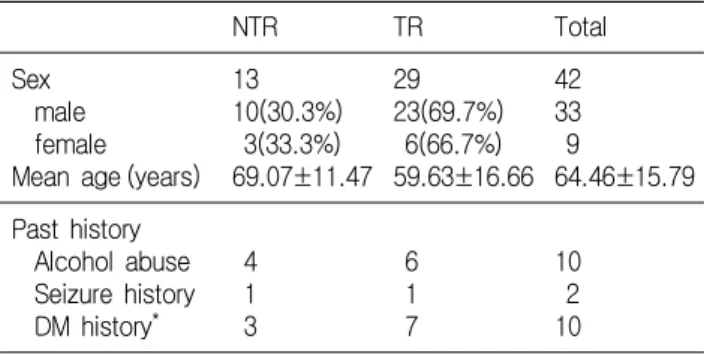
Table 1. Characteristic and clinical findings in the non- total resolution group (NTR) and total resolution group (TR)
NTR TR Total
Sex male female Mean age (years)
13 10(30.3%) 3(33.3%) 69.07±11.47
29 23(69.7%) 6(66.7%) 59.63±16.66
42 33 9
64.46±15.79 Past history
Alcohol abuse Seizure history DM history*
4 1 3
6 1 7
10 2 10
*p<0.05 하고자 한다.
대상 및 방법
본원에서 2004년 1월부터 2005년 6월까지 두개골 천공술 및 폐쇄적 혈종 배액술을 시행하였던 환자 중 6개월 이상 추 적 관찰이 가능하였던 성인 42명의 환자(50개의 혈종)를 대 상으로 하였다.
입원 당시 환자의 신경학적 검사와 알코올 중독 여부 및 간질, 당뇨와 같은 과거력을 조사하였으며, 수술 전에 혈소 판 수치, 혈중 당 수치 및 INR 등의 혈액 검사를 하였다. 만 성 경막하 혈종의 진단은 뇌 전산화단층촬영(CT)으로 하였 으며, 혈종의 밀도는 뇌실질 밀도에 상대적으로 저밀도(low), 등밀도(iso), 고밀도(high) 인 군, 층밀도(layering) 및 혼합 밀 도(mixed) 군의 5군으로 분류하였다15).
모든 수술은 전신 마취하에 시행하였으며, 두개골 천공술 을 시행한 후 경막 및 혈종의 외막을 절개한 후에 폐쇄적 배 액을 시행하기 위해 도관을 삽입하고, 피부를 봉합하였다.
수술 후 절대 안정과 충분한 수액 공급을 시행하였으며, 도 관은 3~7일째에 제거하였다.
수술 전에 시행한 CT 상 혈종이 가장 두꺼운 곳에서 두께 를 측정하였다. 수술 후 3일 째에 시행한 CT에서 뇌위축 정 도를 조사하여 위축이 경도거나, 없는 군(no or mild atrophy) 과 현저한 위축군(definitive atrophy such as dilated sulci or subdural space)으로 분류하였고(Fig. 1), 기뇌량을 조사하여 경 도거나, 없는 군(no or mild residual air bubbles)과 현저한 군 (definite residual air)으로 분류하였다(Fig. 2). 수술 후 3일째에 시행한 CT에서 도관 끝의 위치를 조사하여 전두부, 측두부, 두정부 및 후두부로 분류하였다. 완전 소실군(Total resolution group; TR)은 6개월째 추적 검사한 CT에서 혈종이 완전 소실
된 군으로 정의하였다.
각 요소와 혈종의 소실과의 관계를 SPSS 10.0을 사용하여 Student t-test와 chi-square test를 이용해 분석하였다.
결 과
남자는 33명, 여자 9명이었으며, 평균 연령은 64.46±15.79 세 였다. 혈종의 위치는 좌측과 우측이 각각 17명, 양측성인 경우가 8명이었다. 13명(30.9%)은 혈종이 완전 소실되었으며, 29명(69.1%)은 완전 소실되지 않았다.
알코올 중독이었던 환자 10명 중 혈종이 완전 소실된 환 자는 6명, 비완전 소실군(Non-total resolution group: NTR)은 4 명이었고, 간질 병력이 있는 환자 2명에서는 각각 1명씩으로 두 군간에 통계학적 유의성은 없었다(Table 1).
당뇨의 병력이 있는 환자는 모두 10명으로 이중 완전 소실군 은 7명, 비완전 소실군은 3명으로 통계학적 유의성을 보여 당뇨 가 있는 환자가 혈종이 완전 소실되는 경향을 보였다(Table 1).
Table 5. Preoperative laboratory findings in the non-total resolution group (NTR) and total resolution group (TR)
Parameters Normal range TR NTR P value
Platelet (×103/mm3) INR*
Glucose (mg/dL)**
120-300 0.64-1.17 80-115
272.38±29.43 1.01± 0.17 147.23±67.54
267.26±15.05 1.19± 0.12 108.8 ± 0.75
0.191 0.048 0.004
*, **significantly different between NTR groups and TR groups Table 3. Brain atrophy, postoperative residual air in the non-total resolution group (NTR) and total resolution group (TR)
NTR (n=15) TR (n=35) Total (n=50) Brain atrophy*
No or mild Definite
2 11
7 22
9 33 Amount of residual
air**
No or mild Definite
10 5
28 7
38 12
*p=0.095>0.05, **p=0.407>0.05
Table 2. Hematoma density on the preoperative CT in the non-total resolution group (NTR) and total resolution group (TR)
Hematoma density NTR (n=15) TR (n=35) Total (n=50) Low
Iso High Layering Mixed
1 3 2 2 7
6 13 3 5 8
7 16 5 7 15 p=0.074>0.05, CT: computed tomography
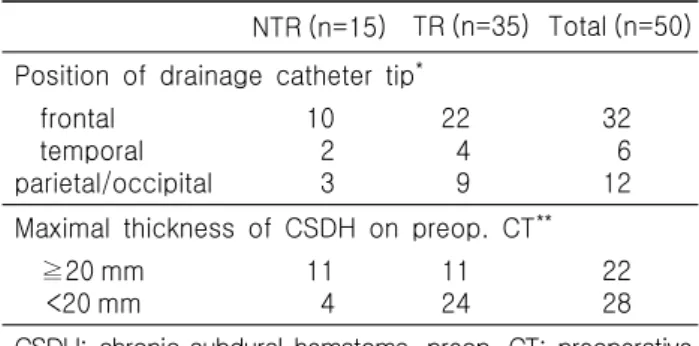
Table 4. Position of drainage catheter tip, hematoma thickness in the non-total resolution group (NTR) and total resolution group (TR)
NTR (n=15) TR (n=35) Total (n=50) Position of drainage catheter tip*
frontal temporal parietal/occipital
10 2 3
22 4 9
32 6 12 Maximal thickness of CSDH on preop. CT**
≧20 mm <20 mm
11 4
11 24
22 28 CSDH: chronic subdural hematoma, preop. CT: preoperative computed tomography
*p=0.311>0.05, **p=0.025<0.05 환자의 연령이 60세 이상이었던 34개의 혈종 중 20개(58.8
%)가 완전 소실되었고, 환자의 연령이 60세 미만이었던 16개 중 15개(93.8%)가 완전 소실되어 두 군간에 유의한 차이가 있었다(p=0.019<0.05).
혈종의 밀도를 보면 저밀도와 등밀도에서는 완전 소실군이 6개(85.7%), 13개(81.3%)였으며, 고밀도, 층밀도, 혼합 밀도에 서는 3개(60%), 5개(71.4%), 8개(53.3%)로 통계학적 유의성을 보이지 않았다(Table 2).
뇌위축의 정도가 경도거나 없는 군은 완전 소실군이 7명 (77.8%), 현저한 군은 22명(66.7%)로 각 군간에 유의한 차이 가 없었으며, 수술 후 기뇌량의 경우는 경도거나, 없는 군에
서는 완전 소실군이 28개(73.4%), 현저한 군에서는 7개(58.3
%)로 역시 유의한 차이가 없었다(Table 3).
수술 후 도관 끝의 위치가 전두부에 있었던 32개의 혈종 중 완전 소실군은 22개(68.7%), 측두부는 6개 중 4개(66.6%), 두정부 혹은 후두부에 있었던 12개 중에는 9개(75%)로 도관 끝의 위치와 혈종의 소실과는 통계학적 유의성을 보이지 않 았다(Table 4).
수술 전 CT에서 혈종의 최대 두께가 20 mm 이상이었던 혈종은 22개였는데, 이 중 완전 소실군은 11개(50%)였으며, 20 mm 미만이었던 28개 중 완전 소실군은 24개(85.7%)로 혈종 의 두께가 20 mm 미만인 군에서 혈종의 완전 소실률이 더 높 은 것으로 나타났다(Table 4).
수술 전 시행한 혈액 검사 상 완전 소실군에서는 혈소판 수치가 평균272.38±29.43×10³/mm3이였으며, 비완전 소실군 에서는 평균 267.26±15.05×10³/mm3로 두 군 모두 정상 수치 를 보여 유의한 차이가 없었다(Table 5). 완전 소실군에서는 평균 INR이 1.01±0.17이였으며, 비완전 소실군에서는 1.19±
0.12로 비완전 소실군이 완전 소실군 보다 INR이 길어져 있 는 것을 관찰할 수 있었다(Table 5). 이와는 반대로 혈당 수 치에서는 완전 소실군에서는 147.23±67.54 mg/dL, 비완전 소
실군에서는 108.8±0.75 mg/dL로 완전 소실군에서 혈당 수치 가 더 높은 것을 알 수 있었다(Table 5).
고 찰
이전에 발표된 문헌들에서 만성 경막하 혈종의 재발과 관 련된 많은 요인들이 보고되었는데1,3,8,9,12,16), 고령, 출혈 경향, 뇌위축이 심한 경우, 알코올 중독, 수술 후 기뇌증이 있는 경 우 등이 위험 요인으로 알려져 있다3-5,9,16).
저자들은 수술 후 6개월 추적 검사상 혈종의 소실과 관 련된 요인들을 조사하였다.
혈액 응고병증(coagulopathy)이 있는 경우 만성 경막하 혈 종의 재발 가능성이 높다는 보고가 있었으며, 이는 혈액 응 고병증이 있는 경우 혈종 막의 신생 혈관에서 미세 출혈이 반복되기 때문인 것으로 알려져 있다1,2,5,11,15-17,21). 본 연구에 서는 INR이 길어진 경우 혈종의 완전 소실 가능성이 낮은 것으로 나타났으나, 혈소판 수치와는 관계가 없었다.
또한 알코올 중독, 항응고제 치료를 받은 경우, 간질이 있 는 경우 및 뇌척수액 단락술을 받은 환자에서 만성 경막하 혈 종이 비교적 흔하게 발생하는 것으로 알려져 있는데 1,5,11,15,16), 이런 요인들이 뇌위축, 감소된 혈액 응고력 및 반복적인 두 부 외상과 관련이 있기 때문이다. 이에 Yamamoto는 간질이 있는 경우가 혈종의 재발을 예측할 수 있는 요인이라고 하였 다21). 그러나 본 연구에서는 간질은 혈종의 완전 소실과 관 련이 없었다.
혈종의 두께는 혈종이 가장 두꺼운 곳에서 측정하는데, 환 자의 나이와 상관관계가 있는 것으로 보고된 바 있다4). 이는 나이가 들수록 뇌위축이 일어나고, 혈종이 자랄 공간이 넓어 지기 때문이다. 같은 맥락에서 Yamamoto는 혈종의 두께가 큰 경우 혈종이 배액된 후에 생기는 경막하 공간이 넓으므로 재 발할 가능성이 높다고 하였다21). 이 연구에서는 나이가 60세 보다 어린 경우와 혈종의 최대 두께가 20 mm 미만인 환자에 서 혈종의 완전소실이 발생할 가능성이 높았으나, 뇌위축의 정도와는 연관성이 없는 것으로 나타났다. 이에 대해서는 더 큰 환자 군을 대상으로 한 연구가 필요할 것으로 생각된다.
당뇨는 관상동맥질환과 뇌졸중의 위험인자로 잘 알려져 있다2). 고혈당은 혈액의 점도를 높이고 동맥경화를 촉진시켜 동맥 협착질환을 일으킨다7). 또한 혈소판이 응집되고 혈액 응고가 활성화되며, 이로 인해 혈액의 삼투압이 높아 진다6). Suzuki 등18)은 20% 만니톨을 이용한 삼투압 치료가 만성 경 막하 혈종의 재출혈을 멈추는데 효과적이라고 주장하였다.
당뇨 환자의 혈액은 정상 혈액에 비해 삼투압이 높으며 혈소 판이 더 응집되어 있다21). 이러한 사실들은 당뇨가 만성 경 막하 혈종의 출혈 경향을 줄일 수 있음을 나타낸다. 이번 연 구에서도 당뇨 환자 및 혈당이 높은 경우가 만성 경막하 혈 종의 완전 소실과 관련이 있는 것으로 나타났다.
만성 경막하 혈종의 밀도는 혈종의 나이와 관련이 있는데, 고밀도 인 경우는 일반적으로 혈종 내에 급성기 출혈이 많은 것으로 생각된다15). 층밀도 인 경우는 저밀도 혹은 등밀도의 위층과 고밀도의 아래층으로 이루어져 있어서 고밀도와 밀 접한 관련이 있는 것으로 생각할 수 있다16). 본 연구에서는 저밀도와 등밀도의 한 군(group)과 고밀도, 층밀도, 혼합 밀 도의 두 군으로 나누어 혈종의 완전 소실과의 관계를 분석하 여 보았다. 첫 번째 군에서는 23개의 혈종 중 완전 소실군이 19개(82.6%)였고, 두 번째 군에서는 완전 소실군이 16개(59.3
%)로 두 번째 군(고밀도, 층밀도, 혼합 밀도)에서 완전 소실 의 빈도가 낮은 것으로 나타났다. 이 결과는 비교적 급성기 에 빠르게 진행하여 CT상에서 고밀도가 보이는 경우에 완전 소실의 가능성이 낮기 때문일 것이다.
병리학적 측면에서 만성 경막하 혈종의 성장에 관하여 이 와 유사한 가설들이 보고되어 왔다9). 경막하 공간내의 출혈 에 의하여 경막에 염증 반응이 발생하고 신생막이 형성된다.
그리고 이 신생막의 외막은 풍부한 신생 혈관을 갖고 있으 며, 반복적인 미세 출혈과 섬유소 용해가 발생하고, 이러한 경로를 통하여 혈종이 자라게 된다는 것이다. 이러한 가설에 의해 완전 소실되지 않은 혈종의 신생막은 혈종 내로 재출혈 되기 쉽다고 추측할 수 있으며, CT에서 고밀도가 보이는 경 우 비완전 소실군이 많은 것을 설명할 수 있다.
수술 후 경막하 공간에 공기가 계속 있으면 뇌실질이 차오 르는 것을 방해하여 혈종이 다시 발생할 위험성이 높은 것으 로 알려져 있다5,10). 그래서 수술 후 기뇌증을 방지하는 것이 재발 방지를 위해 중요하다고 보고된 바 있다14). Nakaguchi13) 는 배액 도관의 끝이 전두부에 있는 경우가 다른 곳에 위치 한 경우보다 혈종 재발의 가능성이 낮다고 하였는데, 다음 2 가지 사실로 설명했다: ① 수술 후 7일 째에 기뇌량이 많은 환자가 그렇지 않은 환자보다 재발률이 높다. ② 도관 끝이 전두부에 위치한 환자가 수술 후 기뇌량이 가장 적다. 그러 나 본 연구에서는 수술 후 기뇌량과 도관 끝의 위치 모두 혈 종의 완전 소실에 영향을 미치지 못했다. 이는 다른 연구들 은 3개월 이내의 비교적 짧은 시간 내에 혈종의 재발 여부를 판단하였고, 이 연구는 비교적 장기간인 6개월에 혈종의 소 실 여부를 판단하였기 때문인 것으로 사료된다.
향후 좀 더 많은 환자군을 대상으로 한 연구가 필요할 것 으로 생각되며, 이 연구에 언급된 요인 뿐만 아니라, 환자의 증상 및 발현 기간, 외상 여부, 항혈전제나 항응고제의 사용 여부, 정중선의 이동 정도, 배액량 등의 요인에 대한 연구도 필요할 것으로 사료된다.
결 론
이 연구에서는 환자의 연령이 60세 미만인 경우, INR이 정 상인 경우, 당뇨가 없는 환자 보다는 있는 환자, 혈종의 두께 가 20 mm 미만인 경우, CT 상에서 저밀도나 등밀도로 보이 는 경우에서 6개월 후에 혈종이 완전 소실될 가능성이 더 높 은 것으로 나타났다.
참 고 문 헌
1. Cameron MM: Chronic subdural hematoma: A review of 114 cases. J Neurol Neurosurg Psychiatry 41:834-39, 1978 2. Cucchiara BL, Kasner SE: Atherosclerotic risk factors in
patients with ischemic cerebrovascular disease. Curr Treat Options Neurol 4:445-53, 2002
3. El-Kadi H, Miele VJ, Kaufman HH: Prognosis of chronic subdural hematoma. Neurosurg Clin N Am 11:553-67, 2000 4. Foelholm R, Waltimo O: Epidemiology of chronic subdural
haematoma. Acta Neurochir(Wien) 32:247-50, 1975
5. Fukuhara T, Gotoh M, Asari S, et al: The relationship bet- ween brain surface elastance and brain reexpansion after evacuation of chronic of chronic subdural hematoma. Surg Neurol 45:570-74, 1996
6. Gosk-Bierska I, Adamiec R, Alexewics P, et al: Coagulation in diabetic and non-diabetic claudicants. Int Angiol 21:128- 33, 2002
7. Kerman JH, Inzucci SE, Viscoli CM, et al: Insulin resis- tance and risk for stroke. Neurology 59:809-15, 2002 8. Labadie EL, Glover D: Physiopathogenesis of subdural he-
matomas. Part 1: Histological and biochemical comparisons of subcutaneous hematomas in rats with subdural hematoma in man. J Neurosurg 45:382-92, 1976
9. Markwalder TM: Chronic subdural hematomas: A review. J Neurosurg 54:637-45, 1981
10. Markwalder TM, Steinsiepe KF, Rohner M, Reichenbach W,
Markwalder H: The course of chronic subdural hematoma after burr-hole craniostomy and closed-system drainage. J Neurosurg 55:390-396, 1982
11. Naganuma H, Fukamachi A, Kawakami M, et al: Sponta- neous resolution of chronic subdural hematoma. Neuro- surgery 19:794-98, 1986
12. Nakaguchi H, Tanishima T, Yoshimasu N: Factors in the natural history of chronic subdural hematomas that influence their postoperative recurrence. J Neurosurg 95:256-62, 2001 13. Nakaguchi H, Tanishima T, Yoshimasu N: Relationship
between drainage catheter location and postoperative recurrence of chronic subdural hematoma after burr-hole irrigation and closed-system drainage. J Neurosurg 93:791-795, 2000 14. Nagata K, Asano T, Basugi N, Tango T, Takakura K: Stu-
dies on the operative factors affecting the reduction of chronic subdural hematoma, with special reference to the residual air in the hematoma cavity. No Shinkei Geka 17:15-20, 1989 15. Nomura S, Kashiwagi S, Fujisawa H, et al: Characterization
of local hyperfibrinolysis in chronic subdural hematomas by SDS-PAGE and immunoblot. J Neurosurg 81:910-13, 1994 16. Oishi M, Toyama M, Tamatani S, Kitazawa T, Saito M:
Clinical factors of recurrent chronic subdural hematoma.
Neurol Med Chir (Tokyo) 41(8):382-6, 2001
17. Park CK, Choi KH, Kim MC, et al: Spontaneous evolution of posttraumatic subdural hygroma into chronic subdural haematoma. Acta Neurochir 127:41-7, 1994
18. Suzuki J, Takaku A: Nonsurgical treatment of chronic sub- dural hematoma. J Neurosurg 33:548-53, 1970
19. Tanikawa M, Mase M, Yamada K, et al: Surgical treatment of chronic subdural hematoma based on intrahematomal mem- brane structure on MRI. Acta Neurochir 143:613-19, 2001 20. Wakai S, Hashimoto K, Watanabe N, Inoh S, Ochiai C,
Nagai M: Efficacy of closed-system drainage in treating chro- nic subdural hematoma: A prospective comparative study.
Neurosurgery 26:771-773, 1990
21. Yamamoto H, Hirashima Y, Hamada H, Hayashi N, Origasa H, Endo S: Independent predictors of recurrence of chronic subdural hematoma: Results of multivariate analysis perfor- med using a logistic regression model. J Neurosurg 98(6):
1217-21, 2003