• 검색 결과가 없습니다.

Effects of Dilute Acid Pretreatment on Enzyme Adsorption and Surface Morphology of Liriodendron tulipifera

N/A
N/A
Protected

Academic year: 2021

Share "Effects of Dilute Acid Pretreatment on Enzyme Adsorption and Surface Morphology of Liriodendron tulipifera"

Copied!
9
0
0

로드 중.... (전체 텍스트 보기)

전체 글

(1)

*1 Received on February 28, 2011; accepted on March 14, 2011

*2 Depratment of Forest Sciences, College of Agriculture and Life Sciences, Seoul National University, Gwanakgu, Seoul 151-921, Korea

*3 Department of Wood and Paper Science, College of Natural Resource, 2105 Biltmore Hall, North Carolina State University, Campus Box 8005, Raleigh NC 27695, Unite States

*4 Research Institute for Agriculture and Life Sciences, College of Agriculture and Life Sciences, Seoul National University, 599 Gwanak-ro, Gwanak-gu, Seoul 151-921, Korea

Corresponding author : In-Gyu Choi (e-mail: [email protected])

Effects of Dilute Acid Pretreatment on Enzyme Adsorption and Surface Morphology of Liriodendron tulipifera* 1

Byeong-Cheol Min*

2

, Bon-Wook Koo*

3

, Ki-Seob Gwak*

2

, Hwanmyeong Yeo*

2,4

, Joon-Weon Choi*

2,4

, and In-Gyu Choi*

2,4†

ABSTRACT

In this study, dilute acid pretreatment of Liriodendron tulipifera was performed for enzymatic hydrolysis. As the pretreatment temperature was increased, enzymatic hydrolysis and enzyme adsorption yield also increased. The highest enzymatic hydrolysis yield was 57% (g/g) and enzyme adsorption was 44% (g/g). Enzymatic hydrolysis yield was determined with weight loss of pretreated biomass by enzyme, and enzyme adsorption was a percentage of enzyme weight attaching on pretreated biomass compared with input enzyme weight. When L. tulipifera was pretreated with 1% sulfuric acid at 160°C for 5 min., hemi- cellulose was significantly removed in pretreatment, but the lignin contents were constant. Other changes in surface morphology were detected on biomass pretreated at 160°C by a field emission scanning electron microscope (FESEM). A large number of spherical shapes known as lignin droplets were observed over the entire biomass surface after pretreatment. Hemicellulose removal and morphological changes improved enzyme accessibility to cellulose by increasing cellulose exposure to enzyme. It is thus evidence that en- zyme adsorption is a significant factor to understand pretreatment effectiveness.

Keywords : Liriodendron tulipifera, dilute acid pretreatment, enzymatic hydrolysis, enzyme adsorption, surface morphology, FESEM

1. INTRODUCTION

Composed of carbon based components, lignocellulosic biomass considered a powerful resource that can carry out not only energy pro-

duction but also chemical refinery. Furthermore,

lignocellulosic biomass is a renewable resource

and independent of supply foodstuffs[1]. Lig-

nocellulosic biomass can also feasibly be used

to effectively reduce greenhouse gases[2].

(2)

Lignocellulosic biomass is composed of cel- lulose, hemicellulose, lignin, extractives, and ash. Among these components, cellulose is the main substrate to obtain bio-ethanol. In this conversion process, the other components can act as barriers[3-5]. Pretreatment is essential to mitigatethe negative effects of the barriers and alter the structure of biomass such that cellulose is more accessible to enzymes[6]. Pretreatment of lignocellulosic resources with acids at am- bient temperature carried out to enhance the anaerobic digestibility by removing the hemi- cellulose[7].

Enzymatic hydrolysis is a method of making sugars form cellulose using cellulase. As a ma- jor process after pretreatment, enzymatic hydrol- ysis is an important method to make sugars alongside with acid hydrolysis. Enzymatic hy- drolysis has several advantages including very mild process conditions, high sugar yield, an environmentally friendly process, and low main- tenance costs compared to acid hydrolysis.

Many researchers thus regard enzymatic hydrol- ysis as a key step for realizing cost-effective ethanol production[8,9].

Understanding the interactions between cellu- lose and cellulase enzymes is important to find routes to help reduce the usage of costly en- zymes and improve the economical efficiency of the overall process. A more economical proc- ess would reduce the price of ethanol fuel, hence enabling competition with gasoline as a fuel for road vehicles. Furthermore, social, eco- nomical, and environmental benefits can result from using renewable resources for energy pro- duction[10].

The amount of enzyme adsorption during en- zymatic hydrolysis is a control factor for the hydrolysis rate and yield, and directly depends on enzyme accessibility to active sites on the solid substrate[11]. Therefore, effects of pre- treatment for enzymatic hydrolysis are pro-

foundly affected by the enzyme adsorption yield.

The measurement of enzyme adsorption re- quires a more precise method. Several methods have been developed for measurement of the amount of biomass and enzymes involving anal- ysis of total proteins[12,13] nitrogen[14], phos- pholipids[15], and DNA[16].

Recently, an improved method was inves- tigated to directly estimate the amount of en- zyme adsorption on biomass solids. A method using an elemental analyzer was applied tomeas- ure the nitrogen factor (NF) with several en- zymes and biomass[17].

Biomass composition is relevant to both the total sugar yield and type of proper pretreatment for bioethanol production. It is important to un- derstand structural factors of biomass and en- zymes[18]. In relation to this, microscopic meth- ods should be advanced in order to observe the structural changes of biomass during pretreat- ment and enzymatic hydrolysis process.

However, the study of surface morphology is not straightforward, because the size of biomass constituents and enzymes is on a nanometer scale. Furthermore, biomasses contain moisture in natural and biorefinery process states. These factors make it difficult to observe the correla- tion between properties changes of biomass and enzyme adsorption using current microscopy methods. Further studies should focus on ad- vanced methods of imaging and characterizing enzymes and biomasses on a nanometer scale[19], thereby making it possible to gain new insight into pretreatment effects.

Liriodendron tulipifera was selected as a ma- terial for this study because it grows rapidly and is an important forestation species in Korea.

The Korean government has plans to harvest this tree and replace it with different species.

To date, little research on dilute acid pretreat-

ment of L. tulipifera has been reported. In this

(3)

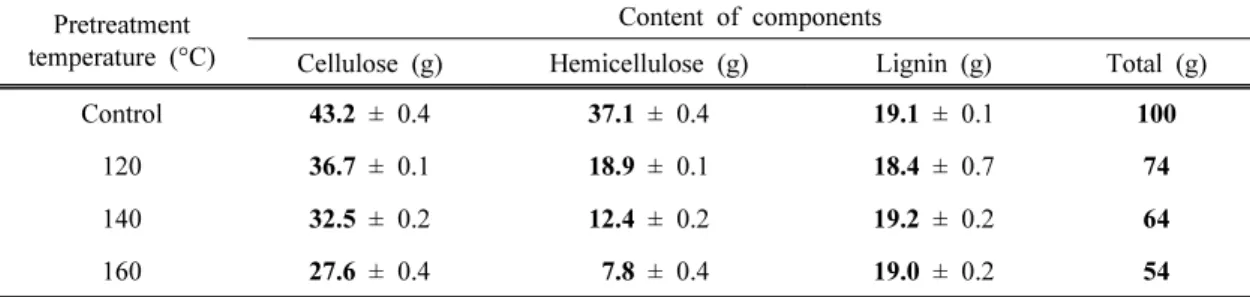
Table 1. Change in chemical composition of biomass after dilute acid pretreatment depending on pretreatment temperature (extractives content was ignored)

Pretreatment temperature (°C)

Content of components

Cellulose (g) Hemicellulose (g) Lignin (g) Total (g)

Control 43.2 ± 0.4 37.1 ± 0.4 19.1 ± 0.1 100

120 36.7 ± 0.1 18.9 ± 0.1 18.4 ± 0.7 74

140 32.5 ± 0.2 12.4 ± 0.2 19.2 ± 0.2 64

160 27.6 ± 0.4 7.8 ± 0.4 19.0 ± 0.2 54

study, the correlation between dilute acid pre- treatment and enzyme adsorption was evaluated with physiochemical and morphological variation.

2. MATERIALS and METHODS 2.1. Dilute Acid Pretreatment

Liriodendron tulipifera was supplied by the Korea Forest Research Institute (KFRI). The material was grown for 20 years and the chem- ical composition (Table 1) was analyzed. Materials were ground and sieved through a 40-mesh screen. Grounded materials were dried in air and the moisture content was reduced to less than 10%.

Dilute acid pretreatment was performed in a laboratory scale heating mantle (model MS-ES-TD, TOPS), which was equipped with an electric heater and a magnetic agitator. The glass re- actor was a cylindrical vessel with a diameter of 35 mm, height of 235 mm, and capacity of 100 ㎖. Loaded biomass was 4 g per 40 ㎖ of 1% sulfuric acid. Pretreatment temperatures were 120, 140 and 160°C, respectively. In all pretreatment conditions, the preheating time and reaction time were maintained 30 and 5 min. by controlling power input. After pretreatment, the reactor was promptly removed from the heating mantle and cooled to 80°C in air. The pre- treated biomasswas then washed with distilled

water 500 ㎖ and filtered with a glass filter to be separated into solid and liquid fractions.

Holocellulose and α-cellulose contents were determined according to the TAPPI test meth- ods[20]. Holocellulose content was determined as the delignified residue by NaClO

2

. 2.5 g of ethanol-benzene extractive-free materials were repeatedly (3 times) treated with 1 g of NaClO

2

in a dilute acetic acid solution (150 ㎖) at 80°C for 1 h. The delignified residue, holocellulose, was filtrated and washed with distilled water and acetone, and oven-dried weight was measured.

α-Cellulose content was determined as the insoluble residue in a 17.5% NaOH solution. 1 g of holocellulose obtained above was trans- ferred to a 100 ㎖ Erlenmeyer flask, and 25 ㎖ of the 17.5% NaOH solution was added. The mixture was stirred at 20°C for 40 min, and 25 ㎖ of distilled water was added to the mix- ture. After 5 min, the insoluble residue was fil- trated, and then 40 ㎖ of 10 % acetic acid sol- ution was added. The insoluble residue was re- filtrated and washed with 1,000 ㎖ of distilled water. Oven-dried weights of the residue and α -cellulose were measured.

Klason lignin was analyzed by the procedures

of the NREL Chemical Analysis and Testing

Standard[21]. 0.3 g of ethanol-benzene ex-

tractive-free material was swelled in 72 % sul-

furic acid at 30°C for 1 h, followed by hydrol-

(4)

ysis of the sample in 4 % sulfuric acid solution at 120°C for 1 h.

2.3. Enzymatic Hydrolysis

Batch hydrolysis was carried out in a 250 ㎖ Erlenmeyer flask containing 1 g (net weight) of pretreated biomass and 0.04 g of Meicelase in 100 ㎖ of 50 mM sodium acetate buffer (pH 5).

The enzyme used for hydrolysis was a commer- cial product, Meicelase, derived from the fungus Tricoderma viride, which was supplied in a powder form by Meiji Seika Co., Ltd. (Tokyo, Japan). The reaction flask was inserted in a shak- ing incubator (HB-204SL, Hanbaek Scientific Co.) and pretreated biomass was hydrolyzed at 45°C for 48 h. Reaction flasks were continually shaken during hydrolysis and the shaking speed was 250 rpm. The solid residue was recovered by filtration with a glass filter (1G3, Iwaki).

The hydrolysis yieldwas calculated with the weight of hydrolyzed biomass per weight of pretreated biomass input.

2.4. Enzyme Adsorption

Adsorption experiments were performed in a 50 ㎖ conical tube with pretreated biomass (0.3 g, net weight) and the enzyme (12 mg) in 30 ㎖ of 0.05 M sodium acetate buffer (pH 5). The tube was maintained in a refrigerator at 4°C for 24 h without shaking to obtain an equilibrium state. The sample was then centrifuged and dried at 105°C for 1 day for further nitrogen analysis. After drying, the enzyme adsorption was calculated with variation of nitrogen con- tent using an Elemental Analyzer (Flash EA 1112) of National Instrumentation Center for Environmental Management (NICEM).

To calculate the enzyme adsorption exactly, it is important to consider the variation of the component ratio between the pretreated biomass and adsorbed enzymes in the measured samples.

The reason for this is that the numerical value of nitrogen content must be estimated according to the amount of enzyme adsorption. The Eq.

(1) was derived after consideration of the variation.

   ×  ×  × 

  ×    ×  ×  (1) A : Nitrogen content (g/g%) of pretreated bi-

omass

B : Nitrogen content (g/g%) of enzyme C : Nitrogen content (g/g%) of biomass after

enzyme adsorption

D : Ratio of enzyme input per biomass (g/g) X : Enzyme adsorption (wt%)

The Eq. (1) could be transformed into Eq. (2) simply,

         ×    × (2)

2.5. Pore Size Distribution and Surface Morphology

Pore size distributions of untreated and pre- treated materials were measured by nitrogen ad- sorption which was performed at 25°C with an ASAP 2010 volumetric adsorption analyzer (Micromeritics, Norcross, GA). Before the ad- sorption analysis, the materials were freeze- dried, and then degassed for 2 h at 245°C in the degas port of the adsorption analyzer[22]. Freeze- dried samples were sputtered with Pt-Pd, and the mixture was examined by FE-SEM (Field Emission Scanning Electron Microscope; SUPRA 55VP, Carl Zeiss) at 3 kV.

3. RESULTS and DISCUSSION 3.1. Dilute Acid Pretreatment

Dilute acid pretreatment affected biomass

(5)

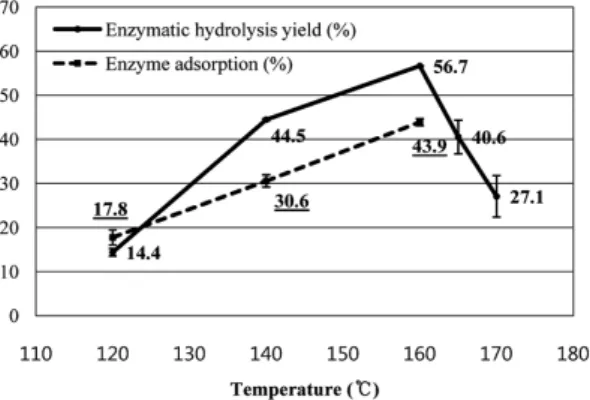
Fig. 1. Enzyme adsorption and enzymatic hydrolysis yields at different pretreatment temperatures.

components in different ways. Some cellulose was depolymerized, and hemicellulose was dis- solved and monomerized. Primarily, only a small amount of lignin was dissolved and it was redistributed extensively[23].

The total recovery and composition of hol- ocellulose and lignin in the water insoluble sol- id fraction were determined from dilute acid pretreatment at different reaction temperatures.

Table 1 showes that the recovered contents of chemical components after pretreatment was gradually reduced to 74% at 120°C and 54% at 160°C. Reduction of recovery yields was caused by the dissolution of cellulose and hemicellulose.

In particular, hemicelluloses were removed rap- idly as the reaction temperature was increased and only 20% of the hemicelluose remained af- ter pretreatment at 160°C. In addition, dilute acid pretreatment degraded not only hemi- cellulose but also cellulose. Cellulose content varied from 43.2 g to 27.6 g depending on the pretreatment temperature (Table 1).

Dilute acid pretreatment was not effective to reduce lignin content. Moreover, pretreatment using dilute acid increased the relative lig- nincontent due to holocellulose removal. This result agreed with other studies, indicating that pretreatment with dilute sulfuric acid led to a

decrease of residual xylan content and an in- crease of lignin content[11,24,25]

3.2. Correlation between Enzymatic Hydrolysis and Enzyme Adsorption Hydrolysis yields were calculated with weight loss of the pretreated biomass after enzymatic hydrolysis. Increasing pretreatment temperature had a positive effect on the hydrolysis yield, but above 160°C this effect no longer found.

The hydrolysis yield of pretreated biomass at 120°C was just 14.4%. The hydrolysis yield in- creased rapidly from 120°C to 140°C and the highest hydrolysis yield was 56.7%, obtained at 160°C. Fig. 1 shows that the enzymatic hydrol- ysis yield was reduced when pretreatment tem- perature was increased beyond 160°C. This re- sult could be attributed to excessive degradation of sugars with pretreatment at high temperature as well as increased relative content of lignin.

The enzyme adsorption experiment was car- ried out with the same ratio of pretreated bio- mass and enzyme as enzymatic hydrolysis. Fig.

1 shows the amount of enzyme adsorption, which was calculated with variation of nitrogen content of the enzyme absorbed biomass after attaining an equilibrium state for 24 h at 4°C.

As expected, the enzyme adsorption also in- creased as biomass pretreated at higher temper- ature was applied. The amount of enzyme ad- sorption was 18% on pretreated biomass at 120°C and increased to 44% on pretreated bio- mass at 160°C. Dilute acid pretreatment im- proved enzyme adsorption because some of the hemicellulose fraction of the pretreated material was removed. As a result, the enzyme accessi- bility to cellulose was enhanced by increasing the exposure of cellulose and the pore size of the biomass surface.

The nitrogen content of the untreated bio-

mass, pretreated biomasses, and enzyme was

(6)

Table 2. Nitrogen content (wt%) of the control, pretreated, and enzyme adsorbed biomasses

Pretreated biomass Enzyme adsorbed biomass

Control 0.122 ± 0.003 ·

120°C 0.075 ± 0.001 0.127 ± 0.005 140°C 0.051 ± 0.002 0.141 ± 0.004 160°C 0.046 ± 0.001 0.176 ± 0.002

Enzyme 7.54 ± 0.011 ·

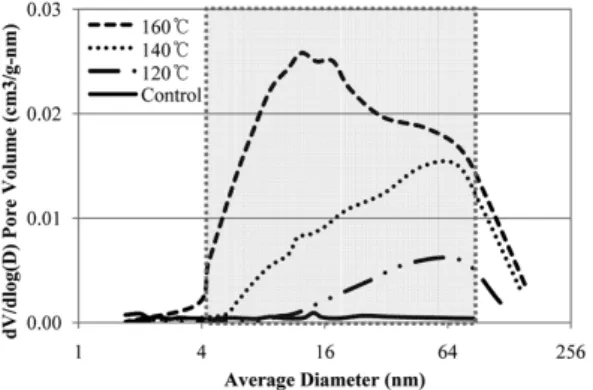
Fig. 2. Pore size distribution at different pretreatment temperatures.

Fig. 3. FE-SEM micrographs of cell wall structure, (a) of raw material, (b) of dilute acid pre- treated material at 120°C, (c) at 140°C and (d) at 160°C.

measured with an elemental analyzer. It was necessary to subtract the nitrogen content of the pretreated biomass from the total nitrogen con- tent of the enzyme adsorbed biomass, because lignocellulosic substrates also contained some protein[17]. Kumar and Wyman (2008) reported that lignocellulosic substrates also contain some protein.

The nitrogen content of non-pretreated bio- mass was 0.122% in this study. Nitrogen was also detected in pretreated biomass, but the ni- trogen content was less than that in the non-pre-

treated biomass. In addition, as the pretreatment temperature was increased, the nitrogen content of the pretreated biomass decreased further. The nitrogen content of pretreated biomass changed from 0.075% at 120°C to 0.046% at 160°C.

Meanwhile, after enzyme adsorption, nitrogen content of the biomass increased from 0.127%

to 0.176% as the pretreatment temperature was increased (Table 2).

3.3. Surface Characterization

3.3.1. Pore Size Distribution

Fig. 2 shows the pore size distribution of pre- treated biomasses in different reaction temperatures.

The raw biomass had few pores because of its dense and close structure (Fig. 3(a)). On the other hand, the pore size and volume of the pretreated biomass were increased as the pre- treatment temperature was raised. This appears to be attributable to the removal of hemi- cellulose alongside with the increase of pore size and volume of cellulose.

Cellulase with a spherical diameter was re- ported to have a size of 24∼74 nm[26]. In an- other study, pore size accessible to molecules with a diameter of 51 A°, similar to the size of T. reesei cellulase components, was reported[27].

Therefore, pore sizes over 5 nm could be de-

(7)

fined as available pores. As illustrated in Fig. 2, the purpose of pretreatment is to increase avail- able pores. The volume of available pores was maximized at 160°C.

Therefore, the increment of available pores could be an important factor regarding the effi- cacy of pretreatment related to enzyme adsorp- tion and enzymatic hydrolysis.

3.3.2. Surface Morphology

Surface morphology is considered to be an important factor alongside pore size distribution to understand enzyme accessibility of pretreated biomass. Dilute acid pretreatment promoted changes of surface characteristics through a thermochemical process.

FE-SEM observation of dilute acid pretreated biomass samples revealed different features such as the formation of droplets on the surface of the cell wall. In a mild pretreatment con- dition (120°C), no change in the surface struc- ture was found. The surface image of biomass pretreated at 140°C showed changes of cell walls, which became coarse, and the creation of micro-particles. The pretreatment condition of 160°C brought out the most distinct morpho- logical changes of the cell wall. Many droplets could be observed on the surface of the pre- treated biomass, and most droplets appeared in spherical form. The size of droplets ranged from tens to hundreds of nanometers (Fig. 3).

Donohoe et al. (2008) reported the occur- rence of droplets during dilute acid pretreatment as lignin migration and redistribution. This study illustrates a possible mechanism for lignin droplet coalescence, extrusion, and redeposition [28]. Similar changes of the biomass surface were also observed in this study.

Droplet observation led to a hypothesis that lignin migration and redistribution increased available pore size and exposure of enzyme ac- cessible cellulose. In other words, pore size

might be increased, even though the content of lignin was constant at all pretreatment con- ditions, because of lignin migration and ag- gregation onto the biomass surface. Therefore, the enzyme adsorption could be increased by not only hemicellulose removal but also lignin redistribution.

4. CONCLUSION

This study verified that dilute acid pretreat- ment enhanced enzymatic hydrolysis yield.

Enzyme adsorption and surface characterization were investigated through experiments to study the effects of dilute acid pretreatment for hy- drolysis efficiency. Even though this study showed a reduction of total fermentable sugars and constant lignin content under harsh pretreat- ment conditions, enzymatic hydrolysis yield was increased. Based on the results of enzyme ad- sorption and surface characterization, enzyme accessibility to cellulose was determined to be a consequential factor to understand and improve pretreatment effects.

In the future, it will be necessary to study correlations between enzyme adsorption and dif- ferent pretreatment methods. Calculating en- zyme adsorption with the nitrogen content would be a good method due to accuracy and convenience. This method and the derived equa- tion can be used to optimally control enzyme usage to save production costs of bio-ethanol.

ACKNOWLEDGEMENT

This study was carried out with the support

of ‘Forest Science & Technology Projects (Pro-

ject No. S120810L140130)’ provided by Korea

Forest Service and ‘Cooperative Research Pro-

gram for Agricultural Science & Technology

Development (Project No. 20100301-030-078-

001-06-00)’ provided by RDA, Republic of Korea.

(8)

REFERENCES

1. Galbe, M. and G. Zacchi. 2002. A review of the production of ethanol from softwood. Applied Microbiology and Biotechnology 59: 618∼628.

2. Sun, Y. and J. Cheng. 2002. Hydrolysis of ligno- cellulosic materials for ethanol production: a review. Bioresource Technology 83: 1∼11.

3. Cosgrove, D. 2005. Growth of the plant cell wall. Nature Reviews Molecular Cell Biology 6:

850.

4. Himmel, M., M. Ruth, and C. Wyman. 1999.

Cellulase for commodity products from cellulosic biomass. Current Opinion in Biotechnology 10:

358∼364.

5. Wyman, C., B. Dale, R. Elander, M. Holtzapple, M. Ladisch, and Y. Lee. 2005. Coordinated de- velopment of leading biomass pretreatment technologies. Bioresource Technology 96: 1959

∼1966.

6. Mosier, N., C. Wyman, B. Dale, R. Elander, Y.

Lee, M. Holtzapple, et al. 2005. Features of promising technologies for pretreatment of ligno- cellulosic biomass. Bioresource Technology 96:

673∼686.

7. Hendriks, A. and G. Zeeman. 2009. Pretreatments to enhance the digestibility of lignocellulosic biomass. Bioresource Technology 100: 10 ∼18.

8. Lee, J. W. 2007. Enzymatic saccharification of lignocellulosic biomass using wood rot fungi and characterization of related enzyme: Seoul National University.

9. Sharma, S., K. Kalra, and H. Grewal. 2002.

Enzymatic saccharification of pretreated sun- flower stalks. Biomass and Bioenergy 23: 237 ∼ 243.

10. Sheehan, J. and M. Himmel. 1999. Enzymes, en- ergy, and the environment: a strategic per- spective on the US Department of Energy’s re- search and development activities for bioethanol.

Biotechnology Progress 15.

11. Jeoh, T., C. Ishizawa, M. Davis, M. Himmel, W.

Adney, and D. Johnson. 2007. Cellulase digesti- bility of pretreated biomass is limited by cellu- lose accessibility. Biotechnology and Bioengi- neering 98.

12. Desvaux, M., E. Guedon, and H. Petitdemange.

2000. Cellulose Catabolism by Clostridium cellu- lolyticum Growing in Batch Culture on Defined Medium. Applied and Environmental Microbio- logy 66: 2461∼2470.

13. Kennedy, M., M. Thakur, D. Wang, and G.

Stephanopoulos. 1992. Techniques for the esti- mation of cell concentration in the presence of suspended solids. Biotechnology Progress 8: 375

∼381.

14. Weimer, P., Y. Shi, and C. Odt. 1991. A seg- mented gas/liquid delivery system for continuous culture of microorganisms on insoluble substrates and its use for growth of Ruminococcus flavefa- ciens on cellulose. Applied Microbiology and Biotechnology 36: 178∼183.

15. Findlay, R., G. King, and L. Watling. 1989.

Efficacy of Phospholipid Analysis in Determining Microbial Biomass in Sediments. Applied and Environmental Microbiology 55: 2888∼2893.

16. Hashimoto, S., M. Fujita, and R. A. Baccay.

1982. Biomass Determination in the Anaerobic Digestion of Night Soil: Kinetic Studies on the Anaerobic Digestion of Night Soil (I). Journal of fermentation technology 60: 51∼54.

17. Kumar, R. and C. Wyman. 2008. An improved method to directly estimate cellulase adsorption on biomass solids. Enzyme and Microbial Technology 42: 426∼433.

18. Himmel, M., T. Vinzant, S. Bower, and J.

Jecura. 2005. BSCL Use Plan : Solving biomass recalcitrance. In: NREL; 2005.

19. Himmel, M., S. Ding, D. Johnson, W. Adney, M.

Nimlos, J. Brady, et al. 2007. Biomass recalci- trance: engineering plants and enzymes for bio- fuels production. Science 315: 804.

20. TAPPI. 1991. Tappi Test Methods In: Tappi Press, Atlanta, GA.

21. NREL. 2005. Biomass Analysis Technology Team Laboratory Analytical Procedure. US Department of Energy, National Renewable Energy Laboratory, Golden, CO.

22. Baklanov, M. R., K. P. Mogilnikov, V. G.

Polovinkin, and F. N. Dultsev. 2000. Determination of pore size distribution in thin films by ellipso- metric porosimetry. Journal of Vacuum Science

& Technology B: Microelectronics and Nanometer

(9)

Structures 18: 1385.

23. Lynd, L., P. Weimer, W. van Zyl, and I.

Pretorius. 2002. Microbial Cellulose Utilization:

Fundamentals and Biotechnology. Microbiology and Molecular Biology Reviews 66: 506.

24. Knappert, D., H. Grethlein, and A. Converse.

1981. Partial acid hydrolysis of poplar wood as a pretreatment for enzymatic hydrolysis[Populus, Trichoderma reesei C30, biomass fuels]. In:

Wiley New York (USA).

25. Nguyen, Q., M. Tucker, F. Keller, and F. Eddy.

2000. Two-stage dilute-acid pretreatment of softwoods. Applied Biochemistry and Biotechnology

84: 561 ∼576.

26. Cowling, E. and T. Kirk. 1976. Properties of cel- lulose and lignocellulosic materials as substrates for enzymatic conversion processes.

27. Grethlein, H. 1985. The effect of pore size dis- tribution on the rate of enzymatic hydrolysis of cellulosic substrates. Nature Biotechnology 3:

155 ∼160.

28. Donohoe, B., S. Decker, M. Tucker, M. Himmel,

and T. Vinzant. 2008. Visualizing lignin coa-

lescence and migration through maize cell walls

following thermochemical pretreatment. Biote-

chnology and Bioengineering 101.

수치

Table 1. Change in chemical composition of biomass after dilute acid pretreatment depending on  pretreatment temperature (extractives content was ignored)
Fig. 1. Enzyme adsorption and enzymatic hydrolysis yields at different pretreatment temperatures.
Table 2. Nitrogen content (wt%) of the control, pretreated, and enzyme adsorbed  biomasses

참조

관련 문서

The fibrinolytic enzyme was purified by using DEAE sepharose CL-6B fast flow chromatography followed by Sephadex G-75 gel filtration and POROS 20

Fructose ester and Glycerol carbonate were synthesized using free-lipase and immobilized lipase under batch reaction condition enzyme.. The conversion of

4 > Effects of Taro on COX-2 expression and iNOS expression(hot water) in human thyroid cancer cells. The cells were pretreated for 48hours with either

 The inhibition pattern of microbial growth is analogous to enzyme inhibition..

Protein hydrolysates have properties such as inhibitory activity against angiotensin I converting enzyme (ACE), immunologi- cally regulating activity and

- Proposed the substrate and enzyme interaction - The winner of the 1902 Nobel Prize in Chemistry...

This type of enzyme regulation is called positive control since the activator stimulates protein synthesis. Positive

-Cost of carriers and immobilization -Changes in properties(selectivity) -Mass transfer limitations.. -Activity