• 검색 결과가 없습니다.

Veterinary Science

N/A
N/A
Protected

Academic year: 2022

Share "Veterinary Science"

Copied!
8
0
0

로드 중.... (전체 텍스트 보기)

전체 글

(1)

Veterinary Science CT myelography of the thoraco-lumbar spine in 8 dogs with degenerative myelopathy

Jeryl C. Jones*, Karen D. Inzana, John H. Rossmeisl, Robert L. Bergman, Tana Wells, Katherine Butler

Department of Small Animal Clinical Sciences, Virginia-Maryland Regional College of Veterinary Medicine, Virginia Polytechnic Institute and State University, Blacksburg, VA 24061-0442, USA

CT myelography of the T11-L2 region was performed in 8 large-breed dogs with a clinical diagnosis of degenerative myelopathy (DM) and 3 large-breed dogs that were clinically normal. CT myelographic characteristics were recorded for each dog, at each disc level. Area measurements of the spinal cord, dural sac, vertebral canal, and vertebral body were recorded at 4 slice locations for each disc level. Mean area ratios were calculated and graphically compared, by slice location and group. In all dogs, CT myelography identified morphologic abnormalities that were not suspected from conventional myelograms. Characteristics observed with higher frequency in DM versus normal dogs were: spinal stenosis, disc protrusion, focal attenuation of the subarachnoid space, spinal cord deformity, small spinal cord, and paraspinal muscle atrophy. Mean spinal cord:dural sac, spinal cord:vertebral canal, dural sac:

vertebral canal, and vertebral canal:vertebral body ratios were smaller in DM versus normal dogs at more than one disc level. Some CT myelographic characteristics in DM dogs were similar to those previously reported in humans, dogs and horses with stenotic myelopathy.

Key words: CT myelography, degenerative myelopathy, dog, spinal stenosis, spinal cord atrophy

Introduction

Progressive paraparesis (hindlimb weakness) is a common problem in large breed dogs [12] . A diagnosis of thoraco- lumbar syndrome is made when the physical and neurologic examinations are consistent with a T3-L3 spinal lesion. The most common causes of progressive thoraco-lumbar syndrome in large breed dogs include: intervertebral disk disease, degenerative myelopathy, and diskospondylitis. Conventional

diagnostic tests for evaluating affected dogs include radiography, myelography, and cerebrospinal fluid analysis [44]. If these diagnostic tests rule out other causes for the clinical signs, a presumptive diagnosis of degenerative myelopathy is given.

Degenerative myelopathy (DM) is a neurodegenerative disorder that most commonly affects German Shepherds [2, 11,13,34,41,42,44,51] . The disease has also been reported in a family of Siberian Huskies [8], an adult Miniature Poodle [37], Welsh Corgies [16], and a cat [38]. Clinical signs of DM include progressive hindlimb ataxia, paraparesis, and hindlimb muscle atrophy. Most dogs exhibit little or no evidence of spinal hyperpathia. Research on possible treatments for DM is ongoing, but there is currently no proven effective treatment [15,16]. Most dogs are euthanized within one year of diagnosis. Post-mortem histopathologic examination of the spinal cord demonstrates varying degrees of axon and myelin degeneration of the spinal cord white matter in all segments. Lesions are most severe in the thoracic region [2, 28]. The pathophysiology of and triggering mechanisms for DM remain incompletely understood. Proposed etiologies have included selective vulnerability of the thoracic spinal cord to some unknown insult [2], dying back axonopathy [21], hereditary predisposition [8,10], immune-mediated myelopathy [6,15,28,53], and vitamin B12 or E deficiency [20].

Computed tomographic (CT) myelography has been found to be more sensitive than myelography for characterizing morphology of the spine in humans, horses, and dogs [1,3,4,39,46]. The technique is considered to be particularly helpful for diagnosing spinal cord atrophy, spinal stenosis, and vertebral malformation/malarticulation [4,19,22,24~26,32, 33,36,39,40,45,46,48,50,55]. Cross-sectional area measurements from CT images are a sensitive method for quantifying spinal components [9,26,29,55]. The use of area ratios has been found to help correct for differences in body sizes [29].

One report describing the plain CT morphology of the thoraco-lumbar spine in normal German Shepherds was found [17]. No reports were found describing the use of CT myelography in dogs with DM. The objective of this study was to describe the CT myelographic characteristics of the

*Corresponding author

Tel: +1-540- 231-2735; Fax: +1-540- 231-1676

Email: [email protected]

(2)

thoraco-lumbar spine in a group of dogs clinically diagnosed with DM.

Materials and Methods

Sample population

The sample population for this prospective, observational study consisted of 8 consecutive dogs with a clinical diagnosis of degenerative myelopathy (DM) and 3 dogs that were clinically normal. A board-certified veterinary neurologist examined all dogs. Inclusion criteria for DM dogs included:

mature, non-chondrodystrophic, large-breed dog; history of paraparesis for 2 weeks or longer; neurologic examination findings consistent with thoraco-lumbar syndrome; absence of severe hyperpathia; no or mild myelographic evidence of spinal cord compression; no evidence of inflammation in the cerebrospinal fluid; and client consent for CT myelography.

Dogs in the normal group were all mature large breed dogs with no history of paraparesis, and no evidence of neurologic deficits on physical examination. The Virginia Tech Institutional Animal Care and Use Committee approved all study protocols.

Imaging protocols

Myelography in all dogs was performed using fluoroscopic guidance. Non-ionic, iodinated contrast medium was injected into the subarachnoid space at L4-5 or L5-6 and radiographic exposures were made immediately following completion of the injection (Omnipaque; Iohexol 240 mg/ml, 0.3~0.5 ml/

kg. Amersham Health, USA) [43] . For dogs meeting the study inclusion criteria, CT of the T11-L2 region was performed immediately following myelography using a fourth generation CT scanner (Picker IQ/Xtra; Phillips Medical Systems, USA).

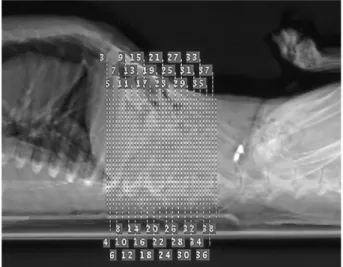
Dogs were positioned in dorsal recumbency with the hind limbs flexed to minimize curvature of the thoraco-lumbar spine. The gantry was tilted as needed to maximize the number of transverse slices that were perpendicular to the vertebral canal (Fig. 1). Technique settings for all CT scans were: 130 kVp, 440 mAs, 480 cm field size, 160 cm image size, 5 mm slice thickness and 4 mm slice interval.

Qualitative analysis

A board-certified veterinary radiologist reviewed CT images on the monitor of a reformatting computer workstation (Picker Voxel Q Visualization Station; Philips Medical Systems, USA). Oblique, multi-planar reformatting software was used as needed to correct for transverse slice obliquity and to generate sagittal and dorsal planar images. For each dog and disc level, presence of the following CT myelographic characteristics was recorded: spinal stenosis, articular process osteoarthritis, dorsal longitudinal ligament calcification, disc protrusion, loss of epidural fat, attenuated subarachnoid space, enlarged subarachnoid space, spinal cord deformity, small spinal cord, and paraspinal muscle

atrophy. Spinal stenosis was defined as narrowing of the vertebral canal/foramina due to thickened lamina, thickened pedicles and/or bulbous articular processes [7,27,29,47,49,52].

Articular process osteoarthritis was defined as periarticular osteophyte formation, subchondral sclerosis or articular process remodelling [14]. Dorsal longitudinal ligament calcification was defined as a linear mineral opacity in the mid-ventral vertebral canal [23]. Disc protrusion was defined as a ventral epidural mass continuous with the disc margin [30]. Spinal cord deformity was defined as ventral concavity in cord margin, unilateral flattening of cord margin, lateral deformity on both sides of cord, and/or triangle-shaped cord (spinal cord atrophy) [55]. Small spinal cord was defined as a localized decrease in cord size visible in at least 2 image planes. Paraspinal muscle atrophy was defined as small and heterogenous multifidus muscles [18].

Fig. 1. Lateral pilot CT image demonstrating patient positioning and locations of T11-L2 transverse slices.

Fig. 2. Transverse CT image demonstrating ROI tracings used to

calculate areas for the spinal cord (sc), dural sac (ds), vertebral

canal (vc), and vertebral body (vb).

(3)

Quantitative analysis

Using the same workstation as that used for qualitative analysis, two operators (TW, KB) performed area measurements using hand-traced regions of interest and the CT computer’s software for area calculations. For all measurements, images were displayed using a 1000 window width, 400 window level and 3X zoom factor. Area measurements of the spinal cord (SC), dural sac (DS), vertebral canal (VC), and vertebral body (VB) were made at 4 slice locations for each disc level (mid-body, caudal pedicle, mid-disc, and cranial pedicle) (Fig. 2) [9,17,26,29]. Mean area ratios (SC:DS, SC:VC, DS:VC, VC:VB) were calculated and graphically compared, by slice location and group [29].

Results

Sample population

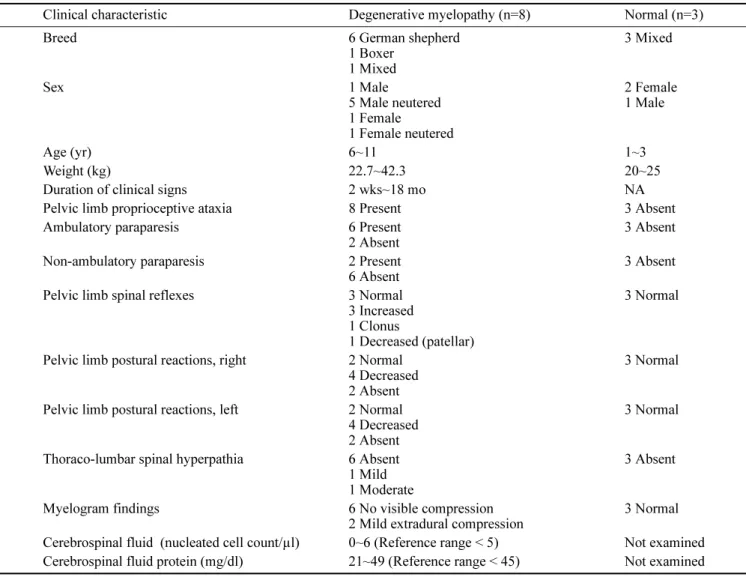
Clinical characteristics in our sample population of DM dogs were consistent with those described in previous reports (Table 1) [2,8,11,15,21,28,42,51]. For 6 DM dogs,

there was no myelographic evidence of spinal cord compression. For 2 DM dogs, myelographic evidence of mild extradural compression was noted by the veterinary radiologist on duty but was considered to be clinically insignificant. By client request, one DM dog was euthanized immediately following the CT examination and the body was submitted for postmortem examination. Histopathology of several segments of the thoracic spinal cord revealed vacuolation of white matter tracts with axonal loss in all funiculi. A board-certified veterinary pathologist interpreted these findings to be consistent with DM.

Qualitative findings

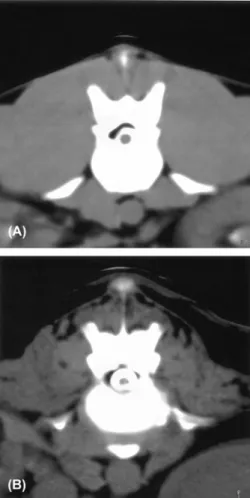
In all DM dogs, CT myelography identified morphologic abnormalities in the thoraco-lumbar spine that were not suspected from conventional myelogram images. CT myelographic characteristics observed with higher frequency in DM versus normal dogs were: spinal stenosis, disc protrusion, attenuation of the subarachnoid space, spinal cord deformity, small spinal cord, and paraspinal muscle

Table 1. Clinical characteristics of sample population

Clinical characteristic Degenerative myelopathy (n=8) Normal (n=3)

Breed 6 German shepherd

1 Boxer 1 Mixed

3 Mixed

Sex 1 Male

5 Male neutered 1 Female

1 Female neutered

2 Female 1 Male

Age (yr) 6~11 1~3

Weight (kg) 22.7~42.3 20~25

Duration of clinical signs 2 wks~18 mo NA

Pelvic limb proprioceptive ataxia 8 Present 3 Absent

Ambulatory paraparesis 6 Present

2 Absent 3 Absent

Non-ambulatory paraparesis 2 Present

6 Absent 3 Absent

Pelvic limb spinal reflexes 3 Normal

3 Increased 1 Clonus

1 Decreased (patellar)

3 Normal Pelvic limb postural reactions, right 2 Normal

4 Decreased 2 Absent

3 Normal Pelvic limb postural reactions, left 2 Normal

4 Decreased 2 Absent

3 Normal Thoraco-lumbar spinal hyperpathia 6 Absent

1 Mild 1 Moderate

3 Absent

Myelogram findings 6 No visible compression

2 Mild extradural compression 3 Normal

Cerebrospinal fluid (nucleated cell count/µl) 0~6 (Reference range < 5) Not examined

Cerebrospinal fluid protein (mg/dl) 21~49 (Reference range < 45) Not examined

(4)

atrophy (Table 2 and Fig. 3~6). Enlargement of the subarachnoid space was observed with higher frequency in normal versus DM dogs. Loss of epidural fat was seen with a high frequency in both DM and normal dogs. Dorsal longitudinal ligament calcification, and articular process osteoarthritis were observed with low frequency in DM dogs and were absent in normal dogs.

Quantitative findings

Mean spinal cord: dural sac area ratios for DM dogs were numerically smaller than those for normal dogs at the T12- 13 disc and from mid L1 to mid L2 (Fig. 7). Mean spinal cord : vertebral canal ratios were smaller from mid-T12 to mid-L2 (Fig. 8). Mean dural sac:vertebral canal ratios were smaller from mid T11 to cranial L2 (Fig. 9). Mean vertebral canal:vertebral body ratios were smaller at the T11-12 disc, mid T12, T12-13 disc, T13-L1 disc to mid L1, cranial L2, and mid L2 (Fig. 10).

Discussion

The CT myelography procedure was easy to perform and revealed morphologic abnormalities in DM dogs that were not suspected from the conventional myelogram images.

The procedure could be performed immediately following myelography, without the need for an additional anesthetic episode. Loss of epidural fat and enlargement of the dorsal

Table 2. Frequencies of CT myelographic abnormalities observed at 4 thoraco-lumbar disc levels in 8 dogs with chronic paraparesis and 3 normal dogs

CT myelographic characteristic Degenerative myelopathy Normal

Obs (n=32) % Obs (n=12) %

Endplate bone spurs 01 03.1 0 0.

Spinal stenosis 26 81.3 5 41.7

Articular process osteoarthritis 03 09.4 0 0.

Dorsal longitudinal ligament calcification 04 01.3 0 0.

Disc protrusion 21 65.6 3 25.0

Loss of epidural fat 31 96.9 120 100.00

Attenuated subarachnoid space 24 75.0 5 41.7

Enlarged subarachnoid space 18 56.5 100 83.3

Spinal cord deformity 26 81.3 6 50.0

Small spinal cord 26 81.3 3 25.0

Paraspinal muscle atrophy 32 100.00 0 0.

Fig. 3. Transverse CT images obtained at caudal T12, demonstrating normal spinal cord (A) and spinal cord deformity (B). Enlargement of the dorsal subarachnoid space is evident in both images.

Fig. 4. Mid-sagittal CT images of the T11-L2 spine, demonstrating

normal spinal cord (A) and small spinal cord (B) with spondylosis

deformans and disc protrusions at T12-13, L1-2, and L2-3.

(5)

subarachnoid space were found to be common in normal dogs. The clinical significance of such abnormalities is therefore questionable. Loss of epidural fat may have been due to a normal regional decrease in the size of the epidural space in the canine thoraco-lumbar spine. Enlargement of the dorsal subarachnoid space may have been due to dorsal

positioning of the dogs and gravity-dependent accumulation of contrast medium. Morphologic characteristics such as spinal stenosis, disc protrusion, focal attenuation of the subarachnoid space, spinal cord deformity, small spinal cord, and paraspinal muscle atrophy were found to be common in DM dogs. Area ratios for spinal cord: dural sac, spinal cord:vertebral canal, dural sac:vertebral canal and

Fig. 5. Transverse CT images obtained at L1-2, demonstrating normal paraspinal muscles (A) and paraspinal muscle atrophy (B).

Fig. 6. Transverse CT images obtained at L1-2, demonstrating normal vertebral canal (A) and spinal stenosis (B) with loss of ventral epidural fat, decreased subarachnoid space, deformed spinal cord, and small spinal cord.

Fig. 7. Mean spinal cord: dural sac area ratios for DM and normal dogs, by slice location and disc level.

Fig. 8. Mean spinal cord: vertebral canal area ratios for DM and normal dogs, by slice location and disc level.

Fig. 9. Mean dural sac: vertebral canal area ratios for DM and

normal dogs, by slice location and disc level.

(6)

vertebral canal:vertebral body were also numerically smaller at more than one slice location in DM dogs. These characteristics are similar to those previously reported in humans, dogs, and horses with chronic spinal cord compression and spinal cord atrophy, stenotic or spondylotic myelopathy [4,7,22,24,36,39,46,54,55]. Yu et al. [55]

described qualitative and quantitative CT myelographic characteristics of the cervical spine in 69 human patients with cervical stenotic myelopathy and/or cervical stenotic radiculopathy. They concluded that CT myelographic evidence of a small, deformed spinal cord with an unattenuated dural sac was a sensitive indicator of spinal cord atrophy. They developed a classification system for describing CT myelographic severity of spinal cord deformity: type A (central cord deformity), type B (unilateral cord deformity), type C (lateral deformity on both sides of the cord) and type D (spinal cord atrophy). Using this classification system, they found that severity of spinal cord deformity was significantly correlated with poor post-operative outcome.

Sharp et al. described the CT myelographic characteristics of the cervical spine in 8 Doberman Pinschers with caudal cervical spondylomyelopathy, Wobbler’s syndrome [46].

They found that cervical spinal cord shape abnormalities in affected dogs appeared similar to those described in humans by Yu et al. [55]. The cord shape was flattened in moderately atrophic regions, triangular in severely atrophic, and focally compressed at locations with disc protrusion.

They found that type classifications of cord deformities matched well with surgical findings in the 6 dogs that underwent surgical decompression. In 4 dogs, the spinal cord shape abnormalities persisted after successful surgical decompression. Jones et al. [29] measured areas of the spinal canal and vertebral bodies in 21 dogs with lumbosacral stenosis and 21 normal dogs. They found that vertebral canal area was significantly correlated with vertebral body area in normal dogs. Vertebral canal:vertebral body ratios for dogs with clinical signs of lumbosacral stenosis significantly differed from those of normal dogs. Moore et

al. [39] described CT myelographic characteristics of the cervical spine in 6 horses with cervical stenotic myelopathy.

Computed tomographic myelography correctly identified all 10 spinal cord compressive lesions that were confirmed by postmortem histopathology. The most common morphologic abnormality was circumferential compression of the dural sac due to malformed articular processes. Both central and lateral spinal cord deformities were also identified.

We propose two possible theories to explain the significance of the CT myelographic characteristics observed in our DM dogs. It is possible that clinical signs in some dogs were primarily caused by chronic spinal cord compression and spinal cord atrophy rather than DM.

Barnett et al. [7] described chronic progressive lower limb dysfunction due to thoracic spinal stenosis in 6 human patients. In 4 patients, deficits developed gradually and were not associated with back pain. In all patients, conventional myelography was considered to be of limited value. Authors concluded that CT or MRI were more useful in the diagnosis. In one case, MRI was inconclusive and CT successfully demonstrated the cause and location of stenosis. In a published abstract, Bagley proposed that some dogs diagnosed with DM based on clinical signs and myelography may actually have under-recognized chronic, type II disc disease [5]. When these dogs were imaged with MRI, he reported that was not uncommon to see disc protrusion even though the myelographic examination was normal. He theorized that, although the actual spinal cord compression appeared minimal, there may have been significant intraspinal disease due to chronic ischemia.

Marsala et al. [35] experimentally created mild, multi-level compression of the caudal portion of the dural sac and adjacent nerve roots in 11 dogs. Nine days after application of the compression, they performed histopathology of the compressed segments. Antegrade degeneration was seen in all sacrococcygeal and L7 dorsal root fibers in the S1-S3 and lower lumbar segments of the spinal cord. Retrograde degeneration of the motor neurons was seen in the ventrolateral portion of the S1-3 segments. It is also possible that clinical signs in our dogs were due primarily to DM and that the thoraco-lumbar morphologic abnormalities were incidental. Jones et al. [31] described CT findings in the lumbosacral spine of 6 geriatric large breed dogs presented for problems unrelated to the lumbosacral spine. The most common abnormalities identified were spinal stenosis, loss of vertebral canal epidural fat, and nerve tissue displacement.

Less common abnormalities were vertebral canal or foraminal bone proliferation, loss of intervertebral foramen fat, vertebral canal disc bulging, degenerative articular process joint disease, transitional vertebra, dural ossification, foraminal disc bulging, Schmorl’s nodes, calcified extruded disc fragment, and sacroiliac joint osteophytes.

In conclusion, findings indicate that conventional diagnostic tests may underestimate the extent of morphologic abnormalities

Fig. 10. Mean vertebral canal: vertebral body area ratios for DM

and normal dogs, by slice location and disc level.

(7)

in the thoraco-lumbar spine of dogs with a clinical diagnosis of DM. For such dogs, CT myelography is a feasible technique for performing additional qualitative and quantitative analysis of thoraco-lumbar morphology. Some CT myelographic characteristics in dogs with DM are similar to those previously reported in humans, dogs, and horses with chronic spinal cord compression and spinal cord atrophy.

Future studies using a larger number of symptomatic and asymptomatic dogs are needed to determine whether associations between CT myelographic characteristics, clinical characteristics, and histopathology are statistically significant.

Acknoweldgments

Funded by the Department of Small Animal Clinical Sciences Foundation and the Virginia Tech Multicultural Academic Opportunities Program. The authors would like to thank Ms. Mary Ayers for assistance with CT protocol design and Dr. Daniel Ward for assistance with statistical analysis.

Portions of this study were presented at the ACVR Scientific Session, December 2003, Chicago, IL, USA.

References

1. Arlien-Soborg P, Kjaer L, Praestholm J. Myelography, CT, and MRI of the spinal canal in patients with myelopathy:

a prospective study. Acta Neurol Scand 1993, 87 , 95-102.

2. Averill DR. Degenerative myelopathy in the aging German Shepherd dog: clinical and pathologic findings. J Am Vet Med Assoc 1973, 162 , 1045-1051.

3. Azar-Kia B, Fine M, Naheedy MH. Importance of metrizamide CT for evaluation of the thoracic spine. Comput Radiol 1985, 9 , 233-241.

4. Badami JP, Norman D, Barbaro NM, Cann CE, Weinstein PR, Sobel DF. Metrizamide CT myelography in cervical myelopathy and radiculopathy: correlation with conventional myelography and surgical findings. AJR Am J Roentgenol 1985, 144 , 675-680.

5. Bagley RS. Spinal cord enigmas: fibrocartilagenous emboli, arachnoid cysts, and others. Proceeding of the 21st Annual ACVIM Forum, pp. 377~378, Charlotte, June 4~8, 2003.

6. Barclay KB, Haines DM. Immunohistochemical evidence for immunoglobulin and complement deposition in spinal cord lesions in degenerative myelopathy in German shepherd dogs. Can J Vet Res 1994, 58 , 20-24.

7. Barnett GH, Hardy RW, Jr., Little JR, Bay JW, Sypert GW. Thoracic spinal canal stenosis. J Neurosurg 1987, 66 , 338-344.

8. Bichsel P, Vandevelde M, Lang J, Kull-Hachler S.

Degenerative myelopathy in a family of Siberian Husky dogs. J Am Vet Med Assoc 1983, 183 , 998-1000, 1965.

9. Bolender NF, Schonstrom NS, Spengler DM. Role of computed tomography and myelography in the diagnosis of central spinal stenosis. J Bone Joint Surg Am 1985, 67 , 240-

246.

10. Braund KG, Vandevelde M. German Shepherd dog myelopathy--a morphologic and morphometric study. Am J Vet Res 1978, 39 , 1309-1315.

11. Braund KG. Hip dysplasia and degenerative myelopathy:

making the distinctions in dogs. Vet Med 1987, 82 , 782-789.

12. Braund KG. Clinical Syndromes in Veterinary Neurology.

2nd ed. pp. 37~80, Mosby, St. Louis, 1994.

13. Braund KG. Degenerative disorders of the central nervous system. In: Vite CH (ed.). Braund’s Clinical Neurology in Small Animals. International Veterinary Information Service, Ithaca, 2003

14. Carrera GF, Haughton VM, Syvertsen A, Williams AL.

Computed tomography of the lumbar facet joints. Radiology 1980, 134 , 145-148.

15. Clemmons RM. Degenerative myelopathy. Vet Clin North Am Small Anim Pract 1992, 22 , 965-971.

16. Coates JR. Degenerative myelopathy. Proceeding of the 19th Annual ACVIM Forum, pp. 404~407, Denver, 2001.

17. Dabanoglu I, Kara ME, Turan E, Ocal MK. Morphometry of the thoracic spine in German Shepherd dog: a computed tomographic study. Anat Histol Embryol 2004, 33 , 53-58.

18. Danneels LA, Vanderstraeten GG, Cambier DC, Witvrouw EE, De Cuyper HJ. CT imaging of trunk muscles in chronic low back pain patients and healthy control subjects. Eur Spine J 2000, 9 , 266-272.

19. Donaldson I, Gibson R. Spinal cord atrophy associated with arachnoiditis as demonstrated by computed tomography.

Neuroradiology 1982, 24 , 101-105.

20. Fechner H, Johnston PE, Sharp NJ, et al. Molecular genetic and expression analysis of alpha-tocopherol transfer protein mRNA in German shepherd dogs with degenerative myelopathy. Berl Munch Tierarztl Wochenschr 2003, 116 , 31-36.

21. Griffiths IR, Duncan ID. Chronic degenerative radiculomyelopathy in the dog. J Small Anim Pract 1975, 16 , 461-471.

22. Hara Y, Tagawa M, Ejima H, Orima H, Fujita M.

Usefulness of computed tomography after myelography for surgery on dogs with cervical intervertebral disc protrusion. J Vet Med Sci 1994, 56 , 791-794.

23. Harsh GRt, Sypert GW, Weinstein PR, Ross DA, Wilson CB. Cervical spine stenosis secondary to ossification of the posterior longitudinal ligament. J Neurosurg 1987, 67 , 349- 357.

24. Hayashi H, Okada K, Hashimoto J, Tada K, Ueno R.

Cervical spondylotic myelopathy in the aged patient. A radiographic evaluation of the aging changes in the cervical spine and etiologic factors of myelopathy. Spine 1988, 13 , 618-625.

25. Hirabuki N, Mitomo M, Miura T, Hashimoto T, Kawai R, Kozuka T. Computed tomographic myelography characteristics of spinal cord atrophy in juvenile muscular atrophy of the upper extremity. Eur J Radiol 1991, 13 , 215- 219.

26. Inoue H, Ohmori K, Takatsu T, Teramoto T, Ishida Y,

Suzuki K. Morphological analysis of the cervical spinal

canal, dural tube and spinal cord in normal individuals using

(8)

CT myelography. Neuroradiology 1996, 38 , 148-151.

27. Jacobson RE, Gargano FP, Rosomoff HL. Transverse axial tomography of the spine. Part 2: the stenotic spinal canal. J Neurosurg 1975, 42 , 412-419.

28. Johnston PE, Barrie JA, McCulloch MC, Anderson TJ, Griffiths IR. Central nervous system pathology in 25 dogs with chronic degenerative radiculomyelopathy. Vet Rec 2000, 146 , 629-633.

29. Jones JC, Wright JC, Bartels JE. Computed tomographic morphometry of the lumbosacral spine of dogs. Am J Vet Res 1995, 56 , 1125-1132.

30. Jones JC, Sorjonen DC, Simpson ST, et al . Comparison between computed tomographic and surgical findings in nine large breed dogs with lumbosacral stenosis. Vet Radiol Ultrasound 1996, 37 , 247-256.

31. Jones JC, Inzana KD. Subclinical CT abnormalities in the lumbosacral spine of older large-breed dogs. Vet Radiol Ultrasound 2000, 41 , 19-26.

32. Karnaze MG, Gado MH, Sartor KJ, Hodges FJ, 3rd.

Comparison of MR and CT myelography in imaging the cervical and thoracic spine. AJR Am J Roentgenol 1988, 150 , 397-403.

33. Laasonen EM, Kankaanpaa U, Paukku P, Sandelin J, Servo A, Slatis P. Computed tomographic myelography (CTM) in atlanto-axial rheumatoid arthritis. Neuroradiology 1985, 27 , 119-122.

34. Longhofer SL, Duncan ID, Messing A. A degenerative myelopathy in young German Shepherd dogs. J Small Anim Pract 1990, 31 , 199-203.

35. Marsala J, Sulla I, Jalc P, Orendacova J. Multiple protracted cauda equina constrictions cause deep derangement in the lumbosacral spinal cord circuitry in the dog. Neurosci Lett 1995, 193 , 97-100.

36. Massicotte C, Jones J, Newman S, Moon M. Wobbler syndrome due to cervical stenosis in a Great Dane puppy.

Canine Pract 1999, 24 , 18-20.

37. Matthews NS, de Lahunta A. Degenerative myelopathy in an adult miniature poodle. J Am Vet Med Assoc 1985, 186 , 1213-1215.

38. Mesfin GM, Kusewitt D, Parker A. Degenerative myelopathy in a cat. J Am Vet Med Assoc 1980, 176 , 62-64.

39. Moore B, Holbrook T, Stefanacci J, Reed S, Tate L, Menard M. Contrast-enhanced computed tomography and myelography in six horses with cervical stenotic myelopathy.

Equine Vet J 1992, 24 , 197-202.

40. Nakada T, Kwee IL, Palmaz JC. Computed tomography of

spinal cord atrophy. Neuroradiology 1982, 24 , 97-99.

41. Oliver JE. What is your neurologic diagnosis? Degenerative myelopathy in a dog, based on negative results of all diagnostic tests. J Am Vet Med Assoc 1993, 203 , 647-648.

42. Romatowski J. Degenerative myelopathy in a German shepherd. Mod Vet Pract 1984, 65 , 535-537.

43. Sande RD. Radiography, myelography, computed tomography, and magnetic resonance imaging of the spine.

Vet Clin North Am Small Anim Pract 1992, 22 , 811-831.

44. Seim HB. Conditions of the thoracolumbar spine. Semin Vet Med Surg (Small Anim) 1996, 11 , 235-253.

45. Sharp NJH, Wheeler SJ, Cofone M. Radiological evaluation of ‘wobbler’ syndrome-caudal cervical spondylomy- elopathy. J Small Anim Pract 1992, 33 , 491-499.

46. Sharp NJH, Cofone M, Robertson ID, DeCarlo A, Smith GK, Thrall DE. Computed tomography in the evaluation of caudal cervical spondylomyelopathy of the doberman pinscher. Vet Radiol Ultrasound 1995, 36 , 100-108.

47. Smith DE, Godersky JC. Thoracic spondylosis: an unusual cause of myelopathy. Neurosurgery 1987, 20 , 589-593.

48. Stevens JM, Kendall BE, Crockard HA. The spinal cord in rheumatoid arthritis with clinical myelopathy: a computed myelographic study. J Neurol Neurosurg Psychiatry 1986, 49 , 140-151.

49. Tarvin G, Prata RG. Lumbosacral stenosis in dogs. J Am Vet Med Assoc 1980, 177 , 159.

50. Thijssen HO, Keyser A, Horstink MW, Meijer E.

Morphology of the cervical spinal cord on computed myelography. Neuroradiology 1979, 18 , 57-62.

51. Toenniessen JG, Morin DE. Degenerative myelopathy: a comparative review. Compend Contin Educ 1995, 17 , 271- 282.

52. Verbiest H. Developmental stenosis of the bony lumbar vertebral canal. Acta Orthop Belg 1987, 53 , 373-387.

53. Waxman FJ, Clemmons RM, Hinrichs DJ. Progressive myelopathy in older German shepherd dogs. II. Presence of circulating suppressor cells. J Immunol 1980, 124 , 1216- 1222.

54. Yamamoto I, Matsumae M, Ikeda A, Shibuya N, Sato O, Nakamura K. Thoracic spinal stenosis: experience with seven cases. J Neurosurg 1988, 68 , 37-40.

55. Yu YL, du Boulay GH, Stevens JM, Kendall BE.

Computed tomography in cervical spondylotic myelopathy and radiculopathy: visualisation of structures, myelographic comparison, cord measurements and clinical utility.

Neuroradiology 1986, 28 , 221-236.

수치

Fig. 1.  Lateral pilot CT image demonstrating patient positioning and locations of T11-L2 transverse slices.
Table 1.  Clinical characteristics of sample population
Table 2.  Frequencies of CT myelographic abnormalities observed at 4 thoraco-lumbar disc levels in 8 dogs with chronic paraparesis and 3 normal dogs
Fig. 5.  Transverse CT images obtained at L1-2, demonstrating normal paraspinal muscles (A) and paraspinal muscle atrophy (B).
+2

참조

관련 문서

Endoscopic spine surgery has become a practical, minimally invasive technique for decompression in patients with spinal disc herniation or stenosis.. However,

Sandberg D, Lavyne M (1999) Symptomatic spinal epidural lipomatosis after local epidural corticosteroid injections:

10 Change of frequency characteristics of the resonators according to adjustment of their g/L ratios ··· 17 Fig.. 11 Change of frequency characteristics of the resonators

First, the general characteristics of the two groups were analyzed by frequency analysis and correlation analysis, which is technical statistics, and the

In this architectural design field, the space with new concept and organic space come into sight, escaping from the space concept in the geometric and

Among the sub-factors, confidence, The factors of setting, team harmony, image and will power were higher in the group with national representative

Lumbar discogenic radiculopathy (LDR) is one of the most common spinal disorders which can lead to high medical expenses for the patient, occupational impairment,

The related factors with clustering healthy behaviors by multinominal logistic regression analysis were higher for “females, the elderly, people with higher level of