Veterinary Science
http://dx.doi.org/10.4142/jvs.2013.14.3.263
Received: 13 Jan. 2012, Revised: 31 Aug. 2012, Accepted: 23 Oct. 2012
Original Article
*Corresponding author: Tel: +39-3495096487, Fax: +39-2-50315746, E-mail: [email protected]
ⓒ 2013 The Korean Society of Veterinary Science.
This is an Open Access article distributed under the terms of the Creative Commons Attribution Non-Commercial License (http://creativecommons.org/licenses/by-nc/3.0) which permits
unrestricted non-commercial use, distribution, and reproduction in any medium, provided the original work is properly cited.
Expression of verocytotoxic Escherichia coli antigens in tobacco seeds and evaluation of gut immunity after oral administration in mouse model
Luciana Rossi
1,*, Alessia Di Giancamillo
1, Serena Reggi
2, Cinzia Domeneghini
1, Antonella Baldi
1, Vittorio Sala
3, Vittorio Dell’Orto
1, Annelies Coddens
4, Eric Cox
4, Corrado Fogher
5
1
Università di Milano, Department of Health, Animal Science and Food Safety, 20134 Milan, Italy
2
Plantechno S.r.l., 26040 Vicomoscano, Cremona, Italy
3
Università di Milano, Department of Animal Pathology, Hygiene and Veterinary Public Health, 20133 Milan, Italy
4
Laboratory of Immunology, Faculty of Veterinary Medicine, Ghent University, 9820 Merelbeke, Belgium
5
Catholic University, Institute of Agronomy, Genetics and Field Crops, 29100 Piacenza, Italy
Verocytotoxic Escherichia (E.) coli strains are responsible for swine oedema disease, which is an enterotoxaemia that causes economic losses in the pig industry. The production of a vaccine for oral administration in transgenic seeds could be an efficient system to stimulate local immunity. This study was conducted to transform tobacco plants for the seed-specific expression of antigenic proteins from a porcine verocytotoxic E. coli strain.
Parameters related to an immunological response and possible adverse effects on the oral administration of obtained tobacco seeds were evaluated in a mouse model. Tobacco was transformed via Agrobacteium tumefaciens with chimeric constructs containing structural parts of the major subunit FedA of the F18 adhesive fimbriae and VT2e B-subunit genes under control of a seed specific GLOB promoter. We showed that the foreign Vt2e-B and F18 genes were stably accumulated in storage tissue by the immunostaining method. In addition, Balb-C mice receiving transgenic tobacco seeds via the oral route showed a significant increase in IgA-positive plasma cell presence in tunica propria when compared to the control group with no observed adverse effects. Our findings encourage future studies focusing on swine for evaluation of the protective effects of transformed tobacco seeds against E. coli infection.
Keywords: Agrobacterium tumefaciens, edible vaccines,
Escherichia coli, pig, verocytotoxins
Introduction
Verocytotoxic Escherichia (E.) coli strains, particularly the O138, O139 and O141 serogroups, are often responsible for
oedema disease (OD), a serious enterotoxaemia of piglets that causes considerable economic losses [12,14,27,32].
About 70% of the affected pigs die, and surviving pigs may grow slowly. In the pathogenesis of OD, two important virulence factors are represented by the Shiga-like toxin II variant (VT2e) and the F18 adhesive fimbriae, which are often found in association [18]. Specifically, the development of OD is caused by the extra-intestinal effects of VT2e toxins, which are bipartite molecules composed of a single enzymatic, intracellularly active A-subunit and a pentamer of B-subunits associated with receptor binding [7,10,30]. The F18 adhesive fimbriae are long, flexible, filamentous structures responsible for the ability to adhere to specific receptors on porcine intestinal villi [3,20]. The backbone of the F18 fimbrial structure is composed of multiple copies of the major subunit FedA, whereas the minor adhesive subunit FedF is located at the tip [14]. Some studies have shown that intestinal colonization with live (F18-positive) E. coli strains resulted in significantly increased levels of anti-fimbrial antibodies, especially IgA, in the serum and intestinal wash fluids [1,25,26,29,31,34].
Pigs that have gone through the infections develop effective
protection against recolonization of the intestine and have
increased fimbrial antibodies in the serum. However, no
vaccines are currently available and OD outbreaks require
antibiotic medication, which may have negative effects on
the environment and contribute to the increase of
antimicrobial resistance; accordingly, the development of an
effective oral vaccination strategy is of interest. In this
context, plants have considerable potential and represent a
promising alternative to biopharmaceutical protein
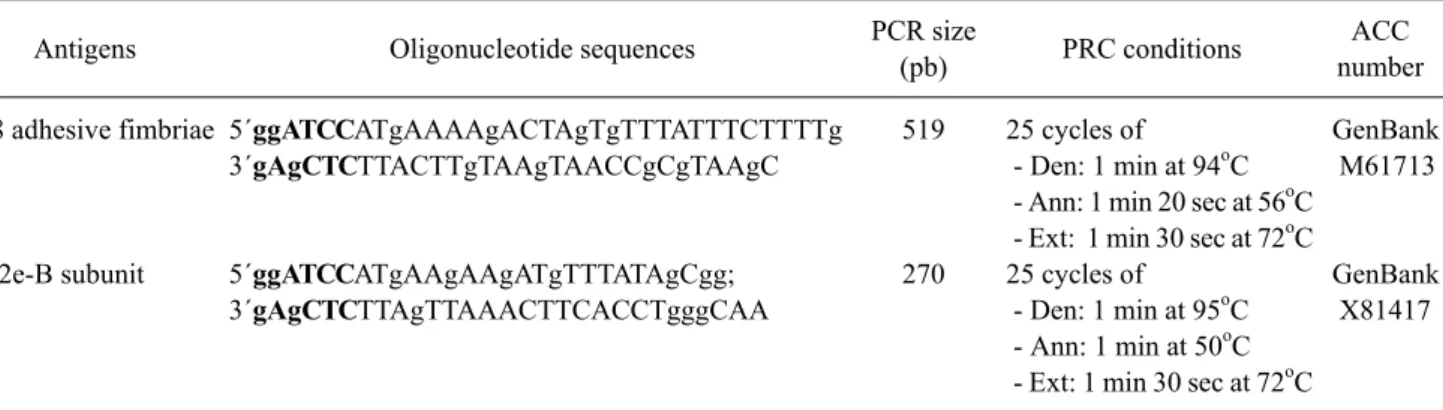
Table 1. Experimental conditions used for the isolation of F18 gene and VT2e-B gene by PCR
Antigens Oligonucleotide sequences PCR size
(pb) PRC conditions ACC
number F18 adhesive fimbriae
VT2e-B subunit
5´ggATCCATgAAAAgACTAgTgTTTATTTCTTTTg 3´gAgCTCTTACTTgTAAgTAACCgCgTAAgC
5´ggATCCATgAAgAAgATgTTTATAgCgg;
3´gAgCTCTTAgTTAAACTTCACCTgggCAA
519
270
25 cycles of
- Den: 1 min at 94
oC - Ann: 1 min 20 sec at 56
oC - Ext: 1 min 30 sec at 72
oC 25 cycles of
- Den: 1 min at 95
oC - Ann: 1 min at 50
oC - Ext: 1 min 30 sec at 72
oC
GenBank M61713
GenBank X81417
Detected genes, primers used in PCR amplification, lengths of obtained PCR products and PCR conditions. The restriction enzyme
recognition sites used in cloning are shown in bold. Den: denaturation temperature, Ann: annealing temperature, Ext: extension temperature.
production, as well as many practical advantages in terms of costs, safety, storage and transportation [11,28,31]. Antigens derived from various pathogens can be synthesized at high levels in their authentic forms in plant tissues, and the oral administration of plant-expressed antigens has been shown to be effective at inducing local immune responses [4,8,9,16]. The development of a mucosal vaccination system is an innovative and interesting way to avoid injections and for the production of specific antibodies in mucous membranes, where many pathogens gain access to the body [17,24]. Therefore, this study was conducted to engineer tobacco plants for the seed-specific expression of antigenic proteins as a model of edible vaccine against porcine verocytotoxic E. coli infection. Accordingly, we focused on virulence factors that, if lost or inactivated by specific antibodies, lead to a reduction in the pathogenicity of E. coli, namely the B subunit of the Shiga-like toxin and F18 fimbriae. The second objective of this study was to evaluate parameters related to local immunity, histological structure and possible adverse effects on the oral administration of tobacco seeds as an edible vaccine in the mouse model.
Materials and Methods
Isolation and evaluation of the B subunit of VT2e genes and F18
The genes encoding the Vt2e-B and FedA subunit of the F18 fimbriae were isolated from genomic DNA purified from a liquid culture of a wild type O139 E. coli strain by polymerase chain reaction (PCR) using the experimental conditions reported in Table 1. Oligonucleotide primers, including unique cloning sites for specific endonucleases (BamH I- 5´, Sac I-3´), were used to facilitate direct subcloning of the fragments in the plant transformation vector. The amplified Vt2e-B and F18 genes were purified from the agarose gel (Geneclean; Q-Bio Gene, Canada)
and then inserted into a high copy number plasmid vector (pGEM-T easy; Promega, Italy) and used for XL1B E. coli strain transformation by electroporation. Preliminary clones selection was conducted by restriction analysis followed by DNA sequencing.
Construction of plant expression vectors and tobacco transformation
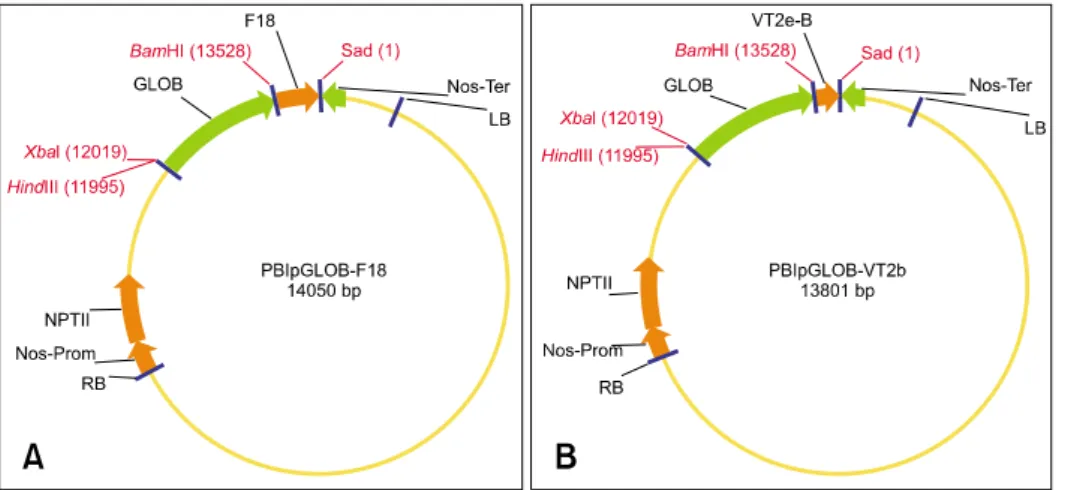
Two expression cassettes were designed, one for VT2e-B and another for F18. DNA SacI-BamHI fragments obtained by digestion of pGEM-T-F18 and pGEM-T-VT2eB were separately subcloned in a pBI-GLOB vector (Patent WO0004146). GLOB, which is the soybean basic 7S globulin promoter (DDBJ accession no. AX006477), was used for the seed-specific expression of antigenic proteins according to Reggi et al. [19]. The chimeric constructs pBIpGLOB-F18 and pBIpGLOB-VT2eB (Fig. 1) were used to transform Agrobacterium (A.) tumefaciens strain EHA105 by electroporation. Tobacco leaf discs (Nicotiana tabacum L., cv. Xanthi) were transformed via A.
tumefaciens as previously described [13].
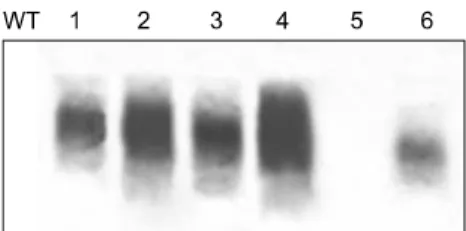
The plants were analysed for the presence of foreign DNA using internal primers of the F18 and VT2e-B sequences by PCR and 80 ng of genomic DNA extracted from young leaves of the regenerated plants as a template according to the method described by Doyle and Doyle [6]. The mRNA was evaluated by Northern blot analysis of the immature seeds (12 days after pollination) of all PCR-positive plants.
Northern blot analysis was carried out using DIG-labelled RNA probes hybridized with total RNA extracted with one volume of 50 mM Tris buffer pH 7.5 containing 150 mM NaCl, 5 mM ethylendiaminetetracetic acid (EDTA), 1%
sodiumdodecilsolphate (SDS), 150 mM β-mercaptoethanol and one volume of phenol:chloroform (1:1).
Electrophoresis, blotting and hybridization were
performed as previously described [23], and specific RNA
detection was conducted using CDP-star (Boehringer
Fig. 5. Duodenum. IgA-producing cells can be seen in the intestinal tunica propria of a CG and TG mouse (A and B, respectively arrows). Scale bars = 50 µm.
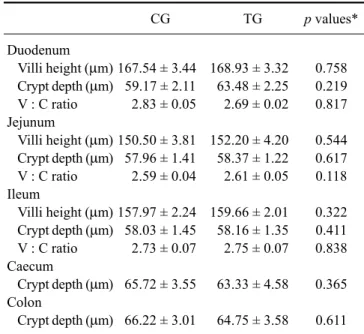
Table 2. Histological and histometric evaluation of intestinal samples of mice
CG TG
p values*
Duodenum Villi height (μm) Crypt depth (μm) V : C ratio Jejunum
Villi height (μm) Crypt depth (μm) V : C ratio Ileum
Villi height (μm) Crypt depth (μm) V : C ratio Caecum
Crypt depth (μm) Colon
Crypt depth (μm)
167.54 ± 3.44 59.17 ± 2.11 2.83 ± 0.05 150.50 ± 3.81 57.96 ± 1.41 2.59 ± 0.04 157.97 ± 2.24 58.03 ± 1.45
2.73 ± 0.07 65.72 ± 3.55 66.22 ± 3.01
168.93 ± 3.32 63.48 ± 2.25 2.69 ± 0.02 152.20 ± 4.20 58.37 ± 1.22 2.61 ± 0.05 159.66 ± 2.01 58.16 ± 1.35 2.75 ± 0.07 63.33 ± 4.58 64.75 ± 3.58
0.758 0.219 0.817 0.544 0.617 0.118 0.322 0.411 0.838 0.365
0.611
Effects of tobacco seeds on villi height, crypt depth and V : C ratio
within the intestine of control (CG) and tobacco seed-supplemented
(TG) mice. *Values are means SEM, n = 14.
enteric pathologies, and the animals’ growth was determined to be normal for Balb-C mice (21 g ± 0.08 g live weight). Moreover, dry matter intake (DMI) and growth parameters (weight, average daily gain) did not differ between experimental groups, and were in agreement with the standard performance of Balb-C mice (data not shown; p > 0.05). Mice fed transgenic tobacco
seeds had an average individual feed intake of 4.5 g;
however, the highest feed intake (corresponding to 7 g/day/mouse) was observed on days in which the treatment was administered, likely as a result of the previous 12 h of fasting. In fact, no residual food was observed on the days after treatment for any each group. Based on these findings, the average estimated dose of delivered VT2e-B was about 0.42 mg/day/mouse. No adverse reactions to the tobacco seeds were observed under the experimental conditions.
ELISA revealed that faecal IgA did not different significantly between TG and CG, even though it was numerically higher in TG animals after 26 days (CG: 2.01
± 0.8 vs. TG: 3.49 ± 0.9 respectively; p = 0.213).
Histological examination showed that oral treatment of the transgenic tobacco seeds by themselves or in association with the F18 fimbriae and VT2e-B subunit genes did not result in an altered microscopic structure of the intestines within groups. Moreover, the structural aspects of the GALT were similar in both experimental groups (Table 2). There were no statistical differences in villi height, crypt depth or V: C ratio between groups (both small and large intestines). The AB/PAS histochemistry showed that neutral glycoconjugates were abundant in the villi mucous cells, whereas acidic ones were abundant in the crypt mucous cells. No differences were observed in the mucous secretions between treated or control mice (data not shown). IgA-Immunohistochemistry showed the presence of several immunopositive cells in the tunica propria of the examined organs (Fig. 5). In addition, immunostaining of the intestine showed that dietary administration of transgenic tobacco seeds (TG) promotes a significant increase in the number of mucosal IgA-producing cells of the tunica propria in both small and large intestines.
Discussion
This study showed that foreign Vt2e-B and F18 fimbrial
genes derived from a wild type verocytoxic E. coli strain
could be stably incorporated into the tobacco plant genome
via transcription through the nuclear apparatus of the plant
for specific expression in the seeds, and that these genes
were inherited by the next generation. As is typical of plants
transformed with binary vectors via Agrobacterium
species, integration of the pBIpGLOB/F18/NOS-T
construct was variable. Dissimilar yields of amplified PCR
products were obtained from different plants, suggesting
different gene copy numbers and integration of the
transgene into sites with variable transcription
competencies. The absence of detectable PCR products in
some plants, despite kanamycin selection, could reflect the
development of antibiotic resistance or genetic instability
after integration. The detection of transgenic proteins in