Introduction
As chemotherapy-induced peripheral neuropathy (CIPN) is a serious side effect without a proven standardized treatment option,
1)because of the severe symptoms, is the decision to reduce chemotherapy dosage for patients is frequently made. Also the symptoms degrade the quality of
life of patients by limiting their mobility and ability to perform everyday life actions. In particular, sensory, motor, and autonomic neurotoxicity could be very disabling or painful.
Besides, chronic neuropathy persists in a number of patients for years after chemotherapy cessation.
2)To prevent and treat the symptoms of CIPN,
A Suggestion on the Action Mechanisms of Acupuncture Treatment for Controlling Chemotherapy-Induced Peripheral
Neuropathy
Hyun-sik Seo, Chang-gyu Son, Nam-hun Lee, Jung-hyo Cho
*Department of Liver & Immunology center, College of Korean medicine, Daejeon University Review Article
⋅Received:9 November 2020 ⋅Accepted:17 November 2020
⋅Correspondence to:Jung-hyo Cho
East & West Cancer Medical Center, Korean Medicine Hospital of Daejeon University, Daejeon, Republic of Korea
Tel: Fax:+82-42-477-9007, E-mail:[email protected]
Objectives: The purpose of this study is to investigate the mechanism of acupuncture for treating chemotherapy -induced peripheral neuropathy.
Methods: Based on domestic and international papers reported until October 2020, experimental papers on
“chemotherapy induced peripheral neuropathy”, “mechanism”, and “acupuncture” were set up to identify the mechanisms of chemotherapy induced peripheral neuropathy. A total of seven papers were selected and searched: one pilot paper for people and six experimental papers for rats.
Results: In the pilot paper studied by Bao, T., the effect of EA was demonstrated but no significant results were produced for the mechanism. Moon et al. derived the association between EA and plasma β–endorphin in rat experimental studies on oxalilatin-induced cold hypersensitivity. Meng et al. found relevance to μ, δ, and δ opioid through EA stimulation in paclitaxel-induced peripheral neuropathy. Lee et al. studied the relationship between EA and muscarin and 5-HT in rat experiments on oxaliplatin-induced coldness, associated with 5-HT and EA, especially with 5-HT3 receptors. Choi et al. revealed the association of adrenaline and opioid acting on α2- and β adrenaline receptors with EA in rat experiments on paclitaxel-induced neuralgia. In rat experiments on oxaliplatin-induced neuralgia reported by Lee, β-endorphin and encephalin were studied to be mediated by EA. Zhang, T. et al. revealed in the paclitaxel induced rat experiment that EA activates 5-HT.
Conclusion: It is inferred that peripheral neuropathy caused by anticancer drugs can be reduced by activating the action of 5-HT, β-endorphin, and encephalin through the descending inhibitory pathways. cell differentiation, herbal medicine, Pongamia, stem cells
Key Words : Hemotherapy, Peripheral neuropathy, Acupuncture, Mechanism, Descending pathways
***-****-****
calcium and magnesium as well as other pharmacological treatments like gabapentin, antiepileptic, and tricyclic antidepressants have been generally used. However, the symptoms of CIPN such as numbness or paresthesia are not decreased effectively. There is no established prevention and treatment for neuro-regeneration.
3)As a result, cancer patients seek additional help for treating their disease or chemotherapy -related side effects. Integrative oncology states that symptoms induced by cancer and cancer treatment could be treated by using non-invasive therapies which are adjuncts to mainstream therapy. The Society of Integrative Oncology Guidelines has set up the range of alternative and complementary therapies including acupuncture, touch therapy, and physical activity.
4)These therapies have become plenteous resources in the care of cancer because of their high usage prevalence during active cancer treatments.
In some cases of centers in Europe, forty-seven out of ninety-nine centers provided integrative oncology treatments. In particular, acupuncture has been used in 26 centers (55.3%) for cancer -diagnosed patients.
5)Acupuncture has been shown to be effective for chemotherapy-induced side effects such as vomiting, fatigue, insomnia, and depression.
5)Moreover, acupuncture has been encouragingly used to treat peripheral neuropathy caused by diseases like HIV and diabetes.
6)Likewise, the effectiveness of acupuncture treatment has been admitted still. However, the results of the study are still insufficient and the mechanism of acupuncture treatment to cure CIPN has not been known. Therefore, in this study, we would like to investigate the mechanism of acupuncture treatment on CIPN
and discover how acupuncture treatment acts for treating CIPN. Therefore, this study will form the basis for the clinical feasibility of acupuncture treatment in the future.
Methods
1. Search Method
Among the electronic search, we have used websites providing domestic and foreign original text. For researching papers, Google scholar, PubMed, Medline, KISS, and OASIS were used.
The targets have been subject to the entire publication in Korean and English dated until October 2020. It only includes research in which the use of electroacupuncture(EA) and acupuncture is contained. Other treatments such as pharmacopuncutre and physical stimulus are excluded.
For researching the mechanisms of acupuncture for chemotherapy induced peripheral neuropathy, the keywords searched were “mechanism” AND
“acupuncture” AND “chemotherapy-induced peripheral neuropathy” OR “CIPN”. In addition, we also studied from the reference lists of relevant articles for the mechanism of acupuncture for chemotherapy-induced peripheral neuropathy.
2. Data Collection
A total of 5,704 articles were detected by electronic searches and the examination of reference lists of the articles for mechanisms of CIPN. We chose the studies from databases through screening the titles and/or abstracts.
After screening, 5,685 articles were excluded for
reasons of focusing on things other than
mechanisms, being unrelated to chemotherapy
-induced peripheral neuropathy, or for treating
with parallel therapy or pharmacopuncture. A
total of 7 experimental articles were retrieved and mainly suggestive for this article (Figure 1).
Results
A total of 7 articles were retrieved for the mechanism of acupuncture for treating CIPN, 1 pilot study and 6 experimental studies were included in this study.
1. Effect on Cytokines and Neurotransmitters In one pilot study 27 patients who were
diagnosed multiple myeloma (MM) revealed bortezomib-induced peripheral neuropathy.
7)After the end of their treatment, a Functional Assessment of Cancer Therapy/Gynecologic Oncology Group -Neurotoxicity (FACT/GOG-Ntx) questionnaire, Total Neuropathy Score (TNSc), and the Neuropathy Pain Sale reduced, significantly indicating decreased pain and improved function (p<0.0001). However there were no valid changes not only in serum cytokines including macrophage inflammatory protein 1α (MIP-1α), vascular endothelial growth factor (VEGF), Relevant papers detected by
electronic search (n = 5,704)
Papers searched for abstract and title evaluation
(n = 19)
Excluded papers after evaluation of title and abstract
(n = 5,685)
Papers searched for full text evaluation
(n = 9)
Excluded papers after evaluating methodical access
(n = 10)
Excluded papers after detailed appraisal
(n = 2) Papers for data analysis
(n = 7)
Fig. 1. Study selection for mechanisms of acupuncture for treating chemotherapy-induced peripheral neuropathy
insulin-like growth factor-1 (IGF-1), and interleukin-6 (IL-6), IL-8, IL-10, IL-17a but also in serum neurotransmitters and neurohormones including nerve growth factor (NGF), brain -derived neurotrophic factor (BDNF), β-endorphin (β-EP), and neurotrophin-3 (NT-3). However, there were limitations that the patients with MM may be affected by disease easily and there is not an established correlation between cerebrospinal fluid with peripheral tissue level and blood.
2. Effect on β– Endorphin
In an experimental study for experimenting on the effectiveness of EA on oxaliplatin-induced neuropathic pain,
8)low frequency (2 Hz) EA at ST36 alleviated cold allodynia more effectively than high frequency EA at ST36 in rats. They used opioid antagonist and α-adrenergic antagonist to investigate which receptor mediates to EA stimulation, that the opioid receptor antagonist completely blocked the EA effect (p>0.05) where as α-adrenergic antagonist did not (p<0.05). Also, 10 minutes after, at the end of EA stimulation, plasma β–endorphin levels increased significantly and decreased subsequently.
In this study, it was found that low frequency EA at ST36 is mediated by the endogenous opioid resulting in alleviating effect on oxaliplatin-induced cold allodynia in rats.
In another study for experiments to examine the endogenous opioid mechanism for oxaliplatin -induced neuropathic in rats,
9)acupoint ST36 was stimulated by EA. Both groups treated by EA for 20 minutes and 30 minutes showed markedly anti-allodynic effects. To confirm the mechanism of EA, plasma β-endorphin levels and spinal encephalin were measured. 10 minutes
after the end of EA stimulation, plasma β -endorphin levels increased significantly (p<0.001), whereas no difference in spinal encephalin levels between the control group and EA groups was detected. As a result, the opioid mechanism can act on the effectiveness of EA to reduce cold allodynia-induced by oxaliplatin.
3. Effect Through the μ , δ , and κ Opioid Receptors
In another experimental study for the effect of EA on paclitaxel(PTX)-induced peripheral neuropathy in rats,
10)10 Hz EA relieved hyperalgesia and allodynia more than 100 Hz EA. Also, they investigated the how 10 Hz EA acts.
EA-produced pain inhibition is blocked by a μ opioid receptor antagonist. EA + either the δ or κ opioid receptor antagonist also did not decrease response, indicating that EA-produced inhibition of hyperalgesia and allodynia is blocked by δ or κ opioid receptor antagonists (between 10 Hz EA + μ opioid receptor antagonist versus 10 Hz EA + vehicle, on 18 days, μ: p<0.01 at 4, 8, 15 g stimulation of PTX, μ: p<0.01 at 4, 15 g stimulation of PTX and p<0.05 at 6 g stimulation of PTX, κ: p<0.05 at 4, 8, 15g stimulation of PTX). In conclusion, μ, δ, and κ opioid receptor subtypes can be involved in EA effects for relieving PTX-induced peripheral neuropathy.
4. Effect Through M
2, M
3, 5-HT
3Receptors
In another study to investigate the relieving
effect of EA on oxaliplatin-induced neuropathic
cold allodynia in rats,
11)EA stimulated at ST36,
GV3, LI11. All of them showed an anti-allodynic
effect. In addition, they confirmed that either
muscarinic or nicotinic receptors are mediated in
the effect of EA through injection of non -selective muscarinic acetylcholine(M) receptor antagonist (atropine) or non-selective nicotinic receptor antagonist (mecamylamine). Compared with Normal saline(NS) by measuring tail withdrawal latency(TWL), it is discovered that M receptors are mediated (NS: p<0.01, atropine:
p>0.05, mecamylamine: p<0.01). Then, they injected NS, M
1,M
2,and M
3receptor antagonists and DMSO, 5-hydroxytryptamie (5-HT)
1A, 5-HT
2A, and 5-HT
3receptor antagonists for finding which receptors are mediated in the effect of EA by measuring TWL. They confirmed that the spinal cholinergic including M
2and M
3can mediate the effect of EA (NS: p<0.01, M
1: p<0.01, M
3: p>0.05), and serotonergic 5-HT
3receptors also mediate the effect of EA on analgesic action for oxaliplatin -induced neuropathic pain (DMSO: p<0.05, 5-H
1A: p<0.001, 5-H
2A: p<0.01, 5-H
3A: p<0.05).
5. Effect Through α 2- and
β -Adrenoceptors, Opioid Receptor In another study to affirm the effectiveness of EA and determining relation mechanism of EA and PTX-induced neuropathic pain,
12)in rats, EA stimulates acupoints ST36 bilaterally. For intrathecal pretreatment, opioid receptor antagonist naloxone (NAL), α2-adrenoceptor antagonist idazoxan (IDA), β-adrenoceptor antagonist propranolol (PRO), and α1-adrenoceptor antagonist prazosin (PRZ) were chosen. In the results, PTX-induced mechanical allodynia and thermal hyperalgesia were markedly alleviated by EA stimulation. In addition, it is confirmed that during EA stimulation at ST36, α2- and β-adrenoceptors, the spinal opioid receptor can be included (at 120 minutes after EA stimulation, compared between PTX + EA group and PTX +
adrenoceptor antagonist + EA, NAL: p<0.01, IDA: p<0.05, PRO: p<0.01).
6. Effect Through 5-HT
1AReceptors and p-CaMKII
The last study to demonstrate the effectiveness of EA on PTX induced neuropathic pain in rats.
13)Bilateral acupoints GB30 were stimulated by EA. As for sham control, EA needles were administered into GB30 without stimulation. And to investigate the roles of 5-HT
1Areceptors, 5-HT
1Areceptor antagonist (WAY-100635) was applied resulting in indicating that the mechanism of EA includes 5-HT
1Areceptor activation (on 18 days, comparing between EA+vehicle and EA+WAY-100635, p<0.01 at 4, 15 g stimulation of PTX, p<0.05 at 8 g stimulation of PTX).
Moreover, they confirmed that EA decreased p-calmodulin-dependent protein kinase(CaMKII) levels compared with sham in the spinal cord (p<0.01). Besides, CaMKII were affected through the activation of 5-HT
1Areceptors in the spinal cord. In conclusion, spinal 5-HT
1Areceptors is activated to inhibit p-CAMKII to alleviate PTX-induced pain by EA.
Through these studies, not only did
electroacupunture alleviate both allodynia and
hyperalgesia caused by chemotherapy but we
could also find that 5-HT, especially activating
5-HT
1Areceptor and opioids, especially β
-endorphin, could be related to inhibiting pain
induced by chemotherapy. Furthermore, it is not
clear that adrenaline mediates the EA-pain
control system by activating adrenoceptors. Also
other neurotransmitters such as muscarine and
encephalin require further research (Table 1.)
(Table 2.).
Discussion
Most of the drug induced neuropathy affects nerve fibers and neuronal bodies, especially to dorsal root ganglia. Most especially, antineoplastic agents cause a major clinical problem. In fact, the peripheral neuropathy frequently represents as a dose limiting side effect. And its onset may affect the quality of life of cancer patients and
cause discomfort. Moreover, in some cases of CIPN it’s only partly reversible while symptoms may resolve.
14)In other cases it isn’t reversible at all. CIPN can be severely painful, disabling, and cause functional abilities eventually decreasing the quality of life.
The representative drugs which cause chemotherapy -induced peripheral neuropathy (CIPN) include platinum drugs, taxanes, epothilones, vinca
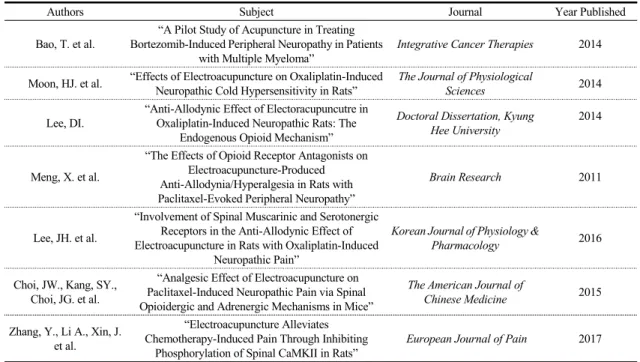
Table 1. References for the Mechanisms of Chemotherapy-Induced Peripheral Neuropathy
Authors Subject Journal Year Published
Bao, T. et al.
“A Pilot Study of Acupuncture in Treating Bortezomib-Induced Peripheral Neuropathy in Patients
with Multiple Myeloma”
Integrative Cancer Therapies 2014
Moon, HJ. et al. “Effects of Electroacupuncture on Oxaliplatin-Induced Neuropathic Cold Hypersensitivity in Rats”
The Journal of Physiological
Sciences 2014
Lee, DI.
“Anti-Allodynic Effect of Electoracupuncutre in Oxaliplatin-Induced Neuropathic Rats: The
Endogenous Opioid Mechanism”
Doctoral Dissertation, Kyung Hee University
2014
Meng, X. et al.
“The Effects of Opioid Receptor Antagonists on Electroacupuncture-Produced Anti-Allodynia/Hyperalgesia in Rats with Paclitaxel-Evoked Peripheral Neuropathy”
Brain Research 2011
Lee, JH. et al.
“Involvement of Spinal Muscarinic and Serotonergic Receptors in the Anti-Allodynic Effect of Electroacupuncture in Rats with Oxaliplatin-Induced
Neuropathic Pain”
Korean Journal of Physiology &
Pharmacology 2016
Choi, JW., Kang, SY., Choi, JG. et al.
“Analgesic Effect of Electroacupuncture on Paclitaxel-Induced Neuropathic Pain via Spinal Opioidergic and Adrenergic Mechanisms in Mice”
The American Journal of
Chinese Medicine 2015
Zhang, Y., Li A., Xin, J.
et al.
“Electroacupuncture Alleviates Chemotherapy-Induced Pain Through Inhibiting
Phosphorylation of Spinal CaMKII in Rats”
European Journal of Pain 2017 CaMKII, Calmodulin-dependent protein kinase II.
Table 2. Mediated Substance or Receptors for EA Stimulation
Authors Mediated Substance or Receptor Chemotherapy Drugs
Bao, T., et al. No change in cytokines and neurotransmitters Bortezomib
Moon, HJ., et al. β–endorphin Oxaliplatin
Lee, DI.. β-endorphin Oxaliplatin
Lee, JH., et al. M2, M3, 5-HT and 5-HT3 receptor Oxaliplatin
Choi, JW., Kang, SY., Choi, JG. et al. α2- and β-adrenoceptors, spinal opioid receptor Paclitaxel
Meng, X., et al μ, δ and κ opioid receptor Paclitaxel
Zhang, Y., Li, A., Xin, J., et al. 5-HT1A receptors and Paclitaxel
A, Electoroacupunture; 5-HT, 5-hydroxytryptamine; CaMKII, Calmodulin-dependent protein kinase II.