DOI: http://dx.doi.org/10.14579/MEMBRANE_JOURNAL.2015.25.6.496
AgBF4/Al(NO3)3 혼합염이 포함된 PEO/PDMS-g-POEM 블렌드 기반의 올레핀 분리막
김 상 진⋅정 정 표⋅박 철 훈⋅김 종 학†
연세대학교 화공생명공학과
(2015년 12월 9일 접수, 2015년 12월 16일 수정, 2015년 12월 17일 채택)
Olefin Separation Membranes Based on PEO/PDMS-g-POEM Blends Containing AgBF4/Al(NO3)3 Mixed Salts
Sang Jin Kim, Jung Pyu Jung, Cheol Hun Park, and Jong Hak Kim†
Department of Chemical and Biomolecular Engineering, Yonsei University, 50 Yonsei-ro, Seodaemun-gu, Seoul 03722, Korea (Received December 9, 2015, Revised December 16, 2015, Accepted December 17, 2015)
요 약: 촉진수송은 기존의 고분자 막에서는 힘든, 투과도와 선택도를 동시에 향상시킬 수 있는 기술 중 한 가지이다. 촉진 수송 분리막을 이용한 올레핀/파라핀 분리는 기존의 증류공정을 대체할 수 있는 기술로써 많은 관심을 받아왔다. 본 연구에서 는 테트라플루오로붕산은/질산알루미늄의 혼합염이 포함된 고분자 블렌드 기반의 촉진수송 올레핀 분리막을 제조하였다. 자유 라디칼중합법을 이용하여 폴리다이메틸실록세인-g-폴리옥시에틸렌 메타크릴레이트 가지형 공중합체를 합성하였다. 또한, 폴리 다이메틸실록세인-g-폴리옥시에틸렌 메타크릴레이트 매질에 폴리에틸렌옥사이드를 다양한 비율로 혼합하였다. 폴리에틸렌옥사 이드를 폴리다이메틸실록세인-g-폴리옥시에틸렌 메타크릴레이트 가지형 공중합체 질량 대비 70%를 혼합하였을 때, 혼합기체 선택도 및 투과도는 5.6 및 10.05 GPU에 도달하였다. 이와 같은 복합막의 올레핀 분리 성능이 향상된 이유는, 분리막에 첨가 된 은이온이 올레핀 기체분자의 선택적인 촉진 수송을 하였고, 또한 고투과성의 고분자 블렌드가 사용되었기 때문이다. 또한 은이온의 은나노입자로의 환원을 억제시키는 질산알루미늄의 첨가로 인해 복합막의 장시간 안정도를 향상시킬 수 있었다.
Abstract: Facilitated transport is one of the possible solutions to simultaneously improve permeability and selectivity, which is challenging in conventional polymer-based membranes. Olefin/paraffin separation using facilitated transport mem- brane has received much attention as an alternative solution to the conventional distillation process. Herein, we report olefin separation composite membranes based on the polymer blends containing AgBF4/Al(NO3)3 mixed salts. Free radical polymer- ization process was used to synthesize an amphiphilic graft copolymer of poly(dimethyl siloxane)-graft- poly(ethylene glycol) methyl ether methacrylate (PDMS-g-POEM). In addition, poly(ethylene oxide) (PEO) was introduced to the PDMS-g-POEM graft copolymer to form polymer blends with various ratios. The propylene/propane mixed-gas selectivity and permeance reached up to 5.6 and 10.05 GPU, respectively, when the PEO loading was 70 wt% in polymer blend. The improvement of olefin separation performance was attributed to the olefin facilitating silver ions as well as the highly permeable blend matrix. The stabilization of silver ions in the composite membrane was achieved through the introduction of Al(NO3)3 which suppressed the reduction of silver ions to silver particles.
Keywords: facilitated transport, olefin, graft copolymer, silver ion, mixed salt
1)1. Introduction
Olefin gases, i.e. aliphatic unsaturated hydrocarbons, are recovered from paraffin gases and commonly used
as intermediate reactants in industrial chemical syn- thesis such as polymerization[1]. However, due to the similar volatilities of olefin and paraffin, the separation of these mixture via distillation process in the pet-
†Corresponding author(e-mail: [email protected], http://orcid.org/0000-0002-5858-1747)
rochemical industry is highly energy intensive[2]. Thus, the separation of olefin/paraffin mixture using en- ergy-saving membrane technology has received much attention as an alternative solution to the conventional distillation process.
Compared to other separation techniques, gas separa- tion membranes have some advantages such as their small size of facility and ease of operation[3-7]. The great part of operating cost for membrane based gas separation comes from the creation of pressure differ- ence across the membrane to get the separation driving force. The mechanism of gas separation can be classi- fied into size exclusive molecular sieving, dif- fusion-solution from the pressure difference and the af- finity of membrane surface with gas molecule and fa- cilitated transport using carriers[7-9]. Among these mechanisms, the separation of olefin/paraffin can be done via facilitated transport. Many investigations have been performed to find out a proper metal ion that could act as the effective carrier and accelerate the transport of olefin through the membrane. Among di- verse metal ions, silver ions that are typically gen- erated from silver salt such as AgBF4 turned out to in- teract reversibly and specifically with olefin mole- cules[10] and could act as the olefin carriers in the membranes, resulting in facilitated olefin transport. On the other hand, paraffin which is a saturated hydro- carbon cannot form the complexes with silver ions, which is an essential factor in facilitated transport for high performance olefin/paraffin separation mem- branes[1,11-13].
Various polymers such as poly(ethylene oxide) (PEO)[14-16]], poly(2-ethyl-2-oxazoline) (POZ)[17,18]
and poly(vinyl pyrrolidone) (PVP)[19-22] have been widely used as polymer matrix to dissolve the silver salts such as AgBF4, AgClO4 and, AgCF3SO3 for facili- tated olefin transport membranes due to their polar func- tional groups in the chains. Meanwhile, a rubbery poly- mer poly(dimethyl siloxane) (PDMS) is one of repre- sentative highly permeable membrane material; its pro- pane (C3H8) permeability reaches 4100 Barrer (1 Barrer
= 1 × 10⁻¹⁰ cm3 (STP)⋅cm/cm2⋅s⋅cmHg)[23-28].
However, due to the relatively low selectivity and poor interaction of PDMS with silver salt, PEO segment consisting of poly(ethylene glycol) methyl ether meth- acrylate (POEM) was grafted into PDMS and was used as the matrix material of facilitated transport membrane in this study.
Here, we prepared facilitated olefin transport mem- branes based on the polymer blends containing AgBF4/Al(NO3)3. An amphiphilic graft copolymer of poly(dimethyl siloxane)-graft- poly(ethylene glycol) methyl ether methacrylate (PDMS-g-POEM) was syn- thesized via free radical polymerization and mixed with PEO to form polymer blends. AgBF4 and Al(NO3)3
were used as the olefin carrier and silver ion stabilizer, respectively. Recently, it was reported that the in- troduction of Al(NO3)3 in polymer/AgBF4 complex membrane can prevent the reduction of silver ion and thus improve the long-term stability of mem- brane[29-31]. The structure and morphology of materi- als were characterized using Fourier-transform infrared spectroscopy (FT-IR), X-ray diffraction (XRD) and transmission electron microscope (TEM). The propy- lene/propane mixed-gas selectivity and permeance were investigated in detail.
2. Experiment
2.1. Materials
Monomethacryloxypropyl terminated poly(dimethyl si- loxane) (PDMS-mMA, 150-200 cSt, Mw 10,000 g/mol) was purchased from Gelest corporation. Poly(ethylene glycol) methyl ether methacrylate (POEM, Mn 500 g/mol), 2,2′-azobis(2-methylpropionitrile) (AIBN), ethyl acetate (EtOAc), poly(ethylene oxide) (PEO) (Mv 600,000), silver trifluoromethane sulfonate(AgBF4, Mw 194.67 g/mol) and aluminum nitrate nonahydrate (Al(NO3)3⋅9H2O, Mw~ 375.13 g/mol) were purchased from Aldrich. Hexane (99.9%) and ethanol (EtOH, 99.9%) were purchased from J. T. Baker. All solvents and chemicals were reagent grade and used as received without further purification.
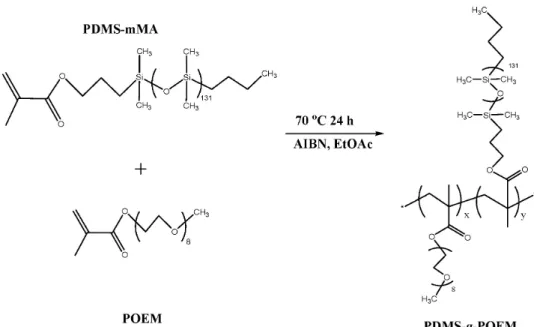
Fig. 1. Synthesis of PDMS-g-POEM amphiphilic graft copolymer via free radical polymerization.
2.2. Synthesis of PDMS-g-POEM graft copolymer The amphiphilic PDMS-g-POEM graft copolymer was synthesized via free-radical polymerization using PDMS-mMA and POEM as macromonomers in a batch reactor, as shown in Fig. 1. First, 6 mL of PDMS-mMA and 14 mL of POEM were dissolved in 50 mL of ethyl acetate, and then 6 mg of AIBN was added. After sealing tightly, the mixture was stirred and purged with nitrogen for 1 h to remove oxygen in the solution, which deactivates radical polymerization.
The reaction was conducted at 70°C in an oil bath and left under constant stirring for 24 h. After the flask cooled down to room temperature, the polymer was precipitated in cold hexane three times and then dried in a vacuum oven at room temperature for 2 days.
2.3. Preparation of facilitated transport membranes First, the PDMS-g-POEM graft copolymer was dis- solved in 50 wt% mixed solvent (EtOH : H2O = 5 : 5), and then PEO was added into the PDMS-g-POEM solution. The weight ratio of PDMS-g-POEM and PEO varied from 3 : 7, 5 : 5 to 7 : 3 while the total amount of polymer was maintained as 0.1 g. The mixed sol- ution was stirred vigorously at 60°C for overnight.
After a homogeneously mixed solution was obtained,
0.443 g of AgBF4 was added into the solution. Then, 0.0341 g of Al(NO3)3⋅9H2O was added into the sol- ution in sequence. The solution was then covered with aluminum foil to block out the light and further stirred for 30 min. The solution was coated on the microporous polysulfone support (average pore size = 0.5 µm, Toray Chemical Inc.) using a RK Control coater (Model 101, Control RK Print-Coat Instruments Ltd., UK). After coating, the membranes were dried in a vacuum oven overnight to completely remove the solvent.
2.4. Characterization
FT-IR measurements were performed using an FTIR (Excalibur Series, DIGLAB Co.) between the fre- quency range of 4000 and 400 cm-1 by using an atte- nuated total reflectance (ATR) facility. XRD patterns were measured using a Rugaku RINT2000 wide-angle goniometer with a Cu cathode operating at 40 kV and 300 mA. The structure of graft copolymer was con- firmed by means of TEM (JEM1010, Japan, JEOL).
The gas separation measurement was performed using a constant pressure/variable volume apparatus provided by Airrane Co. Ltd. (Korea). The area of membrane was approximately 10.2 cm2. The flow rates of mixed-gas were controlled using a mass flow controller
Fig. 2. FT-IR spectra of monomers and PDMS-g-POEM graft copolymer.
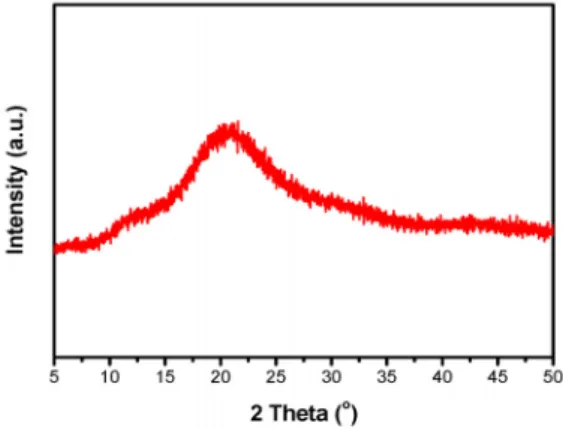
Fig. 3. XRD pattern of PDMS-g-POEM graft copolymer synthesized via free radical polymerization.
Fig. 4. TEM image of PDMS-g-POEM graft copolymer synthesized via free radical polymerization.
(MFC). The gas permeance was measured with a bubble flow meter for various upstream pressures (psig) and at- mospheric downstream pressure. Monitoring the differ- ence in the pressure between permeate and retentate and measuring the gas flow rate of component i through the permeate, the permeance, (GPU) (1 GPU = 10-6 cm3 (STP)/(s cm2cmHg), of mixed-gas was calculated. The
mixed-gas (50 : 50 vol% propylene/propane) separation properties were confirmed using gas chromatography (Young Lin 6500 GC system).
3. Results and Discussion
The synthesis of PDMS-g-POEM graft copolymer via free radical polymerization of PDMS-mMA and POEM macromonomers was confirmed by FT-IR spec- troscopy, as shown in Fig. 2. The neat POEM macro- monomer exhibited strong absorption bands at 2868, 1717 and 1099 cm-1 which are assigned to the stretch- ing vibration modes of methyl (CH2), carbonyl (C=O) and ether (C-O-C) bonds, respectively. A weak band at 1636 cm-1 was additionally observed due to the C=C stretching mode of POEM. Compared to the neat POEM, the absorption band at 1636 cm-1 was hardly observed for the PDMS-g-POEM graft copolymer, in- dicating successful polymerization and complete re- moval of residual monomers. In addition, the absorp- tion band at 1717 cm-1 was shifted to a higher wave- number at 1727 cm-1 due to the loss of conjugation in POEM macromonomer[32,33].
XRD analysis has been firmly established as an ef- fective method to characterize the microstructures of polymers[32,33]. The XRD pattern of PDMS-g-POEM graft copolymer is shown in Fig. 3 in which the in- tensity of X-ray scattering is plotted against diffraction angle (2θ). The PDMS-g-POEM graft copolymer ex- hibited a broad peak at a diffraction angle of around 21°. According the Bragg equation, the interchain d-spacing was determined to be approximately 4.3 Å.
These results represent that the PDMS-g-POEM graft copolymer was a structureless, amorphous and randomly moving coil state. The morphology of PDMS-g-POEM graft copolymer was characterized by TEM image as shown in Fig. 4. The PDMS-g-POEM exhibited micro- phase-separated structure into the dark PDMS and the bright POEM domains. Two domains could clearly be differentiated from each other due to the greater elec- tron density of Si in PDMS than those of other atoms (i.e. H, C, O) in POEM[34,35].
0 2 4 6 8 10 12 14
7 : 3 5 : 5
Permeance (GPU)
3 : 7
PDMS-g-POEM:PEO wt. ratio
Fig. 5. Mixed-gas permeance through PDMS-g-POEM/PEO composite membranes containing AgBF4/Al(NO3)3 with dif- ferent PDMS-g-POEM : PEO ratios.
0 2 4 6 8
7 : 3 5 : 5
C3H6/C3H8 selectivity
3 : 7
PDMS-g-POEM:PEO wt. ratio
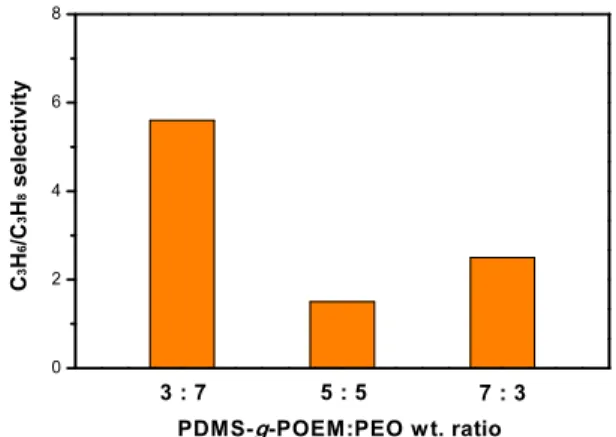
Fig. 6. Mixed-gas selectivity of propylene/propane through PDMS-g-POEM/PEO composite membranes containing AgBF4/Al(NO3)3 with different PDMS-g-POEM : PEO ratios.
The propylene/propane mixed-gas separation per- formance of the PDMS-g-POEM/PEO blend mem- branes containing AgBF4/Al(NO3)3 was evaluated as shown in Figs. 5 and 6. The gas separation results show that the selectivity of propylene/propane and the mixed-gas permeance through the membrane tend to increase with the increase in PEO. The blend mem- brane with 30 wt% PEO loading showed a propy- lene/propane selectivity of 2.5 and a gas permeance of 3.64 GPU. However, when the PEO loading increased up to 70 wt%, the selectivity of propylene/propane mixed-gas was improved up to 5.6 as well as the gas permeance up to 10.05 GPU. The improvement of membrane performance was attributed to the PEO ap- plication which is a highly permeable matrix and also possesses a good affinity with silver salt due to the ether group of PEO[36]. Thus, the successful olefin separation property fundamentally comes from the ap- plication of silver ion from AgBF4 which could act as an olefin carrier and facilitate the selective permeation of olefin such as propylene compared to paraffin such as propane. The obtained performances were not sig- nificantly changed up to approximately 100 hours, in- dicating good long-term stability of membranes. It might be because the introduction of Al(NO3)3 stabi- lized the silver ions and restrained the reduction of the silver ions otherwise might have turned to silver metal nanoparticles and lost their roles as the olefin car rier[29-31].
4. Conclusion
In this study, the olefin/paraffin separation property of composite membranes containing AgBF4/Al(NO3)3 mixed salts was investigated based on the PDMS-g-POEM/PEO blend. The PDMS-g-POEM graft copolymer was synthe- sized via free radical polymerization and was used with PEO as the matrix of silver ion applied membranes.
The PDMS-g-POEM graft copolymer showed structure- less, amorphous state and microphase-separated struc- ture into the dark PDMS and the bright POEM domains. The highest propylene/propane selectivity of 5.6 and mixed-gas permeance of 10.05 GPU were ob- tained when the PDMS-g-POEM to PEO ratio was 3 : 7. Such olefin separation property arose from the silver ions which acted as the olefin facilitating carrier as well as the PDMS-g-POEM and PEO matrix which contains highly permeable and functional groups segment. Furthermore, the stability of silver ions ap- plied composite membranes was improved due to the presence of Al(NO3)3 which suppressed the reduction of silver ions to silver metal nanoparticles.
Acknowledgements
This work was supported by the Human Resources Program in Energy Technology (20154010200810), and the Energy Efficiency & Resources (20122010100040) of the Korea Institute of Energy Technology Evaluation and Planning (KETEP).
Reference
1. J.-S. Yang and G.-H. Hsiue, “C4 olefin/paraffin separation by poly [(1-trimethylsilyl)-1-propyne]- graft-poly (acrylic acid)-Ag+ complex membranes”, J. Membr. Sci., 111, 27-38 (1996).
2. S. W. Kang, K. Char, and Y. S. Kang, “Novel ap- plication of partially positively charged silver nanoparticles for facilitated transport in olefin/par- affin separation membranes”, Chem. Mater., 20, 1308 (2008).
3. N. Du, H. B. Park, M. M. Dal-Cin, and M. D.
Guiver, “Advances in high permeability polymeric membrane materials for CO2 separations”, Energy Environ. Sci., 5, 7306-7322 (2012).
4. S. Li, Z. Wang, X. Yu, J. Wang, and S. Wang,
“High-performance membranes with multi-permse- lectivity for CO2 separation”, Adv. Mater., 24, 3196-3200 (2012).
5. L. Y. Ng, A. W. Mohammad, C. P. Leo, and N.
Hilal, “Polymeric membranes incorporated with metal/metal oxide nanoparticles: a comprehensive review”, Desalination, 308, 15 (2013).
6. Y. I. Park, H. R. Song, S. E. Nam, Y. K. Hwang, J. S. Chang, and U. H. Lee, “Preparation and char- acterization of mixed-matrix membranes containing MIL-100(Fe) for gas separation”, Membr. J., 23, 432-438 (2013).
7. S. Y. Nam and D. J. Kim, “Research and develop- ment trends of polyimide based material for gas separation”, Membr. J., 23, 393-408 (2013).
8. M. Rao and S. Sircar, “Nanoporous carbon mem- branes for separation of gas mixtures by selective surface flow”, J. Membr. Sci., 85, 253-264 (1993).
9. H. Lonsdale, “The growth of membrane technol- ogy”, J. Membr. Sci., 10, 81-181 (1982).
10. J. Van Dongen and C. Beverwijk, “Alkene-and arene-π-complex formation with silver (I); a 13 C NMR study”, J. Organomet. Chem., 51, C36-C38 (1973).
11. W. Ho and D. Dalrymple, “Facilitated transport of
olefins in Ag+-containing polymer membranes”, J.
Membr. Sci., 91, 13-25 (1994).
12. D. J. Safarik and R. B. Eldridge, “Olefin/paraffin separations by reactive absorption: a review”, Ind.
Eng. Chem. Res., 37, 2571-2581 (1998).
13. H. Y. Huang, J. Padin, and R. T. Yang, “Anion and cation effects on olefin adsorption on silver and copper halides: Ab initio effective core poten- tial study of π-complexation”, J. Phys. Chem. B, 103, 3206-3212 (1999).
14. J. Hong, E. Y. Lee, and S. W. Kang, “Preparation and Characterization of Highly Permeable Facilitated Olefin Transport Nanocomposite Membrane Utilizing 7,7,8,8-tetracyanoquinodimethane”, Membr. J., 24, 417-422 (2014).
15. S. Sunderrajan, B. Freeman, C. Hall, and I.
Pinnau, “Propane and propylene sorption in solid polymer electrolytes based on poly (ethylene ox- ide) and silver salts”, J. Membr. Sci., 182, 1-12 (2001).
16. I. Pinnau and L. G. Toy, “Solid polymer electro- lyte composite membranes for olefin/paraffin sepa- ration”, J. Membr. Sci., 184, 39-48 (2001).
17. S. Hong, J. H. Jin, J. Won, and Y. Kang,
“Polymer-salt complexes containing silver ions and their application to facilitated olefin transport membranes”, Adv. Mater., 12, 968-971 (2000).
18. J. H. Kim, B. R. Min, C. K. Kim, J. Won, and Y.
S. Kang, “Role of transient cross-links for trans- port properties in silver-polymer electrolytes”, Macromolecules, 34, 6052-6055 (2001).
19. J. H. Kim, B. R. Min, C. K. Kim, J. Won, and Y.
S. Kang, “Ionic interaction behavior and facilitated olefin transport in poly (n-vinyl pyrrolidone):
Silver triflate electrolytes; Effect of molecular weight”, J. Polym. Sci., Part B: Polym. Phys., 40, 1813-1820 (2002).
20. J. H. Kim, B. R. Min, J. Won, and Y. S. Kang,
“Revelation of facilitated olefin transport through sil- ver-polymer complex membranes using anion com- plexation”, Macromolecules, 36, 4577-4581 (2003).
21. Y. L. Choi, E. Y. Lee, and S. W. Kang,
“Utilization of iodine for the enhanced permeance of facilitated olefin transport nanocomposite mem- brane”, Membr. J., 24, 448-452 (2014).
22. D. Ji and S. W. Kang, “Study for facilitated olefin transport phenomena using silver oxide”, Membr.
J., 25, 1-6 (2015).
23. D. Bodas and C. Khan-Malek, “Hydrophilization and hydrophobic recovery of PDMS by oxygen plasma and chemical treatment - An SEM inves- tigation”, Sens. Actuators. B, 123, 368-373 (2007).
24. T. Hu, G. Dong, H. Li, and V. Chen, “Effect of PEG and PEO-PDMS copolymer additives on the structure and performance of Matrimid® hollow fi- bers for CO2 separation”, J. Membr. Sci., 468, 107-117 (2014).
25. A. Kargari, A. A. Shamsabadi, and M. B.
Babaheidari, “Influence of coating conditions on the H2 separation performance from H2/CH4 gas mixtures by the PDMS/PEI composite membrane”, Int. J. Hydrogen Energy, 39, 6588-6597 (2014).
26. A. A. M. Salih, C. Yi, H. Peng, B. Yang, L. Yin, and W. Wang, “Interfacially polymerized poly- etheramine thin film composite membranes with PDMS inter-layer for CO2 separation”, J. Membr.
Sci., 472, 110-118 (2014).
27. M. Fang, C. Wu, Z. Yang, T. Wang, Y. Xia, and J. Li, “ZIF-8/PDMS mixed matrix membranes for propane/nitrogen mixture separation: Experimental result and permeation model validation”, J. Membr.
Sci, 474, 103-113 (2015).
28. T. C. Merkel, V. I. Bondar, K. Nagai, B. D.
Freeman, and I. Pinnau, “Gas sorption, diffusion, and permeation in poly(dimethylsiloxane)”, J.
Polym. Sci., B: Polym. Phys., 38, 415-434 (2000).
29. S. W. Kang, J. H. Kim, J. Won, and Y. S. Kang,
“Suppression of silver ion reduction by Al(NO3)3
complex and its application to highly stabilized olefin transport membranes”, J. Membr. Sci., 445, 156-159 (2013).
30. D. Song, Y. S. Kang, and S. W. Kang, “Highly permeable and stabilized olefin transport mem- branes based on a poly(ethylene oxide) matrix and Al(NO3)3”, J. Membr. Sci., 474, 273-276 (2015).
31. B. Jose, J. H. Ryu, B. G. Lee, H. Lee, Y. S.
Kang, and H. S. Kim, “Effect of phthalates on the stability and performance of AgBF4-PVP membranes for olefin/paraffin separation”, Chem. Commun., 2046-2047 (2001).
32. J. H. Koh, Y. W. Kim, J. T. Park, and J. H. Kim,
“Templated synthesis of silver nanoparticles in am- phiphilic poly(vinylidene fluoride-co-chlorotri- fluoroethylene) comb copolymer”, J. Polym. Sci., B: Polym. Phys., 46, 702-709 (2008).
33. S. Ü. Çelik and A. Bozkurt, “Preparation and pro- ton conductivity of acid-doped 5-aminotetrazole functional poly(glycidyl methacrylate)”, Eur. Polym.
J., 44, 213-218 (2008).
34. H. Jeon, C. S. Lee, R. Patel, and J. H. Kim,
“Well-organized meso-macroporous TiO2/SiO2 film derived from amphiphilic rubbery comb copoly- mer”, ACS Appl. Mater. Interfaces, 7, 7767-7775 (2015).
35. S. J. Kim, H. Jeon, D. J. Kim, and J. H. Kim,
“High-performance polymer membranes with multi- functional amphiphilic micelles for CO2 capture”, Chem. Sus. Chem., 8, 3783-3792 (2015).
36. G. H. Hong, D. Song, I. S. Chae, J. H. Oh, and S.
W. Kang, “Highly permeable poly(ethylene oxide) with silver nanoparticles for facilitated olefin trans- port”, RSC Adv., 4, 4905-4908 (2014).