Introduction
Chronic obstructive pulmonary disease (COPD) is a com- mon, preventable and treatable disease, characterized by persistent airflow limitation and respiratory symptoms, result- ing in breathlessness and poor quality of life
1,2. In addition to significantly limiting quality of life, it has been associated with increased mortality and contributes to a significant economic and social burden on patients
2-4. It is the fourth leading cause of death worldwide, and is projected to become the third by 2030
5,6. With increasing prevalence of smoking in developing countries, and aging populations in high-income countries, the burden of COPD is expected to increase considerably over the next 30 years
1,7,8.
In Asia, the prevalence of COPD is high (6.2% as of 2012), indicating a substantial socioeconomic burden
9. Exposure to smoke from biomass fuel is a risk factor for COPD in the Asia- Pacific region
9,10; in particular, the prevalence of COPD among
Optimal Bronchodilation for COPD Patients:
Are All Long-Acting β 2 -Agonist/Long-Acting Muscarinic Antagonists the Same?
Marc Miravitlles, M.D.
1, Seungjae Baek, M.D.
2, Vatsal Vithlani, M.Pharm.
3and Rahul Lad, Ph.D.
31
Pneumology Department, Hospital Universitari Vall d’Hebron, CIBER de Enfermedades Respiratorias (CIBERES), Barcelona, Spain,
2Novartis Korea Ltd., Seoul, Korea,
3Novartis Healthcare Pvt. Ltd., Hyderabad, India
Bronchodilators provide improvements in lung function and reductions in symptoms and exacerbations, and are the mainstay of pharmacological management of chronic obstructive pulmonary disease (COPD). The Global Initiative for Chronic Obstructive Lung Disease strategy recommends the use of a combination of long-acting β
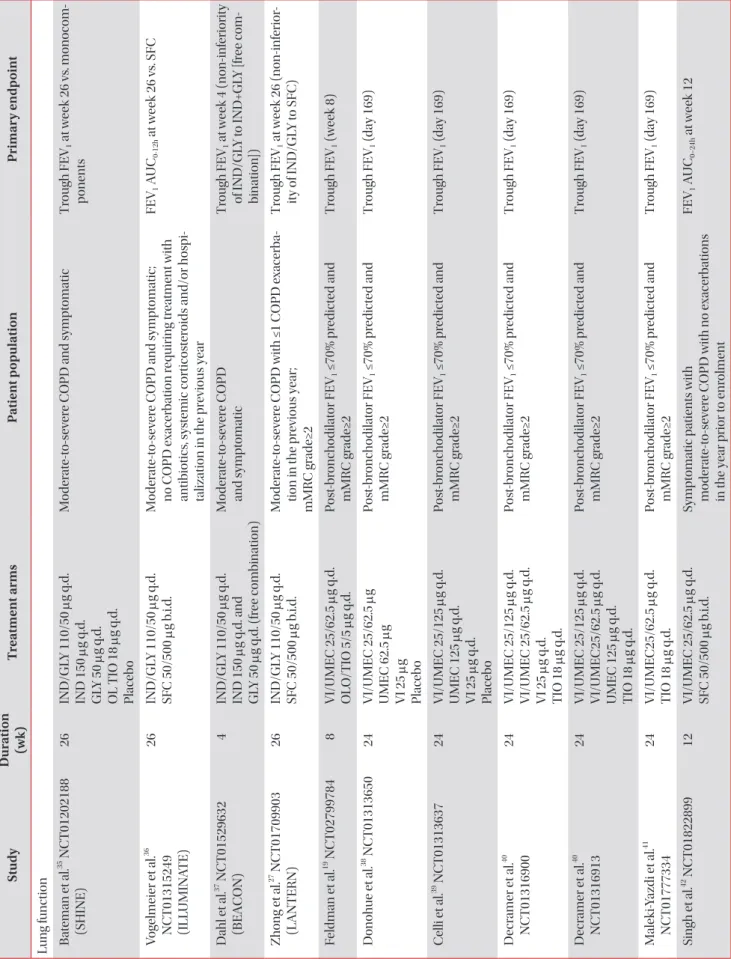
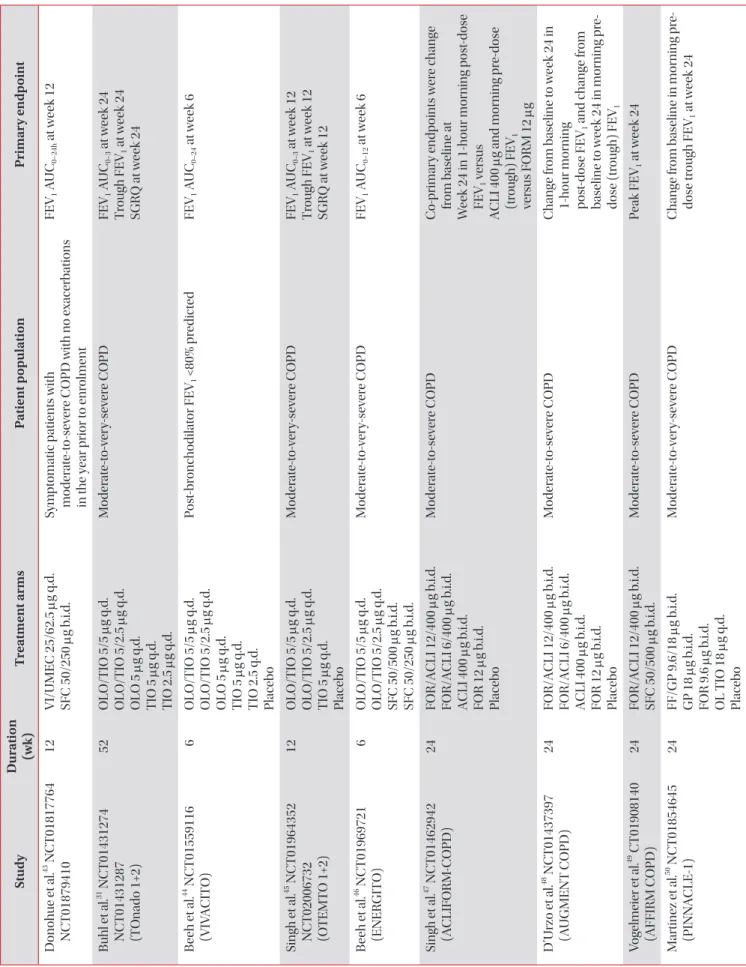
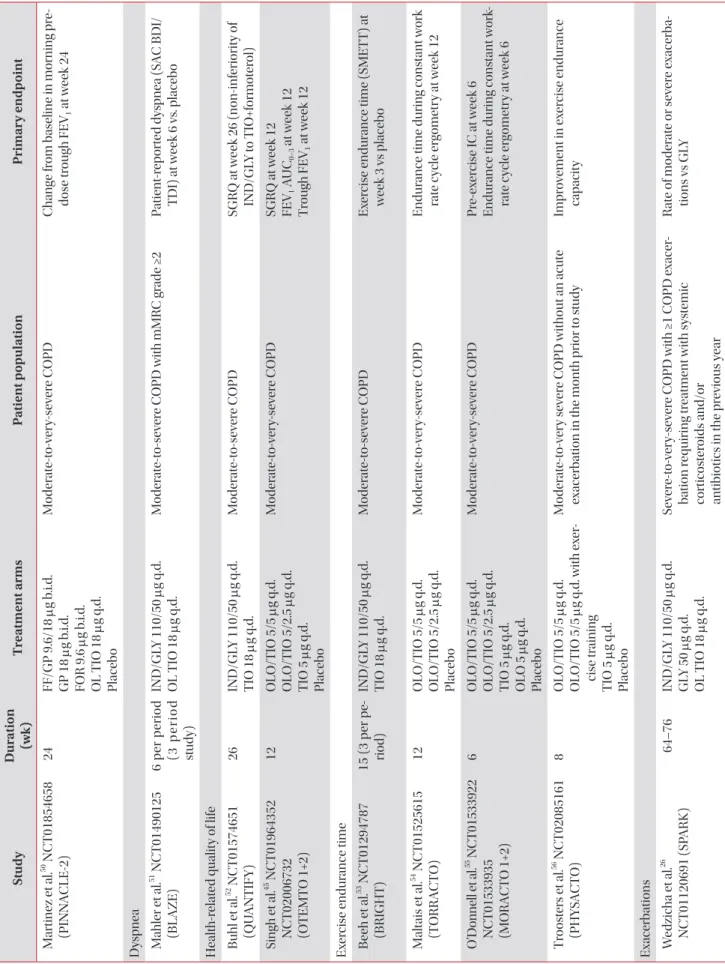
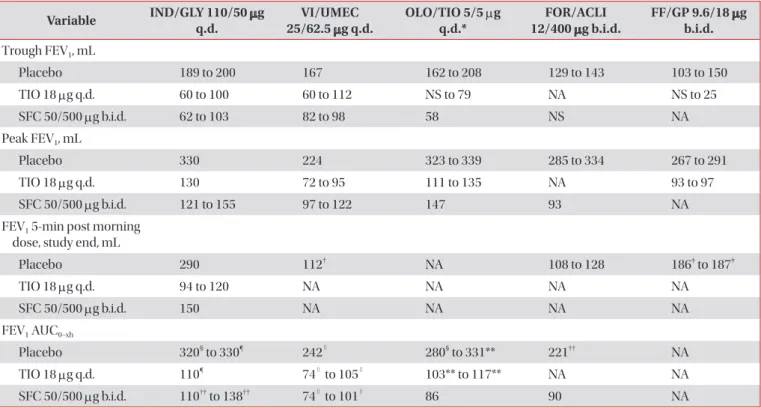
2-agonist/long-acting muscarinic antagonists (LABA/LAMA) as the first-line treatment option in the majority of symptomatic patients with COPD. This review provides an indirect comparison of available LABA/LAMA fixed-dose combinations (FDCs) through discussion of important efficacy and safety data from the key literature, with the objective of providing physicians with a framework for informed decision-making. LABA/LAMA FDCs provided greater benefits compared with placebo and similar or greater benefits compared with tiotropium and salmeterol/fluticasone in improving lung function, dyspnea, health-related quality of life, reducing rescue medication use and preventing exacerbations, although with some variability in efficacy between individual FDCs; further, tolerability profiles were comparable among LABA/LAMA FDCs.
However, there is a disparity in the amount of evidence generated for different LABA/LAMA FDCs. Thus, this review shows that all LABA/LAMA FDCs may not be the same and that care should be taken when extrapolating individual treatment outcomes to the entire drug class. It is important that physicians consider the efficacy gradient that exists among LABA/LAMA FDCs, and factors such as inhaler devices and potential biomarkers, when choosing the optimal bronchodilator treatment for long-term management of patients with COPD.
Keywords: Asian; Pulmonary Disease, Chronic Obstructive; Disease Management; Korea
Address for correspondence: Marc Miravitlles, M.D.
Pneumology Department, Hospital Universitari Vall d’Hebron, P. Vall d’Hebron 119-129, 08035 Barcelona, Spain
Phone: 34-932746083, Fax: 34-932746083 E-mail: [email protected] Received: Apr. 22, 2018
Revised: Apr. 26, 2018 Accepted: Apr. 29, 2018 Published online: Jun. 19, 2018
cc