• 검색 결과가 없습니다.

Characteristics and Outcomes of Patients with Pulmonary Acute Respiratory Distress Syndrome Infected with Influenza versus Other Respiratory Viruses

N/A
N/A
Protected

Academic year: 2021

Share "Characteristics and Outcomes of Patients with Pulmonary Acute Respiratory Distress Syndrome Infected with Influenza versus Other Respiratory Viruses"

Copied!
7
0
0

로드 중.... (전체 텍스트 보기)

전체 글

(1)

Characteristics and Outcomes of Patients with Pulmonary Acute Respiratory Distress Syndrome Infected with Influenza versus Other Respiratory Viruses

Jung-Wan Yoo, M.D.

1

, Sunmi Ju, M.D.

1

, Seung Jun Lee, M.D., Ph.D.

1

, Min-Chul Cho, M.D., Ph.D.

2

, Yu Ji Cho, M.D., Ph.D.

1

, Yi Yeong Jeong, M.D., Ph.D.

1

, Jong Deog Lee, M.D., Ph.D.

1

and Ho Choel Kim, M.D., Ph.D.

3

Departments of

1

Internal Medicine and

2

Laboratory Medicine, Gyeongsang National University Hospital, Gyeongsang National University School of Medicine, Jinju,

3

Department of Internal Medicine, Gyeongsang National University Changwon Hospital, Gyeongsang National University School of Medicine, Changwon, Korea

Background: Although the frequency of respiratory viral infection in patients with pulmonary acute respiratory distress syndrome (ARDS) is not uncommon, clinical significance of the condition remains to be further elucidated. The purpose of this study was to compare characteristics and outcomes of patients with pulmonary ARDS infected with influenza and other respiratory viruses.

Methods: Clinical data of patients with pulmonary ARDS infected with respiratory viruses January 2014–June 2018 were reviewed. Respiratory viral infection was identified by multiplex reverse transcription–polymerase chain reaction (RT-PCR).

Results: Among 126 patients who underwent multiplex RT-PCR, respiratory viral infection was identified in 46%

(58/126): 28 patients with influenza and 30 patients with other respiratory viruses. There was no significant difference in baseline and clinical characteristics between patients with influenza and those with other respiratory viruses. The use of extracorporeal membrane oxygenation (ECMO) was more frequent in patients with influenza than in those with other respiratory viruses (32.1% vs 3.3%, p=0.006). Co-bacterial pathogens were more frequently isolated from respiratory samples of patients with pulmonary ARDS infected with influenza virus than those with other respiratory viruses. (53.6%

vs 26.7%, p=0.036). There were no significant differences regarding clinical outcomes. In multivariate analysis, acute physiology and chronic health evaluation II was associated with 30-mortality (odds ratio, 1.158; 95% confidence interval, 1.022–1.312; p=0.022).

Conclusion: Respiratory viral infection was not uncommon in patients with pulmonary ARDS. Influenza virus was most commonly identified and was associated with more co-bacterial infection and ECMO therapy.

Keywords: Acute Respiratory Distress Syndrome; Respiratory Virus; Multiplex Reverse Transcription Polymerase Chain Reaction; Outcomes

Address for correspondence: Ho Cheol Kim, M.D., Ph.D.

Department of Internal Medicine, Gyeongsang National University Changwon Hospital, 91 Samjeongja-ro, Seongsan-gu, Changwon 51472, Korea Phone: 82-55-214-3730, Fax: 82-55-214-8618, E-mail: [email protected]

Received: Feb. 28, 2019, Revised: May. 15, 2019, Accepted: Jun. 24, 2019

cc It is identical to the Creative Commons Attribution Non-Commercial License (http://creativecommons.org/licenses/by-nc/4.0/).

Copyright © 2019

The Korean Academy of Tuberculosis and Respiratory Diseases.

(2)

Introduction

Acute respiratory distress syndrome (ARDS) is one of the chief conditions for which patients are admitted to the inten- sive care unit (ICU) and contributes to substantial mortality rates

1

. Respiratory viral infection is not uncommon in criti- cally ill patients who received invasive mechanical ventilation due to respiratory failure

2

. Some studies have reported that the frequency of respiratory viral infection ranged from 13.4%

to 49%

3-5

. Availability of multiplex reverse transcription–poly- merase chain reaction (RT-PCR) has facilitated the identifi- cation of respiratory viral infection

6

. Among the diverse risk factors for ARDS, respiratory viral infection has been shown to contribute to development and progression of pulmonary ARDS

7,8

. Although several studies have reported the clinical impact of respiratory viruses on critically ill patients

3,9

, further studies are needed to clarify the significance on those with pulmonary ARDS. Influenza viral infection in pulmonary ARDS has gained attention to intensivists due to high morbid- ity and mortality

10,11

, but little data comparing characteristics and outcomes of the different types of viruses in patients with pulmonary ARDS. Moreover, differences in clinical outcomes between patients infected with influenza and other respira- tory viruses have not been clearly elucidated.

The aim of this study was to compare the characteristics and clinical outcomes of patients with pulmonary ARDS in- fected with influenza vs. other respiratory viruses.

Material and Methods

1. Patients

Patients diagnosed with pulmonary ARDS who were ad- mitted to the medical ICU at a tertiary hospital and received invasive mechanical ventilation were searched from January 2014 to June 2018. ARDS was fulfilled for the Berlin diagnostic criteria

12

. Among them, those who underwent RT-PCR for re- spiratory viral infection were reviewed. Respiratory specimens such as bronchial and endotracheal aspirate, nasopharyngeal swab or sputum were obtained for RT-PCR analysis. AdvanS- ure RV real-time RT-PCR (LG Chemistry, Seoul, Korea) assay based on the multiplex polymerase chain reaction method was used to identify respiratory viruses (influenza virus, parainfluenza virus, respiratory syncytial virus, adenovirus, metapneumovirus, rhinovirus, bocavrius, and coronavirus).

Baseline (age, sex, body mass index, and comorbidities) and clinical characteristics (Acute Physiology and Chronic Health Evaluation [APACHE] II score, Sequential Organ Failure As- sessment [SOFA] score, clinical complications [shock, acute kidney injury], management, etc.) were assessed. Additionally, data from laboratory (neutrophil count, lymphocyte count, hemoglobin, platelet, C-reactive protein [CRP] level, total

protein level, albumin level, etc.), microbiologic data (types of respiratory virus, co-respiratory bacterial or fungal pathogens) and clinical outcomes (length of stay in ICU and hospital, mortality) were analyzed. This study was approved by the Institutional Review Board of Gyeongsang National University Hospital (No. 2018-05-015). Informed consent was waived due to retrospective nature of the study. The study was in ac- cordance with the ethical standards of institutional and/or na- tional research committees and with the Helsinki declaration and its later amendments or comparable ethical standards.

2. Statistical analysis

Continuous data were expressed as mean±standard devia- tion (SD) and compared using the Mann-Whitney U test.

Non-continuous data were expressed as numbers and per- centages and were analyzed using the chi-square or Fisher exact test. To evaluated factors associated with a 30-mortality, logistic regression analysis was used. Factors with p-value <0.1 in univariate analysis were entered into multivariate analysis.

All data were analyzed using the SPSS software version 18.0 (SPSS Inc., Chicago, IL, USA).

Results

One hundred sixty-seven patients with pulmonary ARDS were admitted to the medical ICU. Figure 1 shows flow of patients with ARDS during the period. One hundred and twenty-six patients with pulmonary ARDS (75.4%) underwent multiplex RT-PCR to evaluate the presence of respiratory vi- ral infection, which was identified in 46% (58/126) subjects.

Community-acquired respiratory viral infection was identified

Figure 1. The number of patients with acute respiratory distress

syndrome during the period. ARDS: acute respiratory distress syn-

drome; RT-PCR: reverse transcription–polymerase chain reaction.

(3)

in 37 of 85 patients (43.5%) with community-acquired ARDS whereas hospital-acquired respiratory infection was de- tected in 21 of 41 those with hospital-acquired ARDS (51.2%)

(p=0.417).

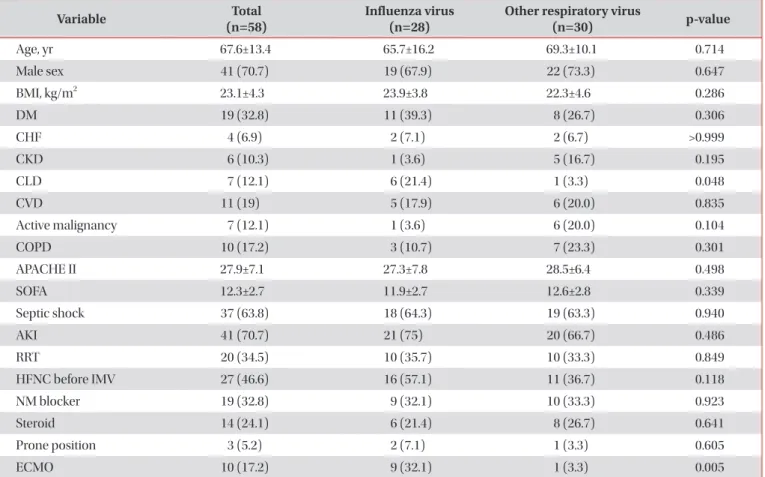
The mean age of patients was 67.6±13.3 years and the pro- portion of men was 70.7%. In all cases, the risk factor for pul- Table 1. Comparison of characteristics between patients with influenza and those with other respiratory virus infection

Variable Total

(n=58) Influenza virus

(n=28) Other respiratory virus

(n=30) p-value

Age, yr 67.6±13.4 65.7±16.2 69.3±10.1 0.714

Male sex 41 (70.7) 19 (67.9) 22 (73.3) 0.647

BMI, kg/m

2

23.1±4.3 23.9±3.8 22.3±4.6 0.286

DM 19 (32.8) 11 (39.3) 8 (26.7) 0.306

CHF 4 (6.9) 2 (7.1) 2 (6.7) >0.999

CKD 6 (10.3) 1 (3.6) 5 (16.7) 0.195

CLD 7 (12.1) 6 (21.4) 1 (3.3) 0.048

CVD 11 (19) 5 (17.9) 6 (20.0) 0.835

Active malignancy 7 (12.1) 1 (3.6) 6 (20.0) 0.104

COPD 10 (17.2) 3 (10.7) 7 (23.3) 0.301

APACHE II 27.9±7.1 27.3±7.8 28.5±6.4 0.498

SOFA 12.3±2.7 11.9±2.7 12.6±2.8 0.339

Septic shock 37 (63.8) 18 (64.3) 19 (63.3) 0.940

AKI 41 (70.7) 21 (75) 20 (66.7) 0.486

RRT 20 (34.5) 10 (35.7) 10 (33.3) 0.849

HFNC before IMV 27 (46.6) 16 (57.1) 11 (36.7) 0.118

NM blocker 19 (32.8) 9 (32.1) 10 (33.3) 0.923

Steroid 14 (24.1) 6 (21.4) 8 (26.7) 0.641

Prone position 3 (5.2) 2 (7.1) 1 (3.3) 0.605

ECMO 10 (17.2) 9 (32.1) 1 (3.3) 0.005

BMI: body mass index; DM: diabetes mellitus; CHF: chronic heart failure; CKD: chronic kidney disease; CLD: chronic liver disease; CVD: cere- brovascular disease; COPD: chronic obstructive pulmonary disease; APACHE: Acute Physiology and Chronic Health Evaluation; SOFA: Se- quential Organ Failure Assessment; AKI: acute kidney injury; RRT: renal replacement therapy; HFNC: high flow nasal cannula; IMV: invasive mechanical ventilation; NM: neuromuscular; ECMO: extracorporenal membrane oxygenation.

Table 2. Comparison of laboratory results and radiologic score between patients with influenza and those with other viruses

Variable Total (n=58) Influenza virus (n=28) Other viruses (n=30) p-value

WBC, ×10

3

/mm

3

11.9±13.6 10.1±8.9 13.7±16.9 0.479

Hb, g/dL 11.6±2.6 12.2±2.2 11.1±2.8 0.081

Platelet, 10

3

/mm

3

197.9±122.5 178.0±112.4 216.4±130.3 0.176

Albumin, g/dL 2.7±0.6 2.7±0.5 2.7±0.6 0.668

CRP, mg/dL 21.8±11.1 24.9±11.8 18.9±9.7 0.076

NT-pro-BNP, pg/mL 6,374.8±9,421.8 6,154.4±9,358.3 6,587.1±9,655.9 0.270

Lactate, mmol/L 4±3.3 4.1±3.1 3.8±3.5 0.915

PaCO

2

, mm Hg 40.8±10.1 40.1±9.1 41.4±11 0.938

P/F ratio 112.1±52.6 108.8±54.2 115.1±43.9 0.409

WBC: white cell count; Hb: hemoglobin; CRP: C-reactive protein; NT-proBNP: N terminal probrain natriuretic peptide; PaCO

2

: partial pressure

of carbon dioxide; P/F: partial pressure of oxygen/fractioned inspired oxygen.

(4)

monary ARDS was pneumonia. Twenty-eight patients (48.3%) were infected with influenza virus while other respiratory vi- ruses were identified in 30 patients (51.7%). Table 1 shows the characteristics of patients with influenza and those with other respiratory virus infection. There was no significant difference regarding baseline characteristics, severity of illness and clini- cal complications between patients with influenza and those with other respiratory viruses. Extracorporeal membrane oxygenation (ECMO) was significantly more used in patients with influenza virus than those with other respiratory viruses as a rescue therapy (32.1% vs. 3.3%, p=0.006).

Table 2 compares laboratory results and radiologic scores of patients with influenza and those with other viruses. There was a trend toward higher hemoglobin and CRP levels in

patients with influenza than in those with other respiratory vi- ruses. No significant difference was observed in other parame- ters between the two groups. Transthoracic echocardiography was done in 75.9% (44/58) patients on admission of medical intensive care unit to evaluate acute heart failure. The mean ejection fraction was 59.2%±7.76%. Stress induced cardio- myopathy and right ventricular dysfunction were featured in three (6.7%) and five (11.1%) patients, respectively.

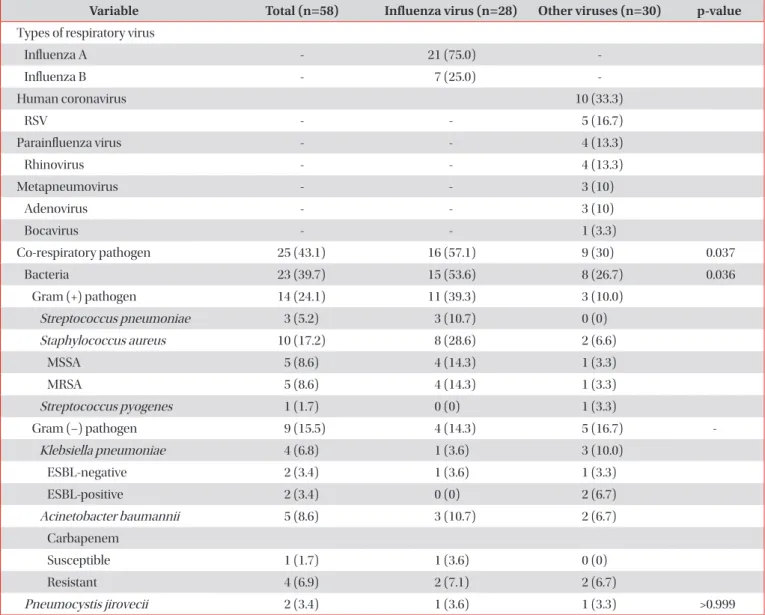
Table 3 enlists the types of respiratory viruses and co- respiratory pathogens in patients with pulmonary ARDS.

Influenza A was the most common virus (21 cases) and other respiratory virus infection (10 coronavirus, 5 RSV, 4 parainflu- enza virus, 4 rhinovirus, 3 adenovirus, 3 metapneumovirus, and 1 bocavirus) were isolated. Overall 43.1% co-respiratory

Table 3. Types of respiratory viruses and co-infected pathogens

Variable Total (n=58) Influenza virus (n=28) Other viruses (n=30) p-value Types of respiratory virus

Influenza A - 21 (75.0) -

Influenza B - 7 (25.0) -

Human coronavirus 10 (33.3)

RSV - - 5 (16.7)

Parainfluenza virus - - 4 (13.3)

Rhinovirus - - 4 (13.3)

Metapneumovirus - - 3 (10)

Adenovirus - - 3 (10)

Bocavirus - - 1 (3.3)

Co-respiratory pathogen 25 (43.1) 16 (57.1) 9 (30) 0.037

Bacteria 23 (39.7) 15 (53.6) 8 (26.7) 0.036

Gram (+) pathogen 14 (24.1) 11 (39.3) 3 (10.0)

Streptococcus pneumoniae 3 (5.2) 3 (10.7) 0 (0)

Staphylococcus aureus 10 (17.2) 8 (28.6) 2 (6.6)

MSSA 5 (8.6) 4 (14.3) 1 (3.3)

MRSA 5 (8.6) 4 (14.3) 1 (3.3)

Streptococcus pyogenes 1 (1.7) 0 (0) 1 (3.3)

Gram (–) pathogen 9 (15.5) 4 (14.3) 5 (16.7) -

Klebsiella pneumoniae 4 (6.8) 1 (3.6) 3 (10.0)

ESBL-negative 2 (3.4) 1 (3.6) 1 (3.3)

ESBL-positive 2 (3.4) 0 (0) 2 (6.7)

Acinetobacter baumannii 5 (8.6) 3 (10.7) 2 (6.7)

Carbapenem

Susceptible 1 (1.7) 1 (3.6) 0 (0)

Resistant 4 (6.9) 2 (7.1) 2 (6.7)

Pneumocystis jirovecii 2 (3.4) 1 (3.6) 1 (3.3) >0.999

RSV: respiratory syncytial virus; MSSA: methicillin-sensitive Staphylococcus aureus; MRSA: methicillin-resistant Staphylococcus aureus;

ESBL: extended-spectrum β-lactamase.

(5)

pathogens were isolated simultaneously. Patients with influ- enza presented with significantly higher co-bacterial patho- gens than those with other respiratory viruses. Gram-positive bacteria co-infection was common in patients with influenza virus than those with other respiratory viruses (39.3% vs. 10%).

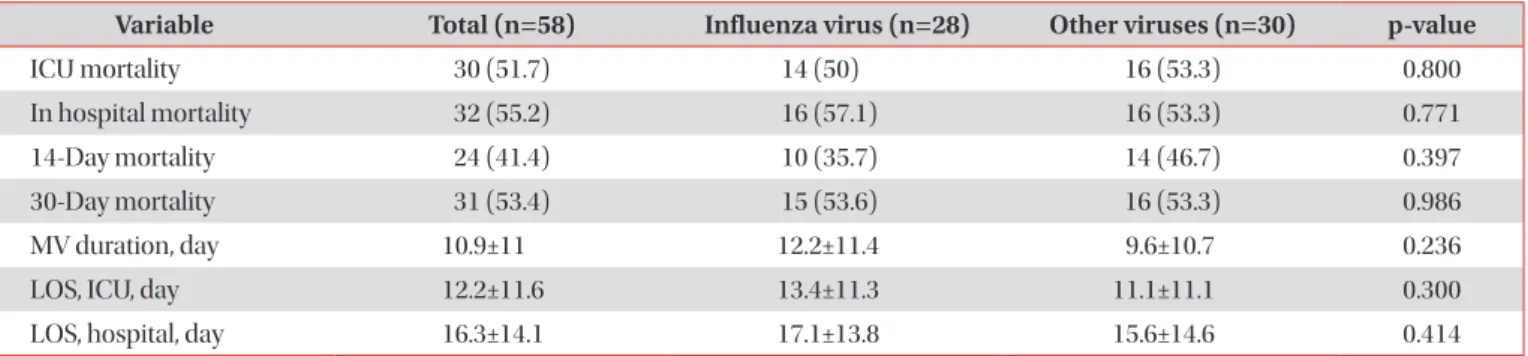
Clinical outcomes are presented and compared in Table 4.

Patients with influenza virus were treated with neuraminidase inhibitor such as oseltamivir or peramivir but those any antivi- ral agent was not administered in those with other respiratory viruses. Overall ICU mortality and hospital mortality rates were 51.7% and 55.2%, respectively. There were no significant differences in extubation success, duration of mechanical ven- tilation, mortality, and length of stay in the ICU and hospital.

Multivariate analysis associated with 30-day mortality was performed and has been shown in Table 5. APACHE II score at admission was associated with ICU mortality. Influenza virus and co-bacterial infection were not associated with ICU mortality.

Factors associated with 30-day mortality are shown in Table 5. In univariate analysis, APACHE II, SOFA and low partial

pressure of oxygen/fractioned inspired oxygen ratio were associated with 30-day mortality. APACHE II only was associ- ated with a 30-day mortality in multivariate analysis. Fourteen patients were treated with steroid. The reasons of use of ste- roid were treatment of concomitant exacerbation of airway disease (n=4, 6.9%), refractory septic shock (n=4, 6.9%), and adjunct treatment of ARDS (n=6, 10.3%), which might not af- fect mortality in ARDS patients with respiratory viral infection.

Discussion

The present study showed that approximately 46% patients with pulmonary ARDS had a concomitant respiratory viral infection and influenza A virus was most commonly isolated.

Co-respiratory infection was more frequent in patients with influenza infection than in those with other respiratory viral infection. Although patients with influenza virus received more invasive treatment such as ECMO, clinical outcomes did not differ between patients with influenza infection and those

Table 4. Comparison of clinical outcomes between patients infected with influenza virus and those with other viruses Variable Total (n=58) Influenza virus (n=28) Other viruses (n=30) p-value

ICU mortality 30 (51.7) 14 (50) 16 (53.3) 0.800

In hospital mortality 32 (55.2) 16 (57.1) 16 (53.3) 0.771

14-Day mortality 24 (41.4) 10 (35.7) 14 (46.7) 0.397

30-Day mortality 31 (53.4) 15 (53.6) 16 (53.3) 0.986

MV duration, day 10.9±11 12.2±11.4 9.6±10.7 0.236

LOS, ICU, day 12.2±11.6 13.4±11.3 11.1±11.1 0.300

LOS, hospital, day 16.3±14.1 17.1±13.8 15.6±14.6 0.414

Values are presented as number (%) or mean±SD.

ICU: intensive care unit; MV: mechanical ventilation; LOS: length of stay; SD: standard deviation.

Table 5. Univariate and multivariate analyses for factors associated with 30-day mortality in patients with ARDS with respiratory viral infection

Variable Univariate analysis Multivariate analysis

OR 95% CI p-value OR 95% CI p-value

Age 1.033 0.991–1.076 0.126 - - -

Male sex 0.519 0.162–1.671 0.272 - - -

APACHE II 1.181 1.066–1.309 0.001 1.158 1.022–1.312 0.022

SOFA 1.320 1.061–1.643 0.013 1.021 0.753–1.384 0.893

Steroid 1.800 0.519–6.237 0.354 - - -

PaO

2

/FiO

2

ratio 0.987 0.975–0.998 0.027 0.391 0.979–1.008 0.391

Influenza virus 1.010 0.360–2.835 0.986 - - -

Co-infected pathogen 2.133 0.735–6.195 0.164 - - -

ARDS: acute respiratory distress syndrome; OR: odds ratio; CI: confidence interval; APACHE: Acute Physiology and Chronic Health Evalua-

tion; SOFA: Sequential Organ Failure Assessment; PaO

2

: arterial partial pressure of oxygen; FiO

2

: fraction of inspired oxygen.

(6)

with other viral infection. APACHE II was associated with ICU mortality in patients with pulmonary ARDS.

ARDS is a common reason of admission to the ICU in criti- cally ill patients with one-quarter of the total number of pa- tients receiving mechanical ventilation being diagnosed with the condition

1

. ARDS also contributes to substantial mortality in the ICU

1

. Various risk factors are associated with ARDS and pulmonary ARDS is frequently encountered in ICU.

Pneumonia has been known as the most common etiology of pulmonary ARDS

13

. The co-infection of respiratory virus was found in patients with severe pneumonia admitted to ICU ranging from 13.4% to 49%

3-5

. The frequency of respiratory viral infection in pulmonary ARDS has not been established.

The current study showed similar frequency of respiratory vi- ral infection in pulmonary ARDS as those of severe pneumo- nia in patients admitted to the ICU. Respiratory viruses play a role in development and progression of ARDS

8

; therefore, it is important to elucidate the clinical significance of them in patients with pulmonary ARDS. Several studies have re- ported clinical outcomes in patients infected with respiratory viruses receiving mechanical ventilation

14-17

. In the present study, clinical outcomes did not differ between patients with infected with influenza virus and those with other respiratory viruses. Similar clinical outcomes were reported in patients with respiratory syncytial virus or rhinovirus compared to influenza virus

17,18

. In the current study, comparison of clinical outcomes in each respiratory viruses was not performed due to a few cases except for influenza virus. APACHE II score was associated with a 30-day mortality in patients with ARDS in- fected with respiratory viruses, which suggests that severity of illness has an impact on overall clinical outcomes.

In the present study, ECMO was more frequently used in patients with influenza virus than those with other respira- tory virus. Several studies have reported the use of ECMO in case of refractory hypoxemia in patients with influenza- related ARDS

14,19,20

. However, the clinical implication of more frequent application of ECMO in patients with influenza virus should be interpreted cautiously in the present study. The use of ECMO is generally determined by multiple factors includ- ing the severity of illness, comorbidities of patients rather than types of respiratory viruses

21

.

In the current study, co-respiratory bacterial pathogens was in more than half of patients with influenza. The current study is consistent with previous studies that influenza virus infec- tion was commonly complicated with co-infection by bacteria such as Staphylococcus aureus and Streptococcus pneumoni- ae

22,23

. This supports the use of empirical antibiotics in cases of

ARDS infected with influenza virus.

The present study has several limitations. First, this study was conducted at a single center and analyzed data retrospec- tively, therefore selection bias cannot be excluded. Second, the site obtaining respiratory sample was not the same, therefore, whether respiratory viruses were pathogens cannot be ac-

curately distinguished. The miss to detect respiratory viruses by multiplex RT-PCR cannot be ruled out. Third, the change in clinical decision by identifying respiratory viruses was not evaluated as in a previous study

5

. Fourth, the prone position was performed in the low proportion of patients with ARDS compared to a recent study

1

.

In conclusion, respiratory viral infection was frequently ob- served in patients with pulmonary ARDS as demonstrated by multiplex RT-PCR. Patients with influenza virus had more co- bacterial infection and received ECMO than those with other respiratory viruses without significant difference with respect to clinical outcomes.

Authors’ Contributions

Conceptualization: Yoo JW. Methodology: Ju S, Lee SJ, Cho MC, Cho YJ, Jeong YY, Lee JD. Data curation: Ju S, Lee SJ, Cho MC, Cho YJ, Jeong YY, Lee JD. Writing - original draft prepara- tion: Yoo JW. Writing - review and editing: Kim HC. Approval of final manuscript: all authors.

Conflicts of Interest

No potential conflict of interest relevant to this article was reported.

Funding

No funding to declare.

References

1. Bellani G, Laffey JG, Pham T, Fan E, Brochard L, Esteban A, et al. Epidemiology, patterns of care, and mortality for patients with acute respiratory distress syndrome in intensive care units in 50 countries. JAMA 2016;315:788-800.

2. Nguyen C, Kaku S, Tutera D, Kuschner WG, Barr J. Viral respi- ratory infections of adults in the intensive care unit. J Inten- sive Care Med 2016;31:427-41.

3. Choi SH, Hong SB, Ko GB, Lee Y, Park HJ, Park SY, et al. Viral infection in patients with severe pneumonia requiring inten- sive care unit admission. Am J Respir Crit Care Med 2012;186:

325-32.

4. Karhu J, Ala-Kokko TI, Vuorinen T, Ohtonen P, Syrjala H. Low- er respiratory tract virus findings in mechanically ventilated patients with severe community-acquired pneumonia. Clin Infect Dis 2014;59:62-70.

5. Kim HJ, Choi SM, Lee J, Park YS, Lee CH, Yim JJ, et al. Respira-

tory virus of severe pneumonia in South Korea: prevalence

(7)

and clinical implications. PLoS One 2018;13:e0198902.

6. Sanghavi SK, Bullotta A, Husain S, Rinaldo CR. Clinical evalu- ation of multiplex real-time PCR panels for rapid detection of respiratory viral infections. J Med Virol 2012;84:162-9.

7. Lee KY. Pneumonia, acute respiratory distress syndrome, and early immune-modulator therapy. Int J Mol Sci 2017;18:E388.

8. Shah RD, Wunderink RG. Viral pneumonia and acute respira- tory distress syndrome. Clin Chest Med 2017;38:113-25.

9. Hong HL, Hong SB, Ko GB, Huh JW, Sung H, Do KH, et al.

Viral infection is not uncommon in adult patients with severe hospital-acquired pneumonia. PLoS One 2014;9:e95865.

10. Kumar A, Zarychanski R, Pinto R, Cook DJ, Marshall J, Lac- roix J, et al. Critically ill patients with 2009 influenza A(H1N1) infection in Canada. JAMA 2009;302:1872-9.

11. Jain S, Benoit SR, Skarbinski J, Bramley AM, Finelli L; 2009 Pandemic Influenza A (H1N1) Virus Hospitalizations Inves- tigation Team. Influenza-associated pneumonia among hos- pitalized patients with 2009 pandemic influenza A (H1N1) virus: United States, 2009. Clin Infect Dis 2012;54:1221-9.

12. ARDS Definition Task Force, Ranieri VM, Rubenfeld GD, Thompson BT, Ferguson ND, Caldwell E, et al. Acute respira- tory distress syndrome: the Berlin Definition. JAMA 2012;

307:2526-33.

13. Agarwal R, Aggarwal AN, Gupta D, Behera D, Jindal SK. Etiol- ogy and outcomes of pulmonary and extrapulmonary acute lung injury/ARDS in a respiratory ICU in North India. Chest 2006;130:724-9.

14. Buchner J, Mazzeffi M, Kon Z, Menaker J, Rubinson L, Bittle G, et al. Single-center experience with venovenous ECMO for influenza-related ARDS. J Cardiothorac Vasc Anesth 2018;32:

1154-9.

15. Hasvold J, Sjoding M, Pohl K, Cooke C, Hyzy RC. The role of human metapneumovirus in the critically ill adult patient. J Crit Care 2016;31:233-7.

16. Cha MJ, Chung MJ, Lee KS, Kim TJ, Kim TS, Chong S, et al.

Clinical features and radiological findings of adenovirus

pneumonia associated with progression to acute respiratory distress syndrome: a single center study in 19 adult patients.

Korean J Radiol 2016;17:940-9.

17. Choi SH, Huh JW, Hong SB, Lee JY, Kim SH, Sung H, et al.

Clinical characteristics and outcomes of severe rhinovirus-as- sociated pneumonia identified by bronchoscopic bronchoal- veolar lavage in adults: comparison with severe influenza virus-associated pneumonia. J Clin Virol 2015;62:41-7.

18. Falsey AR, Hennessey PA, Formica MA, Cox C, Walsh EE.

Respiratory syncytial virus infection in elderly and high-risk adults. N Engl J Med 2005;352:1749-59.

19. Australia and New Zealand Extracorporeal Membrane Oxy- genation (ANZ ECMO) Influenza Investigators, Davies A, Jones D, Bailey M, Beca J, Bellomo R, et al. Extracorporeal membrane oxygenation for 2009 influenza A (H1N1) acute respiratory distress syndrome. JAMA 2009;302:1888-95.

20. Pham T, Combes A, Roze H, Chevret S, Mercat A, Roch A, et al. Extracorporeal membrane oxygenation for pandemic influenza A(H1N1)-induced acute respiratory distress syn- drome: a cohort study and propensity-matched analysis. Am J Respir Crit Care Med 2013;187:276-85.

21. Schmidt M, Bailey M, Sheldrake J, Hodgson C, Aubron C, Rycus PT, et al. Predicting survival after extracorporeal mem- brane oxygenation for severe acute respiratory failure. The Respiratory Extracorporeal Membrane Oxygenation Survival Prediction (RESP) score. Am J Respir Crit Care Med 2014;

189:1374-82.

22. Martin-Loeches I, Schultz MJ, Vincent JL, Alvarez-Lerma F, Bos LD, Sole-Violan J, et al. Increased incidence of co-infec- tion in critically ill patients with influenza. Intensive Care Med 2017;43: 48-58.

23. Rozencwajg S, Brechot N, Schmidt M, Hekimian G, Lebreton

G, Besset S, et al. Co-infection with influenza-associated acute

respiratory distress syndrome requiring extracorporeal mem-

brane oxygenation. Int J Antimicrob Agents 2018;51:427-33.

수치

Figure 1. The number of patients with acute respiratory distress  syndrome during the period
Table 2. Comparison of laboratory results and radiologic score between patients with influenza and those with other  viruses
Table 2 compares laboratory results and radiologic scores  of patients with influenza and those with other viruses
Table 4. Comparison of clinical outcomes between patients infected with influenza virus and those with other viruses Variable Total (n=58) Influenza virus (n=28) Other viruses (n=30) p-value

참조

관련 문서

Respiratory acidosis and metabolic alkalosis : chronic lung disease and diuretics 5.. Mixed acute and chronic respiratory acidosis : chronic lung disease

1 John Owen, Justification by Faith Alone, in The Works of John Owen, ed. John Bolt, trans. Scott Clark, &#34;Do This and Live: Christ's Active Obedience as the

Factors affecting post-traumatic stress of general hospital nurses after the epidemic of Middle East respiratory syndrome infection: Journal of Korean Clinical

Frequency and clinical significance of the expression of the multidrug resistance proteins MDR1/P-glycoprotein, MRP1, and LRP in acute myeloid leukemia: a

호흡기 감염증은 흔히 감기라고도 일컫는 상기도감염과 주된 병소에 따라 임상적으로 크게 크룹 (croup),기관기관지염 (tracheobronchi ti s),모세기관지 염 (bronchi ol

(Background) Gallbladder wall thickening(GWT) and gallbladder contraction are often observed in patients with acute hepatitis.. The incidence of acute hepatitis A

Comparison of mean and standard deviation of capnographic I:E ratio between normal breathing status and respiratory depression status in 21 patients experienced

Although visceral fat adiposity has known to be associated with clinical, pathologic, and oncologic outcomes in patients with colorectal cancer (CRC), the