• 검색 결과가 없습니다.

Anticancer effects of genistein, green tea catechins, and cordycepin on oral squamous cell carcinoma

N/A
N/A
Protected

Academic year: 2021

Share "Anticancer effects of genistein, green tea catechins, and cordycepin on oral squamous cell carcinoma"

Copied!
10
0
0

로드 중.... (전체 텍스트 보기)

전체 글

(1)

INTRODUCTION

Oral cancer holds the eighth position in the worldwide cancer incidence ranking

1)

and oral squamous cell carci- nomas (OSCC) encompass about 90% of all oral cancers.

In general, OSCC patients are treated by one or a combi- nation of the three classical principal therapeutic modali- ties consisted of surgery, radiotherapy, and/or chemotherapy. But OSCC still shows quite significant mortality and morbidity rates

2)

. Thus, the main concern has been focused to identify new chemotherapeutic

agents. Recently, many researchers paid their attention to naturally acquired compounds for new candidates of chemotherapeutic agents. In fact, natural dietary agents have been used in traditional medicines for thousands of years and have been drawing a great deal of attention from both the general public owing to their possible abil- ity to suppress cancers. The first idea for the use of nat- ural compounds in cancer treatment in scientific commu- nity was aroused from epidemiologic evidences.

Epidemiological studies have indicated that populations that consume food rich in fruits and vegetables have a lower incidence of almost all the kinds of cancers

3,4)

.

We have experienced and treated a lot of patients with OSCC and directly observed their relatively poorer prog- noses than those of others in our hospital (Department of Oral and Maxillofacial Surgery, Seoul National University Dental Hospital) despite our ceaseless efforts.

Thus we have endeavored to find out new treatment

* Corresponding author Soon-Min Hong

Dept. of OMFS, Kangdong Sacred Heart Hospital, College of Medicine, Hallym Univ.

445, Gil-dong, Gangdong-gu, Seoul, 134-010, Korea Tel: 82-2-2224-2114 Fax: 82-2-488-0114 E-mail: [email protected]

Anticancer effects of genistein, green tea catechins, and cordycepin on oral squamous cell carcinoma

Sung-Jin Park*, Hoon Myoung*, Young-Youn Kim*, Jun-Young Paeng*, Jun-Woo Park**, Myung-Jin Kim*, Soon-Min Hong*

,

**

*Department of Oral and Maxillofacial Surgery, College of Dentistry, Seoul National University, Korea

**Department of Oral and Maxillofacial Surgery, College of Medicine, Hallym University, Korea

Oral squamous cell carcinoma (OSCC) is the most frequent form of oral cancer and holds the eighth position in the cancer incidence ranking. OSCC patients are treated by classical therapeutic modalities consisting of surgery, radiotherapy, and/or chemotherapy. But OSCC still shows significant mortality rates. Thus, new therapeutic approaches have been investigated and the most promising one is naturally acquired agents with known anti-cancer effects. Genistein is a compound extracted from soy bean. Its anti-cancer effect on breast cancer is well established now and it is investigated whether it has similar effect on OSCC. It inhibited the growth and invasive- ness of OSCC cells in vitro, but these effects did not work in living animals in vivo. Catechin is a compound from green tea and its anti- cancer effect on OSCC is known better than other agents. Catechin showed its anti-cancer effect in vitro via induction of apoptosis, cell cycle arrest, inhibition of growth, and down-regulation of invasion/metastasis. These effects were confirmed in vivo with mouse model.

Cordycepin is one of major pharmacologically important components in Cordyceps Militaris and may exert its anti-cancer effect as an adenosine receptor agonist. In recent study, it inhibited the proliferation of OSCC cells via A3 adenosine receptor. But because there is very scarce evidence on this effect, more researches are needed on this theme.

Key words

Mouth Neoplasms, Squamous Cell Carcinoma, Genistein, Cordycepin, Catechin

Abstract

(2)

modalities and chemotherapeutic agents. For these aims, we have tried some naturally acquired agents, that is, genistein, catechin, and cordycepin. So the purpose of this study is to report the anticancer effects of these agents from our studies with the review of the litera- tures.

NATURAL AGENTS AND THEIR POSSIBLE TARGETS

The active components of dietary phytochemicals that most often appear to be protective against cancer are cur- cumin from turmeric, genistein from soybean, resvera- trol from red grapes, diallyl sulfide, S-allyl cysteine, and allicin from garlic, lycopene from tomato, capsaicin from red chilli, diosgenin, 6-gingerol from ginger, ellagic acid

from pomegranate, ursolic acid from basil, silymarin from artichoke, anethol from fennel, catechins from tea, eugenol and isoeugenol from cloves, and so on

5)

.

Despite the accurate targets for these agents and modes of actions have not been understood completely yet, these exert the antitumor activities through regulation of different cell signaling pathways. The possible targets surmised are transcription factors (e.g., NF-kB, AP-1, STAT3), anti-apoptotic proteins (e.g., Akt, Bcl-2, Bcl-XL), proapoptotic proteins (e.g., caspases, PARP), protein kinases (e.g., IKK, EGFR, HER2, JNK, MAPK), cell cycle proteins (e.g., cyclins, cyclin-dependent kinases), cell adhesion molecules, COX-2, and growth factor signaling pathways

5)

. The most important factors and mechanisms in carcinogenesis and cancer treatment are listed and illustrated in Fig. 1.

Fig. 1. Molecular mechanisms of OSCC carcinogenesis. (1) Many growth factors are overexpressed in OSCC and can activated recep- tor typrosine kinases (RTK). RTK can stimulate intracellularly many signal pathways containing proliferation via NF-κB, Ras, and Akt. (2) NF-κB and AP (Activation Protein)-1 are most famous transcription factors, important in cancer cell survival. COX-2 and Akt are similarly important in carcinogenesis via cell proliferation pathway. (3) Apoptosis pathway is initiated by Bad and Bax. It can be inhibited by Akt and Bcl-2/BclxL. They are overexpressed in some cancer cells with inhibiting apoptosis. (4) Arresting cell cy- cle is another important mechanism of anticancer agents. There are two check points in cell cycle, ie G1/S and S/G2 check points.

They are regulated by the adhesion of CDKs and cyclins. p27/Kip1, p21/WAF1, and p57/Kip2 can inhibit the progression of cell cy-

cle and are overexpressed in cancer cells. (5) Cancer cells excrete molecules related to tumor invasion and angiogenesis, ie, MMPs or

VEGFs. They can determine tumor invasiveness and potential for metastasis.

(3)

GENISTEIN (1) General Overview

Epidemiologic evidences showed that the incidence of breast cancer in Western countries is higher than that in Eastern countries

6)

. The low incidence of breast cancer in Asians has been attributed, in part, to the high intake of soy products. Since then, many studies on soybean and its extracts have shown them to be potent anticancer agents. Soy contains several potential anticancer agents, including protease inhibitors, phytosteroids, saponins, phytates, and isoflavones in a high level

7)

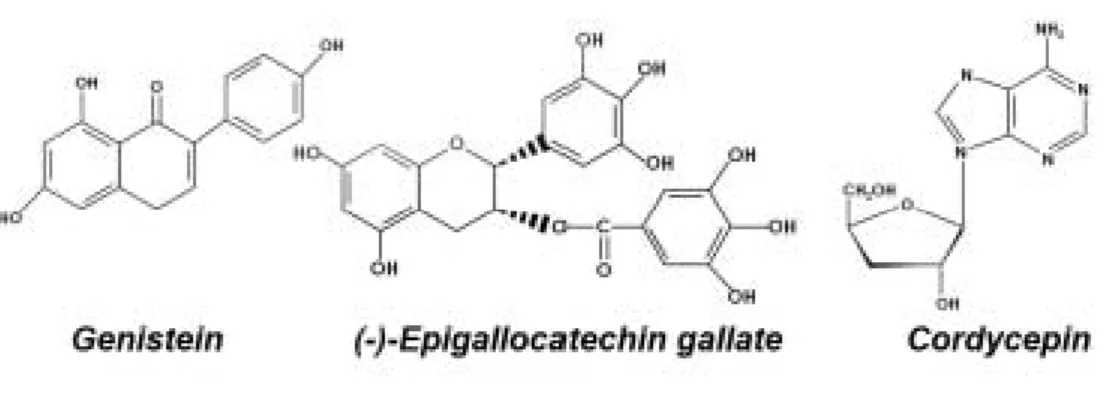
. Genistein, one of the most studied isoflavones, is considered as the prin- ciple compound responsible for soy’s beneficial effects (Fig. 2)

8)

. The proposed biologic activities of genistein are;

(1) antioxidant and anti-inflammatory effect; (2) phenolic phytoestrogic activity; (3) inhibition of ornithine decar- boxylase; (4) inhibition of prostaglandin synthetase; (5) inhibition of tyrosine kinase activity; (6) anti-angiogenic effect

9)

.

(2) Mechanisms of Anticancer Effects

The first mechanism proposed for the anticancer effect of genistein was inhibition of receptor tyrosine kinase

10,11)

.

Since then, other possible mechanisms for the cancer inhibiting effects were found. Reports showed that acti- vated Akt by other agents was inhibited by genistein in cancer cells, suggesting that anticancer effects of genis- tein may be partially mediated by the Akt pathway

12)

. NF-κB inducing activity of other agents was completely abrogated by genistein pretreatment in prostate, breast, lung, and pancreatic cancer cells, suggesting that genis- tein pretreatment inactivates NF-κB

13)

. Genistein com- bined with docetaxel or gemcitabine significantly inhibit- ed Bcl-2, Bcl-XL, and survivin and induced p21WAF1, suggesting that combination treatment regulates the important molecules in the apoptotic pathway

14)

. The inhibition of COX-2 pathway was proposed for another possible effect of genistein. Finally, some reports showed that genistein has anti-angiogenic effect and anti- metastatic effect

15)

.

(3) Anticancer Effects in OSCC

Historically, the main concern of anticancer effect of genistein was concentrated on steroid hormone related cancer (breast and prostate cancer) because it is an anti- estrogen agent. So, its effect on OSCC is a recent issue.

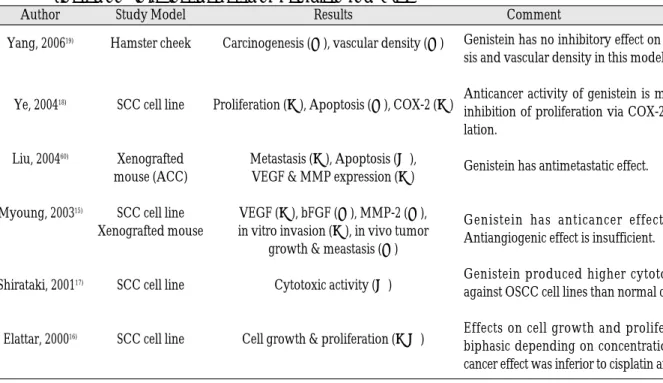
Some studies have tested the anticancer of genistein on OSCC (Table 1). In vitro studies using OSCC cell lines

Table 1. Studies on anticancer effects of genistein for OSCC

Author Study Model Results Comment

Yang, 2006

19)

Hamster cheek Carcinogenesis (-), vascular density (-)

Ye, 2004

18)

SCC cell line Proliferation (↓), Apoptosis (-), COX-2 (↓)

Liu, 2004

60)

Xenografted Metastasis (↓), Apoptosis (↑), mouse (ACC) VEGF & MMP expression (↓)

Myoung, 2003

15)

SCC cell line VEGF (↓), bFGF (-), MMP-2 (-), Xenografted mouse in vitro invasion (↓), in vivo tumor

growth & meastasis (-)

Shirataki, 2001

17)

SCC cell line Cytotoxic activity (↑)

Elattar, 2000

16)

SCC cell line Cell growth & proliferation (↓↑)

Genistein has no inhibitory effect on tumerogene- sis and vascular density in this model.

Anticancer activity of genistein is mainly due to inhibition of proliferation via COX-2 down-regu- lation.

Genistein has antimetastatic effect.

Genistein has anticancer effect on OSCC.

Antiangiogenic effect is insufficient.

Genistein produced higher cytotoxic activity against OSCC cell lines than normal cells.

Effects on cell growth and proliferation were

biphasic depending on concentration. The anti-

cancer effect was inferior to cisplatin and curcumin.

(4)

showed that genistein had cytotoxic activity, inhibitory effect on cancer cell proliferation partly due to COX-2 inhibition, inhibition of VEGF and MMP expression (pro- teins related to invasion and metastasis)

15-18)

. Two in vivo studies tested the antiangiogenic effect using xenograft- ed nude mouse or hamster

15,19)

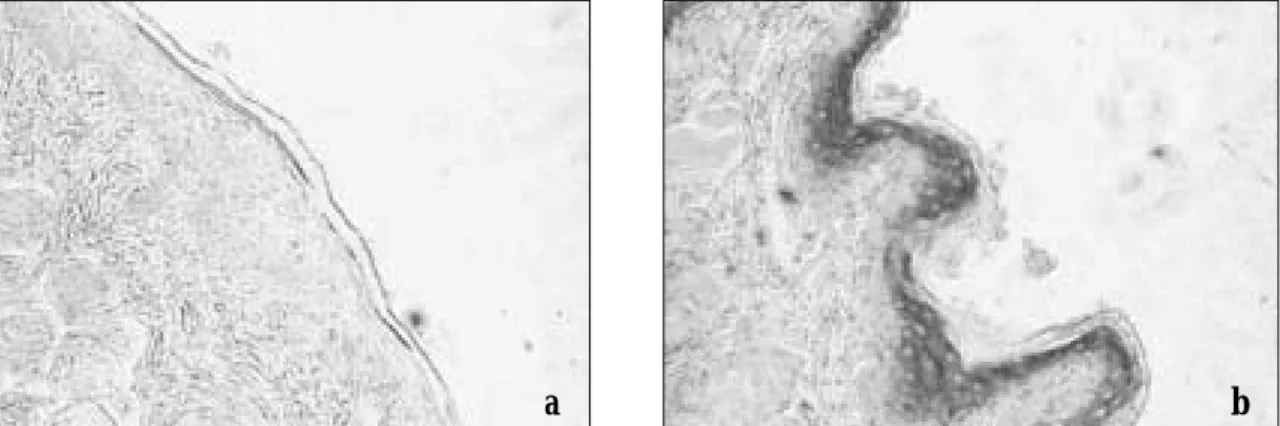
. These studies showed dif- ferent results on in vivo angiogenesis. That is, one con- cluded that genistein reduced neovascularization around tumor mass significantly (Fig. 3)

15)

, while the other showed opposite result. But both concluded that genis- tein had no significant effect on OSCC carcinogenesis or tumor growth

19)

. So it can be concluded that genistein may have cytotoxic or anti-angiogenic effect on OSCC in vitro, but its effect is too weak to show a significant anti- cancer effect in vivo. But because the published reports are rare and it is found that genistein has synergistic effects with chemotherapeutic agents

14)

, further research is recommended to confirm that genistein may be employed as an adjunct treatment modality for OSCC.

GREEN TEA CATECHINS (1) General Overview

Although there are some debates, epidemiologic stud- ies suggest that the consumption of tea, especially green tea, is linked to a decreased incidence of various can- cers

20)

. Green tea and black tea are derived from the same plant, Camellia sinensis. But it is generally thought that the anticancer effect is stronger in green tea. In the pro- duction of green tea, freshly harvested leaves are rapidly

heat-treated to inactivate enzymes, producing a product rich in catechins. Among the polyphenols, (-)-epigallo- catechin gallate (EGCG) is the most abundant (40-60%), followed by (-)-epicatechin gallate (ECG) (10-20%), (-)- epigallocatechin (EGC) (10-20%), (-)-epicatechin (EC) (4- 6%), and (-)-catechin (C) (2-4%)

21)

. Thus, EGCG appears to be the most potent compound in tea with respect to inhibiting cell proliferation and inducing apoptosis in cancer cells (Fig. 2).

(2) Mechanisms of Anticancer Effects

EGCG has various anti-cancer effects, including inhibi- tion of oxidative stress, inhibition of carcinogen-induced mutagenesis, induction of apoptosis, and inhibition of angiogenesis. EGCG mainly inhibits various RTKs, thus suppressing many intracellular pathways important in carcinogenesis

22)

. Recently, Masuda et al. extended this finding into the more sophisticated mechanisms

23,24)

. They found that EGCG inhibits activation of the EGFR, and also HER2, and multiple downstream signaling path- ways in human HNSCC and breast cancer cell lines.

Thus, they concluded that EGCG inhibits activation of ERK, inhibits basal and TGFα-stimulated c-fos and cyclin D1 promoter activity, and causes a decrease in cellular levels of the cyclin D1 and Bcl-xL proteins. As a result, they could get the assumption that the effect on cyclin D1 may explain why the EGCG-treated cells were arrest- ed in G1 and the effect on Bcl-xL may contribute to the apoptotic effect of EGCG. In vivo

25)

and in in vitro

26)

stud- ies indicated that EGCG inhibit both the potent transcrip-

Fig. 2. Molecular structures of genistein, green tea catechins (EGCG), and cordycepin.

(5)

Fig. 3. Immunohistochemical expression of VEGF in hamster buccal pouch oral carcinogenesis model. a. Brown stained cytoplasms of cells were shown markedly in the 8week control group (× 200). b. VEGF expression in the 8 week genistein-treated group (× 200) note the brown stained cytoplasms in were shown rarely or sparsely

29)

.

Fig. 4. Carcinoma in situ in hamster buccal pouch oral carcinogenesis model. a. Appearance of carcinoma cells with keratin apposition is observed markedly in the control group (× 100) in 12 weeks. b. Appearance of carcino- ma cells is also observed in the experimental (catechins applied) group (× 100) in 12 weeks although it was weak- er than control group.

tion factors, AP1 and NF-κB, thus provide evidence that EGCG has significant inhibitory effect on cancer cell pro- liferation and malignant cell transformation. Also, it was found that EGCG inhibits VEGF production in human HNSCC and breast cancer cells, apparently by inhibiting both the activation of Stat3 and NF-κB in these cells. This effect could contribute to the anti-angiogenic effects of EGCG

27)

.

(3) Anticancer Effects in OSCC

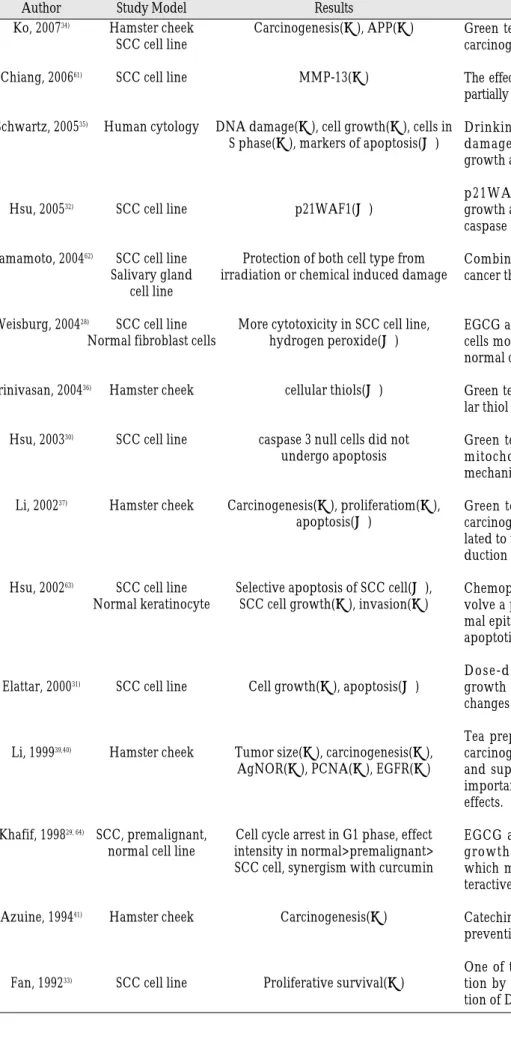
The anticancer effects of green tea catechins, tea extracts, or EGCG alone on OSCC have been tested in many in vitro and in vivo studies. The results were rela- tively consistent and promising (Table 2). EGCG or

green tea extract showed selective inhibition for cancer cell proliferation, not disturbing normal cells

28-30)

. This cancer cell-selective effect may be a superior characteris- tic to conventional chemotherapeutic agents because the side effects by normal cell damage can be diminished. In vitro studies indicated that the anticancer effect of EGCG was mainly attributable to induction of apoptosis. Elattar et al. found that EGCG showed dose-dependent inhibitory effect on OSCC cell growth and dose-depen- dent cell morphology changes were observed. The cell morphologic change were representatives of apoptosis

31)

. Since then, additional in vitro studies the similar results and they concluded that the apoptotic pathway related to EGCG was intrinsic, that is, mitochondria-related.

Caspase 3 is an important mediator in intrinsic apoptosis

a b

a b

(6)

Table 2. Studies on anticancer effects of green tea or catechins for OSCC

Author Study Model Results Comment

Ko, 2007

34)

Hamster cheek Carcinogenesis(↓), APP(↓) SCC cell line

Chiang, 2006

61)

SCC cell line MMP-13(↓)

Schwartz, 2005

35)

Human cytology DNA damage(↓), cell growth(↓), cells in S phase(↓), markers of apoptosis(↑)

Hsu, 2005

32)

SCC cell line p21WAF1(↑)

Yamamoto, 2004

62)

SCC cell line Protection of both cell type from Salivary gland irradiation or chemical induced damage

cell line

Weisburg, 2004

28)

SCC cell line More cytotoxicity in SCC cell line, Normal fibroblast cells hydrogen peroxide(↑)

Srinivasan, 2004

36)

Hamster cheek cellular thiols(↑)

Hsu, 2003

30)

SCC cell line caspase 3 null cells did not undergo apoptosis

Li, 2002

37)

Hamster cheek Carcinogenesis(↓), proliferatiom(↓), apoptosis(↑)

Hsu, 2002

63)

SCC cell line Selective apoptosis of SCC cell(↑), Normal keratinocyte SCC cell growth(↓), invasion(↓)

Elattar, 2000

31)

SCC cell line Cell growth(↓), apoptosis(↑) .

Li, 1999

39,40)

Hamster cheek Tumor size(↓), carcinogenesis(↓), AgNOR(↓), PCNA(↓), EGFR(↓)

Khafif, 1998

29, 64)

SCC, premalignant, Cell cycle arrest in G1 phase, effect normal cell line intensity in normal>premalignant>

SCC cell, synergism with curcumin

Azuine, 1994

41)

Hamster cheek Carcinogenesis(↓)

Fan, 1992

33)

SCC cell line Proliferative survival(↓)

Green tea ingredients (EGCG) might diminish carcinogenesis by down-regulating APP The effects of EGCG in tumor inhibition may act partially through the modulation of MMP-13.

Drinking green tea reduced the number of damaged cells in smokers by inducing cell growth arrest and apoptosis.

p21WAF1 is involved in EGCG-induced growth arrest of SCC cells, which may facilitate caspase 3-mediated apoptosis.

Combination of green tea consumption with cancer therapy requires further evaluation.

EGCG acts as a prooxidant, with the cancerous cells more sensitive to oxidative stress than the normal cells.

Green tea supplementation enhances the cellu- lar thiol status thereby mitigate oral cancer.

Green tea polyphenol-induced apoptosis is a mitochondria-targeted, caspase 3-executed mechanism.

Green tea had inhibitory effects against oral carcinogenesis and such inhibition may be re- lated to the suppression of cell proliferation, in- duction of apoptosis.

Chemopreventive effects of green tea may in- volve a p57 mediated survival pathway in nor- mal epithelial cells, while SCC cells undergo an apoptotic pathway.

Dose-dependent inhibitory effect on cell growth and dose-dependent cell morphology changes were observed.

Tea preparations could effectively inhibit oral carcinogenesis. Protection from DNA damage and suppression of cell proliferation could be important mechanisms of the anticarcinogenic effects.

EGCG and curcumin, were noted to inhibit growth by different mechanisms, a factor which may account for their demonstrable in- teractive synergistic effect.

Catechin and turmeric are effective as chemo- preventive agents and show synergistic effect.

One of the mechanisms of cell growth inhibi-

tion by catechin may probably due to inhibi-

tion of DNA synthesis.

(7)

pathway. Caspase 3 null OSCC cells did not undergo apoptosis with control OSCC cells showed significant apoptosis when exposed to EGCG

30)

. Also, Hsu et al.

found that p21WAF1 is involved in EGCG-induced growth arrest of SCC cells, which may facilitate caspase 3-mediated apoptosis

32)

. Other anticancer effects attribut- able to EGCG proposed were, (1) cytotoxicity agent as prooxident, (2) inhibition of invasion/metastasis through the modulation of MMP-13, (3) cell cycle arrest, and (4) inhibition of cell growth/proliferation

29,33)

.

The most in vivo model for testing anticancer effects of tea catechins were hamster cheek pouch carcinogenesis model (Fig. 4)

34-41)

. Azuine et al. used this model first and they showed that EGCG had antitumor effect for oral carcinogenesis

41)

. Li et al. also found the anticancer effect of EGCG in hamster model and concluded that this effect is via TKR and subsequent proliferation mechanisms

39,40)

. They studied the topic further and finally concluded that green tea and its extract had inhibitory effects against oral carcinogenesis and such inhibition may be related to the suppression of cell proliferation, induction of apopto-

sis

37,38)

. Recently, Schwartz et al. examined the effect of

green tea on the protection of oral mucosa from smoking using cytology from 3 smokers and 3 non-smokers

35)

. They found that drinking green tea reduced the number of damaged cells in smokers by inducing cell growth arrest and apoptosis.

With the results from the published data, it can be con- cluded that the green tea and EGCG, its major extract has anticancer effect on OSCC. The proposed mechanisms were inhibition of proliferation, induction of apoptosis, selective cytotoxicity, and inhibition of cancer cell inva- sion/metastasis. So, more epidemiologic studies and ani- mal studies using other than hamster model are needed in future.

CORDYCEPIN (1) General Overview

Cordyceps is a genus of ascomycete fungi. All Cordyceps species are parasitic, mainly on insects and other arthro- pods. The genus has a worldwide distribution and more than 300 species are currently known. Of them, Cordyceps militaris and Cordyceps sinensis are most famous for their pharmacologic effects in traditional medicine of Korea, China, and Japan. They are consisted of cordycepin, neu- cleodide, and various polysaccharides, but most of the

pharmacologic effects of Cordyceps are attribuied to cordycepin

42)

. Cordycepin is a nucleoside analogue (3’- deoxyadenosine) and was first isolated from Cordyceps militaris by Cunningham et al (Fig. 2)

43)

. It is a natural antibiotics but other important biologic effects have been known; (1) selective antibacterial effect on harmful species; (2) Maturations of antigen-presenting dendritic cell (improvement of immunoregulatory function); (3) Antifungal (Candida albicans) activity; (4) Antiviral effect (Newcastle disease virus); and most importantly (5) Anticancer effect

44-48)

.

(2) Mechanisms of Anticancer Effect

Compared with the above mentioned agents (genistein and green tea catechins), the mechanism of anticancer effect of cordycepin is known much less. But Yoshikawa et al. found that cordycepin has antitumor effect on melanoma cells in vitro and they speculated that it is mediated by inhibition of nucleic acid methylation and polyadenylation by preventing the addition of the poly (A) tail to the 3’-cleaved mRNA

49)

. Placing methyl groups onto specific locations in DNA is achieved through a process called DNA methylation. DNA methylation tells cells which genes need to be expressed or “turned on.”

Thus, it may be an important step in transcription of can- cer-related molecules. Kredich et al. found that cordy- cepin could inhibit nucleic acid methylation via in vivo study

50)

. Most cytoplasmic mRNAs have a poly A tail (3’

end) of 50-250 adenosine and it promotes mRNA stabili- ty so enhances translation. There are reports that cordy- cepin can reduce the production of nucleotides and pro- teins via specific inhibition of RNAs with poly (A) tail51.

Recently, Nakamura et al. showed anticancer effect of cordycepin in mouse and cancer cell line. They used melanoma and lung carcinoma cells and cordycepin con- sistently inhibited carcinogenesis and cancer growth

47-49)

. They took notice of the structural similarity between adenosine and cordycepin and tested cordycepin as adenosine A3 receptor agonist. And they found that cordycepin exerted inhibitory effects on the growth of mouse melanoma and lung carcinoma cells, at least in part, by stimulating adenosine A3 receptors on tumor cells

48)

.

(3) Anticancer Effects in OSCC

There is no published report on the anticancer effect of

(8)

cordycepin upon OSCC. So, we are now testing cordy- cepin as an anticancer agent on OSCC. Hereafter, some obtained data with review of literatures will be present- ed.

As stated earlier, Nakamura et al. found that the anti- cancer effect of cordycepin is mediated by adenosine A3 receptor. They showed that cordycepin and selective adenosine A3 receptor agonist notably inhibited the growth of both mouse tumor cell lines. In addition, the tumor growth inhibitory effect of cordycepin was antag- onized by selective adenosine A3 receptor antagonist. So they concluded that cordycepin exerts inhibitory effects on the growth of cancer cells by stimulating adenosine A3 receptors on tumor cells. Adenosine is released into the extracellular environment from metabolically active or stressed cells and it has various cellular activities (growth, differentiation, death)

52)

. Its various biologic effects may be attributable to the receptor type of recipi- ent cells. There are 4 types of adenosine receptors; A1, A2a, A2b, and A353. It has been shown that adenosine A3 receptor agonist has anticancer effect on various solid and hematogenic cell types. In general, It is thought that adenosine A3 receptor agonist has two antitumor mecha- nisms; (1) via cell cycle arresting in low concentration;

and (2) via induction of apoptosis in high concentrati-

on

54-59)

. When A3 adenosine receptor agonist was applied

to cancer cells in low concentration, cell count decrease and cell cycle arrest (in G0/G1 phase) were consistently observed. It was consistently shown that cell count was decreased and cancer cell s cell cycle arrest At low con- centration, it was showed that A3 adenosine receptor agonist consistently inhibited cell cycle. Lee et al. found that cell cycle arrest was due to decrease of cyclin D1 and c-myc

58)

. At higher concentration, DNA fragmentation with cancer cell apoptosis was also consistently observed. It was postulated that Bcl-2 might not be involved but decreasing Akt (p-Akt) and activated GSK (p-GSK) were the main mechanism for apoptosis

58)

. Furthermore, Madi et al. found that primary and metastatic tumor tissues from colon and breast carcino- ma highly expressed A3 adenosine receptor indicating that high receptor expression is a characteristic of solid tumors.

Thus, we decided to start a new experiment that can inspect the anticancer effect of cordycepin to OSCC as an A3 adenosine receptor agonist. Cordycepin decreased OSCC cell lines (HSC-3, KB) significantly at higher con- centrations. Similar to adenosine A3 receptor agonists,

cordycepin induced apoptosis to OSCC cells. When adenosine receptor antagonists were applied with cordy- cepin, the anticancer effect was significantly reversed only by A3 adenosine receptor antagonist. Now we are ongoing in vivo study with xenografted mouse.

From these results with literatures, it can be concluded that cordycepin may be an anticancer agent. Although the exact mechanisms are not found yet, it may suppress cancer cells via activating A3 adenosine receptor. As a result, it can induce cell cycle arrest and apoptosis.

Anticancer effect of cordycepin to OSCC is not verified yet, so further study is needed. But data from ongoing study showed positive results.

REFERENCES

1. Mehrotra R, Yadav S: Oral squamous cell carcinoma: etiol- ogy, pathogenesis and prognostic value of genomic alter- ations. Indian J Cancer 2006;43(2):60-6.

2. Beenken SW, Urist MM. Current surgical diagnosis and treatment. New York: Lange Medical Books/McGraw-Hill;

2003.

3. Reddy L, Odhav B, Bhoola KD: Natural products for cancer prevention: a global perspective. Pharmacol Ther 2003;

99(1):1-13.

4. Willett WC: Diet and health: what should we eat? Science 1994;264(5158):532-7.

5. Aggarwal BB, Shishodia S. Molecular targets of dietary agents for prevention and therapy of cancer. Biochem Pharmacol 2006;71(10):1397-421.

6. Goldin BR, Adlercreutz H, Gorbach SL, Woods MN, Dwyer JT, Conlon T, et al.: The relationship between estro- gen levels and diets of Caucasian American and Oriental immigrant women. Am J Clin Nutr 1986;44(6):945-53.

7. Troll W, Wiesner R, Shellabarger CJ, Holtzman S, Stone JP:

Soybean diet lowers breast tumor incidence in irradiated rats. Carcinogenesis 1980;1(6):469-72.

8. Barnes S, Peterson TG, Coward L: Rationale for the use of genistein-containing soy matrices in chemoprevention tri- als for breast and prostate cancer. J Cell Biochem Suppl 1995;22:181-7.

9. Kim YY, Myoung H, Kim MJ. Chemopreventive effect of genisten in hamster buccal pouch carcinogenesis. J Kor Oral Maxillofac Surg 2001;27(2):135-41.

10. Adlercreutz H: Evolution, nutrition, intestinal microflora, and prevention of cancer: a hypothesis. Proc Soc Exp Biol Med 1998;217(3):241-6.

11. Akiyama T, Ishida J, Nakagawa S, Ogawara H, Watanabe S, Itoh N, et al.: Genistein, a specific inhibitor of tyrosine- specific protein kinases. J Biol Chem 1987;262(12):5592-5.

12. Banerjee S, Zhang Y, Ali S, Bhuiyan M, Wang Z, Chiao PJ, et al.: Molecular evidence for increased antitumor activity of gemcitabine by genistein in vitro and in vivo using an orthotopic model of pancreatic cancer. Cancer Res 2005;

65(19):9064-72.

13. Hillman GG, Forman JD, Kucuk O, Yudelev M, Maughan RL, Rubio J, et al.: Genistein potentiates the radiation effect on prostate carcinoma cells. Clin Cancer Res 2001;7(2):382- 90.

14. Sarkar FH, Li Y: Using chemopreventive agents to enhance

the efficacy of cancer therapy. Cancer Res 2006;66(7):

(9)

3347-50.

15. Myoung H, Hong SP, Yun PY, Lee JH, Kim MJ: Anti-cancer effect of genistein in oral squamous cell carcinoma with re- spect to angiogenesis and in vitro invasion. Cancer Sci 2003;94(2):215-20.

16. Elattar TM, Virji AS: The inhibitory effect of curcumin, genistein, quercetin and cisplatin on the growth of oral can- cer cells in vitro. Anticancer Res 2000;20(3A):1733-8.

17. Shirataki Y, Tani S, Sakagami H, Satoh K, Nakashima H, Gotoh K, et al.: Relationship between cytotoxic activity and radical intensity of isoflavones from Sophora species.

Anticancer Res 2001;21(4A):2643-8.

18. Ye F, Wu J, Dunn T, Yi J, Tong X, Zhang D: Inhibition of cy- clooxygenase-2 activity in head and neck cancer cells by genistein. Cancer Lett 2004;211(1):39-46.

19. Yang Y, Zhou ZT, Ge JP: Effect of genistein on DMBA-in- duced oral carcinogenesis in hamster. Carcinogenesis 2006;27(3):578-83.

20. Yang CS, Wang ZY: Tea and cancer. J Natl Cancer Inst 1993;85(13):1038-49.

21. Babich H, Krupka ME, Nissim HA, Zuckerbraun HL:

Differential in vitro cytotoxicity of (-)-epicatechin gallate (ECG) to cancer and normal cells from the human oral cavi- ty. Toxicol In Vitro 2005;19(2):231-42.

22. Liang YC, Lin-shiau SY, Chen CF, Lin JK: Suppression of extracellular signals and cell proliferation through EGF re- ceptor binding by (-)-epigallocatechin gallate in human A431 epidermoid carcinoma cells. J Cell Biochem 1997;

67(1):55-65.

23. Masuda M, Suzui M, Weinstein IB: Effects of epigallocate- chin-3-gallate on growth, epidermal growth factor receptor signaling pathways, gene expression, and chemosensitivity in human head and neck squamous cell carcinoma cell lines. Clin Cancer Res 2001;7(12):4220-9.

24. Masuda M, Suzui M, Lim JT, Weinstein IB:

Epigallocatechin-3-gallate inhibits activation of HER-2/neu and downstream signaling pathways in human head and neck and breast carcinoma cells. Clin Cancer Res 2003;

9(9):3486-91.

25. Nomura M, Ma W, Chen N, Bode AM, Dong Z: Inhibition of 12-O-tetradecanoylphorbol-13-acetate-induced NF- kappaB activation by tea polyphenols, (-)-epigallocatechin gallate and theaflavins. Carcinogenesis 2000;21(10):1885-90.

26. Yang CS, Chung JY, Yang GY, Li C, Meng X, Lee MJ:

Mechanisms of inhibition of carcinogenesis by tea.

Biofactors 2000;13(1-4):73-9.

27. Masuda M, Suzui M, Lim JT, Deguchi A, Soh JW, Weinstein IB: Epigallocatechin-3-gallate decreases VEGF production in head and neck and breast carcinoma cells by inhibiting EGFR-related pathways of signal transduction. J Exp Ther Oncol 2002;2(6):350-9.

28. Weisburg JH, Weissman DB, Sedaghat T, Babich H: In vitro cytotoxicity of epigallocatechin gallate and tea extracts to cancerous and normal cells from the human oral cavity.

Basic Clin Pharmacol Toxicol 2004;95(4):191-200.

29. Khafif A, Schantz SP, Chou TC, Edelstein D, Sacks PG:

Quantitation of chemopreventive synergism between (-)- epigallocatechin-3-gallate and curcumin in normal, prema- lignant and malignant human oral epithelial cells.

Carcinogenesis 1998;19(3):419-24.

30. Hsu S, Lewis J, Singh B, Schoenlein P, Osaki T, Athar M, et al.: Green tea polyphenol targets the mitochondria in tu- mor cells inducing caspase 3-dependent apoptosis.

Anticancer Res 2003;23(2B):1533-9.

31. Elattar TM, Virji AS: Effect of tea polyphenols on growth of oral squamous carcinoma cells in vitro. Anticancer Res 2000;20(5B):3459-65.

32. Hsu S, Farrey K, Wataha J, Lewis J, Borke J, Singh B, et al.:

Role of p21WAF1 in green tea polyphenol-induced growth arrest and apoptosis of oral carcinoma cells. Anticancer Res 2005;25(1A):63-7.

33. Fan XJ: In vitro effect of catechin on cell growth. Zhonghua Zhong Liu Za Zhi 1992;14(3):190-2.

34. Ko SY, Chang KW, Lin SC, Hsu HC, Liu TY: The repressive effect of green tea ingredients on amyloid precursor pro- tein (APP) expression in oral carcinoma cells in vitro and in vivo. Cancer Lett 2007;245(1-2):81-9.

35. Schwartz JL, Baker V, Larios E, Chung FL: Molecular and cellular effects of green tea on oral cells of smokers: a pilot study. Mol Nutr Food Res 2005;49(1):43-51.

36. Srinivasan P, Sabitha KE, Shyamaladevi CS: Therapeutic ef- ficacy of green tea polyphenols on cellular thiols in 4- Nitroquinoline 1-oxide-induced oral carcinogenesis. Chem Biol Interact 2004;149(2-3):81-7.

37. Li N, Chen X, Liao J, Yang G, Wang S, Josephson Y, et al.:

Inhibition of 7,12-dimethylbenz[a]anthracene (DMBA)-in- duced oral carcinogenesis in hamsters by tea and curcum- in. Carcinogenesis 2002;23(8):1307-13.

38. Li N, Chen X, Han C, Chen J: Chemopreventive effect of tea and curcumin on DMBA-induced oral carcinogenesis in hamsters. Wei Sheng Yan Jiu 2002;31(5):354-7.

39. Li N, Han C, Chen J: Tea preparations protect against DM- BA-induced oral carcinogenesis in hamsters. Nutr Cancer 1999;35(1):73-9.

40. Li N, Han C, Chen J: Effects of tea on DMBA-induced oral carcinogenesis in hamsters. Wei Sheng Yan Jiu 1999;

28(5):289-92.

41. Azuine MA, Bhide SV: Adjuvant chemoprevention of ex- perimental cancer: catechin and dietary turmeric in forestomach and oral cancer models. J Ethnopharmacol 1994;44(3):211-7.

42. Kim GY, Ko WS, Lee JY, Lee JO, Ryu CH, Choi BT, et al.:

Water extract of Cordyceps militaris enhances maturation of murine bone marrow-derived dendritic cells in vitro.

Biol Pharm Bull 2006;29(2):354-60.

43. Cunningham KG, Hutchinson SA, Manson W, Spring FS:

Cordycepin, a metabolic product from cultures of Cordyceps militaris (Linn.) Link. Part I. Isolation and char- acterisation. J Chem Soc 1951:2299-300.

44. Koc Y, Urbano AG, Sweeney EB, McCaffrey R: Induction of apoptosis by cordycepin in ADA-inhibited TdT-positive leukemia cells. Leukemia 1996;10(6):1019-24.

45. Kodama EN, McCaffrey RP, Yusa K, Mitsuya H:

Antileukemic activity and mechanism of action of cordy- cepin against terminal deoxynucleotidyl transferase-posi- tive (TdT+) leukemic cells. Biochem Pharmacol 2000;

59(3):273-81.

46. Kuo YC, Lin CY, Tsai WJ, Wu CL, Chen CF, Shiao MS:

Growth inhibitors against tumor cells in Cordyceps sinen- sis other than cordycepin and polysaccharides. Cancer Invest 1994;12(6):611-5.

47. Nakamura K, Konoha K, Yoshikawa N, Yamaguchi Y, Kagota S, Shinozuka K, et al.: Effect of cordycepin (3’-de- oxyadenosine) on hematogenic lung metastatic model mice. In Vivo 2005;19(1):137-41.

48. Nakamura K, Yoshikawa N, Yamaguchi Y, Kagota S, Shinozuka K, Kunitomo M; Antitumor effect of cordycepin (3’-deoxyadenosine) on mouse melanoma and lung carci- noma cells involves adenosine A3 receptor stimulation.

Anticancer Res 2006;26(1A):43-7.

49. Yoshikawa N, Nakamura K, Yamaguchi Y, Kagota S, Shinozuka K, Kunitomo M: Antitumour activity of cordy- cepin in mice. Clin Exp Pharmacol Physiol 2004;31 Suppl 2:S51-3.

50. Kredich NM: Inhibition of nucleic acid methylation by

cordycepin. In vivo synthesis of S-3’-DEOXYADENOSYL-

(10)

METHIONINE BY WI-L2 human lymphoblasts. J Biol Chem 1980;255(15):7380-5.

51. Duncan RF: Cordycepin blocks recovery of non-heat-shock mRNA translation following heat shock in Drosophila. Eur J Biochem 1995;233(3):784-92.

52. Ohana G, Bar-Yehuda S, Barer F, Fishman P: Differential ef- fect of adenosine on tumor and normal cell growth: focus on the A3 adenosine receptor. J Cell Physiol 2001;186(1):19- 23.

53. Yaar R, Jones MR, Chen JF, Ravid K: Animal models for the study of adenosine receptor function. J Cell Physiol 2005;202(1):9-20.

54. Fishman P, Bar-Yehuda S, Ardon E, Rath-Wolfson L, Barrer F, Ochaion A, et al.: Targeting the A3 adenosine receptor for cancer therapy: inhibition of prostate carcinoma cell growth by A3AR agonist. Anticancer Res 2003;23(3A):2077- 83.

55. Fishman P, Bar-Yehuda S, Barer F, Madi L, Multani AS, Pathak S: The A3 adenosine receptor as a new target for cancer therapy and chemoprotection. Exp Cell Res 2001;269(2):230-6.

56. Fishman P, Bar-Yehuda S, Madi L, Cohn I: A3 adenosine receptor as a target for cancer therapy. Anticancer Drugs 2002;13(5):437-43.

57. Fishman P, Bar-Yehuda S, Ohana G, Pathak S, Wasserman L, Barer F, et al.: Adenosine acts as an inhibitor of lym- phoma cell growth: a major role for the A3 adenosine re- ceptor. Eur J Cancer 2000;36(11):1452-8.

58. Lee EJ, Min HY, Chung HJ, Park EJ, Shin DH, Jeong LS, et al.: A novel adenosine analog, thio-Cl-IB-MECA, induces G0/G1 cell cycle arrest and apoptosis in human promyelo- cytic leukemia HL-60 cells. Biochem Pharmacol 2005;

70(6):918-24.

59. Madi L, Bar-Yehuda S, Barer F, Ardon E, Ochaion A, Fishman P: A3 adenosine receptor activation in melanoma cells: association between receptor fate and tumor growth inhibition. J Biol Chem 2003;278(43):42121-30.

60. Liu H, Yu GY: Antimetastatic effects of genistein on sali- vary adenoid cystic carcinoma in vivo. Zhonghua Kou Qiang Yi Xue Za Zhi 2004;39(5):373-5.

61. Chiang WC, Wong YK, Lin SC, Chang KW, Liu CJ: Increase of MMP-13 expression in multi-stage oral carcinogenesis and epigallocatechin-3-gallate suppress MMP-13 expres- sion. Oral Dis 2006;12(1):27-33.

62. Yamamoto T, Staples J, Wataha J, Lewis J, Lockwood P, Schoenlein P, et al.: Protective effects of EGCG on salivary gland cells treated with gamma-radiation or cis- platinum(II)diammine dichloride. Anticancer Res 2004;

24(5A):3065-73.

63. Hsu S, Yu FS, Lewis J, Singh B, Borke J, Osaki T, et al.:

Induction of p57 is required for cell survival when exposed to green tea polyphenols. Anticancer Res 2002;22(6C):4115- 20.

64. Khafif A, Schantz SP, al-Rawi M, Edelstein D, Sacks PG:

Green tea regulates cell cycle progression in oral leuko-

plakia. Head Neck 1998;20(6):528-34.

수치

Fig. 1. Molecular mechanisms of OSCC carcinogenesis. (1) Many growth factors are overexpressed in OSCC and can activated recep- recep-tor typrosine kinases (RTK)
Table 1. Studies on anticancer effects of genistein for OSCC
Fig. 2. Molecular structures of genistein, green tea catechins (EGCG), and cordycepin.
Fig. 3. Immunohistochemical expression of VEGF in hamster buccal pouch oral carcinogenesis model
+2

참조

관련 문서

Effects of Anthriscus sylvestris Hoffmann aqueous layer (ASAL) on cell apoptosis and PARP activity in NIH/3T3 fibroblast and KB, FaDu oral cancer cells by

In this study, the expression profiles of miRNAs were compared and analyzed for establishment of miRNAs related cancer cell growth inhibition in normal human oral

Anticancer activities of EF-24, a novel curcumin analog, on KB human. oral

Concentration-Dependent inhibition of cell viability by adenosine in human oral fibroblast and FaDu human head and neck squamous cell carcinoma · · ·

It also suggest that cell proliferation inhibits by a novel signal transduction for adenosine effect in human FaDu hypopharynx squamous cell carcinoma cells....

Differential Expression of Desmoglein1, Desmoglein3, Epithelial Membrane Antigen, Ber-EP4 and CD10 in Basal Cell Carcinoma and Squamous Cell Carcinoma

According to above, liquid based cytology is considered to be adequate for routine oral examination or diagnostic tool for oral dysplasia and carcinoma

Inhibitory effects of classified methanol extracts of Smilax china L on the COX-2 and iNOS expression of human colorectal cancer cell lines... Inhibitory