Inhibition of Adipocyte Differentiation and Adipogenesis by Aged Black Garlic Extracts in 3T3-L1 Preadipocytes
Jung Ae Park
1, Cheol Park
1, Min Ho Han
2, Byung Woo Kim
1,2,3, Yoon Ho Chung
5and Yung Hyun Choi
1,2,4*
1
Blue-Bio Industry Regional Innovation Center,
2Department of Biomaterial Control, Graduate School,
3Department of Life Science and Biotechnology, College of Natural Sciences, Dong-Eui University, Busan 614-714, Korea
4
Department of Biochemistry and Research Institute of Oriental Medicine, Dongeui University College of Oriental Medicine, Busan 614-052, Korea
5
Duksan B&F Co. LTD., Busan 614-853, Korea
Received February 7, 2011 /Accepted February 12, 2011
Garlic (Allium sativum) has been used as a source food as well as a traditional folk medicine ingredient since ancient times. Aged black garlic is a type of fermented garlic and is expected to have stronger anticancer and antioxidant activities than raw garlic. However, the mechanisms of their inhibitory ef- fects on adipocyte differentiation and adipogenesis are poorly understood. In the present study, the effects and mechanisms of water extracts of raw garlic (WERG) and aged black garlic (WEABG) on adipocyte differentiation and adipogenesis in 3T3-L1 preadipocytes were investigated. Treatment with WEABG significantly suppressed terminal differentiation of 3T3-L1 preadipocytes in a dose-dependent manner as confirmed by a decrease in lipid droplet number and lipid content through Oil Red O stain- ing, however WERG had no such effect. In addition, WEABG reduced accumulation of cellular trigly- ceride, which is associated with a significant inhibition of key pro-adipogenic transcription factors in- cluding peroxisome proliferator-activated receptor γ (PPARγ), cytidine-cytidine-adenosine-ad- enosine-thymidine (CCAAT)/enhancer binding proteins α (C/EBPα) and C/EBPβ. Taken together, these results provide important new insight that aged black garlic might inhibit adipogenesis by sup- pressing the pro-adipogenic transcription factors in 3T3-L1 preadipocytes, and further studies will be needed to identify the active compounds that confer the anti-obesity activity of aged black garlic.
Key words : Aged black garlic, 3T3-L1 preadipocytes, PPARγ, C/EBPα, C/EBPβ
*Corresponding author
*Tel:+82-51-850-8649, Fax:+82-51-853-4036
*E-mail : [email protected]
서 론
비만은 열량의 섭취와 소비의 불균형으로 발생하는 대사성 질환이며, 고혈압, 심혈관계 질환, 제 2형 당뇨병 및 각종 암 등과 같은 만성 질환의 발생 가능성을 증가시키는 위험요소로 서 인류 건강을 위협하고 있다[39]. 유전적 요인, 환경적 요인, 식습관, 생활습관 및 개인의 건강상태 등의 다양한 원인에 의 하여 유발되는 비만은 지속적으로 증가하는 추세에 있으며, 2005년 4억 명인 세계 비만 인구가 2015년에는 7억 명에 이를 것으로 추산되고 있다[43,46]. 또한, 한국의 경우에도 식생활의 서구화 및 생활환경의 변화 등으로 인하여 계속적인 증가 추 세를 보이고 있어 국가적으로 비만 예방 및 치료에 관심이 급증하고 있는 실정이다. 일반적으로 비만은 지방전구세포의 분화와 같은 adipogenesis 과정에 의하여 새롭게 생성되는 지 방세포의 비대 및 과형성에 의한 지방조직의 축적에 의하여 유발되는 것으로 알려져 있다[3,18]. 지방세포의 비대는 음식 물에 포함되어 있는 triglyceride의 축적에 의하여 유발되며,
지방세포의 과형성은 세포증식 및 분화에 의해서 유발되는 것 으로 알려져 있다[34]. 지방전구세포에서 성숙된 지방세포로 분화되는 과정에는 insulin을 포함한 호르몬 자극과 함께 지방 세포 유전자의 조절에 관여하는 전사인자들의 활성이 필요하 며, 이렇게 형성된 지방세포는 지방을 합성하고 저장하는 역 할 이외에 다양한 호르몬, cytokine, 성장요소들을 분비함으로 서 glucose 대사 및 에너지 항상성 유지에 있어서 중요한 내분 비 조절자로 작용한다[17,41]. 하지만 과도한 지방조직의 축적 은 insulin 저항성을 유발함으로서 제 2형 당뇨병, 고지질혈증 및 심혈관계 질환의 위험을 증가시키는 원인이 된다[23,37].
Adipogenesis는 지방세포가 만들어지는 분화과정으로서
세포형태, 유전자 발현 및 호르몬 민감성 등의 변화를 동반하
는데[14,35], adipogenesis 연구를 위한 in vitro model system
에는 일반적으로 mouse embryo로부터 유래된 지방전구세포
인 3T3-L1 세포가 많이 사용되며, insulin, dexamethasone 및
3-isobutyl-1-methylxanthine (IBMX) 등과 같은 분화유도인자
가 필요하다[9,20,25]. 또한 adipogenesis 과정에는 peroxisome
proliferator-activated receptor γ (PPARγ) 및 cytidine-cyti-
dine-adenosine-adenosine-thymidine (CCAAT)/enhancer
binding proteins (C/EBPα, C/EBPβ 및 C/EBPδ) 등과 같은
adipogenic transcription factor들이 중요한 조절자로서 관여 하는 것으로 알려져 있다[36,44,45]. C/EBPβ 및 C/EBPδ의 경 우에는 분화초기에 insulin, dexamethasone 및 cAMP 등과 같 은 hormonal cocktail에 의하여 일시적이고 빠르게 발현되는 반면에 C/EBPα 및 PPARγ의 경우에는 분화후기에 발현되어 adipose-specific 유전자 발현을 활성화함으로서 분화를 촉진 하여 분화과정을 완성하는데 관여한다[16,35,48]. 아울러 C/EBPα는 PPARγ의 활성화 및 지속적인 유지와 함께 성숙 한 지방세포 생성을 위한 insulin 감수성에 중요한 역할을 한 다[35,36]. 분화된 세포는 백색지방세포에서 나타나는 trigly- ceride의 축적 등과 같은 형태적 특징과 더불어 PPARγ, fatty acid synthase (FAS), lipoprotein lipase (LPL), sterol response element binding protein (SREBP) 및 adipocyte-specific lipid binding protein (aP2) 등과 같은 지방세포 특이적인 유전자의 발현이 유발되는 생화학적 특징을 가진다[5,19]. 지방세포를 가 지는 동물모델에서 C/EBPα를 제거하였을 경우에는 지방축적 을 하지 못하는 것으로 보고되었기에[42], 효과적인 비만억제 및 비만과 관련된 대사성 질환의 치료를 위해서는 지방세포 특 이적인 분비물질의 조절과 더불어 지방세포 분화과정에 관여하 는 전사인자들의 활성을 억제하는 것이 중요하다고 판단된다.
마늘(Allium sativum)은 분류학상 백합목(Liliales), 백합과 (Liliaceae)에 속하는 필수 식자재일 뿐만 아니라 많은 종류의 유기 및 무기화합물이 포함되어 있어 심장병, 관절염, 폐질환, 설사 및 기생충 제거 등에 효과가 좋아서 예로부터 민간처방 약재로 사용되어져 왔다[33]. 또한 최근 연구에 따르면 마늘의 성분 중 allicin은 alliinase의 촉매작용에 의하여 alliin (S-all- yl-L cysteine sulfoxide)으로부터 만들어지는 산물이며, 이렇 게 생성된 allicin이 분해되어 형성되는 여러 가지 다른 allyl sulfur 화합물은 중금속의 해독, 항염증, 항균, 항혈전, 항고혈 압, 항고지혈증, 항고혈당, 항산화, 항암 및 면역기능 강화 등 과 같은 많은 약리학 및 생물학적 활성을 가지는 것으로 알려 져 있어 많은 연구가 집중되고 있다[4,6,7,11,24,26,31,32,40,49].
한편 흑마늘(aged black garlic)은 일정한 온도와 습도 하에서 숙성ㆍ발효시켜 마늘 특유의 강한 맛과 자극적인 냄새를 제거 하고 폴리페놀 함량을 증가시킨 것이다. 특히 흑마늘은 일반 마늘에 비교하여 항산화력이 매우 높은 것으로 나타났으며, 이는 흑마늘 숙성 과정에서 유발되는 S-allyl cysteine의 함량 증가와 연관성이 있는 것으로 보고되고 있다[1,29]. 따라서 S-allyl cysteine의 함량이 증가된 흑마늘은 다양한 질병의 예 방과 치료에 있어서 생마늘보다 효과적일 것으로 추정되지만 [1] 흑마늘이 유발하는 다양한 생리ㆍ생화학적 기전에 대한 연구는 상대적으로 매우 미비한 실정이다.
본 연구에서는 흑마늘의 항비만 효과 및 그에 따른 생화학 적 기전의 해석을 위하여 생마늘(water extracts of raw garlic, WERG) 및 흑마늘 열수 추출물(water extracts of aged black garlic, WEABG)이 지방전구세포인 3T3-L1 세포에서 insulin,
dexamethasone 및 3-isobutyl-1-methylxanthine (IBMX) 등이 혼합된 비만유도인자에 의하여 인위적으로 유발된 adipo- genesis 과정에 있어서 어떠한 영향을 미치는지를 조사하였 고, 이때 PPARγ, C/EBPα 및 C/EBPβ 등과 같은 adipogenic transcription factor들의 발현에 어떠한 변화가 유발되었는지 를 조사하였다.
재료 및 방법
시료준비
본 실험에 사용된 생마늘 및 흑마늘은 (주)덕산비엔에프에 서 제공 받았으며, 열수 추출물을 얻기 위하여 흐르는 물로 충분히 세척하고 건조시킨 후 잘게 분쇄하였다. 건조된 생마 늘 및 흑마늘 100 g 당 증류수 1 l를 첨가하여 환류 냉각장치가 장착된 가열기에서 180-200
oC의 온도로 3시간 동안 끓인 후 이를 3,000 rpm에서 20분간 원심분리하여 찌꺼기를 제거하고 상층액만 분리하였다. 분리된 상층액을 Whatman 필터(No.
2)로 걸러내고 감압 농축과정을 통하여 고형성분을 얻어내어 막자사발로 잘게 마쇄하고 밀봉시켜 -70
oC 초저온 냉동고에 보관하였으며, 실험 시에는 3차 증류수를 이용하여 100 mg/ml의 농도로 만든 다음 이를 적정 농도로 배지에 희석하 여 처리하였다. 아울러 비교군으로서 일본의 아오모리산 흑마 늘(WEABG-A)을 동일 조건에서 처리하여 항비만 효과 여부 를 조사하였다.
실험재료
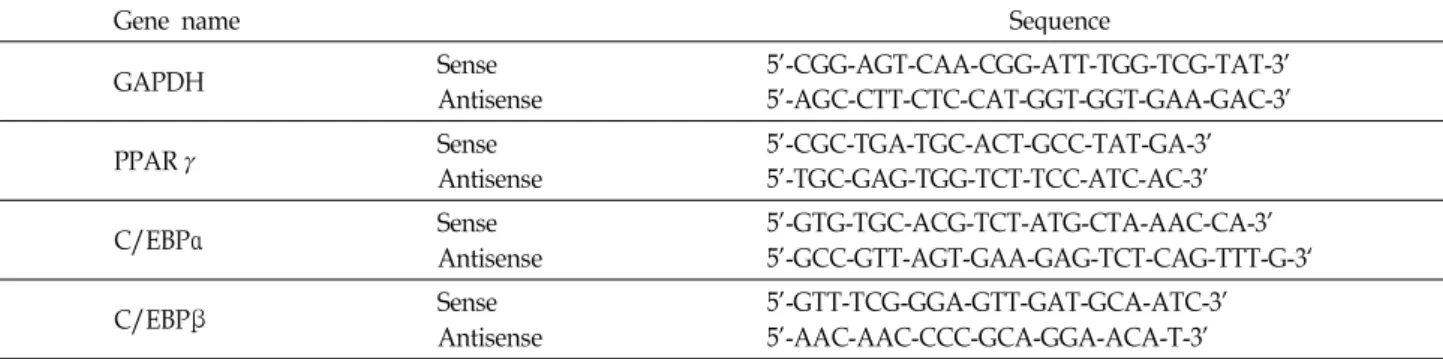
본 실험에서 mRNA 발현양 분석을 위하여 Bioneer (Taejeon, Korea)에서 구입한 primer 염기서열은 Table 1에 나타내었으 며, 단백질 분석을 위하여 사용된 PPARγ, C/EBPα, C/EBPβ 및 actin 항체는 Santa Cruz Biotechnology Inc. (Santa Cruz, CA, USA) 및 Cell Signaling Technology (Beverly, MA, USA) 에서 구입하였다. Immunoblotting을 위해 2차 항체로 사용된 peroxidase-labeled donkey anti-rabbit 및 peroxidase-labeled sheep anti-mouse immunoglobulin은 Amersham Life Science Corp. (Arlington Heights, IL, USA)에서 구입하였다.
또한 3T3-L1 지방전구세포의 분화를 위하여 사용된 insulin, dexamethasone 및 IBMX와 지방세포 내 triglyceride 생성을 확인하기 위하여 사용된 Oil Red O는 Sigma-Aldrich (St. Luis, MO, USA)에서 구입하였다.
3T3-L1 지방전구세포의 배양
실험에 사용된 3T3-L1 지방전구세포는 90%의 Dulbecco's
Modified EaDCRT Media (DMEM, Gibco BRL, Grand Island,
NY, USA), 10%의 bovine calf serum (BCS, Gibco BRL) 및
1%의 penicillin 및 streptomycin (Gibco BRL)이 포함된 배지
를 사용하여 37
oC, 5% CO
2조건 하에서 배양하였다. 세포수의
Table 1. Sequence of primers used for RT-PCR
Gene name Sequence
GAPDH Sense
Antisense 5'-CGG-AGT-CAA-CGG-ATT-TGG-TCG-TAT-3'
5'-AGC-CTT-CTC-CAT-GGT-GGT-GAA-GAC-3'
PPARγ Sense
Antisense 5'-CGC-TGA-TGC-ACT-GCC-TAT-GA-3'
5'-TGC-GAG-TGG-TCT-TCC-ATC-AC-3'
C/EBPα Sense
Antisense 5'-GTG-TGC-ACG-TCT-ATG-CTA-AAC-CA-3'
5'-GCC-GTT-AGT-GAA-GAG-TCT-CAG-TTT-G-3‘
C/EBPβ Sense
Antisense 5'-GTT-TCG-GGA-GTT-GAT-GCA-ATC-3'
5'-AAC-AAC-CCC-GCA-GGA-ACA-T-3'
증식에 따른 과밀도 현상을 해소하기 위하여 성장배지의 교환 을 매 48시간마다 실시하여 적정수의 세포를 유지하였다.
3T3-L1 지방전구세포의 분화유도
3T3-L1 지방전구세포를 세포 배양용 6 well plate에서 con- fluent 상태까지 배양한 후 10 μg/ml insulin, 0.1 μM dex- amethasone 및 0.5 μM IBMX가 포함된 분화배지로 교환하여 2일간 배양하였으며, 그 후 매 2일마다 10 μg/ml insulin이 포함된 배지로 교환하였으며, 10일간 분화를 유도한 3T3-L1 지방전구세포를 다양한 실험적 분석을 위하여 사용하였다.
Hemocytometer를 이용한 3T3-L1 지방전구세포 생존율 의 측정
생마늘 및 흑마늘 추출물처리에 따른 3T3-L1 지방전구세포 의 생존율을 측정하기 위하여 세포 배양용 6 well plate에 3T3-L1 지방전구세포를 well 당 2 ml씩 분주하여 confluent 상태까지 배양한 후 마늘 추출물을 적정 농도로 처리하였다.
72시간 동안 배양한 후 배지를 제거하고 0.05% trypsin-EDTA 를 처리하여 세포를 부유시켜서 phosphate-buffered saline (PBS)를 각 well 당 적정량을 첨가하여 세포를 모았다. 이렇게 모인 세포를 2,000 rpm으로 5분간 원심분리하여 상층액을 제 거하고 세포만 남긴 다음 다시 1 ml의 PBS와 동량의 0.5%
trypan blue (Gibco BRL)를 첨가하여 2분간 처리한 후 위상차 현미경을 이용하여 살아있는 세포를 계수하였다. 이에 따른 결과를 Microsoft EXCEL program을 사용하여 분석하였다.
MTT assay에 의한 3T3-L1 지방전구세포 성장억제 조사 세포 배양용 6 well plate에 3T3-L1 지방전구세포를 분주하 여 confluent 상태까지 배양한 후 마늘 추출물을 배지에 희석 하여 각 well 당 적정농도로 처리하였다. 72시간 후 배지를 제거하고 성장배지와 희석된 0.5 mg/ml 농도의 tetrazolium bromide salt (MTT, Amresco, Solon, OH, USA)를 2 ml씩 분 주하고 3시간 동안 CO
2incubator에서 배양시킨 다음 MTT 시약을 깨끗하게 제거하고 DMSO를 1 ml씩 분주하여 well에 생성된 formazin을 모두 녹인 후 96 well plate에 200 μl씩 옮겨
서 ELISA reader (Molecular Devices, Sunnyvale, CA, USA) 로 540 nm에서 흡광도를 측정하였다. 측정은 모두 세 번을 하였으며, 그에 대한 평균값과 표준 오차를 Microsoft EXCEL program을 사용하여 분석하였다.
도립 현미경을 이용한 3T3-L1 지방전구세포의 성장과 형 태의 관찰
마늘 추출물 처리에 의한 3T3-L1 지방전구세포의 분화 및 droplet 생성 정도를 확인하기 위하여 세포 배양용 6 well plate에 3T3-L1 지방전구세포를 분주하여 confluent 상태까지 배양한 후 마늘 추출물을 적정농도로 희석 처리하면서 분화를 유도하였다. 분화가 끝난 후 마늘 추출물 처리농도에 따른 분 화 및 droplet 생성 정도를 도립 현미경을 이용하여 200배의 배율로 관찰하였다.
Oil Red O 염색 및 정량
세포 내 droplet 생성을 확인하기 위하여 Oil Red O 염색 을 실시하였다. 준비된 3T3-L1 지방전구세포를 PBS로 세척한 후 3.7% formalin으로 1시간 동안 고정하고 60% isopropanol 을 이용하여 세척한 다음 Oil Red O solution을 처리하여 실 온에서 20분 간 염색하였다. 염색 후 Oil Red O solution을 제거하고 증류수로 3회 세척한 다음 염색된 세포를 위상차 현미경을 이용하여 관찰하였다. 또한 정량적 분석을 위하여 100% isopropanol을 이용하여 지방을 추출한 후 96 well plate에 200 μl씩 옮겨서 ELISA reader로 500 nm에서 흡광도 를 측정하였다.
Reverse transcriptase polymerase chain reaction (RT-PCR)에 의한 mRNA의 분석
마늘 추출물을 처리하면서 분화시킨 3T3-L1 지방전구세포
에 TRIzol reagent (Invitrogen Co., Carlsbad, CA, USA) 1 ml
을 첨가하여 4
oC에서 1시간 동안 반응시킨 후 200 μl의 chloro-
form을 첨가하여 4
oC에서 30분 동안 반응시켰다. 14,000 rpm,
4
oC에서 15분간 원심분리시켜 400 μl의 상층액을 분리하여 동
량의 isopropanol을 첨가하여 4
oC에서 30분 동안 반응시킨 후
14,000 rpm, 4
oC에서 30분간 원심분리시켜 total RNA를 분리 하였다. 분리된 RNA를 DEPC water를 이용하여 녹이고 정량 한 후, 각각의 primer, DEPC water 그리고 ONE-STEP RT-PCR PreMix Kit (Intron, Korea)를 넣고 Mastercycler gra- dient (Eppendorf, Hamburg, Germany)를 이용하여 역전사 및 증폭하였다. 각 PCR 산물들의 양적 차이를 확인하기 위하 여 1× TAE buffer로 1% agarose gel을 만들고 well 당 각각의 primer에 해당하는 PCR 산물에 DNA gel loading solution을 섞어서 loading 한 후 100 V에서 전기영동을 하였다. 전기영동 으로 DNA 분리가 끝난 gel을 ethidium bromide (EtBr)을 이용 하여 염색한 후 UV 하에서 확인하였으며, housekeeping 유전 자인 glyceraldehyde-3-phosphate dehydrogenase (GAPDH) 를 internal control로 사용하였다.
Western blot analysis에 의한 단백질 발현의 분석
동일한 방법으로 준비된 3T3-L1 지방전구세포에 적당량의 lysis buffer [25 mM Tris-Cl (pH 7.5), 250 mM NaCl, 5 mM EDTA, 1% NP-40, 1 mM phenymethylsulfonyl fluoride (PMSF), 5 mM dithiothreitol (DTT)]를 첨가하여 4
oC에서 1시 간 동안 반응시킨 후, 14,000 rpm으로 30분간 원심분리하여 상층액에 있는 총 단백질을 분리하였다. 상층액의 단백질 농 도는 Bio-Rad 단백질 정량 시약(Bio-Rad, Hercules, CA, USA) 과 그 사용방법에 따라 정량 한 다음 동량의 Laemmli sample buffer (Bio-Rad)를 섞어서 sample을 만들었다. 동량의 sam- ple을 sodium dodecyl sulphate (SDS)-polyacrylamide gel을 이용하여 전기영동으로 분리한 후, nitrocellulose membrane (Schleicher and Schuell, Keene, NH, USA)으로 electro- blotting에 의해 전이시켰다. 분리된 단백질이 전이된 nitro- cellulose membrane을 5% skim milk를 처리하여 비특이적인 단백질들에 대한 blocking을 실시하고 1차 항체를 처리하여 상온에서 2시간 이상 또는 4
oC에서 over night 시킨 다음 PBS-T로 세척(15분간 1번, 5분간 5번)하고 처리된 1차 항체에 맞는 2차 항체(PBS-T로 1:1,500으로 희석하여 사용)를 사용하 여 상온에서 1시간 정도 반응시켰다. 반응이 끝난 후 암실에서 Enhanced Chemiluminoesence (ECL) solution (Amersham Life Science Corp.)을 적용시킨 다음 X-ray film에 감광시켜 특정 단백질의 발현 양을 분석하였다.
결과 및 고찰
3T3-L1 지방전구세포의 생존율 및 증식에 미치는 마늘 추 출물의 영향
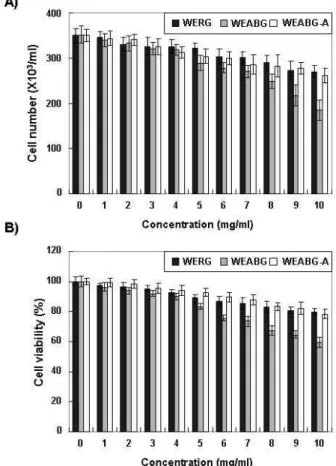
마늘 추출물 처리에 따른 3T3-L1 지방전구세포의 생존율을 알아 보기위하여 WERG, WEABG 및 WEABG-A를 적정농도 로 72시간 동안 처리한 후, 살아있는 세포의 수를 계수하여 비교한 결과는 Fig. 1A에 나타낸 바와 같다. 결과에서 알 수
있듯이 WERG 및 WEABG-A 처리군의 경우에는 전체적으로 생존율의 감소가 완만하게 이루어지는 반면 WEABG 처리군 의 경우에는 4 mg/ml의 농도까지는 생존율의 감소가 크게 나타나지 않았지만 5 mg/ml의 농도에서부터는 급격한 생존 율의 감소가 관찰되었다. 동일 조건에서 배양된 3T3-L1 지방 전구세포의 증식에 미치는 WERG, WEABG 및 WEABG-A의 영향을 알아보기 위하여 MTT assay를 실시하였다. Fig. 1B에 나타낸 바와 같이 WEABG 처리군에서 4 mg/ml의 농도까지 는 증식억제효과가 크게 나타나지 않았지만 4 mg/ml의 농도 에서부터 증식억제효과가 나타나기 시작하여 10 mg/ml의 농 도에서 WEABG에서는 약 40% 정도의 증식억제효과가 나타 났지만 WERG 및 WEABG-A 처리군의 경우에는 WEABG 처 리군에 비하여 증식억제 효과가 약한 것으로 나타났다. 이상 의 결과에 준하여 마늘 추출물 세 종류의 시료 모두에서 생존 율 및 증식에 큰 영향을 미치지 않는 4 mg/ml의 농도까지를
Fig. 1. Effects of garlic extracts on the cell growth in 3T3-L1 mouse preadipocytes. Cells were treated with the in- dicated concentrations of water extracts of raw garlic (WERG) and two types of aged black garlic (WEABG and WEABG-A) for 72 hr. Cell number (A) and viability (B) were determined by hemocytometer counts of trypan blue excluding cells and MTT assay, respectively.
Results are expressed as percentage of the vehicle treat- ed control±SD of three separate experiments.
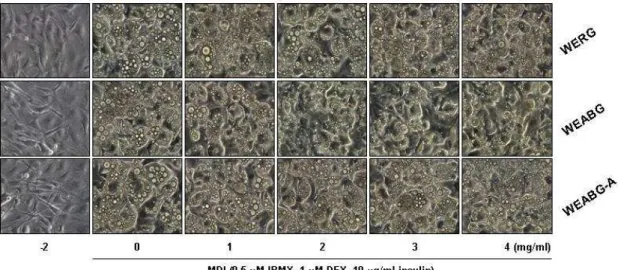
Fig. 2. Effects of garlic extracts on the microscopic morphological changes of differentiated 3T3-L1 mouse preadipocytes.
Differentiation of confluent 3T3-L1 mouse preadipocytes was initiated with MDI (0.5 mmol/l 3-isobytyl-1-methylxanthine, 0.5 μmol/l dexamethasone, and 5 μg/ml insulin) and maintained DMEM-5% FBS medium (maintenance differentiation medium) in the absence or presence of WERG, WEABG and WEABG-A. After day 8, differentiating 3T3-L1 cells were visualized by light microscopy. Magnification, ×200.
Fig. 3. Inhibitory effects of garlic extracts on lipid droplet accumulation of differentiated 3T3-L1 mouse preadipocytes. Differentiation of confluent 3T3-L1 mouse preadipocytes was initiated with MDI and maintained DMEM-5% FBS medium (maintenance differentiation medium) in the absence or presence of WERG, WEABG and WEABG-A. After day 8, cells were fixed and stained with Oil Red O to visualize lipid droplets by light microscopy. Magnification, ×200.
실험 조건으로 설정하였다.
3T3-L1 지방전구세포의 lipid droplet 생성에 미치는 마 늘 추출물의 영향
Lipid droplet은 phospholipid monolayer에 의하여 둘러싸 여진 중성지방으로 구성된 비활성 소낭으로서 precursor fi- broblast에서부터 지방세포로의 분화과정에서 나타나며, PPARγ와 같은 중요한 adipogenic transcription factor들에 의해서 조절되는 것으로 알려져 있다[16,30,38]. 성숙한 지방세
포에서의 lipid droplet 유지는 LPL에 의한 triglyceride 유입
과 adipose triglyceride lipase (ATGL) 및 hormone sensitive
lipase (HSL)에 의한 triglyceride 유출에 의하여 조절된다
[2,27,28,50]. 따라서 3T3-L1 지방전구세포가 지방세포로의 분
화과정에 나타나는 lipid droplet 생성에 마늘 추출물이 어떠
한 영향을 미치는지를 확인하기 위하여 각각의 시료를 적정
농도로 처리하여 분화를 유도한 후 Oil Red O 염색 전후로
구분하여 lipid droplet 생성정도를 위상차 현미경으로 관찰하
였다. Fig. 2 및 3에서 볼 수 있듯이 마늘 추출물을 처리하지
않고 분화를 유도하였을 경우에 세포질 내 lipid droplet의 형 성이 활발하게 유발되는 것으로 관찰되었으나, WEABG 처리 에 의하여 lipid droplet의 형성이 처리 농도 의존적으로 억제 되는 것을 확인하였다. 그러나 WERG 및 WEABG-A 처리군의 경우에는 lipid droplet의 크기는 조금 줄어드는 것으로 나타 났지만 lipid droplet의 개수에는 큰 차이를 보이지 않는 것으 로 나타났다. 따라서 세 종류의 시료 중 3T3-L1 지방전구세포 에서 지방세포로의 분화 억제에 WEABG가 가장 효과가 높았 음을 알 수 있었다.
지방세포 내 triglyceride 생성에 미치는 마늘 추출물의 영향 중성지방으로 알려진 triglyceride는 1분자의 glycerol에 3 분자의 fatty acid가 ester 결합한 것으로서 음식물로 섭취하는 지방의 95% 이상이 triglyceride이며, 동물의 저장지방의 경우 에도 triglyceride 형태로 저장된다[8,10]. 지방조직에서의 tri- glyceride의 저장은 chylomicron 및 very low density lip- oprotein (VLDL) 등과 같은 triglyceride-rich lipoprotein에 의 하여 유발되는 것으로 알려져 있다[47]. 일반적으로 trigly- ceride는 포도당과 함께 세포의 중요한 에너지원으로 사용되 지만 여분의 triglyceride는 지방세포에 흡수되고 저장되어 비 만의 원인으로 작용하며, 다양한 질환의 원인이 되기도 한다 [21,27]. 따라서 3T3-L1 지방전구세포에 마늘 추출물의 처리에 의한 triglyceride의 생성억제 효과를 확인하기 위하여 Oil Red O로 염색된 lipid droplet을 isopropanol로 추출한 후 tri- glyceride의 함량을 측정하였다. Fig. 4에 나타난 바와 같이 정상배지에서 분화된 지방세포에 비교해서 WERG 및
Fig. 4. Inhibitory effects of garlic extracts on triglyceride accu- mulation of differentiated 3T3-L1 mouse preadipocytes.
Triglyceride contents were determined by Oil Red O staining after treatment of the absence or presence of WERG, WEABG and WEABG-A. The rates of trigly- ceride contents were measured at λ=500 nm wavelength by the ELISA reader. Data are expressed as the means±S.D. The results were confirmed by three in- dependent experiments.
WEABG-A 4 mg/ml 처리군의 경우에는 각각 8% 및 10% 정 도의 triglyceride 형성 억제효과가 나타난 반면 WEABG 처리 군의 경우에는 약 55% 정도의 triglyceride 형성 억제효과가 있었다. 이상의 결과를 살펴보면 WERG 및 WEABG-A 처리군 에 비교해서 WEABG 처리군의 triglyceride 생성 억제효과가 큰 것으로 나타났으므로 WEABG가 3T3-L1 지방전구세포의 분화를 억제함으로서 비만 예방에 효과적일 것으로 기대된다.
Adipogenic transcription factor들의 발현에 미치는 마 늘 추출물의 영향
지방전구세포에서 지방세포로 분화되는 adipogenesis 과정 은 많은 종류의 adipogenic transcription factor들의 단계적인
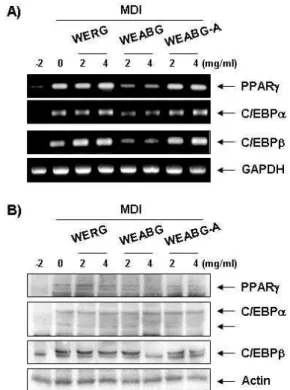
Fig. 5. Effects of garlic extracts on the levels of adipogenic tran- scription factors mRNA and protein expression in differ- entiated 3T3-L1 mouse preadipocytes. Differentiation of confluent 3T3-L1 mouse preadipocytes was incubated with the absence or presence of WERG, WEABG and WEABG-A for 8 day after initiated with MDI. (A) Total RNAs were isolated and reverse-transcribed. The result- ing cDNAs were subjected to PCR with indicated pri- mers and the reaction products were subjected to electro- phoresis in 1% agarose gel and visualized by EtBr staining. GAPDH was used as an internal control. (B) Cells were lysed and cellular proteins were separated by SDS-polyacrylamide gels and transferred onto nitro- cellulose membranes. The membranes were probed with the indicated antibodies. Proteins were visualized using an ECL detection system. Actin was used as an internal control.
조절에 의하여 유발되는 것으로 알려져 있다. 특히 이러한 adipogenic transcription factor들 중에서 C/EBP 및 PPAR family가 중요한 역할을 하는 것으로 알려져 있는데, 먼저 분 화유도인자에 노출되면 몇 시간 이내에 C/EBPβ의 발현이 유 발되면서 분화가 시작되며, C/EBPβ는 insulin-sensitive glu- cose uptake와 같은 성숙한 비만세포의 특징을 증가시키는데 관여하는 C/EBPα 및 PPARγ의 발현을 촉진함으로서 최종적 으로 분화과정을 완성하게 된다[12,15,22]. 이렇게 분화된 세포 는 lipid droplet 생성 및 세포의 크기 증가 등과 같은 형태적 특징과 더불어 특이적인 유전자의 발현을 유발함으로서 지방 세포의 특징을 지니게 된다. 따라서 본 연구에서는 마늘 추출 물이 adipogenic transcription factor들의 발현에 어떠한 영향 을 미치는 지를 mRNA 및 단백질 수준에서 확인하였다. Fig.
5에 나타난 바와 같이 분화유도인자인 insulin, dexamethasone 및 IBMX를 처리하여 분화를 유발하였을 경우 PPARγ, C/EBPα 및 C/EBPβ의 발현이 현저하게 증가하는 것으로 나 타났으며, 이러한 분화유도 과정에서 WERG 및 WEABG-A를 처리하였을 경우 PPARγ, C/EBPα 및 C/EBPβ의 발현에는 큰 영향을 미치지 못하는 것으로 나타났다. 그러나 WEABG 처리에 의해서는 PPARγ, C/EBPα 및 C/EBPβ의 발현이 mRNA 및 단백질 수준에서 현저하게 감소하였음을 확인하였 다. 이상의 결과를 살펴볼 때 WEABG는 3T3-L1 지방전구세포 에서 adipogenic transcription factor인 PPARγ, C/EBPα 및 C/EBPβ의 발현을 억제함으로서 lipid droplet 및 triglyceride 생성을 감소시킴으로서 지방세포로의 분화를 억제시킬 수 있 을 것으로 추정된다.
감사의 글
본 연구는 지식경제부 지역특화선도기업지원사업과 지역 혁신센터사업 블루바이오 소재 개발 및 실용화 지원 센터 (RIC08-06-07)의 지원에 의해 이루어진 것임.
References
1. Ahmad, M. S., M. Pischetsrieder, and N. Ahmed. 2007. Aged garlic extract and S-allyl cysteine prevent formation of ad- vanced glycation endproducts.
Eur. J. Pharmacol
. 561, 32-38.2. Ahmadian, M., Y. Wang, and H. S. Sul. 2010. Lipolysis in adipocytes.
Int. J. Biochem. Cell Biol
. 42, 555-559.3. Alessi, M. C., H. R. Lijnen, D. Bastelica, and I. Juhan-Vague.
2003. Adipose tissue and atherothrombosis.
Pathophysiol.
Haemost. Thromb
. 33, 290-297.4. Augusti, K. T. 1996. Therapeutic values of onion (
Allium cepa
L.) and garlic (Allium sativum
L.).Indian. J. Exp. Biol
. 34, 634-640.5. Bernlohr, D. A., M. A. Bolanowski, T. J. Kelly Jr, and M.
D. Lane. 1985. Evidence for an increase in transcription of specific mRNAs during differentiation of 3T3-L1
preadipocytes.
J. Biol. Chem
. 260, 5563-5567.6. Bordia, T., N. Mohammed, M. Thomson, and M. Ali. 1996.
An evaluation of garlic and onion as antithrombotic agents.
Prostaglandins Leukot. Essent. Fatty Acids
54, 183-186.7. Cañizares, P., I. Gracia, L. A. Gómez, C. Martín de Argila, L. de Rafael L, and A. García. 2002. Optimization of
Allium sativum
solvent extraction for the inhibition ofin vitro
growth ofHelicobacter pylori
.Biotechnol. Prog
. 18, 1227-1232.8. Chen, H. C., and R. V. Farese Jr. 2000. DGAT and triglyceride synthesis: a new target for obesity treatment?
Trends Cardiovasc. Med
. 10, 188-192.9. Cowherd, R. M., R. E. Lyle, and R. E. McGehee Jr. 1999.
Molecular regulation of adipocyte differentiation.
Semin. Cell Dev. Biol
. 10, 3-10.10. Duane, W. C. 1997. Cholesterol metabolism in familial hy- pertriglyceridemia: effects of obesity versus triglyceride level.
J. Lab. Clin. Med
. 130, 635-642.11. El-Demerdash, F. M., M. I. Yousef, and N. I. El-Naga. 2005.
Biochemical study on the hypoglycemic effects of onion and garlic in alloxan-induced diabetic rats.
Food Chem. Toxicol
. 43, 57-63.12. El-Jack, A. K., J. K. Hamm, P. F. Pilch, and S. R. Farmer.
1999. Reconstitution of insulin-sensitive glucose transport in fibroblasts requires expression of both PPARgamma and C/EBPalpha.
J. Biol. Chem
. 274, 7946-7951.13. Farese, R. V. Jr, and T. C. Walther. 2009. Lipid droplets fi- nally get a little R-E-S-P-E-C-T.
Cell
139, 855-860.14. Farmer, S. R. 2006. Transcriptional control of adipocyte formation.
Cell Metab
. 4, 263-273.15. Fox, K. E., D. M. Fankell, P. F. Erickson, S. M. Majka, J.
T. Crossno Jr, and D. J. Klemm. 2006. Depletion of cAMP-re- sponse element-binding protein/ATF1 inhibits adipogenic conversion of 3T3-L1 cells ectopically expressing CCAAT/enhancer-binding protein (C/EBP) alpha, C/EBP beta, or PPAR gamma 2.
J. Biol. Chem
. 281, 40341-40353.16. Freytag, S. O., D. L. Paielli, and J. D. Gilbert. 1994. Ectopic expression of the CCAAT/enhancer-binding protein alpha promotes the adipogenic program in a variety of mouse fi- broblastic cells.
Genes Dev
. 8, 1654-1663.17. Galic, S., J. S. Oakhill, and G. R. Steinberg. 2010. Adipose tissue as an endocrine organ.
Mol. Cell Endocrinol.
316, 129-139.18. Gesta, S., Y. H. Tseng, and C. R. Kahn. 2007. Developmental origin of fat: tracking obesity to its source.
Cell
131, 242-256.19. Green, H. and O. Kehinde. 1976. Spontaneous heritable changes leading to increased adipose conversion in 3T3 cells.
Cell
7, 105-113.20. Green, H. and M. Meuth. 1974. An established pre-adipose cell line and its differentiation in culture.
Cell
3, 127-133.21. Hafiz, M. S., M. I. Arslan, S. Banarjee, and M. Obaidullah.
2004. Studies on serum triglyceride level in patients with myocardial infarction.
Mymensingh. Med. J
. 13, 185-187.22. Hamm, J. K., B. H. Park, and S. R. Farmer. 2001. A role for C/EBPbeta in regulating peroxisome proliferator- activated receptor gamma activity during adipogenesis in 3T3-L1 preadipocytes.
J. Biol. Chem
. 276, 18464-18471.23. Heilbronn, L., S. R. Smith, and E. Ravussin. 2004. Failure of fat cell proliferation, mitochondrial function and fat oxi- dation results in ectopic fat storage, insulin resistance and type II diabetes mellitus.
Int. J. Obes. Relat. Metab. Disord
. 28, S12-21.24. Hodge, G., S. Hodge, and P. Han. 2002.
Allium sativum
(garlic) suppresses leukocyte inflammatory cytokine pro- ductionin vitro
: potential therapeutic use in the treatment of inflammatory bowel disease.Cytometry
48, 209-215.25. Jessen, B. A. and G. J. Stevens. 2002. Expression profiling during adipocyte differentiation of 3T3-L1 fibroblasts.
Gene
299, 95-100.26. Kumaraguruparan, R., K. V. Chandra Mohan, S. K.
Abraham, and S. Nagini. 2005. Attenuation of N-meth- yl-N'-nitro-N-nitrosoguanidine induced genotoxicity and oxidative stress by tomato and garlic combination.
Life Sci.
76, 2247-2255.
27. Labreuche, J., P. J. Touboul, and P. Amarenco. 2009. Plasma triglyceride levels and risk of stroke and carotid athero- sclerosis: a systematic review of the epidemiological studies.
Atherosclerosis
203, 331-345.28. Lafontan, M. and D. Langin. 2009. Lipolysis and lipid mobi- lization in human adipose tissue.
Prog. Lipid Res.
48, 275-297.29. Lee, Y. M., O. C. Gweon, Y. J. Seo, J. Im, M. J. Kang, M.
J. Kim, and J. I. Kim. 2009. Antioxidant effect of garlic and aged black garlic in animal model of type 2 diabetes mellitus.
Nutr. Res. Pract
. 3, 156-161.30. Manickam, E., A. J. Sinclair, and D. Cameron-Smith. 2010.
Suppressive actions of eicosapentaenoic acid on lipid drop- let formation in 3T3-L1 adipocytes.
Lipids Health Dis
. 9, 57.31. Patya, M., M. A. Zahalka, A. Vanichkin, A. Rabinkov, T.
Miron, D. Mirelman, M. Wilchek, H. M. Lander, and A.
Novogrodsky. 2004. Allicin stimulates lymphocytes and elic- its an antitumor effect: a possible role of p21ras.
Int.
Immunol
. 16, 275-281.32. Qidwai, W., R. Qureshi, S. H. Hasan, and S. I. Azam. 2000.
Effect of dietary garlic (
Allium Sativum
) on the blood pres- sure in humans-a pilot study.J. Pak. Med. Assoc
. 50, 204-207.33. Rivlin, R. S. 2001. Historical perspective on the use of garlic.
J. Nutr
. 131, 951S-954S.34. Roncari, D. A., D. C. Lau, and S. Kindler. 1981. Exaggerated replication in culture of adipocyte precursors from mas- sively obese persons.
Metabolism
30, 425-427.35. Rosen, E. D. and O. A. MacDougald. 2006. Adipocyte differ- entiation from the inside out.
Nat. Rev. Mol. Cell Biol
. 7, 885-896.36. Rosen, E. D. and B. M. Spiegelman. 2000. Molecular regu- lation of adipogenesis.
Annu. Rev. Cell Dev. Biol
. 16, 145-171.37. Saltiel, A. R. and C. R. Kahn. 2001. Insulin signalling and
the regulation of glucose and lipid metabolism.
Nature
414, 799-806.38. Schoonjans, K., B. Staels, and J. Auwerx. 1996. The perox- isome proliferator activated receptors (PPARS) and their ef- fects on lipid metabolism and adipocyte differentiation.
Biochim. Biophys. Acta
1302, 93-109.39. Spiegelman, B. M. and J. S. Flier. 2001. Obesity and the regu- lation of energy balance.
Cell
104, 531-543.40. Thomson, M. and M. Ali. 2003. Garlic [
Allium sativum
]: a review of its potential use as an anti-cancer agent.Curr.
Cancer Drug Targets
3, 67-81.41. Vázquez-Vela, M. E., N. Torres, and A. R. Tovar. 2008. White adipose tissue as endocrine organ and its role in obesity.
Arch. Med. Res
. 39, 715-728.42. Wang, N. D., M. J. Finegold, A. Bradley, C. N. Ou, S. V.
Abdelsayed, M. D. Wilde, L. R. Taylor, D. R. Wilson, and G. I. Darlington. 1995. Impaired energy homeostasis in C/EBP alpha knockout mice.
Science
269, 1108-1112.43. Wellman, N. S. and B. Friedberg. 2002. Causes and con- sequences of adult obesity: health, social and economic im- pacts in the United States.
Asia Pac. J. Clin. Nutr
. 11, S705-709.44. White, U. A. and J. M. Stephens. 2010. Transcriptional factors that promote formation of white adipose tissue.
Mol. Cell Endocrinol
. 318, 10-14.45. Wu, Z., P. Puigserver, and B. M. Spiegelman. 1999.
Transcriptional activation of adipogenesis.
Curr. Opin. Cell Biol
. 11, 689-694.46. Wyatt, S. B., K. P. Winters, and P. M. Dubbert. 2006.
Overweight and obesity: prevalence, consequences, and causes of a growing public health problem.
Am. J. Med. Sci
. 331, 166-174.47. Yano, T., S. Kobori, M. Sakai, Y. Anami, T. Matsumura, H.
Matsuda, M. Kasho, and M. Shichiri. 1997. Beta-very low density lipoprotein induces triglyceride accumulation through receptor mediated endocytotic pathway in 3T3-L1 adipocytes.
Atherosclerosis
135, 57-64.48. Yeh, W. C., Z. Cao, M. Classon, and S. L. McKnight. 1995.
Cascade regulation of terminal adipocyte differentiation by three members of the C/EBP family of leucine zipper proteins.
Genes Dev
. 9, 168-181.49. Yeh, Y. Y. and S. M. Yeh. 1994. Garlic reduces plasma lipids by inhibiting hepatic cholesterol and triacylglycerol synthesis.
Lipids
29, 189-193.50. Zimmermann, R., J. G. Strauss, G. Haemmerle, G.
Schoiswohl, R. Birner-Gruenberger, M. Riederer, A. Lass, G.
Neuberger, F. Eisenhaber, A. Hermetter, and R. Zechner.
2004. Fat mobilization in adipose tissue is promoted by adi- pose triglyceride lipase.