| Abstract |
1)PURPOSE: This study examined the effects of cardiopulmonary physiotherapy on the cardiopulmonary function, metabolism, inflammatory markers, and quality of life in patients with coronary artery disease who underwent percutaneous coronary intervention (PCI).
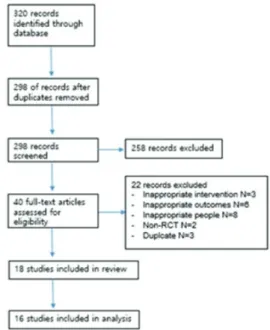
METHODS: Electronic bibliographic databases of a regional information sharing system (RISS) and PubMed were searched to identify studies with randomized and non-randomized controlled trials. As the final outcome, 320 publications were identified and 18 studies met the inclusion
†Corresponding Author : Min-hee Kim
[email protected], ttps://orcid.org/0000-0001-6072-9459 This is an Open Access article distributed under the terms of the Creative Commons Attribution Non-Commercial License (http://creativecommons.org/licenses/by-nc/3.0) which permits unrestricted non-commercial use, distribution, and reproduction in any medium, provided the original work is properly cited.
and exclusion criteria. All studies were assessed for the quality of study using Cochrane’s risk of bias.
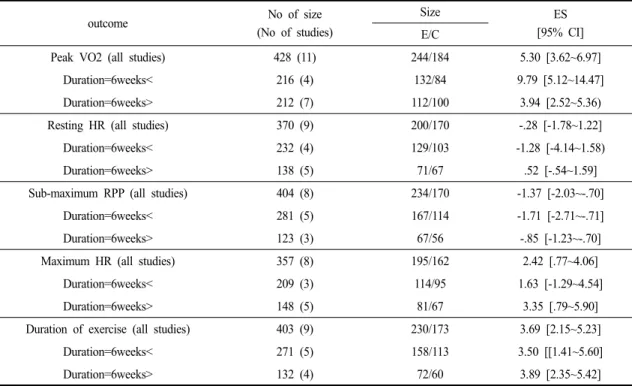
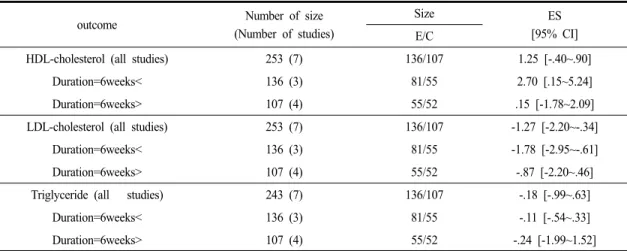
RESULTS: Sixteen studies met the inclusion criteria, in which meta-analysis had been conducted to examine the effectiveness of cardiopulmonary physiotherapy on the cardiopulmonary function, metabolism, inflammatory markers, and quality of life in patients undergoing PCI.
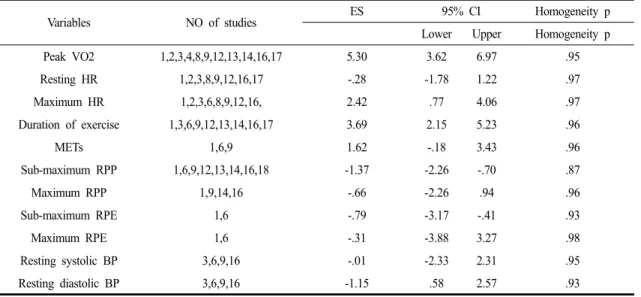
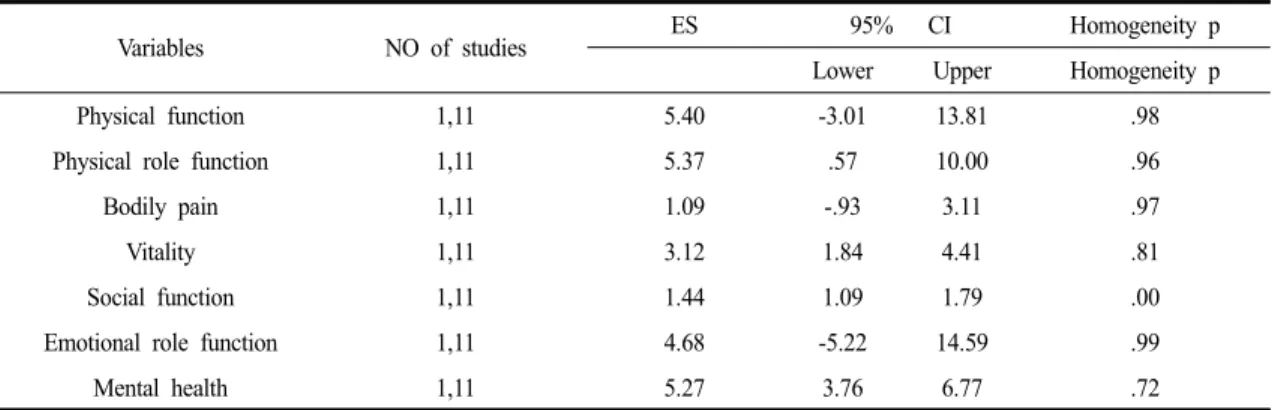
Meta-analysis based on a random effect model showed that the cardiopulmonary physiotherapy was beneficial in improving the cardiopulmonary function, metabolism, inflammatory markers, and quality of life. In particular, there was a significant effect on the peak oxygen uptake (effect size 5.30%; 95% confidence interval 3.62~6.97). Cardiopulmonary physiotherapy for a during period of 6 weeks or more was effective in significantly improving the cardiopulmonary function and metabolism function in a subgroup analysis, but cardiopulmonary physiotherapy for less than 6 weeks was not effective.
CONCLUSION: Cardiopulmonary physiotherapy has
Research Article Open Access
경피적 관상동맥 중재술을 받은 환자를 대상으로 심장호흡물리치료에 대한 효과 - 체계적 고찰과 메타분석