J. Biomed. Lab. Sci. 10 (2004) 153–161
Functional Analysis of the marB gene of Escherichia coli K-12
Chang-Mi Lee and Byung-Tae Park†
Department of Medicine, Taegu Catholic University, Taegu 705-718, Korea
Antibiotic resistance is often associated with the production of inner membrane proteins (for example, AcrAB/TolC efflux pump) that are capable to extrude antibiotics, detergents, dyes and organic solvents. In order to evaluate the unknown MarB function of Escherichia coli, especially focused on the function of OmpF porin, several mutants were construted by T4GT7 transduction. MarA plays a major roles in mar (multiple antibiotic resistance) phenotype with AcrAB/TolC efflux pump in E. coli K-12. Futhermore, MarA decreases OmpF porin expression via micF antisense RNA. Expression of acrAB is increased in strains containing mutation in marR, and in those carrying multicopy plasmid expressing marA. MarB protein of E. coli K-12 showed its activity at OmpF porin & TolC protein as target molecule. Some paper reported MarB positively regulates OmpF function. MarA shows mar phenotype, and MarB along with MarA show decreased MIC through OmpF function. By this experiment, MarB could decrease MIC through the OmpF porin & TolC protein as target.
Key Words: E. coli, mar operon, marB gene, MIC
서 론
세균의 약제 내성 기전은 비유전적 및 유전적인 요인으로 나누어진다. 비유전적인 요인으로는 결핵균처럼 복제의 불활 성화와 돌연변이에 의해 내성을 나타내거나 L-form 세균처 럼 표적부위의 손실로 내성을 유발할 수 있다. 유전적인 요 인은 균 자체의 필수물질은 변화하지 않고 항균제를 세포질 외에서 불활성화 하거나 표적부위의 구조가 바뀌어 내성을 나타낸다. 내성 유전자는 염색체 혹은 염색체 이외의 부위 에 plasmid로 존재한다. 염색체 DNA는 안정적인데 반하여, plasmid DNA는 균종내, 균종간, 심지어 균속간을 손쉽게 이동한다. 또 다른 방법으로 형질도입 (transduction), 접합 (conjugation), 형질전환 (transformation), 전위 (transpose- tion) 등에 의해 다른 세균에 내성을 전파할 수 있다. 세균의 내성 표현형은 구성적 내성 (constitutive)과 약물의 노출 후에 내 성이 나타나는 유도성 (inducible) 내성으로 구분된다8).
항생제가 항균효과를 나타내는 기전을 크게 5가지로 요약 할 수 있다. 1) 세포벽 합성의 저해제 (cell wall inhibitor) 2) 세포막 기능 저해제 (cell membrane inhibitor) 3) 단백질 합성 저해제 (protein synthesis inhibitor) 4) 대사 길항제 (competitive
antagonism) 5) 핵산 합성 저해제 (nucleic acid synthesis in- hibitor) 등이 있다. 항생제가 세균에 대하여 작용을 하기 위 해서는 다음의 조건들이 충족되어야 한다. 첫째, 항생제가 세균의 세포 내 혹은 세포 외의 효소에 의하여 불활성화되는 것을 피하여야 한다. 둘째 세균 내에 항생제의 표적분자 (target molecule)가 있고, 적절한 농도의 항생제가 균체 안으 로 침투가 가능하여야 하고, 셋째 항생제가 표적분자와 만나 상호작용을 통하여 항균효과를 발휘할 수 있어야 한다.
이와 반대로 세균이 항균제에 내성이 되는 물질의 변화와 세포막의 항균제 투과성에 대한 변화 (세포 내 침투 및 축적 의 방해), 세포 외부로의 능동적 항균제 배출, 효소에 의한 항균제의 불활성화 등이 있다. 세균은 이들 중 한 가지 또는 여러 가지 기전에 의하여 항균제에 내성을 나타낸다.
세포막의 항균제 투과성에 대한 변화 즉 침투과정 및 세포 내 축적과정을 방해하여 항생제의 침투 자체가 방해를 받아 내성이 발생하는 치료적인 약제를 대장균의 대상으로 연구 한 결과 β-lactam 재제이며7), 대장균 E. coli의 외막에는 여 러 종류의 Porin이 있지만, 항균제는 주로 OmpF와 OmpC를 투과한다7). 내성이 발생한 세균은 OmpF 등의 외막 단백질 의 수량이 감소하여 상대적으로 세포막을 통한 항생제의 침 투를 어렵게 하는 것으로 확인되어 있다. Porin은 세포 외막 의 단백질이며, 그람음성세균에만 존재한다. 영양물질을 받 아들이고, 대사산물을 내보내는 통로로 생각되는데 항균제 대부분은 Porin을 통해서 세포 내로 들어간다. 항균제의 Porin 투과도는 항균제 분자의 전하 (charge), 소수성 (hydropho-
*논 문 접 수: 2004년 4월 20일 수정재접수: 2004년 6월 15일
†별책 요청 저자: 박병태, (우) 705-034 대구광역시 남구 대명4동 3056-6번지, 대구가톨릭의대 미생물학교실
Tel: 053-650-4476, 4489, e-mail: [email protected]
bicity) 및 분자량에 따라 결정된다. 분자량이 큰 항균제는 분자량이 작은 항균제에 비해서, 소수성 (hydrophobicity) 분 자는 친수성 (hydrophilic) 분자에 비해서 Porin을 잘 투과하 지 못한다. 음성 (陰性) 전하의 분자는 양성 (陽性) 혹은 양성 (兩性, zwitterion) 전하의 분자에 비하여 Porin을 통과하는 속 도가 느리다57).
세포 내로 유입된 항균제를 능동적으로 세포 외로 유출하 는 세균도 있다. 이 내성 기전은 ribosome의 단백 생성을 저 해하는 tetracycline38)이나 macrolide에 내성인 세균과, DNA gyrase의 활성을 억제하는 quinolone에 내성인 세균에서 볼 수 있다. 그래서 MAR 변이주는 OmpF porin의 감소에 의해 서 항균제 세포막 투과도가 저하되어, 세포 외로 항균제를 능동적으로 배출한다44).
능동적 배출에 의해서 여러 가지 항균제에 대한 내성을 획득하는 기전은 다제 내성 펌프 (multidrug resistance pump, MDR pump)라 불린다29). MDR 펌프는 유핵세포에서 처음 발견되었으며 Staphylococ cusaureus 등의 그람양성세균, E.
coli, Pseudomonas aeruginosa 등 그람음성세균 뿐 아니라, 진 균인 Candida albicans, 원충류인 Plasmodium falciparum 등도 갖고 있다29).
그 중 대장균에서의 MDR pump (multiple drug resistance) 는 AcrAB/TolC efflux pump, EmrAB/TolC pump 등이 있으며, S. aureus에서는 QacA, NorA pump 등이 알려져 있다29).
대장균의 구성적 (constitutive)인 다약제 내성은 두 단백질, AcrA와 AcrB의 과잉 생산으로 보여진다. AcrA와 AcrB는 acrA와 acrB의 operon 형태로 구성되어 있고, 조절인자 AcrR에 의해서 조절되어진다. acrRAB operon은 decanoate (DEC, capric acid)에 의해 유도된다.
RND (Resistance-nodulation cell division)로 분류되는 AcrB 는, AcrA와 외막의 periplasmic space에 속해 있는 항균제를 직접적으로 운송을 담당하는 TolC와의 막 사이에 존재한다.
AcrAB/TolC efflux pump는 ciprofloxacin, novobiocin, erthro- mycin, tetacyclin, chloramphenicol, cloxacillin의 항균제들과 E.
coli의 약제 내성을 가지는데 중요한 역할을 한다.
대장균의 multiple-antibiotic-resistance (marRAB) operon은 세균 염색체 지도의 34분에 위치하는 유전자들로써, 각종 항 균제에 대한 내재성 내성 (intrinsic resistance)을 나타내며 타 균종간에도 전달될 수 있다는 것이 보고되었다2). 또한 구조 가 다른 여러 종류의 항균제들과 독성물질들에 대한 내성을 조절하고 있는 것으로 알려져 있다. 그래서 marRAB operon의 돌연변이인 Mar돌연변이가 최근 주목받고 있다2). marRAB operon은 sodium salicylate (SAL), tetracycline (Tc), chloram- phenicol (Cm) 등이 MarR을 억제함으로써 세포 외부의 환경 신호에 의해 유도 (induction)될 수 있다. 또 MarR은 야생형 대장균에서 구성적 (constitutive)으로 발현되어 항균제와 독 성물질들에 대한 내성을 매개하는 MarA의 전사를 억제하는 조절인자이다. MarA는 acrRAB operon의 전사를 촉진시켜서 항균제와 독성물질들을 세포 외부로 배출하거나, OmpF porin 의 발현을 감소시켜서 항균제와 독성물질들의 세포 내 침투 를 감소시켜 항생제 내성을 나타낸다고 알려져 있다15). 그러 나 MarB의 기능은 MarA와 이중조절을 하여 감수성을 감소 시키는지, 아니면 MarB가 단독으로 항생제에 따라 감수성 에 영향을 끼치는지 분명히 알려져 있지 않다.
MarA는 단독으로 AcrAB/TolC pump와 OmpF porin에 작 용하여 항생제 내성을 증가시킨다는 것은 이미 알려져 있으 므로, 본 실험에서는 MarB를 단독으로 발현시켜서 Ap, Cm,
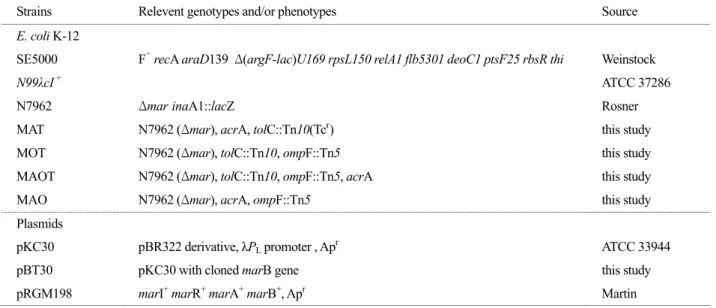
Table 1. Strains, phage, and plasmids used in this study
Strains Relevent genotypes and/or phenotypes Source
E. coli K-12
SE5000 F- recA araD139 Δ(argF-lac)U169 rpsL150 relA1 flb5301 deoC1 ptsF25 rbsR thi Weinstock
N99λcI + ATCC 37286
N7962 Δmar inaA1::lacZ Rosner
MAT N7962 (Δmar), acrA, tolC::Tn10(Tcr) this study
MOT N7962 (Δmar), tolC::Tn10, ompF::Tn5 this study
MAOT N7962 (Δmar), tolC::Tn10, ompF::Tn5, acrA this study
MAO N7962 (Δmar), acrA, ompF::Tn5 this study
Plasmids
pKC30 pBR322 derivative, λPL promoter , Apr ATCC 33944
pBT30 pKC30 with cloned marB gene this study
pRGM198 marI+ marR+ marA+ marB+, Apr Martin
Em, Tc, Rf, Af의 항생제에서 항균제 내성 정도를 MIC의 변 화를 통해서 알아보고, MarB의 단독으로의 OmpF porin 및 TolC에 대한 항균작용에 대한 기능을 분석하여 그 결과를 보고한다.
재료 및 방법
1. 돌연변이 균주 제조
본 실험에 사용된 균주는 E. coli K-12이며 Table 1과 같고, SE5000은 Wienstock으로부터, N7962 (Δmar)는 Rosner로부 터, plasmid은 Matrin, Timothy B. Warner으로부터 각각 분양 받았다.
2. PCR (Polymerase Chain Reaction)
marB 유전자 부분만을 PCR로 증폭시키기 위하여, pRGM- 198가 들어가 있는 균주 N8198을 1 ml LB broth에 overnight 시켜 Minipreps kit (Qiagen)를 이용하여 plasmid를 분리해서 PCR을 위한 DNA template를 준비했다. Primer (Bionics)는 제한효소 EcoRI을 붙여서 주문 제작하였다 (① 5'CCT TAA GCT ACA TAG CGT GTT GTT T 3' ② 5'GGA ATT CAT GAA ACC ACT TTC ATC C 3'). ①번의 primer는 concentration이 18.75 nmole이므로 187.5 µl의 D.W에 녹여 100 pmole로 희 석하여 사용하였다. ②번의 primer는 concentration이 18.45 nmole이므로 184.5 µl의 D.W에 녹여 100 pmole로 희석하여 사용하고 primer는 -20℃에 보관하였다. PCR Master Mix 2x (Taq DNA polymerase, MgCl2, dNTPs, reation buffer containing, Promega)를 25 µl, primer를 각각 2 µl씩, DNA template를 2 µl 씩 넣고 Nuclease-free Water를 19 µl를 넣어서 total volume 50 µl를 맞추었다. Total cycle은 25회, denature 94℃, annealing 60℃, extension 72℃에서 1분씩 반응시켰다. 반응시킨 다음 agarose gel (1.5%)로 밴드를 가시화하여 확인하였다.
3. 형질전환 (transformation)
PCR로 marB 부분을 증폭시킨 다음 pKC30 expression vec- tor (Escherichia coli NS428 ATCC 33944)와 marB를 제한효소 EcoRI으로 절단했다. 37℃ water bath에서 shaking을 시키지 않고 4시간 동안 반응시킨 후에, agarose gel (1.5%)에서 전기 영동으로 marB 219 bp size를 확인하였다. 동일한 제한효소로 절단된 pKC30 expression vector와 marB를 ligation한다. Liga- tion kit (10 mM Tris-HCl [pH 7.0 at 25℃], 50 mM KCl, 1 mM DTT, 0.1 mM EDTA and 50% glycerol, Promega)를 이용하여 16℃에서 overnight 시켰다. Competent cell은 Cohen 등에 의 해 개발된 방법을 약간 변형시킨 것으로 Hanahan 방법에 비 해 떨어지나 간편하고 보통 cloning 목적으로 사용하기에는 충분하다. 이 방법으로 만든 competent cell은 시간이 오래 지
날수록 형질전환의 효율이 다소 감소하긴 하지만 -70℃ deep freezer에 보관하여 사용할 수 있다. SE5000, N7962 균들을 2 ml LB broth에 넣어 overnight 시켰다. 다음날 40 ml LB broth 에 넣어 OD600 0.3~0.5가 되도록 하여 이것을 원심분리하여 pellet을 50 mM CaCl2, 10 mM TrisCl (pH 8.0)을 넣어 녹이면 competent cell이 만들어진다. Competent cell 200 µl와 cloning 된 pKC30 (즉, pBT30) 3 µl를 섞어서 ice에 30분을 둔 다음 42℃ Heat shock에서 2분간 두고, 1 ml의 LB broth를 더 넣 어 1시간 30분에서 2시간 정도 37℃ water bath에서 교반하 면서 키운 다음 Ampicillin이 들어간 한천배지에서 200 µl 분주하여 하루 정도 37℃ 배양기에서 배양하였다. 다음날 colony 생긴 것을 볼 수 있었다. 이것이 pKC30에 subcloning 된 pBT30이다. Colony를 백금이로 따서 1 ml LB borth 37℃
에 키운 다음 일부는 glycerol를 넣어 -20℃에 보관하여 두었 다. N7968, MAO, MAT, MOT 및 MAOT competent cell로 만 들어서 pBT30을 Miniprep하여 N7968, MAO, MAT, MOT, 및 MAOT에 각각 형질전환하여 균주를 만들어 놓았다.
4. 항균제 감수성 검사
LB agar 배지에 steer 등의 접종기를 이용한 한천평판희석 법을 사용하였다. 항균제 ampicillin (Ap), chloramphenicol (Cm), tetracycline (Tc), erythromycin (Em), rifampin (Rf), acriflavin (Af) 등은 Sigma회사에서 구입하였다. 각 항균제는 용매에 용해시켜 phosphate buffer 또는 증류수로 희석하여 사용하였 다. 42℃에서 열처리 (heat shock)는 90분을 주었으며, 나머지 32℃, 37℃ 등의 필요온도에서는 20시간 배양한 후 접종부위 의 균 발육 유무를 보아 최소발육저지농도 (minimal inhibi-
◀marB 1500 bp
200 bp
1 2 3 4 5 6 7
Fig. 1. Electrophoresis of PCR amplified marB gene digested with EcoRI. marB gene PCR products following electrophoresis in a 1.5% agarose gel. 1.5 kb Ladder size showed from 100 bp to 1,500 bp. Lane 1; M.W. marker (1.5 kb ladder), lane 2~7; amplified marB gene (219 bp) indicated by arrow.
◀marB 1500 bp
200 bp
1 2 3 4 5 6 7
tory concentration, MIC)를 판정하였다. 매 실험마다 정도 관 리를 위하여 ATCC (American Type Culture Collection)의 표 준균주들인 Escherichia coli ATCC 25922, Pseudomonas aeru- ginosa ATCC 27853 등을 함께 실시하였고, 검사법 및 내성 균의 판정은 National Committee for Clinical Laboratory Stan- dards의 기준에 따랐다.
결 과
1. 대장균 K-12의 marB 유전자의 PCR 분석
대장균 N8198의 PRGM198 plasmid에서 marB 유전자를 primer 5'CCT TAA GCT ACA TAG CGT GTT GTT T 3'와 5'
GGA ATT CAT GAA ACC ACT TTC ATC C 3'를 이용해서 PCR로 증폭하여 EcoRI 제한효소로 절단한 후에 1.5% aga- rose gel에서 전기영동한 결과 219 bp의 길이를 가진 것을 확 인하였다 (Fig. 1).
PCR로 증폭된 marB 유전자의 민감도를 알아보기 위해서 2% agarose gel에서 전기영동을 하였는데, lane 1은 MW maker이고, lane 4-9는 lane 2를 연속적으로 1/10 계단희석한 것을 나타낸다 (Fig. 2).
2. 대장균 K-12의 marB 유전자의 기능분석
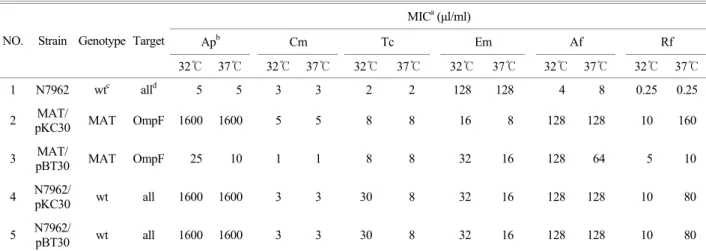
Table 2는 pBT30을 균주 MAT에 형질전환한 것을 37℃에 서 배양하여 항균제 함유 한천배지에서 32℃, 37℃에서 각각 유도시켜 pBT30을 항생제 내성 검사한 MIC 수치를 나타낸 표이다. Table 2를 분석하여 보면 Cm, Tc, Em, Af, Rf의 항균제 에 대해서는 MIC 변화는 거의 없고 Ap에 대해서만이 marB 가 OmpF porin을 target으로 하여 MIC 수치가 변화였음을 볼 수 있다. 또한 대조군인 pKC30을 균주 MAT에 형질전환 해서 target을 OmpF porin로 하여 실험했는데 MIC 수치에는 변화없음을 나타내었고, 역시 야생형인 N7962도 MIC의 변 화가 없음을 나타내었다. 즉, marB는 OmpF porin을 target으 로 하여 Ap에는 영향을 받으나 다른 항균제 Cm, Tc, Em, Af, Rf에는 영향을 받지 않으며 32℃, 37℃의 배양온도에는 영향 을 받지 않는다는 것을 나타낸다.
Table 3은 pBT30을 균주 MAT에 형질전환한 것을 32℃에 서 배양하여 항균제 함유 한천배지에서 32℃, 37℃에서 각각 유도시켜 pBT30을 항생제 내성 검사한 MIC 수치를 나타낸 표이다. Table 3에서도 Table 2와 마찬가지로 다른 항균제 Cm, Tc, Em, Af, Rf에 대해서는 MIC 변화는 거의 없고 Ap에 대해서만이 marB가 OmpF porin을 target으로 하여 MIC 수
Table 2. Antibiotic resistance of E. coli K-12 containing recombinat marB plsmid (pBT30) grown at 37℃
MICa (µl/ml)
Apb Cm Tc Em Af Rf
NO. Strain Genotype Target
32℃ 37℃ 32℃ 37℃ 32℃ 37℃ 32℃ 37℃ 32℃ 37℃ 32℃ 37℃
1 N7962 wtc alld 5 5 3 3 2 2 128 128 4 8 0.25 0.25 2 MAT/
pKC30 MAT OmpF 1600 1600 5 5 8 8 16 8 128 128 10 160 3 MAT/
pBT30 MAT OmpF 25 10 1 1 8 8 32 16 128 64 5 10 4 N7962/
pKC30 wt all 1600 1600 3 3 30 8 32 16 128 128 10 80 5 N7962/
pBT30 wt all 1600 1600 3 3 30 8 32 16 128 128 10 80
a MIC (minimal inhibitory concentration), b ampicillin (Ap), chloramphenicol (Cm), tetracycline (Tc), erythromycin (Em), rifampin (Rf), acriflavin (Af), c wt: wild type, d all: AcrA, TolC, OmpF as targets
◀marB 1500 bp
300 bp 200 bp
1 2 3 4 5 6 7 8 9
Fig. 2. Sensitivity of amplified marB gene with electrophoresis.
PCR products following electrophoresis in a 2% agarose gel. 1.5 kb Ladder size showed from 100 bp to 15,00 bp. Lane 1; M.W.
marker (1.5 kb ladder), lane 2; marB after PCR (no dilution), lane 3; No template in PCR reaction, lane 4~9; consequtive serial 10- fold dilution of PCR products (from lane 2). Indicated arrow re- presents marB gene (219 bp).
Table 3. Antibiotic resistance of E. coli K-12 containing recombinat marB plsmid (pBT30) grown at 32℃
MICa (µl/ml)
Apb Cm Tc Em Af Rf
NO. Strain Genotype Target
32℃ 37℃ 32℃ 37℃ 32℃ 37℃ 32℃ 37℃ 32℃ 37℃ 32℃ 37℃
1 N7962 wtc alld 5 5 3 3 2 2 128 128 4 8 0.25 0.25 2 MAT/
pKC30 MAT OmpF 160 1600 5 5 8 8 8 8 128 128 10 160 3 MAT/
pBT30 MAT OmpF 25 10 1 1 8 8 32 32 128 64 5 5 4 N7962/
pKC30 wt all 160 1600 3 3 30 8 32 8 128 128 5 160
5 N7962/
pBT30 wt all 160 1600 3 3 30 8 32 16 128 128 5 80
a MIC (minimal inhibitory concentration), b ampicillin (Ap), chloramphenicol (Cm), tetracycline (Tc), erythromycin (Em), rifampin (Rf), acriflavin (Af), c wild type , d all: AcrA, TolC, OmpF as targets
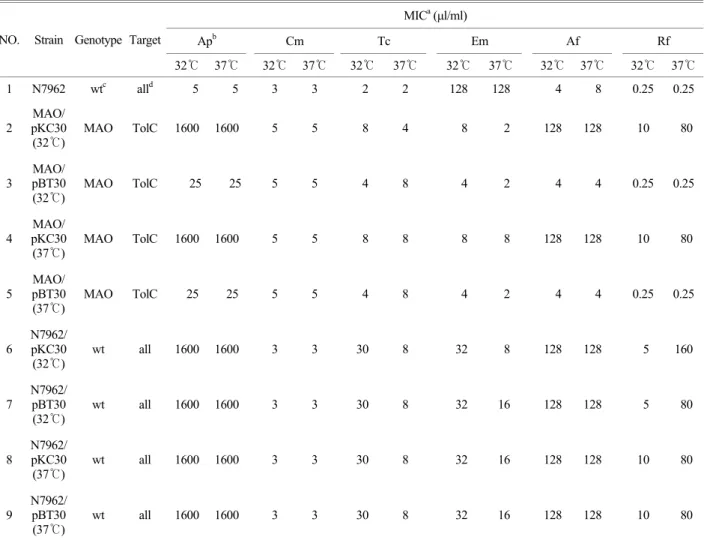
Table 4. Antibiotic resistance of E. coli K-12 containing recombinant marB plsmid (pBT30) grown at 32℃ and 37℃
MICa (µl/ml)
Apb Cm Tc Em Af Rf
NO. Strain Genotype Target
32℃ 37℃ 32℃ 37℃ 32℃ 37℃ 32℃ 37℃ 32℃ 37℃ 32℃ 37℃
1 N7962 wtc alld 5 5 3 3 2 2 128 128 4 8 0.25 0.25
2
MAO/
pKC30
(32℃) MAO TolC 1600 1600 5 5 8 4 8 2 128 128 10 80
3 MAO/
pBT30 (32℃)
MAO TolC 25 25 5 5 4 8 4 2 4 4 0.25 0.25
4 MAO/
pKC30 (37℃)
MAO TolC 1600 1600 5 5 8 8 8 8 128 128 10 80
5
MAO/
pBT30
(37℃) MAO TolC 25 25 5 5 4 8 4 2 4 4 0.25 0.25
6
N7962/
pKC30
(32℃) wt all 1600 1600 3 3 30 8 32 8 128 128 5 160
7 N7962/
pBT30 (32℃)
wt all 1600 1600 3 3 30 8 32 16 128 128 5 80
8 N7962/
pKC30 (37℃)
wt all 1600 1600 3 3 30 8 32 16 128 128 10 80
9
N7962/
pBT30
(37℃) wt all 1600 1600 3 3 30 8 32 16 128 128 10 80
a MIC (minimal inhibitory concentration), b ampicillin (Ap), chloramphenicol (Cm), tetracycline (Tc), erythromycin (Em), rifampin (Rf), acriflavin (Af), c wt: wild type, d all: Acr, Tol, OmpF
치가 변화가 있음을 나타내었다. MAT/pKC30과 야생형인 N- 7962는 target을 OmpF porin으로 하고 있음에도 MIC의 수 치에 변화는 없었음을 나타내었으며, 이 결과는 Table 2에서 와 같았다.
즉, Table 2, Table 3을 대조균과 비교해 보았을 때, 32℃, 37℃ 각각의 배양온도에서는 marB가 OmpF porin을 target으 로 할 때 반응하여 MIC를 감소시켰음을 나타내었다. Cm, Tc, Em, Af, Rf의 항생제균에 대해서는 MIC의 변화가 없고 다 만 Ap에 대해서만이 변화였음을 볼 수 있다. 따라서 marB 는 target을 OmpF porin을 하여 배양온도에는 영향을 받지 않고 Ap에서만 MIC를 감소시킨다는 것을 나타내었다.
Table 4는 pBT30을 균주 MAO에 형질전환한 것을 32℃, 37℃에서 각각 배양하여 항균제 함유 한천배지에서 32℃, 37℃에서 각각 배양시켜 pBT30을 항생제 내성 검사한 MIC 수치를 나타낸 표이다. 이 표에서도 볼 수 있듯이 온도에 의 해서는 변화가 없었지만, MAO에 형질전환한 pBT30이 TolC 를 target로 하여 항균제 Ap, Rf, Af에서는 MIC의 변화가 있 었음을 나타내었다. 즉, 배양온도에는 marB가 영향을 받지 않지만 항균제 Ap, Rf, Af에서는 TolC target으로 하여 영향 을 받는다는 것을 나타낸다.
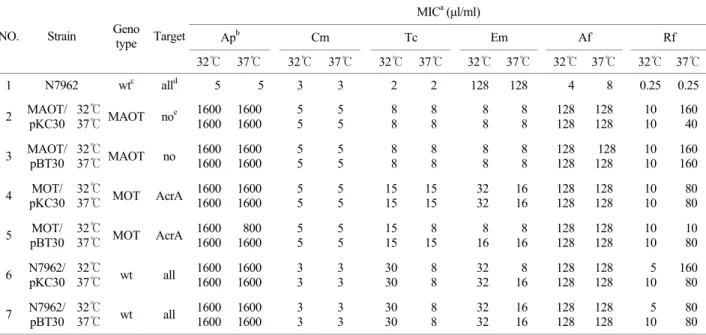
Table 4-1는 pBT30을 균주 MAOT, MOT에 형질전환한 것 을 32℃, 37℃에서 각각 배양하여 항균제 함유 한천배지에서 pBT30을 항생제 내성 검사한 MIC 수치를 나타낸 표이다.
이 표에서는 target이 없는 것과 AcrA를 target으로 하는 것 을 볼 수 있는데 marB가 온도와 6종류의 항생제에 모두 반
응이 없음을 나타낸다. 즉, marB는 AcrA를 target으로 하지 않는다는 것을 보여주었고, MarB는 실험한 6종류의 항생제 중에서 Ap, Rf, Af에서만 MIC 감소효과를 나타내었으며, 각 각 약 Ap 83% (1/6), Rf 80% (1/5), Af 83% (1/6)의 MIC 감소 를 나타내었다.
고 찰
대장균에서 marRAB operon은 다약제 내성에 관여하는 것 으로 알려져 있고, MarR은 marRAB operon에 repressor로 작 용하여, SAL, Cm, Tc 등의 항생제나 외부 환경 자극에 유도 될 수 있다고 한다. MarA의 기능으로 주로 다약제 내성 (multiple antibiotic resistance, Mar) 표현형을 나타내며, micF 의 antisense RNA를 통하여 OmpF porin의 발현을 감소시키 는 기능도 가지고 있고, acrRAB operon의 전사를 활성화시 키는 기능도 있는 것으로 알려져 있다. 한편, MarA는 대장 균 Mar mutant에서 OmpF porin의 발현을 감소시킨다는 보고 를 하였는데, 결과적으로 내성을 증가시킨다15). 그러나, 아 직까지 MarB의 기능을 밝혀져 있지 않지만, 최근의 보고에 따르면 MarA는 전사수준에서 acrRAB operon의 발현을 일부 증가시키고, OmpF의 발현을 감소시키는 기능을 통하여 균체 의 항생제에 대한 내성을 증가시키는 기능을 가지고 있는데 반하여, MarB는 단독으로 OmpF porin에 작용하여 그 기능 을 증가시키는 쪽, 즉 항생제 유입을 증가시키는 효과를 나 타내게 하므로 OmpF에 대한 MarA와 MarB의 이중조절작 Table 4-1. Antibiotic resistance of E. coli K-12 containing recombinant marB plsmid (pBT30) grown at 32℃ and 37℃ (continued)
MICa (µl/ml)
Apb Cm Tc Em Af Rf
NO. Strain Geno type Target
32℃ 37℃ 32℃ 37℃ 32℃ 37℃ 32℃ 37℃ 32℃ 37℃ 32℃ 37℃
1 N7962 wtc alld 5 5 3 3 2 2 128 128 4 8 0.25 0.25 2 MAOT/
pKC30 32℃
37℃ MAOT noe 1600 1600 1600
1600 5 5 5
5 8 8 8
8 8 8 8
8 128 128 128
128 10 10 160
40
3 MAOT/
pBT30 32℃
37℃ MAOT no 1600 1600
1600 1600
5 5
5 5
8 8
8 8
8 8
8 8
128 128
128 128
10 10
160 160
4 MOT/
pKC30 32℃
37℃ MOT AcrA 1600 1600 1600
1600 5 5 5
5 15 15 15
15 32 32 16
16 128 128 128
128 10 10 80
80
5 MOT/
pBT30 32℃
37℃ MOT AcrA 1600 1600
800 1600
5 5
5 5
15 15
8 15
8 16
8 16
128 128
128 128
10 10
10 80
6 N7962/
pKC30 32℃
37℃ wt all 1600 1600 1600
1600 3 3 3
3 30 30 8
8 32 32 8
16 128 128 128
128 5 10 160
80
7 N7962/
pBT30 32℃
37℃ wt all 1600 1600
1600 1600
3 3
3 3
30 30
8 8
32 32
16 16
128 128
128 128
5 10
80 80
a MIC (minimal inhibitory concentration), b ampicillin (Ap), chloramphenicol (Cm), tetracycline (Tc), erythromycin (Em), rifampin (Rf), acriflavin (Af), c wild type, d all: AcrA, TolC, OmpF as target, e no: no target
용이 있음을 보고하고 있다4).
분자적으로 볼 때 MarB 단백질은 72개의 아미노산으로 구 성되어 있고, marB 유전자는 219 bp의 길이를 가지고 있다.
MarB를 생산하는 플라스미드인 pRGM은 pTA108 (Ap내성) 에서 유래된 low-copy no의 plasmid이다. 따라서 대량 생산 으로 marB의 MIC의 감소나 증가, OmpF porin의 target에 작 용을 하는지의 여부를 알 수 있을 것이라고 생각한다. PCR (Polymerase Chain Reaction)은 DNA의 양쪽 가닥을 주형 (template)으로 하여 동시에 primer annealing site 사이의 특정 염기열을 증폭하는 방법으로, Cetus사의 Mullis에 의해서 개 발되었다.
대장균에서는 Ap를 포함하는 β-lactam 계열의 항생제를 AcrAB pump가 특히 잘 배출한다고 보고하였으므로41) Ap를 중심으로 여러 항균제들과 PCR을 하여 대량 생산되어진 marB의 항균제 배지에서 정확한 target과 MIC의 기능을 본 실험에서 알아보고자 했다.
marB를 PCR을 해서 얻은 pBT30은 pKC30과 subcloning 되어 항균제 배지에 대한 target과 MIC의 기능을 알아볼 수 있었다. 혹시나 cycle 25회와 annealing 과정에서 온도를 충 분히 높여주지 못하여 원하는 부위의 단일 밴드가닥을 얻기 가 어렵지 않을까 생각했으나 annealing 과정은 60℃가 적당 하였으며 cycle 횟수도 적당했음을 알았다. 또 template도 전 기영동으로 밴드의 purify했음을 확인했다. 전기영동의 size 확인과, 정확한 sequence band의 가시화를 확인했다.
Table 2와 Table 3에서 보면 Cm, Tc, Em의 항균제에 대해 서는 MIC 변화는 거의 없고 Ap, Rf, Af에 대해서 marB가 OmpF porin와 TolC를 target으로 하여 MIC를 감소시켰음을 알 수 있다. 또한 대조균인 pKC30의 target을 OmpF porin, TolC을 했음에도 MIC 변화는 없음을 알 수 있고, 야생형인 N7962도 MIC의 변화가 없음을 볼 수 있다.
Table 2, 3, 4, 5를 분석하여 보면 모든 항균제에 대한 MarB 는 32℃에서 배양하여 발현하거나, 37℃에서 발현해도 MIC 의 변화는 없음을 볼 수 있다. 따라서 온도에 대한 marB의 발현은 영향을 미치지 않음을 알 수 있다.
MarB의 peptide (GenBank accession No. D90797.1)는 다음 과 같이 signal sequence를 가지고 있으므로 (NH3-MⓀPⓁSS
ⒶⒾⒶⒶⒶⓁⒾⓁFSⒶQⒼⓋⒶⒺQTT...) marRAB operon 에서 생산된 후에 분비되어 세포 외막이나 periplasmic space 로 이동할 것으로 생각된다. 따라서 세포 외막에 있는 목표 물인 OmpF에 작용할 가능성이 높다고 생각했다.
그러나 결과는 OmpF porin을 target으로 한 marB는 항생 제 Ap에게서만 MIC를 감소하는 기능을 나타내었으며, TolC 를 표적부위로 할 때는 항생제 Ap, Rf, Af에서 MIC를 크게 감소시키는 기능을 나타내었다.
즉, 종합하여 보면 MAR 표현형은 주로 acrAB efflux pump
가 주기능을 담당한다고 하였고41), MarA는 acrAB efflux pump에 작용하여 균체 내로 들어온 항생제를 균체 밖으로 배출하여 MIC를 증가시키고35), MarB는 OmpF porin, TolC에 작용하여 MIC를 감소시킴을 알 수 있다.
그러나 pKC30과 pBT30은 42℃에서 유전자 발현이 나 타나므로, 42℃에 대한 실험이 추가 되어야 한다고 생각한다.
또, S. aureus 중에 penicillin에 감수성인 세균은 거의 없어 졌지만, Methicillin resistant S. aureus (MRSA)에 methicillin이 사용되기 시작한 1960년대에 이미 보고되었으므로, 항균제에 대한 추가된 실험에도 methicillin에도 Ap와 같은 결과를 얻 을 수 있는지에 대해서 추가 실험이 필요할 것 같다.
참 고 문 헌
1) 김봉훈, 정민호, 박병태 (1991): 임상가검물에서 분리한 Gram음성 세균의 항균제 내성. 동아의대 학술지 3: 77 -89.
2) 박병태 (1998): Antibiotic Resistance of Multiple-Antibiotic- Resistance (Mar) mutants of Escherichia coli K-12. 대한미 생물학회지 33: 195-203.
3) 박병태, 편세현, 이창미: 대장균 marB 유전자의 기능 분석 (in press).
4) 박병태, 채유호, 이창미: 대장균 K-12의 MarB와 MarA 단백질의 OmpF Porin에 대한 이중조절 (in press).
5) 서성일, 박종욱, 전도기 (1987): 임상재료에서 분리한 각종 세균의 항균제 내성. 대한미생물학회지 22: 283-294.
6) 설성용, 장희경, 김정민, 신행섭, 이제철, 이유철, 조동 택, 김경숙 (1997): 원내감염 대장균의 역학조사를 위한 분자유전적 분석. 대한미생물학회지 32: 1- 14.
7) 송재훈 (1998): 항생제 내성의 발생 기전 (Mechanisms of antimicrobial resistance). 미생물과 산업 24(1).
8) 정윤섭, 이경원 (1997): 병원균의 항균제 내성과 기전, 제 1판, 서흥출판사, 서울 p31-39.
9) Ariza RR, Cohen SP, Bachhawat N, Levy SB and Demple B (1994): Repressor mutations in the marRAB operon that acti- vate oxidative stress genes and multiple antibiotic resistance in Escherichia coli. J Bacteriol, 176: 143-148.
10) Asako H, Nakajima H, Kobayashi K, Kobayashi M and Aono R (1997): Organic solvent tolerance and antibiotic resistance increased by overexpression of marA in Escherichia coli.
Appl Environ Microbiol, 63: 1428-1433.
11) Brooks GF, Butel JS and Morse SA (1998): Jawetz, Melnick,
& Adelberg's edical Microbiology (21th ed). Appleton &
Lange pp 145-154.
12) Cohen SP, Hachler H and Levy SB (1993): Genetic and func-
tional analysis of the multiple antibiotic resistance (mar) locus in Escherichia coli. J Bacteriol, 175: 1484-1492.
13) Cohen SP, Levy SB, Foulds J and Rosner JL (1993): Salicy- late induction of antibiotic resistance in Escherichia coli: acti- vation of the mar operon and a mar-independent pathway. J Bacteriol, 175: 7856-7862.
14) Cohen SP, McMurry LM, Hooper DC, Wolfson JS and Levy SB (1989): Cross-resistance to fluoroquinolones in multiple- antibiotic-resistant (Mar) Escherichia coli selected by tetracy- cline or chloramphenicol: decreased drug accumulation asso- ciated with membrane changes in addition to OmpF reduction.
Antimicrob Agents Chemother, 33: 1318-1325.
15) Cohen SP, McMurry LM and Levy SB (1988): marA locus causes decreased expression of OmpF porin in multiple- antibiotic-resistant (Mar) mutants of Escherichia coli. J Bac- teriol, 170: 5416-5422.
16) Cohen SP, Yan W and Levy SB (1993): A multidrug resistance regulatory chromosomal locus is widespread among enteric bacteria. J Infect Dis, 168: 484-488.
17) Cunningham RP, Saporito SM, Spitzer SG and Weiss B (1986): Enconuclease IV (nfo) Mutant of Escherichia coli. J Bacteriol, 168: 1120-1127.
18) Darnell J, Lodish H and Baltimore D (1986): Molecular Cell Biology. Scientific Americans Books, Inc. p946.
19) Davila AM, Herrera HM, Schlebinger T, Souza SS and Traub- Cseko YM (2003): Using PCR for unraveling the cryptic epi- zootiology of livestock trypanosomosis in the Pantanal, Brazil.
Vet Parasito, 117(1-2): 1-13.
20) Davis LG, Dibner MD and Battey JF (1986): Basic methods in Molecular Biology. Elsevier, New York. p90-92.
21) Fralick JA (1996): Evidence that TolC is required for func- tioning of the Mar/AcrAB efflux pump of Escherichia coli. J Bacteriol, 178: 5803-5805.
22) George AM and Levy SB (1983): Gene in the Major Const- ruction Gap of the Escherichia coli K-12 Linkage Map Required for the Expression of Chromosomal Resistance to Tetracycline and Other Antibiotics. J Bacteriol, 155: 541-548.
23) Hachler H, Cohen SP and Levy SB (1991): marA, a regulated locus which controls expression of chromosomal multiple antibiotic resistance in Escherichia coli. J Bacteriol, 173:
5532-5538.
24) Harder KJ, Nikaido H and Matsuhashi M (1981): Mutants of Escherichia coli that are resistant to certain β-lactam com- pounds lack ompF porin. Antimicrob Agents Chemother, 20:
549-552.
25) Jair KW, Martin RG, Rosner JL, Fujita N, Ishihama A and Wolf RE Jr (1995): Purification and regulatory properties of MarA protein, a transcriptional activator of Escherichia coli multiple antibiotic and superoxide resistance promoters. J Bacteriol, 177: 7100-7104.
26) Jair KW, Yu X, Skarstad K, Thony B, Fujita N, Ishihama A and Wolf RE Jr (1996): Transcriptional activation of promo- ters of the superoxide and multiple antibiotic resistance regu- lons by Rob, a binding protein of the Escherichia coli origin of chromosomal replication. J Bacteriol, 178: 2507-2513.
27) Jeung JU, Cho SK, Shim KS, Ok SH, Lim DS and Shin JS (2002): Construction of two pGEM-7Zf (+) phagemid T-tail vectors using AhdI-restriction endonuclease sites for direct cloning of PCR products. Plasmid, 48(2): 160-163.
28) Jung M, Muche JM, Lukowsky A, Jung K and Loening SA (2001): Dimethyl sulfoxide as additive in ready-to-use reaction mixtures for real-time polymerase chain reaction analysis with SYBR Green I dye. Anal Biochem, 289(2): 292-295.
29) Lewis K, Hooper DC and Ouellette M (1997): Multidrug Re- sistance Pumps Provide Broad Defense - MDR pumps expel a broad array of otherwise toxic molecules, including many antibiotics. ASM News, 63: 605-610.
30) Li XZ, Ma D, Livermore DM and Nikaido H (1994): Role of efflux pump (s) in intrinsic resistance of Pseudomonas aeru- ginosa: resistance to tetracycline, chloramphenicol, and nor- floxacin. Antimicrob Agents Chemother, 38: 1732- 1741.
31) Mac K, Wichmann-Schauer H, Peters J and Ellerbroek L (2003): Species identification and detection of vancomycin resistance genes in enterococci of animal origin by multiplex PCR. Int J Food Microbiol, 88(2-3): 305-309.
32) Ma D, Cook DN, Alberti M, Pon NG, Nikaido H and Hearst JE (1995): Genes acrA and acrB encode a stress-induced efflux system of Escherichia coli. Mol Microbiol, 16: 45-55.
33) Maneewannakul K and Levy SB (1996): Identification for mar mutants among quinolone-resistant clinical isolates of Esche- richia coli. Antimicrob Agents Chemother, 40: 1695-1698.
34) Martin RG, Jair KW, Wolf RE Jr and Rosner JL (1996): Auto- activation of the marRAB multiple antibiotic resistance operon by the MarA transcriptional activator in Escherichia coli. J Bacteriol, 178: 2216-2223.
35) Martin RG, Nyantakyi PS and Rosner JL (1995): Regulation of the multiple antibiotic resistance (mar) regulon by marORAB sequences in Escherichia coli. J Bacteriol, 177: 4176-4178.
36) Martin RG and Rosner JL (1995): Binding of purified multi- ple antibiotic-resistance repressor protein (MarR) to mar ope-
rator sequences. Proc Natl Acad Sci USA, 92: 5456-5460.
37) Martin RG, Yen-Sen HO and Allan SN: The use of pKC30 and Derivatives for controlled expression of genes. Methods in Enzymology, Vol. 101.
38) McMurry LM, George AM and Levy SB (1994): Active efflux of chloramphenicol in susceptible Escherichia coli strains and in multiple-antibiotic-resistant (Mar) mutants. Antimicrob Agents Chemother, 38: 542-546.
39) Miller PF, Gambino LF, Sulavik MC and Gracheck SJ (1994):
Genetic relationship between soxRS and mar loci in promo- ting multiple antibiotic resistance in Escherichia coli. Anti- microb Agents Chemother, 38: 1773-1779.
40) National Committee for Clinical Laboratory Standards: Me- thods for dilution antimicrobial susceptibility tests for bacteria that grow aerobically, National Committee for Clinical Labo- ratory Standards, Approved standard M7-A. Villanova, Pa, U.S.A.
41) Okusu H, Ma D and Nikaido H (1996): AcrAB efflux pump plays a major role in the antibiotic resistance phenotype of Escherichia coli multiple-antibiotic-resistance (Mar) mutants.
J Bacteriol, 178: 306-308.
42) Park BT (1999): Putative Negative Regulation of Novel MarB along with MarA upon the function of AcrAB/TolC Efflux Pump of Escherichia coli K-12. Kor J Biomed Lab Sci, 5:
27-40.
43) Park BT (1999): Evidences that Suggest the Spread of Multi- ple-Antibiotic-Resistance (mar) Operon of Escherichia coli Mutants among Gram- Negative Bacilli. Kor J Biomed Lab Sci 5: 17-26.
44) Plakidou S, Moffat KG, Salmond GPC and Mackinnon G (1984): Convenient Transduction of recA with Bacteriophage T4GT7. J Bacteriol, 159: 1072-1073.
45) Poole K, Krebes K, McNally C and Neshat S (1993): Multiple antibiotic resistance in Pseudomonas aeruginosa L evidence for involvement of an efflux operon. J Bacteriol, 175: 7363 -7372.
46) Prilipov A, Phale PS, Koebnik R, Widmer C and Rosenbusch JP (1998): Identification and Chracterization of Two Quiescent Porin Genes, nmpC and ompN, in Escherichia coli BE. J Bacteriol, 180: 3388-3392.
47) Pugsley AP and Schnaitman CA (1978): Outer membrane
proteins of Escherichia coli. VII. Evidence that bacteriophage- directed protein 2 functions as a porin. J Bacteriol, 133: 1181 -1189.
48) Quellette M, Lewis K and Hooper DC (1997): Eukaryotic Microbial Multidrug Resistance Pumps. ASM News, 63: 664 -667.
49) Rosner JL and Slonczewski JL (1994): Dual regulation of inaA by the multiple antibiotic resistance (mar) and superoxide (soxRS) stress response systems of Escherichia coli. J Bac- teriol, 176: 6262-6269.
50) Saito S, Matoba R and Kato K (2003): Adapter-tagged com- petitive PCR (ATAC-PCR) - a high-throughput quantitative PCR method for microarray validation. Methods, 31(4): 326 -331.
51) Seoane AS and Levy SB (1995): Identification of new genes regulated by the marRAB operon in Escherichia coli. J Bac- teriol, 177: 530-535.
52) Seoane AS and Levy SB (1995): Characterization of MarR, the repressor of the multiple antibiotic resistance (mar) operon in Escherichia coli. J Bacteriol, 177: 3414-3419.
53) Steers E, Plotz EL and Graves BS (1959): Inocular replica- tiong apparatus for routine testing of bacterial susceptibility to antibiotics. Antibiot Chemother, 9: 307-311.
54) Sulavik MC, Dazer M and Miller PF (1997): The Salmonella typhimurium mar locus: molecular and genetic analyses and assessment of its role in virulence. J Bacteriol, 179: 1857 -1866.
55) White DG, Goldman JD, Demple B and Levy SB (1997):
Role of the acrAB locus in organic solvent tolerance mediated by expression of marA, soxS, or robA in Escherichia coli. J Bacteriol, 179: 6122-6126.
56) Wilson GG, Young KKY and Edlin GJ (1979): High-Frequency generalised transduction by bacteriophage T4. Nature, 280:
80-82.
57) Yoshimura F and Nikaido H (1985): Diffusion of β-lactam antibiotic through the porin channels of Escherichia coil K-12.
Antimicrob Agents Chemother, 27: 84-92.
58) Zhang E and Thomas Ferenci (1999): OmpF changes and the complexity of Escherichia coli adaptation to prolonged lactose limitation. FEMS Microbiology Letters, 176: 395-401.