Effects of high carbon dioxide and ethylene treatment on postharvest ripening regulation of red kiwifruit (Actinidia melanandra Franch)
during cold storage
Yong-Joon Yang
1*, Byung-Seon Lim
21Department of Plant and Food Science, Sangmyung University
2National Institute of Horticultural & Herbal Science, RDA
고농도 이산화탄소와 에틸렌처리가 레드키위의 수확 후 저온저장 중 숙성조절에 미치는 효과
양용준1*, 임병선2
1상명대학교 식물식품공학과
2농촌진흥청 국립원예특작과학원 저장유통과
Abtract The effect of high carbon dioxide and ethylene treatment on postharvest ripening regulation of red kiwifruit (Actinidia melanandra) was investigated during cold storage. Physio-chemical properties such as weight loss, firmness, SSC, acidity, and market quality were analysed in red kiwifruit held at 10oC compared to the fruit treated with carbon dioxide and ethylene during 75 days of storage. No significant weight loss was detected in red kiwifruit treated with carbon dioxide until 75 days of storage while the most rapid loss was found in fruit treated with ethylene. In ethylene-treated fruit, the firmness was dramatically reduced from 4.2kg on the first day to 1.2 kg after 27 days of storage at 10℃. However, the firmness of the carbon dioxide-treated fruit was 1.8kg after 54 days of storage. The highest level of SSC(%) was investigated within the 27 storage days at 10℃ for fresh red kiwifruit treated with exogenous ethylene,whereas the carbon dioxide-treated fruit exhibited a greatly increasedSSC after 64 days. The carbon dioxide-treated red kiwifruit maintained statistically(p<.01) higher levels of acidity compared to the control and the exogenous ethylene-treated ones during 41 days of storage at 10℃. The SSC/Acid ratio of fruit treated with carbon dioxide was significantly lower (p<.01) maintained than the other two treatments (ethylene-treated and control fruit)throughout the 75-dayexperiment. Based on the quality characteristics of postharvest red kiwifruit, it could be concluded that the carbon dioxide treatment significantly delayed the ripening process and maintained the market quality of harvested red kiwifruit, which can be a potential application for commercial use in the kiwi industry.
요 약 본 연구는 레드키위 과실의 수확 후 숙성반응에 미치는 이산화탄소와 외부 에틸렌처리 효과를 구명하기 위하여 수행되었다. 저장온도 10oC에 75일 저장 기간 중 레드키위의 숙성과정에 영향을 미치는 이산화탄소와 에틸렌 처리 효과를 구명하기 위하여 과실의 생체 중, 경도, 가용성 당 함량, 유기산 및 시장성 품질 등 물리 화학적 특성을 분석하였다. 레드키위 의 생체중은 이산화탄소 처리로 저장 75일후 까지 무 처리와 에틸렌 처리에 비하여 가장 적게 감소된 반면 에틸렌 처리된 과실은 가장 빠르게 감소되었다. 에틸렌 처리과실의 경도는 10℃ 저온저장 27일 후 4.2kg에서 1.2kg으로 감소된 반면, 이산 화탄소 처리된 레드키위 과실은 저장 54일 후까지 1.8kg을 유지하였다. 가용성 당 함량(%)은 에틸렌처리로 10℃ 저장 27일 후 가장 높은 값을 보인 반면 이산화탄소 처리된 과실에서는 64일 저장 후 가장 높게 나타났다. 레드 키위 과실의 유기산함 량은 이산화탄소 처리에서 대조 구와 에틸렌 처리된 과실에 비하여 10℃에 41일 저장 동안 통계적으로 유의성 있는 높은 값을 유지하였다. 당산 비는 75일 저장 기간 동안 대조 구와 에틸렌 처리된 과일에 비하여 이산화탄소 처리된 키위 과실이 가장 낮은 값을 보였다. 본 연구에서 이산화탄소 처리가 수확 후 레드 키위 과실의 숙성지연과 시장성 품질유지에 매우 효과 적으로 나타나 향후 키위 산업에 상업적인 목적으로 이용 가능할 것으로 밝혀졌다.
Keywords : Carbon dioxide, Ethylene, Firmness, Red kiwifruit, Ripening
This study was carried out with the support of “Cooperative Research Program for Agricultural Science & Technology Development (Project No. PJ011699)”, RDA Republic of Korea
*Corresponding Author : Yong-Joon Yang(Sangmyung University) Tel: +82-10-4756-5290 email: [email protected]
Received March 21, 2017 Accepted June 9, 2017
Revised (1st April 19, 2017, 2nd May 15, 2017) Published June 30, 2017
1. Introduction
The species Actinidia melanandra Franch(red kiwifruit) is an attractive dioecious climbing plant which produces clusters of red-dish green large berries that are sweeter and more intensely flavoured than the fuzzy kiwi. Berries of A. melanandra have a smooth texture and therefore can be eaten as a whole[1].
The red kiwifruit are a commercially important early-season cultivar in Korea. The fruit have a deep red color around the core, and the contrasting red and yellow-green cross-sectional appearance is particularly striking and decorative. The fruit has a sweet taste when ripe, with a mean soluble solid concentration of
> 18% and total acid content of approximately 1.5%.
These desirable characteristics have led to its popularity, but a premature decrease in fruit firmness during storage is a major problem in this variety[2].
Kiwifruit, a typical climacteric fruit, is characterized by a peak in ethylene production that coordinates ripening-associated processes[1]. Ethylene, a simple gaseous plant hormone is considered as a trigger of the ripening process in climacteric fruits. Ethylene has long been regarded as the main regulator of ripening in climacteric fruit. Softening is a major physiological process of fruit ripening in kiwis after harvest that infl uences quality attributes and limits postharvest storage.
Application of exogenous ethylene to fruit caused faster softening while high carbon dioxide treatments maintained fruit firmness and delayed ripening process[3].
Ethylene-induced fruit ripening was well known in some reports that investigated to evaluate the sensitivity of ‘Rainbow Red’ to exogenous ethylene[1, 2]. Since 1980, the exogenous ethylene becomes the most effective method to induce the postharvest ripening by a sudden burst of climacteric respiration of kiwifruit. Ripening responses to exogenous ethylene treatments are useful in suggesting possible storage temperatures effects on postharvest ripening[3].
Low-temperature storage is considered to inhibit
most cell metabolic activities, thereby delaying fruit ripening and plant senescence. In addition, low temperature is known to influence the expression patterns of ethylene synthesis, ethylene receptors, and ripening-related genes in several fruits. The optimum storage conditions for kiwis depend on the variety, harvesting moment, region, location of orchard and cultivation conditions. Moreover, postharvest life and quality of kiwifruit can also be extended by some other techniques in combination with cool storage[2].
In general, kiwifruit should always be kept at low temperatures below 7.5oC and enclosed with storage liners, except if they are going to be consumed within 3 days[4].
Premature softening during low-temperature storage is a major issue in the red kiwifruit. During cold storage and ripening, kiwifruit undergo biochemical changes including conversion of starch to sugar, changes in cell wall constituents and production of characteristic volatiles which lead to the taste, texture and aroma desired by consumers[5].
Short-term anoxic treatment was reported to inhibit ethylene production, reduce rot development, prevent physiologic disorders, delay ripening and extend shelf-life of harvested fruits and vegetables[6].
The immediate effects of high carbon dioxide treatments have generally been to inhibit respiration and ethylene production, reduce protein synthesis, and increase protein breakdown. Both ethylene production and cell wall softening are directly inhibited in papaya and tomatoes by high carbon dioxide treatments[7].
The objective of this study was to investigate the effects of high carbon dioxide and ethylene treatment on ripening regulation of postharvest red kiwifruit during cold storage.
2. Materials and Methods
2.1 Preparation of materialsRed kiwifruit (Actinidia chinensis Planch.) cultivar
were harvested on October 2016 at the maturity stage (SSC=14%) from an orchard of the commercial vineyards in Jeju/S-Korea. Red kiwifruit without visible defects or decay were used for all experiments before being transported into the laboratory. Fruits were then subsequently transferred to the postharvest laboratory in Sangmyung University/S-Korea and sorted based on size and the absence of physical injuries or infections. A total of 630 fruit in the size range of 90-120g with no visible defects were selected and divided into three chambers, each with 210 fruit.
2.2 Storage treatment
The first chamber was treated with high carbon dioxide gas for keeping freshness, the second one was treated with ethylene generator for inducing fruit ripening, and the third one had no treatment as control.
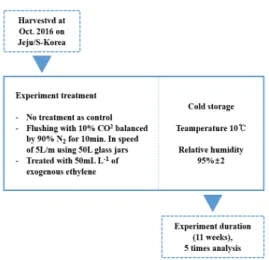
Kiwifruit were flushed with 10% carbon dioxide balanced by 90% N2 supplied by Cheonan Gas Factory, S-Korea for 30 min. at 0°C in speed of 5L/min. in 50 L glass jars. The high level of CO2 is commonly used in storage of many fruit and vegetables and is also recommended for prolonging storage life of kiwifruit[8], and therefore we have used a relative high level of CO2 in our experiment(Fig. 1).
Fig. 1. Experiment methods for controlling ripening regulation of postharvest red kiwifruit during cold storage.
To evaluate the sensitivity of red kiwifruit to exogenous ethylene, fruit were treated with ethylene.
Kiwifruit were treated with 50 mL L-1 of ethylene, respectively, in a ripening chamber at 20 ○C for 24 h.
The new developed ethylene generator for commercial which are using charcoal for a commercial purpose.
The new developed ethylene generator maintained the ethylene concentration in the 5kg box 40 ~ 400 μL∙
L-1, also could make the red kiwifruit[9].
After treatment, all of the fruit were allowed to store in chambers under the same temperature and humidity conditions as the control groups. Red kiwifruit were kept in 50 L glass jars at 10oC cold storage room(capacity 5 ton) and the relative humidity was maintained at the range of 95%±2 for 11 weeks.
2.3 Physio-chemical analysis
After every 2 weeks, 30 fruits per treatment were taken from cool storage for fruit quality assessment(Fig 1). All treatments including control were analysed for the chemical analysis and for evaluating the overall fruit quality to know how long fruits could be kept marketable.
Fruit firmness was determined by measuring compression using a hand-held Effegi penetrometer with a 7.9 mm probe after removal of skin to a vertical depth of 1 mm on two sides of the fruit. The firmness considered as an average peak force of 10 fruits and expressed as kg/7.9 mm2. Moreover, 10 fruits per replicate were weighed at the beginning of storage and throughout storage period to calculate weigh loss percentage.
Titratable acidity was determined using 5 ml of fruit puree from five fruits mixed with 25 ml of distilled water, with two drops of phenolphthalein (1%) as indicator, titrated with 0.1 N NaOH to an endpoint pink (pH 8.2). The results were expressed as percent anhydrous citric acid since it is the dominant acid in kiwifruit.
Soluble solids contents(SSC)(%, Brix) were measured by a digital refractometer, model R1-Atago,
Japan, in juice from the equatorial zone of the fruit.
Consumer quality for red kiwifruit considering the characteristics of postharvest climacteric ripening were used for the sensory consumer test. In a separate room, five panelists were asked to observe and then rate the overall appearance of the samples using a 5-point hedonic scale (1 = dislike extremely, 3 = like extremely, and 5 = definitely would not consume). The panelists observed and rated the overall appearance expressing market quality of cut and uncut kiwifruit as well as intside color of the samples.
2.4 Statistical analysis
The ANOVA of mixed design using SPSS(Version 18.0) for Windows(SPSS Inc.) was performed to investigate the effect of several treatments(control, exogenous ethylene, & carbon dioxide) and storage duration on chemical composition such as fresh weight, firmness, SSC, acidity and SSC/acidity ratio in red kiwifruit. Measurements of chemical composition of fruit were 6 times (0, 27, 41, 54, 64, and 75th day) investigated until the end of this experiment after storage for 75 days and repeated at least several times on specified day of storage. The results of ANOVA of mixed design were difference of 3 treatments, 6 times storage duration, and interaction of treatments and storage duration. The statistical significant level were .05 on ANOVA of mixed design.
3. Result and Discussion
3.1 Effect of postharvest treatments on quality characteristics
Kiwifruit, a climacteric fruit, softens and decays rapidly once harvested. In climacteric fruit, an increase in ethylene production is observed before the initiation of ripening and increasing evidence shows that the control of climacteric fruit ripening relies largely on the modulation of ethylene production and/or action[9].
- treatment : significant level of 3 treatment.
- time : significant level of 6 times.
- interaction : significant level of interaction between treatment and times.
* p<.05, ** p<.01.
Fig. 2. Fresh weight loss(%) of red kiwifruit affected by high carbon dioxide and ethylene treatment during cold storage.
Fruit ripening is an unavoidable and irreversible physiological process during which the overall fruit quality radically changes that results in numerous physiological, biochemical, and structural changes in colour, flavour, aroma, texture, and nutritional value of the flesh[10].
The loss of weight in fresh fruit represents the evident defect when purchase for consumer. The loss of water caused by transpiration, respiration and vapour pressure difference between fresh produce and surrounding air. Red kiwifruit treated with carbon dioxide prevented weight loss in comparison with control while ripened fruit by ethylene 50ppm showed the severe loss(Fig. 2).
As a results of ANOVA of mixed design on the loss of weight, there were significant difference among 3 treatments(p<.01) and 6 times duration((p<.01), and significant interaction(p<.05) between treatments and duration also(Fig. 2). The results showed the statistically difference among high level of carbon dioxide concentration and exogenous ethylene treatment on fresh weight. The more loss of fresh weight was found in exogenous ethylene treatment than fruit in control during cold storage of 11 weeks n red kiwifruit. Water loss(shriveling) had been identified as
Fig. 4. SSC(%) of red kiwifruit affected by high carbon dioxide and ethylene treatment during cold storage.
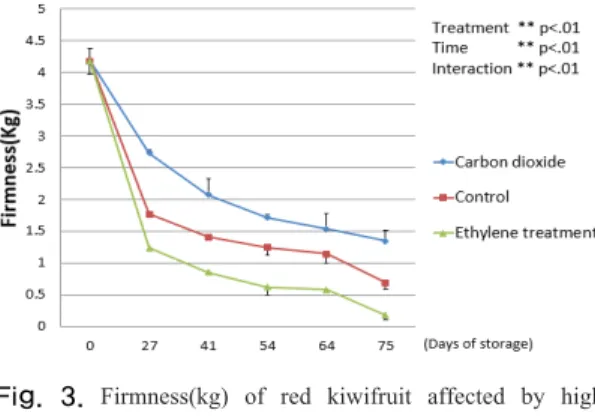
Fig. 3. Firmness(kg) of red kiwifruit affected by high carbon dioxide and ethylene treatment during cold storage.
the most significant cause of commercial loss in kiwifruit[4]. A significant retard in weight loss was not detected in red kiwifruit treated with carbon dioxide until the end of the experimental period.
Fruit ripening is a complex and genetically programmed process. Maintaining of firmness after harvest is the most important factor that determines storage-life and final kiwifruit quality[2]. Flesh firmness and SSC are probably the best predictors of kiwifruit maturity. Softening as expressed by firmness declination is a major symptom of ripening in kiwifruit after harvest. Fruit firmness decreased gradually with storage time in kiwifruit exposed to exogenous ethylene. Fast firmness loss was found in the red kiwifruit treated with exogenous ethylene compared to the carbon dioxide and even to the control(p<.01)(Fig 3). This result led to the conclusion that exogenous ethylene softens fruit soft quickly as the results of the ANOVA.
As shown in Fig. 3, the firmness in the control fruit dropped sharply from of 4.2kg on the first day to 1.8kg on the 27th day. In ethylene treated fruit, the firmness was dramatically declined from 4.2kg on the first day to 1.2kg on the 27th day. But the firmness of the carbon dioxide treated fruit was showed the level of 1.8kg after 54 days of storage. Postharvest treatment using carbon dioxide could significantly(p<.01) delay softening, reduce weight loss and retain firmness of fresh hardy kiwifruit during storage, thus effectively
extending shelf-life[8].
The SSC accumulation rates decreased over time probably because the differences between initial and ripe SSC decreased with each passing week due to natural starch conversion over time. The rate of kiwifruit softening is affected by time, temperature, exogenous ethylene levels and maturity of the fruit[9, 11]. A harvest index of 6.2% soluble solids content(SSC) has long been used for New Zealand-grown 'Hayward' kiwifruit destined for storage and export, based on the soluble solids accumulation rate at this point having increased because of starch breakdown in response to low night temperatures[5].
As shown in Fig. 4, the climacteric peak was statistically(p<.01) shown at 27 days after storage in fruit treated with exogenous ethylene and at 41 days after storage in control fruit. But carbon dioxide treated fruit showed the climacteric peak at 64 days after storage, as the results of the ANOVA. The accumulation of soluble solids were substantially faster in the control fruit at the beginning, whereas the carbon dioxide treated fruit presented a great increase in SSC after 64 days and exceeded the control fruit at the end of the experiment. The obvious difference between postharvest treatment(carbon dioxide, control and ethylene) and storage duration was statistically (p<.01) found during cold storage of red kiwifruit.
The best eating quality was investigated within the 27 storage days at 10℃ for fresh red kiwifruit after
Fig. 5. Acidity(%) of red kiwifruit affected by high carbon dioxide and ethylene treatment during cold storage
Fig. 6. SSC/Acidity ratio of red kiwifruit affected by high carbon dioxide and ethylene treatment during cold storage.
harvest treated with exogenous ethylene gas, within 41 days for fruits with no treatment(control), and within 64 days for fruits treated with carbon dioxide(10%), when the aspect of the content of SSC(%) should be firstly considered(Fig. 4).
The availability of exogenous ethylene has resulted in an explosion of research on its effects on fruit, both as a tool to further investigate the role of ethylene in ripening and senescence, and as a commercial technology to improve the maintenance of product quality[11].
The organic acid contents(%) declined sharply at the 10℃ ambient temperature with increasing storage duration, as shown in Fig. 5. The trend of acidity(%) drop in all treatments including control was similar until the end of the experiment, but the carbon dioxide treated fruit maintained statistically(p<.01) higher levels of acidity compared to the control and the exogenous ethylene treated ones during the whole period of storage at 10℃ in red kiwifruit.
These results show that fruits under 10℃-ethylene ripened more rapidly than those under 10℃ carbon dioxide treatment. Similar results have also been reported by Fattahi(2010) on salicylic acid dipping kiwifruit[12]. Therefore, carbon dioxide treatment had an obvious effect on delaying of acid loss while exogenous ethylene showed fast inducing those losses in the red kiwifruit.
The SSC/Acid ratio can be translated the meaning of
best quality for consumer. It is usually to recommend to eat ripe fruit at the level of optimal value of the ratio after harvest of climacteric fruit[4].
As a results of ANOVA of mixed design on SSC/Acidity ratio, there were significant difference among 3 treatments(p<.01) and 6 times duration ((p<.01), and significant interaction between treatments and duration. As shown in Fig. 6, the SSC/Acid ratio started to increase after the first day of storage at 10℃
in all red kiwifruit until the end of this experiment after 75 days. This pattern of red kiwifruit was obviously different due to the cultivar characteristics the previous results of Yang and Lim(2017) with
“Gold” kiwifruit which showed the increase until 5 weeks after storage and then slowly declined[4]. The consistent increase of the SSC/Acid ratio may depend on both the sharp loss of acids and the gradual increase of SSC(%) after harvest in red kiwifruit.
The SSC/Acid ratio has been reached to the level of 17 after storage of 41 days in control and exogenous ethylene-treated red kiwifruit. The ANOVA of mixed design showed no statistically difference of SSC/Acid ratio between ethylene- treated and control fruits during 41 days weeks storage of red kiwifruit.
On the contrary, the SSC/Acid ratio of fruit treated with carbon dioxide was lower significantly(p<.01) maintained than other two comparing treatments throughout th the experiment of 75 days.
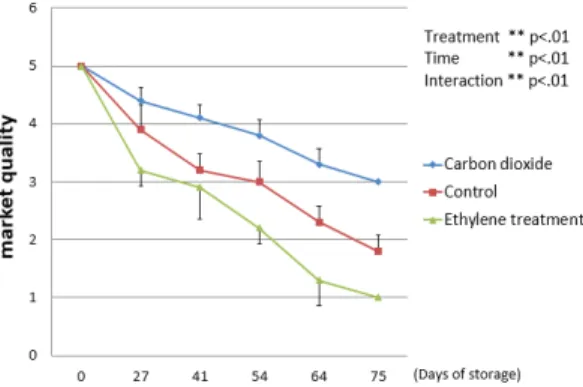
Fig. 7. Market quality of red kiwifruit affected by high carbon dioxide and ethylene treatment during cold storage.
Fig. 8. Internal appearance of red kiwifruit affected by high carbon dioxide and ethylene treatment during cold storage.
For market quality evaluation of red kiwifruit should be considered the characteristics of postharvest climacteric ripening which used for the sensory panel with a 5-point hedonic scale; 1=dislike extremely, 3=like extremely, and 5=definitely would not consume.
The point 2.5 used in our experiment was the minimum level of eating quality in red kiwifruit. Fruit eating quality has been correlated with various physical attributes like fruit skin color, flesh color, firmness, fruit shape and size[5].
As shown in Fig. 7, this result led to the conclusion that exogenous ethylene softens fruit more soft quickly after 50 days storage at 10℃ than the control fruit reached at least 10 days later. The control fruit stored at 10℃ softened gradually, reaching an 'eating-ripe' stage of firmness of < 1.5kg by 41 days while carbon dioxide effectively delayed market quality loss of fruit compared to fruit treated with exogenous ethylene. As the results of the ANOVA,. the carbon dioxide could significantly(p<.01) delay ripening and retain eating quality of fresh hardy red kiwifruit during storage, thus effectively extending shelf-life.
3.2 Effect of postharvest treatments on market quality
Fruit visual quality for kiwifruit has been correlated with various physical attributes like fruit flesh color, firmness, fruit shape and size. Most studies on changes
in green color due to time and temperature treatments only mention a decrease of green color for yellow kiwifruit[8]. Maintaining the natural color in stored fruits has been a major challenge to enhance red kiwifruit quality. As shown in Fig 8, the best red kiwi flesh color was maintained with the increasing storage duration at 10℃. From these results, the postharvest treatments for accelerating or delaying the ripening could be should be properly selected according to the anticipated consumption schedule before shipment in red kiwifruit.
Commercial production of red kiwifruit(Actinidia melanandra) has been unsuccessful because of its short shelf life. Our investigation exhibited the beneficial effect in delaying red kiwifruit ripening by the carbon dioxide treatment. The high carbon dioxide concentration significantly delayed ripening process of harvested red kiwifruit, without detrimentally affecting normal fruit ripening, as well as the market quality, which can be a potential application for commercial use in the kiwi industry.
4. Conclusion
Physio-chemical properities were analysed to investigate the effect of high carbon dioxide and ethylene treatment on postharvest ripening regulation in red kiwifruit held in 10oC temperatures compared to the fruit treated with carbon dioxide and ethylene
during 75 days of storage. Our result led to the conclusion that exogenous ethylene softens fruit more soft quickly after 50 days storage at 10℃ than the control fruit reached at least 10 days later. The carbon dioxide significantly(p<.01) could delay ripening and retain eating quality of fresh hardy red kiwifruit during storage, thus effectively extending shelf-life throughout the experiment of 75 days.
References
[1] M. Kaya, L. C. Esoniene, R. Daubaras, D. Leskauskaite, D. Zabulione, “Chitosan coating of red kiwifruit(Actinidia melanandra) for extending of the shelf life”, International Journal of Biological Macromolecules, vol. 85, pp. 355-360, 2016.
DOI: https://doi.org/10.1016/j.ijbiomac.2016.01.012 [2] S. Murakami, Y. Ikoma, M. Yano, “Low Temperature
Increases Ethylene Sensitivity in Actinidia chinensis 'Rainbow Red' Kiwifruit”, J. Japan. Soc. Hort. Sci. vol.
83, no. 4, 322-326, 2014.
DOI: https://doi.org/10.2503/jjshs1.CH-104
[3] H. Hayama, T. Shimada, H. Fujii, A. Ito, Y. Kashimura,
“Ethylene-regulation of fruit softening and softening- related genes in peach”, J. Exp. Bot. vol. 57, 4071- 4077. 2006.
DOI: https://doi.org/10.1093/jxb/erl178
[4] Y. J. Yang, B. S. Lim, “Temperature and length of cold storage affect the Quality Maintenance of fresh kiwifruit (Actinidia chinensis Planch)”, Journal of the Korea Academia-Industrial cooperation Society vol. 18, no. 1, pp. 256-261, 2017.
DOI: https://doi.org/10.5762/KAIS.2017.18.1.256 [5] J. Burdon, P. Pidakala, P. Martin, D. Billing, H.
Boldingh, “Fruit maturation and the soluble solids harvest index for 'Hayward' kiwifruit”, Scientia Horticulturae vol. 213, no. 193-198, 2016.
DOI: https://doi.org/10.1016/j.scienta.2016.10.027 [6] Y. S. Park, M. H. Im, J. H. Choi, S. H. Yim, H.
Leontowicz, M. Leontowicz, M. Suhaj, S. Gorinstein,
“The effects of ethylene treatment on the bioactivity of conventional and organic growing ‘Hayward’ kiwi fruit”, Scientia Horticulturae vol. 164, pp. 589-595, 2013.
DOI: https://doi.org/10.1016/j.scienta.2013.10.016 [7] S. Picton, D. Grierson, “Inhibition of expression of
tomato-ripening genes at high temperature”, Plant Cell Environ. vol. 11, pp. 265–272. 1988.
DOI: https://doi.org/10.1111/j.1365-3040.1988.tb01145.x [8] P. Latocha, T. Krupa, P. Jankowski, J. Radzanowska, “
Changes in postharvest physicochemical and sensory characteristics of hardy kiwifruit after cold storage under normal versus controlled atmosphere”, Postharvest Biology and Technology vol. 88, pp. 21-33, 2014.
DOI: https://doi.org/10.1016/j.postharvbio.2013.09.005
[9] B. S. Lim, J. S. Lee, S. Y. In, H. J. Park, Y. J. Yang,
“Effects of Ethylene Treatment on Postharvest Quality of Kiwi fruit”, J. Agr. Sci. Chungbuk. Nat’l Univ. vol. 31, no. 2, pp. 114-118, 2015.
[10] H. J. Klee, J. J. Giovannoni, “Genetics and control of tomato fruit ripening and quality attributes”, Annu. Rev.
Genet. vol. 45, pp. 41-59, 2011.
DOI: https://doi.org/10.1146/annurev-genet-110410-132507 [11] B. S. Lim, J. S. Lee,, S. Y. H. J. Park, Y. J. Yang, S.
H. Jung, “Effects of temperature and Ethylene Treatment on Postharvest Quality of Kiwi fruit”, J. Agr. Sci.
Chungbuk Nat“l Univ. vol. 31, no 2, pp. 114-118, 2015.
[12] J. Fattahi, “Postharvest Quality of Kiwifruit affected by Pre-storage application of Salicylic acid”, South west J Hortic Biol Environ South Western Journal of Horticulture, Biology and Environment, pp. 2067-2068, 2010.
Yong-Joon Yang [Regular member]
∙Mar. 1988 ~ current :
Department of Plant and Food Science, Sangmyung University
<Research Interest>
controlled atmosphere storage, freshness, Postharvest
Byeong-Seon Im [Regular member]
∙Jan. 1992 ~ current : Postharvest Research division, National Institute og Horticultural &
Herbal Science, RDA, Korea
<Research Interest>
ethylene, postharvest, precooling