The Korean Version of the Trauma Symptom Checklist for Children: Psychometric Properties and the Connection to Trauma among Korean Children and Adolescents
The purpose of the present study was to develop a Korean version of the trauma symptom checklist for children (TSCC) and to examine its reliability and validity for screening posttraumatic stress symptoms. A normative group of 405 children and adolescents aged 8 to 16 yr participated in the study. A test-retest procedure was conducted with 76
participants from the normative group after 4 weeks. In the traumatized group, 73 children and adolescents of the same age from the Child Sexual Abuse Treatment Center were included. Good internal consistency (Cronbach’s alpha) for the total scale (0.95, ranging 0.79-0.85 on the clinical scales) and test-retest reliability for the total scale (r = 0.91, ranging 0.71-0.87 on the clinical scales) were found. Confirmatory 6-factor analysis explained 51.1% of the variance. Other measures such as concurrent or
discriminative validity were also shown to be satisfactory. In conclusion, the Korean version of TSCC has been shown to be a screening instrument with satisfactory psychometric qualities that is capable of identifying trauma symptoms among children and adolescents who have self-reported experiencing trauma or for whom clinicians have identified traumatic experiences.
Keywords: Trauma Symptom Checklist for Children; Post-Traumatic Stress;
Self-Assessment; Children; Adolescents; Child Sexual Abuse; Screening Un-Sun Chung
Department of Psychiatry, Kyungpook National University, School of Medicine, School Mental Health Resources and Research Center, Deagu, Korea
Received: 12 April 2013 Accepted: 21 May 2014 Address for Correspondence:
Un-Sun Chung, MD
Department of Psychiatry, Kyungpook National University, School of Medicine, School Mental Health Resources and Research Center, Kyungpook National University Children’s Hospital, 807 Hoguk-ro, Buk-gu, Daegu 702-210, Korea Tel: +82.53-200-6414, Fax: +82.53-426-5361 E-mail: [email protected]
This work was supported by Biomedical Research Institute grant, Kyungpook National University Hospital (2007).
http://dx.doi.org/10.3346/jkms.2014.29.6.837 • J Korean Med Sci 2014; 29: 837-845
INTRODUCTION
Trauma is defined by the fourth edition of the Diagnostic and Statistical Manual of Mental Disorders (DSM-IV) as exposure to an extreme traumatic stressor involving a direct personal expe- rience of an event that involves actual or threatened death or serious injury or other threat to one’s physical integrity; or wit- nessing an event that involves death, injury, or threat to the physical integrity of another person (1). Today much is known about the potential consequences of traumatic experiences, and there is an extensive literature that provides evidence that failure to resolve moderate to severe traumatic reactions may result in both short-term and long-term adverse consequences (2). However, not everyone who experiences a potentially trau- matic event is affected by it, and it is difficult to predict individ- ual consequences (3).
Childhood traumatic events, such as child abuse, peer as- saults, natural disasters, childhood traumatic grief and medi- cally-related trauma, are associated with a variety of negative mental health outcomes. These include anxiety, depression, posttraumatic stress, dissociation, oppositional behavior, sui- cidal and self-injurious behavior, anger and aggression, and sexual symptoms and age-inappropriate sexual behavior (4-9).
The potentially disastrous effects on each individual child re- sulting from different traumatic experiences, including sexual abuse, and the costs to the family and to society can be so sub- stantial that it is essential to have sound assessment instruments for identifying these symptoms.
Before 1980, the assessment of childhood traumatic responses relied mostly on clinical case assessments (2), but after the Post Traumatic Stress Disorder (PTSD) diagnosis was introduced in the third edition of the Diagnostic and Statistical Manual of Mental Disorders (DSM-III), several instruments for the assess- ment of PTSD have been developed. Research has shown the need for trauma-specific instruments in order to identify these symptoms and has also shown that standard assessments or generic measurements of distress are not adequate to identify the symptoms of trauma. This is particularly true for children and adolescents who have been sexually abused (2, 8, 11-14).
Most measures that have been developed for use with trauma- tized children and adolescents have focused on specific types of trauma or specific areas of trauma-related distress, such as sexual trauma and sexual problems, for example, the Children’s Impact of Traumatic Events Scale (CITES-R) (15, 16), the Child Sexual Behavior Inventory (CBSI) (17) and the Sexual Abuse Fear Evaluation (SAFE) (18), or for dissociation, for example, Psychiatry & Psychology
the Child Dissociative Checklist (CDC) (19) and the Adolescent Dissociative Experience Scale (A-DES) (14). The Trauma Symp- tom Checklist for Children (TSCC) (20) and the Trauma Symp- tom Checklist for Younger Children (TSCYC) (21) represent broad-based, multi-trait, self-report questionnaires with both abuse-specific (e.g., sexual concerns, dissociation, and post- traumatic stress) and generic (e.g., anger, anxiety, and depres- sion) subscales.
The TSCC (20) is the only scale measuring trauma symptoms that includes scales to identify over- and under-reporting of trau- matic symptoms, and it has been standardized in both non-clin- ical and clinical populations. The TSCC has been used in sever- al studies as a measure of trauma symptoms (22-26) and in treat- ment outcome studies (27-29). A recent survey of traumatic stress professionals (Members of the International Society for Traumatic Stress Studies) has shown that the TSCC is the most widely used self-report scale for the measurement of trauma symptoms among children and adolescents (30), is considered quick and easy (2, 31), and is also well suited to be a screening instrument in clinical practice.
Among the various types of childhood trauma, child sexual abuse has been at the center of remarkable public and academ- ic attention in Korea. The Yonsei University Health System was charged by the Korean Ministry of Gender Equality and Family with organizing child sexual abuse response teams named “Sun- flower Centers,” starting in 2004. Eight Sunflower Centers have been founded throughout Korea since and over a thousand sex- ually abused children have been evaluated and treated medi- cally and psychologically in those centers each year. The Korean National Statistical Office reported 2,054 child sexual abuse cases among children and adolescents in 2011 and it was 2.4 times more than in 2007. For this reason, it became necessary to introduce measurements for the children’s trauma symptom in Korea (http://police.go.kr/infodata/pds_crimes.jsp).
The need to evaluate child victims of sexual abuse has been growing and the relative lack of assessment resources such as a Korean version of the trauma scales has been problematic. The purpose of the present study was to develop a Korean version of the TSCC and to evaluate its reliability and factorial validity in non-clinical and clinical samples of Korean children and ad- olescents.
MATERIALS AND METHODS Participants
Normative group
Our intent was to include children and adolescents, 8 to 16 yr of age, from different socioeconomic areas in Daegu, for which Jung-gu and Seo-gu were selected. They are areas within the city of Daegu with 76,545 and 223,279 inhabitants, respectively, and are representative of the city in terms of family socioeco-
nomic status (32). In Korea, compulsory school for children and adolescents consists of nine grades, which include 6 grades of elementary school, 3 grades of middle school, and most chil- dren starting at age 7 finish by age 15 or 16. By applying a sam- pling procedure designed to ensure a good representation of students from different socioeconomic areas, schools were chosen according to official information about housing condi- tions. A proportional number of schools were then randomly chosen from each area. In total, 2 schools and 18 classes were chosen from among all schools in the compulsory school sys- tem, from the first grade of elementary school through the third grade of middle school. No school or class that was invited to participate refused, and 407 children and adolescents were available for this study. A total of 405 children and adolescents from these groups answered the TSCC. Cases with incomplete questionnaires were excluded (n = 2, omitted enough ques- tions to be invalid according to the TSCC manual). This resulted in a participation rate of 99.5%. There were 181 boys and 224 girls in the study (Table 1). The mean age and standard devia- tion was 12.0 ± 2.1 yr for boys and 11.61 ± 2.4 yr for girls. To as- sess test-retest reliability, 76 students (mean age = 11.0 yr, SD
= 2.31), representing 16 classes randomly selected from the 18 classes from the first grade in elementary school through the third grade in middle school, completed the questionnaire a second time four weeks after completing the initial question- naire. Four weeks between the two test occasions was consid- ered to be a reasonable amount of time to obtain a degree of stability for answers and at the same time ensure that the an- swers were unduly influenced by the individual’s recollection of the answers given during the first test (30).
The same divisions of age groups were used as Briere (20) and, consequently, the samples consisted of two groups: chil- dren aged 8 to 12 yr (preadolescence) and children aged 13 to 16 yr (adolescence).
Traumatized group
In the traumatized group, there were 73 patients, consecutively chosen, who were selected from the Sunflower Center for the treatment of sexually abused children in Daegu. Parents or oth- er guardians gave informed consent for participation. All cases Table 1. Demographic information for the normative sample (n = 405)
Variables Subsample No. Percentage of samples
Sex Boys Girls
181 224
44.7 55.3 Age (yr)
8-10 11-12 13-14 15-16 (8-12) (13-16)
119 105 160 21 (224) (182)
29.3 25.9 39.5 5.2 (55.3) (44.7)
had been sexually abused (corroborated by police reports and medical charts), but some had also been subjected to physical abuse. There were 49 girls and 24 boys in this group and the age varied between 8 and 17 yr (boys, mean age 10.1 yr, SD = 1.3;
girls, mean age 10.3 yr, SD = 2.6). The TSCC was completed be- fore the start of treatment, and no psychiatric diagnoses were made at that time.
Questionnaires
Trauma symptom checklist for children
The TSCC (Briere, 1996) is a self-report instrument designed to identify a broad range of symptoms of traumatic experiences in children and adolescents aged 8 to 17 yr (19). This 54-item ques- tionnaire takes approximately 15-20 min to administer. Each item is rated on a 4-point Likert scale: 0 “never,” 1 “sometimes,”
2 “lots of times,” and 3 “almost all of the time.” The measure has six clinical scales with 9 to 10 items in each: Anxiety (Anx), De- pression (Dep), Posttraumatic Stress (Pts), Sexual Concerns (Sc), Dissociation (Dis), and Anger (Ang). Three questions, items 10, 11, and 25, belong to two scales (Table 2). In addition, there are two subscales in the sexual concerns scale: sexual preoccu- pation (Sc-p) and sexual distress (Sc-d), and two in the dissoci- ation scale: fantasy (Dis-F) and overt dissociation (Dis-O). There are also two validity scales: underresponse (Und) and hyperre- sponse (Hyp), in which underresponse describes a child’s ten- dency to deny symptomatology and hyperresponse shows the tendency to overrespond to symptom items.
The standardization of the TSCC was based on 3,008 norma- tive school children from different parts of the USA and in the manual for the TSCC, Cronbach’s alpha coefficients ranged from 0.77 to 0.89 for the clinical scales and 0.84 for the total scale (20).
Its validity has been tested and established in various ways, such as convergent and discriminant validity, construct validity, and subscale intercorrelations (20, 34, 35).
The questionnaire was translated into Korean by two child and adolescent psychiatrists independently of each other. After a consensus procedure, the translated questionnaire was sent to a bilinguist for back-translation. The back-translation was then compared with the original and a final version with minor differences was sent to and accepted by the designer of the orig- inal scale.
Children’s Depression Inventory (CDI)
The CDI, was used for the purpose of testing concurrent validity (correlation between the Korean version of the CDI and the de- pression subscale of the Korean version of the TSCC). The CDI was introduced by Maria Kovacs in 1981 and first published in 1992 (36, 37). The CDI is a symptom-oriented self-report instru- ment for assessing depression in children between the ages of 7 and 17 yr. The CDI contains 27 items, each of which consists of three statements. For each item, the individual is asked to select
the statement that best describes his or her feelings for the past two weeks. The assessment is designed for a variety of situations, including schools, child guidance clinics, pediatric clinics, and child psychiatric settings. The Korean version of the CDI was developed in 1990 (38).
State-Trait Anxiety Inventory for Children (STAI-C)
The STAI-C was first introduced by Spieberger in 1970 (38). The instrument is designed to be used with upper elementary or ju- nior high school-aged children and consists of two 20-item scales. The STAI-C State Anxiety (S-Anxiety) scale consists of 20 statements that ask children how they feel at a particular mo- ment in time. The STAI-C Trait Anxiety (T-Anxiety) scale also contains 20 items, but subjects respond to these items by indi- cating how they feel at a particular moment in time.
The S-Anxiety scale is designed to measure transitory anxiety states, that is, subjective, consciously perceived feelings of ap- prehension, tension, and worry that vary in intensity and fluc- tuate over time. The T-Anxiety scale measures relatively stable individual differences in anxiety proneness, that is, differences between children in their tendency to experience anxiety states.
Children with high T-Anxiety scores are more prone to respond to situations perceived as threatening with elevations in S-Anx- iety intensity than children with low T-Anxiety scores. The Ko- rean version of the STAI-C was developed in 1989. The Korean version of the Anxiety Questionnaire, the STAI-C, was also used for the purpose of testing concurrent validity (correlation be- tween the Korean version of the STAI-C and the anxiety sub- scale of the Korean version of the TSCC).
Procedure
The headmaster of each school was first contacted by letter and then by telephone. When the headmaster had made a list of teachers and classes, written information was given to students and parents and informed consent was obtained. The students were also given information about where they could get coun- seling if participation had caused feelings of distress.
All questionnaires were answered anonymously. In the six- teen classes where the test-retest procedure had been involved, the teachers had coded the questionnaires to make certain that all were kept anonymous to the researchers.
Statistical procedures
To test the construct validity of the TSCC in the Korean sample, we performed factor analysis (CFA) using principal component analysis and varimax rotation with Kaiser normalization as the extraction method.
To evaluate the internal reliability of the TSCC in the Korean sample, we calculated Cronbach α coefficients for the total score and for each clinical scale. Test-retest reliability was evaluated using Pearson’s r. The relationship between the total score and
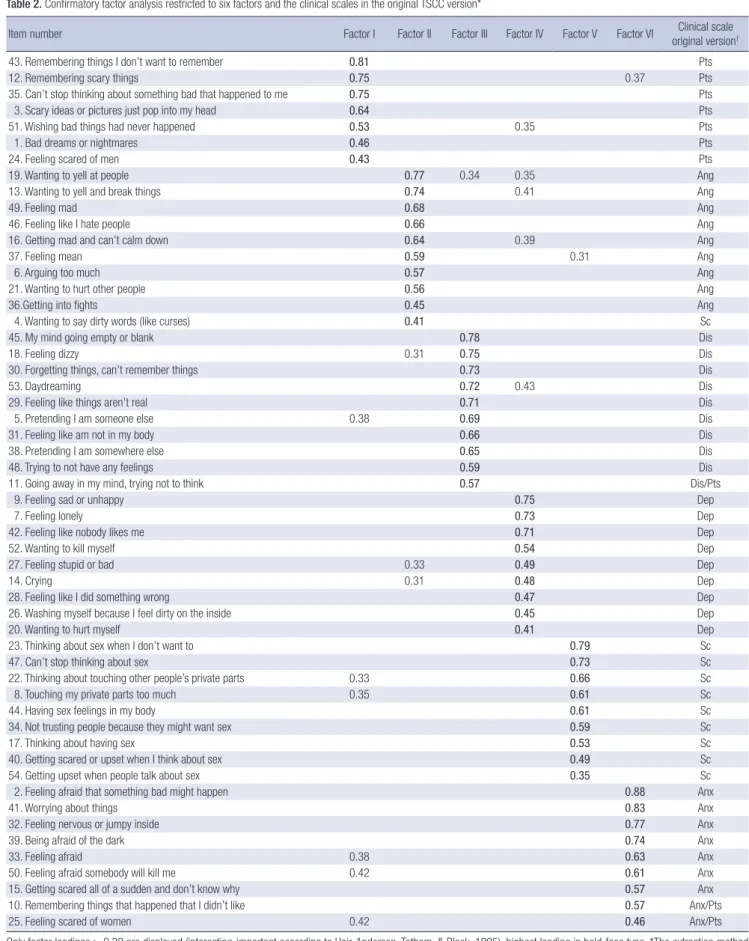
Table 2. Confirmatory factor analysis restricted to six factors and the clinical scales in the original TSCC version*
Item number Factor I Factor II Factor III Factor IV Factor V Factor VI Clinical scale
original version†
43. Remembering things I don’t want to remember 0.81 Pts
12. Remembering scary things 0.75 0.37 Pts
35. Can’t stop thinking about something bad that happened to me 0.75 Pts
3. Scary ideas or pictures just pop into my head 0.64 Pts
51. Wishing bad things had never happened 0.53 0.35 Pts
1. Bad dreams or nightmares 0.46 Pts
24. Feeling scared of men 0.43 Pts
19. Wanting to yell at people 0.77 0.34 0.35 Ang
13. Wanting to yell and break things 0.74 0.41 Ang
49. Feeling mad 0.68 Ang
46. Feeling like I hate people 0.66 Ang
16. Getting mad and can’t calm down 0.64 0.39 Ang
37. Feeling mean 0.59 0.31 Ang
6. Arguing too much 0.57 Ang
21. Wanting to hurt other people 0.56 Ang
36.Getting into fights 0.45 Ang
4. Wanting to say dirty words (like curses) 0.41 Sc
45. My mind going empty or blank 0.78 Dis
18. Feeling dizzy 0.31 0.75 Dis
30. Forgetting things, can’t remember things 0.73 Dis
53. Daydreaming 0.72 0.43 Dis
29. Feeling like things aren’t real 0.71 Dis
5. Pretending I am someone else 0.38 0.69 Dis
31. Feeling like am not in my body 0.66 Dis
38. Pretending I am somewhere else 0.65 Dis
48. Trying to not have any feelings 0.59 Dis
11. Going away in my mind, trying not to think 0.57 Dis/Pts
9. Feeling sad or unhappy 0.75 Dep
7. Feeling lonely 0.73 Dep
42. Feeling like nobody likes me 0.71 Dep
52. Wanting to kill myself 0.54 Dep
27. Feeling stupid or bad 0.33 0.49 Dep
14. Crying 0.31 0.48 Dep
28. Feeling like I did something wrong 0.47 Dep
26. Washing myself because I feel dirty on the inside 0.45 Dep
20. Wanting to hurt myself 0.41 Dep
23. Thinking about sex when I don’t want to 0.79 Sc
47. Can’t stop thinking about sex 0.73 Sc
22. Thinking about touching other people’s private parts 0.33 0.66 Sc
8. Touching my private parts too much 0.35 0.61 Sc
44. Having sex feelings in my body 0.61 Sc
34. Not trusting people because they might want sex 0.59 Sc
17. Thinking about having sex 0.53 Sc
40. Getting scared or upset when I think about sex 0.49 Sc
54. Getting upset when people talk about sex 0.35 Sc
2. Feeling afraid that something bad might happen 0.88 Anx
41. Worrying about things 0.83 Anx
32. Feeling nervous or jumpy inside 0.77 Anx
39. Being afraid of the dark 0.74 Anx
33. Feeling afraid 0.38 0.63 Anx
50. Feeling afraid somebody will kill me 0.42 0.61 Anx
15. Getting scared all of a sudden and don’t know why 0.57 Anx
10. Remembering things that happened that I didn’t like 0.57 Anx/Pts
25. Feeling scared of women 0.42 0.46 Anx/Pts
Only factor loadings > 0.30 are displayed (interesting-important according to Hair, Andersen, Tatham, & Black, 1995), highest loading in bold-face type. *The extraction method used was the principal component analysis and rotation method: varimax rotation with Kaiser normalization (eigenvalues > 1); †Pts (Post traumatic stress), Ang (Anger), Dis (Dis- sociation), Dep (Depression), Sc (Sexual Concern), Anx (Anxiety). TSCC, Trauma Symptom Checklist for Children.
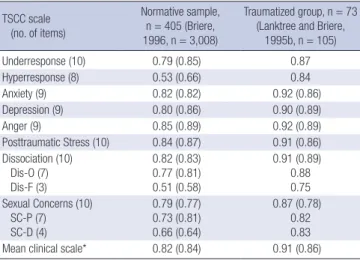
Table 3. Reliability of the TSCC Scales in the normative group and the traumatized group in this study and Briere’s study
TSCC scale (no. of items)
Normative sample, n = 405 (Briere, 1996, n = 3,008)
Traumatized group, n = 73 (Lanktree and Briere,
1995b, n = 105)
Underresponse (10) 0.79 (0.85) 0.87
Hyperresponse (8) 0.53 (0.66) 0.84
Anxiety (9) 0.82 (0.82) 0.92 (0.86)
Depression (9) 0.80 (0.86) 0.90 (0.89)
Anger (9) 0.85 (0.89) 0.92 (0.89)
Posttraumatic Stress (10) 0.84 (0.87) 0.91 (0.86) Dissociation (10)
Dis-O (7) Dis-F (3)
0.82 (0.83) 0.77 (0.81) 0.51 (0.58)
0.91 (0.89) 0.88 0.75 Sexual Concerns (10)
SC-P (7) SC-D (4)
0.79 (0.77) 0.73 (0.81) 0.66 (0.64)
0.87 (0.78) 0.82 0.83
Mean clinical scale* 0.82 (0.84) 0.91 (0.86)
For the two validity scales (UND and HYP) and the four clinical subscales (DIS-O, DIS- F, SC-P, SC-D) for the child abuse center in Lanktree and Briere, 1995, reliability was not reported. *Mean a across six TSCC clinical scales (subscales not included). TSCC, Trauma Symptom Checklist for Children; DIS-O, Overt Dissociation; DIS-F, Fantasy;
SC-P, Sexual Preoocupation; SC-D, Sexual Distress.
Table 4. Test-retest reliability of the TSCC scales (n = 76, mean = 11.0, SD = 2.31) Und Hyp Anx Dep Ang Pts Dis Dis-O Dis-F Sc Sc-P Sc-D P ear-
son r 0.71 0.70 0.87 0.81 0.82 0.81 0.89 0.83 0.72 0.75 0.72 0.71 Pearson correlation 2-tailed significance set at P < 0.05 for all. Und, Underresponse;
Hyp, Hyperresponse; Anx, Anxiety; Dep, Depression; Anx, Anger; Pts, Posttraumatic Stress; Dis, Dissociation; Dis-O, Overt Dissociation; Dis-F, Fantasy; Sc, Sexual Con- cerns; Sc-P, Sexual Preoccupation; Sc-D, Sexual Distress; TSCC, Trauma Symptom Checklist for Children.
the clinical scales were also examined using Pearson’s r.
Comparisons of the TSCC total score and subscale scores between the normal group and the traumatized group were ex- amined using analysis of covariance (ANCOVA), controlling for the effects of age and gender. Statistical analysis was performed with SPSS/Windows (Version 16.0).
Ethics statement
The institutional review board of Kyungpook National Universi- ty Hospital reviewed and permitted the study (2011-05-012).
Informed consent of parents of the subjected school children was obtained before the study.
RESULTS Reliability
The internal consistency for the total scale was 0.95 for the nor- mative group and 0.98 for the traumatized group. The Cron- bach’s alpha for the clinical scales varied between 0.85 (Ang) and 0.79 (Sc) in the normative group, and between 0.92 (Anx) and 0.90 (Dep) in the traumatized group (Table 3). Lower Cron- bach’s alphas were seen in the Dis-f (0.51) and Sc-D (0.66) sub- scales in the normative group.
Test-retest reliability
When test-retest reliability (n = 76, mean = 11.0, SD = 2.3) was examined, r was 0.91 for the total scale and r was 0.87 for the clinical Anxiety scale , 0.81 for the Depression scale, 0.82 for the Anger scale, 0.81 for the Posttraumatic stress scale, 0.89 for the Dissociation scale (Dissociation-overt, r = 0.83; Dissociation- fantasy, r = 0.72) and 0.75 for the Sexual Concerns scale (Sexual
concerns-preoccupation, r = 0.72; Sexual concerns-distress, r = 0.71). Underresponse had an r of 0.71, and hyperresponse had an r of 0.70 (Table 4).
Validity Construct validity Factor analysis
Exploratory and a confirmatory factor analyses of the total pop- ulation, including the normative group and the traumatized group, were conducted to investigate the construct of the Kore- an version of the TSCC. The exploratory factor analysis yielded nine factors with an eigenvalue over 1, which explained 55.1%
of the variance. Confirmatory factor analysis (six factors) ex- plained 51.1% of the variance. The confirmatory factor analysis resulted in a structure similar to Briere’s, 1996 (19) proposed six-factor structure (Table 2).
The first and strongest factor explained 10.6% of the variance.
Seven items, all from the original Posttraumatic stress scale be- longed to this factor. The second factor explained 10.2% of the variance. Nine items, all from the original Anger scale, belonged to this factor and one item originally belonging to the Sexual Concern subscale was also included in the second factor. The third factor explained 9.5% of the variance. In this factor, ten items were included and all items fit within the theoretical con- struct of Dissociation. All items had a factor loading above 0.30.
The fourth factor explained 8.5% of the variance. All nine items from the theoretical factor Depression loaded highest on this factor. The fifth factor explained 7.4% of the variance. All nine items from the theoretical factor Sexual concern loaded highest in this factor and well above a factor loading of 0.30. The one other item loaded high in the Anger scale. Finally, the sixth fac- tor explained 4.9 % of the variance. All items from the theoreti- cal factor Anxiety loaded highest on this factor and above 0.30.
Correlations between the subscales and the total scale
The correlations between the clinical scales and the total scale varied between 0.71 (Sc) and 0.90 (Dep). The correlations be- tween all the subscales are presented in Table 5.
Concurrent validity
In the normative group, 405 students had also completed the CDI and STAI-C. In order to establish concurrent validity, their
Table 6. TSCC clinical scale correlations with the CDI and the STAIC scores in a nor- mative sample
TSCC scale CDI SAIC TAIC
Anxiety 0.43* 0.11 0.74*
Depression 0.55* 0.07 0.71*
Anger 0.48* 0.02 0.64*
Posttraumatic stress 0.50* 0.11 0.71*
Dissociation 0.48* 0.14 0.69*
Sexual concern 0.41* 0.03 0.47*
All correlations significant at P < 0.05 except for SAIC. *P < 0.05, n = 405. TSCC, Trauma Symptom Checklist for Children; CDI, Children’s Depression Inventory; SAIC, State Anxiety Inventory for Children; TAIC, Trait Anxiety Inventory for Children.
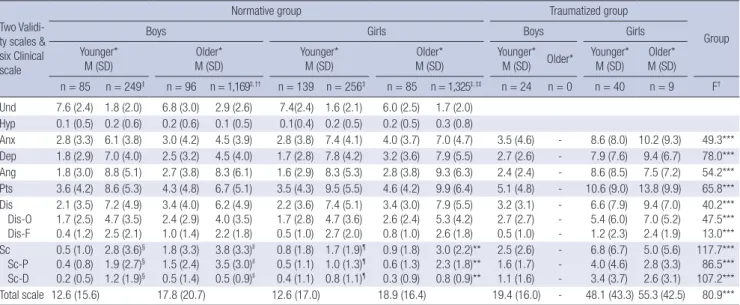
Table 7. Differences in the means of subscales of the TSCC between the normative group and the traumatized group in our study and those in Briere’s study in 1996
Two Validi- ty scales &
six Clinical scale
Normative group Traumatized group
Group
Boys Girls Boys Girls
Younger*
M (SD) Older*
M (SD) Younger*
M (SD) Older*
M (SD) Younger*
M (SD) Older* Younger*
M (SD) Older*
M (SD) n = 85 n = 249‡ n = 96 n = 1,169‡, †† n = 139 n = 256‡ n = 85 n = 1,325‡, ‡‡ n = 24 n = 0 n = 40 n = 9 F† Und 7.6 (2.4) 1.8 (2.0) 6.8 (3.0) 2.9 (2.6) 7.4(2.4) 1.6 (2.1) 6.0 (2.5) 1.7 (2.0)
Hyp 0.1 (0.5) 0.2 (0.6) 0.2 (0.6) 0.1 (0.5) 0.1(0.4) 0.2 (0.5) 0.2 (0.5) 0.3 (0.8)
Anx 2.8 (3.3) 6.1 (3.8) 3.0 (4.2) 4.5 (3.9) 2.8 (3.8) 7.4 (4.1) 4.0 (3.7) 7.0 (4.7) 3.5 (4.6) - 8.6 (8.0) 10.2 (9.3) 49.3***
Dep 1.8 (2.9) 7.0 (4.0) 2.5 (3.2) 4.5 (4.0) 1.7 (2.8) 7.8 (4.2) 3.2 (3.6) 7.9 (5.5) 2.7 (2.6) - 7.9 (7.6) 9.4 (6.7) 78.0***
Ang 1.8 (3.0) 8.8 (5.1) 2.7 (3.8) 8.3 (6.1) 1.6 (2.9) 8.3 (5.3) 2.8 (3.8) 9.3 (6.3) 2.4 (2.4) - 8.6 (8.5) 7.5 (7.2) 54.2***
Pts 3.6 (4.2) 8.6 (5.3) 4.3 (4.8) 6.7 (5.1) 3.5 (4.3) 9.5 (5.5) 4.6 (4.2) 9.9 (6.4) 5.1 (4.8) - 10.6 (9.0) 13.8 (9.9) 65.8***
Dis Dis-O Dis-F
2.1 (3.5) 1.7 (2.5) 0.4 (1.2)
7.2 (4.9) 4.7 (3.5) 2.5 (2.1)
3.4 (4.0) 2.4 (2.9) 1.0 (1.4)
6.2 (4.9) 4.0 (3.5) 2.2 (1.8)
2.2 (3.6) 1.7 (2.8) 0.5 (1.0)
7.4 (5.1) 4.7 (3.6) 2.7 (2.0)
3.4 (3.0) 2.6 (2.4) 0.8 (1.0)
7.9 (5.5) 5.3 (4.2) 2.6 (1.8)
3.2 (3.1) 2.7 (2.7) 0.5 (1.0)
- - -
6.6 (7.9) 5.4 (6.0) 1.2 (2.3)
9.4 (7.0) 7.0 (5.2) 2.4 (1.9)
40.2***
47.5***
13.0***
Sc Sc-P Sc-D
0.5 (1.0) 0.4 (0.8) 0.2 (0.5)
2.8 (3.6)§ 1.9 (2.7)§ 1.2 (1.9)§
1.8 (3.3) 1.5 (2.4) 0.5 (1.4)
3.8 (3.3)ll 3.5 (3.0)ll 0.5 (0.9)ll
0.8 (1.8) 0.5 (1.1) 0.4 (1.1)
1.7 (1.9)¶ 1.0 (1.3)¶ 0.8 (1.1)¶
0.9 (1.8) 0.6 (1.3) 0.3 (0.9)
3.0 (2.2)**
2.3 (1.8)**
0.8 (0.9)**
2.5 (2.6) 1.6 (1.7) 1.1 (1.6)
- - -
6.8 (6.7) 4.0 (4.6) 3.4 (3.7)
5.0 (5.6) 2.8 (3.3) 2.6 (3.1)
117.7***
86.5***
107.2***
Total scale 12.6 (15.6) 17.8 (20.7) 12.6 (17.0) 18.9 (16.4) 19.4 (16.0) - 48.1 (43.3) 55.3 (42.5) 80.9***
*Age in two groups, 8-12 (younger) and 13-16 (older) years of age; †Analysis of covariance (ANCOVA) with each clinical scale and subscales, as well as the total scale as a de- pendent variable, each group as an independent factor, and gender and age as covariances. Graded area: data from our study; ‡Data from Briere’s study, 1996; §n = 71; lln = 39;
¶n = 65; **n = 46; ††n = ranged from 1139 to 1169; ‡‡n = ranged from 1289 to 1325. ***P < 0.01. TSCC, Trauma Symptom Checklist for Children; Und, Underresponse; Hyp, Hyperresponse; Anx, Anxiety; Dep, Depression; Ang, Anger; Pts, Posttraumatic stress; Dis, Dissociation; Dis-O subscale, Dissociation-overt; Dis-F subscale, Dissociation-fantasy;
Sc, Sexual Concerns; Sc-P subscale, Sexual-preoccupation; Sc-D subscale, Sexual-distress.
Table 5. Correlation between the scales, subscales, and the total scale of the TSCC
Scales Hyp Anx Dep Ang Pts Dis Dis-O Dis-F Sc Sc-P Sc-D
Und -0.35 -0.79 -0.77 -0.73 -0.77 -0.72 -0.69 -0.63 -0.48 -0.45 -0.42
Hyp 0.64 0.55 0.47 0.57 0.47 0.46 0.38 0.39 0.30 0.40
Anx 0.75 0.70 0.83 0.69 0.68 0.57 0.55 0.46 0.57
Dep 0.79 0.73 0.76 0.75 0.64 0.59 0.54 0.55
Ang 0.65 0.75 0.73 0.64 0.59 0.54 0.53
Pts 0.71 0.70 0.58 0.54 0.48 0.50
Dis Dis-O Dis-F
0.97 0.84
0.69
0.59 0.57 0.52
0.54 0.51 0.49
0.53 0.52 0.44 Sc
Sc-P
0.94 0.69
0.88 0.64
Total scale 0.89 0.90 0.86 0.89 0.88 0.86 0.74 0.71 0.64 0.66
Pearson correlation 2-tailed significance set at P < 0.05 for all. Und, Underresponse; Hyp, Hyperresponse; Anx, Anxiety; Dep, Depression; Ang, Anger; Pts, Posttraumatic stress;
Dis, Dissociation; Dis-O subscale, Dissociation-overt; Dis-F subscale, Dissociation-fantasy; Sc, Sexual Concern; Sc-P subscale, Sexual-preoccupation; Sc-D subscale, Sexual -distress; Und, Underresponse; TSCC, Trauma Symptom Checklist for Children.
total scores on the CDI and TAIC were correlated with the Dep and Anx subscales on the TSCC. The correlation coefficients (Pearson’s r) were found to be 0.55 and 0.74, respectively (Table 6).
Means in the normative group
The means and standard deviations found in the normative group are shown in Table 7. There were no significant differ- ences (ANOVA) between boys and girls in the normative group on any of the clinical scales. Considering two age groups, the means for Sexual concerns-preoccupation was higher in male (1.5 ± 2.4) than in female (0.6 ± 1.3) (P = 0.002) and the means Underresponse validity scale was higher in male (6.8 ± 3.0) than in female (6.0 ± 2.5) (P = 0.04) in adolescence group. The older boys scored higher on Sc (P < 0.001) and Dis (P = 0.02)
than the younger boys, and the older girls scored higher on Anx (P = 0.02), Dep (P = 0.001), Ang (P = 0.01), and Dis (P < 0.001),
except for Sc and Pts than the younger girls.
Differences between the normative group and the traumatized group As shown in Table 7, there were significant differences between the normative and the traumatized groups on each of the clini- cal scales and subscales when adjusting for gender and age.
There were only younger boys in sexually traumatized group.
DISCUSSION
This study showed that the Trauma Symptom Checklist for Chil- dren could be translated into Korean and used in the Korean culture outside of English-speaking society and still maintained its psychometric properties. This is the first study using the Trau- ma Symptom Checklist for Children in a Korean population of normal and traumatized children and adolescents.
Our experience is that the TSCC is easy to administer and is readily understood by the normal group and the traumatized group studied. This increases the usefulness of the TSCC as a screening instrument for clinicians in their planning for diag- nostic procedures and treatment in their clinical and research work.
The psychometric properties of the Korean translation of the TSCC were good. The total scale and the clinical scales in our study had approximately the same internal consistency as Bri- ere (20) reported from a normative sample and from a child abuse center in the Lanktree and Briere’s sample (35) (Table 3).
The lowest Cronbach’s alpha coefficient was found in the Dis-F scale in both studies. Our sample size (n = 405) was smaller than Briere’s (n = 3,008), which explains our slightly lower al- pha coefficients for every scale except sexual concerns (SC). Al- though the sample size in our traumatized group (n = 75) was the smallest and larger sample sizes tend to show higher alpha coefficients, all of the coefficients in our traumatized group were higher than those of the normative group (n = 405) in our sample and also higher than those of Lanktree and Briere’s sample (n = 105) (35). This means that the Korean version of the TSCC is more reliable in a target population of children and adolescents with sexual trauma. The internal consistency of the Swedish sample (n = 728, aged 10-17) was 0.94 for the total scale, and varied between 0.78 to 0.85 in the normative group and between 0.74 to 0.89 in the traumatized group for the clini- cal scales, which was similar to our results (35).
Conclusion from our study is that the internal consistency of the TSCC is high and satisfactory in both the normative and traumatized population, and is similar to other published stud- ies. The test-retest reliability was found to be high (0.85), which had not been reported in the Briere’s study (Table 4). The test- retest reliability in Swedish version was r = 0.81 (n = 79 of 728 aged 10 to 17) (35).
In order to study the construct validity, confirmatory factor
analysis was performed, and our interpretation of the outcome was similar to Briere’s (23) factors, excepting one item on the Sexual Concerns subscale. Item 4 was ‘wanting to say dirty words.’
was seen as being restricted to the ‘Anger’ subscale instead of being a part of the ‘Sexual Concerns’ subscale as it is in the origi- nal English version. One explanation for this could be cultural difference. In Confucian culture in Korea, ‘dirty words’ was ex- tremely prohibited in public and might be considered as very aggressive attitude instead of ‘Sexual Concerns’. Unlike Swedish version in which Anxiety subscale did not show up as expected, Korean version came close to all Briere’s factors (35).
Concurrent validity was studied comparing the Depression subscale and the Anxiety subscale with the CDI and STAI-C. The Anxiety scale of the TSCC was correlated with the Trait anxiety subscale of the STAI-C. The anxiety scale of the TSCC is associ- ated with trait anxiety, not state anxiety. Correlation coefficients for the CDI ranged from 0.43 to 0.55 in our sample and from 0.45 to 0.68 in Briere’s report, with the exception of the Sexual Concerns scale (20). The coefficient for the Sexual Concerns was 0.41 in our study; there was no report of it in Briere’s study.
In Briere’s study, the Revised Children’s Manifest Anxiety Scale (RCMAS) was used to assess concurrent validity and the corre- lation coefficients ranged from 0.51 to 0.63. The correlation co- efficients with the TAIC ranged from 0.64 to 0.74 in our study.
The Sexual Concerns scale was not reported in Briere’s study and had a correlation coefficient of 0.47 in our study. Therefore, concurrent validity of the Korean version of the TSCC was shown as above.
Significantly higher mean scores were found for the trauma- tized group in the total scale and all of the clinical scales com- pared to the normative group in our study, which demonstrat- ed the discriminant validity of the Korean version of the TSCC.
However, a comparison of the means of the TSCC in our sam- ple with those in Briere’s report (20) and Swedish sample (39) showed that the means in our study were substantially lower for all of the clinical scales for all ages and gender categories in the normative group. In our sample, there was a much higher score in the underresponse validity scale than in Briere’s report.
This result suggests a pattern of symptom underreporting in our study group, which was also reported in the development of the Korean version of the Adolescent Dissociative Experience Scale (39) and of the 20-Item Toronto Alexithymia Scale in Ko- rean Adolescents (40). Culturally, Korea is the one of the coun- tries showing a response bias toward giving the most socially desirable answer, and Korean adolescents perceived their health risk likelihood and rated the chances of most health problems happening to them as significantly lower than a group of Aus- trians in a previous study (41). This cultural context should be considered when determining culturally-specific norms (scores).
Another explanation for the difference in means between the studies was the sampling procedure. Briere (20) combined a
school and a medical waiting room sample rather than using a classroom school sample as in our study. This medical waiting- room sample of children could have included a more problem- atic population than a classroom sample.
In previous studies, there were significantly higher means in girls than in boys in the normative group except SC where ado- lescent boys normally scored significantly higher. In our study, there was no such gender difference but still higher SC-preoc- cupation score in adolescent boys in normative group. The girls tended to score higher as they grew older except SC in Swedish sample and in traumatized group in our study (39). In trauma- tized group, there was significant gender difference (P < 0.001) and age difference in girls (P < 0.01). Why there was no differ- ence between gender in normative group was not fully under- stood but a pattern of under reporting symptoms could be one explanation.
The study has two limitations. First, the sample is not a repre- sentative national sample, since other large cities in Korea were not included in this study. To establish national norms for the Korean version of the TSCC, a larger sample would be needed.
A second limitation is that only sexually traumatized children and adolescents were included in our traumatized sample. The need for Korean screening tools for posttraumatic stress symp- toms has been in high demand and urgently needed, especially for sexually abused children. The Korean version of the TSCC has been shown to be a proper screening tool for this purpose.
In conclusion, this initial validation study shows the Korean version of the TSCC to be a promising measure of posttraumat- ic stress symptoms in Korean children and adolescents. It has been shown to be psychometrically appropriate and will be a useful self-reporting instrument for Korean clinicians. The TSCC is useful in identifying traumatic symptoms in children and ad- olescents who have been traumatized, and specifically for chil- dren and adolescents who have been sexually abused. It is valu- able to have a screening tool for clinical practice in order to pro- vide proper therapeutic help for children and adolescents.
ACKNOWLEDGMENT
Thank you for two Clinical Psychologists, Min-A Kang and Hae- Jung Kim, other precious colleague and child sexual abuse vic- tims treated in Sunflower Child Center, Daegu Gyeongbuk Child Sexual Abuse Response Center, in Daegu, Korea.
DISCLOSURE
The author has no conflicts of interest to disclose.
REFERENCES
1. American Psychiatric Association. Diagnostic and statistical manual of
mental disorders. 4th ed. Washington, D.C.: American Psychiatric Asso- ciation, 1994.
2. Nader KO. Assessing traumatic experiences in children. In: Wilson JP, Keane TM, eds. Assessing psychological trauma and PTSD. New York:
Guilford Press, 1997, p291-348.
3. National Center for Post Traumatic Stress Disorder. Fact sheet and child measures. Available at http://www.ncptsd.vagov/fact/specific/fs chil- dren.html [accessed on 6 August 2006].
4. Fergusson DM, Horwood LJ, Lynskey MT. Childhood sexual abuse and psychiatric disorder in young adulthood: II. psychiatric outcomes of child- hood sexual abuse. J Am Acad Child Adolesc Psychiatry 1996; 35: 1365- 74.
5. Flannery DJ, Singer MI, Wester K. Violence exposure, psychological trau- ma, and suicide risk in a community sample of dangerously violent ado- lescents. J Am Acad Child Adolesc Psychiatry 2001; 40: 435-42.
6. Ford JD. Traumatic victimization in childhood and persistent problems with oppositional-defiance. J Aggress Maltreat Trauma 2002; 6: 25-58.
7. Guterman NB, Cameron M, Hahm HC. Community violence exposure and associated behavior problems among children and adolescents in residential treatment. J Aggress Maltreat Trauma 2003; 6: 111-36.
8. Johnson JG, Cohen P, Gould MS, Kasen S, Brown J, Brook JS. Childhood adversities, interpersonal difficulties, and risk for suicide attempts dur- ing late adolescence and early adulthood. Arch Gen Psychiatry 2002; 59:
741-9.
9. Maida CA, Gordon NS, Strauss G. Child and parent reactions to the Los Angeles Area Whittier Narrows Earthquake. J Soc Behav Pers 1993; 8:
421-36.
10. Saltzman WR, Pynoos RS, Layne CM, Steinberg AM, Aisenberg E. Trau- ma- and grief-focused intervention for adolescents exposed to commu- nity violence: results of a school-based screening and group treatment protocol. Group Dyn 2001; 5: 291-303.
11. Fricker AE, Smith DW. Trauma specific versus generic measurement of distress and the validity of self-reported symptoms in sexually abused children. J Child Sex Abus 2001; 10: 51-66.
12. McLeer SV, Deblinger E, Atkins MS, Foa EB, Ralphe DL. Post traumatic stress disorder in sexually abused children. J Am Acad Child Adolesc Psy- chiatry 1988; 27: 650-4.
13. Wolfe DA, Sas L, Wekerle C. Factors associated with the development of posttraumatic stress disorder among child victims of sexual abuse. Child Abuse Negl 1994; 18: 37-50.
14. Armstrong JG, Putnam FW, Carlson EB, Libero DZ, Smith SR. Develop- ment and validation of a measure of adolescent dissociation: the Adoles- cent Dissociative Experiences Scale. J Nerv Ment Dis 1997; 185: 491-7.
15. Wolfe VV. Measuring post-traumatic stress disorder: the Children’s Im- pact of Traumatic Events Scale - revised. APSAC Advis 1996; 9: 25-6.
16. Wolfe VV, Gentile C, Michienzi T, Sas L, Wolfe DA. The childrens’s im- pact of traumatic events scale: a measure of post-sexual-abuse PTSD symptoms. Behav Assess 1991; 13: 359-83.
17. Jin Y, Chung US, Jeong SH, Lee WK. The reliability and validity of the Korean version of the child sexual behavior inventory. Psychiatry Inves- tig 2013; 10: 336-45.
18. Putnam FW, Helmers K, Trickett PK. Development, reliability, and va- lidity of a child dissociation scale. Child Abuse Negl 1993; 17: 731-41.
19. Briere J. Trauma Symptom Checklist for Children (TSCC) professional manual. Odessa: Psychological Assessment Resources, 1996.
20. Briere J. Trauma Symptom Checklist for Young Children (TSCYC) pro- fessional manual. Odessa: Psychological Assessment Resources, 2005.
21. Bal S, Crombez G, Van Oost P, Debourdeaudhuij I. The role of social support in well-being and coping with self-reported stressful events in adolescents. Child Abuse Negl 2003; 27: 1377-95.
22. Bal S, Van Oost P, De Bourdeaudhuij I, Crombez G. Avoidant coping as a mediator between self-reported sexual abuse and stress-related symp- toms in adolescents. Child Abuse Negl 2003; 27: 883-97.
23. Brady KL, Caraway SJ. Home away from home: factors associated with current functioning in children living in a residential treatment setting.
Child Abuse Negl 2002; 26: 1149-63.
24. Shaw JA, Lewis JE, Loeb A, Rosado J, Rodrigues RA. Child on child sex- ual abuse: psychological perspectives. Child Abuse Negl 2000; 24: 1591- 600.
25. Shaw JA, Lewis JE, Loeb A, Rosado J, Rodrigues RA. A comparison of Hispanic and African-American sexually abused girls and their families.
Child Abuse Negl 2001; 25: 1363-79.
26. Cohen JA, Mannarino AP, Knudsen K. Treating sexually abused children:
1 year follow-up of a randomized controlled trial. Child Abuse Negl 2005;
29: 135-45.
27. Lanktree CB, Briere J. Outcome of therapy for sexually abused children:
a repeated measures study. Child Abuse Negl 1995; 19: 1145-55.
28. Nolan M, Carr A, Fitzpatrick C, O’Flaherty A, Keary K, Turner R, O’Shea D, Smyth P, Tobin G. A comparison of two programs for victims of child sexual abuse. Child Abuse Rev 2002; 11: 103-23.
29. Elhai JD, Gray MJ, Kashdan TB, Franklin LC. Which instruments are most commonly used to assess traumatic event exposure and posttrau- matic effects? a survey of traumatic stress professionals. J Trauma Stress 2005; 18: 541-5.
30. Balaban V. Psychological assessment of children in disasters and emer- gencies. Disasters 2006; 30: 178-98.
31. Daegu Statistical Information. Statistics. Available at http://www.Dae-
gu.go.kr/Administrative/Resident_Registration.aspx [accessed on 31 De- cember 2008].
32. Crouch JL, Smith DW, Ezzell CE, Saunders BE. Measuring reactions to sexual trauma among children: comparing the children’s impact of trau- matic events scale and the trauma symptom checklist for children. Child Maltreat 1999; 4: 255-63.
33. Sadowski CM, Friedrich WN. Psychometric properties of the Trauma Symptom Checklist for Children (TSCC) with psychiatrically hospital- ized adolescents. Child Maltreat 2000; 5: 364-72.
34. Lanktree CB, Briere J. Early data on the new Sexual Concerns and Dis- sociation subscales of the TSCC: unpublished manuscript, Department of Psychiatry, University of Southern California School of Medicine. In:
Briere J, editor. Trauma Symptom Checklist for Children (TSCC) profes- sional manual. Odessa: Psychological Assessment Resources, 1995.
35. Nilsson D, Wadsby M, Svedin CG. The psychometric properties of the Trauma Symptom Checklist For Children (TSCC) in a sample of Swed- ish children. Child Abuse Negl 2008; 32: 627-36.
36. Kovacs M. Rating scales to assess depression in school-aged children. Acta Paedopsychiatr 1981; 46: 305-15.
37. Kovacs M. Children’s Depression Inventory (CDI). Ontario: Multi-Health Systems Inc., 1992.
38. Spielberger CD, Gorsuch RL, Lushene RE. Manual for the State-Trait Anxiety Inventory. Palo Alto: Consulting Psychologists Press, 1970.
39. Shin JU, Jeong SH, Chung US. The Korean version of the adolescent dis- sociative experience scale: psychometric properties and the connection to trauma among Korean adolescents. Psychiatry Investig 2009; 6: 163- 72.
40. Seo SS, Chung US, Rim HD, Jeong SH. Reliability and validity of the 20- item toronto alexithymia scale in Korean adolescents. Psychiatry Investig 2009; 6: 173-9.
41. Kim Y. Australian and Korean adolescents’ perceived health risk. Psychol Rep 2007; 101: 816-22.