Applications of Nutrient-Controlling and Growth-Regulating Chemicals to Enhance Yield of Once-Over Harvest Red Pepper (Capsicum annuun L.)
Byung-Koo Ahn, Hyeong-Goog Kim, Myung-Jun Kim1, and Jin-Ho Lee2*
Jeollabuk-do Agricultural Research and Extension Services, Iksan 570-704, Korea
1Red Pepper Research Institute, Imsil Agricultural Technology Center, Imsil 566-822, Korea
2Department of Bioenvironmental Chemistry, Chonbuk National University, Jeonju 561-756, Korea
The cultivation of once-over harvest pepper cultivars might be very valuable to Korean farmers who still depend on traditional hand-harvesting method. Thus, we conducted this experiment to obtain important information for enhancing the productivity of once-over harvest red pepper fruits by supplying several nutrient-controlling and growth-regulating chemicals, such as KH2PO4, SiO2, and 2-chloroethylphosphonic acid (ethephon). Adequate fertilization was provided in each treatment plots. In this study, two once-over harvest pepper cultivars, Saengryeg No. 211 and 213 (SR 211 and SR 213), and one regular piecemeal harvest pepper cultivar, Kangryegdaetong (KRDT), were cultivated to evaluate the productivity of pepper fruit as affected by above chemicals. The distribution of macro- and micro-nutrients in pepper fruits among the cultivars were different in term of N, B, Cu, and Fe concentrations. In particular, the concentration of B in SR 213 was about 2 times higher than that in SR 211 and KRDT. However, overall red pepper productivity of SR 211 was markedly higher (2.91~3.38 Mg ha-1) than that (1.68~2.37 Mg ha-1) of SR 213. Also, the productivity of matured red pepper was significantly influenced by the treatments of KH2PO4, SiO2, and ethephon. The yield indices for matured red pepper fruits were the highest with the treatment of KH2PO4 or SiO2 with ethephon, which were 113~116% for SR 211 and 147~150% for SR 213. Thus, the applications of KH2PO4 or SiO2 with ethephon would be suggested to enhance the productivity of matured red pepper fruit.
Key words: Once-over harvest pepper, Chemical fertilizer, Growth regulator, Mature red peppercultivation
Received : July 14. 2011 Accepted : August 16. 2011
*Corresponding author : Phone: +82632702545 E-mail: [email protected]
Introduction
Red pepper (Capsicum annuun L.) is one of the most productive crops among horticultural plants (Shin et al., 2006). Pepper fruit is generally harvested approximately 4 to 6 times during the cultivation period (Jung et al., 2006;
Cho et al., 2005; Chung et al., 2002), but pepper plant cultivation and fruit harvesting are relatively labor-intensive in Korea, especially with traditional hand-harvesting method. Labor expense was about 70% of total cost for producing pepper fruit. During regular pepper plant cultivation, both base- and side-dressings are needed because of its long cultivation period; that is, after transplanting the pepper plant seedlings, nitrogen and phosphorus fertilizers are needed to apply as the first side-dressing. The second side-dressing fertilizers are
needed at 30 days after the first side-dressing. Sometimes, the third side-dressing might be additionally necessary to improve the productivity of pepper fruits depended on soil conditions. Therefore, it is necessary to develop the labor-saving and cost-down approaches. For these reasons, Korean farmers have cultivated once-over harvest red pepper cultivars, Saengryeg No. 211 and 213 (Cho and Cho, 2004). As comparing with the regular piecemeal harvest peppers, the once-over harvest peppers need to increase their fruit productivity with accelerating plant maturity by the reduction of nutritional growth with controlling nitrogen uptake at harvesting stage.
Heavy application of nitrogen fertilizer causes plant/
crop lodging and disease/insect problems, but application of silicon (Si) can reduce those problems by improving nutrient imbalance (Parry and Smithson, 1964; Idris, et al., 1975; Mauad et al., 2003; Ghanbari-Malidareh, 2011).
Silicon is recognized as a quasi-essential plant nutrient.
During crop production, Si fertilization may increase
yield, disease and insect resistance, and tolerance to stresses such as cold, drought, and toxic metals (Heckman and Wolf, 2011). In Korea, various research outcomes related to the impacts of silicon application on the cultivation of horticultural crops have been studied. Some researchers reported that the application of silicon improved plant growth and reduced plant disease incidence (Lee et al., 2000; Lee and Yiem, 2000; Kim et al., 2002). Silicon distributes based on pH values as orthosilicic acids. Near 100% of H4SiO4 is existed at less than pH 7.0, a maximum amount of H3SiO4– is present at pH 10.7, and any amount of H2SiO42–, HSiO43– and SiO44– is not available at less than pH 9.5 (Huang and Keller, 1973). The fertilizations of potassium and phosphorus also improve fruit quality. Kim et al. (2009) reported that the foliar application of potassium phosphate fertilizer onto leaves of persimmon tree enhanced the color of fruits.
Therefore, the objective of this study was to obtain valuable information for the enhancement of once-over harvest red pepper productivity with the treatments of nutrient-controlling and growth-regulating chemicals.
Materials and Methods
Site description, pepper cultivation, and fertilizer application This study was conducted in an experimental field at Jeollabuk-do Agricultural Research and Extension Services from May to October, 2010. Once-over red pepper cultivars used in this experiment were Saengryeg No.
211 and 213 (SR 211 and 213). Those were developed in National Institute of Horticultural & Herbal Science (NIHHS), Korea. A regular piecemeal harvest pepper cultivar, Kangryegdaetong (KRDT; Nongwoo Bio Co., Ltd), was used as a standard plant for comparison. The experimental plots were treated with 5.0 Mg ha-1 of rice straw and 20 Mg ha-1 of matured compost. The plots were also applied with chemical fertilizers based on Soil Mana- gement and Fertilizer Recommendation (190 kg ha-1 as N, 112 kg ha-1 as P2O5, and 149 kg ha-1 as K2O) provided by National Institute of Agricultural Science and Technology (NIAST), Rural Development Admistration (RDA), Korea.
Among those fertilizers, 103 kg ha-1 as N, 112 kg ha-1 as P2O5, and 91 kg ha-1 as K2O were applied as a base-dressing.
Also, there were three separate times of side-dress appli- cations during the cultivation period: the first and second applications were done with 34 and 29 kg ha-1 as N and K2O, respectively, and the third application was only with 19 kg
ha-1 as N. In addition, for controlling nitrogen uptake by the once-over pepper plants, 50 kg ha-1 of monopotassium phosphate (KH2PO4) and silicon as SiO2 (conc. 17% in solution) were applied at 30 days before harvesting, and the plant growth-regulating chemical, 2-chloroethylphosphonic acid (C2H6ClO3P, ethephon), was treated at 15 days before harvesting to accelerate the red pepper colour.
Pepper seedlings were brought from Red Pepper Research Institute, Imsil Agricultural Technology Center, Jeollabuk-do, Korea. The seedlings were transplanted (planting density: 120 × 45 cm) into the experimental plots in the middle of May, 2010. The first side-dress application was established at 45 days after transplanting the seedlings, and the second and third side-dressings were conducted every 30 day intervals after the first application. The nutrient-controlling chemicals, KH2PO4 and SiO2, were applied by a soil drenching method, and the plant growth regulator, ethephon, was treated by a foliar spray method.
Soil and pepper plant analyses Soil samples in the experimental plots were collected before transplanting the pepper seedlings and after harvesting the pepper fruits.
The soil samples were air-dried and crushed to pass through a 2-mm sieve. Soil texture was determined by a micro- pipette method (Chung et al., 1999; Park et al., 2006) and the textural triangle chart (Gee and Bauder, 1986).
Exchangeable cations in the soils were extracted by 1.0 M ammonium acetate (CH3COONH4, pH 7.0) and measured by an inductively coupled plasma (ICP) spectrometers (GBC Braeside Australia). Other soil properties were determined using the procedures proposed by NIAST, RDA, Korea (2000).The selected physical and chemical properties of the soils were presented in Table 1.
After harvesting the pepper fruits, the fruit samples were dried in an air-forced drying oven at 70℃ for 72 h.
The dried fruit samples were ground using a grinding mill (RM100 Mortar Grinder, Retsch, Germany). Total nitrogen in the samples was determined using a C-N elemental analyzer (vario MAX CN) with Dumas combustion method.
Macro-nutrients like phosphorus (P), potassium (K), calcium (Ca), and magnesium (Mg) and micro-nutrients such as boron (B), copper (Cu), iron (Fe), manganese (Mn), zinc (Zn), and molybdenum (Mo) were determined using methods proposed by NIAST (2000). The analysis of phosphorus was conducted with a UV/Vis spectropho- tometer (HP8453 UV-Vis, Agilent) at a 470 nm wavelength.
K, Ca, and Mg were analyzed using an atomic absorption
Table 1. Selected physical and chemical properties of soils in the experimental field before cultivating pepper plants.
Particle size distribution Soil texture†
Bulk
density pH EC SOM Aval. P2O5 Exch. cation
CEC Total N
Sand Silt Clay K Ca Mg Na
--- g kg-1 --- g cm-3 (1:5) dS m-1 g kg-1 mg kg-1 --- cmolc kg-1 --- cmolc kg-1 g kg-1
541 186 274 SCL 1.19 6.9 1.78 10.2 521 0.24 5.39 1.78 0.08 14.2 1.4
†SCL: sandy clay loam.
Table 2. Selected chemical properties of soils in the experimental field afterharvesting pepper plants.
Cultivar† Trt. plot‡ pH EC SOM Aval. P2O5 Exch. cation
Total N
K Ca Mg Na
(1:5) dS m-1 g kg-1 mg kg-1 --- cmolc kg-1 --- g kg-1
SR 211
Plot 1 7.5 1.44 19.2 243 0.27 5.52 2.98 0.09 0.73
Plot 2 7.3 0.55 15.3 242 0.32 5.65 2.59 0.10 0.95
Plot 3 7.2 0.70 19.9 280 0.38 5.26 2.50 0.17 0.94
Plot 4 7.2 1.36 19.6 249 0.24 5.72 2.65 0.14 0.90
Plot 5 7.2 1.24 18.2 259 0.23 6.01 2.26 0.17 0.90
SR 213
Plot 1 7.5 1.44 19.2 243 0.27 5.52 2.98 0.09 0.73
Plot 2 7.3 0.61 19.3 291 0.27 5.37 2.67 0.12 1.00
Plot 3 7.1 1.03 17.5 253 0.30 5.75 2.43 0.08 0.95
Plot 4 7.1 1.25 18.1 222 0.37 5.32 2.56 0.11 1.02
Plot 5 7.3 0.90 16.7 208 0.26 5.74 2.31 0.11 0.85
KRDT PMH 6.5 1.55 18.9 312 0.63 5.24 2.22 0.15 1.28
†SR 211: Saengryeg No. 211, SR 213: Saengryeg No. 213, KRDT: Kangryegdaetong.
‡Plot 1: control, Plot 2: KH2PO4 treated, Plot 3: KH2PO4 and 2-chloroethylphosphonic acid (ethephon) treated, Plot 4: Silicon (as SiO2) treated, and Plot 5: silicon (as SiO2) and 2-chloroethylphosphonic acid (ethephon) treated; PMH: piecemeal harvesting.
spectrophotometer (Avanta, GBC Braeside Australia).
Micro-nutrients were measured using the ICP spectrometers.
Results and Discussion
Selected soil properties of the pepper experimental field were shown in Table 1. Optimal ranges of soil chemical properties for cultivating pepper plant are as follows:
soil pH between 6.0 and 6.5, soil organic matter (SOM) content between 25 and 35 g kg-1, available phosphorus (P2O5) concentration between 450 and 550 mg kg-1, exchangeable K between 0.7 and 0.8 cmol kg-1, exchangeable Ca between 5.0 and 6.0 cmol kg-1, exchangeable Mg between 1.5 and 2.0 cmol kg-1, cation exchange capacity (CEC) between 10.0 and 15.0 cmol kg-1, and less than 2.0 dS m-1 electrical conductivity (EC) value (RDA, 1999). Also, ideal soil conditions for pepper growing are deep, well drained sandy loam with low bulk density having less than 15%
liquid phase (Choi et al., 2000; Jung et al., 2004). Uras and Sonmez (2011) reported that the higher values of plant height and stem diameter and the pepper fruit length were recorded for the plants growing in clay loam textured soil.
Thus, the soil properties of the experimental plots used in this study were very close to optimal conditions required
for pepper cultivation even though the contents of soil organic matter (SOM), 10.2 g kg-1, and exchangeable potassium (K), 0.24 cmolc kg-1, were lower than optimal values.
Table 2 presents the changes of the soil chemical properties in the different pepper cultivation plots as influenced by the side-dressings and the combined treatments of nutrient (nitrogen)-controlling and growth-regulating chemicals (KH2PO4, SiO2, and ethephon). The soil chemical properties in the regular piecemeal harvest pepper, Kangryegdaetong (KRDT), plot were changed after 4 months from the initial investigation. The SOM content increased approximately 2 times, whereas the concentration of available phosphorus decreased 40% from the values before transplanting the pepper seedlings, and the exchangeable K increased close to the optimal concentration. The changes in the soil properties might be caused by the rice straw andmatured compost applications, and also the decrease of available phosphorus concentration was occurred by soil adsorption and plant uptake. In the plots for cultivating once-over harvest pepper cultivars (SR 211 and 213), soil pH values, SOM contents, and exchangeable K and Mg concentrations increased, but EC values, available phosphorus concent- rations, and total nitrogen contents were declined. In
Table 3. The concentrations of selected nutrients in pepper fruits at harvesting stage.
Cultivar† Trt. Plot‡ N P K Ca Mg B Cu Fe Mn Zn Mo
--- g kg-1 --- --- mg kg-1 ---
SR 211
Plot 1 23.2 3.4 25.1 0.6 1.1 65.6 39.3 624 226 243 43.2
Plot 2 23.5 3.8 23.8 0.8 1.5 67.2 38.6 565 253 246 41.0
Plot 3 23.2 3.6 23.6 0.8 1.6 68.8 30.2 543 269 269 39.5
Plot 4 23.0 3.2 31.2 0.8 0.9 69.7 33.0 465 263 285 36.7
Plot 5 23.1 3.1 31.5 0.8 1.0 69.7 33.0 466 257 290 35.3
SR 213
Plot 1 24.9 3.7 26.8 0.5 1.3 101.9 37.2 634 230 228 44.6
Plot 2 23.4 3.8 27.5 0.8 1.4 127.5 31.2 657 268 215 46.3
Plot 3 23.4 3.2 24.2 0.9 1.3 125.1 34.1 653 257 220 45.2
Plot 4 24.2 3.5 22.1 1.0 1.5 98.0 31.6 549 251 218 57.9
Plot 5 24.3 3.7 22.3 0.9 1.2 101.0 31.6 569 262 217 53.8
KRDT PMH 21.3 3.8 27.4 0.6 1.3 74.5 44.2 376 238 232 48.1
†SR 211: Saengryeg No. 211, SR 213: Saengryeg No. 213, KRDT: Kangryegdaetong.
‡Plot 1: control, Plot 2: KH2PO4 treated, Plot 3: KH2PO4 and 2-chloroethylphosphonic acid (ethephon) treated, Plot 4: silicon (as SiO2) treated, and Plot 5: silicon (as SiO2) and 2-chloroethylphosphonic acid (ethephon) treated; PMH: piecemeal harvesting.
Table 4. Parameters (plant height, stem diameter, and node number) to evaluate the growth status of different pepper plants.
Cultivar† Plant height (cm) Stem diameter (mm) Node (number plant-1)
45 DAT‡ 90 DAT 45 DAT 90 DAT 45 DAT 90 DAT
SR 211 56.4 102.4 11.0 20.8 8.6 16.4
SR 213 48.1 98.7 10.3 21.7 8.3 15.4
KRDT 73.2 121.7 13.1 20.2 10.9 20.1
†SR 211: Saengryeg No. 211, SR 213: Saengryeg No. 213, KRDT: Kangryegdaetong.
‡DAT: days after transplanting pepper seedlings.
particular, as comparing with the control plot (Plot 1), the contents of total nitrogenin other plots (Plot 2, 3, 4, and 5) were significantly higher. The results might be attributed to the treatment of nutrient-controlling chemicals, KH2PO4 and SiO2, because the applications of phosphate, potassium, and/or silicate fertilizers are known to have antagonistic effects on the uptake of nitrogen (Mauard et al., 2003).
In relation to the pepper plant growth, the different concentrations of macro- and micro-nutrients in pepper fruits at harvesting stage are shown in Table 3. There were no significant differences in the concentrations of selected macro-nutrients in the pepper fruits among the three different pepper cultivars, except nitrogen concentration.
The nitrogen concentration in the piecemeal harvest KRDT pepper fruits was relatively lower than that in the once-over harvest pepper fruits. The concentrations of some micro-nutrients such as B, Cu, and Fe in the KRDT pepper fruits were relatively different as comparing with those in the once-over harvesting pepper fruits. Also, as comparing the nutrient concentrations in pepper fruits between two different once-over harvest pepper cultivars (SR 211 and 213), most of the nutrient concentrations are
not different between the cultivars, except B concentration;
however, the high B concentration of SR 213 might not reach to toxic effect level. In general, the primary functions of B are related to cell wall strength and development, cell division, fruit and seed development, sugar transport, and hormone development. It also interrelates with the functions of nitrogen, phosphorus, potassium and calcium in plants. Adequate amount of B application is critical to enhance high yields and quality of crops. Nonetheless, the higher B concentration in the SR 213 pepper cultivar did not significantly affect its growth and fruit productivity.
Thus, to evaluate the growth status of different pepper cultivars, plant height, stem diameter, and node number were measured at 45 and 90 days after transplanting the pepper seedlings (Table 4). Values of the growth- status parameters were mostly higher for the piecemeal pepper KRDT cultivar as compared to those of the once- over harvest pepper SR 211 and 213 cultivars. When comparing between SR 211 and 213 cultivars, the yield parameter values for SR 211 cultivar were relatively higher than those for SR 213, even though the amount of nutrients taken up by SR 211 was lower than that by SR 213. To evaluate once-over harvest pepper productivity, other
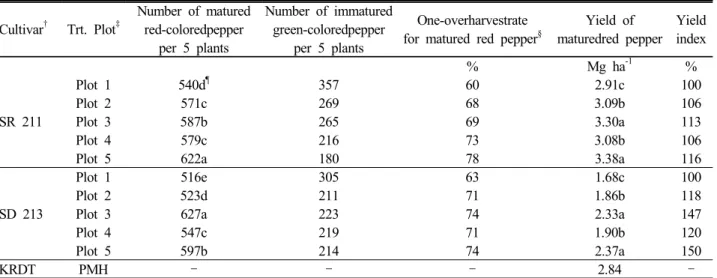
Table 5. Parameters to evaluateonce-over harvest pepper productivityas influenced by the treatments of nutrient-controlling and growth-regulating chemicals.
Cultivar† Trt. Plot‡
Number of matured red-coloredpepper
per 5 plants
Number of immatured green-coloredpepper
per 5 plants
One-overharvestrate for matured red pepper§
Yield of maturedred pepper
Yield index
% Mg ha-1 %
SR 211
Plot 1 540d¶ 357 60 2.91c 100
Plot 2 571c 269 68 3.09b 106
Plot 3 587b 265 69 3.30a 113
Plot 4 579c 216 73 3.08b 106
Plot 5 622a 180 78 3.38a 116
SD 213
Plot 1 516e 305 63 1.68c 100
Plot 2 523d 211 71 1.86b 118
Plot 3 627a 223 74 2.33a 147
Plot 4 547c 219 71 1.90b 120
Plot 5 597b 214 74 2.37a 150
KRDT PMH – – – 2.84 –
†SR 211: Saengryeg No. 211, SR 213: Saengryeg No. 213, KRDT: Kangryegdaetong.
‡Plot 1: control, Plot 2: KH2PO4 treated, Plot 3: KH2PO4 and 2-chloroethylphosphonic acid (ethephon) treated, Plot 4: silicon (as SiO2) treated, and Plot 5: silicon (as SiO2) and 2-chloroethylphosphonic acid (ethephon) treated; PMH: piecemeal harvesting.
§One-over harvest rate for mature red pepper (%) = [number of maturered-colored pepper / (number of maturered-colored pepper + number of immature green-colored pepper)] × 100.
¶Numbers followed by the same letter within a column in the different cultivar’s rows are not significantly different (Duncan test, p<0.05).
parameters as influenced by the treatments of nutrient- controlling and growth-regulating chemicals were presented in Table 5. Overall productivity of red pepper fruit of SR 211 was markedly higher than that of SR 213. The yield of matured red pepper fruits ranged from 2.91 to 3.83 Mg ha-1 for SR 211, and 1.68 to 2.37 Mg ha-1 for SR 213.
However, once-over harvest rates for matured red pepper between the two cultivars were not significantly different, which were ranged 60 to 78% for SR 211 and 63 to 74%
for SR 213. Also, the matured red pepper productivities were distinctly affected by the nutrient-controlling chemicals (KH2PO4 and SiO2) and the growth regulator (ethephon).
The yield of matured red pepper and its yield index were significantly higher with the combined application of KH2PO4 and ethephon (Plot 3) and of SiO2 and ethephon (Plot 5) than with the sole application of KH2PO4 (Plot 2) or SiO2 (Plot 4). The yield indices ranged from 113 to 116 for SR 211 and 147 to 150 for SR 213 in the treatment Plot 3 and 5, respectively. Similar results were obtained from some studies with different plants: Kim et al. (2009) reported that the foliar application of potassium phosphate fertilizer enhanced the color of persimmon fruits. Also, the application of silicate fertilizer could increase the availability of phosphorus for plants, so that it improved plant growth and reduced the accumulation of phosphate in soils (Lee and Kim, 2006). Therefore, the applications
of KH2PO4 and SiO2 with ethephon would be suggested to enhance the productivity of matured red pepper fruit.
Conclusion
The soil chemical properties after the final harvest of pepper fruits were varied due to the treatments of organic materials (rice straw and matured compost), KH2PO4, SiO2, and ethephon, and also depend on the cultivations of different pepper cultivars (regular piecemeal harvest KRDT and once-over harvest SR 211 and 213). The distribution of macro- and micro-nutrients in pepper fruits among the cultivars were only different with N, B, Cu, and Fe concentrations; in particular, the concentration of B in SR 213 was about 2 times higher than that in SR 211 and KRDT, but the concentrations of other nutrients, P, K, Ca, Mg, Mn, Zn, and Mo, were similar among the pepper cultivars. The growth-status parameters, plant height, stem diameter, and node number, were higher mostly for KRDT than for SR 211 and 213. As comparing between the two different once-over harvest pepper cultivars, the parameter values for SR 211 cultivar were relatively higher than those for SR 213, even though the amount of nutrients taken by SR 211 was lower than that by SR 213. Overall productivity of SR 211 red pepper fruit was markedly
higher (2.91~3.38 Mg ha-1) than that (1.68~2.37 Mg ha-1) of SR 213, but once-over harvest rates for matured red pepper between the two cultivars were not significantly different, which were ranged 60 to 78% for SR 211 and 63 to 74% for SR 213. On the other hand, the matured red pepper productivities were significantly influenced by the treatments of KH2PO4, SiO2, and ethephon. The yield of matured red pepper and its yield index were the highest with the treatments of KH2PO4/SiO2 with ethephon: the yield indices were 113~116% for SR 211 and 147~150%
for SR 213. Thus, the applications of KH2PO4 and SiO2 with ethephon would be suggested to improve the productivity of matured red pepper fruit.
References
Cho, M.C. and Y.S. Cho. 2004. Breeding chili pepper variety for once-over harvest and its prospect, p 327-341. In B.D. Kim (ed.). Molecular genetics and breeding of chilli pepper in Korea.
SRC. Seoul Nat’l Univ., Seoul.
Cho, M.C., Y. Chae, Y.S. Cho, K.D. Ko, Y.A. Shin, D.H. Kim, and J.W. Jung. 2005. The result of new pepper varieties evaluation at farmer’s field Korean. J. Hort. Sci. Technol. (Suppl. I) 23:38-38.
Choi, J., I.S. Son, Y.T. Jung, D.H. Lee, M. Park, and C.I. Choi.
2000. Soil characteristics and its influences on the yields and quality of red pepper in Yeongyang area, Gyeongbuk province.
Korean J. Soil Sci. Fert. 33:145-152.
Chung, J.B., M.K. Kim, B.J. Kim, and K.H. Kim. 1999. Comparison of micro-pipette method and hydrometer method in soil particle size analysis. J. Korean Soc. Soil Sci. Fert. 32:274-278.
Chung, K.M., S.K. Kwon, and J.M. Hwang. 2002. Quality of single- harvested red peppers. Kor. J. Food. Sci. Technol. 34:128-131.
Gee, G.W. and J.W. Bauder. 1986. Particle size analysis. pp. 383- 411. In A. Klute (ed), Methods of soil analysis part I (2nd ed.).
American Society of Agronomy, Madison, WI.
Ghanbari-Malidareh, A. 2011. Silicon application and nitrogen on yield and yield components in rice (Oryza sativa L.) in two irrigation systems. World Academy of Science, Engineering and Technology, 74:88-95.
Heckman, J. and A. Wolf. 2011. Recommended soil tests for silicon. pp. 99-101. In Northeastern Regional Publication No.
493, Recommended soil testing procedures for the northeastern United States (3rd ed.), Cooperative Extension, University of Delaware, Newark, DE, USA.
Huang, W.H. and W.D. Keller. 1973. New stability diagrams of some phyllosilicates in the SiO2-Al2O3-K2O-H2O system. Clays and Clay Minerals, 21:331-336.
Idris, M., M.M. Hossain, and E.F. Chouhury. 1975. The effect of silicon on lodging of rice in presence of added nitrogen. Plant Soil. 43:691-695.
Jung, J.W., M.C. Cho, and Y.S. Cho. 2006. Fruit quality of once-over harvest pepper (Capsicum annuum) cultivar Saengryeg No. 211 and Saengryeg No. 213. Kor. J. Hort. Sci. Technol. 24:205-209.
Jung, S.J., B.S. Back, G.S. Jang, B.K. Hyun, and S.K. Rim. 2004.
Suitability class criteria for red pepper cultivation with respect to soil morphology and physical properties. Korean J. Soil Sci.
Fert. 37(5):336-340.
Kim, H.C., H.J. Bae, K.S. Cho, J.W. Han, and T.C. Kim. 2009.
Effects of potassium-dihydrogenphosphate and antitranspirant on fruit color in non-astringent persimmon. Kor. J. Hort. Sci. Technol.
(Suppl. I). 27:113-113.
Kim, Y.C., K.Y. Kim, K.W. Park, H.K. Yun, T.C. Seo, J.W. Lee, and S.G. Lee. 2002. Effect of granular silicate application on the growth and yield of tomato grown in perlite substrate. J.
Korean Soc. Hort. Sci. 43:21-24.
Lee, J.S. and M.S. Yiem. 2000. Effects of soluble silicon in development powdery mildew (Sphaerotheca fuliginea) in cucumber plants. Korean. J. Pestic. Sci. 4:37-43.
Lee, J.S., J.H. Park, and K.S. Han. 2000. Effects of potassium silicate on growth, photosynthesis, and inorganic ion absorption in cucumber hydroponics. J. Korean. Soc. Hort. Sci. 41:480-484.
Lee, Y.B. and P.J. Kim. 2006. Effects of silicate fertilizer on increasing phosphorus availability in salt accumulated soil during Chinese cabbage cultivation. Korean J. Soil Sci. Fert. 39:8-14.
Mauard, M., C.A.C. Crusciol, H.G. Filho, and J.C. Correa. 2003.
Nitrogen and silicon fertilization of upland rice. Scientia Agricola, 60(4):761-765. National Institute of Agricultural Science and Technology (NIAST). 2000. Method of soil and plant analysis.
NIAST, Rural Development Administration, Korea.
Park, S.N., K.H. Kim, and J.Y. Kang. 2006. Accuracy and precision of spectrophotometric measurement of clay content in soils.
Korean J. Soc. Soil Sci. 49:153-157.
Parry, D.W. and F. Smithson. 1964. Types of opaline silica deposition in the leaves of Brithish grasses. Ann. Bot. 28:169-185.
Shin, Y.A., J.S. Lee, Y.C. Um, and S.H. Park. 2006. Effects of seed spacing and depth and planting date on yield of once-over harvested hot pepper (Capsicum annuum L.) planted by direct seeding. Kor. J. Hort. Sci. Technol. 24:8-12.
Uras, D.S. and S. Sonmez. 2011. Efect of changes in salt levels of irrigation water to some physical properties of pepper plants (Capsicum annuun L.) grown on various soil textures. Food Agri. Environ. 9(2):686-688.