Vol. 18, No. 11 (2008)
604
†Corresponding author
E-Mail : [email protected] (J. B. Kang)
Silica 가 첨가된 지르콘 소결거동
이근봉·강종봉†
경남대학교 대학원 재료공학과
Sintering Behavior of Zircon with SiO
2Keun Bong Lee, Jong Bong Kang†
Department of Materials Science and Engineering, kyungnam University, Masan 631-701, Korea
(2007년 9월 11일 접수 : 2008년 10월 27일 최종수정 : 2008년 10월 29일채택)
Abstract The sintering behavior of zircon with silica was investigated. Zircon with 5 vol% of sedimentation SiO2 resulted in the apparent density of 4.45 g/cm3, the diametral tensile strength of 12.125 kgf/cm2, and the micro Vickers hardness of 1283 HV. The dissociation temperature and mechanical characteristics of the ZrSiO4
were changed with different kinds of SiO2. SiO2 addition prevented dissociation of ZrSiO4. Zircon with 5 vol%
of sedimentation SiO2 and with 5 vol% of fused SiO2 resulted in increased diametral tensile strength and increased micro Vickers hardness by suppression of ZrSiO4 dissociation and low temperature liquid SiO2 formation. Zircon with fumed SiO2 and quartz SiO2 resulted in decreased diametral tensile strength and decreased micro Vickers hardness because of cristobalite and quartz phase formation and high temperature liquid SiO2 formation. Zircon with 10 vol% of SiO2 resulted in decreased diametral tensile strength and decreased micro Vickers hardness because of weak particle coupling due to excess formation of liquid SiO2. Key words ZrSiO4, Zircon, Silica, SiO2
1.
서 론지르코늄실리케이트(Zircon, ZrSiO4)는 우수한 열적, 기 계적, 화학적 특성을 지닌 재료로서 그 소결체는 내화재 료, 전자기 재료 및 각종 이화학기기에 많이 사용된다.
최근 고순도 ZrSiO4는 내마모성 구조재료 세라믹스로 응 용되고 있다. ZrSiO4는 고온특성이 뛰어나고, 낮은 열팽 창 계수(5.3 × 10⁻⁶/oC 25~1500oC), 낮은 열전도도 계수 {6.1 W/moC (<100oC), 4.0 W/moC (<1400oC)}를 가지고 있어, 열충격저항성이 다른 세라믹재료에 비해 매우 우 수하다. 또한 화학적 안정성을 유지하면서 고온에서 발 생하는 열적해리 온도까지는 어떠한 구조적 전이가 발생 하지 않기 때문에 갑작스런 온도변화에 적용할 수 있는 유용한 재료로 주목받고 있다.1,2) 그러나 ZrSiO4는 분말 의 정제 및 미립화가 어렵고, 1550oC 이상에서 ZrO2와 SiO2로 해리가 발생되며, 해리된 SiO2는 휘발되는 단점 이 있다.3-5) 일반적인 ZrSiO4는 1550oC에서 해리가 발생 되지만, 입자크기가 작고, 불순물이 존재하는 ZrSiO4는 1100oC에서 해리가 발생됨과 동시에 기계적 성질이 감 소하는 경향을 보인다. 이러한 해리현상을 억제하고, 치
밀한 소결체를 제조하기 위하여 소결조제로서 MgO, TiO2, Fe2O3, ZnO, Al2O3, clay를 첨가하는 연구가 선행 되었으나, 첨가한 소결조제들은 열처리 시 ZrSiO4의 해 리를 더욱 촉진시키며, 기계적 성질은 증가되지 않은 것 으로 보고되었다.6-8)따라서 해리현상을 억제하고 기계적 특성의 증가를 위해 소결조제로 silica(Sedimentation SiO2, Fused SiO2, Fumed SiO2, Quartz SiO2)를 첨가하여 시 편을 제조하고, 소결거동 및 기계적특성 변화를 관찰하였다.
2.
실험 방법본 연구에 사용한 주원료인 ZrSiO4 (Standard, Terio Co., Ltd, China)의 평균입도는 3.015 µm로 측정되었으며, 첨가제로 Sedimentation SiO2 (Sedimentation silica, Rhodia Co., Ltd, France), Fused SiO2 (Fused Silica, Boram chemetal Co., Ltd, Korea), Fumed SiO2 (Fumed Silica, Nycontech Co., Ltd, Korea), Quartz (Quartz, 21Centry silica Co., Ltd, Korea,)를 지르콘에 각각 2, 5, 10 vol% 첨가하였다.
ZrSiO4에 각각의 SiO2를 첨가하고, 수직 attrition mill 을 이용하여 3시간 동안 습식 분쇄한 후, 입도분석기(LS 230, Coulter, USA)를 이용하여 평균입자크기를 측정하 였다. 평균 입자크기가 1.0 µm인 슬러리를 제조하여, 70oC
Silica가 첨가된 지르콘 소결거동 605
에서 건조하였다. 건조된 각각의 시료들은 건식 분쇄하 여 200 mesh(75 µm 이하)채로 분급한 후, 300 kg/cm2의 압력으로 이축 가압 성형하였다. 5oC/min의 승온속도로 1200~1500oC에서 5시간 소결하였으며, 소결 후 냉각은 로내에서 자연 냉각하였다.
온도 및 각 실리카의 첨가에 따라 ZrSiO4의 분해와 해 리 및 새로운 상 생성물에 대한 시편의 결정상을 확인 하기 위하여 X선 회절(APD System, philips, Netherlands) 장치로 결정상을 분석하였다. 소결시편의 겉보기 밀도는 아르키메데스 원리를 이용하여 밀도측정기(MCI, Sartorious, Japan)로 측정하였으며, 외부 힘에 의한 단단한 정도를 비 커스경도기(MXT-alpha 7E, Future Tech Co., Ltd, Japan)로 측정하였다. 하중에 따른 소결시편이 견디는 정 도를 확인하기 위하여 O.Bermuddez9)의 직경인장강도 측 정방법에 따라 재료시험기(Series IX, Instron, USA)로 측정하였다.
Fig. 1. Flow chart of experimental procedure Flow chart of experimental procedure.
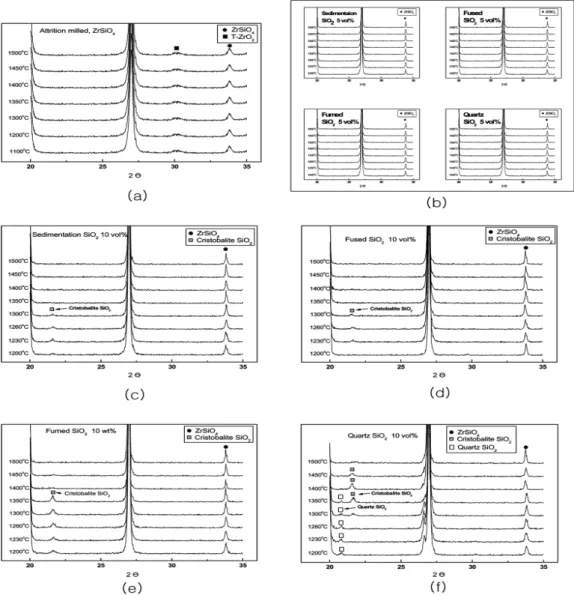
Fig. 2. XRD patterns of specimens with different kind of SiO2, contents of SiO2 and temperature; (a) no additive (b) 5 vol%
SiO2 (c) 10 vol% Sedimentation SiO2 (d) 10 vol% Fused SiO2 (e) 10 vol% Fumed SiO2 and (f) 10 vol% Quartz SiO2
소결시편의 각 실리카의 종류와 실리카의 첨가량, 소 결온도에 따른 입자의 형상 및 소결체의 치밀한 미세구 조를 관찰하기 위하여 주사전자현미경 SEM(S4200, Hitach Co., Ltd, Japan)으로 미세구조를 관찰하였다.
3.
결과 및 고찰Fig. 2는 ZrSiO4에 sedimentation SiO2, Fused SiO2, Fumed SiO2, Quartz SiO2를 각각 10 vol% 첨가한 시 편의 결정상 분석을 나타내었다. 순수 ZrSiO4에 각각의 Fig. 3. Apparent density of specimens with different kind of SiO2, contents of SiO2 and temperature;
(a) Sedimentation SiO2 (b) Fused SiO2 (c) Fumed SiO2 and (d) Quartz SiO2.
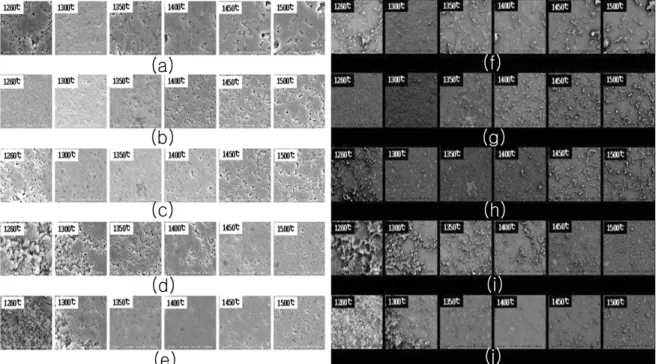
Fig. 4. Positive and negative SEM images(×10,000) of specimens with different kind of SiO2, contents of SiO2 and temperature;
(a), (f) no additive (b), (g) 5 vol% Sedimentation SiO2 (c), (h) 5 vol% Fused SiO2 (d), (i) 5 vol% Fumed SiO2 (e), (j) 5 vol%
Quartz SiO2
Silica가 첨가된 지르콘 소결거동 607
SiO2를 2, 5 vol% 첨가 시 1500oC까지 순수 ZrSiO4 결 정상만 측정되었다. 이는 SiO2 종류에 관계없이 첨가량 이 5 vol%까지는 ZrSiO4의 해리를 억제시킨다는 것을 알 수 있었다. Sedimentation SiO2와 fused SiO2, fumed SiO2를 각각 10 vol% 첨가 시 1350oC까지 cristobalite가 측정되었으며, 1400oC부터는 순수 ZrSiO4결정상만 측정 되었다. 이는 첨가된 비정질 SiO2가 소결온도에 따라 cristobalite, liquid SiO2로 상전이 되기 때문이다. Quartz SiO2의 10 vol% 첨가는 1500oC의 고온에서 liquid SiO2
로 상전이 되어 고온 액상이 형성되는 것을 알 수 있 었다. 따라서 순수 ZrSiO4에 각각의 SiO2 첨가에 따른 상전이는 아래와 같이 진행됨을 알 수 있었다.
(1) ZrSiO4+ Sedimentation SiO2⇒
ZrSiO4+ Cristobalite SiO2+ Liquid SiO2 (1350oC) (2) ZrSiO4+ Fused SiO2⇒
ZrSiO4+ Cristobalite SiO2+ Liquid SiO2 (1350oC) (3) ZrSiO4+ Fumed SiO2⇒
ZrSiO4+ Cristobalite SiO2+ Liquid SiO2 (1400oC) + monoclinic-ZrO2
(4) ZrSiO4+ Quartz SiO2⇒
ZrSiO4 + Quartz SiO2+ Cristobalite SiO2+ Liquid SiO2 (1500oC)
Fig. 3은 ZrSiO4에 각각의 SiO2를 2, 5, 10 vol% 첨 가한 시편의 겉보기 밀도(이하 밀도)를 나타내었다. 각각 의 SiO2를 2, 5 vol% 첨가 시 1300~1350oC부터 일정한 밀도를 나타내었다. 이는 첨가된 SiO2가 저온에서 liquid SiO2로 상전이 되어 ZrSiO4의 해리를 억제시키고, 액상 소결이 진행되어 입자의 최적충전으로 치밀한 미세구조 를 나타내기 때문이다. 하지만 각각의 SiO2를 10 vol%
첨가 시 전체적으로 낮은 밀도를 나타내었다. 이는 SiO2
의 이론밀도가 낮기 때문에 밀도의 감소가 나타나며, 첨 가된 각각의 SiO2가 저온에서 결정질 cristobalite와 quartz 로 존재하여 기공을 발생시켜 치밀하지 못한 미세구조를 나타내기 때문이다.
Fig. 4는 ZrSiO4에 각각의 SiO2를 각각 5 vol% 첨가 한 ZrSiO4의 미세구조를 나타내었다. Sedimentation SiO2
와 fused SiO2를 첨가한 시편은 저온에서 liquid SiO2의 생성으로 치밀한 미세구조와 ZrSiO4해리도 억제하였다.
그러나 소결온도가 높아질수록 liquid SiO2에 의한 액상 소결보다는 고상소결이 진행되어 기공이 발생하고 결정 립이 성장하였다. 이는 소결온도가 높아질수록 ZrSiO4의 해리가 증가하여 해리 억제를 위해 많은 liquid SiO2가 ZrO2와 반응하기 때문에 고상소결이 진행되는 것으로 판 단된다. Quartz SiO2와 fumed SiO2를 첨가한 시편은
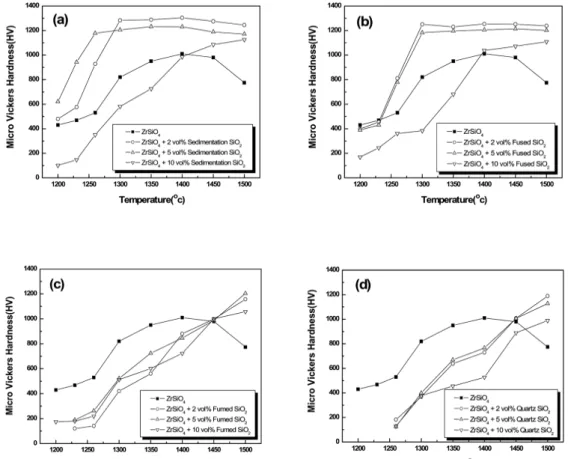
Fig. 5. Micro vickers hardness of specimens with different kind of SiO2, contents of SiO2 and temperature; (a) Sedimentation SiO2 (b) Fused SiO2 (c) Fumed SiO2 and (d) Quartz SiO2.
ZrSiO4입자간 초기 재배열시 liquid SiO2를 생성하지 못 하고, quartz와 cristobalite 결정질 유리상으로 존재하여 고상소결이 진행되고 비정상 입자가 성장하여 치밀한 미 세구조를 나타내지 못하였다.
Fig. 5는 ZrSiO4에 각각의 SiO2를 2, 5, 10 vol% 첨 가한 시편의 미세경도를 나타내었다. Sedimentation SiO2
와 fused SiO2의 첨가 시 1260oC에서 순수 ZrSiO4보다 331.5 Hv 높은 1177 Hv의 미세경도를 나타내었으며, 1300oC에서는 1283 Hv의 높은 미세경도를 나타내었다. 이 는 Sedimentation SiO2와 fused SiO2가 저온에서 liquid SiO2로 상전이 되어 액상을 통한 물질확산이 빨라지고 ZrSiO4입자간 최적충전이 가속화되어 강한 입자결합을 하기 때문이다. Fumed SiO2와 Quartz SiO2의 첨가는 1450oC까지 순수 ZrSiO4 보다 낮은 미세경도를 나타내 었다. 이는 fumed SiO2와 Quartz SiO2가 1500oC의 고 온에서 liquid SiO2로 상전이 되기 때문이다. 각각의 SiO2를 10 vol% 첨가한 시편은 1500oC까지 온도상승에 따른 계속적인 미세경도의 증가를 나타내었으며, 순수 ZrSiO4보다 낮은 미세경도를 나타내었다. 이는 첨가된 SiO2가 1450oC까지 cristobalite와 quartz의 결정질 SiO2
로 존재하기 때문에 미세경도는 증가되지 않았다.
Fig. 6는 ZrSiO4에 각각의 SiO2를 2, 5, 10 vol% 첨 가한 시편의 직경인장강도를 나타내었다. Sedimentation SiO2와 fused SiO2의 첨가는 1200oC부터 순수 ZrSiO4보 다 높은 직경인장강도를 나타내었다. 이는 SiO2첨가로 저온 liquid SiO2가 생성되어 ZrSiO4 입자를 강하게 결 합시켰기 때문이다. 그러나 fumed SiO2와 quartz SiO2의 첨가는 저온에서 결정질 SiO2로 존재하고 기공의 발생 과 비정상 결정립의 성장으로 하중에 대한 균열전파의 거 리가 짧아져서 직경인장강도의 저하가 나타나는 것으로 판단된다.
4.
결 론본 연구에서는 순수 ZrSiO4에 각각의 SiO2를 첨가시 켜 시편을 제조한 후 ZrSiO4의 소결거동과 기계적 특성 을 비교 고찰하여 다음과 같은 결론을 얻었다. 첨가된 Sedimentation SiO2와 Fused SiO2는 저온에서 liquid SiO2가 생성되어 ZrSiO4의 해리를 억제시켰으며, liquid SiO2를 통한 물질확산의 증가로 ZrSiO4 입자간 최적충 전으로 강한 입자결합과 소결을 촉진시켜 저온에서 치밀 한 미세구조와 높은 기계적 특성을 나타내었다. Fumed Fig. 6. Diametral tensile strength of specimens with different kind of SiO2, contents of SiO2 and temperature; (a) Sedimentation SiO2 (b) Fused SiO2 (c) Fumed SiO2 and (d) Quartz SiO2.
Silica가 첨가된 지르콘 소결거동 609
SiO2와 Quartz SiO2의 첨가는 ZrSiO4의 해리는 억제시 키지만, 1500oC의 고온에서 liquid SiO2가 생성되어 ZrSiO4의 소결과 기계적 특성에는 큰 영향을 나타내지 못 하였다.
감사의 글
이 연구결과물은 2008 학년도 경남대학교 학술 연구 장려금 지원에 의한 것임.
참 고 문 헌
1. C. Aksel, Materials Letters, 57(4), 992 (2002).
2. R. N Singh, J. Am. Ceram. Soc., 70, 117 (1994).
3. R. N. Singh,, J. Am. Ceram. Soc., 73, 2399 (1990).
4. T. Mori, H. Yamamura and H. Kobatashil, J. Am. Ceram.
Soc., 75, 2420 (1992).
5. L. B. Garrido and E.F Aglietti, Europ. Ceram. Soc., 21(12), 2259 (2001).
6. Y. Shi, X. Huang and D. Yan, Europ. Ceram. Soc., 24(5), 393 (1998).
7. J. K. Lee, J. Y. Kim, Y. L. Baeg, J. S. Lee, D. W. Sin, Ceramics Raw Materials, 13, 234 (2000).
8. J. B. Kang, Kor. J. Mater. Res. 18(7), 352 (2008).
9. O. Bermuddez, J. Mater. Sci., 4, 389 (1993).