| Abstract |
1)
Purpose: The purpose of this study was to prove the effects of coordinative locomotion training (CLT) on walking speed, walking endurance, and balance for incomplete spinal cord injury patients.
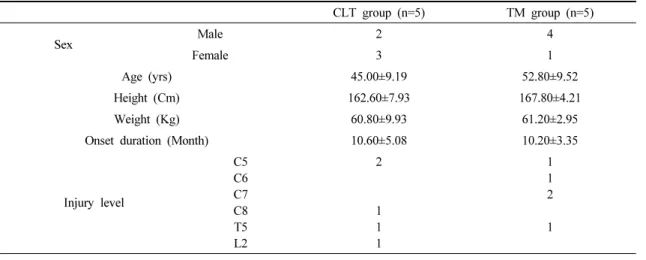
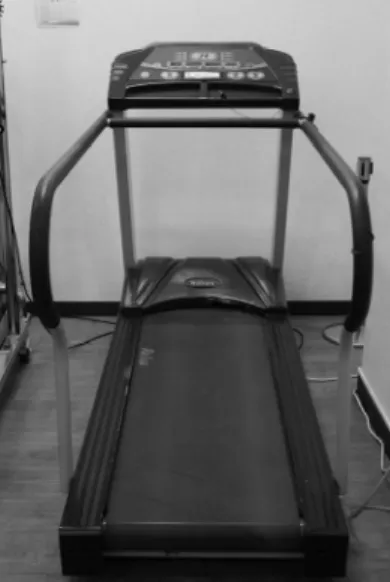
Methods: Ten subjects were randomly assigned to the CLT group (n = 5) and the treadmill (TM) group (n = 5). The CLT group performed PNF pattern exercise using the motions of the sprinter and skater for 30 minutes, while the TM group performed using a treadmill for 30 minutes. Both groups performed these therapeutic interventions for five days per week, for a period of four weeks.
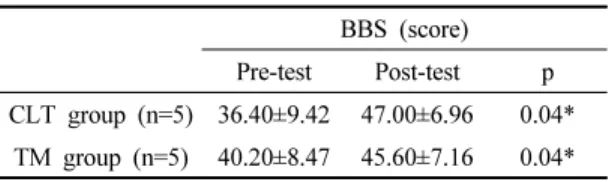
A 10 meter walking test, Berg Balance Scale (BBS), and 6 meter walking test were used for the assessment of gait speed, balance, and gait endurance. The SPSS Ver. 18.0 statistical program was used for data processing. A Wilcoxon signed rank test was used for the comparison of pre- and post-intervention performance and a Mann-Whitney test was used for comparison between the groups. The significance level for the statistical inspection was set at 0.05.
Results: Both groups showed significant improvements in the 10 meter walking test, Berg Balance Scale, and 6 meter walking test (P < 0.05).
Conclusion: CLT had an effect on the improvement of walking speed, walking endurance, and the balance of incomplete spinal cord injury patients. Thus, we suggest that CLT is a therapeutic intervention for incomplete spinal cord injury patients.
Key Words: Coordinative locomotion training, Spinal cord injury, Splint skate pattern, Treadmill, Walking
†Corresponding Author : Gwan-Cheol Maeng ([email protected])
Original Article Open Access
PNF 패턴을 결합한 협응적 이동 훈련이 척수손상환자의 보행에 미치는 효과