• 검색 결과가 없습니다.

Clinical Outcomes of Lung Transplantation: Experience at Asan Medical Center

N/A
N/A
Protected

Academic year: 2021

Share "Clinical Outcomes of Lung Transplantation: Experience at Asan Medical Center"

Copied!
7
0
0

로드 중.... (전체 텍스트 보기)

전체 글

(1)

ISSN: 2233-601X (Print) ISSN: 2093-6516 (Online)

Received: June 23, 2017, Revised: September 21, 2017, Accepted: September 26, 2017, Published online: February 5, 2018

Corresponding author: Sehoon Choi, Department of Thoracic and Cardiovascular Surgery, Asan Medical Center, University of Ulsan College of Medicine, 88 Olympic-ro 43-gil, Songpa-gu, Seoul 05505, Korea

(Tel) 82-2-3010-3904 (Fax) 82-2-3010-6966 (E-mail) [email protected]

© The Korean Society for Thoracic and Cardiovascular Surgery. 2018. All right reserved.

This is an open access article distributed under the terms of the Creative Commons Attribution Non-Commercial License (http://creativecommons.org/

licenses/by-nc/4.0) which permits unrestricted non-commercial use, distribution, and reproduction in any medium, provided the original work is properly cited.

Clinical Outcomes of Lung Transplantation:

Experience at Asan Medical Center

Yong Ho Jeong, M.D., Sehoon Choi, M.D., Seung-Il Park, M.D., Dong Kwan Kim, M.D., Asan Medical Center Lung Transplantation Team

Department of Thoracic and Cardiovascular Surgery, Asan Medical Center, University of Ulsan College of Medicine

Background: Lung transplantation is a life-saving procedure in patients with end-stage lung disease, and is increasingly performed in Korea. Methods: We retrospectively evaluated the outcomes of patients who re- ceived a lung transplant at Asan Medical Center between January 2008 and December 2016. Thirteen of 54 patients experienced multiorgan transplantation; the remaining 41 who received only lung grafts were included. Results: The mean age of the lung transplant recipients was 44.6 years; 27 were men and 14 were women. The most frequent reasons were idiopathic interstitial pneumonia (21 of 41 patients, 51.2%), inter- stitial lung disease (9 of 41, 22.0%), and bronchiolitis obliterans after bone marrow transplantation (7 of 41, 17.1%). The median waiting time was 47 days, and many patients received preoperative intensive care (27 of 41, 65.9%), ventilator support (26 of 41, 63.4%), or extracorporeal life support (19 of 41, 46.3%). All 41 patients received bilateral lung grafts. Ten deaths occurred (24.3%), including 5 cases of early mortality (12.2%) and 5 cases of late mortality (12.2%). The 1-, 3-, and 5-year survival rates were 78.9%, 74.2%, and 69.3%, respectively. Conclusion: Despite a high percentage of patients who required preoperative intensive care, the transplantation outcomes were acceptable.

Key words: 1. Lung transplantation

2. Extracorporeal membrane oxygenation (ECMO) 3. Survival

Introduction

Lung transplantation is indicated for a number of end-stage lung diseases. The International Society for Heart and Lung Transplantation (ISHLT) reports that the number of procedures performed in 253 centers across the world has increased from 1,934 cases in 2003 to 4,080 in 2014 [1]. The first lung transplant was performed in Korea in 1996 [2], and 89 were performed in 2016. The lung transplantation survival rates in Korea are lower than those reported by the ISHLT [1,3], possibly because of differences in the

lung allocation score (LAS). The LAS criteria of the

Korean Network for Organ Sharing (KONOS) are

based on emergency status. We believe that trans-

plant recipients in Korea are likely to require pre-

operative ventilator support and extracorporeal mem-

brane oxygenation (ECMO), but data on transplant

recipients and outcomes are limited. The few rele-

vant studies that reviewed the results of lung trans-

plantation procedures primarily included procedures

performed before 2010 [2,4,5]. In this study, we re-

viewed the preoperative status, including the severity

of the patients’ condition, and postoperative outcomes

https://doi.org/10.5090/kjtcs.2018.51.1.22

(2)

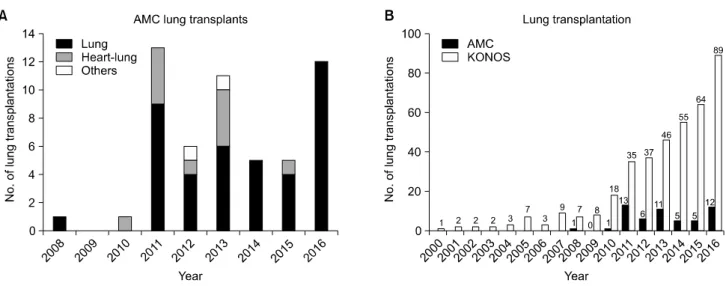
Fig. 1. (A) Number of lung transplantations performed at AMC between 2008 and 2016. The number of lung transplantations performed each year between 2000 and 2016 at AMC is shown in blue. The number of transplantations, including single lung transplantations and multiple organ transplantations, performed in the AMC is also shown. Other transplantations included 1 lung-liver transplantation and 1 heart-lung-liver transplantation. (B) Number of lung transplantations performed in Korea between 2000 and 2016. The number of lung transplantations performed each year between 2000 and 2016, according to the KONOS, is shown. The blue bars show the lung trans- plantations performed at AMC. AMC, Asan Medical Center; KONOS, Korean Network for Organ Sharing.

of lung transplant recipients at Asan Medical Center (AMC).

Methods

The records of the 54 patients who underwent lung transplantation at AMC between January 2008 and December 2016 were reviewed. These included 11 cases of heart-lung transplantation, 1 lung-liver transplantation, and 1 heart-lung-liver transplantation.

The outcomes of the 11 heart-lung transplantation patients have been previously reported [6]. This study evaluated the 41 patients who only underwent lung transplantation. Potential lung transplant recipi- ents were evaluated by a transplantation committee composed of a pulmonologist, intensivist, cardiotho- racic surgeon, anesthesiologist, radiologist, and in- fectious disease specialist. Preoperative management was determined by recipient lung status. Oxygen was supplied by nasal cannulae, and ventilator support or ECMO was provided as necessary. When a potential donor became available, the donor evaluation com- mittee, consisting of a cardiothoracic surgeon, pulmo- nologist, and coordinator, reviewed the donor charac- teristics and decided whether to perform or abandon the transplantation. Transplantation was performed with cardiopulmonary bypass (CPB) and the assis-

tance of a cardiac surgeon. Following transplantation, the patients were transferred to the intensive care unit (ICU) under the care of a pulmonologist and intensivist. When sufficiently recovered, patients were transferred to the general ward and then discharged, and routine follow-up with a pulmonologist was scheduled. The pretransplant diagnosis, age, sex, number of days of preoperative hospitalization in- cluding days in the ICU, preoperative ECMO, and ven- tilator support were retrieved from patient records.

Procedure-related variables included duration of sur- gery, time on CPB, and cold and warm ischemia times. The postoperative outcomes included overall mortality, early mortality within 30 days, late mortal- ity (more than 30 days after transplantation), and transplantation-associated complications that occurred during hospitalization. Values of continuous variables were expressed as means±standard deviation or medians. Survival was analyzed by the Kaplan-Meier method. Statistical analysis was performed using PASW SPSS Statistics ver. 18.0 (SPSS Inc., Chicago, IL, USA).

Results

Forty-one patients underwent lung transplantation

at AMC between 2008 and 2016 (Fig. 1A). The total

(3)

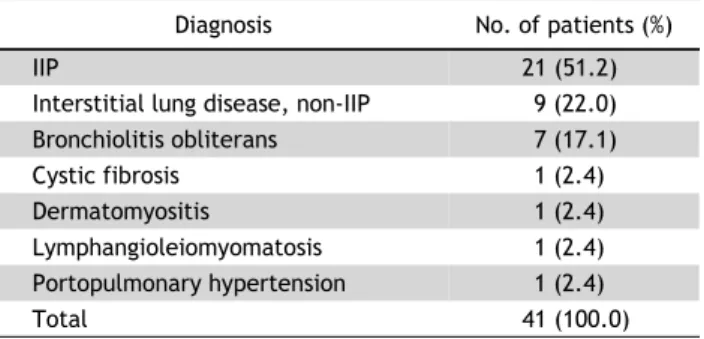
Table 1. Diagnosis of lung transplantation recipients

Diagnosis No. of patients (%)

IIP 21 (51.2)

Interstitial lung disease, non-IIP 9 (22.0)

Bronchiolitis obliterans 7 (17.1)

Cystic fibrosis 1 (2.4)

Dermatomyositis 1 (2.4)

Lymphangioleiomyomatosis 1 (2.4)

Portopulmonary hypertension 1 (2.4)

Total 41 (100.0)

Diagnosis of lung transplant recipients followed the International Society for Heart and Lung Transplantationcriteria. IIP was the most common reason for lung transplantation at Asan Medical Center.

IIP, idiopathic interstitial pneumonia.

Table 3. Korean lung allocation score

Category Indications

Status 0 Patient is connected to a ventilator or an extracorporeal membrane oxygenation

Status 1 NYHA stage IV patients with PaO

2

of <55 mm Hg on room air

NYHA stage IV patients with an average pulmonary pressure of >65 mm Hg or an average right atrial pressure of >15 mm Hg

Cardiac index <2 L/min/m

2

Status 2 Forced expiratory volume in 1 second <25% on pulmonary function test

PaO

2

<60 mm Hg on room air

Average right atrial pressure: 10 –15 mm Hg Average pulmonary pressure: 55 –65 mm Hg Cardiac index: 2 –2.5 L/min/m

2

Korean lung allocation score provided by Korean Network for Organ Sharing. Lungs are allocated by the emergency status of the recipient. The survival probability of the recipient is not considered.

NYHA, New York Heart Association.

Table 2. Preoperative status of lung transplantation recipients Variable No. of patients

(%)

Median (range), day Preoperative hospitalization 32 (78.0) 25 (1 –71) Preoperative ICU care 27 (65.9) 20 (1 –60) Preoperative ventilator 26 (63.4) 15 (1 –60) Preoperative ECMO 19 (46.3) 14 (1 –36) Patients on ventilator or ECMO support were kept in the ICU.

ICU, intensive care unit; ECMO, extracorporeal membrane oxyge- nation.

Table 4. Pretransplant status of recipients based on the Korean lung allocation score criteriaat the initial KONOS registration

Category Initial Status at the point of transplantation

Status 0 14 (34.1) 27 (65.9)

Status 1 8 (19.5) 11 (26.8)

Status 2 5 (12.2) 2 (4.9)

Status 3 14 (34.1) 1 (2.4)

Values are presented as number (%). The number of recipients included in the evaluation was determined by status. At the initial KONOS registration, the numbers of status 0 and status 3 patients were equal. The distribution changed by the time of transplantation, when the majority of the patients were status 0.

In the interim, 20 patients changed status, including 19 in whom the status deteriorated.

KONOS, Korean Network for Organ Sharing.

number of lung transplants in Korea is shown in Fig.

1B. The first transplant at AMC was performed in October 2008 and the second in 2010. Nine were performed in 2011, including 3 because of humidifier disinfectant-associated lung disease. Twelve trans- plants were performed in 2016. The recipients in- cluded 27 men (65.9%) and 14 women (34.1%) with a mean age of 44.6±16.1 years (range, 6 to 74 years).

The lung disease diagnoses of the transplantation re- cipients are shown in Table 1, and followed the pri- mary diagnostic indications for adult lung trans- plantation proposed in the 2016 ISHLT heart-lung transplant report [1]. Of the 21 idiopathic interstitial pneumonia (IIP) patients, 17 (41.5%) had idiopathic pulmonary fibrosis, 1 (2.4%) had nonspecific inter- stitial pneumonia, 1 (2.4%) had typical interstitial pneumonitis, 1 (2.4%) had cryptogenic organizing pneumonia, and 1 (2.4%) had cellular interstitial pneumonitis. Of the 9 interstitial lung disease (ILD) patients without IIP, 3 (7.3%) had acute respiratory distress syndrome (ARDS) because of exposure to toxic chemicals, 3 (7.3%) had ARDS because of in-

fection, 1 (2.4%) had drowning-related ARDS, 1 (2.4%) had ILD, and 1 (2.4%) had pneumoconiosis.

The preoperative status of the patients is shown in Table 2. Thirty-two patients (78.0%) were hospi- talized before transplantation, 27 of whom (65.9%) spent time in the ICU, 19 (46.3%) received pre- operative ECMO support, 26 (63.4%) received ven- tilator support, and 1 (2.4%) received high-flow oxy- gen therapy. Lung allocation was based on the Korean LAS criteria shown in Table 3. The median waiting time was 47 days (range, 1 to 386 days).

One patient was an outlier with a waiting time of

(4)

Table 5. Immediate postoperative results of lung transplant re- cipients

Postoperative care Median (range, outliers), day

Postoperative ventilator usage 7 (2 –24, 200, 1,102) Postoperative intensive care unit stay 13 (3 –64, 306, 1,102) Postoperative hospitalization 59 (3 –347, 1,102)

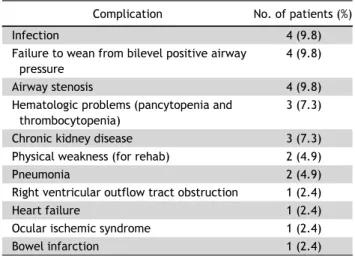
Table 7. Major postoperative complications of patients needing long-term hospitalization

Complication No. of patients (%)

Infection 4 (9.8)

Failure to wean from bilevel positive airway pressure

4 (9.8)

Airway stenosis 4 (9.8)

Hematologic problems (pancytopenia and thrombocytopenia)

3 (7.3)

Chronic kidney disease 3 (7.3)

Physical weakness (for rehab) 2 (4.9)

Pneumonia 2 (4.9)

Right ventricular outflow tract obstruction 1 (2.4)

Heart failure 1 (2.4)

Ocular ischemic syndrome 1 (2.4)

Bowel infarction 1 (2.4)

This table summarizes the major complications that occurred in the 13 patients who were hospitalized for more than 90 days. All major complications were counted. Different complications that occurred in a single patient were counted separately.

Table 6. Major postoperative complications of patients needing long-term ICU care

Complication No. of

patients (%)

Ventilator weaning failure 8 (19.5)

Gastrointestinal problems (bleeding, ischemia, and ileus)

3 (7.3)

Kidney problems (acute kidney injury and chronic kidney disease)

3 (7.3)

Pneumonia (carbapenem-resistant Acinetobacter baumannii)

2 (4.9)

Brain hemorrhage (subdural hemorrhage and intracranial hemorrhage)

2 (4.9)

Cardiac problem 2 (4.9)

Deep vein thrombosis 1 (2.4)

This table summarizes the major complications that occurredin 12 patients who received more than 3 weeks of ICU care. All major complications were counted. Different complications that occurred in a single patient were counted.

ICU, intensive care unit.

1,513 days after KONOS registration. Between admis- sion and transplantation, the LAS of 20 patients (48.8%) changed, increasing in 19 (46.3%) and de- creasing in one (2.4%) (Table 4); 5 patients (12.2%) experienced more than 1 change in status. Trans- plantation was performed in 27 patients (65.9%) with a LAS status of 0, 11 (26.8%) with a status of 1, 2 (4.9%) with a status of 2, and 1 (2.4%) with a status of 3. In patients with a change of status, the median waiting time decreased to 17 days and the longest wait decreased to 386 days. The ranges by status were 1–78, 1–180, 1–316, and 1–386 days, respectively. All 41 patients underwent bilateral lung transplantation with CPB support. The average proce- dure was 611.5±102 minutes, with an average total ischemia time of 254.5±68.1 minutes, warm ischemia time of 148.2±31.5 minutes, cold ischemia time of 105.7±46.4 minutes, and total pump time of 253.2±

61.1 minutes. All patients were intubated and trans- ferred to the ICU after surgery. The duration of the

postoperative ICU stay, ventilator support, and hospi- tal stay are shown in Table 5. Two patients received ECMO support, for which they were kept in the ICU for 3 and 11 days, respectively.

Immediate postoperative complications included postoperative bleeding in 5 patients (12.2%), 2 of whom (4.9%) underwent surgery to control the bleeding. Three (7.3%) died of uncontrolled bleeding.

Twelve patients (26.8%) were kept in the ICU for more than 3 weeks (Table 6). The most frequent rea- son was failure to wean from ventilator support in 8 patients (19.5%). Thirteen patients (31.7%) were hospitalized for more than 90 days; the median du- ration was 194 days (range, 93 to 347 days), with 1 outlier stay of 1,102 days. The primary complications of patients requiring long-term hospitalization were infection, failure to wean from mechanical ventilation, and airway problems (Table 7).

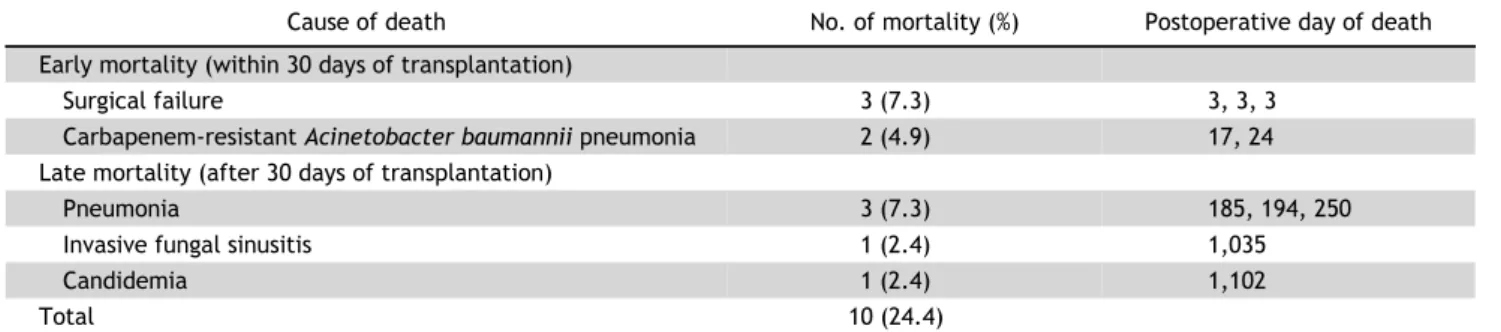
The average follow-up period was 2.21 years (range, 3 days to 6.05 years). Ten patients (24.4%) died during follow-up (Table 8). There were 5 cases of early mortality (12.2%). Three patients (7.3%) died of early, uncontrollable postoperative bleeding with ICU care, and 2 more patients died of carbape- nem-resistant Acinetobacter baumannii pneumonia.

There were 5 cases of late mortality (12.2%): 3

(7.3%) of pneumonia, 1 (2.4%) of invasive fungal si-

nusitis, and 1 (2.4%) of candidemia. The cumulative

(5)

Table 8. Early and late mortality and causes of death in the study population

Cause of death No. of mortality (%) Postoperative day of death

Early mortality (within 30 days of transplantation)

Surgical failure 3 (7.3) 3, 3, 3

Carbapenem-resistant Acinetobacter baumannii pneumonia 2 (4.9) 17, 24

Late mortality (after 30 days of transplantation)

Pneumonia 3 (7.3) 185, 194, 250

Invasive fungal sinusitis 1 (2.4) 1,035

Candidemia 1 (2.4) 1,102

Total 10 (24.4)

A total of 10 recipients died, including 5 cases of early mortality and 5 of late mortality.

Fig. 2. Cumulative survival of lung transplant recipients at Asan Medical Center between 2008 and 2016. The 1-, 3-, and 5-year survival rates were 78.9%, 74.2%, and 69.3%, respectively.

survival, estimated by the Kaplan-Meier curve shown in Fig. 2, was 78.9% at 1 year, 74.2% at 3 years, and 69.3% at 5 years. The survival of patients with either ventilator support or ECMO was 79.9% at 1 year, 71.9% at 3 years, and 63.9% at 5 years.

Twenty-three patients survived for more than 1 year postoperatively; 2 of these 23 patients had grade >2 bronchiolitis obliterans syndrome/restrictive allograft syndrome (BOS/RAS).

Discussion

This retrospective review of the experience of AMC with lung transplantation found that 75.6% of the re- cipients were hospital inpatients before the proce- dure, 63.4% received preoperative ventilator support, and 46.3% received preoperative ECMO life support.

The ISHLT registry data indicate that 8.4% of recipi-

ents were hospital inpatients and that only 3.2% re- ceived preoperative ventilator support. The hazard ratios for 1-year mortality among recipients with preprocedural hospitalization and ventilator support were estimated to be 1.440 and 1.239, respectively [1]. In a report describing outcomes in a large pa- tient sample in the United States, Mason et al. [7]

found that postoperative 1-year survival of patients was 62% for those with preoperative mechanical ventilation and 50% for those with ECMO, with haz- ard ratios of 1.49 and 2.55, respectively. In this study, the overall 1- and 3-year survival rates (78.9%

and 74.2%, respectively) and those of recipients with

either ventilator or ECMO support (79.9% and

71.9%, respectively) were similar. The 5-year overall

survival rate (69.3%) and the 5-year survival rate of

recipients with preoperative support (63.9%) were

slightly different. The 1-, 3-, and 5-year survival rates

of the patients at AMC were not inferior to the rates

of 80%, 65 %, and 5 4% reported by ISHLT [1]. It is

difficult to compare the results because of the small

number of transplantations performed at AMC, but

there are a number of ways to account for the

differences. First, the 3 recipients of transplants in

2011 for humidifier disinfectant-induced lung disease

were young and had no other underlying lung

disease. As the procedures were performed to treat

an acute condition, a satisfactory recovery might be

expected. Second, the 1-year survival rate at AMC

(78.9%) and that reported by the ISHLT (80%) are

similar because of good ICU care. Although the rate

of preoperative hospitalization (78.0%) and the se-

verity of disease (65.9% received ICU care) were

high, the care provided by intensivists adequately

treated medically reversible diseases and produced

favorable results. Finally, the incidence of BOS/RAS

(6)

was low. Only 2 of the 23 patients who survived for more than 1 year after transplantation had grade 2 BOS/RAS, whereas nearly 50% of the ISHLT patients developed BOS within 5 years after transplantation [1]. This discrepancy may have resulted from differ- ences in the Korean and ISHLT registry populations.

The average operating time was 611.5±102 minutes.

Patients with a history of pleurodesis, influenza, pneumonia, and other conditions that increased the possibility of adhesions were taken to the operating room 4 hours before the estimated arrival of the do- nor lung to ensure sufficient time for adhesiolysis and bleeding control. The average total ischemia of 254.5±68.1 minutes and average total pump time of 253.2±61.1 minutes were both longer than has been reported in previous studies [4]. These increases might have resulted from factors specific to the transplantation procedures at AMC. Considerations of the recipient’s age, disease status, and possible adhe- sions prompt early arrival in the operating room for careful adhesiolysis and bleeding control. CPB was initiated approximately 1 hour before the estimated time of donor lung arrival. Bilateral pneumonectomy was performed, along with meticulous bleeding con- trol, especially at the posterior mediastinum. The me- ticulous bleeding control is one of the reasons for the infrequent bleeding events and the small differ- ence between the ischemia and the CPB times. The AMC uses CPB in all cases of lung transplantations because the severe medical condition of recipients makes it difficult to perform transplantation proce- dures without cardiopulmonary support or with only ECMO support. The advantages of using CPB include performing anastomoses in a clear field, the ease of detecting sources of bleeding after bilateral pneumo- nectomy; and the stable maintenance of vital signs during anastomosis even when the lungs and vessels are retracted. CPB does not increase the post- operative bleeding tendency. Therefore, transplanta- tion with CPB support will continue as the standard method at AMC.

The survival rates following lung transplantation in Korea are lower than those reported by the ISHLT.

The 1-, 3-, and 5-year survival rates of 55.4%, 47.6%, and 44.8%, respectively, reported by KONOS [8] may reflect differences in the Korean and the United Network for Organ Sharing (UNOS) LAS criteria. The UNOS LAS considers not only the current status of

the patient but also the expected post-transplant sur- vival probability [9]. KONOS allocates lungs based on emergency status only, as shown in Table 1 [10].

Therefore, recipients in Korea tend to be less clin- ically stable, which may lead to worse transplan- tation outcomes.

The main study limitations are the small patient sample and the short follow-up period. However, even though a high percentage of transplant recipi- ents were hospitalized and received preoperative in- tensive care, the post-transplantation results were not inferior compared to international reports.

In conclusion, lung transplantation in Korea is per- formed in severely ill patients because of the alloca- tion of lungs by emergency status determined by the LAS. Many recipients are hospital inpatients and may be receiving intensive care with ventilator or ECMO support. Considering these circumstances, the AMC lung transplantation outcomes were not inferior to those reported by the ISHLT.

Conflict of interest

No potential conflict of interest relevant to this ar- ticle was reported.

Acknowledgments

The following members of Asan Medical Center Lung Transplantation Team contributed to data col- lection and participated in the discussions: Hyeong Ryul Kim and Sung Ho Jung (Department of Thoracic and Cardiovascular Surgery); Dae-Kee Choi and In- Cheol Choi (Department of Anesthesiology); Kyung- Wook Jo, Tae Sun Shim, and Sang-Bum Hong (Depart- ments of Pulmonology and Critical Care Medicine);

and Sang-Oh Lee (Department of Infectious Diseases) at University of Ulsan College of Medicine.

This study was supported by a Grant of the Samsung Vein Clinic Network (Daejeon, Anyang, Cheongju, Cheonan; Fund no. KTCS04-093).

References

1. Yusen RD, Edwards LB, Dipchand AI, et al. The registry of

the International Society for Heart and Lung Transplanta-

tion: thirty-third adult lung and heart-lung transplant re-

port-2016; focus theme: primary diagnostic indications for

(7)

transplant. J Heart Lung Transplant 2016;35:1170-84.

2. Haam SJ, Lee DY, Paik HC. An overview of lung trans- plantation in Korea. Transplant Proc 2008;40:2620-2.

3. Korean Network for Organ Sharing. 2015 Annual report [Internet]. Seoul: Korean Network for Organ Sharing; 2017 [cited 2017 Jun 21]. Available from: https://www.konos.

go.kr/konosis/common/bizlogic.jsp.

4. Paik HC, Hwang JJ, Kim DH, Joung EK, Kim HK, Lee DY. The 10 years experience of lung transplantation. Korean J Thorac Cardiovasc Surg 2006;39:822-7.

5. Paik HC. Current perspective of lung transplantation. J Korean Med Assoc 2016;59:119-24.

6. Yun JK, Choi SH, Park SI; Asan Medical Center Heart-Lung Transplantation Team. Clinical outcomes of heart-lung transplantation: review of 10 single-center consecutive patients. Korean J Thorac Cardiovasc Surg 2016;49:157-64.

7. Mason DP, Thuita L, Nowicki ER, Murthy SC, Pettersson GB,

Blackstone EH. Should lung transplantation be performed for patients on mechanical respiratory support?: the US experience. J Thorac Cardiovasc Surg 2010;139:765-73.e1.

8. Korean Network for Organ Sharing. Transplantation sta- tistics [Internet]. Seoul: Korean Network for Organ Sharing; 2017 [cited 2017 Jun 21]. Available from: http://

konos.go.kr/konosis/common/bizlogic.jsp#.

9. Organ Procurement and Transplantation Network. OPTN policies [Internet]. Richmond (VA): Organ Procurement and Transplantation Network; 2017 [cited 2017 Jun 21].

Available from: https://optn.transplant.hrsa.gov/gover- nance/policies/.

10. Korean Network for Organ Sharing. 2016 Transplantation guideline [Internet]. Seoul: Korean Network for Organ Sharing; 2017 [cited 2017 Jun 21]. Available from: https://

www.konos.go.kr/konosis/common/bizlogic.jsp.

수치

Fig. 1. (A) Number of lung transplantations performed at AMC between 2008 and 2016. The number of lung transplantations performed  each year between 2000 and 2016 at AMC is shown in blue
Table 3. Korean lung allocation score
Table 7. Major postoperative complications of patients needing  long-term hospitalization
Table 8. Early and late mortality and causes of death in the study population

참조

관련 문서

This retrospective chart review was conducted to determine the effectiveness of antipsychotics when given as antidepressant augmentation agents to inpatients

The proposal of the cell theory as the birth of contemporary cell biology Microscopic studies of plant tissues by Schleiden and of animal tissues by Microscopic studies of

Grade 3 QTc prolongation Withhold until recovery to Grade ≤ 1, then resume at 200 mg twice daily a Grade 4 QTc prolongation Permanently discontinue. a In case

웹 표준을 지원하는 플랫폼에서 큰 수정없이 실행 가능함 패키징을 통해 다양한 기기를 위한 앱을 작성할 수 있음 네이티브 앱과

_____ culture appears to be attractive (도시의) to the

It considers the energy use of the different components that are involved in the distribution and viewing of video content: data centres and content delivery networks

After first field tests, we expect electric passenger drones or eVTOL aircraft (short for electric vertical take-off and landing) to start providing commercial mobility

1 John Owen, Justification by Faith Alone, in The Works of John Owen, ed. John Bolt, trans. Scott Clark, "Do This and Live: Christ's Active Obedience as the