INTRODUCTION
In recent years, the use of endosseous osseointegrated implants for tooth replacements has increased, showing promising results with the aid of novel treatments. Recently, researchers and manufacturers have attempted to standardize the procedures, techniques, and devices used in implant dentistry. As a result, the majority of components in the prostheses are produced through a computerized manufacturing process, yielding uniformity between components and processes. Implant-supported prostheses are classified into screw-retained and cement-retained prostheses. Cement-retained implant-supported prostheses have following advantages over screw-retained implant- supported prostheses: (a) a more passive superstructure of the cemented prostheses; (b) the aesthetics of the cemented prostheses are easier to achieve; and (c) the laboratory costs for a cement-retained restoration are half of those for a screw-retained restoration.1A passive fit of the restoration is the most significant benefit of the cement-retained implant- supported prostheses, which can reduce the possibility of the screw loosening and fractures, ultimately leading to a decrease in implant disturbance or prostheses fractures.1-4 However, cemented restorations have the following disadvantages: (a) the lack of retrievability when problems
occur, which often require crown removal; (b) the difficulty associated with visualizing and removing the excess cement at the crown margin;4 and (c) the development of inflammation caused by the remnant cement.5Although the retrieval of the prostheses is required less often due to the significant increase in the survival rate of dental implants, one should not overlook the possibility of screw loosening and screw breakage due to overload, bone loss due to changes or reactions of the peri-implant tissues, or deformation of the prostheses after the loss of implants.4-7 Therefore, a temporary cement interface between metal surfaces has been used to allow small discrepancies, which would not be acceptable in a screw-maintained fixture, and to allow retrieval if problems occur.3,6,8However, the disadvantages of temporary cements are that they have low retentive forces and can be easily broken and dissolved.
Inflammation caused by plaque accumulation may occur if the temporary cements dissolve. Overloading of the abutments can cause instability. Frequent restoration of the prostheses can damage the implants and abutments.3 Recently, temporary cement have been used to remove prostheses without damaging them.9-11There are few reports on the tensile strengths and safety of temporary cement.
Evaluations of provisional cements for the factors influencing the marginal adaptation and tensile strength of
COMPARISON OF RETENTIVE FORCES OF TEMPORARY CEMENTS AND ABUTMENT HEIGHT USED WITH
IMPLANT-SUPPORTED PROSTHESES
Dong-Hee Lee1, DDS, Kyu-Won Suh2, DDS, MSD, PhD, Jae-Jun Ryu2*, DDS, MSD, PhD
1Graduate student, Department of Restorative Dentistry, Graduate School of Clinical Dentistry, Korea University
2Professor, Department of Restorative Dentistry, Graduate School of Clinical Dentistry, Korea University
Corresponding Author: Jae-Jun Ryu
Department of Medical Science, Graduate School, Korea University
the prosthetic components are essential.10There are a number of factors influencing the retention and resistance of cement-retained restorations, such as the width and height of the abutment, the type of cement, the surface finish, the roughness and connecting system.5,9,10,12Covey et al12 reported that the abutment height and height to width ratio were positively associated with the retention strength, whereas the total surface area and width of an abutment were not. This factor could be considered in a clinical setting where it is difficult to fabricate cement-retained prostheses due to the short vertical distances. There is considerable data on evaluating the retentive forces of cements in natural teeth. Therefore, one can assume similar results from studies evaluating the retentive forces of cements in implant prostheses. However, recent data on the retentive forces of cements are significantly different from the data on natural teeth. The reported data have been inconsistent and unable to suggest clinical guidelines regarding the effects the cement type has on the retentive force of a prosthetic crown.
This study evaluated the effects of the cement types and abutment heights on the resistance to dislodgement of a cement-retained implant-supported prosthesis.
MATERIALS AND METHODS
1. Specimens preparation
Screw retained-implant prostheses (NeoPlant; ISR412,
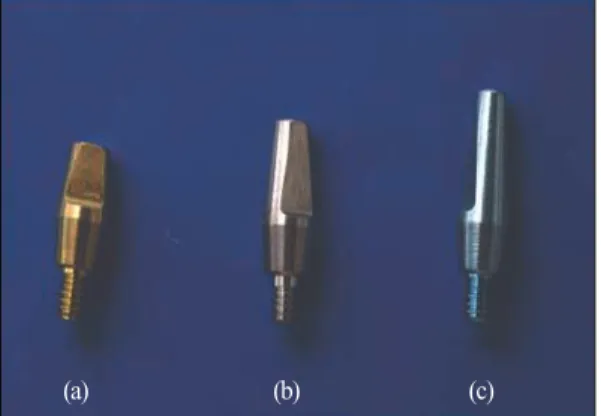
Neobiotech, Seoul, Korea), 4 mm in diameter and 12 mm in length, were embedded in the base of an acrylic resin (Orthodontic Resin; Dentsply Caulk, Milford, Del, USA) for attachment to a tensile testing apparatus with 3 mm of their tips exposed (Fig. 1). The prefabricated implant abutments used were 4 mm in diameter, had an 8�taper per side with chamfer margins, and had abutment heights of 4 mm, 5.5 mm and 7 mm (Fig. 2). Each cement-retained abutment was attached to an implant analog with 20 Ncm torque.
2. Casting preparation
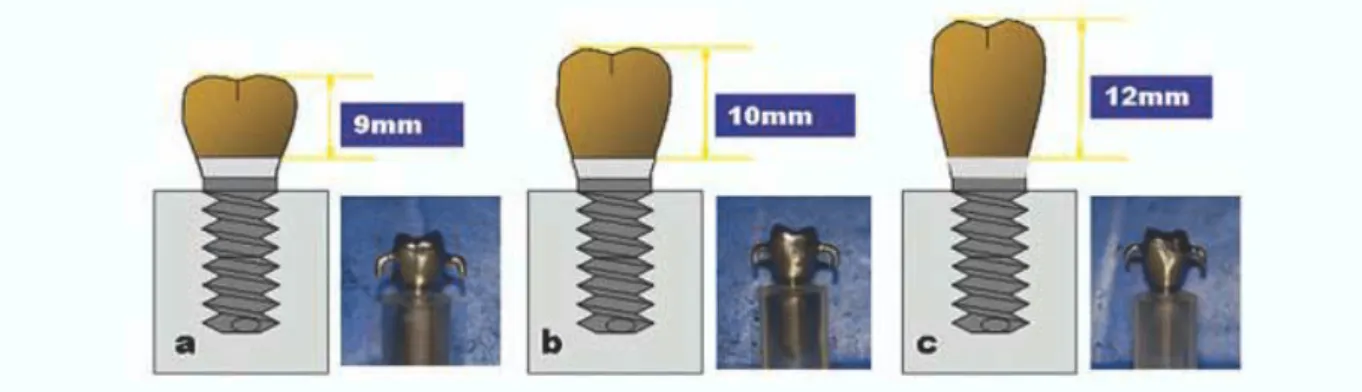
The resin copings were fabricated on the prostheses using pattern resin (Pattern Resin; GC, Japan). Wax moldings were completed using wax copings (Biotec modeling wax, Bredent Co, Germany). The heights of the wax molds were 9mm, 10mm, and 12 mm according to the abutment heights of 4 mm, 5.5 mm and 7 mm, respectively (Fig. 3). Seven specimens of a single crown similar to the first premolar were fabricated. A hook was fabricated at the top third portion of the occlusal surface in order to measure the tensile strength. After dipping with a plaster dipping material (Cristobalite FF, Noritake, Nagayo, Japan) and hardening, a casting type 4 gold alloy (Super 55, Soo-Min Synthesis Dental Material s, Korea) was fabricated in a vacuum casting machine (KDF Cascom, Denken, Japan).
The castings were divested, placed in an ultrasonic cleaner, and inspected for debris and surface irregularities using a
Fig. 1. The single implant with the solid abutment embedded in the block of acrylic resin.
Fig. 2. Solid abutment systems of 4 mm (a), 5.5 mm (b), and 7 mm (c) (ISR412, NEOBIOTECH, CO., LTD., Korea).
(a) (b) (c)
dental laboratory microscope. The adaptability of each casting was evaluated using disclosing medium (Fit Checker, G.C. Dental Industrial Corp., Tokyo, Japan).
Seven castings were fabricated and the entire procedure was performed by the same technician.
3. Cementing
Tables I and II list the temporary cements used in this study. The cements were mixed according to the manufacturers’specifications, and 0.1 mL of the luting cement was placed inside the prostheses uniformly using a calibrated insulin syringe. The prostheses were seated onto the abutments and loaded under 5 kg compression for 10 minutes (Number 96 according to the American Dental Association). Excess cement was removed from the abutment-prostheses junction and the specimens were stored at room temperature for 24 hours. After tensile
testing, each casting was heated to 600℃ for 1.5 hours in order to help remove the luting agents and allowed to bench cool at room temperature. The specimens were immersed in a cement removal solution (Removalon-1, Premier Dental Products, Inc., Norristown, PA, USA) and placed in an ultrasonic cleaner for 30 minutes. The specimens were then inspected for complete cement removal and rinsed with water.
4. Tensile tests
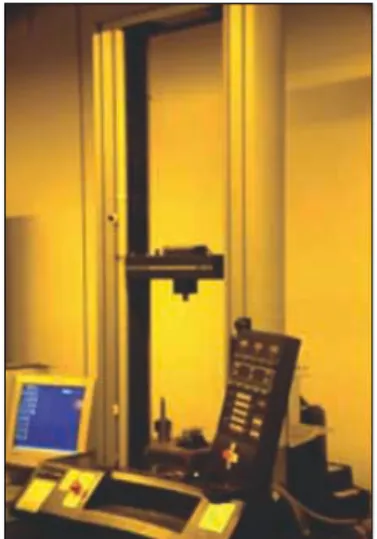
The specimens were tested under tension using a universal testing machine (Instron, Model 4301, Instron Ltd., High Wycombe, England) operating at a crosshead speed of 0.5 mm/min. The separation force needed to unseat the crown from the abutment was recorded. The initial drop in the stress-displacement curve was used as the load at the failure strength. The tensile tests were repeated 3 times for
Fig. 3. Casting crowns of 9 mm (a), 10 mm (b), and 12 mm (c).
Table I. Temporary luting cements types used in the study
Code Brand Type Manufacturer
TB TempBond Zinc oxide (eugenol) Kerr Co.
CA Cavitec Zinc oxide (eugenol) Kerr Co.
TNE TempBond NE Zinc oxide (non-eugenol) Kerr Co.
Pro Procem Zinc oxide (non-eugenol) ESPE Dental AG.
DY Dycal Calcium hydroxide Dentsply Inc.
IRM IRM Zinc oxide (eugenol) Dentsply Inc.
TB: TempBond, CA: Cavitec, TNE: TempBond NE, Pro: Procem, DY: Dycal, and IRM: IRM
each cement (Fig. 4 and 5).
5. Statistics
Statistical analysis was carried out using two-way analysis of variance (ANOVA) to determine the effects of the temporary cements and abutment heights on the retentive force (P<0.05). A Tukey’s HSD (P<0.05) test
was used to determine the differences between the group means.
RESULTS
There was a significant difference between the groups with different abutment heights in the retentive force (P<0.05) (Table III and IV). Table III shows the mean and standard deviation of the retentive forces according to the abutment heights. A Tukey’s HSD performed for each abutment height showed that for each abutment height (4 mm, 5.5 mm, and 7 mm), Dycal had the highest retentive force, followed in order by IRM, Procem, TempBond, Cavitec, and TempBond NE (Table III and V and Fig. 6).
TempBond NE had the lowest retentive force at an abutment height of 4 mm, showing a tensile strength of 1.76 ± 0.76 kg, and Dycal had the highest retentive force at an abutment height of 7 mm, showing a tensile strength of 19.98 ± 2.91 kg (Table III and Fig. 6). The highest retentive force was found to be approximately 7 times the lowest retentive force for each abutment height. The increase in retentive forces from abutment heights of 4 mm to 5.5 mm was larger than that from 5.5 mm to 7 mm (Fig. 7).
Table II. Classification of the experimental groups
Cement type Abutment height (mm) Number of specimens
TB 4 7
5.5 7
7 7
CA 4 7
5.5 7
7 7
TNE 4 7
5.5 7
7 7
Pro 4 7
5.5 7
7 7
DY 4 7
5.5 7
7 7
IRM 4 7
5.5 7
7 7
TB: TempBond, CA: Cavitec, TNE: TempBond NE, Pro: Procem, DY: Dycal, and IRM: IRM
Fig. 4. The universal testing machine used to measure tensile strengths.
Table III. Mean tensile bond strengths (kg) and standard deviation of the cements at different abutment heights
TB CA TNE Pro DY IRM
4 mm 4.14±0.39 2.07±0.71 1.76±0.76 4.99±0.77 7.42±1.04 5.82±0.79
5.5 mm 7.63±0.24 3.92±0.62 2.87±1.48 8.65±2.02 15.89±3.07 8.40±2.63
7 mm 8.26±0.38 4.57±0.32 3.48±0.58 11.05±1.51 19.98±2.91 9.47±1.51
TB: TempBond, CA: Cavitec, TNE: TempBond NE, Pro: Procem, DY: Dycal, and IRM: IRM
Table IV. Two-way ANOVA of the interaction between the abutment heights and the cement groups
Source Sum of Squares (kg) df Mean Squares (kg) 2 F Significance
Cement (A) 1843.505 5 368.701 165.400 0.000
Height (B) 573.146 2 286.573 128.557 0.000
AB 284.444 10 28.444 12.760 0.000
Error 240.748 108 2.229
Sum 9550.107 126
Fig. 5. Retentive tests in the universal testing machine.
Fig. 6. Mean uniaxial resistance forces of the cements for each abutment type. The TempBond NE had the lowest retentive force at an abutment height of 4 mm, and Dycal had the highest retentive force at an abutment height of 7
Fig. 7. The effect of the abutment height on the uniaxial resistance forces. The abutment heights have an influence on the retentive force. The retentive force was decreased in the order of abutment heights of 7 mm, 5.5 mm, and 4 mm
DISCUSSION
It has been reported that the grade of abutment, surface finish, abutment height, width, and diameter, and the cement type influence the retention and resistance of cement-retained restorations.8-10,13,14There are many reports on the retentive forces of cements in natural teeth, showing consistent results. However, recent data on the retentive forces of cements are different from the data obtained from natural teeth due to the shape of the abutments or different surface treatments for each implant system.3,12,15-17Schneider et al16examined the comparative retentive values of various dental cementing agents and dental implants and demonstrated that the retentive strength decreased with increasing abutment grade. Lee HY17examined changes in the tensile bond strength with different surface treatments and reported that sandblasting with 250 μm aluminum oxide produced the highest tensile bond strength in an abutment cemented with TempBond NE, and sandblasting with 50 μm aluminum oxide produced the highest tensile bond strength in an abutment cemented with TempBond, suggesting that the tensile bond strength dependspartly on the surface treatment. On the other hand, Squier et al.13 suggested that the use of an anodized abutment surface had no added effect on retention. Maxwell et al.18examined the effect of the crown preparation height on the retention and
resistance of gold castings using natural teeth and reported that the retentive force of an abutment height of 3 mm was decreased by half compared with that of an abutment height of 5 mm. Covey et al.12 using CeraOne abutments demonstrated that the abutment height and height to width ratio were positively associated with the retention strength, whereas the total surface area and width of the abutment were not. This study used implant abutments that had previously been established, and had the other factors fixed except for the different types of cements and the abutment heights. Therefore, an assessment of the tensile strength in accordance with the abutment height and the effects of the different types of cements on the retentive forces of the implant-supported crowns was possible. It is possible that the surface roughness of a specimen can change if the specimen is to be used more than once. However, most studies3,12,19-21found that recycling the specimen has no effect on the surface roughness of the specimen. Mathews et al.22 measured the cemented retainers using a force simulation machine and reported that the number of tests had no significant effect on the cement retentive strength. Goodacre et al.23reviewed 17 studies, and found that abutment screw loosening occurred in 2-45 % of the reported cases. The highest incidence was noted with single crowns placed in the premolar and molar areas.24In this study, three specimens of a single crown similar to a first premolar were Table V. Results of the Tukey’s test between the cement groups
Group TB CA TNE Pro DY IRM
TB
CA *
TNE *
Pro * * *
DY * * * *
IRM * * *
TB: TempBond, CA: Cavitec, TNE: TempBond NE, Pro: Procem, DY: Dycal, and IRM: IRM
Table VI. Results of the Tukey’s test between the abutment heights
Group 4 mm 5.5 mm 7 mm
4 mm
5.5 mm *
7 mm * *
fabricated. The cement types and the abutment heights were found to have a significant effect on the retentive force. The retentive forces increased with increasing abutment heights, which is in contrast to some studies that showed no increase of the retentive forces in accordance with abutment heights.
However, the results of the present study are consistent with Kent et al.15who evaluated an experimental abutment (5 mm height) using a zinc phosphate permanent cement and reported retention strengths double that of standard height abutments (3.7 mm). In this study, the influence of the increasing abutment height on the retentive force was found to be larger from 4 mm to 5.5 mm than from 5.5 mm to 7.5 mm, even though this was not statistically significant. It is possible that the abutment height will have less effect on the retentive force as it reaches a certain point. More studies will be needed to confirm this hypothesis. Michalakis et al.8, who evaluated the retentive strengths of 4 provisional luting agents used to cement restorations supported by 2 or 4 implants 24 hours after cementation, reported a significant difference in the retentive strength values of TempBond and TempBond NE for the 2-unit fixed partial dentures but not for the 4-unit fixed partial dentures. In the present study, there was a significant difference in the retentive force between the TempBond and TempBond NE at various abutment heights even though the prefabricated implant abutments had an 8�taper per side. The solubility of specimens with 3 resins, 1 polyurethane, and 2 eugenol- containing provisional luting agents, was assessed and it was found that the specimens containing eugenol had the best solubility. Eugenol inhibits bacteria from multiplying and cements containing eugenol have advantages in terms of cost. However, the high solubility can allow a colony to form in the gap between the abutment and the prosthesis.
Bacterial formation on the interface between the abutment and the prosthesis causes soft tissue complications. It is also possible that persistent microleakage of the cements will ultimately weaken the retentive force of the prostheses. One study examined ten samples of five different luting agents to determine their retentive strengths according to the CeraOne single-tooth implant system. It was reported that luting agents containing eugenol had a lower retentive force than those that did not but the difference was not statistically significant.3This finding is in contrast with the current study
retentive force than TempBond NE, which does not contain eugenol, at all abutment heights. It is believed that this difference was due to the samples in Clayton et al. s study3 being stored in artificial saliva for 24 hours to mimic the oral cavity environment. Breeding et al6tested 10 machined cementable implant abutments with an appropriate axial taper of 9 degrees, and reported the retentive force for IRM to be 14.34 kg, whereas Ramp et al.5 who tested 10 prefabricated implant abutments with a 3�taper per side, reported a retentive force of 32.66 kg. In this study, IRM showed a significantly higher retentive force than TempBond and TempBond NE, which is compatible with the findings from Breeding et al.6Singer and Serfaty25 presented a follow-up of 92 implant-supported fixed partial dentures that had been cement retained from 6 months up to 3 years and demonstrated that no washout occurred when the fixed partial dentures were cemented with IRM.
However, washout occurred when the dentures were cemented with TempBond. In the current study, IRM showed relatively high retentive values, which suggests that it is a reliable luting agent. However, it is unclear if the higher retentive values of IRM will cause difficulties during retrieval.25Dycal demonstrated the highest retentive force among various luting agents at all abutment heights. This data is compatible with the findings reported by Baldissara et al26, who evaluated the marginal leakage of various temporary luting agents previously cemented in natural teeth and found that a calcium hydroxide base showed the lowest marginal leakage. It is possible that the amount of retentive force of a temporary luting agent under certain circumstances should be assessed before it is used.
Although the retentive force sufficient to remove implant- supported bones, abutments, or prostheses without damage is unknown, previous studies have demonstrated that it is impossible to remove them if permanent cements are used.
This study showed that the cement types and abutment heights have a significant effect on the retentive force. In addition, the interaction between the cement types and the abutment heights has a significant effect on the retentive force. Moreover, other factors may have some effect on the retentive force of implant-supported prostheses.
More experimental work on thermocycling techniques and cyclic load tests will be needed. In addition, more
the selection of the appropriate cements according to various implant systems and the number of implants.
CONCLUSION
The cement types and abutment heights were found to have a significant effect on the retentive force (P<0.05). In addition, the interaction between the cement types and the abutment heights has a significant influence (P<0.05). The abutment heights affect the retentive force with a higher abutment height having a stronger retentive force (P<0.05).
The retentive force is decreased in the order of abutment heights of 7 mm, 5.5 mm, and 4 mm (P<0.05). The highest retentive force according to the temporary cement type is found to be Dycal, which was followed in order by Procem, IRM, TempBond, Cavitec, and TempBond NE. There was a significant difference between Dycal and the other cements.
Cavitec and TempBond NE showed the lowest values (P<0.05). The influence of the increasing abutment height on the retentive force was found to be smaller from abutment heights of 5.5 mm to 7.5 mm than from 4 mm to 5.5 mm. Dycal showed significantly larger changes in retentive force with changes in abutment heights compared with the other cement types (P<0.05).
REFERENCES
1. Misch CE. Screw-retained versus cement-retained im- plant-supported prostheses. Pract Periodontics Aesthet Dent 1995;7:15-8.
2. Chee W, Felton DA, Johnson PF, Sullivan DY.
Cemented versus screw-retained implant prostheses:
which is better? Int J Oral Maxillofac Implants 1999;14:137-41.
3. Clayton GH, Driscoll CF, Hondrum SO. The effect of luting agents on the retention and marginal adaptation of the CeraOne implant system. Int J Oral Maxillofac Implants 1997;12:660-5.
4. Pauletto N, Lahiffe BJ, Walton JN. Complications asso- ciated with excess cement around crowns on osseointe- grated implants: a clinical report. Int J Oral Maxillofac Implants 1999;14:865-8.
5. Ramp MH, Dixon DL, Ramp LC, Breeding LC, Barber LL. Tensile bond strengths of provisional luting agents used with an implant system. J Prosthet Dent 1999;81:510-4.
6. Breeding LC, Dixon DL, Bogacki MT, Tietge JD. Use
of luting agents with an implant system: Part I. J Prosthet Dent 1992;68:737-41.
7. Voitik AJ. The Kulzer abutment luting; Kal technique.
A direct assembly framework method for osseointe- grated implant prostheses. Implant Soc 1991;2:11-4.
8. Michalakis KX, Pissiotis AL, Hirayama H. Cement failure loads of 4 provisional luting agents used for the cementation of implant-supported fixed partial den- tures. Int J Oral Maxillofac Implants 2000;15:545-9.
9. Akashia AE, Francischone CE, Tokutsune E, da Silva W, Jr. Effects of different types of temporary cements on the tensile strength and marginal adaptation of crowns on implants. J Adhes Dent 2002;4:309-15.
10. Bernal G, Okamura M, Munoz CA. The effects of abutment taper, length and cement type on resistance to dislodgement of cement-retained, implant-supported restorations. J Prosthodont 2003;12:111-5.
11. Crim GA, Swartz ML, Phillips RW. Comparison of four thermocycling techniques. J Prosthet Dent 1985;53:50-3.
12. Covey DA, Kent DK, St Germain HA, Jr., Koka S.
Effects of abutment size and luting cement type on the uniaxial retention force of implant-supported crowns. J Prosthet Dent 2000;83:344-8.
13. Squier RS, Agar JR, Duncan JP, Taylor TD.
Retentiveness of dental cements used with metallic im- plant components. Int J Oral Maxillofac Implants 2001;16:793-8.
14. Akca K, Iplikcioglu H, Cehreli MC. Comparison of uniaxial resistance forces of cements used with im- plant-supported crowns. Int J Oral Maxillofac Implants 2002;17:536-42.
15. Kent DK, Koka S, Froeschle ML. Retention of cement- ed implant-supported restorations. J Prosthodont 1997;6:193-6.
16. Schneider RL. Evaluation of the retention of castings to endosseous dental implants. J Prosthet Dent 1987;58:73-8.
17. Lee HY, Lee HS. In vitro study of the tensile bond strength of cement-retained single implant prosthesis by the various provisional luting cements and the sur- face treatment of abutments. J Korean Acad Prosthodont 2002;40:296-305.
18. Maxwell AW, Blank LW, Pelleu GB, Jr. Effect of crown preparation height on the retention and resis- tance of gold castings. Gen Dent 1990;38:200-2.
19. Koka S, Ewoldsen NO, Dana CL, Beatty MW. The ef- fect of cementing agent and technique on the retention of a CeraOne gold cylinder: a pilot study. Implant Dent 1995;4:32-5.
20. Mansour A, Ercoli C, Graser G, Tallents R, Moss M.
Comparative evaluation of casting retention using the ITI solid abutment with six cements. Clin Oral
Implants Res 2002;13:343-8.
21. Dixon DL, Breeding LC, Lilly KR. Use of luting agents with an implant system: Part II. J Prosthet Dent 1992;68:885-90.
22. Mathews MF, Breeding LC, Dixon DL, Aquilino SA.
The effect of connector design on cement retention in an implant and natural tooth-supported fixed partial denture. J Prosthet Dent 1991;65:822-7.
23. Goodacre CJ, Kan JY, Rungcharassaeng K. Clinical complications of osseointegrated implants. J Prosthet Dent 1999;81:537-52.
24. Becker W, Becker BE. Replacement of maxillary and mandibular molars with single endosseous implant restorations: a retrospective study. J Prosthet Dent 1995;74:51-5.
25. Singer A, Serfaty V. Cement-retained implant-support- ed fixed partial dentures: a 6-month to 3-year follow- up. Int J Oral Maxillofac Implants 1996;11:645-9.
26. Baldissara P, Comin G, Martone F, Scotti R.
Comparative study of the marginal microleakage of six cements in fixed provisional crowns. J Prosthet Dent 1998;80:417-22.
COMPARISON OF RETENTIVE FORCES OF TEMPORARY CEMENTS AND ABUTMENT HEIGHT USED WITH
IMPLANT-SUPPORTED PROSTHESES
Dong-Hee Lee1, DDS, Kyu-Won Suh2, DDS, MSD, PhD, Jae-Jun Ryu2*, DDS, MSD, PhD
1Graduate student, Department of Restorative Dentistry, Graduate School of Clinical Dentistry, Korea University
2Professor, Department of Restorative Dentistry, Graduate School of Clinical Dentistry, Korea University
STATEMENT OF THE PROBLEM: Recent data regarding the effects the cement type and abutment heights on the retentive force of a prosthetic crown are inconsistent and unable to suggest clinical guidelines. PURPOSE OF THE STUDY: This study evaluated the effects of different types of temporary cements and abutment heights on the retentive strength of cement-retained implant-supported prostheses.
MATERIALS AND METHODS: Prefabricated implant abutments, 4 mm in diameter, 8�taper per side, and light chamfer margins, were used. The abutment heights of the implants were 4 mm, 5.5 mm and 7 mm. Seven specimens of a single crown similar to a first premolar were fabricated. Six commercially available temporary cements, TempBond, TempBond NE, Cavitec, Procem, Dycal, and IRM, were used in this study. Twenty-four hours after cementation, the retentive strengths were measured using a universal testing machine with a cross- head speed of 0.5 mm/min. The cementation procedures were repeated 3 times. The data was analyzed using two-way analysis of variance and a Tukey test (α=0.05). RESULTS: The tensile bond strength ranged from 1.76 kg to 19.98 kg. The lowest tensile strengths were simi- lar in the TempBond and Cavitec agents. Dycal showed the highest tensile bond strength (P<0.01). More force was required to remove the crowns cemented to the long abutments (P<0.05). CONCLUSION: TempBond and Cavitec agents showed the lowest mean tensile bond strength. The Dycal agent showed more than double the tensile bond strength of the TempBond agent.
KEY WORDS: Dental implantation, Dental cements, Dental abutments, Tensile strength
Corresponding Author: Jae-Jun Ryu
Department of Medical Science, Graduate School, Korea University
516, Gozan 1-dong, Danwon-gu, Ansan, Gyeonggi, 425-707, Korea +82-31-412-5370: e-mail, [email protected] Received May 22, 2008 Last Revison June 5, 2008 Accepted June 20, 2008.