ABSTRACT
Nonsteroidal anti-inflammatory drug (NSAID)-exacerbated respiratory disease (NERD) has attracted a great deal of attention because of its association with severe asthma. However, it remains widely underdiagnosed in asthmatics as well as the general population. Upon pharmacological inhibition of cyclooxygenase 1 by NSAIDs, production of anti-inflammatory prostaglandin E2 and lipoxins ceases, while release of proinflammatory cysteinyl leukotrienes increases. To determine the underlying mechanisms, many studies have attempted to elucidate the genetic variants, such as single nucleotide polymorphisms, responsible for alterations of prostaglandins and leukotrienes, but the results of these genetic studies could not explain the whole genetic pathogenesis of NERD. Accordingly, the field of epigenetics has been introduced as an additional contributor to genomic alteration underlying the development of NERD. Recently, changes in CpG methylation, as one of the epigenetic components, have been identified in target tissues of NERD. This review discusses in silico analyses of both genetic and epigenetic components to gain a better understanding of their complementary roles in the development of NERD. Although the molecular mechanisms underlying NERD pathogenesis remain poorly understood, genetic and epigenetic variations play significant roles. Our results enhance the understanding of the genetic and epigenetic mechanisms involved in the development of NERD and suggest new approaches toward better diagnosis and management.
Keywords: NSAID hypersensitivity; asthma; genetics; epigenetics
INTRODUCTION
Oral aspirin challenge is the best method of diagnosing nonsteroidal anti-inflammatory drug (NSAID)-exacerbated respiratory disease (NERD), but this is a time-consuming procedure that results in serious complications in some cases. Therefore, the development of noninvasive biomarkers for easy diagnosis has been attempted to confirm the diagnosis of NERD and prevent unexpected complications of nonsteroidal anti-inflammatory drugs (NSAIDs)/aspirin use in susceptible patients. Using several genetic approaches, including
Review
Received: Apr 4, 2019 Revised: Jun 21, 2019 Accepted: Jun 25, 2019 Correspondence to Hun Soo Chang, PhD
Department of Interdisciplinary Program in Biomedical Science Major, Soonchunhyang Graduate School, 170 Jomaru-ro, Wonmi-gu, Bucheon 14584, Korea.
Tel: +82-32-621-5105 Fax: +82-32-621-5023 E-mail: [email protected]
†Jong-Uk Lee and Jong Sook Park contributed equally to this work.
Copyright © 2019 The Korean Academy of Asthma, Allergy and Clinical Immunology • The Korean Academy of Pediatric Allergy and Respiratory Disease
This is an Open Access article distributed under the terms of the Creative Commons Attribution Non-Commercial License (https://
creativecommons.org/licenses/by-nc/4.0/) which permits unrestricted non-commercial use, distribution, and reproduction in any medium, provided the original work is properly cited.
ORCID iDs Jong-Uk Lee
https://orcid.org/0000-0002-0232-5381 Jong Sook Park
https://orcid.org/0000-0003-4128-9085 Hun Soo Chang
https://orcid.org/0000-0002-4025-4182 Choon-Sik Park
https://orcid.org/0000-0003-2977-0255
Jong-Uk Lee ,
1†Jong Sook Park ,
2†Hun Soo Chang ,
1*Choon-Sik Park
21 Department of Interdisciplinary Program in Biomedical Science Major, Soonchunhyang Graduate School, Bucheon, Korea
2 Genome Research Center and Division of Allergy and Respiratory Medicine, Soonchunhyang University Bucheon Hospital, Bucheon, Korea
Complementary Participation of Genetics and Epigenetics in
Development of NSAID-exacerbated
Respiratory Disease
Disclosure
There are no financial or other issues that might lead to conflict of interest.
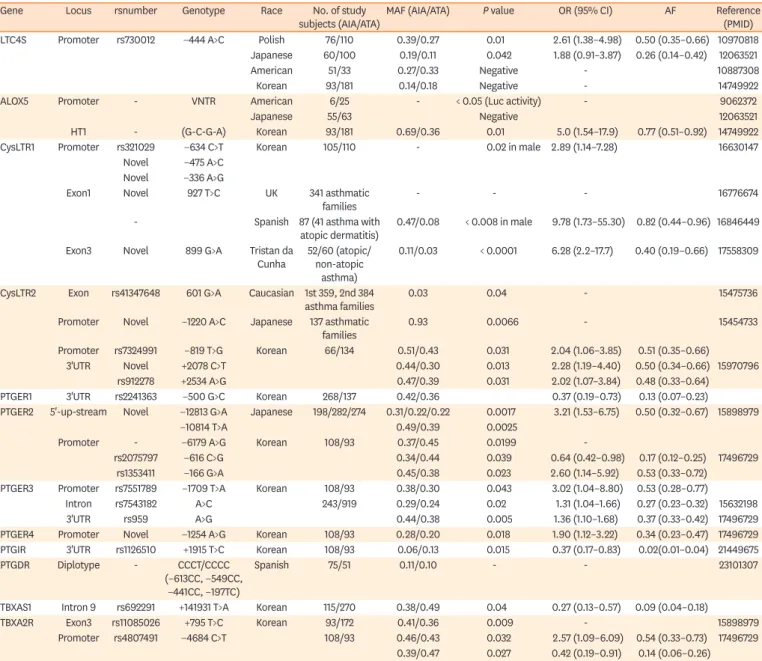
biologically plausible candidate genes and genome-wide association studies (GWAS), more than 100 genetic variants have been identified in association with NERD. Among them, the best mechanistic evidence supports intrinsic dysregulation of the leukotriene (LT)/
prostaglandin (PG) pathway, leading to increased recruitment of eosinophils and immune effector cells into the target tissues. These effects are mainly mediated by single nucleotide polymorphisms (SNPs) of the genes that regulate mRNA and protein expression responsible for PG and LT metabolism, i.e., LTC4S,
1,2ALOX5,
3,4CYSLTR1,
5-7CYSLTR2,
5,6TBX,
6,8EP2,
9and COX2
10,11(Table 1).
Table 1. NERD-associated single nucleotide polymorphisms in the genes for cysteinyl LTRs, PG, and thromboxane synthesis and their receptors
Gene Locus rsnumber Genotype Race No. of study
subjects (AIA/ATA) MAF (AIA/ATA) P value OR (95% CI) AF Reference (PMID) LTC4S Promoter rs730012 −444 A>C Polish 76/110 0.39/0.27 0.01 2.61 (1.38–4.98) 0.50 (0.35–0.66) 10970818
Japanese 60/100 0.19/0.11 0.042 1.88 (0.91–3.87) 0.26 (0.14–0.42) 12063521
American 51/33 0.27/0.33 Negative - 10887308
Korean 93/181 0.14/0.18 Negative - 14749922
ALOX5 Promoter - VNTR American 6/25 - < 0.05 (Luc activity) - 9062372
Japanese 55/63 Negative 12063521
HT1 - (G-C-G-A) Korean 93/181 0.69/0.36 0.01 5.0 (1.54–17.9) 0.77 (0.51–0.92) 14749922
CysLTR1 Promoter rs321029 −634 C>T Korean 105/110 - 0.02 in male 2.89 (1.14–7.28) 16630147
Novel −475 A>C Novel −336 A>G
Exon1 Novel 927 T>C UK 341 asthmatic
families - - - 16776674
- Spanish 87 (41 asthma with
atopic dermatitis) 0.47/0.08 < 0.008 in male 9.78 (1.73–55.30) 0.82 (0.44–0.96) 16846449 Exon3 Novel 899 G>A Tristan da
Cunha 52/60 (atopic/
non-atopic asthma)
0.11/0.03 < 0.0001 6.28 (2.2–17.7) 0.40 (0.19–0.66) 17558309
CysLTR2 Exon rs41347648 601 G>A Caucasian 1st 359, 2nd 384
asthma families 0.03 0.04 - 15475736
Promoter Novel −1220 A>C Japanese 137 asthmatic
families 0.93 0.0066 - 15454733
Promoter rs7324991 −819 T>G Korean 66/134 0.51/0.43 0.031 2.04 (1.06–3.85) 0.51 (0.35–0.66)
3'UTR Novel +2078 C>T 0.44/0.30 0.013 2.28 (1.19–4.40) 0.50 (0.34–0.66) 15970796
rs912278 +2534 A>G 0.47/0.39 0.031 2.02 (1.07–3.84) 0.48 (0.33–0.64)
PTGER1 3'UTR rs2241363 −500 G>C Korean 268/137 0.42/0.36 0.37 (0.19–0.73) 0.13 (0.07–0.23)
PTGER2 5'-up-stream Novel −12813 G>A Japanese 198/282/274 0.31/0.22/0.22 0.0017 3.21 (1.53–6.75) 0.50 (0.32–0.67) 15898979
−10814 T>A 0.49/0.39 0.0025
Promoter - −6179 A>G Korean 108/93 0.37/0.45 0.0199 -
rs2075797 −616 C>G 0.34/0.44 0.039 0.64 (0.42–0.98) 0.17 (0.12–0.25) 17496729
rs1353411 −166 G>A 0.45/0.38 0.023 2.60 (1.14–5.92) 0.53 (0.33–0.72)
PTGER3 Promoter rs7551789 −1709 T>A Korean 108/93 0.38/0.30 0.043 3.02 (1.04–8.80) 0.53 (0.28–0.77)
Intron rs7543182 A>C 243/919 0.29/0.24 0.02 1.31 (1.04–1.66) 0.27 (0.23–0.32) 15632198
3'UTR rs959 A>G 0.44/0.38 0.005 1.36 (1.10–1.68) 0.37 (0.33–0.42) 17496729
PTGER4 Promoter Novel −1254 A>G Korean 108/93 0.28/0.20 0.018 1.90 (1.12–3.22) 0.34 (0.23–0.47) 17496729 PTGIR 3'UTR rs1126510 +1915 T>C Korean 108/93 0.06/0.13 0.015 0.37 (0.17–0.83) 0.02(0.01–0.04) 21449675
PTGDR Diplotype - CCCT/CCCC
(−613CC, −549CC,
−441CC, −197TC)
Spanish 75/51 0.11/0.10 - - 23101307
TBXAS1 Intron 9 rs692291 +141931 T>A Korean 115/270 0.38/0.49 0.04 0.27 (0.13–0.57) 0.09 (0.04–0.18)
TBXA2R Exon3 rs11085026 +795 T>C Korean 93/172 0.41/0.36 0.009 - 15898979
Promoter rs4807491 −4684 C>T 108/93 0.46/0.43 0.032 2.57 (1.09–6.09) 0.54 (0.33–0.73) 17496729 0.39/0.47 0.027 0.42 (0.19–0.91) 0.14 (0.06–0.26)
NERD, nonsteroidal anti-inflammatory drug (NSAID)-exacerbated respiratory disease; LTR, leukotriene; PG, prostaglandin; AF, attributable fraction; AIA, aspirin- induced asthma; ATA, aspirin-tolerance asthma; MAF, minor allele frequency; OR, odds ratio; CI, confidence interval; LTC4S, leukotriene C4 synthase; ALOX5, arachidonate 5-lipoxygenase; CysLTR1, cysteinyl leukotriene receptor 1; CysLTR2, cysteinyl leukotriene receptor 2; PTGER2, prostaglandin E receptor 2; PTGER3, prostaglandin E receptor 3; PTGER4, prostaglandin E receptor 4; PTGIR, prostaglandin I2 receptor; TBXAS1, thromboxane A synthase 1; TBXA2R, thromboxane A2 receptor; RGS7BP, regulator of G protein signaling 7-binding protein.
An LTC4S−444A/C promoter SNP (rs730012) is among the most widely reported variants associated with NERD, although its association with NERD across studies is inconsistent.
12-16Three ALOX5 promoter variants have been shown to be associated with NERD and/or its severity of hyperresponsiveness.
4,17,18However, some results have not been replicated due to small sample sizes, ethnic differences between study populations, or epigenetic changes, for the latter of which there is compelling evidence for a role in NERD.
19,20CLINICAL EVIDENCE OF EPIGENETIC COMPONENTS IN NERD
The prevalence of NSAID/aspirin hypersensitivity in adult asthmatics varies depending on the method used for diagnosis. In a recent meta-analysis,
21the prevalence was highest when determined by oral provocation test (adults 21%, children 5%), as compared to verbal history (adults 3%, children 2%). In Korea, 6.2% of 836 adult asthmatics showed a positive responses to oral aspirin challenge tests,
22and 5.8% of 1,173 adult asthmatics showed a positive
response for NSAID/aspirin hypersensitivity n histories and/or provocation tests.
23NERD shows less familial aggregation compared with asthma, although the European Network on Aspirin-Induced Asthma found that 6% of NERD patients had a family history of aspirin hypersensitivity.
24;a study of 1,344 Turkish patients revealed a 3.7% family history of NSAID/
aspirin hypersensitivity,
25suggesting an intermediate genetic background for this condition.
NSAID/aspirin hypersensitivity is more common in women than in men, beginning in adulthood at an average age of 30 years. Once developed, it remains throughout life, although sporadic disappearance of intolerance has been reported.
26However, considerable discordance in clinical manifestations of the disease has been noted in identical twin sisters, suggesting the greater influence of environmental factors.
27,28As NERD usually develops in middle age after relatively long-term exposure to NSAIDs, and with a low level of familial aggregation,
24,29epigenetic mechanisms may make greater contributions than genetic variations.
GLOBAL CHANGES IN CPG METHYLATION OF NASAL POLYPS FROM SUBJECTS WITH NERD
Epidemiological studies have shown that regular use of NSAIDs reduces the risk of
development of at least some cancers.
30,31via the well-known targets, including COX-1 and
COX-2, and other intracellular pathways, including cell cycle, cell differentiation, apoptosis,
and regulation of transcription factors (TFs).
32In our previous in vitro study, DNMT3a and
3b mRNAs were elevated in a mucoepidermoid cell line (NCI-H292) within 1 day after
stimulation with medium and high doses of aspirin, while DNMT1 and MeCP2 showed no
significant changes in expression (Fig. 1). DNMT3b mRNA was enhanced by stimulation for 2
hours with 0.2 and 2 mM aspirin. DNMT3a mRNA level was increased progressively for up to
3 days by treatment with high-dose aspirin. These data suggest that aspirin may induce global
CpG methylation, which may affect gene expression. In contrast, NSAIDs are known induce
promoter demethylation of Secreted Protein Acidic and Cysteine Rich (SPARC) by repressing
DNMT expression.
33In agreement with the experimental data, an epidemiological study
showed that chronic aspirin use may be associated with a lower prevalence of E-cadherin
(CDH1) promoter methylation in non-neoplastic gastric mucosa.
34There have been few studies on global DNA CpG methylation in NERD. In a genome-wide CpG methylation study of nasal polyps in subjects with NERD and aspirin-tolerant asthma (ATA) patients,
35332 CpG sites on 296 genes were hypomethylated and 158 sites on 141 genes were hypermethylated in NERD (Fig. 2). Thus, the NERD-associated proportion of global differential methylated CpG (DMC) was 1.78% (490/27,587 CpGs analyzed in the test kit), which was about 10 times higher than the proportion of DMC in the bronchial epithelium of patients with atopic asthma (0.19%, 53/27,578 CpGs).
36The 490 DMCs were located on 437 genes and, thus, the global proportion of differentially methylated genes (DMGs) was 3.02%
(437/14,457 genes analyzed in the test kit). In silico analysis of the 490 DMCs indicated that 409 CpG sites (83.5%) were on promoter regions with 130 hypermethylated CpGs and 279 hypomethylated CpGs (Fig. 3). In general, hypermethylation of cytosines within CpG islands of promoters causes gene silencing, and hypomethylation triggers active transcription.
37,38Thus, differential promoter CpG methylation may affect gene expression levels in nasal polyps of NERD patients, as compared to ATA patients. Ontological classification of the 36,127 genes in AmiGo2 (http://amigo.geneontology.org/amigo/search/ontology) indicated 259 genes in the arachidonate pathways (Table 2). Among them, 66 genes were differentially
0 daysA
Relative level of expression
3 days
2 hours 1 day 5 days
4
0 1 3
2
* *
*
*
* *
*
Time after treatment
DNMT3a
0 days
B
Relative level of expression
3 days
2 hours 1 day 5 days
4
0 1 3
2
Time after treatment
DNMT3b
2 mM 0.2 mM 0 mM 2 mM
0.2 mM 0 mM
0 days
C
Relative level of expression
3 days
2 hours 1 day 5 days
4
0 1 3
2
Time after treatment
DNMT1
0 days
D
Relative level of expression
3 days
2 hours 1 day 5 days
4
0 1 3
2
Time after treatment
MeCP2
2 mM 0.2 mM 0 mM 2 mM
0.2 mM 0 mM
Fig. 1. Effects of aspirin on DNA methyltransferase genes in the mucoepidermoid NCI-H292 lung cell line. Quantitative real-time polymerase chain reaction assay was conducted in a Smart Cycler instrument, and the relative levels of DNMT3a, DNMT3b, and DNMT1 mRNAs were normalized relative to that of peptidylprolyl isomerase A. The data are representative of 3 consecutive experiments.
*P < 0.05 vs. 0 mM aspirin.
A
−Log (p)
Delta beta 158 loci
(141 genes) 332 loci
(296 genes)
490/27,578 CpG = 1.78% Atopy: 53/27,578 CpG = 0.019%
7
−1.0 −0.80 −0.6−0.4−0.2 0 0.2 0.4 0.6 0.8 1.0 4
3 2 1 6 5
−Log (p)
Delta beta 7
−1.0 −0.80 −0.6−0.4−0.2 0 0.2 0.4 0.6 0.8 1.0 4
3 2 1 6 5
B C
ATA (buffy coat)
ATA (nas al pol
yp)
NERD ( buffy coat)
NERD (nas al pol
yp)
Beta value scale
1.0 0.9 0.8 0.7 0.6 0.5 0.4 0.3 0.2 0.1 0
Fig. 2. CpG DNA methylation patterns of nasal polyps and peripheral blood mononuclear cells obtained from subjects with NERD and ATA. Volcano plot of differential methylation levels between NERD and ATA in nasal polyp tissues (A) and buffy coat samples (B). Red dots, delta beta ≥ 0.5 and P ≤ 0.01; blue dots, delta beta ≤ −0.5 and P ≤ 0.01; gray dots, −0.5 ≤ delta beta ≤ 0.5 and P > 0.01. Delta beta, difference in DNA methylation level (subtracting DNA methylation level of ATA from NERD). −log (p), log-transformed t-test P values. (C) Heat map of 490 differentially methylated CpGs between NERD and ATA in buffy coat and nasal polyps. Reproduced with permission from Allergy Asthma Immunol Res 2013;5:258-7619 (license number: EU826007151).
NERD, nonsteroidal anti-inflammatory drug (NSAID)-exacerbated respiratory disease; ATA, aspirin-tolerant asthma.
Table 2. Proportions of differently methylated and SNP genes in arachidonic acid pathways in NERD compared to those in ATA
Ontology No. of genes DMG SNP-gene DMG & SNP cgSNPs
Arachidonic acid binding 5 3 (60) 2 (40) 1 (20) 1 (20)*
Arachidonic acid metabolism 62 34 (54.9) 11 (17.8) 4 (6.5) 0 (0)
Prostaglandin biosynthetic process 25 6 (25) 5 (20) 0 (0) 0 (1)
Leukotriene biosynthetic process 20 3 (15) 4 (20) 1 (5) 0 (2)
Arachidonic acid products 93 13 (14) 13 (14) 0 (0) 0 (3)
Leukotriene products 38 5 (13) 9 (24) 1 (2.6) 0 (4)
Lipoxygenase 16 2 (12.5) 5 (31.3) 0 (0) 0 (5)
Total 259 66 (22.5) 49 (18.9) 7 (2.7 ) 1 (0.4)
Values are presented as number (%). The 259 genes were recruited from 36,127 genes in the AmiGo2, the web-based set of tools for searching and browsing the Gene Ontology database. Number in parenthesis is proportion of genes among the total gene.
NERD, nonsteroidal anti-inflammatory drug (NSAID)-exacerbated respiratory disease; DMG, differentially methylated gene; SNP, single nucleotide polymorphism; ATA, aspirin-tolerance asthma; SNP-gene, number of genes having single nucleotide polymorphism associated with nonsteroidal anti- inflammatory drug (NSAID)-exacerbated respiratory disease; cgSNPs, CpG site related single nucleotide polymorphisms.
*S100A9 (S100 Calcium Binding Protein A9); This protein is a calcium- and zinc-binding protein which plays a prominent role in the regulation of inflammatory processes and immune response.
methylated (25.5%), which was 10 times higher than the global proportion of DMG (3.02%).
These observations indicated that the genes in the arachidonate pathways are much more labile to CpG methylation in NERD compared to ATA.
GENOME-EPIGENOME INTERACTION VIA CPG SITE- RELATED SNPS (CGSNPS)
Some SNPs influence the presence of CpG sites, where DNA modification, such as methylation and hydroxymethylation, occurs.
39These SNPs can lead to gain or loss of CpG sites and are defined as cgSNPs. For example, a C-to-T transition on the “C” of CpG dinucleotides leads to loss of a CpG site. A human genome study demonstrated a considerable proportion of cgSNPs (23.0%) among 4097556 common variants.
40In the nasal polyps of NERD,
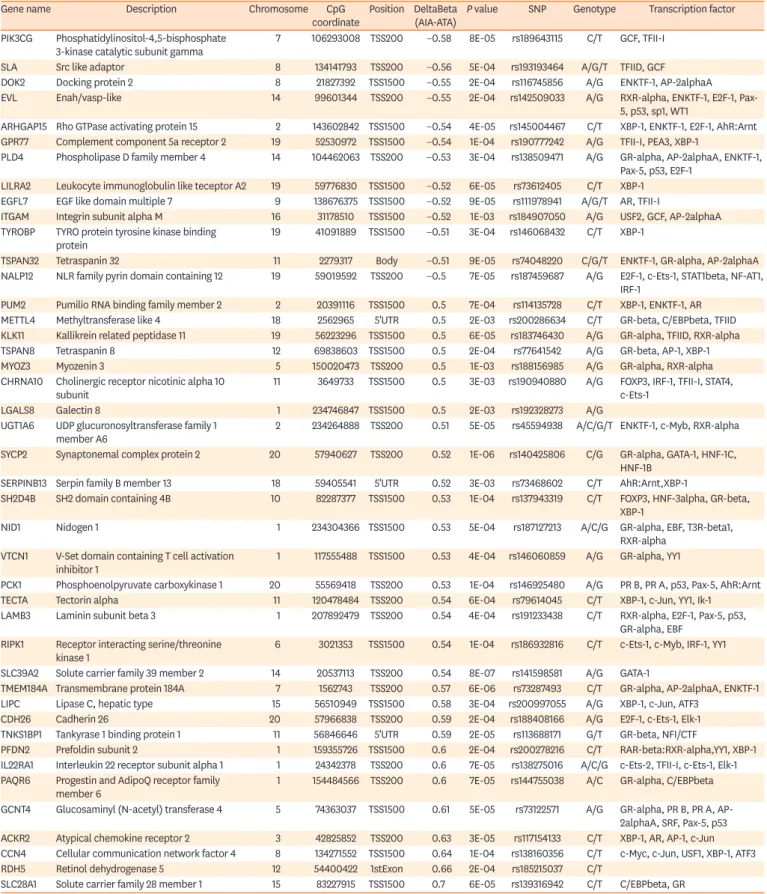
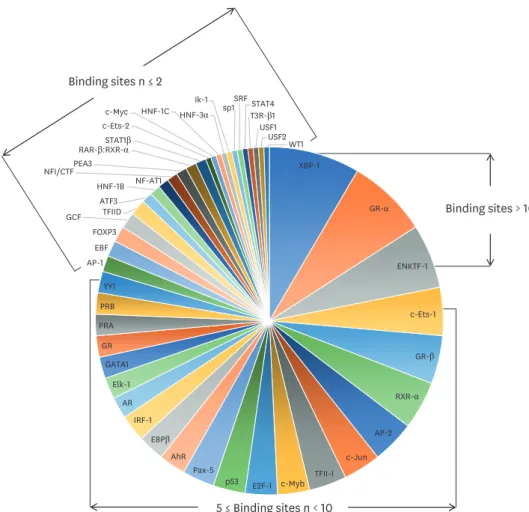
3542 cgSNPs were present in about 11% of the 409 DMC sites on the promoter and one cgSNP was located in the body of the gene (Table 3). Forty-seven TFs were predicted to bind to the DNA sequences of these sites (Fig. 4) on PROMO search (http://
alggen.lsi.upc.edu/). Among the TFs, XBP-1, GR-alpha, and EKNTF-1 bind to more than 10 CpGs sites. The XBP-1 protein is a TF that regulates the expression of genes important to the immune system and the cellular stress response.
41In addition, the expression of this protein is required for transcription of a subset of class II major histocompatibility genes.
42GWAS studies performed by our group and other investigators have revealed that SNPs on HLA-DPB1 (rs1042151 and rs3128965) show the most significant association with NERD susceptibility.
43The rs1042151 acts as a potential cis regulator of the expression of HLA-DPB1 with an expression quantitative trait loci (eQTL) score of 36.83, as calculated using the eQTL browser (http://eqtl.uchicago.edu/cgi-bin/gbrowse/eqtl/). In silico analysis of SNP function indicated that the rs1042151 SNP is located in an exonic splicing enhancer region.
44Thus, XBP-1 is thought to be one of the key TFs binding to the DMCs in the development of NERD, which will be validated in future studies.
FGD CpGs Subgroup CpGs Promoter 130
TSS200 26 TSS1500 47 5'UTR 31 1stExon 26
Body 27
3'UTR 1
FGD CpGs Subgroup CpGs Promoter 409
TSS200 84 TSS1500 146 5'UTR 93 1stExon 86
Body 79
3'UTR 2
84.10%
15.60%
0.30%
FGD CpGs Subgroup CpGs Promoter 279
TSS200 58 TSS1500 99
5'UTR 62
1stExon 60
Body 52
3'UTR 1
Hyper-methylation (158 loci on 141 genes) Hypo-methylation (332 loci on 296 genes) Total-methylation (490 loci on 437 genes)
83.50%
16.30% 0.40%
82.30%
17.70%
0.60%
Promoter Body 3'UTR
Promoter Body 3'UTR
Promoter Body 3'UTR
A B C
Fig. 3. In silico analysis of the 490 DMCs between NERD and ATA indicated that 409 CpG sites (83.5%) were on promoter regions with 130 hypermethylated CpGs and 279 hypomethylated CpGs.
DMC, differential methylated CpG; NERD, nonsteroidal anti-inflammatory drug (NSAID)-exacerbated respiratory disease; ATA, aspirin-tolerant asthma; TSS200, 0–200 bases upstream of the transcription start site; TSS1500, 200–1,500 bases upstream of the transcription start site.
Table 3. List of 42 cgSNPs of 409 differentially methylated CpG sites between NERD and ATA and their transcription binding factors
Gene name Description Chromosome CpG
coordinate Position DeltaBeta
(AIA-ATA) P value SNP Genotype Transcription factor PIK3CG Phosphatidylinositol-4,5-bisphosphate
3-kinase catalytic subunit gamma 7 106293008 TSS200 −0.58 8E-05 rs189643115 C/T GCF, TFII-I
SLA Src like adaptor 8 134141793 TSS200 −0.56 5E-04 rs193193464 A/G/T TFIID, GCF
DOK2 Docking protein 2 8 21827392 TSS1500 −0.55 2E-04 rs116745856 A/G ENKTF-1, AP-2alphaA
EVL Enah/vasp-like 14 99601344 TSS200 −0.55 2E-04 rs142509033 A/G RXR-alpha, ENKTF-1, E2F-1, Pax-
5, p53, sp1, WT1
ARHGAP15 Rho GTPase activating protein 15 2 143602842 TSS1500 −0.54 4E-05 rs145004467 C/T XBP-1, ENKTF-1, E2F-1, AhR:Arnt GPR77 Complement component 5a receptor 2 19 52530972 TSS1500 −0.54 1E-04 rs190777242 A/G TFII-I, PEA3, XBP-1
PLD4 Phospholipase D family member 4 14 104462063 TSS200 −0.53 3E-04 rs138509471 A/G GR-alpha, AP-2alphaA, ENKTF-1, Pax-5, p53, E2F-1
LILRA2 Leukocyte immunoglobulin like teceptor A2 19 59776830 TSS1500 −0.52 6E-05 rs73612405 C/T XBP-1 EGFL7 EGF like domain multiple 7 9 138676375 TSS1500 −0.52 9E-05 rs111978941 A/G/T AR, TFII-I
ITGAM Integrin subunit alpha M 16 31178510 TSS1500 −0.52 1E-03 rs184907050 A/G USF2, GCF, AP-2alphaA TYROBP TYRO protein tyrosine kinase binding
protein 19 41091889 TSS1500 −0.51 3E-04 rs146068432 C/T XBP-1
TSPAN32 Tetraspanin 32 11 2279317 Body −0.51 9E-05 rs74048220 C/G/T ENKTF-1, GR-alpha, AP-2alphaA
NALP12 NLR family pyrin domain containing 12 19 59019592 TSS200 −0.5 7E-05 rs187459687 A/G E2F-1, c-Ets-1, STAT1beta, NF-AT1, IRF-1
PUM2 Pumilio RNA binding family member 2 2 20391116 TSS1500 0.5 7E-04 rs114135728 C/T XBP-1, ENKTF-1, AR METTL4 Methyltransferase like 4 18 2562965 5'UTR 0.5 2E-03 rs200286634 C/T GR-beta, C/EBPbeta, TFIID KLK11 Kallikrein related peptidase 11 19 56223296 TSS1500 0.5 6E-05 rs183746430 A/G GR-alpha, TFIID, RXR-alpha
TSPAN8 Tetraspanin 8 12 69838603 TSS1500 0.5 2E-04 rs77641542 A/G GR-beta, AP-1, XBP-1
MYOZ3 Myozenin 3 5 150020473 TSS200 0.5 1E-03 rs188156985 A/G GR-alpha, RXR-alpha
CHRNA10 Cholinergic receptor nicotinic alpha 10
subunit 11 3649733 TSS1500 0.5 3E-03 rs190940880 A/G FOXP3, IRF-1, TFII-I, STAT4,
c-Ets-1
LGALS8 Galectin 8 1 234746847 TSS1500 0.5 2E-03 rs192328273 A/G
UGT1A6 UDP glucuronosyltransferase family 1
member A6 2 234264888 TSS200 0.51 5E-05 rs45594938 A/C/G/T ENKTF-1, c-Myb, RXR-alpha
SYCP2 Synaptonemal complex protein 2 20 57940627 TSS200 0.52 1E-06 rs140425806 C/G GR-alpha, GATA-1, HNF-1C, HNF-1B
SERPINB13 Serpin family B member 13 18 59405541 5'UTR 0.52 3E-03 rs73468602 C/T AhR:Arnt,XBP-1
SH2D4B SH2 domain containing 4B 10 82287377 TSS1500 0.53 1E-04 rs137943319 C/T FOXP3, HNF-3alpha, GR-beta, XBP-1
NID1 Nidogen 1 1 234304366 TSS1500 0.53 5E-04 rs187127213 A/C/G GR-alpha, EBF, T3R-beta1,
RXR-alpha VTCN1 V-Set domain containing T cell activation
inhibitor 1 1 117555488 TSS1500 0.53 4E-04 rs146060859 A/G GR-alpha, YY1
PCK1 Phosphoenolpyruvate carboxykinase 1 20 55569418 TSS200 0.53 1E-04 rs146925480 A/G PR B, PR A, p53, Pax-5, AhR:Arnt
TECTA Tectorin alpha 11 120478484 TSS200 0.54 6E-04 rs79614045 C/T XBP-1, c-Jun, YY1, Ik-1
LAMB3 Laminin subunit beta 3 1 207892479 TSS200 0.54 4E-04 rs191233438 C/T RXR-alpha, E2F-1, Pax-5, p53, GR-alpha, EBF
RIPK1 Receptor interacting serine/threonine
kinase 1 6 3021353 TSS1500 0.54 1E-04 rs186932816 C/T c-Ets-1, c-Myb, IRF-1, YY1
SLC39A2 Solute carrier family 39 member 2 14 20537113 TSS200 0.54 8E-07 rs141598581 A/G GATA-1
TMEM184A Transmembrane protein 184A 7 1562743 TSS200 0.57 6E-06 rs73287493 C/T GR-alpha, AP-2alphaA, ENKTF-1 LIPC Lipase C, hepatic type 15 56510949 TSS1500 0.58 3E-04 rs200997055 A/G XBP-1, c-Jun, ATF3
CDH26 Cadherin 26 20 57966838 TSS200 0.59 2E-04 rs188408166 A/G E2F-1, c-Ets-1, Elk-1
TNKS1BP1 Tankyrase 1 binding protein 1 11 56846646 5'UTR 0.59 2E-05 rs113688171 G/T GR-beta, NFI/CTF
PFDN2 Prefoldin subunit 2 1 159355726 TSS1500 0.6 2E-04 rs200278216 C/T RAR-beta:RXR-alpha,YY1, XBP-1 IL22RA1 Interleukin 22 receptor subunit alpha 1 1 24342378 TSS200 0.6 7E-05 rs138275016 A/C/G c-Ets-2, TFII-I, c-Ets-1, Elk-1 PAQR6 Progestin and AdipoQ receptor family
member 6 1 154484566 TSS200 0.6 7E-05 rs144755038 A/C GR-alpha, C/EBPbeta
GCNT4 Glucosaminyl (N-acetyl) transferase 4 5 74363037 TSS1500 0.61 5E-05 rs73122571 A/G GR-alpha, PR B, PR A, AP- 2alphaA, SRF, Pax-5, p53 ACKR2 Atypical chemokine receptor 2 3 42825852 TSS200 0.63 3E-05 rs117154133 C/T XBP-1, AR, AP-1, c-Jun CCN4 Cellular communication network factor 4 8 134271552 TSS1500 0.64 1E-04 rs138160356 C/T c-Myc, c-Jun, USF1, XBP-1, ATF3
RDH5 Retinol dehydrogenase 5 12 54400422 1stExon 0.66 2E-04 rs185215037 C/T
SLC28A1 Solute carrier family 28 member 1 15 83227915 TSS1500 0.7 6E-05 rs139316942 C/T C/EBPbeta, GR
cgSNP, CpG site-related single nucleotide polymorphism; NERD, nonsteroidal anti-inflammatory drug (NSAID)-exacerbated respiratory disease; AIA, aspirin- induced asthma; ATA, aspirin-tolerant asthma; SNP, single nucleotide polymorphism.
Interestingly, the frequency of cgSNPs was much lower in the arachidonate pathways. Among the total of 259 genes involved in these pathways, the number of genes with SNPs associated with NERD was 49 (18.9%), which was slightly less than the proportion of DMG (25.5%) (Table 3). Seven genes had both DMCs and SNPs. Among them, only one SNP (rs19980990 of S100A9) was related to a CpG site (i.e., a cgSNP). Thus, among the 259 genes, gene expression may be regulated by CpG methylation on 59 genes, by SNPs on 42 genes, and by both CpG methylation and SNPs on 7 genes.
DIFFERENTIALLY METHYLATED CPGS OF THE GENES INVOLVED IN THE PG AND LTR BIOSYNTHESIS
PATHWAYS
Among 37 CpGs on 19 genes found in the PG and LT biosynthesis pathways (Supplementary
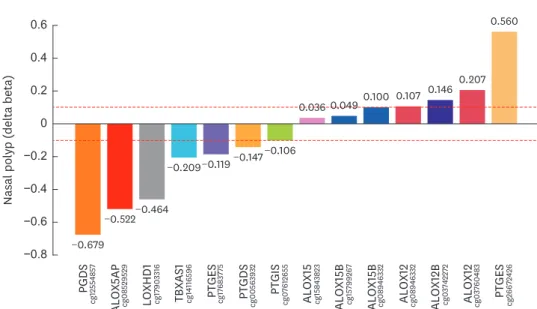
Table S1), there were 14 DMCs on 11 genes, i.e., ALOX12 (cg03760483, cg08946332), ALOX12B(cg03742272), ALOX15 (CG15843823), ALOX15B (CG15799267, CG12343777), ALOX5AP (CG08529529), LOXHD1 (cg17903316), PGDS (cg12554857), PTGDS (CG00563932), PTGES (cg26672426, cg17683775), PTGIS (CG07612655), and TBXAS1 (CG14116569) (Fig. 5). Among them, PGDS (cg12554857) and ALOX5AP (CG08529529) were highly hypomethylated (delta beta: −0.67 and −0.522, respectively),
XBP-1
GR-α
ENKTF-1
c-Ets-1
GR-β RXR-α
AP-2 c-Jun TFII-I c-Myb E2F-1 p53 Pax-5 AhR EBPβ IRF-1 AR Elk-1 GATA1 GR PRA PRB YY1 AP-1
EBF FOXP3 GCF ATF3TFIID
HNF-1B NF-AT1 NFI/CTFPEA3
RAR-β:RXR-αSTAT1β c-Ets-2
c-Myc HNF-1C HNF-3αIk-1
sp1SRF STAT4 T3R-β1 USF1USF2
WT1
Binding sites > 10
5 ≤ Binding sites n < 10 Binding sites n ≤ 2
Fig. 4. Diagram of transcription factors binding to 43 CpG site-related single nucleotide polymorphisms.
while PTGES (cg26672426) was robustly hypermethylated (delta beta: 0.56) in NERD compared to ATA (Fig. 5). Although the genomic impact of DMCs in NERD has not been analyzed with regard to changes in their genes or metabolites, prostanglandins, cysteinyl LTs, and thromboxanes are expected to be elevated, while PGE may be downregulated by varying the extent of CpG methylation of the relevant genes of NERD patients.
Therapeutic concentrations of aspirin mainly inhibit cyclooxygenase 1 (COX-1). COX-1, also known as PGG/H synthase 1, PG-endoperoxide synthase 1, or PGH2 synthase 1, is an enzyme encoded in humans by the PTGS1 gene. Therefore, blocking of COX-1 results in a reduction of multifunctional PGH2 level, which is a common precursor substrate for PGD2, PGE2, PGF2, PGI2, and TXB2 (Fig. 6A). Accordingly, the levels of all of these end products are expected to be decreased after aspirin challenge or even in the basal state in NERD. However, systemic PGF2
45and PGD2 levels
46and the ratio of local PGD2/PGE2 levels were increased in NERD
47compared to ATA (Fig. 6B-E). These data are in good agreement with the methylation changes of these genes.
Although systemic basal TBX2 levels were significantly higher in NERD than ATA, the levels were downregulated after aspirin challenge,
48while PGF2 and PGD2 levels were persistently elevated.
45,46The different responses to aspirin challenge may be due to genetic differences in these genes between NERD and ATA. A genetic variant study of a Korean population demonstrated that the frequency of the minor allele +141931T>A (rs6962291) in intron 9 of TBXAS1 was significantly lower in the NERD group than the ATA group (Table 1). Taken together, these observations suggest that DNA CpG methylation may exert a regulatory role in synthesis of PG metabolites, especially PGD2 and PGE, while the genetic variants and hypomethylation of TBX2 may be responsible for that of thromboxane B2.
49The other important mechanistic evidence for NERD pathogenesis supports intrinsic dysregulation of the activity of the 5-LO/LTC4S pathway, i.e., LTC4S
1and ALOX5
4(Table 1).
−0.679
−0.522−0.464
−0.209−0.119−0.147−0.106
0.100 0.107 0.146 0.207
0.560
Nasal polyp (delta beta) −0.4 0.6 0.4 0.2 0
−0.2
−0.8
−0.6
cg12554857PGDS cg08529529ALOX5AP cg17903316LOXHD1 cg14116596TBXAS1 cg17683775PTGES cg00563932PTGDS cg07612655PTGIS cg15843823ALOX15 cg15799267ALOX15B cg08946332ALOX15B cg08946332ALOX12 cg03742272ALOX12B cg03760483ALOX12 cg26672426PTGES
0.036 0.049
Fig. 5. Delta beta values of 16 DMCs (P < 0.05) on 11 genes involved in the prostaglandin and leukotriene pathways between NERD and ATA. Delta beta was calculated by subtracting the beta value of ATA from that of NERD at each CpG site.
DMC, differential methylated CpG; NERD, nonsteroidal anti-inflammatory drug (NSAID)-exacerbated respiratory disease; ATA, aspirin-tolerant asthma.
LTC4S is among the most widely reported variants associated with NERD, although its association with NERD across studies is inconsistent.
50,51A recent meta-analysis of 13 case–control studies of asthma revealed significantly increased risk in asthmatic patients carrying the CC or AC genotype vs. the AA genotype.
16Three ALOX5 promoter variants are associated with NERD
4,17,18(Table 1). Interestingly, ALOX5AP showed hypomethylation with delta beta of −0.52, which may affect gene expression. Thus, cysteinyl LTs may be elevated by both differences in the extent of methylation of ALOX5AP and genetic variants of ALOX5 and LTC4 synthase. Among the 14 receptor genes involved in the PG and LTR pathways, 5 genes showed 6 DMC (Supplementary Table S2). However, LTB4R and LXA4 Receptor (FPRL1) are significantly hypomethylated with delta beta > 0.2 (Fig. 7). As shown in Table 1, CysLTR1 and CysLTR2, and PTGER1, PTGER2, PTGER3, and PTGER4, PTGDR, PTGD2R (CRTH2), PTGIR and TBXA2R have different frequencies of SNPs on their respective genes in patients with NERD or those with nasal polyps,
52indicating that the receptors for PG and LTR metabolites have genetic effects due to SNPs except for LTB4R and FPRL1, which are modulated by differences in methylation (Fig. 7).
C
*
*
*
†
Before
OAC in ATA OAC in NERD
LTC4 (pg/mL)
Before
After After
10,000
0 4,000
2,000 8,000
6,000
D
† †
†
Before
ATA NERD
TXB2 (ng/mL)
Before
After After
15
0 5 10 Control
A
PGD2/PGE2 (pg/polyp 1 g)
ATA
NA NERD
16
0 10 8 6 4 2 14 12
*
*
*
*
*
Before
B
OAC in ATA OAC in NERD
PGD2 (pg/mL)
Before
After After
1,200
0 600 400 200 1,000 800
P = 0.0058 P = 0.00032
Fig. 6. Effects of aspirin and NSAID on prostaglandin and leukotriene metabolites. Theoretical hanges in PGDs followed by inhibition of COX-1 and actual results (A).47 Changes in PGD2 (B), LTC4 (C), and TXB2 (D) levels in plasma after aspirin challenge in patients with NERD and in those with ATA (license number:
4483431214000).46,48
NSAID, nonsteroidal anti-inflammatory drug; PGD, prostaglandin D; NERD, nonsteroidal anti-inflammatory drug (NSAID)-exacerbated respiratory disease; ATA, aspirin-tolerant asthma.
*P < 0.05; †P < 0.005.
CONCLUSION
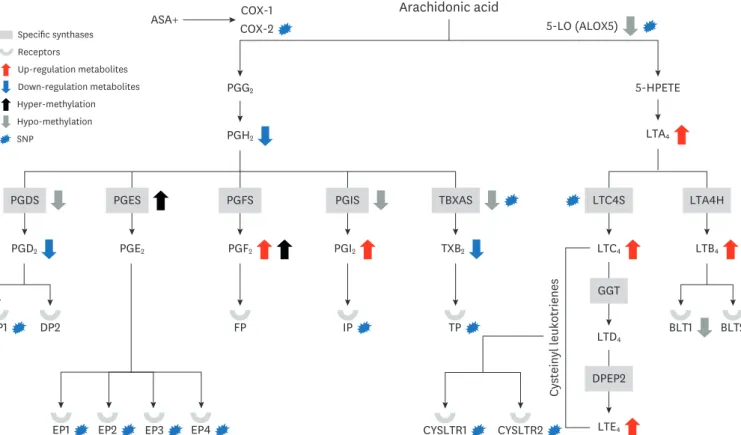
PGE synthesis may be decreased due to hypermethylation of PGEs, while PGD and thromboxane synthesis may be elevated by hypomethylation of PTDS and TBXAS. The imbalance of PGE/PGD may be accentuated by genetic variants of PGERs (EP2–EP4) and PTGDR. In the LT pathways, cysteinyl LTR synthesis may be elevated by hypomethylated ALOX5AP and genetic variants of ALOX5 and LTC4S. Furthermore, the effects of cysteinyl LT may be maximized by genetic variants of CysLR1 and 2 (Fig. 8). Accordingly, the imbalance of PG/cysteinyl LT synthesis may be dominantly regulated by the changes in methylation and may be complemented by the SNPs of LTC4S and ALOX5, and the effects of the imbalance may be accentuated by the genetic variants of PGERs, CYSLTR1, and CYSLTR2 (Fig. 8). Taken together, these observations indicated that subjects with NERD may have genetically distorted and epigenetically susceptible arachidonate pathways to environmental factors, including exposure to NSAIDs or other agents. In addition, DNA methylation may indeed be tightly regulated by genetic factors such as SNPs that affect NERD development (Fig. 8). However, the precise mechanisms by which NSAIDs induce dysregulation of CpG methylation in NERD are still unknown. It remains to be determined when and how the epigenetic effects of NSAIDs begin and the initial mechanisms underlying the changes in CpG methylation. Other possible actions of NSAID may involve modification of other epigenetic components, including histone proteins and miRNA, or altered metabolism of methylating nutrients. Although the molecular mechanisms underlying NERD pathogenesis remain poorly understood, genetic and epigenetic variations play significant roles. Our results enhance the understanding of the genetic and epigenetic mechanisms involved in NERD development and suggest new approaches toward the diagnosis, treatment, and management of NERD.
−0.614
−0.241
−0.086
0.167
Nasal polyp (delta beta) −0.4 0.6 0.4 0.2 0
−0.2
−0.8
−0.6
cg20542800LTB4R cg24964368FPRL1 cg11822964PTGIR cg03495868PTGFR cg10468702PTGER1 cg27524460PTGER1
0.022 0.147
Fig. 7. Delta beta values of 6 DMCs (P < 0.05) on 5 genes of receptors involved in the prostaglandin and leukotriene pathways between NERD and ATA. Delta beta was calculated by subtracting the beta value of ATA from that of NERD at each CpG site.
DMC, differential methylated CpG; NERD, nonsteroidal anti-inflammatory drug (NSAID)-exacerbated respiratory disease; ATA, aspirin-tolerant asthma.
ACKNOWLEDGMENTS
This study was supported by a grant from the National Research Foundation of Korea (NRF) funded by the Ministry of Education (2017R1D1A1B0429365) and a research grant from Soonchunhyang University to JS Park. The methylation data were generously provided by a Biobank in Soonchunhyang University, Bucheon Hospital. JU Lee was supported by the Basic Science Research Program of NRF (2018R1A6A3A01011004). The data were obtained from a BioBank at Soonchunhyang University, Bucheon Hospital.
SUPPLEMENTARY MATERIALS
Supplementary Table S1
Delta beta levels of differentially methylated CpGs in prostaglandin and leukotriene pathways between NERD and ATA
Click here to view
Cysteinyl leukotrienes
Arachidonic acid
5-HPETE PGG2
PGE2
LTC4S PGFS
DPEP2 GGT
LTA4H
LTD4
ASA+ COX-1
COX-2
TXB2
PGD2
PGH2
LTE4
LTC4
LTA4
LTB4
PGI2
PGF2
PGES
PGDS PGIS
5-LO (ALOX5)
TBXAS
DP1 DP2 FP IP TP BLT1 BLT2
EP1 EP2 EP3 EP4 CYSLTR1 CYSLTR2
SNP
Hyper-methylation Hypo-methylation Down-regulation metabolites Up-regulation metabolites Receptors
Specific synthases
Fig. 8. NERD severity and its clinical phenotypes are affected by DNA methylation and genetic variation within genes of associated with multiple pathways for arachidonic acid metabolism.
NERD, nonsteroidal anti-inflammatory drug (NSAID)-exacerbated respiratory disease; PG, prostaglandin; SNP, single nucleotide polymorphism; ASA, acetylsalicylic acid; DP, prostaglandin D (PGD) receptors; EP, prostaglandin E (PGE) receptors; FP, prostaglandin F receptor; IP, prostaglandin I2 receptor; TP, thromboxane receptors; LT, leukotriene; BLT, leukotriene B4 receptor; ALOX5, arachidonate 5-lipoxygenase; 5-HPETE, arachidonic acid 5-hydroperoxide; CysLTR1, cysteinyl leukotriene receptor 1; CysLTR2, cysteinyl leukotriene receptor 2; LTC4S, leukotriene C4 synthase; LTA4H, aeukotriene A4 hydrolase.
Supplementary Table S2
DNA methylation level of differentially methylated CpGs in receptor genes of arachidonic acid pathways in AIA compared to those in ATA
Click here to view
REFERENCES
1. Cowburn AS, Sladek K, Soja J, Adamek L, Nizankowska E, Szczeklik A, et al. Overexpression of leukotriene C4 synthase in bronchial biopsies from patients with aspirin-intolerant asthma. J Clin Invest 1998;101:834-46.
PUBMED | CROSSREF
2. Sampson AP, Cowburn AS, Sladek K, Adamek L, Nizankowska E, Szczeklik A, et al. Profound overexpression of leukotriene C4 synthase in bronchial biopsies from aspirin-intolerant asthmatic patients. Int Arch Allergy Immunol 1997;113:355-7.
PUBMED | CROSSREF
3. Kim SH, Choi JH, Holloway JW, Suh CH, Nahm DH, Ha EH, et al. Leukotriene-related gene polymorphisms in patients with aspirin-intolerant urticaria and aspirin-intolerant asthma: differing contributions of ALOX5 polymorphism in Korean population. J Korean Med Sci 2005;20:926-31.
PUBMED | CROSSREF
4. Kim SH, Bae JS, Suh CH, Nahm DH, Holloway JW, Park HS. Polymorphism of tandem repeat in promoter of 5-lipoxygenase in ASA-intolerant asthma: a positive association with airway hyperresponsiveness.
Allergy 2005;60:760-5.
PUBMED | CROSSREF
5. Sousa AR, Parikh A, Scadding G, Corrigan CJ, Lee TH. Leukotriene-receptor expression on nasal mucosal inflammatory cells in aspirin-sensitive rhinosinusitis. N Engl J Med 2002;347:1493-9.
PUBMED | CROSSREF
6. Arm JP, O'Hickey SP, Spur BW, Lee TH. Airway responsiveness to histamine and leukotriene E4 in subjects with aspirin-induced asthma. Am Rev Respir Dis 1989;140:148-53.
PUBMED | CROSSREF
7. Kim SH, Oh JM, Kim YS, Palmer LJ, Suh CH, Nahm DH, et al. Cysteinyl leukotriene receptor 1 promoter polymorphism is associated with aspirin-intolerant asthma in males. Clin Exp Allergy 2006;36:433-9.
PUBMED | CROSSREF
8. Akahoshi M, Obara K, Hirota T, Matsuda A, Hasegawa K, Takahashi N, et al. Functional promoter polymorphism in the TBX21 gene associated with aspirin-induced asthma. Hum Genet 2005;117:16-26.
PUBMED | CROSSREF
9. Ying S, Meng Q, Scadding G, Parikh A, Corrigan CJ, Lee TH. Aspirin-sensitive rhinosinusitis is associated with reduced E-prostanoid 2 receptor expression on nasal mucosal inflammatory cells. J Allergy Clin Immunol 2006;117:312-8.
PUBMED | CROSSREF
10. Pérez-Novo CA, Watelet JB, Claeys C, Van Cauwenberge P, Bachert C. Prostaglandin, leukotriene, and lipoxin balance in chronic rhinosinusitis with and without nasal polyposis. J Allergy Clin Immunol 2005;115:1189-96.
PUBMED | CROSSREF
11. Schmid M, Göde U, Schäfer D, Wigand ME. Arachidonic acid metabolism in nasal tissue and peripheral blood cells in aspirin intolerant asthmatics. Acta Otolaryngol 1999;119:277-80.
PUBMED | CROSSREF
12. Wang G, Zhang J, Sun H, Cao W, Zhang J, Wang Y, et al. Genetic variation in members of the leukotrienes biosynthesis pathway confers risk of ischemic stroke in Eastern Han Chinese. Prostaglandins Leukot Essent Fatty Acids 2012;87:169-75.
PUBMED | CROSSREF
13. Wang GN, Zhang JS, Cao WJ, Sun H, Zhang J, Wang Y, et al. Association of ALOX5, LTA4H and LTC4S gene polymorphisms with ischemic stroke risk in a cohort of Chinese in east China. World J Emerg Med 2013;4:32-7.
PUBMED | CROSSREF
14. Zhao N, Liu X, Wang Y, Liu X, Li J, Yu L, et al. Association of inflammatory gene polymorphisms with ischemic stroke in a Chinese Han population. J Neuroinflammation 2012;9:162.
PUBMED | CROSSREF
15. Lima JJ, Zhang S, Grant A, Shao L, Tantisira KG, Allayee H, et al. Influence of leukotriene pathway polymorphisms on response to montelukast in asthma. Am J Respir Crit Care Med 2006;173:379-85.
PUBMED | CROSSREF
16. Zhang Y, Huang H, Huang J, Xiang Z, Yang M, Tian C, et al. The −444A/C polymorphism in the LTC4S gene and the risk of asthma: a meta-analysis. Arch Med Res 2012;43:444-50.
PUBMED | CROSSREF
17. Drazen JM, Yandava CN, Dubé L, Szczerback N, Hippensteel R, Pillari A, et al. Pharmacogenetic association between ALOX5 promoter genotype and the response to anti-asthma treatment. Nat Genet 1999;22:168-70.
PUBMED | CROSSREF
18. Kim SH, Park HS. Genetic markers for differentiating aspirin-hypersensitivity. Yonsei Med J 2006;47:15-21.
PUBMED | CROSSREF
19. Park SM, Park JS, Park HS, Park CS. Unraveling the genetic basis of aspirin hypersensitivity in asthma beyond arachidonate pathways. Allergy Asthma Immunol Res 2013;5:258-76.
PUBMED | CROSSREF
20. Dahlin A, Weiss ST. Genetic and epigenetic components of aspirin-exacerbated respiratory disease.
Immunol Allergy Clin North Am 2016;36:765-89.
PUBMED | CROSSREF
21. Jenkins C, Costello J, Hodge L. Systematic review of prevalence of aspirin induced asthma and its implications for clinical practice. BMJ 2004;328:434.
PUBMED | CROSSREF
22. Chang HS, Park JS, Jang AS, Park SW, Uh ST, Kim YH, et al. Diagnostic value of clinical parameters in the prediction of aspirin-exacerbated respiratory disease in asthma. Allergy Asthma Immunol Res 2011;3:256-64.
PUBMED | CROSSREF
23. Moon JY, Kim SH, Kim TB, Kim SH, Chang YS, Lee JH, et al. Aspirin-intolerant asthma in the Korean population: prevalence and characteristics based on a questionnaire survey. Respir Med 2013;107:202-8.
PUBMED | CROSSREF
24. Szczeklik A, Nizankowska E, Duplaga M. Natural history of aspirin-induced asthma. Eur Respir J 2000;16:432-6.
PUBMED | CROSSREF
25. Bavbek S, Yilmaz I, Celik G, Aydin O, Erkekol FO, Orman A, et al. Prevalence of aspirin-exacerbated respiratory disease in patients with asthma in Turkey: a cross-sectional survey. Allergol Immunopathol (Madr) 2012;40:225-30.
PUBMED | CROSSREF
26. Rosado A, Vives R, González R, Rodríguez J. Can NSAIDs intolerance disappear? A study of three cases.
Allergy 2003;58:689-90.
PUBMED | CROSSREF
27. Lockey RF, Rucknagel DL, Vanselow NA. Familial occurrence of asthma, nasal polyps and aspirin intolerance. Ann Intern Med 1973;78:57-63.
PUBMED | CROSSREF
28. Delaney JC. Letter: asthma, nasal polyposis, and aspirin sensitivity. Ann Intern Med 1973;79:761.
PUBMED | CROSSREF
29. Settipane GA, Pudupakkam RK. Aspirin intolerance. III. Subtypes, familial occurence, and cross- reactivity with tartarazine. J Allergy Clin Immunol 1975;56:215-21.
PUBMED | CROSSREF
30. Brasky TM, Bonner MR, Moysich KB, Ambrosone CB, Nie J, Tao MH, et al. Non-steroidal anti- inflammatory drug (NSAID) use and breast cancer risk in the Western New York Exposures and Breast Cancer (WEB) Study. Cancer Causes Control 2010;21:1503-12.
PUBMED | CROSSREF
31. Li X, Gao L, Cui Q, Gary BD, Dyess DL, Taylor W, et al. Sulindac inhibits tumor cell invasion by suppressing NF-κB-mediated transcription of microRNAs. Oncogene 2012;31:4979-86.
PUBMED | CROSSREF
32. Yiannakopoulou E. Modulation of lymphangiogenesis: a new target for aspirin and other nonsteroidal anti-inflammatory agents? A systematic review. J Clin Pharmacol 2012;52:1749-54.
PUBMED | CROSSREF
33. Pan MR, Chang HC, Chuang LY, Hung WC. The nonsteroidal anti-inflammatory drug NS398 reactivates SPARC expression via promoter demethylation to attenuate invasiveness of lung cancer cells. Exp Biol Med (Maywood) 2008;233:456-62.
PUBMED | CROSSREF
34. Tahara T, Shibata T, Nakamura M, Yamashita H, Yoshioka D, Okubo M, et al. Chronic aspirin use suppresses CDH1 methylation in human gastric mucosa. Dig Dis Sci 2010;55:54-9.
PUBMED | CROSSREF
35. Cheong HS, Park SM, Kim MO, Park JS, Lee JY, Byun JY, et al. Genome-wide methylation profile of nasal polyps: relation to aspirin hypersensitivity in asthmatics. Allergy 2011;66:637-44.
PUBMED | CROSSREF
36. Kim YJ, Park SW, Kim TH, Park JS, Cheong HS, Shin HD, et al. Genome-wide methylation profiling of the bronchial mucosa of asthmatics: relationship to atopy. BMC Med Genet 2013;14:39.
PUBMED | CROSSREF
37. Tan L, Ou J, Tao Z, Kong Y, Xu Y. Neonatal immune state is influenced by maternal allergic rhinitis and associated with regulatory T cells. Allergy Asthma Immunol Res 2017;9:133-41.
PUBMED | CROSSREF
38. Suh DI, Chang HY, Lee E, Yang SI, Hong SJ. Prenatal maternal distress and allergic diseases in offspring:
review of evidence and possible pathways. Allergy Asthma Immunol Res 2017;9:200-11.
PUBMED | CROSSREF
39. Tham EH, Leung DYM. How different parts of the world provide new insights into food allergy. Allergy Asthma Immunol Res 2018;10:290-9.
PUBMED | CROSSREF
40. Zhou D, Li Z, Yu D, Wan L, Zhu Y, Lai M, et al. Polymorphisms involving gain or loss of CpG sites are significantly enriched in trait-associated SNPs. Oncotarget 2015;6:39995-40004.
PUBMED | CROSSREF
41. Yoshida H, Nadanaka S, Sato R, Mori K. XBP1 is critical to protect cells from endoplasmic reticulum stress:
evidence from Site-2 protease-deficient Chinese hamster ovary cells. Cell Struct Funct 2006;31:117-25.
PUBMED | CROSSREF
42. Ono SJ, Liou HC, Davidon R, Strominger JL, Glimcher LH. Human X-box-binding protein 1 is required for the transcription of a subset of human class II major histocompatibility genes and forms a heterodimer with c-fos. Proc Natl Acad Sci U S A 1991;88:4309-12.
PUBMED | CROSSREF
43. Park BL, Kim TH, Kim JH, Bae JS, Pasaje CF, Cheong HS, et al. Genome-wide association study of aspirin- exacerbated respiratory disease in a Korean population. Hum Genet 2013;132:313-21.
PUBMED | CROSSREF
44. Park JS, Son JH, Park CS, Chang HS. Clinical implications of single nucleotide polymorphisms in diagnosis of asthma and its subtypes. Yonsei Med J 2019;60:1-9.
PUBMED | CROSSREF
45. Bochenek G, Nagraba K, Nizankowska E, Szczeklik A. A controlled study of 9alpha,11beta-PGF2 (a prostaglandin D2 metabolite) in plasma and urine of patients with bronchial asthma and healthy controls after aspirin challenge. J Allergy Clin Immunol 2003;111:743-9.
PUBMED | CROSSREF
46. Lee JU, Chang HS, Lee HJ, Bae DJ, Son JH, Park JS, et al. Association of interleukin-25 levels with development of aspirin induced respiratory diseases. Respir Med 2017;123:71-8.
PUBMED | CROSSREF
47. Yoshimura T, Yoshikawa M, Otori N, Haruna S, Moriyama H. Correlation between the prostaglandin D2/ E2 ratio in nasal polyps and the recalcitrant pathophysiology of chronic rhinosinusitis associated with bronchial asthma. Allergol Int 2008;57:429-36.
PUBMED | CROSSREF
48. Oh SH, Kim YH, Park SM, Cho SH, Park JS, Jang AS, et al. Association analysis of thromboxane A synthase 1 gene polymorphisms with aspirin intolerance in asthmatic patients. Pharmacogenomics 2011;12:351-63.
PUBMED | CROSSREF
49. Ricciotti E, FitzGerald GA. Prostaglandins and inflammation. Arterioscler Thromb Vasc Biol 2011;31:986-1000.
PUBMED | CROSSREF
50. Sanak M, Pierzchalska M, Bazan-Socha S, Szczeklik A. Enhanced expression of the leukotriene C4
synthase due to overactive transcription of an allelic variant associated with aspirin-intolerant asthma.
Am J Respir Cell Mol Biol 2000;23:290-6.
PUBMED | CROSSREF
51. Van Sambeek R, Stevenson DD, Baldasaro M, Lam BK, Zhao J, Yoshida S, et al. 5′ flanking region polymorphism of the gene encoding leukotriene C4 synthase does not correlate with the aspirin- intolerant asthma phenotype in the United States. J Allergy Clin Immunol 2000;106:72-6.
PUBMED | CROSSREF
52. Cornejo-García JA, Perkins JR, Jurado-Escobar R, García-Martín E, Agúndez JA, Viguera E, et al.
Pharmacogenomics of prostaglandin and leukotriene receptors. Front Pharmacol 2016;7:316.
PUBMED | CROSSREF