I. Introduction
In the 21st century, technology is evolving more rapidly than
ever. The younger generations, including undergraduate nursing students, live daily lives equipped with highly ad- vanced mobile technology, challenging nursing educators to incorporate mobile technology in education to improve the learning outcomes of students [1,2]. Though no clear defini- tion of mobile technology is confirmed in nursing educa- tion, the purpose of mobile technology is often described in nursing education as “handheld platforms that incorporate hardware, software, and communication [2].”
The personal digital assistants (PDAs) introduced in the early 1990s were initially used to store and manage personal information; however, they have further evolved into smart devices such as smartphones and tablet PCs, the latest ver- sion of mobile technology. These devices have multiuse features including audio and video recording and web portal support systems [3].
Mobile Technology in Undergraduate Nursing Education: A Systematic Review
Hyejung Lee, PhD, RN1, Haeyoung Min, PhD, RN2, Su-mi Oh, MSN, RN3, Kaka Shim, PhD, RN4
1College of Nursing·Mo-Im Kim Nursing Research Institute, Yonsei University, Seoul, Korea; 2College of Nursing, Gyeongsang National University, Jinju, Ko- rea; 3College of Nursing, Yonsei University, Seoul, Korea; 4College of Nursing, University of Illinois at Chicago, Chicago, IL, USA
Objectives: This study aimed to identify and systematically review the literature on the use of mobile technology in nursing education. The research findings could evidence the effectiveness of mobile technology in undergraduate nursing students’
learning outcomes. Methods: Computerized searches were conducted using the Ovid-MEDLINE, Ovid-EMBASE, Cochrane Library, and CINAHL databases for relevant primary studies and limited to those between 2000 and February 2018. Only randomized controlled trials (RCTs) and quasi-experimental studies published in either English or Korean were included and critically appraised using Joanna Briggs Institute tools. Results: Seven RCTs and 7 quasi-experimental studies were iden- tified. The mobile device and intervention applied varied throughout all the studies. Studies published earlier in the 2000s found that immediate access to clinical and pharmacological referencing information through the mobile device increased students’ efficacy in clinical practice. Later studies, which were mostly conducted in Korea, reported that smartphone-based applications could promote nursing students’ learning motivation and satisfaction but not their clinical skills and knowledge.
Conclusions: We still seem to be in the beginning stage of implementing mobile technology in nursing education due to the limited implication of mobile technology and inconsistent research conclusions. In the future, rigorous primary empirical studies are needed to suggest the effective use of mobile devices in nursing education.
Keywords: Nursing, Smartphone, Education, Review, Mobile Applications
Healthc Inform Res. 2018 April;24(2):97-108.
https://doi.org/10.4258/hir.2018.24.2.97 pISSN 2093-3681 • eISSN 2093-369X
Submitted: March 29, 2018 Revised: April 14, 2018 Accepted: April 15, 2018 Corresponding Author Haeyoung Min, PhD, RN
College of Nursing, Gyeongsang National University, 816-15 Jinju- daero, Jinju 52727, Korea. Tel: +82-55-772-8220, E-mail: haeyoung [email protected]
This is an Open Access article distributed under the terms of the Creative Com- mons Attribution Non-Commercial License (http://creativecommons.org/licenses/by- nc/4.0/) which permits unrestricted non-commercial use, distribution, and reproduc- tion in any medium, provided the original work is properly cited.
ⓒ 2018 The Korean Society of Medical Informatics
Due to their ubiquity, mobile devices have been proposed to enhance the outcomes of student clinical learning during clinical rotation and improve student-faculty interactions [4,5].
Nursing students practice in various clinical environments, including acute hospital settings and community health cen- ters, where close individual supervision by the clinical instruc- tors is not always available [5]. Additionally, nursing students tend to use knowledge and skills learned in the classroom when providing bedside care to patients. Current healthcare emphasizes evidence-based practice to ensure quality care, and mobile devices including PDAs and smartphones can be considered suitable for immediate access to up-to-date medi- cal information [6,7]. The use of PDA resources supported clinical reasoning among undergraduate students by facilitat- ing problem solving with reliable information [7]. Mobile- based applications further enable more active learning by actively constructing knowledge using a wide range of web- based clinical applications. Thus far, various mobile devices with applications have increasingly been used in classroom activities and clinical practicum including e-portfolio in many countries [2,5]. Although numerous studies found positive at- titudes toward and satisfaction with the use of mobile devices among nursing students [6-8] and barriers to using mobile devices including protecting the confidential information of patients, infection control issues, technical difficulties, short battery life, the cost of mobile devices, and negative percep- tions of hospital staff and patients [2,3].
The advantages of mobile technology in nursing education have been examined in research using a survey study design and qualitative research methods [4,8,9]. Recently published review studies only summarized the studies without criti- cal study appraisals or described the benefits and barriers to use the mobile technology in nursing education [2,3]. This makes it difficult to determine the effectiveness of mobile device use and confirm their educational effects on nursing education. Thus, a systematic review is needed to review and critically appraise the literature on the implementation of mobile technology in undergraduate nursing education. The findings of this review will contribute to the advancement of nursing education by improving our understanding of the impact of mobile technology and providing an insight into developing strategies in mobile technology application in nursing education.
II. Methods
1. Aim
This systematic review aimed to identify and appraise stud-
ies on the use of mobile technology in undergraduate nurs- ing education. The major learning outcomes of students were evaluated in this review to determine the educational effectiveness of mobile technology in nursing education.
2. Search Strategy
On February 14, 2018, search strategies and subsequent literature searches were performed by an experienced sys- tematic review researcher in accordance with the Preferred Reporting Items for Systematic Reviews and Meta-Analyses (PRISMA) guidelines [10]. Literature searches of the Ovid- MEDLINE, Ovid-EMBASE, Cochrane Library, and CINAHL databases were conducted to identify articles evaluating the efficacy of mobile education in nursing undergraduate students. The following search terms were used: “{(nursing or nurse) AND (student OR students)} AND (mobile OR handheld OR PDA OR smartphone OR tablet PC OR tablet computer OR wireless).” For example, we searched Ovid- MEDLINE using the following strategy: {("nursing" [TW]
OR “nurse$1" [TW]) AND "student$1" [TW]} AND ("com- puters, handheld" [Mesh] OR "mobile" [TW] OR “handheld*"
[TW] OR "PDA" [TW] OR “smartphone" [TW] OR "tablet PC" [TW] OR "tablet computer$1" [TW] OR "wireless"
[TW]).
The inclusion criteria for this review were: (1) primary empirical studies, (2) studies involving undergraduate nurs- ing students, and (3) studies reporting findings on mobile technology implemented in nursing education. The exclu- sion criteria were: (1) proceedings, discussions, disserta- tions, editorial articles, and reviews, and (2) studies involved postgraduate or other allied health professionals. Only ex- perimental design studies such as randomized controlled tri- als (RCTs) and quasi-experimental studies were considered.
Studies were limited to those published in either Korean or English between 2000 and 2018.
3. Search Outcomes
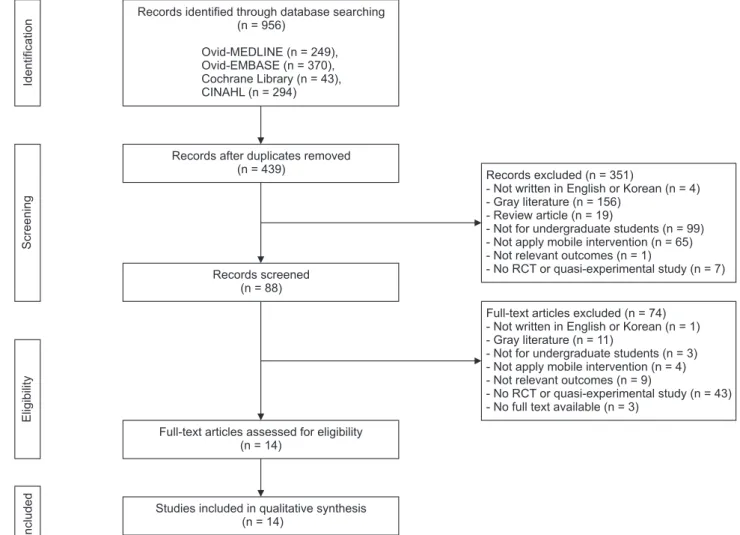
We retrieved 956 citations from four databases. After de- leting duplicate citations, the abstracts of 439 studies were independently screened by two reviewers using the inclusion and exclusion criteria. All reasons for exclusion were re- corded. The full texts of 88 studies were reviewed and finally 14 studies were identified for data extraction and synthesis (Figure 1).
4. Data Extraction and Synthesis
The data were extracted using predetermined themes of methods/research design, study purpose(s), sample popula-
tion, mobile device and intervention, outcome measures, and key findings. The synthesis of the studies was conducted by addressing key learning outcomes of knowledge, clinical skills (performance), self-efficacy, and student satisfaction.
5. Quality Appraisal
All 14 studies were appraised for methodological qual- ity by two independent reviewers using a critical appraisal tool adapted from the Joanna Briggs Institute Meta Analy- sis of Statistics Assessment and Review Instrument (JBI- MAStARI) [11]. The critical appraisal tools included 13 items for the RCT and 9 for quasi-experimental study with four possible responses: yes (the criteria are clearly identifi- able through the report description and assigned 1 point), unclear (the criteria are not clearly identified in the report), and no (the criteria failed to be applied appropriately). The 13 items for the RCT assess the following domains: random- ization, allocation, similarity between groups, blindness, treating identically, dropout, intention-to-treat analysis, outcomes measured, and statistical analysis [11]. The 9 items
for quasi-experimental study assess the following domains:
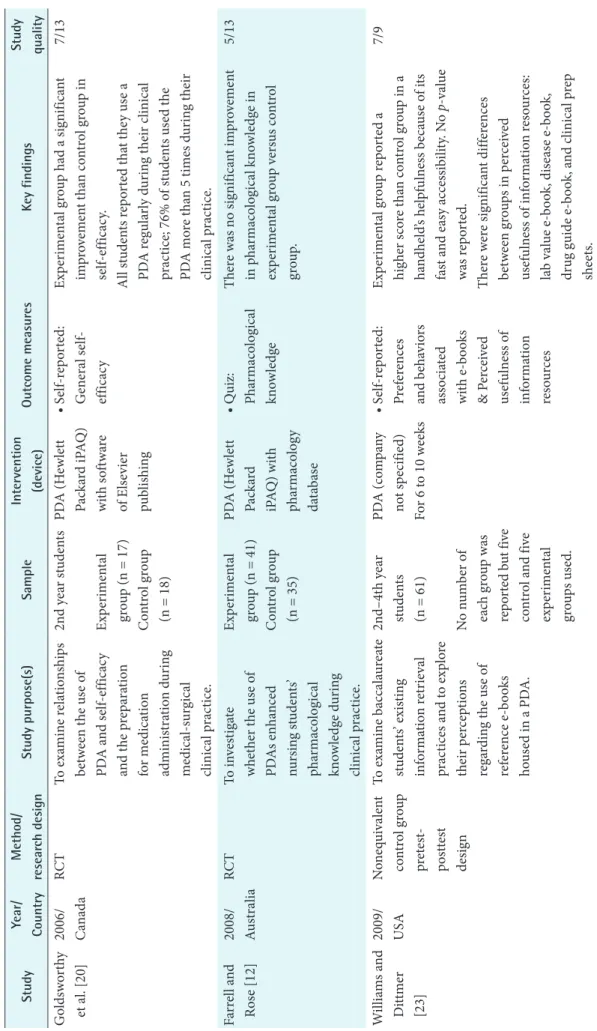
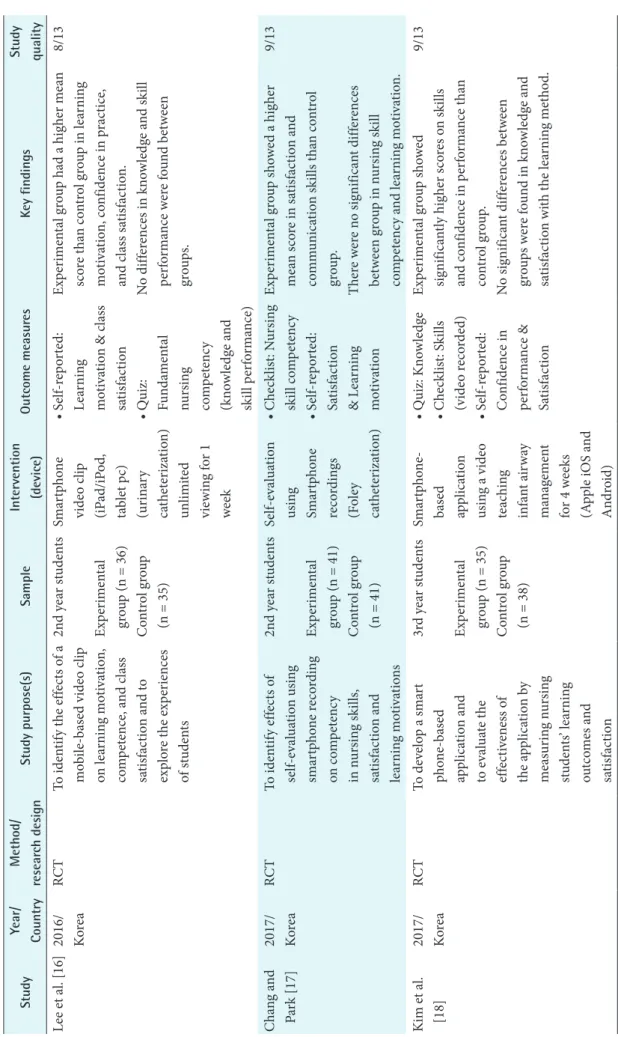
cause and effect, similarity between groups, control group, multiple measurements, dropout, outcomes measured, and statistical analysis [11]. After independent review, the results were collected and discrepancies were discussed with a third reviewer experienced in systematic reviews. Each study was displayed with its total points and classified into one of the following categories: low risk of bias as all criteria were met, moderate risk of bias as one or more criteria were unclear, high risk of bias as one or more criteria were unmet (Table 1).
III. Results
Of 14 studies, seven were RCTs. The publication years ranged from 2006 to 2018. Studies were conducted in five countries, and 9 (64.3%) studies were conducted in Korea.
1. Method/Research Design
The quality of the studies varied from high to low risk of bias. The quality of all RCT studies was weak due to high
IdentificationScreeningEligibilityIncluded
Records excluded (n = 351)
- Not written in English or Korean (n = 4) - Gray literature (n = 156)
- Review article (n = 19)
- Not for undergraduate students (n = 99) - Not apply mobile intervention (n = 65) - Not relevant outcomes (n = 1)
- No RCT or quasi-experimental study (n = 7)
Full-text articles excluded (n = 74) - Not written in English or Korean (n = 1) - Gray literature (n = 11)
- Not for undergraduate students (n = 3) - Not apply mobile intervention (n = 4) - Not relevant outcomes (n = 9)
- No RCT or quasi-experimental study (n = 43) - No full text available (n = 3)
Records identified through database searching (n = 956)
Records after duplicates removed (n = 439)
Records screened (n = 88)
Full-text articles assessed for eligibility (n = 14)
Studies included in qualitative synthesis (n = 14)
Ovid-MEDLINE (n = 249), Ovid-EMBASE (n = 370), Cochrane Library (n = 43), CINAHL (n = 294)
Figure 1. PRISMA flow diagram of the literature search. RCT: randomized controlled trial.
Table 1. Summary and quality appraisal scores of the included studies (n = 14) StudyYear/ CountryMethod/ research designStudy purpose(s)SampleIntervention (device)Outcome measuresKey findingsStudy quality Goldsworthy et al. [20]2006/ CanadaRCT To examine relationships between the use of PDA and self-efficacy and the preparation for medication administration during medical-surgical clinical practice.
2nd year students Experimental group (n = 17) Control group (n = 18) PDA (Hewlett Packard iPAQ) with software of Elsevier publishing
• Self-reported: General self- efficacy
Experimental group had a significant improvement than control group in self-efficacy. All students reported that they use a PDA regularly during their clinical practice; 76% of students used the PDA more than 5 times during their clinical practice.
7/13 Farrell and Rose [12]2008/ AustraliaRCTTo investigate whether the use of PDAs enhanced nursing students’ pharmacological knowledge during clinical practice.
Experimental group (n = 41) Control group (n = 35) PDA (Hewlett Packard iPAQ) with pharmacology database
• Quiz: Pharmacological knowledge There was no significant improvement in pharmacological knowledge in experimental group versus control group.
5/13 Williams and Dittmer [23]
2009/ USANonequivalent control group pretest- posttest design
To examine baccalaureate students’ existing information retrieval practices and to explore their perceptions regarding the use of reference e-books housed in a PDA.
2nd–4th year students (n = 61) No number of each group was reported but five control and five experimental groups used.
PDA (company not specified) For 6 to 10 weeks
• Self-reported: Preferences and behaviors associated with e-books & Perceived usefulness of information resources Experimental group reported a higher score than control group in a handheld’s helpfulness because of its fast and easy accessibility. No p-value was reported. There were significant differences between groups in perceived usefulness of information resources: lab value e-book, disease e-book, drug guide e-book, and clinical prep sheets.
7/9
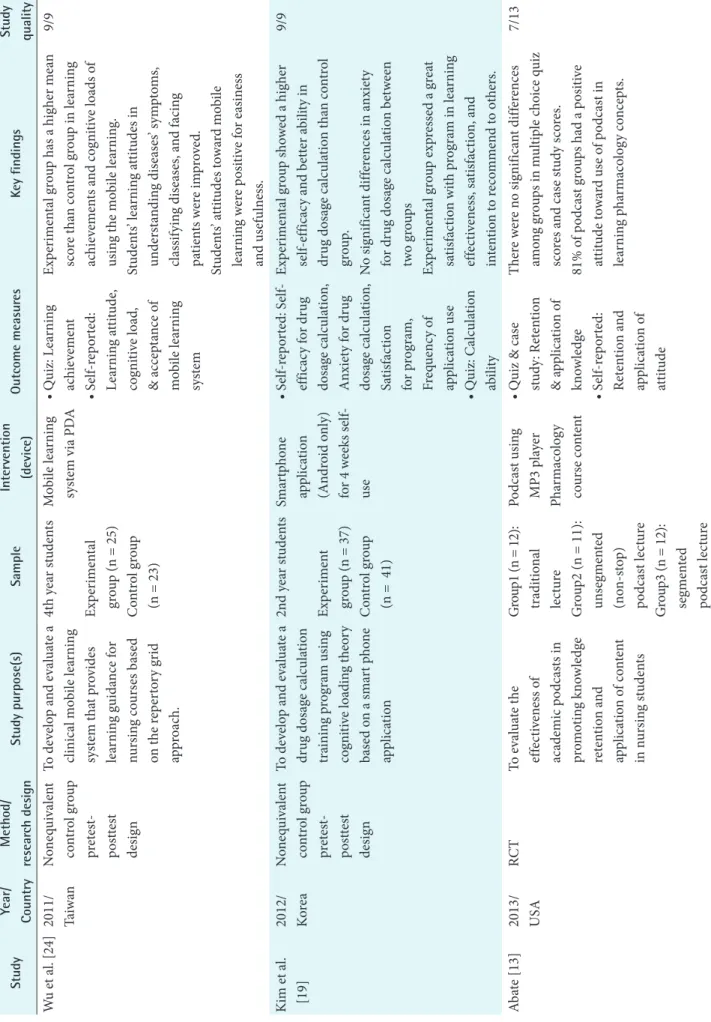
Table 1. Continued 1 StudyYear/ CountryMethod/ research designStudy purpose(s)SampleIntervention (device)Outcome measuresKey findingsStudy quality Wu et al. [24]2011/ TaiwanNonequivalent control group pretest- posttest design To develop and evaluate a clinical mobile learning system that provides learning guidance for nursing courses based on the repertory grid approach.
4th year students Experimental group (n = 25) Control group (n = 23) Mobile learning system via PDA• Quiz: Learning achievement • Self-reported: Learning attitude, cognitive load, & acceptance of mobile learning system
Experimental group has a higher mean score than control group in learning achievements and cognitive loads of using the mobile learning. Students’ learning attitudes in understanding diseases’ symptoms, classifying diseases, and facing patients were improved. Students’ attitudes toward mobile learning were positive for easiness and usefulness.
9/9 Kim et al. [19]2012/ KoreaNonequivalent control group pretest- posttest design
To develop and evaluate a drug dosage calculation training program using cognitive loading theory based on a smart phone application 2nd year students Experiment group (n = 37) Control group (n = 41) Smartphone application (Android only) for 4 weeks self- use
• Self-reported: Self- efficacy for drug dosage calculation, Anxiety for drug dosage calculation, Satisfaction for program, Frequency of application use • Quiz: Calculation ability Experimental group showed a higher self-efficacy and better ability in drug dosage calculation than control group. No significant differences in anxiety for drug dosage calculation between two groups Experimental group expressed a great satisfaction with program in learning effectiveness, satisfaction, and intention to recommend to others.
9/9 Abate [13]2013/ USARCT To evaluate the effectiveness of academic podcasts in promoting knowledge retention and application of content in nursing students
Group1 (n = 12): traditional lecture Group2 (n = 11): unsegmented (non-stop) podcast lecture Group3 (n = 12): segmented podcast lecture Podcast using MP3 player Pharmacology course content
• Quiz & case study: Retention & application of knowledge • Self-reported: Retention and application of attitude There were no significant differences among groups in multiple choice quiz scores and case study scores. 81% of podcast groups had a positive attitude toward use of podcast in learning pharmacology concepts.
7/13
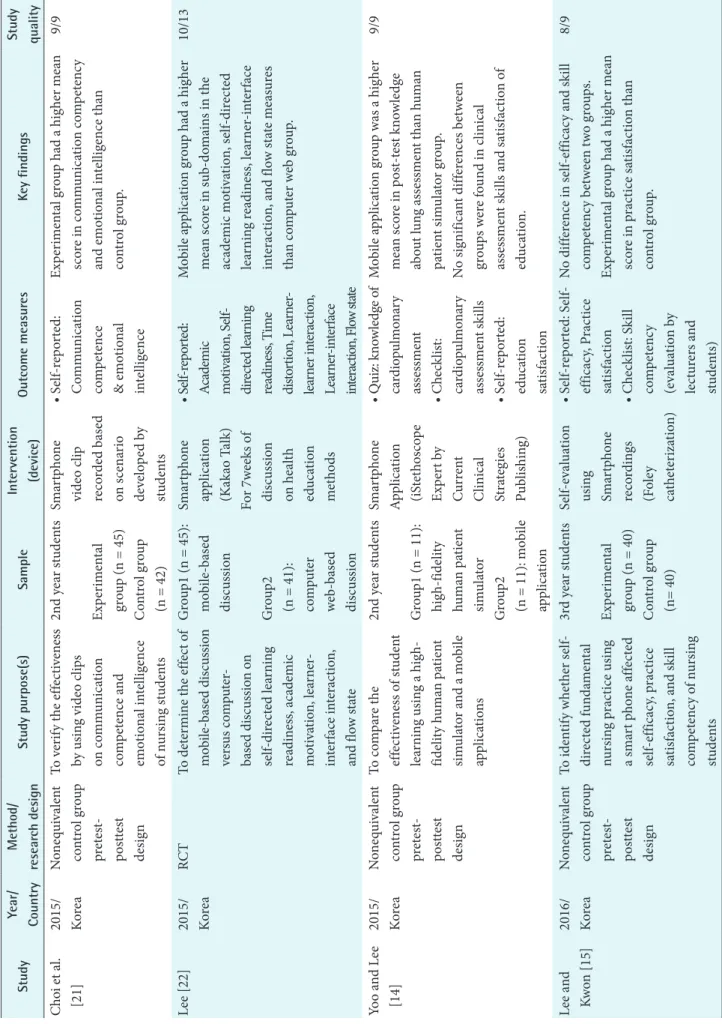
Table 1. Continued 2 StudyYear/ CountryMethod/ research designStudy purpose(s)SampleIntervention (device)Outcome measuresKey findingsStudy quality Choi et al. [21]2015/ KoreaNonequivalent control group pretest- posttest design To verify the effectiveness by using video clips on communication competence and emotional intelligence of nursing students 2nd year students Experimental group (n = 45) Control group (n = 42) Smartphone video clip recorded based on scenario developed by students
• Self-reported: Communication competence & emotional intelligence Experimental group had a higher mean score in communication competency and emotional intelligence than control group.
9/9 Lee [22]2015/ KoreaRCT To determine the effect of mobile-based discussion versus computer- based discussion on self-directed learning readiness, academic motivation, learner- interface interaction, and flow state
Group1 (n = 45): mobile-based discussion Group2 (n = 41): computer web-based discussion
Smartphone application (Kakao Talk) For 7weeks of discussion on health education methods
• Self-reported: Academic motivation, Self- directed learning readiness, Time distortion, Learner- learner interaction, Learner-interface interaction, Flow state Mobile application group had a higher mean score in sub-domains in the academic motivation, self-directed learning readiness, learner-interface interaction, and flow state measures than computer web group.
10/13 Yoo and Lee [14]2015/ KoreaNonequivalent control group pretest- posttest design
To compare the effectiveness of student learning using a high- fidelity human patient simulator and a mobile applications
2nd year students Group1 (n = 11): high-fidelity human patient simulator Group2 (n = 11): mobile application
Smartphone Application (iStethoscope Expert by Current Clinical Strategies Publishing)
• Quiz: knowledge of cardiopulmonary assessment • Checklist: cardiopulmonary assessment skills • Self-reported: education satisfaction Mobile application group was a higher mean score in post-test knowledge about lung assessment than human patient simulator group. No significant differences between groups were found in clinical assessment skills and satisfaction of education.
9/9 Lee and Kwon [15]2016/ KoreaNonequivalent control group pretest- posttest design
To identify whether self- directed fundamental nursing practice using a smart phone affected self-efficacy, practice satisfaction, and skill competency of nursing students 3rd year students Experimental group (n = 40) Control group (n= 40) Self-evaluation using Smartphone recordings (Foley catheterization)
• Self-reported: Self- efficacy, Practice satisfaction • Checklist: Skill competency (evaluation by lecturers and students) No difference in self-efficacy and skill competency between two groups. Experimental group had a higher mean score in practice satisfaction than control group.
8/9
Table 1. Continued 3 StudyYear/ CountryMethod/ research designStudy purpose(s)SampleIntervention (device)Outcome measuresKey findingsStudy quality Lee et al. [16] 2016/ KoreaRCT To identify the effects of a mobile-based video clip on learning motivation, competence, and class satisfaction and to explore the experiences of students 2nd year students Experimental group (n = 36) Control group (n = 35)
Smartphone video clip (iPad/iPod, tablet pc) (urinary catheterization) unlimited viewing for 1 week
• Self-reported: Learning motivation & class satisfaction • Quiz: Fundamental nursing competency (knowledge and skill performance) Experimental group had a higher mean score than control group in learning motivation, confidence in practice, and class satisfaction. No differences in knowledge and skill performance were found between groups.
8/13 Chang and Park [17]2017/ KoreaRCTTo identify effects of self-evaluation using smartphone recording on competency in nursing skills, satisfaction and learning motivations
2nd year students Experimental group (n = 41) Control group (n = 41) Self-evaluation using Smartphone recordings (Foley catheterization)
• Checklist: Nursing skill competency • Self-reported: Satisfaction & Learning motivation Experimental group showed a higher mean score in satisfaction and communication skills than control group. There were no significant differences between group in nursing skill competency and learning motivation.
9/13 Kim et al. [18]2017/ KoreaRCT To develop a smart phone-based application and to evaluate the effectiveness of the application by measuring nursing students’ learning outcomes and satisfaction
3rd year students Experimental group (n = 35) Control group (n = 38)
Smartphone- based application using a video teaching infant airway management for 4 weeks (Apple iOS and Android)
• Quiz: Knowledge • Checklist: Skills (video recorded) • Self-reported: Confidence in performance & Satisfaction Experimental group showed significantly higher scores on skills and confidence in performance than control group. No significant differences between groups were found in knowledge and satisfaction with the learning method.
9/13
risk of bias, whereas most quasi-experimental studies were rated as having a low risk of bias. Among RCT studies, many studies did not appropriately discuss the aspects of the blind- ness of the treatment group, participants, and researchers to treatment. One quasi-experimental study had a high risk of bias from the lack of homogeneity of the two groups and another showed a moderate risk of bias due to unreliable outcome measures.
2. Sample Population
The sample sizes for the studies ranged from n = 11 to 45 in each group. Most studies recruited over 30 students in each group, and 6 described the sample power in the report. The students recruited for the studies ranged from the second to fourth year of nursing college.
3. Types of Mobile Device and Intervention
The studies published in the early 2000s used PDAs such as Hewlett Packard iPAQs (the most popular brand) and MP3, whereas later studies frequently used smartphones. The most commonly downloaded application or database for PDAs was drug or clinical reference information. The video and audio features of smartphones were extensively used in inculcating the fundamental clinical skills of Foley catheter- ization. Infant airway management and academic electronic medical records were also tested in two studies. The duration of intervention varied from 1 to 10 weeks. The wide varia- tion in devices and interventions in the studies reviewed made the data synthesis difficult.
4. Key Findings
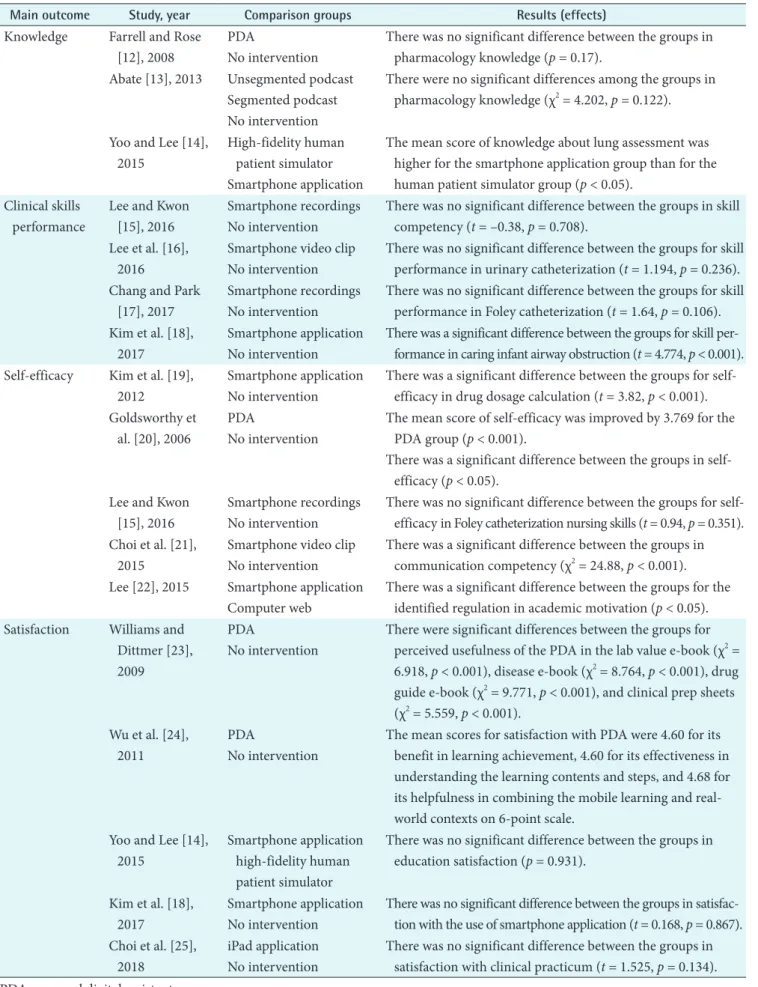
The synthesis of results on effectiveness of mobile devices in nursing education focused on the following main outcomes:
knowledge, clinical skills performance, self-efficacy, and sat- isfaction (Table 2).
1) Knowledge
No study reported an improvement in pharmacological knowledge in nursing students [12,13], but one found im- proved knowledge related to lung assessment [14]. Most stu- dents’ knowledge was evaluated by quizzes developed for the studies.
2) Clinical skills performance
Fundamental nursing skills including Foley catheterization were investigated to determine whether students improved their skills by reviewing the procedures on their own smart- phones multiple times [15-17]. None of the three studies Table 1. Continued 4 StudyYear/ CountryMethod/ research designStudy purpose(s)SampleIntervention (device)Outcome measuresKey findingsStudy quality Choi et al. [25] 2018/ KoreaNonequivalent control group pretest- posttest design
To examine the effect of the application of a mobile academic electronic medical record (AEMR) system on the clinical practicum of undergraduate nursing students 3rd year students Experimental group (n = 30) Control group (n = 45)
iPad application (AEMR system) for 4 weeks
• Self-reported: Nursing informatics competency, Critical thinking disposition, Satisfaction with clinical practice, Usability of application There were no differences between groups in overall nursing informatics competency. No significant differences between groups were found in critical thinking and clinical practicum satisfaction.
9/9 RCT: randomized controlled trial, PDAs: personal digital assistants.
Table 2. Effectiveness of mobile devices in nursing education
Main outcome Study, year Comparison groups Results (effects)
Knowledge Farrell and Rose [12], 2008
PDA
No intervention
There was no significant difference between the groups in pharmacology knowledge (p = 0.17).
Abate [13], 2013 Unsegmented podcast Segmented podcast No intervention
There were no significant differences among the groups in pharmacology knowledge (χ2 = 4.202, p = 0.122).
Yoo and Lee [14], 2015
High-fidelity human patient simulator Smartphone application
The mean score of knowledge about lung assessment was higher for the smartphone application group than for the human patient simulator group (p < 0.05).
Clinical skills performance
Lee and Kwon [15], 2016
Smartphone recordings No intervention
There was no significant difference between the groups in skill competency (t = –0.38, p = 0.708).
Lee et al. [16], 2016
Smartphone video clip No intervention
There was no significant difference between the groups for skill performance in urinary catheterization (t = 1.194, p = 0.236).
Chang and Park [17], 2017
Smartphone recordings No intervention
There was no significant difference between the groups for skill performance in Foley catheterization (t = 1.64, p = 0.106).
Kim et al. [18], 2017
Smartphone application No intervention
There was a significant difference between the groups for skill per- for mance in caring infant airway obstruction (t = 4.774, p < 0.001).
Self-efficacy Kim et al. [19], 2012
Smartphone application No intervention
There was a significant difference between the groups for self- efficacy in drug dosage calculation (t = 3.82, p < 0.001).
Goldsworthy et al. [20], 2006
PDA
No intervention
The mean score of self-efficacy was improved by 3.769 for the PDA group (p < 0.001).
There was a significant difference between the groups in self- efficacy (p < 0.05).
Lee and Kwon [15], 2016
Smartphone recordings No intervention
There was no significant difference between the groups for self- efficacy in Foley catheterization nursing skills (t = 0.94, p = 0.351).
Choi et al. [21], 2015
Smartphone video clip No intervention
There was a significant difference between the groups in communication competency (χ2 = 24.88, p < 0.001).
Lee [22], 2015 Smartphone application Computer web
There was a significant difference between the groups for the identified regulation in academic motivation (p < 0.05).
Satisfaction Williams and Dittmer [23], 2009
PDA
No intervention
There were significant differences between the groups for perceived usefulness of the PDA in the lab value e-book (χ2 = 6.918, p < 0.001), disease e-book (χ2 = 8.764, p < 0.001), drug guide e-book (χ2 = 9.771, p < 0.001), and clinical prep sheets (χ2 = 5.559, p < 0.001).
Wu et al. [24], 2011
PDA
No intervention
The mean scores for satisfaction with PDA were 4.60 for its benefit in learning achievement, 4.60 for its effectiveness in understanding the learning contents and steps, and 4.68 for its helpfulness in combining the mobile learning and real- world contexts on 6-point scale.
Yoo and Lee [14], 2015
Smartphone application high-fidelity human patient simulator
There was no significant difference between the groups in education satisfaction (p = 0.931).
Kim et al. [18], 2017
Smartphone application No intervention
There was no significant difference between the groups in satisfac- tion with the use of smartphone application (t = 0.168, p = 0.867).
Choi et al. [25], 2018
iPad application No intervention
There was no significant difference between the groups in satisfaction with clinical practicum (t = 1.525, p = 0.134).
PDA: personal digital assistant.
reported improved performance in the experimental groups as measured with a skill checklist. Infant management skills improved in nursing students [18].
3) Self-efficacy
Self-efficacy in drug knowledge and dosage calculation improved in two studies [19,20], but efficacy in Foley cath- eterization skills did not improve in students who used their smartphones for practice [15]. Communication competency using smartphone video clips [21] and academic motivation using smartphone applications (Kakao Talk) [22] signifi- cantly increased in the experimental group of students dur- ing the classroom activities.
4) Student satisfaction
In majority of studies, nursing students expressed satisfac- tion with the mobile technology applied in education and found it useful for clinical learning sources during clinical practicums [23,24]. However, neither the study comparing smartphone applications for cardiopulmonary assessment skills with a high-fidelity human simulator [14] nor that us- ing an application for infant airway management reported higher satisfaction in the experimental group students [18].
Using the mobile-device-based academic electronic medical record did not affect students’ clinical practicum satisfaction [25].
IV. Discussion
With the recent explosion in the use of wireless device, nurs- ing faculties have become more interested in incorporating mobile technologies into their teaching and learning strate- gies. This timely study systematically reviewed the experi- mental studies investigating the effects of mobile technology on learning outcomes in undergraduate nursing students.
The overall findings of this review did not provide consistent results on the improvement of knowledge and clinical skills of nursing students, but noted students’ satisfaction and preference for these methods over the traditional teaching methods.
Studies published early in the 2000s focused on the use of PDAs and downloaded databases in nursing education.
Since 2010, smartphones have been quickly replacing PDAs, as they have more advanced functionality with a wealth of applications. The advanced features of smartphones, includ- ing text, audio, and images, have changed the way they may be employed in clinical and classroom teaching. The re- corded video clips of the students’ performance of the Foley
catheterization procedure allowed them to remodel their skills immediately upon viewing their performance [15- 17]. Similarly, communication training using smartphones’
audio-video recording capabilities could improve students’
communication competencies [21]. These multimedia ca- pabilities of mobile devices can be further incorporated in more complex ways in nursing education to stimulate stu- dents’ learning motivation.
Pharmacology was the most popular subject in the studies reviewed. This may be attributed to concerns over medica- tion errors in clinical practice. Using a pharmacology data- base through the mobile device did not increase the students’
pharmacology knowledge and thus, did not seem to improve the contextual knowledge retention of students [12,13].
However, the improved efficacy of drug dosage calculations might be considered a facilitating factor for better clinical practice in the future [20].
No improvements in skill competency or knowledge of Foley catheterization were found in students with mobile devices [15-17] as evaluated using a checklist, which is a more objective skill measure. Unlimited viewing of the self-performance of student procedures was assumed to be beneficial due to possible self-directed practice. Strategies to maintain students’ interest in correcting their nursing skills still need to be developed because student interest decreases over time after repeated views of the clips. The video clips of communication among students helped increase competence in the mobile device groups [21]. Attitudes and communica- tion skills seem to be rather better modified through self- reflection on the video recordings using mobile devices.
The overall quality of the 6 RCTs was evaluated as showing a high risk of bias due to a failure to appropriately describe the blind aspects in the treatment and subjects. This is read- ily understood because the educational treatments given to the participating students are not easily concealed from the other group of students in confined classroom or clini- cal settings. Interestingly, over half the identified studies were conducted in Korea. The higher computer literacy and possession of smart devices among Korean students might stimulate nursing researchers to investigate the application of mobile devices to education. Three studies investigated the use of smartphones to enhance the fundamental nursing skills practice of students. This appears to reflect the current emphasis on clinical skills in nursing education in Korea [26].
The mobile-based applications developed for these studies, such as infant airway management and cardiopulmonary assessment, were evaluated as effective in student learn- ing outcomes. These studies can be considered as yielding
worthwhile results in terms of creative ways to develop the educational contents. As many mobile applications currently lack an evidentiary base [2], the quality and suitability of educational contents need to be validated.
The weaknesses in the methodologies of the studies re- viewed allow only a limited overall generalizability from their results. Objective measures including standardized knowledge test and skill performance checklist assessed by a third party can be better used to evaluate the outcomes of learning and benefit from the implementation of mobile technology, which are needed for future studies.
The younger generations that have grown up in our en- vironment of rapid developments in mobile devices may become more motivated to learn when these technologies are incorporated in education. However, apparently, we are currently in the early stages of the implementation of mobile devices in the nursing education curricula. This system- atic review found no support for consistent positive effects of mobile device use on undergraduate nursing students’
knowledge and clinical skills outcomes. The use in clinical environments of mobile devices loaded with appropriate da- tabases may help close the gap between theory and practice and enhance the evidence-based practice of undergraduate students. Mobile technology can support innovative teach- ing strategies for nursing education once rigorous studies provide consistent results on the pedagogical effectiveness of mobile device.
Conflict of Interest
No potential conflict of interest relevant to this article was reported.
References
1. Risling T. Educating the nurses of 2025: technology trends of the next decade. Nurse Educ Pract 2017;22:89- 92.
2. O’Connor S, Andrews T. Mobile technology and its use in clinical nursing education: a literature review. J Nurs Educ 2015;54(3):137-44.
3. Raman J. Mobile technology in nursing education:
where do we go from here? A review of the literature.
Nurse Educ Today 2015;35(5):663-72.
4. Mackay BJ, Anderson J, Harding T. Mobile technology in clinical teaching. Nurse Educ Pract 2017;22:1-6.
5. Strandell-Laine C, Stolt M, Leino-Kilpi H, Saarikoski M.
Use of mobile devices in nursing student-nurse teacher
cooperation during the clinical practicum: an integra- tive review. Nurse Educ Today 2015;35(3):493-9.
6. Mann EG, Medves J, Vandenkerkhof EG. Accessing best practice resources using mobile technology in an under- graduate nursing program: a feasibility study. Comput Inform Nurs 2015;33(3):122-8.
7. Kuiper R. Use of personal digital assistants to support clinical reasoning in undergraduate baccalaureate nurs- ing students. Comput Inform Nurs 2008;26(2):90-8.
8. George LE, Davidson LJ, Serapiglia CP, Barla S, Thotakura A. Technology in nursing education: a study of PDA use by students. J Prof Nurs 2010;26(6):371-6.
9. McNally G, Frey R, Crossan M. Nurse manager and student nurse perceptions of the use of personal smart- phones or tablets and the adjunct applications, as an educational tool in clinical settings. Nurse Educ Pract 2017;23:1-7.
10. Moher D, Liberati A, Tetzlaff J, Altman DG; PRISMA Group. Preferred reporting items for systematic reviews and meta-analyses: the PRISMA statement. J Clin Epi- demiol 2009;62(10):1006-12.
11. Tufanaru C, Munn Z, Aromataris E, Campbell J, Hopp L.
Chapter 3: Systematic reviews of effectiveness. In: Aro- mataris E, Munn Z, editors. Joanna Briggs Institute re- viewer’s manual. Adelaide, Australia: The Joanna Briggs Institute; 2017.
12. Farrell MJ, Rose L. Use of mobile handheld computers in clinical nursing education. J Nurs Educ 2008;47(1):13-9.
13. Abate KS. The effect of podcast lectures on nursing stu- dents’ knowledge retention and application. Nurs Educ Perspect 2013;34(3):182-5.
14. Yoo IY, Lee YM. The effects of mobile applications in cardiopulmonary assessment education. Nurse Educ Today 2015;35(2):e19-23.
15. Lee SS, Kwon MK. Effects of self-directed fundamental nursing practice using smartphone videos on self-effica- cy, practice satisfaction, and skill competency. J Korean Acad Soc Nurs Educ 2016;22(3):255-63.
16. Lee NJ, Chae SM, Kim H, Lee JH, Min HJ, Park DE.
Mobile-based video learning outcomes in clinical nurs- ing skill education: a randomized controlled trial. Com- put Inform Nurs 2016;34(1):8-16.
17. Chang E, Park S. Effects of self-evaluation using smart- phone recording on nursing students’ competency in nursing skills, satisfaction, and learning motivations: fo- cusing on Foley catheterization. J Korean Acad Fundam Nurs 2017;24(2):118-27.
18. Kim SJ, Shin H, Lee J, Kang S, Bartlett R. A smartphone
application to educate undergraduate nursing students about providing care for infant airway obstruction.
Nurse Educ Today 2017;48:145-52.
19. Kim MS, Park JH, Park KY. Development and effec- tiveness of a drug dosage calculation training program using cognitive loading theory based on smartphone application. J Korean Acad Nurs 2012;42(5):689-98.
20. Goldsworthy S, Lawrence N, Goodman W. The use of personal digital assistants at the point of care in an undergraduate nursing program. Comput Inform Nurs 2006;24(3):138-43.
21. Choi Y, Song E, Oh E. Effects of teaching communica- tion skills using a video clip on a smart phone on com- munication competence and emotional intelligence in nursing students. Arch Psychiatr Nurs 2015;29(2):90-5.
22. Lee MK. Effects of mobile phone-based app learning compared to computer-based web learning on nursing students: pilot randomized controlled trial. Healthc In-
form Res 2015;21(2):125-33.
23. Williams MG, Dittmer A. Textbooks on tap: using elec- tronic books housed in handheld devices in nursing clinical courses. Nurs Educ Perspect 2009;30:220-5.
24. Wu PH, Hwang GJ, Tsai CC, Chen YC, Huang YM. A pilot study on conducting mobile learning activities for clinical nursing courses based on the repertory grid ap- proach. Nurse Educ Today 2011;31(8):e8-e15.
25. Choi M, Lee H, Park JH. Effects of using mobile device- based academic electronic medical records for clinical practicum by undergraduate nursing students: a quasi- experimental study. Nurse Educ Today 2018;61:112-9.
26. Korean Accreditation Board of Nursing Education. Ac- creditation evaluation criteria for nursing education [Internet]. Seoul, Korea: Korean Accreditation Board of Nursing Education; c2017 [cited at 2018 Mar 24]. Avail- able from: http://kabone.or.kr/kabon02/index04.php#.