Korean Journal of Environmental Agriculture
Korean J Environ Agric. 2014;33(2):144-147. Korean Online ISSN: 2233-4173
Published online 2014 May 16. http://dx.doi.org/10.5338/KJEA.2014.33.2.144 Print ISSN: 1225-3537
전문가 델파이 방법을 이용한 농업 비점오염 저감 기술의 현장 적용성 조사
김민경,1* 정구복,1 김민영,2 김명현,1 조광진,1 최순군,1 홍성창,1 소규호1
1국립농업과학원 농업환경부 기후변화생태과, 2국립농업과학원 농업공학부 재해예방공학과
Application Evaluation of Best Management Practices for Agricultural Non-Point Source Pollution using Delphi Survey Method
Min-Kyeong Kim,
1*Goo-Bok Jung,
1Min-Young Kim,
2Myung-Hyun Kim,
1Kwang-Jin Cho,
1Soon-Kun Choi,
1Seong-Chang Hong
1and Kyu-Ho So
1(
1Climate Change and Agroecology Division, National Academy of Agricultural Science, RDA, Suwon 441-707, Korea,
2Agricultural Safety Engineering Division, National Academy of Agricultural Science, RDA, Suwon 441-707, Korea)
Received: 29 April 2014 / Revised: 12 May 2014 / Accepted: 16 May 2014 Copyright ⓒ 2014 The Korean Society of Environmental Agriculture
This is an Open-Access article distributed under the terms of the Creative Commons Attribution Non-Commercial License (http://creativecommons.org/licenses/by-nc/3.0) which permits unrestricted non-commercial use, distribution, and reproduction in any medium, provided the original work is properly cited.
*교신저자(Corresponding author): Min-Kyeong Kim Phone: +82-31-290-0223; Fax: +82-31-290-0206;
E-mail: [email protected]
144
Abstract
BACKGROUND: It is essential to prioritize the exact and clear understanding of agricultural nonpoint source pollution (NPS) controls. The realistic policies and systems should also be developed based on this understanding.
Therefore, this study aimed to present agricultural Best Management Practices (BMPs) applicable for the fields based on the Delphi survey result.
METHODS AND RESULTS: This study deduced the evaluation items to assess each BMP for agricultural NPS control and conducted the surveying using the Delphi method based on agricultural BMP experts. In addition, its on-the-spot application were evaluated. Considering its importance, technical, social and economic proprieties showed that political support was ranked first and followed by cost investment, labor investment, reduction effect and resident participation. The survey findings by agricultural BMP experts showed the good performance of on-the-spot application can be achieved from fertilization by soil
testing, residue and green manure application and contour plowing which are applicable within a field. Agricultural BMPs, highly applicable for the fields, were the countermeasures that farmers who are the principal bodies of agricultural NPS control could be participated directly.
CONCLUSION: The active participation of farmers is essential for effective control of agricultural NPS. It is necessary to establish various incentive systems.
Key words: Agriculture, Best Management Practices, Delphi survey method, Field application, Non-point source pollution
서 론
산업이 고도화되고 삶의 질이 높아짐에 따라 농업용수 수 질오염에 대한 국민들의 인식이 점차 높아지고 있다. 점오염 원만의 관리만으로는 수계의 수질관리에 대한 한계성과 기후 변화에 따른 강우특성 변화로 비점오염물질의 유출이 증대될 것으로 예측되어 국가의 수질정책은 비점오염원 관리에 집중 되고 있다(Hwang et al. , 2006; An et al. , 2007; Kim et al. , 2013).
우리나라의 하천 및 호소에 유입되는 오염물질 중에서 약
Open Access
Survey
Application Evaluation of Best Management Practices for Agricultural Non-Point Source Pollution using Delphi Survey Method 145
30% 이상이 농업활동 등에 의한 비점오염원이며 농업지역은 영농활동을 위해 농경지에 시용되는 가축분뇨 퇴⋅액비, 비 료 등이 비점오염원으로 작용하여 이로 인한 비점오염 부하 기여율이 높은 편이다(Kim et al. , 2013). 특히 넓은 농경지 로부터 배출되는 비점오염원을 모아서 처리하는 것은 비용과 효율성 측면에서 매우 불리하므로 논과 밭에서 배출되는 비 점오염원을 줄이는 발생원 대책이 최선의 방법으로 대두되고 있다(An et al. , 2007; Choi et al. , 2012; Won et al. , 2013).
농림축산식품부에서는 2004년부터 논 배수 저류시설 설치 등 농업비점오염 저감을 위한 농업용수 수질개선사업을 추진 하고 있으나 그 실적은 미흡하다. 이와 같은 농업 비점오염 저감 기술은 관련 분야의 특징에 대한 정확한 이해를 바탕으 로 영농현장의 적용성이 용이하고 현실적인 정책과 제도를 개발하여 적용하는 것이 필요하다.
따라서 본 연구에서는 농업 비점오염 저감 기술을 평가하 기 위한 평가 항목을 도출하고 농업 비점오염 전문가를 중심 으로 델파이 설문 조사를 실시하여 각 평가 항목에 대한 현장 적용성을 평가하여 현장 적용이 가능한 농업 비점오염 저감 기술을 정립하고자 한다.
재료 및 방법
본 연구는 델파이 조사를 위한 전문성 확보를 위해 농업 비점오염 관련 연구를 최소 5년 이상 수행한 경험이 있는 교 수와 연구기관에 소속된 전문가 20명을 전문가 패널로 선정 하였다(Table 1).
Expert Panel No.
Experts belonging to Research institutes and Universities
- Researcher(12), Policy Maker(3), Professor(5) 20 Table 1. Constitution of expert panel
델파이 방법은 통제된 피드백이 제공되는 설문조사를 통 하여 어떤 분야에 전문가들의 합의를 이루는데 유용한 의사 결정 수단으로 집단으로 하여금 개별적 차원이 아닌 전체적 차원에서 복잡한 문제에 효율적으로 대응하도록 하는 기법이 다(Lee, 2001). 미래에 실현될 주요 기술의 실현시기, 중요도 등에 대하여 다수 전문가의 직관을 수립하는 기술예측의 한 방법으로 선진국은 물론 국내에서도 과학기술 예측조사를 위 해 유용하게 활용되고 있는 방법이다. 이 방법은 조사결과를 응답자에게 제시하여 수정 응답할 기회를 부여함으로써 다수 전문가의 의견을 수립할 수 있고 또한 익명성의 보장으로 자 신의 의견 및 주장을 자유롭게 개진할 수 있도록 유도하여 다 양한 정보를 교환할 수 있는 장점이 있다(Kim et al. , 2012).
본 연구에서는 7점 리커트척도의 폐쇄형 설문을 이용한 수정델파이(Modified Delphi Technique) 방법이 사용되었 으며 설문 결과의 분석은 엑셀 프로그램을 이용하였다. 수정 델파이는 다양한 자료를 통해 예비 항목을 선정하여 첫 번째
단계부터 이를 제시하는 폐쇄형 전문으로 시작되며 이 방법 은 초기단계의 응답률을 높이고 선행연구를 통해 기초를 다 질 수 있게 한다. 또한 익명성으로 인한 그룹 반응의 편향을 줄이고 참가자들에게 통제된 피드백을 제공하는 장점을 가진 다(Custer et al. , 1999).
결과 및 고찰
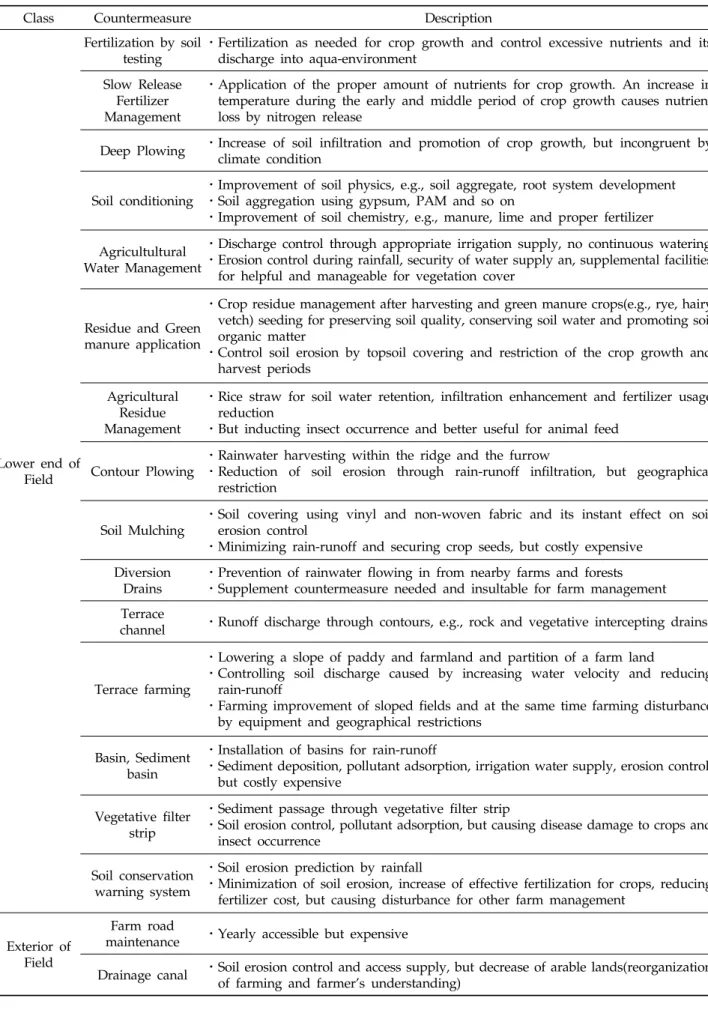
농경지를 대상으로 하는 농업 비점오염 저감기술에 대한 선행 자료들(KRCC, 2011; USEPA, 2012)을 분석하여 각 저 감기술에 대한 장점과 단점을 기술하였다(Table 2). 개발된 농업 비점오염 저감기술들은 적용되는 대상에 따라 경작지내, 경작지 하단, 외부 수변으로 구분하였다. 농경지 비점오염 저 감기술은 밭 위주의 저감 기술이 주를 이루고 있으며 논에 대 한 저감기술에 관한 연구는 상대적으로 적었다.
본 연구에서는 기존에 개발된 농업비점오염 저감기술에 대한 현장 적용성이라는 한계점을 보완하기 위해 농업비점오 염 전문가 집단을 중심으로 델파이 조사를 하여 보다 전문적 이고 객관적인 결과를 도출하고자 하였다. 전문가 델파이 조 사는 각 저감기술에 대한 평가항목 설정과 평가항목에 대한 가중치 설정 그리고 이를 고려한 각 저감기술에 대한 현장 적 용성 평가로 이루어졌다.
각 저감 기술별로 중요도와 기술적, 사회적 및 경제적 타 당도를 고려하여 저감 기술에 대한 평가항목을 저감효과, 정 책적 지원 및 주민 참여, 그리고 노동력 투입 및 비용 투입으 로 선정하였다. 각 평가항목별 가중치는 상대적 중요도에 따 라 1에서 5까지 부여하였으며 정책적 지원(5) > 비용투입(4)
> 노동력 투입(3) > 저감효과(2) > 주민 참여(1) 순이었다.
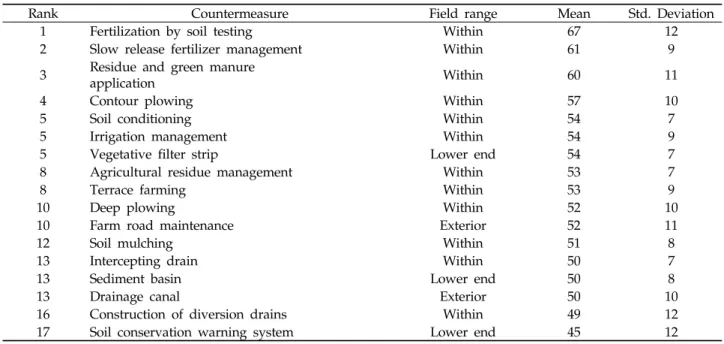
현장 적용성에 대한 전문가 조사는 전문가별로 17개의 저 감 기술별로 5개의 평가항목에 1부터 7까지 부여한 점수에다 평가항목별 가중치를 반영하여 총 점수를 산정하였다. 그 결 과 토양검정 시비, 완효성비료 시비, 식물잔재 및 녹비사용, 등고선 경작 등의 경작지 내 저감기술이 높은 것으로 나타났 다(Table 3). 농업 비점오염 관리는 발생원 관리가 중요하다 는 기존의 연구결과(An et al. , 2007; Choi et al. , 2012;
Won et al. , 2013)와 같이 경작지 내에서의 저감기술이 현장 적용성이 높은 것으로 판단된다. 또한 연구기관, 대학 및 정 책부서에 소속된 전문가 그룹별 조사 결과는 p-값(p=0.815) 이 5% 이상으로 유의한 차이가 인정되지 않아 전문가 그룹별 로 차이가 없었다.
농업지역이 토지피복분류상 토지계 비점오염원의 48.5%
로 높은 비중을 보이고 있으나(An et al. , 2007) 농업 비점오
염에 대한 구체적 제도 및 법안이 미비한 실정이다. 그러나
정부는 친환경 농업 육성 계획 및 보조금 정책 등으로 체계적
인 대책을 수립 중에 있으며 효과적인 시행을 위해서는 농업
인들의 적극적인 참여가 필요하다. 본 연구에서는 현장 적용
성이 높은 농업 비점오염 관리 방안은 비점오염 발생원 관리
의 주체인 농업인이 경작지 내에서 직접 참여할 수 있는 방안
들이라는 결과를 도출하였다. 따라서 효과적인 농업 비점오염
KIM et al.
146
Class Countermeasure Description
Lower end of Field
Fertilization by soil testing
⋅Fertilization as needed for crop growth and control excessive nutrients and its discharge into aqua-environment
Slow Release Fertilizer Management
⋅Application of the proper amount of nutrients for crop growth. An increase in temperature during the early and middle period of crop growth causes nutrient loss by nitrogen release
Deep Plowing ⋅Increase of soil infiltration and promotion of crop growth, but incongruent by climate condition
Soil conditioning
⋅Improvement of soil physics, e.g., soil aggregate, root system development
⋅Soil aggregation using gypsum, PAM and so on
⋅Improvement of soil chemistry, e.g., manure, lime and proper fertilizer
Agricultultural Water Management
⋅Discharge control through appropriate irrigation supply, no continuous watering
⋅Erosion control during rainfall, security of water supply an, supplemental facilities for helpful and manageable for vegetation cover
Residue and Green manure application
⋅Crop residue management after harvesting and green manure crops(e.g., rye, hairy vetch) seeding for preserving soil quality, conserving soil water and promoting soil organic matter
⋅Control soil erosion by topsoil covering and restriction of the crop growth and harvest periods
Agricultural Residue Management
⋅Rice straw for soil water retention, infiltration enhancement and fertilizer usage reduction
⋅But inducting insect occurrence and better useful for animal feed
Contour Plowing
⋅Rainwater harvesting within the ridge and the furrow
⋅Reduction of soil erosion through rain-runoff infiltration, but geographical restriction
Soil Mulching
⋅Soil covering using vinyl and non-woven fabric and its instant effect on soil erosion control
⋅Minimizing rain-runoff and securing crop seeds, but costly expensive Diversion
Drains
⋅Prevention of rainwater flowing in from nearby farms and forests
⋅Supplement countermeasure needed and insultable for farm management Terrace
channel ⋅Runoff discharge through contours, e.g., rock and vegetative intercepting drains
Terrace farming
⋅Lowering a slope of paddy and farmland and partition of a farm land
⋅Controlling soil discharge caused by increasing water velocity and reducing rain-runoff
⋅Farming improvement of sloped fields and at the same time farming disturbance by equipment and geographical restrictions
Basin, Sediment basin
⋅Installation of basins for rain-runoff
⋅Sediment deposition, pollutant adsorption, irrigation water supply, erosion control, but costly expensive
Vegetative filter strip
⋅Sediment passage through vegetative filter strip
⋅Soil erosion control, pollutant adsorption, but causing disease damage to crops and insect occurrence
Soil conservation warning system
⋅Soil erosion prediction by rainfall
⋅Minimization of soil erosion, increase of effective fertilization for crops, reducing fertilizer cost, but causing disturbance for other farm management
Exterior of Field
Farm road
maintenance ⋅Yearly accessible but expensive
Drainage canal ⋅Soil erosion control and access supply, but decrease of arable lands(reorganization of farming and farmer’s understanding)
Table 2. Review of agricultural Nonpoint Source Pollution control
Application Evaluation of Best Management Practices for Agricultural Non-Point Source Pollution using Delphi Survey Method 147
Rank Countermeasure Field range Mean Std. Deviation
1 Fertilization by soil testing Within 67 12
2 Slow release fertilizer management Within 61 9
3 Residue and green manure
application Within 60 11
4 Contour plowing Within 57 10
5 Soil conditioning Within 54 7
5 Irrigation management Within 54 9
5 Vegetative filter strip Lower end 54 7
8 Agricultural residue management Within 53 7
8 Terrace farming Within 53 9
10 Deep plowing Within 52 10
10 Farm road maintenance Exterior 52 11
12 Soil mulching Within 51 8
13 Intercepting drain Within 50 7
13 Sediment basin Lower end 50 8
13 Drainage canal Exterior 50 10
16 Construction of diversion drains Within 49 12
17 Soil conservation warning system Lower end 45 12
Table 3. Result of Delphi method per each agricultural nonpoint source pollution control
관리를 위해서는 농업인들의 적극적인 참여가 필수적이며 이 를 위해서는 보조금을 이용한 다양한 장려 정책이 이루어져 야 한다고 생각된다.
결 론
현장 적용이 가능한 농업 비점오염 저감기술을 정립하고 자 본 연구는 농업 비점오염 저감 기술을 평가하기 위한 평가 항목을 도출하고 농업 비점오염 전문가를 중심으로 델파이 설문 조사를 실시하여 각 평가 항목에 대한 현장 적용성을 평 가하였다. 각 저감 기술별로 중요도와 기술적, 사회적 및 경 제적 타당도를 고려한 저감 기술에 대한 평가항목별 가중치 는 정책적 지원 > 비용투입 > 노동력 투입 > 저감효과 > 주 민 참여 순이었다. 현장 적용성에 대한 전문가 조사 결과 토 양검정 시비, 완효성비료 시비, 식물잔재 및 녹비사용, 등고선 경작 등의 경작지 내 저감기술이 높은 것으로 나타났다. 현장 적용성이 높은 농업 비점오염 관리 방안은 비점오염 발생원 관리의 주체인 농업인이 경작지 내에서 직접 참여할 수 있는 방안들이라는 결과를 도출하였다. 따라서 효과적인 농업 비점 오염 관리를 위해서는 농업인들의 적극적인 참여가 필수적이 며 이를 위해서는 보조금을 이용한 다양한 장려 정책이 이루 어져야 한다고 생각된다.
Acknowledgement
This study was carried out with the support of
“Research Program for Agricultural Science & Technology Development (Project No. PJ008566)”, National Academy of Agricultural Science, Rural Development Administration, Republic of Korea.
References