Effect of dietary supplementation of quercetin on antioxidant activity and meat quality of beef cattle
Mingu Kang1, Hyun Joo Kim1, Aera Jang2, Dong Keun Gam3, Gwan Sik Yun4, Cheorun Jo1*
1Department of Animal Science and Biotechnology, Chungnam National University, Daejeon 305-764, Korea
2Department of Animal Products and Food Science, Kangwon National University, Chuncheon 2001-701, Korea
3CJ Cheiljedang, Inchoen, 400-103, Korea; 4Synergen, Inc., Bucheon, 420-020, Korea
Quercetin의 급여가 우육의 항산화 효과 및 품질에 미치는 영향
강민구
1ㆍ김현주
1ㆍ장애라
2ㆍ감동근
3ㆍ윤관식
4ㆍ조철훈
1*
1충남대학교 동물자원생명과학과, 2강원대학교 동물식품응용과학과, 3CJ 제일제당, 4시너젠
Received on 27 December 2011, revised on 18 January 2012, accepted on 23 March 2012
Abstract : This study was carried out to investigate the effects of dietary supplementation of quercetin (KocetinTM, QR) on antioxidative activity and meat quality of beef cattle (Holstein-Friesian). Beef cattle were divided into 3 groups; dietary supplementation of QR at 21 (n=4) and 42 ppm (n=3), and non-supplemented control (n=4). The QR comprised of 10%
of quercetin. After slaughtering the beef cattle, loins were obtained and analyzed. Dietary supplementation of QR at 42 ppm showed significantly higher final pH of loin but did not affect the water holding capacity, drip loss, cooking loss, surface color, total phenolics content, 1,1-diphenyl-2-picrylhydrazyl radical scavenging activity. Dietary QR showed no difference in both 2-thiobarbituric acid reactive substances and volatile basic nitrogen values. Textural characteristic results also showed no difference, except for cohesiveness. Cohesiveness was significantly higher in loin from beef cattle treated by dietary QR at 42 ppm when compared to control. Results suggest that dietary QR, which has only 10% of quercetin is not sufficient to have positive biochemical effects on beef meat quality.
Key words : Beef, Loin, Quercetin, Meat quality
*Corresponding author: Tel: +82-42-821-5774 E-mail address: [email protected]
I. Introduction
The quality of meat and meat products is an imperative necessity in the meat industry. Especially, oxidative processes are a major problem for the meat industry. Oxidation causes to the deterioration of lipids and proteins that work on the degradation in flavor, texture and color of fresh meat (Decker et al., 1995). Therefore, improved oxidative stability is required to maintaining the quality of meat. And the application of antioxidants is a desirable approach to protect opposite to oxidative processes in meat (Xiong
et al., 1993).
Currently, the interest in natural antioxidants has
increased because they are considered to be safer than
the synthetic antioxidants, and have greater application
potential for consumer’s acceptability, stability and
shelf-life of meat products (Jung et al., 2010; Naveena
et al., 2008). Zhang et al. (2010) reported that vitamins,
fatty acids and polyphenols have been studied as
natural antioxidants. Flavonoids are naturally existing
polyphenolic metabolites found in most plant and
plant-derived foodstuffs. They have shown multiple
actions: biological, pharmacological, medicinal and
various effects as typical ingredients of the human
diet (Hertog et al., 1993; Middleton et al., 2000).
Quercetin is one of the catechol-type flavonoids that have high antioxidant ability to inhibit free radical processes in cells. Previous studies revealed the following relevant mechanisms, by the scavenging of reactive oxygen, lipid peroxidation, either by reaction with peroxyl or lipid peroxyl radicals and the formation of hydroxide, probably by chelating iron ions (Middleton et al., 2000; Mira et al., 2002; Zhu et al., 2000).
Previously, oxidative stability of chicken meat during storage by the effect of dietary quercetin was reported (Jang et al., 2010). Cho et al. (2010) reported the effectiveness of dietary quercetin on meat quality of goat. Kang et al. (2011) also studied the effect of dietary quercetin of Hanwoo. Others have also reported using rats and pigs (Ameho et al., 2008; de Boer et al., 2005; Luehring et al., 2011).
The aim of this study was to investigate the effect of dietary supplementation of Kocetin
TM, containing quercetin, on quality of beef loin meat during storage.
II. Materials and methods
1. Sample preparation
A total of 11 beef cattle (male, Holstein-Friesian) were obtained from experimental farm (CJ Co., Ltd., Seoul Korea). Beef cattle were divided into 3 groups;
21 ppm of dietary Kocetin
TM(QR) (n = 4), 42 ppm of dietary QR (n = 3), and non-treated control (n = 4).
QR was obtained from Synergen Co. (Incheon, Korea) which consisted of 10% of quercetin and 90% of CaCO
3. The QR was mixed with feed for the designated con- centrations and fed for 75 days. The prepared feed was provided at 10 kg/day to beef cattle. After 24 h postmortem, loin of the beef cattle was obtained from a commercial abattoir and transported to laboratory using a cold container. All samples were stored in a refrigerator in a 4℃ for 7 days and quality characteristics were analyzed.
2. Proximate analysis
Approximately 200 g of the samples were used to measure collagen, fat, moisture, and protein contents using a FoodScan Lab Meat Analyzer (FoodScan Lab, Type 78800, FOSS, Hilleroed, Denmark).
3. Physical characteristics
1) pH
The samples (1 g) were homogenized (T25b, Ika Works (Asia)., Sdn, Bhd, Malaysia) with distilled water (9 ml) at 16,000 rpm for 20 s. pH of the loin meat was measured by pH meter (SevenGo, Mettler-Toledo Inti, Inc, Schwerzenbach, Switzerland).
2) Water holding capacity (WHC)
The sample (1 g) of minced loin meat was placed into conical tube and centrifuged at 3,000 rpm for 10 min. The released water was weighed and calculated as a percentage of the initial moisture content of meat.
3) Color measurement
Color measurements of the surface of the loin were performed using a spectrophotometer CM 3500d (Konica Minolta Censing Inc., Japan) and Hunter color L
*- (lightness), a
*- (redness) and b
*- (yellowness) value were determined. Sample was place on a quartz cell (8 mm diameter) and the instrument was calibrated to standard black and white plate before analysis. A small size aperture was used, and the measurement was triplicated.
4) Texture analysis
For texture analysis, the loin meat samples were
cut into 30 mm × 20 mm × 15 mm. The experiment
was carried out with a Texture Analyzer (Model TA-
XT 2i, Stable Micro systems Ltd., Surrey, UK). A
round needle type probe (75 mm diameter) was set and
moved perpendicularly to the sample with a speed of 1.00 mm/s, and trigger force of 0.005 kg. Texture analysis was performed by the texture expert software (version 4,0, 12,0. Stable Micro system Ltd.), and the following parameters were recorded; hardness, adhesive- ness, springiness, cohesiveness, gumminess, chewiness, and resilience (Bourne, 1978). Each measurement was replicated at three times.
4. Antioxidative activity
Loin meats (3 g) were homogenized (T25b, Ika Works (Asia)) in 15 ml of distilled water at 16,000 rpm for 20 s. The samples were centrifuged (Union 32R, Hanil Co., Ltd., Korea) at 3,000 rpm for 10 min and filtered with a filter paper (Whatman No. 1, Whatman Ltd., Maidstone, England). Chloroform (10 ml) was added to remove fat. To the mixture, the samples were shaken 2-3 times. The samples were divided into lipids and the aqueous supernatant by centrifuged at 3,000 rpm for 10 min and then the supernatant used for the analysis of the total phenolic contents and DPPH radical scavenging activity.
Total phenolic contents were measured by the Folin-Ciocalteu’s method (Subramanian et al., 1965).
The prepared sample solution (0.1 ml) was added to the Folin-Ciocalteu reagent (0.2 ml) and kept to reaction for 1 min. Sodium carbonate (5%, 3 ml) was added and voltexed. The mixture was kept to reaction in incubator for 2 h at 23℃. The absorbance was measured with a spectrophotometer (DU 530, Beckman Instruments Inc., Fullerton, CA, USA) at 765 nm.
Phenolic contents were expressed as gallic acid equivalents.
The DPPH radical scavenging effect was estimated according to the method of Blois (1958) with slight modification. The samples (0.2 ml) were added to distilled water (0.8 ml) and 0.2 mM methanolic DPPH solution (1 ml). For the control, distilled water (1 ml) was added to 0.2 mM methanolic DPPH solution (1 ml). The mixture
was and left to stand for 30 min at room temperature.
The absorbance was measured with a spectrophotometer (Beckman Instruments Inc.) at 517 nm. The percentage of DPPH radical scavenging was obtained from the following equation;
DPPH radical scavenging activity
= [1-(absorbance of sample / absorbance of control)]
× 100.
5. Lipid oxidation
2-Thiobarbituric acid reactive substances (TBARS) values of the loin meat were measured during storage and done according to method by Jung et al. (2011).
Each sample (3 g) was added to distilled water (9 ml) and BHT (7.2% in ethanol, 50 µL) in centrifuge tube (50 ml). The samples were homogenized at 16,000 rpm for 20 s. The homogenate (1 ml) was transferred to a centrifuge tube (15 ml) and added to thiobarburic acid (TBA)/trichloroacetic acid (TCA) solution (20 mM TBA in 15% TCA, 2 ml). Tubes were heated in a water bath at 90℃ for 30 min, cooled in cold water and then centrifuged at 3,000 rpm for 10 min. Absorbance was measured at 532 nm with a spectrophotometer (Beckman Instrument Inc.). TBARS value was reported as mg malondialdehyde per kg meat.
6. Volatile basic nitrogen (VBN)
Measurement of VBN was done according to Conway (1950). Samples (3 g) were homogenized at 16,000 rpm for 10 min with distilled water (3 ml) and TCA (10%, 6 ml). The samples were centrifuged at 3,000 rpm for 10 min and filtered with a filter paper (Whatman No.
1). Homogenization was added to TCA (5%, 18 ml). The mixture was centrifuged at 3,000 rpm for 10 min, and then made up to a final volume 30 ml with TCA (5%).
0.01 N boric acid was used as a VBN absorber and
placed in the inner section of a Conway micro-
Table 1. Proximate composition of the loin meat from beef cattle fed quercetin (KocetinTM).
Supplementation Proximate composition (%)
Collagen Fat Moisture Protein
Control 1.81 8.12 69.14 21.55
21 ppm 1.68 7.68 69.39 21.48
42 ppm 1.75 8.58 69.15 21.12
SEM1 0.069 1.469 1.138 0.503
1Standard error of the means (n = 11).
diffusion cell (Sibata Ltd., Tokyo, Japan). The sample solution (1 ml) was placed into the outer section. TCA (5%) was used as control. K
2CO
3solution (1 ml) was placed into the outer section on the opposite side of the sample solution and the lid was closed immediately.
Conway micro-diffusion cell was stirred smoothly and then incubated at 37℃ for 60 min. The samples were titrated against 0.01 N sulfuric acid. The concentration of VBN was calculated as ammonia equivalent using the following equation:
VBN value (mg%)
= [0.14 × (titration volume of sample solution - titration volume of control) × 10] × 100 7. Sensory evaluation
Sensory evaluation was performed by a ten-member of panelist who has experience of meat quality analysis for at least 1 year. Different sessions were carried out in 3 consecutive days. The samples were sliced into 15 mm thick portions. Samples were grilled on both sides for 45 s to reach an interior temperature of 75℃.
The grilled meat samples were scored on a 9-point hedonic scale by sensory panelists to assess meat quality attributes. Sensory paramerters evaluated were meat color, odor, taste, tenderness, juiciness, flavor and overall acceptance (extremely dislike = 1 to extremely like = 9).
8. Statistical analysis
Statistical analysis was performed by one-way
analysis of variance (ANOVA). When significant differences were detected, the differences among the mean values were identified by Duncan’s multiple range tests using SAS software (2004) at a confidence level of P < 0.05.
Mean values and standard errors of the mean are reported.
III. Results and discussion
1. Proximate composition
The proximate composition of the effects of dietary QR of beef is shown in Table 1. The results of collagen, moisture, fat, and protein was no significant difference.
These results mean that dietary QR treatments did not affect the proximate composition of loin from beef cattle.
2. Physical characteristics
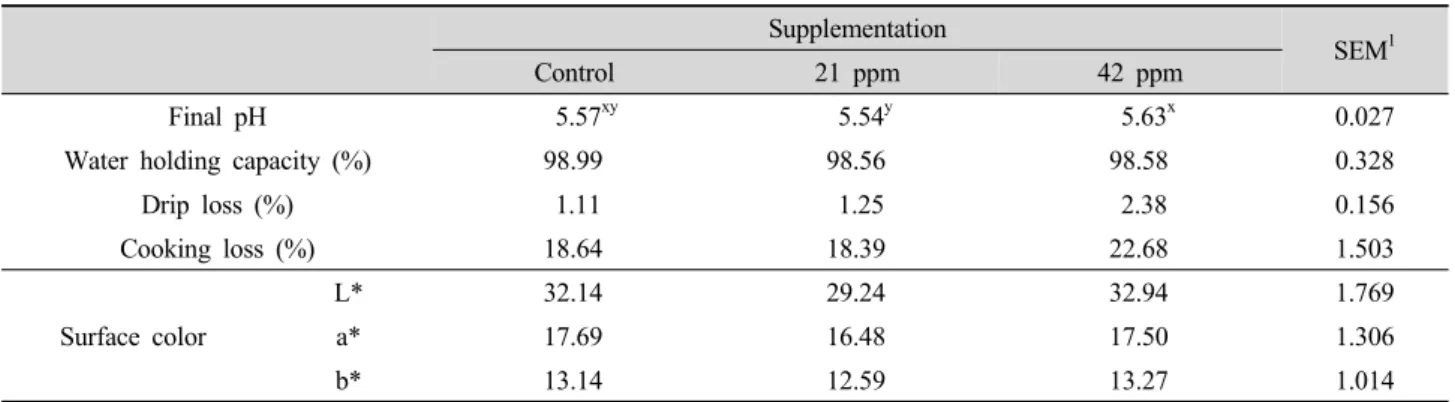
Table 2 shows the physical characteristics values of sample from the beef loin fed QR. The final pH of the sample was significantly increased in loin from beef cattle supplemented by 42 ppm of QR. However, there were no significant differences on the WHC, drip loss, cooking loss and surface color of sample.
These findings mean that the dietary quercetin did not
change the ultimate characteristics of meat (Kremer et
al., 2000). The CaCO
3content of QR may influence
this pH difference. However, Kang et al. (2011) reported
that when Hanwoo was fed the same amount of dietary
quercetin, there was no difference in pH by the
treatment. Muscle pH is very important due to the
Table 2. Physical characteristics of the loin meat from beef cattle fed quercetin (KocetinTM).
Supplementation
SEM1
Control 21 ppm 42 ppm
Final pH 5.57xy 5.54y 5.63x 0.027
Water holding capacity (%) 98.99 98.56 98.58 0.328
Drip loss (%) 1.11 1.25 2.38 0.156
Cooking loss (%) 18.64 18.39 22.68 1.503
Surface color
L* 32.14 29.24 32.94 1.769
a* 17.69 16.48 17.50 1.306
b* 13.14 12.59 13.27 1.014
1Standard error of the means (n = 11).
x, yDifferent letters within the same row differ significantly (p < 0.05).
Table 3. Texture profile analysis of the loin meat from beef cattle fed quercetin (KocetinTM).
Supplementation Hardness (kg)
Adhesiveness (g/sec)
Springness (mm)
Cohesiveness (%)
Gumminess (kg)
Chewiness
(kg*mm) Resilience
Control 33.72 -3.75 0.55 0.48b 16.11 8.87 0.23
21 ppm 38.00 -4.63 0.55 0.52ab 19.82 10.97 0.23
42 ppm 31.45 -3.13 0.58 0.56a 17.62 10.32 0.27
SEM1 2.245 0.444 0.018 0.019 1.714 1.080 0.014
1Standard error of means (n=11).
a, bDifferent letters within the same column differ significantly (p<0.05).
positive correlation with water holding capacity during the conversion of muscle to meat (Bee et al., 2007).
The transition of meat pH close to isoelectric point decreases WHC (Swatland, 2008). The result of higher pH in beef loin fed 42 ppm suggests that there might have some positive effects on quality even though there was no evidence with real meat system.
Table 3 shows the texture profile analysis of the beef loin fed QR. Hardness increased slightly at QR 21 ppm, but there was no significant difference. A similar trend was observed for gumminess and chewiness.
However, cohesiveness was significantly increased in the loin of beef cattle fed QR a 42 ppm level, when compared with control. Jung et al. (2011) indicated that high springiness is one of the distinctive meat quality traits of Koran native chicken when comparison with broilers. In this study, all TPA results have no difference, except for cohesiveness (Table 3). This means, that the consumption of feeding quercetin has a no important influence to texture of the beef loin.
3. Antioxidant activity and volatile basic nitrogen content
Phenolic and flavonoid compounds in quercetin were known by several studies (Hertog et al., 1993;
Hollman and Arts, 2000; Pratt and Watts, 1964). Total phenolic contents for all treatments were no significant difference (Table 4). The antioxidant properties of quercetin have been associated with phenolic compound that break free radical chain reactions by electron donation and chelating metal ion (Bekhik et al., 2003).
The radical scavenging activity has been measured to the antioxidant activity of the beef loin fed QR by the DPPH method. DPPH is an extensively used method for evaluating the antioxidative activity. However, in this case, DPPH radical scavenging activities did not show any different by fed QR. These may be related to rapid metabolism of quercetin (de Boer et al., 2005;
van der Woude et al., 2004; Cho et al., 2010).
Table 5 shows the effect of TBARS value of the loin
Table 4. Antioxidative activity of the loin meat from beef cattle fed quercetin (KocetinTM).
Supplementation Total phenolic content (mg/g) DPPH radical scavenging activity (%)
Control 2.07 43.05
21 ppm 2.17 42.53
42 ppm 2.04 52.45
SEM1 0.052 4.674
1Standard error of the means (n = 11).
Table 5. 2-thiobarbituric acid reactive substances (TBARS) and volatile basic nitrogen (VBN) of the loin meat from beef cattle fed quercetin (KocetinTM).
Supplementation Storage (day)
0 7 SEM
TBARS (mg malondialdehyde/kg meat)
Control 0.39y 0.53x 0.0242
21 ppm 0.33y 0.50x 0.0252
42 ppm 0.33 0.60 0.0803
SEM1 0.027 0.054
VBN (mg %)
Control 5.60y 6.05x 0.1172
21 ppm 5.78 5.78 0.3352
42 ppm 5.13 6.07 0.3693
SEM1 0.303 0.263
1Standard error of means (n=11), 2(n=8), 3(n=6).
x, yDifferent letters within the same row differ significantly (p < 0.05).
from beef cattle fed QR during storage for 7 days at 4℃. Generally, TBARS values increased with storage time. In our study, also, TBARS values increased significantly during storage time, except for QR 42 ppm. The increase of TBARS value is described by autooxidation of fat in the existence of oxygen. There was any difference found among the treatments, similarly, quercetin as a dietary supplementary for goat did not show the effect of lipid oxidation in goat meat (Cho et al., 2010). In contrast, other studies showed contradictory results (Ameho et al., 2008;
Jang et al., 2010; Luehring et al., 2011). It was considered that experiments were about supplementation of quercetin to rats, chickens and pigs that appeared effective to antioxidant ability. This difference results may be come from difference in structure of the digestive system because of the unique role of the rumen volatile fatty acid (VFA) in ruminants. Several researches discussed that high antioxidative capacity
of quercetin was opposed to hydroxyl and peroxyl radicals and superoxide anions (Afanasev et al., 1989;
Robak and Gryglewski, 1988).
Total volatile basic nitrogen substances (VBN) con- centration has been regarded as a measurement of freshness and spoilage (Kruk et al., 2011). The VBN value was significantly increased during storage time (Table 5). Increase of VBN amount in meat can be reason of either microorganisms or enzymatic degradation of protein (Field and Chang, 1969; Jo et al., 2004).
Jang et al. (2010) reported that quercetin as dietary supplementation for chicken has highly effected on prevention of protein decomposition.
4. Sensory evaluation
Table 6 shows the sensory evaluation of the beef
loin fed QR that was performed the parameters of
color, odor, taste, tenderness, juiciness, flavor and
Table 6. Sensory evaluation of the loin meat from beef cattle fed quercetin (KocetinTM).
Supplementation Color Odor Taste Tenderness Juiciness Flavor Overall
acceptance
Control 5.63 5.16 5.93a 3.46c 5.63a 5.78a 5.98a
21 ppm 5.29 5.11 4.30b 6.19a 4.83b 4.29c 4.08c
42 ppm 5.63 5.52 5.26a 4.68b 5.18ab 5.08b 5.10b
SEM1 0.211 0.229 0.259 0.279 0.241 0.248 0.287
The score was evaluated with 10 semi-trained panelists (1, extremely dislike; 5, neither dislike nor like; 9, extremely like).
1Standard error of means (n=110).
a-cDifferent letters within the same column differ significantly (p<0.05).
overall acceptance. According to the sensory panel, there were no significantly different results in color and odor. QR 21 ppm was significantly higher than other treatments in tenderness. Overall acceptance showed higher in control sample. Previous studies explain that intake of dietary quercetin was not stored in muscle directly (de Boer et al., 2005; Graf et al., 2006). In this regard, quercetin does not function directly in meat, while it is metabolized in other organs or digestive tract after consumption, and these are perceived having an influence of sensory of meat (Cho et al., 2010). On the other hand, QR composed of only 10% of quercetin, which may be difficult to reveal function. Therefore, we need more researches to improve our understanding of the mechanism this natural antioxidant.
IV. Conclusion
Dietary QR does not affect the quality of the loin of beef cattle except for pH. It might be related with the unique digestive structure of rumen and restricted amount of feeding the active compound (10% of quercetin in QR). Further studies are needed on the effect of dietary quercetin on the quality of beef.
Acknowledgment
This research was supported by the Technology Development Program for Agriculture and Forestry (Project No. 311016-3), Ministry of Agriculture, Forestry
and Fisheries, Republic of Korea, 2012.
References
Afanasev IB, Dorozhko AI, Brodskii AV, Kostyuk VA, Pota- povitch AI. 1989. Chelating and free-radical scavenging mechanisms of inhibitory-action of rutin and quercetin in lipid-peroxidation. Biochem. Pharmacol. 38: 1763-1769.
Ameho CK, Chen CYO, Smith D, Sanchez-Moreno C, Milbury PE, Blumberg JB. 2008. Antioxidant activity and metabolite profile of quercetin in vitamin-E-depleted rats. J. Nutr. Biochem.
19: 467-474.
Bee G, Anderson AL, Lonergan SM, Huff-Lonergan E. 2007.
Rate and extent of pH decline affect proteolysis of cytoskeletal proteins and water-holding capacity in pork.
Meat Sci. 76: 359-365.
Bekhik AED, Geesink GH, Ilian MA, Morton JD, Bickerstaffe R. 2003. The effects of natural antioxidants on oxidative processes and metmyoglobin reducing activity in beef patties.
Food Chem. 81: 175-187.
Blois MS. 1958. Antioxidant determinations by the use of a stable free radical. Nature 181: 1199-1200.
Bourne MC. 1978. Texture profile analysis. Food Technol. 33:
62-66.
Cho SK, Jo C, Jung S, Kim MK, Oh HM, Lee BD, Lee SK.
2010. Effects of dietary quercetin on the feed utilization, blood parameters, and meat quality in Korean native goats.
J. Anim. Sci. Technol. 52: 297-304.
Conway EJ. 1950. Microdiffusion Analysis and Volumetric Error, 3rd ed, London:Crosby Lockwood and Son Ltd. pp. 87-107.
de Boer VCJ, Dihal AA, van der Woude H, Arts ICW, Wolffram S, Alink GM, Rietjens IMCM, Keijer J, Hollman PCH.
2005. Tissue distribution of quercetin in rats and pigs. J.
Nutr. 135: 1718-1725.
Decker EA, Chan WKM., Livisay SA, Butterfield DA, Faustman, C. 1995. Interactions between carnosine and the different redox states of myoglobin. J. Food Sci. 60: 1201-1204.
Field RA, Chang YD. 1969. Free amino acids in bovine muscles and their relationship to tenderness. J. Food Sci. 34: 329-331.
Graf BA, Ameho C, Dolnikowski GG, Milbury PE, Chen CY,
Blumberg JB. 2006. Rat gastrointestinal tissues metabolize quercetin. J. Nutr. 136: 39-44.
Hertog MGL, Hollman PCH, Katan MB, Kromhout D. 1993.
Intake of potentially anticarcinogenic flavonoids and their determinants in adults in the Netherlands. Nutr. Cancer Int.
J. 20: 21-29.
Hollman PCH, Arts ICW. 2000. Flavonols, flavones and flavanols - nature, occurrence and dietary burden. J. Sci. Food Agric.
80: 1081-1093.
Jang A, Park JE, Kim SH, Chae HS, Ham JS, Oh MH, Kim KH, Cho SH, Kim DH. 2010. Effect of dietary supple- mentation of quercetin on oxidative stability of chicken thigh. Korean J. Poultry Sci. 37: 405-413.
Jo C, Kim DH, Kim HY, Lee WD, Lee HK, Byun MW. 2004.
Studies on the development of low-salted, fermented, and seasoned Changran Jeotkal using the intestines of Therage chalcogramma. Radiat. Phys. Chem. 71: 123-126.
Jung S, Choe JH, Kim B, Yun H, Kruk ZA, Jo C. 2010. Effect of dietary mixture of gallic acid and linoleic acid on antioxidative potential and quality of breast meat from broilers. Meat Sci. 86: 520-526.
Jung Y, Jeon HJ, Jung S, Choe JH, Lee JH, Heo KN, Kang BS, Jo C. 2011. Comparison of quality traits of thigh meat from Korean native chickens and broilers. Korean J. Food Sci.
Ani. Resour. 31: 684-692.
Kang M, Kim HJ, Lee HJ, Jang A, Yung GS, Jo C. 2011. Effect of dietary KocetinTM on meat quality of Hanwoo loin. J.
Anim. Sci. Technol. 53: 541-548.
Kremer BT, Stahly TS, Sebranek JG. 2000. Effect of dietary quercetin on pork quality. Iowa State University, ASL, 1621.
Kruk ZA, Yun H, Rutley DL, Lee EJ, Kim YJ, Jo C. 2011. The effect of high pressure on microbial population, meat quality and sensory characteristics of chicken breast fillet.
Food Control. 22: 6-12.
Luehring M, Blank R, Wolffram S. 2011. Vitamin E-sparing and vitamin E-independent antioxidative effects of the flavonol quercetin in growing pigs. Anim. Feed Sci. Technol. 169:
199-207.
Middleton E, Kandaswami C, Theoharides TC. 2000. The effects of plant flavonoids on mammalian cells: Implications for inflammation, heart disease, and cancer. Pharmacol. Rev.
52: 673-751.
Mira L, Fernandez MT, Santos M, Rocha R, Florencio MH, Jennings KR. 2002. Interactions of flavonoids with iron and copper ions: A mechanism for their antioxidant activity.
Free Radical Res. 36: 1199-1208.
Naveena BM, Sen AR, Vaithiyanathan S, Babji Y, Kondaiah N.
2008. Comparative efficacy of pomegranate juice, pomegranate rind powder extract and BHT as antioxidants in cooked chicken patties. Meat Sci. 80: 1304-1308.
Pratt DE, Watts BM. 1964. The antioxidant activity of vegetable extracts I. Flavone aglyconesa. J. Food Sci. 29: 27-33.
Robak J, Gryglewski RJ. 1988. Flavonoids are scavengers of superoxide anions. Biochem. Pharmacol. 37: 837-841.
SAS Institute Inc. 2004. SAS User's Guide. Cary, NC : SAS Institute Inc.
Subramanian KN, Padmanaban G, Sarma PS. 1965. Folin- ciocalteureagent for the estimation of siderochromes. Anal.
Biochem. 12: 106-112.
Swatland HJ. 2008. How pH causes paleness or darkness in chicken breast meat. Meat Sci. 80: 396-400.
van der Woude H, Boersma MG, Vervoort J, Rietjens IMCM.
2004. Identification of 14 quercetin phase II mono- and mixed conjugates and their formation by rat and human phase II in vitro model systems. Chem. Res. Toxicol. 17:
1520-1530.
Xiong YL, Decker EA, Robe GH, Moody WG. 1993. Gelation of crude myofibrillar protein isolated from beef-heart under antioxidative conditions. J. Food Sci. 58: 1241-1244.
Zhang W, Xiao S, Samaraweera H, Lee EJ, Ahn DU. 2010.
Improving functional value of meat products. Meat Sci. 86:
15-31.
Zhu QY, Huang Y, Chen ZY. 2000. Interaction between flavonoids and alpha-tocopherol in human low density lipoprotein. J. Nutr.Biochem. 11: 14-21.