J. Kor. Soc. Fish. Tech., 44(4), 282 293, 2008 DOI:10.3796/KSFT.2008.44.4.282
Attracting effect of baits used the by-product for swimming crab Portunus trituberculatus pots
Ho Young CHANG*, Jae Geun KOO1, Keun Woo LEE1, Bong Kon CHOand Byung Gon JEONG2
Marine Science & Production Major, Kunsan National University, Jeonbuk 573-701, Korea
1Food Science & Biotechnology Major, Kunsan National University, Jeonbuk 573-701, Korea
2Environmental Engineering Major, Kunsan National University, Jeonbuk 573-701, Korea
In order to develop the substitutive materials for natural baits of swimming crab pots, the attracting effects of swimming crab such as the preference of baits which were made of the by-products of marine and stock raising through the water tank experiments and fishing experiments. On the investigation of mean entrapped catch number to the pot by the baits after putting the 4 kinds of baits, mackerel(M), mackerel with grinded mackerel s internals(MMI), mackerel with tuna s internals(MTI) and makerel with grinded krill(MK) each in one pot by turns, MMIand MK were entrapped mean 3.9(13.0%) and they were a little more comparing to M, and MTIis least with mean 2.1(7.0%)(F 12.913, P 0.05). Otherwise, on the preference investigation of swimming crabs by the baits after putting the 4 kinds of baits in the 4 pots each, M was entrapped mean 3.0(10%), but MMI, MTIand MK were mean 1.2(4.0%), 1.0(3.3%) and 1.5(5.0%) each and they were only 30-50% of M(F 13.398, P 0.05). On the preference investigation of swimming crabs by the 5 kinds of baits, mackerel(M), and krill(K), manila clam(MC), pig s fat(PF) and chicken s head(CH) which were used in substitutive baits, M was entrapped mean 3.2(10.7%), but K was about 50% of catch of M with mean 1.6(5.3%), and MC, PFand CH were very few with mean 0.1-0.2(0.3-0.7%)(F 89.186, P 0.05). On the preference investigation of swimming crabs by the pots which were put each the 3 kinds of baits, original krill(K), grinded krill with gluten and soybean oil cake(KGGS) and grinded krill with gluten, soybean oil cake and glycine(KGGSGL) in the blue fluorescent hexahedral plastic bait cages(BF), and which were put the mackerel(M) in the non-fluorescent hexahedral red plastic bait cage(RFN), it was entrapped mean 3.0(10.0%) in the pot which was put the mackerel in the RFN, and the same level in the pots which were put
*Corresponding author: [email protected], Tel: 82-63-469-1819, Fax: 82-63-469-1811
30 40%
(Chang, 2003).
Umezu(1966), Hara (1982), Carr and Thompson(1983), Takeda et al.(1984), Carr and Derby(1986), Harada(1986), Zimmer-Faust(1989), Johnstone and Mackie(1990),
Takaoka et al.(1990) ,
.
Beukemaj(1970), Kobayashi (1975), Yamaguchi et al.(1983), Lφkkeborg (1991), Fuwa et al.(2000), Januma(2001), Januma et al.(2003), Watanabe and Honda(2005), An and Arimoto(2007), Archdale et al.(2008)
,
Miyazaki et al.(1967), Kawamura et al.
(1995), Youm(1998)
. ,
,
.
(M),
(MMI), (MTI),
(MK) 4 (Fig. 1) ,
1 4
. ,
M
MMI, MTI, MK 4
,
. the K and KGGSGLin the BF, but it was mean 2.0(6.7%) in the pots which was put the KGGS in BF and it was decreased by 30% of catch comparing to RFN(F=3.750, P 0.05). On the preference investigation of swimming crab by the pots which was put grinded tuna with gluten, soybean oil cake and glycine(TIGSGL) in the blue fluorescent hexahedral plastic bait cage(BF), and which was put mackerel(M) in the non- fluorescent hexahedral red plastic bait cage(RFN), it was entrapped mean 3.3(11.0%) in the pot which was put mackerel in RFN, and mean 2.7(9.0%) in the pot which was put TIGSGLin BF and it was about 15% less comparing to use bait M(t 1.387, P 0.05). As a results of fishing experiments, a plan for enhancing catching efficiency of TIGSGLwill be required because catching efficiency of TIGSGL, alternative bait, was half of fish catching efficiency of natural bait using mackerel. Fishing experiments were conducted 3 times using reinforced substitutive artificial bait that is reinforced attractive effect of TIGSGL and composed of tuna intestine, grinded mackerel, gluten, soybean cake, glycine and alanine(TIMGGSGLA). Catching efficiency of TIMGGSGLA was about 80% of that of natural bait made of mackerel.
Key words : Swimming crab pot, Attracting effect, By-product, Substitutive bait
Fig. 1. Type of baits used in experiments of preference to the marine by-products.
M: mackerel, MMI: mackerel with grinded mackerel s internals,
MTI: mackerel with grinded tuna s internals, MK: mackerel with grinded krill.
Fig. 2. Type of baits used in experiments of preference to the marine and stock raising by- products.
K: krill, MC: manila clam, PF: pig s fat, CH: chicken s head.
M MMI
MTI MK
K MC
PF CH
(M) ,
(K), (MC), (PF), (CH) 4
(Fig. 2) .
(M)
(K), (KGGS),
(KGGSGL)
3 4
(Fig. 3) .
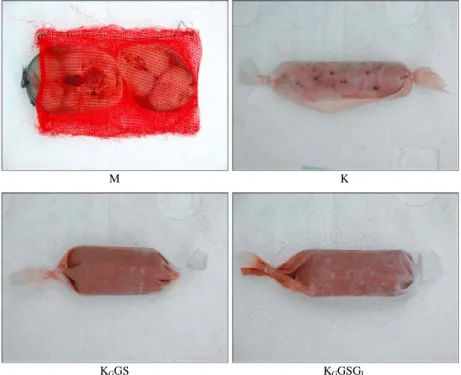
Fig. 3. Type of baits used in experiments of preference to the substitute baits.
M: mackerel, K: krill, KGGS: grinded krill with gluten and soybean oil cake, KGGSGL: grinded krill with gluten, soybean oil cake and glycine.
Fig. 4. Type of baits used in experiments of preference to the mackerel and tuna s internals.
M: mackerel, TIGSGL: grinded tuna s internals with gluten, soybean oil cake and glycine.
M K
KGGS KGGSGL
M TIGSGL
,
,
,
(Chang et al., 2008) . ,
(M) ,
(TIGSGL) 2 (Fig. 4)
.
2005 10 26 31 ,
2006 6 3 10
(φ64,000 H10,600mm)
. Chang et al.(2007)
.
2005 10 26
31 136 170g,
61 70mm, 125 147mm ,
16 18 C . 2006 6 3 10
145 263g, 68 84mm,
147 174mm , 22 24 C .
30 ,
10 6
. ,
(ANOVA) , (M)
(TIGSGL)
T-test .
1 2007 6 18 19
(M)
(TIGSGL) 2 (Fig. 4)
2 , 2 2007 11
15 17 (M)
(TIMGGSGLA)
2 (Fig. 5) 3 .
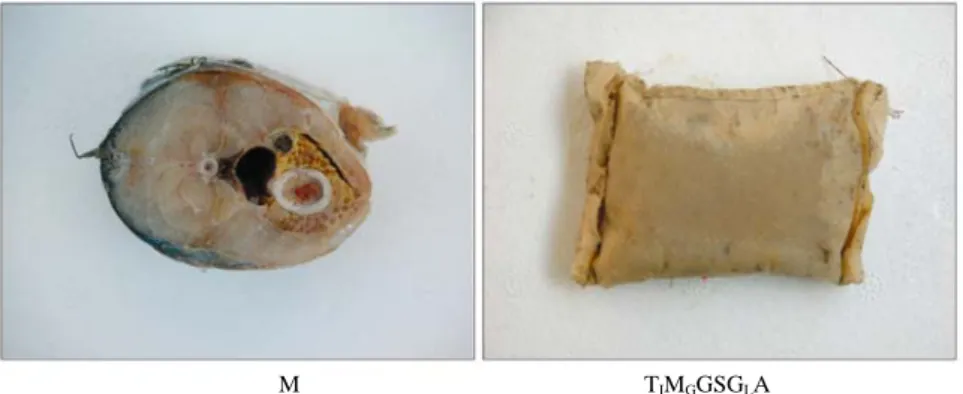
Fig. 5. Type of baits used in fishing experiments.
M: mackerel, TIMGGSGLA: grinded tuna s internals with grinded mackerel, gluten, soybean oil cake, glycine and alanine.
M TIMGGSGLA
M
, TIGSGL
TIMGGSGLA .
φ590 H250mm
35mm 200 1 2
. 1
, Chang et al.(2008) 30 40m .
(M), (MMI),
(MTI), (MK) 4
1 4
, 10
Table 1 . M,
MMI, MTI MK 4
MMI MK
3.9 (13.0%) M
, MTI 2.1 (7.0%) (F 12.913, P 0.05).
, M, MMI, MTI MK 4
, 10 4
Table 2
. M 3.0 (10.0%)
, MMI, MTI MK 1.2 (4.0%), 1.0 (3.3%) 1.5 (5.0%)
30 50% (F 13.398, P 0.05).
(M)
(K), (MC), (PF), (CH) 4
Table 3 . M 3.2
Table 3. Results of the preference examination of swimming crab to the bait using the marine and stock breeding by- products
Type of baits Entrapped number (Entrapped rate, %)
*: mackerel, **: krill, ***: manila clam, ****: pig s fat, *****: chicken s head.
F 89.186, P 0.05.
M* K** Mc*** PF**** CH*****
3.2 (10.7)
1.6 (5.3)
0.2 (0.7)
0.1 (0.3)
0.1 (0.3) Table 2. Results of the preference examination of swimming crab to the bait using the marine by-products
Type of baits Entrapped number (Entrapped rate, %)
*: mackerel, **: mackerel with grinded mackerel s internals, ***: mackerel with grinded tuna s internals, ****: mackerel with grinded krill.
F 13.398, P 0.05.
M* MMI** MTI*** MK****
3.0 (10.0)
1.2 (4.0)
1.0 (3.3)
1.5 (5.0) Table 1. Mean cumulative entrapped numbers of swimming crab to the bait using the marine by-products
Type of baits Entrapped number (Entrapped rate, %)
*: mackerel, **: mackerel with grinded mackerel s internals, ***: mackerel with grinded tuna s internals, ****: mackerel with grinded krill.
F 12.913, P 0.05.
M* MMI** MTI*** MK****
3.0 (10.0)
3.9 (13.0)
2.1 (7.0)
3.9 (13.0)
(10.7%) , K 1.6
(5.3%) 50% , MC, PF
CH 0.1 0.2 (0.3 0.7%)
(F 89.186, P 0.05).
(M) (RFN)
(K), (KGGS),
(KGGSGL) 3 (BF)
Table 4 . RFN M
3.0 (10.0%) , BF
K KGGSGL
, KGGS
2.0 (6.7%) 30%
(F 3.750, P 0.05).
, (RFN)
(M) (BF)
(TIGSGL)
Table 7 .
(RFN) (M)
3.3 (11.0%) , (BF)
(TIGSGL)
2.8 (9.3%) (M)
15%
(t 1.387, P 0.05).
. (M)
(TIGSGL) 2
Table 6 . M
702.0 38.4kg
, 225.5 (32.1%)
21.0kg(54.7%) .
TIGSGL
602.0 31.3kg
, 120.0 (19.9%)
Table 5. Results of the attraction examination of swimming crab to the replacement bait using the tuna s internals Type of baits
Entrapped number (Entrapped rate, %)
*: mackerel, **: grinded tuna s internals with gluten, soybean oil cake and glycine.
t 1.387, P 0.05.
M* TIGSGL**
3.3 (11.0)
2.8 (9.3) Table 4. Results of the attraction examination of swimming crab to the replacement baits using the krill
Type of baits Kind of bait cages Entrapped number (Entrapped rate, %)
*: mackerel, **: krill, ***: grinded krill with gluten and soybean oil cake, ****: grinded krill with gluten, soybean oil cake and glycine, 1: red non-flourescent bait cage, 2: blue flourescent bait cage.
F 3.750, P 0.05.
M* K** KGGS*** KGGSGL****
RFN1 BF2 BF2 BF2
3.0 (10.0)
3.0 (10.0)
2.0 (6.7)
3.0 (10.0)
Table 6. Results of fishing experiment for the baits of mackerel and grinded tuna with gluten, soybean oil cake and glycine(TIGSGL)
Species
Portunus trituberculatus Ovalipes punctatus Charybdis japonica Conger myriaster Platycephalus indicus
Anomura Prawn Snail Others
Total
*: mackerel, **: grinded tuna with gluten, soybean oil cake and glycine.
( ): entrapped catch weight(kg).
M* TIGSGL**
18th June, 2007
19th June,
2007 Mean
229 (21.1)
106 (9.1) 2 (0.3)
4 (1.3)
4 (1.2)
62 (0.8)
38 (0.1)
226 (2.7) 43 (1.9)
222 (20.9)
116 (10.0)
5 (0.6)
3 (1.0)
2 (0.7)
53 (0.7)
36 (0.1)
207 (2.5)
46 (1.8)
225.5 (21.0) 111.0 (9.6) 3.5 (0.5) 3.5 (1.2) 3.0 (1.0) 57.5 (0.8) 37.0 (0.1) 216.5 (2.6) 44.5 (1.9) 714
(38.5)
690 (38.3)
702.0 (38.4)
18th June, 2007
19th June,
2007 Mean
108 (10.0)
135 (11.6)
8 (1.1)
4 (1.2)
5 (1.5)
76 (0.9)
32 (0.1)
186 (2.2)
37 (1.6)
132 (12.7)
128 (10.8)
10 (1.4)
6 (1.7)
4 (1.3)
59 (0.7)
49 (0.1)
193 (2.3) 32 (1.4)
120.0 (11.3) 131.5 (11.2) 9.0 (1.3) 5.0 (1.5) 4.5 (1.4) 67.5 (0.8) 40.5 (0.1) 189.5 (2.3) 34.5 (1.5) 591
(30.2)
613 (32.4)
602.0 (31.3)
Table 7. Results of fishing experiment for the baits of mackerel and grinded tuna with grinded mackerel, gluten, soybean oil cake, glycine and alanine(TIMGGSGLA)
Species
Portunus trituberculatus Charybdis japonica Ovalipes punctatus Lepidotrigla microptera Octopus vulgaris
Anomura Prawn Snail Others
Total
*: mackerel, **: grinded tuna with grinded mackerel, gluten, soybean oil cake, glycine and alanine.
( ): entrapped catch weight(kg).
M* TIMGGSGLA**
15th Nov., 2007
16th Nov., 2007
17th Nov.,
2007 Mean
288 (30.5) 105 (10.2) 5 (0.5) 13 (0.9) 8 (3.8) 65 (0.8) 23 (0.1) 673 (8.1) 73 (3.2)
293 (28.0) 114 (11.0) 6 (0.6) 11 (0.8) 12 (5.7) 78 (0.9) 38 (0.1) 702 (8.4) 88 (3.9)
265 (24.9) 87 (8.5) 7 (0.7) 10 (0.7) 5 (2.4) 49 (0.6) 22 (0.1) 645 (7.7) 65 (2.8)
282.0 (27.8) 102.0 (9.9)
6.0 (0.6) 11.3 (0.8) 8.3 (4.0) 64.0 (0.8) 27.7 (0.1) 673.3 (8.1)
75.3 (3.3) 1,253
(58.1)
1,342 (59.4)
1,155 (48.4)
1,249.9 (55.3)
15th Nov., 2007
16th Nov., 2007
17th Nov.,
2007 Mean
227 (20.9)
122 (13.9)
2 (0.2)
40 (3.2) 6 (2.5)
73 (0.8) 44 (0.1) 213 (2.5) 56 (2.5)
239 (22.6)
138 (15.7)
5 (0.5)
35 (2.8) 8 (3.4)
89 (0.9) 61 (0.1) 427 (5.1) 61 (2.6)
211 (19.3)
115 (13.1)
3 (0.2)
32 (2.6) 5 (2.0)
66 (0.7) 36 (0.1) 332 (3.9) 48 (2.1)
225.7 (20.9) 125.0 (14.2) 3.3 (0.3) 35.7 (2.9) 6.3 (2.6) 76.0 (0.8) 47.0 (0.1) 324.0 (3.8)
55.0 (2.4) 783
(46.6)
1,063 (53.7)
848 (44.0)
898.0 (48.1)
11.3kg(36.1%)
. TIGSGL
M 53.2% 53.8%
, M
. TIGSGL
,
. , TIGSGL
30% ,
0.2%
(TIMGGSGLA)
. (M)
TIMGGSGLA 3
Table 7 . M
1,249.9 55.34kg , 282.0 (22.6%) 27.8kg(50.3%) . TIMGGSGLA
898.0 48.1kg ,
225.7 (25.1%) 20.9kg(43.5%) . TIMGGSGL
M 80.0%, 75.2%
, M
.
(M) (MMI),
(MTI), (MK)
30 50% . ,
.
(M)
(K) 50% ,
(MC), (PF) (CH) 3 6%
. K
, MC PF CH
.
(M) (RFN)
(K) (KGGSGL) (BF)
,
(KGGS) (BF)
30%
. Chang et al.(2007)
, M K
50% KGGS
KGGSGL ,
. , (RFN)
(M) (BF)
(TIGSGL)
15%
. (M)
(TI)
2/3 ,
. ,
,
,
. (M)
(TIGSGL)
2 M
TIGSGL
53.2% 53.8%
. TIGSGL
M 50%
, TIGSGL
. , (M)
(TIMGGSGLA)
3 M
TIMGGSGL
80.0% 75.2%
. TIMGGSGLA
M 80%
TIGSGL
. , M
60% ,
.
,
.
(M), (MMI),
(MTI),
(MK) 4 1 4
,
, M, MMI, MTI
MK 4
MMI MK 3.9
(13.0%) M ,
MTI 2.1 (7.0%)
(F 12.913, P 0.05). , M, MMI, MTI
MK 4 , 4
,
M 3.0
(10.0%) , MMI, MTI MK
1.2 (4.0%), 1.0 (3.3%) 1.5 (5.0%)
30 50% (F 13.398, P 0.05).
(M)
(K), (MC), (PF), (CH) 4
, M 3.2 (10.7%)
, K 1.6 (5.3%)
50% , MC, PF CH 0.1
0.2 (0.3 0.7%)
(F 89.186, P 0.05). (M)
(RFN)
(K), (KGGS),
(KGGSGL) 3 (BF)
, RFN M 3.0 (10.0%) , BF K KGGSGL
, KGGS
2.0 (6.7%) 30%
(F 3.750, P 0.05).
,
(BF)
(TIGSGL)
(RFN) (M)
,
(RFN) (M)
3.3 (11.0%)
, (BF)
(TIGSGL)
2.7 (9.0%)
(M) 15%
(t 1.387, P 0.05).
(M)
(TIGSGL) 2
, M
225.5 (32.1%) 21.0kg(54.7%) , TIGSGL
120.0 (19.9%) 11.3kg(36.1%)
TIGSGL M 50%
. , (M)
(TIMGGSGLA) 3
, M
282.0 (22.6%) 27.8kg(50.3%) , TIMGGSGLA
225.7 (25.1%) 20.9kg(43.5%) TIMGGSGL
M 80% .
,
,
.
( : F10400506
A210000110)
. ,
.
An, Y.I., and T. Arimoto, 2007. Development of artificial bait for octopus drift line. Jour. Kor. Soc. Fish.
Tech., 43(4), 291 300.
Archdale, M.V., C.P. Añasco and Y. Tahara, 2008. Catch of swimming crabs using fish mince in teabags compared to conventional fish baits in collapsible pots. Fish. Res., 91, 291 298.
Beukemaj, J.J., 1970. Acquired hook avoidance in the pike Esox lucius L. fished with artificial and natural baits. Jour. Fish Bio., Vol. 2, 155 160.
Carr, W.E.S. and C.D. Derby, 1986. Chemically stimulated feeding behavior in marine animals. J.
Chem. Ecol., 12: 989 1011.
Carr, W.E.S. and H.W. Thompson, 1983. Adenosine 5 monophoshpate, an internal regulatory agent, is a potent chemoattractant for a marine shrimp. J.
Comp. Phsiol., 153, 47 53.
Chang, H.Y., 2003. Analysis on the present business states of coastal and off shore fisheries by type of fishery. Jour. Fish. Mar. Sci. Edu., 15(2), 166 175.
Chang, H.Y., J.G. Koo, K.W. Lee and B.K. Cho, 2007.
Attracting effect of baits used in trap for swimming crab. Jour. Kor. Soc. Fish. Tech., 43(4), 301 309.
Chang, H.Y., J.G. Koo, K.W. Lee, B.K. Cho and B.G Jeong, 2008. Fluorescent characteristics of baits and bait cages for swimming crab Protunus tritubercula- tus pots. Jour. Kor. Soc. Fish. Tech., 44(3), 174 183.
Fuwa, S., M. Ishizaki, A. Tanaka, K. Ebata, T. Miura and T. Abe, 2000. The efficiency of the processed bait for longline made by the leftovers of squid. Nippon Suisan Gakkaishi, 66(5), 888 889.
Hara, J.J., 1982. Chemoreception in Fishes. (ed. by J.J.
Hara). Elsevier Sci. Pub. Co., Amsterdam. pp. 433.
Harada, K., 1986. Feeding attraction activities of nucleic acid related compounds for abalone, oriental weather fish and yellowtail. Bull. Japanese Soc. Sci.
Fish., 52(11), 1961 1968.
Januma, S., 2001. The application of processed bait for pelagic tuna longline made by liver of squid. Nippon Suisan Gakkaishi, 67(2), 313 314.
Januma, S., K. Miyajima and T. Abe, 2003. Development and comparative of squid liver artificial bait for tuna longline. Fish. Sci., 69, 288 292.
Johnstone, A.D.F. and A.M. Mackie, 1990. Laboratory investigations of bait acceptance by the cod, Gadus morthua L.: investigations of feeding stimulants.
Fish. Res., 9, 219 230.
Kawamura, G. T. Matsuoka, T. Tajiri, M. Nishida and M.
Hayashi, 1995. Effectiveness of a sugarcane fish combination as bait in trapping swimming crabs.
Fish. Res., 22, 155 160.
Kobayashi, H., 1975. A study on the success of a fishery with artificial baits for tuna long lines. Bull. Jap.
Soc. Sci. Fish., 41(2), 175 182.
Lφkkeborg, S., 1991. Fishing experiments with an alternative longline bait using surplus fish products.
Fish. Res., 12, 43 56.
Miyazaki, C., S. Yazima, T. Koyama and S. Mitsugi, 1967. Fishing efficiency of feed stuff containing chemical stimulant. Bull. Tokai Reg. Fish. Res.
Lab., 49, 99 103.
Takaoka. O., K. Takii, M. Nakamura, H. Kumai and M.
Takeda, 1990. Identification of feeding stimulants for marbled rockfish. Bull. Japanese. Soc. Sci. Fish., 56(2), 345 351.
Takeda, M., K. Takii and K. Matsui, 1984. Identification of feeding stimulants for juvenile eel. Bull.
Japanese. Soc. Sci. Fish., 50, 645 651.
Umezu, T., 1966. Behavioral response of fishes to chemical stimuli. Bull. Japanese Soc. Sci. Fish., 32(3), 352 376.
Watanabe, T. and N. Honda, 2005. Trap catch of the red queen crab Chionoecetes japonicus when using conspecific crabs as trap bait. Nippon Suisan Gakkaishi, 71(4), 549 554.
Yamaguchi, Y., T. Nonoda, H. Kobayashi, K. Izawa, T.
Jinno, I. Ishikura, M. Uchida and M. Tonogai, 1983.
Effectiveness of artificial baits for obtaining higher hooking rate on bottom set long line fishing. Bull.
Jap. Soc. Sci. Fish., 49(12), 1819 1824.
Youm, M., 1998. The improved artificial trap baits, Bull.
Kor. Soc. Fish. Tech., 34(2), 185 190.
Zimmer Faust, Richard K., 1989. The relationship between chemoreception and foraging behavior in crustaceans. Limnol. Oceanogr., 34(7), 1367 1374.
2008 9 1
2008 10 28 1
2008 11 4 2
2008 11 4