Clin Nutr Res 2015;4:76-89
http://dx.doi.org/10.7762/cnr.2015.4.2.76 pISSN 2287-3732 ∙ eISSN 2287-3740
This is an Open Access article distributed under the terms of the Creative Commons Attribution Non-Commercial License (http://creativecommons.org/licenses/by-nc/3.0/) which permits unrestricted non-commercial use, distribution, and reproduction in any
© 2015 The Korean Society of Clinical Nutrition
*Corresponding author Cheong-Min Sohn
Address Department of Food and Nutrition, Wonkwang University, 460 Iksan-daero, Iksan 570-749, Korea
Tel +82-63-850-6656, Fax +82-63-850-5363 E-mail [email protected]
Received April 7, 2015 Revised April 15, 2015 Accepted April 15, 2015
Introduction
Prevalence of chronic illnesses is increasing due to rapid economic development, undesirable lifestyle and diet, and the increase of elderly population [1,2]. Particularly, a cardiovas- cular disease is one of the top three causes of death around the world and induces significant economic burden [3,4]. In South Korea, prevalence of dyslipidemia is also increasing and contributes to growing of death and morbidity rate in patients with cardiovascular diseases [5,6]. Various factors such as age, physical activity, obesity, heredity and stresses are affecting
Development of Job Standards for Clinical Nutrition Therapy for Dyslipidemia Patients
Min-Jae Kang
1, Jung-Sook Seo
2, Eun-Mi Kim
3, Mi-Sun Park
4, Mi-Hye Woo
5, Dal-Lae Ju
4, Gyung-Ah Wie
6, Song-Mi Lee
7, Jin-A Cha
8, Cheong-Min Sohn
1*
1Department of Food and Nutrition, Wonkwang University, Iksan 570-749, Korea
2Department of Food and Nutrition, Yeungnam University, Gyeongsan 712-749, Korea
3Department of Dietetics, Kangbuk Samsung Hospital, Seoul 110-746, Korea
4Department of Food and Nutrition Care, Seoul National University Hospital, Seoul 110-744, Korea
5Department of Nutrition Team, Kyung Hee University Medical Center, Seoul 130-872, Korea
6Department of Clinical Nutrition, National Cancer Center, Goyang 410-769, Korea
7Department of Nutrition, Gangnam Severance Hospital, Seoul 135-720, Korea
8Department of Korean Cuisine, Jeonju University, Jeonju 560-759, Korea
Dyslipidemia has significantly contributed to the increase of death and morbidity rates related to cardiovascular diseases. Clini- cal nutrition service provided by dietitians has been reported to have a positive effect on relief of medical symptoms or reduc- ing the further medical costs. However, there is a lack of researches to identify key competencies and job standard for clinical dietitians to care patients with dyslipidemia. Therefore, the purpose of this study was to analyze the job components of clinical dietitian and develop the standard for professional practice to provide effective nutrition management for dyslipidemia pa- tients. The current status of clinical nutrition therapy for dyslipidemia patients in hospitals with 300 or more beds was studied.
After duty tasks and task elements of nutrition care process for dyslipidemia clinical dietitians were developed by developing a curriculum (DACUM) analysis method. The developed job standards were pretested in order to evaluate job performance, difficulty, and job standards. As a result, the job standard included four jobs, 18 tasks, and 53 task elements, and specific job description includes 73 basic services and 26 recommended services. When clinical dietitians managing dyslipidemia patients performed their practice according to this job standard for 30 patients the job performance rate was 68.3%. Therefore, the job standards of clinical dietitians for clinical nutrition service for dyslipidemia patients proposed in this study can be effectively used by hospitals.
Key Words: Dyslipidemia, DACUM, Clinical dietitian, Job standards, Clinical nutrition service
the development of dyslipidemia [7] and, especially, a diet is the most influencing factor to dyslipidemia [8]. Hence a cer- tain but official format of dietary guidelines is necessary and become important component in effective management and prevention of dyslipidemia [9]. Korean Society of Lipidology and Atherosclerosis proposed a modified and supplemented dyslipidemia treatment guideline in 2009. The guideline rec- ommends maintaining normal weight; limiting cholesterol intake to 200 mg per day as suggested by national cholesterol education program adult treatment panel Ⅲ (NCEP-ATP Ⅲ);
limiting saturated fatty acids to 7% of the total energy intake, as the intake of animal lipids is increasing; limiting trans fatty acids less than 1% of the total energy intake recommend by world health organization (WHO); polyunsaturated fatty acid to 10% of the total energy intake, soluble dietary fiber to 10- 25 g/d; carbohydrate to 60% of the total energy intake; and alcohol less than two glasses per day [10]. Furthermore, rel- evant guidelines were announced in USA and European coun- tries and the correlation between dyslipidemia and diet were emphasized in their announcement [11,12].
In South Korea, for systematic and intensified dietary man- agement in clinics and hospitals, the Korean goverment legis- lated certification system for government certified clinical di- etitians in 2010 and began this certification system in 2012 to foster government-certified clinical dietitians who will perform nutrition assessment, nutrition consultation, and nutrition monitoring and evaluation [13]. Professional clinical nutrition service has been reported to have positive effects on reduc- ing length of stay (LOS) and medical costs of patients [14-16], and Korean medical staff of the clinical nutrition services for disease management are always in high demands in Korea [17]. In the U.S., joint commission on accreditation of health organization (JCAHO) and academy of nutrition & dietetics (AND, former American dietetic association) participated in developing nutrition care standard for clinical dietitians in planning of diet therapy [18] and AND proposed standards of practice (SOP) and standard of professional performance (SOPP) for clinical dietitians [19,20]. Although Korean hospitals and clinics introduced the concept of nutrition care process (NCP) for standardizing the process of nutrition management by clinical dietitians, actual NCP application cases in the field are very limited so far. Also, even though several researched investigated job characteristics and level of job-satisfactions of dietitians in healthcare centers, schools and hospitals there are no relevant job standard to evaluate job performance or properties of dietitians and the proportion of clinical nutri-
tion tasks in their daily duties is very low [21-25]. Recently, developing a curriculum (DACUM) for defining the job of clini- cal dietitians at hospitals and standardizing the job based on job description was attempted and devleoped by nutrition experts. However, only a few researches has been conducted regarding job analysis and standardization of tasks for clinical dietitians according to a type of diseases. Therefore, in this study, the job of clinical dietitians who are involved nutrition management of dyslipidemia patients will be analyzed and job standards developed, in order to effectively manage and treat patients with dyslipidemia.
Materials and Methods
Current status and practice of clinical nutrition services This study was approved by institutional review board (IRB, approval no.: YUHS01-13-003) of Yeungnam university. A sur- vey was conducted on general status of hospital, the number of hospital beds (permitted beds, adjustable beds), clinical dietitian workforce, practice and result of nutrition education and consultation programs, and other questions related to dyslipidemia management by post-mail and email with clini- cal dietitians at medium and large hospitals with 300 or more beds in Korea from March 2014 to April 2014. Among 239 hospitals, questionnaire was collected from 104 hospitals (39 tertiary hospitals, 59 general hospitals, 6 hospitals), and that was 43.5% answering rate.
Job analysis and job standards development
In order to develop job standards to standardize the job of clinical nutrition service for dyslipidemia, a DACUM committee was made up of 17 members including clinical dietitians. DA- CUM is a method to extract task and task elements of clinical dietitians who provide the service to dyslipidemia patients and through this process DACUM creates a relevant job list. The DACUM committee workshop, first, defined the job of clinical dietitians for dyslipidemia and created competency standards based on characteristics of dyslipidemia. The job standard was composed of job elements of basic nutrition care services that clinical dietitian performed and recommended nutrition ser- vices specific for dyslipidemia patients. Details of recommend- ed services were added, and, after several meetings, a draft of job standards based on NCP and practice was drawn. Later, the job standards were modified and supplemented based on advice and review of relevant institutes and experts.
Field application evaluation
For field application evaluation, 10 medical institutions among those with most trainings on dyslipidemia were se- lected based on the size and region of institution. The survey included job performance, difficulty, and job standard form evaluation, and, for job performance, performance of each task element was studied at each medical institution based on medical records of three cases of clinical nutrition service.
Also, task difficulty was recorded based on ‘basic service’ and
‘recommended service’ according to practical experience of the subjects, while the job standards form was evaluated by having the subjects write their opinion on changes that need to be made.
Statistical analysis
All statistical analyses were based on SPSS 21.0 (IBM Corp., NY, USA), and general information of the hospitals was ex- pressed in frequency (percentage) and average ± standard de- viation. Education fee and reason for not receiving education fee were examined using multiple responses. ANOVA was used to compare in dyslipidemia nutrition education costs between different types of education. For an inter-group analysis, a
post-hoc analysis was performed with Scheffe test. Statistical significance was set at p < 0.05.
Results
Practice of clinical nutrition service for dyslipidemia General status of the hospitals
Of the 104 hospitals that participated in this study, 39 (37.5%) were tertiary hospitals, 59 (56.7%) general hospitals, and 6 (5.8%) hospitals. The number of permitted beds was highest in tertiary hospitals, average 985, followed by general hospitals, 599, and hospitals, 393. Also, 69.2% of tertiary hos- pitals, 56.9% of general hospitals, and 16.7% of hospitals had a separate nutrition education rooms (Table 1).
Current status of clinical nutrition service for dyslip- idemia
Table 2 shows the reasons why the subject hospitals receive or do not receive dyslipidemia-related education fees. Of the subject hospitals, 66.7% do not receive the dyslipidemia- related education fee and 48 hospitals of them responded that it was because of ‘difficulty of making an education team.’
Table 1. General characteristics of the hospitals surveyed
Type N (%) Permitted number of beds, N* Adjustable number of beds, N* Separate educational room (%)
Tertiary hospital 39 (37.5) 985 ± 475 980 ± 485 69 . 2
General hospital 59 (56.7) 599 ± 195 582 ± 188 56 . 9
Hospital 6 (5.8) 393 ± 130 352 ± 89 16 . 7
Total 104 (100.0) 736 ± 387 719 ± 391 59 . 2
*Mean ± SD.
Table 2. Items related to education fee for dyslipidemia care
Classification Tertiary hospital General hospital Hospital Total
Education fee
Paid 16 (41.0) 16 (27.6) 2 (40.0) 34 (33.3)
Unpaid 23 (59.0) 42 (72.4) 3 (60.0) 68 (66.7)
Total 39 (100) 58 (100) 5 (100) 102 (100)
Reason for not receiving education fee*
(n = 68)
Difficulty of making educational team 19 (82.6) 28 (66.7) 1 (33.3) 48 (70.6) Lack of full charge educator 15 (65.2) 26 (61.9) 1 (33.3) 42 (61.8) Difficulty to receive patient’s agreement 5 (21.7) 19 (45.2) 1 (33.3) 25 (36.8)
Others 3 (13.0) 6 (14.3) 1 (33.3) 10 (14.7)
*Multiple response. N (%).
Table 3 shows the current status of dyslipidemia nutrition education. To the multiple-response question related to the types of dyslipidemia nutrition education, 13.0% responded
‘group education’, 82.0% ‘individual education’, 1.0% ‘prac- tice’, and 4.0% ‘group + individual education’, and the average education fees were 6,500 KRW for group education, 14,498 KRW for individual education, and 32,625 KRW for group + individual education.
Job standards for clinical nutrition treatment of dyslipid- emia
Definition of clinical dietitians for dyslipidemia was made first by the DACUM workshop. And then, after several meet- ings, clinical dietitians for dyslipidemia were defined as a pro- fessional who performs clinical nutrition treatment including self-management education and training to treat dyslipidemia and prevent complications of dyslipidemia for individuals and groups.
Table 3. Nutrition education related to dyslipidemia care
Education type N (%)* Education fee
(won/case)† p value‡
Group 13 (13.0) 6,500 ± 15,921b
0.029
Individual 82 (82.0) 14,498 ± 15,207ab
Practice 1 (1.0) -
Group+Individual 4 (4.0) 32,625 ± 11,785a
Total 100 (100.0) 14,783 ± 15,613
*Multiple response; †Mean ± SD; ‡Multiple-comparison by Scheffe test.
a-bValues with the same superscript letters within the column are significantly different at p < 0.05.
Duties Task
A Nutrition assessment
A1.
Review basic information
A2.
Review medical history and
treatment plan
A3.
Evaluation of anthropometric measurement data
A4.
Review laboratory and medical test
A5.
Review nutrition focused physical
findings
A6.
Collection and evaluation of food nutrition-related data A7.
Decision of nutritional requirement
A8.
Documentation of nutrition assess-
ment
B Nutrition diagnosis
B1.
Derivation of nutrition diagnosis
B2.
Documentation of nutrition diagnosis
C Nutrition intervention
C1.
Planning of nutrition intervention
C2.
Management of nutritional prescrip-
tion
C3.
Implementation of nutrition interven-
tion
C4.
Documenting of nutrition interven-
tion
D
Nutrition monitoring
evaluation
D1.
Monitoring of nutritional status
D2.
Monitoring of nutri- tion intervention
process
D3.
Evaluation of nutri- tion intervention
D4.
Documentation of nutrition monitoring
evaluation Figure 1. DACUM chart of job description of clinical dietitian for dyslipidemia care.
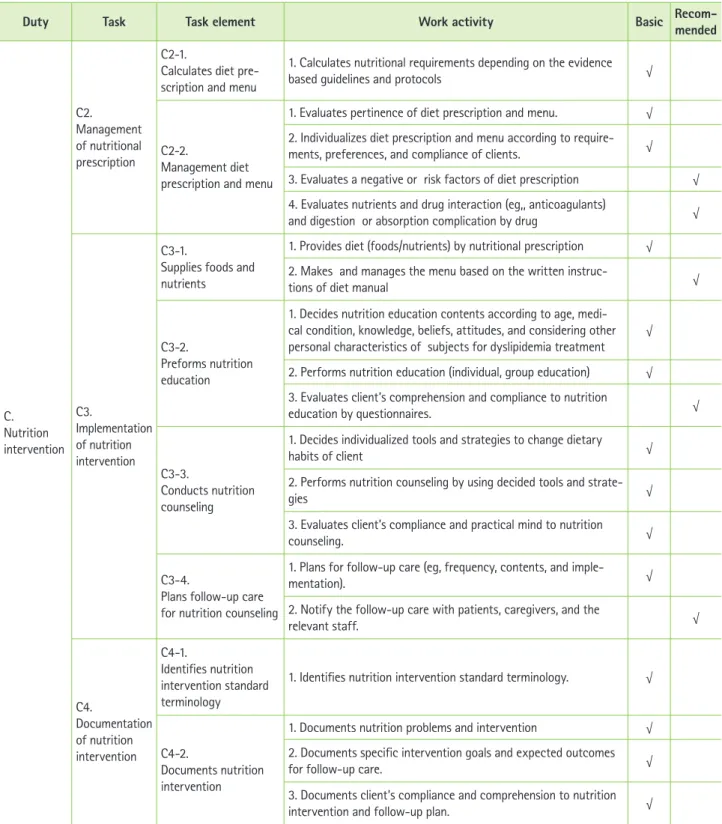
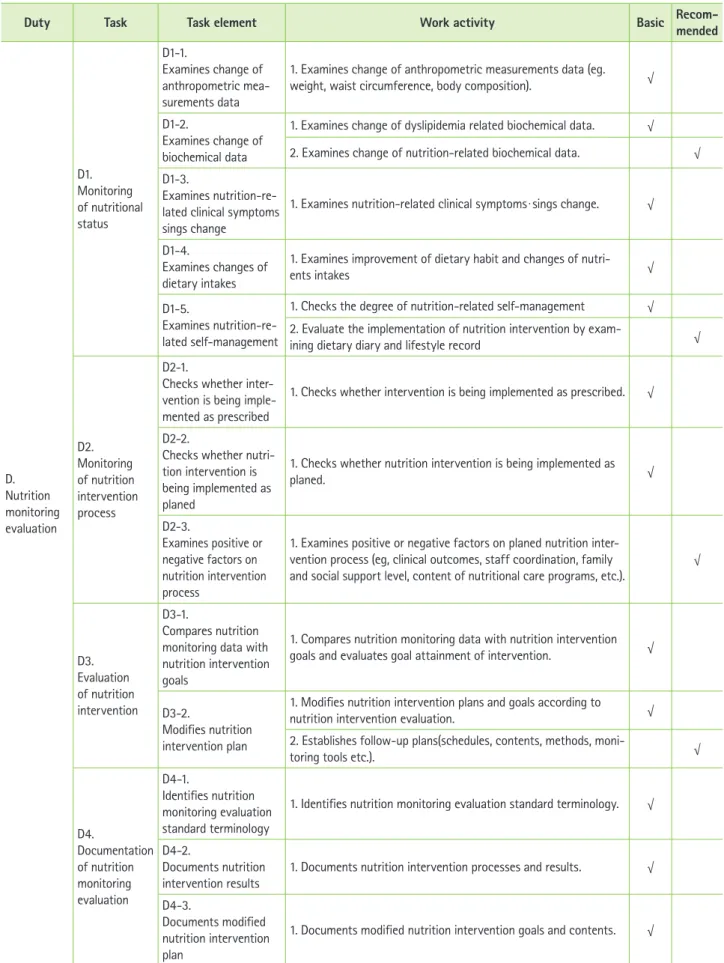
The job of clinical dietitians for dyslipidemia patients was analyzed based on the DACUM method, and the job specifica- tion included duties, tasks, and task elements. It was com- posed of 18 tasks and 53 task elements, which were organized in a table (DACUM chart) by duties (Figure 1). Here, the main duties of clinical dietitians were based on core duties defined in previous research [26], and, were in accord with the NCP steps of international confederation of dietetic associations (ICDA), ‘A. nutrition assessment’, ‘B. nutritional diagnosis’, ‘C.
nutrition intervention’, and ‘D. nutrition monitoring and evalu- ation.’ The duties included specific tasks: for ‘A. nutrition as- sessment,’ A1. review basic information, A2. review medical history and treatment plan, A3. evaluate anthropometric data, A4. review laboratory and medical test, A5. review nutrition focused physical findings, A6. collect and evaluate data related to food and nutrition, A7. decide nutritional needs, and A8.
document nutrition assessment; for ‘B. nutritional diagnosis,’
B1. derivate nutritional diagnosis, and B2. document nutri- tional diagnosis. ‘C. nutrition intervention’ C1. plan nutrition intervention, C2. management of nutritional prescription, C3.
implement of nutrition intervention, C4. document nutrition intervention, and ‘D. nutrition monitoring and evaluation,’ D1.
monitor nutritional status, D2. monitor the nutrition inter- vention process, D3. evaluate nutrition intervention, and D4.
document nutrition monitoring and evaluation.
Based on these job descriptions, a specific job description was added to each task element and the tasks were classi- fied as ‘basic’ and ‘recommended.’ ‘Basic’ means basic tasks that clinical dietitians must perform, whereas ‘recommended’
means tasks performed by experienced professional dietitians for dyslipidemia.
Table 4. Characteristics of the subjects for field application of job standards of clinical dietitian for dyslipidemia care
Variable Classification
Gender* Female 17
Male 13
Age, yrs† 54.2 ± 12.2
Patient type* Inpatient 14
Outpatient 16
Nutrition management* Initial management 21
Follow-up management 9
Duration of nutrition management, min/case† 43.8 ± 14.0
*N; †Mean ± SD.
Table 5. Performance rate of standardized jobs in field application tests
Variable N Performance rate (%)
Work activity
Basic 65 76.9
Recommended 35 52.5
Total 100 68.3
Duty
Nutrition assessment 52 74.4
Nutrition diagnosis 9 86.0
Nutrition intervention 23 75.5
Nutrition monitoring 16 28.2
Total 100 68.3
Field application evaluation
General information on the subjects and nutrition practice in medical institutions
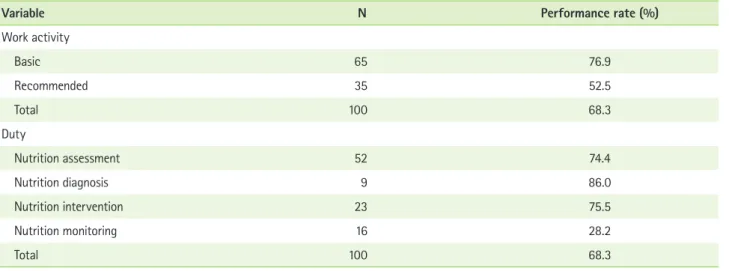
Field application evaluation was performed by working clinical dietitians at 10 medium and large hospitals, and Table 4 shows general information on patients with dyslipidemia to whom the study was applied. Of the 30 patients, 17 were female and 13 male, and the average age was 54.2. Also, 14 were inpatients and 16 outpatients, and 21 received nutrition management only in the beginning while 9 received follow-up management as well. And, the average time for clinical dieti- tians to provide nutrition management for these patients was 43.8 minutes.
Job performance rate and difficulty
When the job standards were applied to the hospitals, of the 65 basic tasks, 76.9% was performed and, of the 35 recom- mended services, 52.5% was performed. Also, in terms of du-
ties, 74.4% of the 52 nutrition assessment tasks, 86.0% of the 9 nutritional diagnosis tasks, 75.5% of the 23 nutrition inter- vention tasks, and 28.2% of the 16 nutrition monitoring and evaluation tasks were performed (Table 5). Table 6 presents the result of studying job performance by duty according to types of dyslipidemia patients. The performance rates of nutrition assessment, nutritional diagnosis, nutrition intervention, and nutrition monitoring and evaluation for inpatients were 67.1%, 69.7%, 76.7%, and 39.2%, respectively, and, for outpatients, 79.4%, 97.2%, 74.7%, and 20.7%.
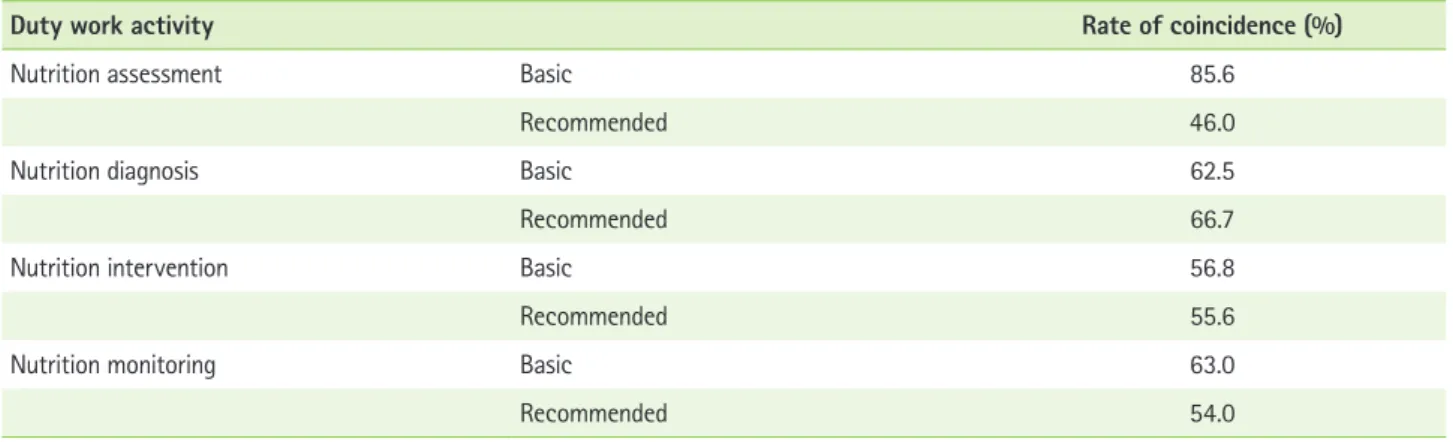
Table 7 presents the rate of coincidence for task difficulty between the researchers and clinical dietitians. The rates of coincidence for basic tasks, nutrition assessment, nutritional diagnosis, nutrition intervention, and nutrition monitoring and evaluation, were 85.6%, 62.5%, 56.8%, and 63.0%, re- spectively, while those of recommended services were 46.0%, 66.7%, 55.6%, and 54.0%.
Table 6. Performance rate of standardized jobs in field application tests according to patient type
Duty patient type Performance rate (%)
Nutrition assessment Inpatients 67.1
Outpatients 79.4
Nutrition diagnosis Inpatients 69.7
Outpatients 97.2
Nutrition intervention Inpatients 76.7
Outpatients 74.7
Nutrition monitoring Inpatients 39.2
Outpatients 20.7
Table 7. The coincidence rate of perception between the researchers and clinical dietitians on difficulty of standardized jobs in field application tests
Duty work activity Rate of coincidence (%)
Nutrition assessment Basic 85.6
Recommended 46.0
Nutrition diagnosis Basic 62.5
Recommended 66.7
Nutrition intervention Basic 56.8
Recommended 55.6
Nutrition monitoring Basic 63.0
Recommended 54.0
Table 8. The job description of clinical dietitian for dyslipidemia care
Duty Task Task element Work activity Basic Recom-mended
A.
Nutrition assessment
A1.
Review basic information
A1-1.
Verifies referrals 1. Verifies nutritional referrals (eg, data, reason, diagnosis, pre-
scribed diet etc.). √
A1-2.
Verifies personal infor-
mation 1. Verifies age, sex, and ethnicity. √
A2.
Review medi- cal history and treatment plan
A2-1.
Checks diagnosis and treatment plan
1. Checks type and complication of dyslipidemia. √
2. Checks dyslipidemia treatment √
3. Identifies dyslipidemia comorbidities treatment plan. √ A2-2.
Checks history of prescribed medication
1. Assesses current prescription medications and changes of lipid-
lowering medications √
2. Evaluates prescribed medications affecting on blood lipid levels √ A2-3.
Checks complications and related risk factors
1. Checks risk factors for dyslipidemia complications √ 2. Checks risk factors for dyslipidemia comorbidities complications √ A2-4.
Checks referral treat- ment results
1. Checks referral treatment results related to nutrition care pro-
cess by medical record. √
A2-5.
Checks personal dis- ease history data
1. Reviews personal socioeconomic factors(eg, job, education, eco-
nomic status, family number). √
2. Reviews history of tobacco, alcohol. √
3. Reviews history of previous dyslipidemia nutrition education/
consultation. √
4. Checks any other cardiovascular disease history √
A3.
Evaluation of anthropomet- ric measure- ment data
A3-1.
Evaluates anthropomet- ric measurement data
1. Evaluates height, weight and waist circumference. √
A3-2.
Collects historical data of body weight change
1. Assesses the usual body weight and weight change. √ 2. Evaluates reasons of weight change and weight status. √ A3-3.
Assesses body compo- sition data
1. Evaluates body fat and muscle measurements. √
2. Evaluates visceral fat measurements. √
A4.
Review labora- tory and medi- cal test data
A4-1.
Examines blood urine test data
1. Evaluates blood lipid profile and glucose test results √ 2. Assesses other nutrition-related data (eg, albumin, electrolytes, anemia test, ketone body etc.), liver function data, and thyroid
function data. √
A4-2.
Examines physical function data
1. Evaluates physical activity performance, cardiopulmonary func-
tion, sensory sensitivity, or musculoskeletal function data. √ A5.
Review nutrition focused physi- cal findings
A5-1.
Examines chewing and swallowing function
1. Assesses chewing functions (eg, dental condition, gum disease). √ 2. Assesses swallowing functions (eg, choking, esophageal disease,
pain on swallowing). √
Table 8. Continued
Duty Task Task element Work activity Basic Recom-mended
A.
Nutrition assessment
A5.
Review nutrition focused physi- cal findings
A5-2.
Examines gastrointesti- nal symptom
1. Assesses gastrointestinal symptoms (eg, decreased appetite, dyspepsia, bloating, flatulence, abdominal pain, diarrhea, constipa- tion, nausea, vomiting, hunger etc.).
√
A5-3.
Examines vital signs 1. Assesses blood pressure. √
A5-4.
Examination of physical symptom
1. Assesses malnutrition-related physical symptom. √
A6.
Collection and evaluation of food·nutrition- related data
A6-1.
Evaluates dietary his- tory
1. Evaluates current dietary habits (eg, number and time of meals and snacks, meal rate, meal composition, eating out patterns,
drinking (frequency / volume / side dishes etc.). √ 2. Evaluates favorite/avoid foods, food allergy and symptoms. √ 3. Evaluates dietary supplements, and complementary and alterna-
tive medicine practices. √
4. Evaluates adequacy of dietary habits according to dietary guidelines for dyslipidemia care (eg. Korean dyslipidemia guidelines, Korean dietary guidelines etc.).
√
A6-2.
Evaluates dietary intakes
1. Evaluates type and amount of daily food intake by using 24 hour
recall, dietary record. √
2. Evaluates frequencies of total fat, saturated fat, trans fat, and
cholesterol-containing food intake √
3. Evaluates carbohydrate, dietary fiber, and alcohol intakes √ 4. Evaluates adequacy of energy and nutrient intakes according to dietary guidelines for dyslipidemia care (eg. Korean dyslipidemia guidelines, Korean dietary guidelines etc.).
√
A6-3.
Examines physical activity level
1. Evaluates current level of physical activity. √ 2. Assesses kind, strength, time and frequency of current exercise. √ 3. Considers effect of ability to perform activities of daily living
(ADLs) and Instrumental ADL on dietary intakes. √
A6-4.
Examines dietary envi- ronment
1. Assesses social, economic, and environmental factors that af- fect meal planning, food purchasing, cooking, and food availability. √ 2. Assesses availability of social/medical support and degree of
social interaction. √
3. Assesses psychological factors affecting nutritional problems. √
A6-5.
Evaluation of nutri- tional knowledge and attitudes
1. Identifies knowledge and skills to dietary intakes √ 2. Assesses behavioral mediators related to dietary intake (eg, atti-
tudes, self-efficacy, intentions, readiness and willingness to change). √ 3. Identifies degree of performance of self-control and monitoring
to dietary intake √
Table 8. Continued
Duty Task Task element Work activity Basic Recom-mended
A.
Nutrition assessment
A7.
Decision of nutritional requirement
A7-1.
Decides calorie needs 1. Decides calorie needs according to dietary guidelines for dyslip-
idemia care. √
A7-2.
Decides individual nutrient needs
1. Decides nutrient needs (fat, carbohydrate, sodium) according to
dietary guidelines for dyslipidemia care. √
2. Determine the needs for food supplements and health food.
based on scientific evidence √
A8.
Documentation of nutrition as- sessment
A8-1.
Identifies nutrition assessment standard terminology
1. Identifies nutrition assessment standard terminology. √
A8-2.
Documents nutrition assessment
1. Documents nutrition assessment (eg, collected data, assessment
data). √
B.
Nutrition diagnosis
B1.
Derivation of nutrition diagnosis
B1-1.
Identifies the problem
1. Identifies the problem based on the nutrition assessment data. √ 2. Differentiates between nutrition-related, dyslipidemia-related,
and treatment-related side effects. √
3. Prioritizes nutrition problems in order of importance/urgency/
efficacy/resolving possibility. √
B1-2.
Determines etiology
1. Evaluates multiple factors(eg, pathophysiological, psychosocial, situational, cultural, and environmental causes etc.) that impact nutrition problem(s).
√
B1-3.
Clusters signs and
symptoms 1. Clusters signs and symptoms to define nutrition problems. √
B2.
Documentation of nutrition diagnosis
B2-1.
Identifies nutrition diagnosis standard terminology
1. Identifies nutrition diagnosis standard terminology. √
B2-2.
Documents nutrition diagnosis
1. Documents the ranked nutrition problems. √
2. Documents etiology of the ranked nutrition problems. √ 3. Documents sings and symptoms of the ranked nutrition prob-
lems. √
C.
Nutrition intervention
C1.
Planning of nutrition inter- vention
C1-1.
Sets nutrition interven- tion goals
1. Prioritizes nutrition intervention goal(long term/short term) to
solve problems based on nutrition diagnosis. √
2. Prioritizes nutrition intervention goal based on dyslipidemia
complications and comorbid diseases. √
3. Discusses intervention goal with client, caregivers, and other
health care providers. √
C1-2.
Plans the details for nutrition intervention
1. Determines specific nutrition intervention (eg, food, nutrition education & counseling, multidisciplinary team approach etc.) that
can effectively achieve goal. √
2. Prioritizes dyslipidemia related nutrition problems in order of importance/urgency/efficacy/resolving possibility. √ 3. Establishes detailed plan for nutrition education contents and
methods √
Table 8. Continued
Duty Task Task element Work activity Basic Recom-mended
C.
Nutrition intervention
C2.
Management of nutritional prescription
C2-1.
Calculates diet pre- scription and menu
1. Calculates nutritional requirements depending on the evidence
based guidelines and protocols √
C2-2.
Management diet prescription and menu
1. Evaluates pertinence of diet prescription and menu. √ 2. Individualizes diet prescription and menu according to require- ments, preferences, and compliance of clients. √ 3. Evaluates a negative or risk factors of diet prescription √ 4. Evaluates nutrients and drug interaction (eg,, anticoagulants)
and digestion or absorption complication by drug √
C3.
Implementation of nutrition intervention
C3-1.
Supplies foods and nutrients
1. Provides diet (foods/nutrients) by nutritional prescription √ 2. Makes and manages the menu based on the written instruc-
tions of diet manual √
C3-2.
Preforms nutrition education
1. Decides nutrition education contents according to age, medi- cal condition, knowledge, beliefs, attitudes, and considering other personal characteristics of subjects for dyslipidemia treatment
√
2. Performs nutrition education (individual, group education) √ 3. Evaluates client’s comprehension and compliance to nutrition
education by questionnaires. √
C3-3.
Conducts nutrition counseling
1. Decides individualized tools and strategies to change dietary
habits of client √
2. Performs nutrition counseling by using decided tools and strate-
gies √
3. Evaluates client’s compliance and practical mind to nutrition
counseling. √
C3-4.
Plans follow-up care for nutrition counseling
1. Plans for follow-up care (eg, frequency, contents, and imple-
mentation). √
2. Notify the follow-up care with patients, caregivers, and the
relevant staff. √
C4.
Documentation of nutrition intervention
C4-1.
Identifies nutrition intervention standard terminology
1. Identifies nutrition intervention standard terminology. √
C4-2.
Documents nutrition intervention
1. Documents nutrition problems and intervention √ 2. Documents specific intervention goals and expected outcomes
for follow-up care. √
3. Documents client’s compliance and comprehension to nutrition
intervention and follow-up plan. √
Table 8. Continued
Duty Task Task element Work activity Basic Recom-mended
D.
Nutrition monitoring evaluation
D1.
Monitoring of nutritional status
D1-1.
Examines change of anthropometric mea- surements data
1. Examines change of anthropometric measurements data (eg.
weight, waist circumference, body composition). √ D1-2.
Examines change of biochemical data
1. Examines change of dyslipidemia related biochemical data. √ 2. Examines change of nutrition-related biochemical data. √ D1-3.
Examines nutrition-re- lated clinical symptoms sings change
1. Examines nutrition-related clinical symptomsㆍsings change. √
D1-4.
Examines changes of dietary intakes
1. Examines improvement of dietary habit and changes of nutri-
ents intakes √
D1-5.
Examines nutrition-re- lated self-management
1. Checks the degree of nutrition-related self-management √ 2. Evaluate the implementation of nutrition intervention by exam-
ining dietary diary and lifestyle record √
D2.
Monitoring of nutrition intervention process
D2-1.
Checks whether inter- vention is being imple- mented as prescribed
1. Checks whether intervention is being implemented as prescribed. √
D2-2.
Checks whether nutri- tion intervention is being implemented as planed
1. Checks whether nutrition intervention is being implemented as
planed. √
D2-3.
Examines positive or negative factors on nutrition intervention process
1. Examines positive or negative factors on planed nutrition inter- vention process (eg, clinical outcomes, staff coordination, family and social support level, content of nutritional care programs, etc.).
√
D3.
Evaluation of nutrition intervention
D3-1.
Compares nutrition monitoring data with nutrition intervention goals
1. Compares nutrition monitoring data with nutrition intervention goals and evaluates goal attainment of intervention. √
D3-2.
Modifies nutrition intervention plan
1. Modifies nutrition intervention plans and goals according to
nutrition intervention evaluation. √
2. Establishes follow-up plans(schedules, contents, methods, moni-
toring tools etc.). √
D4.
Documentation of nutrition monitoring evaluation
D4-1.
Identifies nutrition monitoring evaluation standard terminology
1. Identifies nutrition monitoring evaluation standard terminology. √
D4-2.
Documents nutrition intervention results
1. Documents nutrition intervention processes and results. √
D4-3.
Documents modified nutrition intervention plan
1. Documents modified nutrition intervention goals and contents. √
Final version of job standards of clinical nutrition service for dyslipidemia
The draft job standards were shown to relevant institutions for advice and review, and, after field application evaluation and discussions, experts mainly suggested that the criteria for
‘basic’ and ‘recommended’ tasks need to be more specified;
there are too many task elements and items in job description evaluation; and job standards for other diseases were needed as well. Also, the job standards and form developed based on field application evaluation were reviewed by institutions and all respondents were satisfied with the modified job standards.
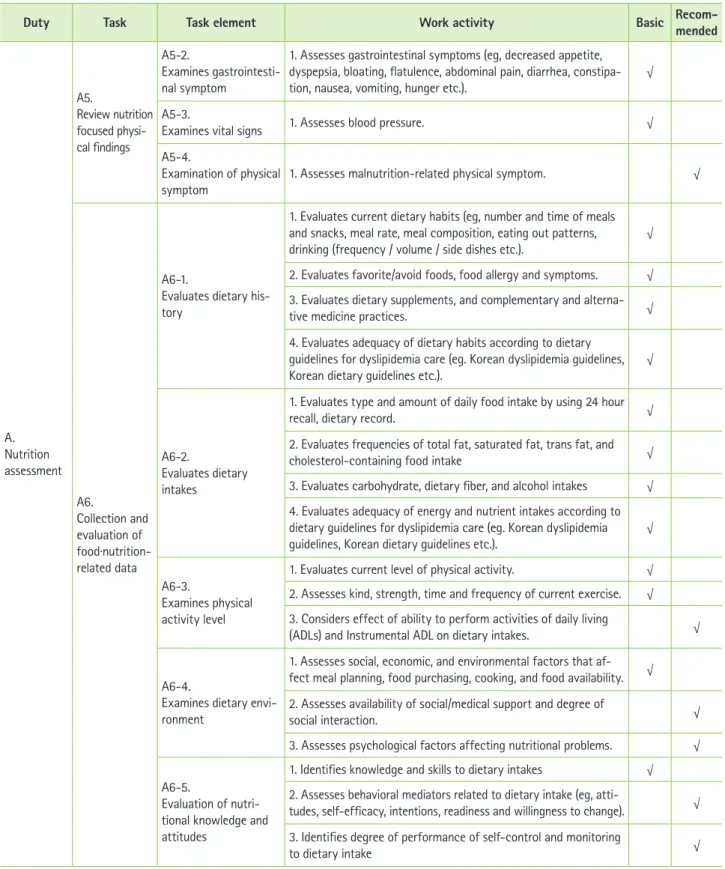
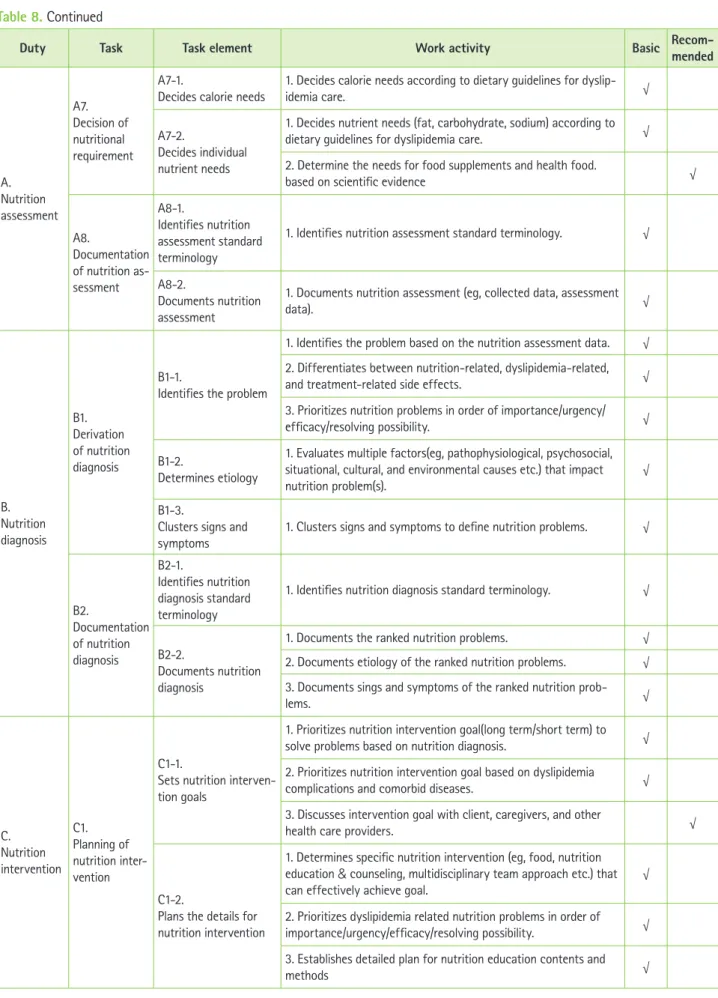
Later, based on field application evaluation and expert advice, the job standards were modified and supplemented, and the final job standards for clinical nutrition treatment of patients with dyslipidemia included 73 basic services and 26 recom- mended services, among 4 duties, 18 tasks, 53 task elements, and 99 job descriptions (Table 8).
Discussion
For the purpose of qualitative improvement of clinical nutri- tion service, in this study, the current status and practice of clinical nutrition service for dyslipidemia in Korean hospitals was studied, and job standards of clinical dietitians for clinical nutrition treatment of patients with dyslipidemia that can be applied to medical institutions were developed based on DA- CUM analysis and field application evaluation.
For dyslipidemia patients, it has been reported that improv- ing diet through nutrition education and consultation can reduce risk factors and frequency of medication, and improve nutritional knowledge [27]. Therefore, clinical nutrition service provided by clinical dietitians has been reported to maximize treatment efficacy and reduce medical costs [15,28]. Also, clinical nutrition service for prevention and treatment of dyslipidemia is likely to become more important in the future as the prevalence of the disease grows every year. However, unlike in the U.S. where clinical nutrition service is applicable for health insurance benefits since 2002 [29], South Korea does not have no legislative policy relating to clinical dietitians and, therefore, does not insure the service. According to the result of this study, when patients receive nutrition education, individual education costs 24,487 KRW and group education 39,000 KRW. Therefore, if patients can receive insured clinical nutrition service, it may reduce prevalence and death rate of the disease.
Recently, it has been emphasized the tasks of clinical di- etitians should be more specific and clear in order to activate services. A series of job activity analyses has been conducted for dietitians at schools, business places, hospitals, and health centers between 2002 and 2008 [23-25,30] and, in 2013, job standards of clinical dietitians at hospitals was developed [26] in Korea. This study was conducted based on previous research that suggested a wide range of tasks of clinical di- etitians for overall diseases, and analyzed tasks that must be performed by clinical dietitians for clinical nutrition service of dyslipidemia. Here, to determine the tasks in a short period, the DACUM method was used, and the tasks and task ele- ments were proposed according to the four steps of NCP, de- veloped by AND (Academy of nutrition & dietetics, USA). This study may provide a manual for high quality clinical nutrition service by clinical dietitians performing standardized tasks, and to highlight the importance of clinical dietitians at hospi- tals who are in charge with diet and health management for patients.
The job standards for clinical nutrition treatment of patients with dyslipidemia proposed in this study include 4 duties, 18 tasks, 53 task elements, and 99 job descriptions, with less duties, tasks, and task elements than in the job description of clinical dietitians at hospitals developed by Cha et al. [26], which included 7 duties, 27 tasks, and 93 task elements. The tasks were reduced perhaps because the study was focused on tasks of clinical dietitians for a specific disease rather than overall diseases. Also, AND introduced job standardization for nutritional management since the early 2000s, and has pub- lished standard of practice (SOP) and standard of professional performance (SOPP) for clinical dietitians for various diseases [19,20]. While Cha et al. [26] proposed seven duties including nutrition assessment, nutritional diagnosis, nutrition interven- tion, nutrition monitoring and evaluation, consultation and co- operation, nutrition research, and self-development, this study, based on Korean and overseas studies, proposed four steps according to NCP; nutrition assessment, nutritional diagnosis, nutrition intervention, and nutrition monitoring and evalua- tion.
When the proposed job standards were applied to hospitals, the performance rate was high, average 68.3%, while the per- formance rate of nutrition monitoring and evaluation was the lowest, 28.2%. This low performance rate of nutrition moni- toring and evaluation, despite the high importance can be explained by a lack of workforce and concentration on evalua-
tion and management of patients. It is believed that inefficient communication with the medical staff in overall hospitals can induce difficulties in clinical nutrition services [31].
Therefore, in this study, job standards for clinical dietitians for dyslipidemia patients at hospitals were developed based on tasks that are most necessary. However, authors believe that there are limitations in applying the proposed job standards to different regions with different medical staff and practices.
However, if such limitations are improved and job standards of clinical dietitians are continuously developed, the recognition and status of clinical dietitians will be improved within the hospital and the nation.
Conclusion
The definition and job standards of clinical dietitians for dyslipidemia were made based on DACUM analysis. The job standards included 4 duties, according to the steps defined in NCP, 18 tasks, 53 task elements, and 99 job descriptions, with 73 basic services and 26 recommended services. The job stan- dards for clinical nutrition treatment for patients with dyslipid- emia developed in this study can be effectively used in clinical fields and also improve quality of clinical nutrition service and quality of life of patients with dyslipidemia.
Acknowledgments
This research was supported by grants from Health Pro- motion Fund, Ministry of Health & Welfare, Republic of Ko- rea(13-34).
Conflict of Interests
No conflict interests were declared by any of the authors.
References
1. Song R, June KJ, Ro YJ, Kim CG. Effects of motivation-enhancing program on health behaviors, cardiovascular risk factors, and func- tional status for institutionalized elderly women. J Korean Acad Nurs 2001;31:858-70.
2. Cha JA, Park HR, Lim YS, Lim SH. Developing job description for dieti- tians working in public health nutrition areas. Korean J Community Nutr 2008;13:890-902.
3. Statistics Korea. Causes of death statistics 2013 [Internet]. Available from http://www.kostat.go.kr [cited 2015 March 15]. 2014.
4. Go AS, Mozaffarian D, Roger VL, Benjamin EJ, Berry JD, Blaha MJ, Dai S, Ford ES, Fox CS, Franco S, Fullerton HJ, Gillespie C, Hailpern SM, Heit JA, Howard VJ, Huffman MD, Judd SE, Kissela BM, Kittner SJ, Lack- land DT, Lichtman JH, Lisabeth LD, Mackey RH, Magid DJ, Marcus GM, Marelli A, Matchar DB, McGuire DK, Mohler ER 3rd, Moy CS, Mussolino
ME, Neumar RW, Nichol G, Pandey DK, Paynter NP, Reeves MJ, Sorlie PD, Stein J, Towfighi A, Turan TN, Virani SS, Wong ND, Woo D, Turner MB; American Heart Association Statistics Committee and Stroke Statistics Subcommittee. Executive summary: heart disease and stroke statistics--2014 update: a report from the American Heart Association.
Circulation 2014;129:399-410.
5. Kostis JB. The importance of managing hypertension and dyslipidemia to decrease cardiovascular disease. Cardiovasc Drugs Ther 2007;21:297- 309.
6. Ministry of Health and Welfare, Korea Centers for Disease Control and Prevention. Korea Health Statistics 2013: Korea National Health and Nutrition Examination Survey (KNHANES VI-1). Cheongju: Korea Cen- ters for Disease Control and Prevention; 2014.
7. Haskell WL. Cardiovascular disease prevention and lifestyle interven- tions: effectiveness and efficacy. J Cardiovasc Nurs 2003;18:245-55.
8. Kim IS, Seo EA. A long term observation of total cholesterol, blood pressure, BMI and blood glucose concerned with dietary intake. Korean J Community Nutr 2000;5:172-84.
9. Harper AE. Dietary guidelines in perspective. J Nutr 1996;126:1042S- 1048S.
10. Korean Society of Lipidology and Atherosclerosis. Guideline for treat- ment of dyslipidemia. 2nd rev. ed. Seoul: Korean Society of Lipidology and Atherosclerosis; 2009.
11. Eckel RH, Jakicic JM, Ard JD, de Jesus JM, Houston Miller N, Hubbard VS, Lee IM, Lichtenstein AH, Loria CM, Millen BE, Nonas CA, Sacks FM, Smith SC Jr, Svetkey LP, Wadden TA, Yanovski SZ, Kendall KA, Morgan LC, Trisolini MG, Velasco G, Wnek J, Anderson JL, Halperin JL, Albert NM, Bozkurt B, Brindis RG, Curtis LH, DeMets D, Hochman JS, Kovacs RJ, Ohman EM, Pressler SJ, Sellke FW, Shen WK, Smith SC Jr, Tomaselli GF;
American College of Cardiology/American Heart Association Task Force on Practice Guidelines. 2013 AHA/ACC guideline on lifestyle manage- ment to reduce cardiovascular risk: a report of the American College of Cardiology/American Heart Association Task Force on Practice Guide- lines. Circulation 2014;129:S76-99.
12. Reiner Ž, Catapano AL, De Backer G, Graham I, Taskinen MR, Wiklund O, Agewall S, Alegría E, Chapman MJ, Durrington P, Erdine S, Halcox J, Hobbs RH, Kjekshus JK, Perrone Filardi P, Riccardi G, Storey RF, David W;
Clinical Practice Guidelines Committee of the Spanish Society of Cardi- ology. ESC/EAS Guidelines for the management of dyslipidaemias. Rev Esp Cardiol 2011;64:1168.e1-1168.e60.
13. Korean Institute of Dietetic Education and Evaluation. Clinical dietitian 2015 [Internet]. Available from http://www.kidee2011.or.kr/ [cited 2015 March 15]. 2015.
14. Pastors JG, Warshaw H, Daly A, Franz M, Kulkarni K. The evidence for the effectiveness of medical nutrition therapy in diabetes manage- ment. Diabetes Care 2002;25:608-13.
15. Kim HA, Yang IS, Lee HY, Lee YE, Park EC, Nam CM. Evaluation of cost- effectiveness of medical nutrition therapy: meta-analysis. Korean J Nutr 2003;36:515-27.
16. Cho Y, Lee M, Jang H, Rha M, Kim J, Park Y, Sohn C. The clinical and cost effectiveness of medical nutrition therapy for patients with type 2 diabetes mellitus. Korean J Nutr 2008;41:147-55.
17. Han MH, Lee SM, Lyu ES. Doctors’ perception and needs on clinical nu- trition services in hospitals. J Korean Diet Assoc 2012;18:266-75.
18. Krasker GD, Balogun LB. 1995 JCAHO standards: development and rel- evance to dietetics practice. J Am Diet Assoc 1995;95:240-3.
19. Franz MJ, Boucher JL, Green-Pastors J, Powers MA. Evidence-based nutrition practice guidelines for diabetes and scope and standards of practice. J Am Diet Assoc 2008;108:S52-8.
20. Boucher JL, Evert A, Daly A, Kulkarni K, Rizzotto JA, Burton K, Bradshaw BG; Merican Dietetics Association. American Dietetic Association re- vised standards of practice and standards of professional performance for registered Dietitians (generalist, specialty, and advanced) in diabetes care. J Am Diet Assoc 2011;111:156-166.e1-27.
21. Kwon YS. A job analysis in common managemant dietitian of school
foodservice: centering around Kyoungsang buk-do. J Korean Diet Assoc 1999;5:182-93.
22. Moon HK, Lee AR, Lee YH, Jang YJ. Analysis and framing of Dietitian’s Job Description. J Korean Diet Assoc 2001;7:87-104.
23. Moon HK, Jang YJ. Analysis of the Dietitian’s Job Description in the business and industry foodservice. J Korean Diet Assoc 2002;8:121-31.
24. Moon HK, Jang YJ. Analysis of the Dietitian’s Job Description in the hospital. J Korean Diet Assoc 2002;8:132-42.
25. Moon HK, Jang YJ. Analysis of the Dietitian’s Job Description in the school. J Korean Diet Assoc 2002;8:143-53.
26. Cha JA, Kim KE, Kim EM, Park MS, Park YK, Baek HJ, Lee SM, Choi SK, Seo JS. Development of job description of clinical dietitians in hospitals by the DACUM method. J Korean Diet Assoc 2013;19:265-86.
27. Nam TY, Kim JH. An evaluation of the effectiveness of nutrition coun-
seling for adults with risk factors for dyslipidemia. Korean J Community Nutr 2014;19:27-40.
28. Lee HY, Kim HA, Yang IS, Nam CM, Park EC. Effectiveness of nutrition intervention: systematic review & meta-analysis. Korean J Community Nutr 2004;9:81-9.
29. Park EC, Kim HA, Lee HY, Lee YE, Yang IS. A review of the Medical Nutrition Therapy (MNT) of the U.S. medicare system. Korean J Com- munity Nutr 2002;7:852-62.
30. Park HR, Cha JA, Lim YS. Performance and importance analysis of di- etitian’s task in public health nutrition areas. Korean J Community Nutr 2008;13:540-54.
31. Choi J, Park E. Different perceptions of clinical nutrition services be- tween doctors and dietitians in the Busan-Gyeongnam area. J Korean Diet Assoc 2013;19:69-81.