• 검색 결과가 없습니다.

The Impact of Implementing Critical Care Team on Open General Intensive Care Unit

N/A
N/A
Protected

Academic year: 2022

Share "The Impact of Implementing Critical Care Team on Open General Intensive Care Unit"

Copied!
7
0
0

로드 중.... (전체 텍스트 보기)

전체 글

(1)

Tuberc Respir Dis 2012;73:100-106

CopyrightⒸ2012. The Korean Academy of Tuberculosis and Respiratory Diseases. All rights reserved.

The Impact of Implementing Critical Care Team on Open General Intensive Care Unit

Ick Hee Kim, M.D.

1

, Seung Bae Park, M.D.

2

, Seonguk Kim, M.D., Ph.D.

3

, Sang-Don Han, M.D.

4

, Seung Seok Ki, M.D.

5

, Gyu Rak Chon, M.D.

6

1

Department of Surgery, Konkuk University Chungju Hospital, Konkuk University School of Medicine, Chungju,

2

Department of Surgery, Kangwon University School of Medicine, Chuncheon, Departments of

3

Pediatrics,

4

Neurology,

5

Gastroenterology, and

6

Pulmonary and Critical Care Medicine, Konkuk University School of Medicine, Chungju, Korea

Background: There are a plethora of literatures showing that high-intensity intensive care unit (ICU) physician staffing is associated with reduced ICU mortality. However, it is not widely used in ICUs because of limited budgets and resources. We created a critical care team (CCT) to improve outcomes in an open general ICU and evaluated its effectiveness based on patients' outcomes.

Methods: We conducted this prospective, observational study in an open, general ICU setting, during a period ranging from March of 2009 to February of 2010. The CCT consisted of five teaching staffs. It provided rapid medical services within three hours after calls or consultation.

Results: We analyzed the data of 830 patients (157 patients of the CCT group and 673 patients of the non-CCT one). Patients of the CCT group presented more serious conditions than those of the non-CCT group (acute physiologic and chronic health evaluation II [APACHE II] 20.2 vs. 15.8, p<0.001; sequential organ failure assessment [SOFA] 5.5 vs. 4.6, p=0.003). The CCT group also had significantly more patients on mechanical ventilation than those in the non-CCT group (45.9% vs. 23.9%, p<0.001). Success rate of weaning was significantly higher in the CCT group than that of the non-CCT group (61.1% vs. 44.7%, p=0.021). On a multivariate logistic regression analysis, the increased ICU mortality was associated with the older age, non-CCT, higher APACHE II score, higher SOFA score and mechanical ventilation (p<0.05).

Conclusion: Although the CCT did not provide full-time services in an open general ICU setting, it might be associated with a reduced ICU mortality. This is particularly the case with patients on mechanical ventilation.

Key Words: Critical Care; Intensive Care Units; Mortality

Address for correspondence: Gyu Rak Chon, M.D.

Critical Care Team, Konkuk University Chungju Hospital, Konkuk University School of Medicine, 82, Gugwon-daero, Chungju 380-704, Korea

Phone: 82-43-840-8209, Fax: 82-43-843-6655 E-mail: [email protected]

Received: May 16, 2012 Revised: Jun. 8, 2012 Accepted: Jul. 16, 2012

CC
It is identical to the Creative Commons Attribution Non-Commercial License (http://creativecommons.org/licenses/by-nc/3.0/).

Introduction

There are so many literatures showing that a high-in- tensity intensive care unit (ICU) physician staffing is as- sociated with a reduced ICU mortality

1-10

. Its rationale

is that physicians can prevent or attenuate morbidity

and mortality and thereby can improve the outcomes

because they are skilled in not only treating critically-ill

patients but also immediately detecting and then resolv-

ing problems

11

. But a high-intensity ICU physician staff-

ing is not widely used in ICUs in many countries be-

cause of limited budgets and resources. According to

Young and Birkmeyer

12

, about 15% of all ICU patients

were treated in ICUs that meet the Leapfrog standard

in the United States. Recent published studies have

shown that at least 95% of total ICU patients were man-

aged by critical care physicians for the entire stay in

about 18.6% (23/123) of ICUs in the United States

13

.

According to a white paper published by the Korean

(2)

Society of Critical Care Medicine (KSCCM), only 17.3%

of total ICUs were equipped with high-intensity ICU physicians who can work over eight hours a day

14

. Given the above background, we created the critical care team (CCT) to improve outcomes in an open gen- eral ICU and evaluated its effectiveness based on pa- tients' outcomes.

Materials and Methods 1. Study design

We conducted this prospective, observational study in an open, general ICU setting during a period ranging from March of 2009 to February of 2010. The study was approved by the Ethics Committee and Institutional Review Board (IRB) of Chungju Hospital, Konkuk University. Written informed consent was waived be- cause the observational study had the prospective na- ture and it was conducted to provide rationale of the ICU care policy of our institution by the IRB.

2. Critical care team

Our hospital is a secondary referral hospital equipped with 445 beds except for ICU ones. In addition, its open general ICU has 26 beds where there are 55 board-certi- fied teaching staffs. The CCT consisted of five teaching staffs, each of which includes one pulmonologist, one gastroenterologist, one vascular/trauma surgeon, one pediatrician and one neurologist. The CCT performed the activity only for patients of the CCT group. Each member of the CCT was expected to play its own role;

the management of airway and mechanical ventilation (the pulmonologist), the examination of all the abdomi- nal problems including gastroduodenofibroscopy (the gastroenterologist), the related surgical operations and procedures including tracheostomy and chest tube drainage (the vascular/trauma surgeon), the manage- ment of mechanical ventilation in the absence of the pulmonologist and cardiopulmonary resuscitation in de- veloped unexpected arrests (the pediatrician) and the treatment of delirium/seizure and acute mental deterio- ration of patients assigned to the CCT (the neurologist).

It was activated by patients' needs, calling criteria based on the medical emergency response improvement team (MERIT) study

15

or each member's decision.

Patients' needs were defined when patients of the CCT group complained to the CCT members or ICU nurses about their three symptoms (pain, dyspnea, and palpita- tion). In these cases, at least one CCT member directly examined patients and discussed or, if necessary, man- aged patients' symptoms with other remaining CCT members. We educated the ICU nurses about MERIT criteria in our ICU conference one month before the start of the study. Attending ICU nurses would call CCT members who could be reached if patients of the CCT group met MERIT criteria. The decision of the CCT member was defined when any CCT members needed to discuss the condition or treatment plan of patients of the CCT group with other CCT members. We directly called CCT members without consultation and then dis- cussed with them for the management of patients in future. Otherwise, we provided some treatments includ- ing procedures. We were the CCT members who were not full-time high-intensity ICU staffs, but provided rap- id medical services, including consultation, within three hours after calls or consultation. We also regularly ex- amined patients and managed patients during rounding after patients were assigned to the CCT group. Of the CCT members, at least one member on duty always cov- ered at night and during weekends. Although the CCT members were on vacation, they were recommended to provide consultation, if necessary, by accessing a web-based remote control program.

3. Study subjects

In the current study, criteria for ICU admission were

based on the guidelines by the American College of

Critical Care Medicine and Society of Critical Care

Medicine

16

. The chief of ICU and an attending physician

who assumed responsibility for patient's care de-

termined ICU admission according to the priority of

above criteria. An attending physician of the department

was assigned to each ICU patient according to his or

her primary reason for ICU admission. Inclusion criteria

(3)

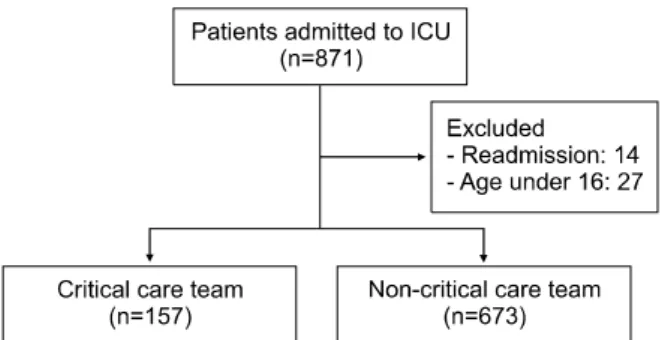
Figure 1. Flow diagram of the study. ICU: intensive care unit.

for the CCT group include 1) patients to whom any members of the CCT were assigned at ICU admission and 2) non-CCT patients who were allowed to take the management by the CCT members during ICU stay with the agreement of non-CCT physicians although they ini- tially belonged to the non-CCT group at ICU admission.

Moreover, exclusion criteria include 1) readmission to the ICU during a certain hospital stay and 2) age of <16 years. A flow diagram describing the recruitment of our study subjects is shown in Figure 1.

For the current study, we collected such patient data as demographic data, underlying diseases, primary rea- sons for ICU admission, ICU mortality rates, lengths of ICU stay, acute physiologic and chronic health evalua- tion II (APACHE II) scores and sequential organ failure assessment (SOFA) scores at ICU admission, the number of patients on mechanical ventilation and success rates of weaning. Success of weaning was defined as a com- plete autonomy from the ventilator for at least 48 hours, with oxygen saturation (breathing room air or O

2

) of

>90%, and absence of any fatiguing pattern of breath- ing (tachypnea, marked use of neck inspiratory muscle and asynchronous or paradoxical movements of chest wall and abdomen) by Rochester

17

.

4. Statistical analysis

All the data were expressed as mean±standard devia- tion, but non-normally distributed data were expressed as median and interquartile ratio (IQR). Between the two groups, nominal variables were compared using the Chi-square test or Fisher's exact test. In addition, mean

values were compared using Student's t-test between the two groups. Non-normally distributed continuous variables were compared using the Mann-Whitney U test between the two groups. We used a multivariate logistic regression model to adjust confounding varia- bles for an analysis of the ICU mortality rates. An initial model was composed of variables that were determined to be significant and clinically important on univariate analysis. This model included age, sex, medical/surgical patients, underlying diseases (chronic respiratory dis- ease and malignancy), the APACHE II scores and SOFA scores seen on mechanical ventilation, CCT and length of ICU stay. Backward elimination was performed by the likelihood ratio method. Model adequacy was as- sessed by the Hosmer-Lemeshow goodness-of-fit test.

Data are presented as odds ratios with 95% confidence intervals. All the statistical analyses were performed us- ing the SPSS version 17.0 (SPSS Inc., Chicago, IL, USA).

Results

We analyzed the data of 830 patients (157 patients

of the CCT group and 673 patients of the non-CCT one),

but excluded cases of readmission during the same

hospitalization. Our clinical series included 505 men

(60.8%) and 518 medical patients (62.4%). The mean

age of patients was 61.1±18.0 years. Length of ICU stay

and the period of mechanical ventilation were pre-

sented as both median and IQR (the length of ICU stay,

4 days; range, 2∼8 days; and the period of mechanical

ventilation, 69 hours; range, 25.5∼228.5 hours). In as-

sociation with the mechanical ventilation, severity

scores and variables showed that the APACHE II score

at admission was 16.7±9.6 points, the SOFA score was

4.8±3.5 points, the number of patients on mechanical

ventilation was 233 (28.1%) and the success rate of

weaning was 49.8% (116/233). In addition, the ICU

mortality rate was 12.7% (105/830). The primary rea-

sons of ICU admission include 201 cases (24.2%) of cer-

ebrovascular diseases, 166 cases (20%) of trauma, 158

cases (19%) of gastrointestinal and hepatobiliary dis-

eases, 93 cases (11.2%) of cardiovascular diseases, 82

(4)

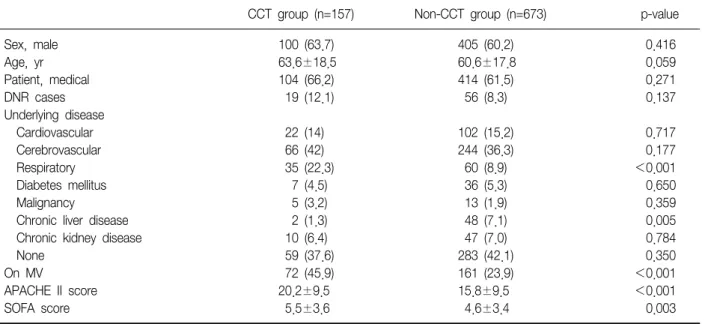
Table 1. Baseline characteristics of the study (n=830)

CCT group (n=157) Non-CCT group (n=673) p-value

Sex, male 100 (63.7) 405 (60.2) 0.416

Age, yr 63.6±18.5 60.6±17.8 0.059

Patient, medical 104 (66.2) 414 (61.5) 0.271

DNR cases 19 (12.1) 56 (8.3) 0.137

Underlying disease

Cardiovascular 22 (14) 102 (15.2) 0.717

Cerebrovascular 66 (42) 244 (36.3) 0.177

Respiratory 35 (22.3) 60 (8.9) <0.001

Diabetes mellitus 7 (4.5) 36 (5.3) 0.650

Malignancy 5 (3.2) 13 (1.9) 0.359

Chronic liver disease 2 (1.3) 48 (7.1) 0.005

Chronic kidney disease 10 (6.4) 47 (7.0) 0.784

None 59 (37.6) 283 (42.1) 0.350

On MV 72 (45.9) 161 (23.9) <0.001

APACHE II score 20.2±9.5 15.8±9.5 <0.001

SOFA score 5.5±3.6 4.6±3.4 0.003

Values are presented as mean±SD or number (%).

CCT: critical care team; DNR: do not resuscitation; MV: mechanical ventilation; APACHE: acute physiologic and chronic health evalua- tion; SOFA: sequential organ failure assessment.

Table 2. Clinical outcomes of the study (n=830)

CCT group (n=157) Non-CCT group (n=673) p-value

Length of ICU stay, day* 4 (2∼13) 3 (2∼7) 0.015

Length of MV, hr* 82.5 (29.3∼226.3) 65 (24∼229.5) 0.416

Success of weaning

44 (61.1) 72 (44.7) 0.021

ICU mortality 22 (14) 83 (12.3) 0.569

ICU mortality, O/E value, n

APACHE II<20 1/2.8 17/15.2 0.334

APACHE II≥20 21/22.4 66/64.6 0.691

Values are presented as number (%).

*Values are presented as median, interquartile ratio.

Patients on mechanical ventilation were 233 cases.

CCT: critical care team; ICU: intensive care unit; MV: mechanical ventilation; O/E: observed/expected; APACHE: acute physiologic and chronic health evaluation.

cases (9.9%) of respiratory diseases, 34 cases (4.1%) of renal or urologic diseases, 22 cases (2.7%) of metabolic or endocrinologic diseases and 74 cases (8.9%) of close monitoring. The most common underlying disease was cerebrovascular disease that was seen in 310 patients (37.3%). There were 75 patients (9%) who received a 'do-not-resuscitate (DNR)' order including withdrawal of treatment by next of kin. The CCT was activated at the total frequency of 1,246 (123 times by patients' needs, 887 times by the MERIT study criteria and 236 times by

the CCT member's decision).

The baseline characteristics of the study are presented

in Table 1. Sex and age were similar between the two

groups. But patients of the CCT group presented more

serious conditions than those of the non-CCT group

(APACHE II 20.2 vs. 15.8, p<0.001; SOFA 5.5 vs. 4.6,

p=0.003). The CCT group also had significantly more

patients on mechanical ventilation than the non-CCT

group (45.9% vs. 23.9%, p<0.001). The CCT group

had a significantly longer ICU stay than the non-CCT

(5)

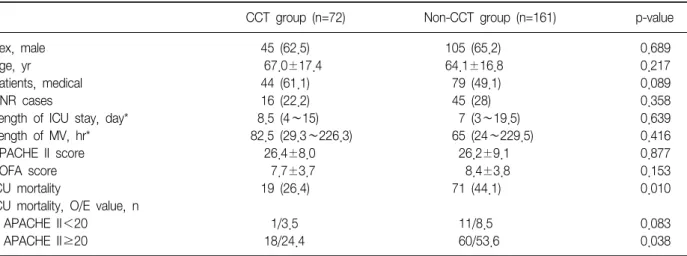
Table 3. Baseline characteristics and clinical outcomes in patients on mechanical ventilation (n=233)

CCT group (n=72) Non-CCT group (n=161) p-value

Sex, male 45 (62.5) 105 (65.2) 0.689

Age, yr 67.0±17.4 64.1±16.8 0.217

Patients, medical 44 (61.1) 79 (49.1) 0.089

DNR cases 16 (22.2) 45 (28) 0.358

Length of ICU stay, day* 8.5 (4∼15) 7 (3∼19.5) 0.639

Length of MV, hr* 82.5 (29.3∼226.3) 65 (24∼229.5) 0.416

APACHE II score 26.4±8.0 26.2±9.1 0.877

SOFA score 7.7±3.7 8.4±3.8 0.153

ICU mortality 19 (26.4) 71 (44.1) 0.010

ICU mortality, O/E value, n

APACHE II<20 1/3.5 11/8.5 0.083

APACHE II≥20 18/24.4 60/53.6 0.038

Values are presented as number (%) or mean±SD.

*Values are presented as median, interquartile ratio.

CCT: critical care team; DNR: do not resuscitation; ICU: intensive care unit; MV: mechanical ventilation; APACHE: acute physiologic and chronic health evaluation; SOFA: sequential organ failure assessment; O/E: observed/expected.

Table 4. Prognostic factors associated with ICU mortality by multivariate logistic regression model

Odds ratio (95% confidence interval) p-value

Age 1.017 (1.001∼1.033) 0.042

Sex, female 1.119 (0.651∼1.923) 0.685

Length of ICU stay 0.983 (0.960∼1.007) 0.159

Patients, surgical 1.640 (0.918∼2.930) 0.095

Chronic respiratory disease 1.085 (0.525∼2.244) 0.826

Malignancy 1.622 (0.397∼6.628) 0.501

Critcal care team 0.525 (0.281∼0.980) 0.043

APACHE II score at ICU admission 1.039 (1.000∼1.080) 0.049

SOFA score at ICU admission 1.163 (1.058∼1.278) 0.002

On mechanical ventilation 8.694 (4.123∼18.333) <0.001

ICU: intensive care unit; APACHE: acute physiologic and chronic health evaluation; SOFA: sequential organ failure assessment.

group (4 days vs. 3 days, p=0.015). Length of mechan- ical ventilation, ICU mortality and the number of DNR cases were similar between the two groups. Success rate of weaning was significantly higher in the CCT group than that of the non-CCT group (61.1% vs.

44.7%, p=0.021). Details of clinical outcomes are shown in Table 2. There were no significant differences in un- adjusted ICU mortality rates between the two groups (14% in CCT vs. 12.3% in non-CCT). However, the ICU mortality rate associated with the mechanical ventilation was significantly lower in the CCT group than the non-CCT group (26.4% in the CCT vs. 44.1% in the

non-CCT groups, p=0.01). Table 3 shows the baseline characteristics and clinical outcomes of patients on me- chanical ventilation.

On univariate analysis, the increased ICU mortality

was associated with chronic respiratory diseases, malig-

nancy, medical patient, higher severity scores (APACHE

II and SOFA), longer ICU stay and mechanical ven-

tilation (p<0.05). On a multivariate logistic regression

analysis with the adjustment of confounder, the in-

creased ICU mortality was associated with the older age,

non-CCT, higher APACHE II score, higher SOFA score

and mechanical ventilation (p<0.05). Table 4 shows

(6)

the prognostic factors associated with the ICU mortality in detail.

Discussion

We demonstrated here that the CCT in an open gen- eral ICU setting was associated with a reduced ICU mortality. It was especially effective in treating patients on mechanical ventilation. Additionally, we also dem- onstrated that the CCT improved the ICU mortality even in patients with more serious illness following the man- agement by the CCT.

Our CCT model was similar to the rapid response sys- tem (RRS), which has been proposed as a strategy for better anticipation, especially preventing in-hospital car- diopulmonary arrests

18,19

. We applied the concept of the RRS as well as rapid critical care services in open gen- eral ICUs. Therefore, open general ICUs with limited re- sources could enhance survival rates by implementing the CCT system.

Our study demonstrated some merits. Firstly, it had a prospective observational study design without a his- torical control. Many studies conducted so far had used historical controls or before-after study design

1-5,9,10,20,21

, and have performed a retrospective analysis

1,3-5,9,10

. The cross-sectional studies usually run the risk of selection bias associated with illness severity or utilization of resources. Secondly, the CCT provided rapid medical services to ICU patients within three hours after call or consultation. Despite a lack of the full-time coverage, it may show possibility of improving the ICU mortality.

Thirdly, after adjustment for covariates, we demon- strated that both the APACHE II and SOFA scores were associated with the ICU mortality. This is in agreement with other studies showing that these severity scores were predictors of the ICU mortality

22-25

.

However, this study had some limitations. Firstly, the finding was obtained from a single center study. This deserves further multicenter randomized studies. Se- condly, the guidelines on critical care medicine (sepsis bundle, weaning protocol, stress ulcer prophylaxis pro- tocol and deep vein thrombosis prophylaxis protocol)

were prepared at nursing station of our ICU. But we did not examine the degree of compliance to these guidelines in both groups. Thirdly, the CCT was not ef- fective in shortening the length of ICU stay although our study did not focus on it. Presumably, many physicians including the CCT members in our hospital might have been reluctant to transfer patients from stable to general wards based on the consideration that patients would be easily aggravated in general wards. This miscon- ception should be overcome by constant education.

Henceforth, further studies are warranted to improve this misconception after implementing the CCT system on a yearly basis.

In conclusion, we demonstrated not only that the CCT model in an open general ICU setting might be associated with the improved ICU mortality but also that the degree of effectiveness was especially remarkable in patients on mechanical ventilation. It can also be in- ferred that it would also improve the outcomes of pa- tients at other open general ICUs when it is applied to them.

References

1. Brown JJ, Sullivan G. Effect on ICU mortality of a full-time critical care specialist. Chest 1989;96:127-9.

2. Baldock G, Foley P, Brett S. The impact of organisa- tional change on outcome in an intensive care unit in the United Kingdom. Intensive Care Med 2001;27:

865-72.

3. Kuo HS, Tang GJ, Chuang JH, Lee CH, Lui WY, Lee TY, et al. Changing ICU mortality in a decade: effect of full-time intensivist. Crit Care Shock 2000;3:57-61.

4. Ghorra S, Reinert SE, Cioffi W, Buczko G, Simms HH.

Analysis of the effect of conversion from open to closed surgical intensive care unit. Ann Surg 1999;

229:163-71.

5. Manthous CA, Amoateng-Adjepong Y, al-Kharrat T, Jacob B, Alnuaimat HM, Chatila W, et al. Effects of a medical intensivist on patient care in a community teaching hospital. Mayo Clin Proc 1997;72:391-9.

6. Rosenfeld BA, Dorman T, Breslow MJ, Pronovost P,

Jenckes M, Zhang N, et al. Intensive care unit tele-

medicine: alternate paradigm for providing continuous

intensivist care. Crit Care Med 2000;28:3925-31.

(7)

7. Goh AY, Lum LC, Abdel-Latif ME. Impact of 24 hour critical care physician staffing on case-mix adjusted mortality in paediatric intensive care. Lancet 2001;357:

445-6.

8. Pronovost PJ, Angus DC, Dorman T, Robinson KA, Dremsizov TT, Young TL. Physician staffing patterns and clinical outcomes in critically ill patients: a system- atic review. JAMA 2002;288:2151-62.

9. Varelas PN, Conti MM, Spanaki MV, Potts E, Bradford D, Sunstrom C, et al. The impact of a neuro- intensivist-led team on a semiclosed neurosciences in- tensive care unit. Crit Care Med 2004;32:2191-8.

10. Hawari FI, Al Najjar TI, Zaru L, Al Fayoumee W, Salah SH, Mukhaimar MZ. The effect of implementing high-intensity intensive care unit staffing model on out- come of critically ill oncology patients. Crit Care Med 2009;37:1967-71.

11. Fuchs RJ, Berenholtz SM, Dorman T. Do intensivists in ICU improve outcome? Best Pract Res Clin Anaesthe- siol 2005;19:125-35.

12. Young MP, Birkmeyer JD. Potential reduction in mor- tality rates using an intensivist model to manage in- tensive care units. Eff Clin Pract 2000;3:284-9.

13. Levy MM, Rapoport J, Lemeshow S, Chalfin DB, Phillips G, Danis M. Association between critical care physician management and patient mortality in the intensive care unit. Ann Intern Med 2008;148:801-9.

14. Korean Society of Critical Care Medicine. The Korean Society of Critical Care Medicine white paper: domestic intensive care units survey report 2009. Seoul: Korean Society of Critical Care Medicine; 2010. p. 27-45.

15. Hillman K, Chen J, Cretikos M, Bellomo R, Brown D, Doig G, et al. Introduction of the medical emergency team (MET) system: a cluster-randomised controlled trial. Lancet 2005;365:2091-7.

16. Guidelines for intensive care unit admission, discharge, and triage. Task Force of the American College of

Critical Care Medicine, Society of Critical Care Medi- cine. Crit Care Med 1999;27:633-8.

17. Rochester DF. Tests of respiratory muscle function. Clin Chest Med 1988;9:249-61.

18. Berwick DM, Calkins DR, McCannon CJ, Hackbarth AD. The 100,000 lives campaign: setting a goal and a deadline for improving health care quality. JAMA 2006;295:324-7.

19. Devita MA, Bellomo R, Hillman K, Kellum J, Rotondi A, Teres D, et al. Findings of the first consensus con- ference on medical emergency teams. Crit Care Med 2006;34:2463-78.

20. Multz AS, Chalfin DB, Samson IM, Dantzker DR, Fein AM, Steinberg HN, et al. A "closed" medical intensive care unit (MICU) improves resource utilization when compared with an "open" MICU. Am J Respir Crit Care Med 1998;157(5 Pt 1):1468-73.

21. Carson SS, Stocking C, Podsadecki T, Christenson J, Pohlman A, MacRae S, et al. Effects of organizational change in the medical intensive care unit of a teaching hospital: a comparison of 'open' and 'closed' formats.

JAMA 1996;276:322-8.

22. Wong DT, Crofts SL, Gomez M, McGuire GP, Byrick RJ. Evaluation of predictive ability of APACHE II sys- tem and hospital outcome in Canadian intensive care unit patients. Crit Care Med 1995;23:1177-83.

23. Naved SA, Siddiqui S, Khan FH. APACHE-II score cor- relation with mortality and length of stay in an in- tensive care unit. J Coll Physicians Surg Pak 2011;21:

4-8.

24. Ferreira FL, Bota DP, Bross A, Mélot C, Vincent JL.

Serial evaluation of the SOFA score to predict outcome in critically ill patients. JAMA 2001;286:1754-8.

25. Minne L, Abu-Hanna A, de Jonge E. Evaluation of SOFA-based models for predicting mortality in the ICU:

a systematic review. Crit Care 2008;12:R161.

수치

Figure  1. Flow diagram  of  the study. ICU:  intensive  care unit.
Table  1.  Baseline  characteristics  of  the  study  (n=830)
Table  3.  Baseline  characteristics  and  clinical  outcomes  in  patients  on  mechanical  ventilation  (n=233)

참조

관련 문서

(2003), Nosocomial Infection of Malnourished Patients in an Intensive Care Unit. Anal ysis of Nutritional Support Status in the Intensive Care Unit. Korean J crit Ca re Med.

Objective: The purpose of this study is to use it as a basis for the health care guidelines for the muscle mass and cardiovascular disease of Korean population by

This study aims to suggest a basic data for the activation of aromatherapy pimple treatment program with the pimple skin care and treatment by testing the actual

The inputted data and sensed data were collected using a wearable input interface as input sequence data for error correction model.. Analyzing the

The primary aim of this study was to evaluate the effects of an app-based self-management program for PLWH on self-management outcomes such as self-efficacy

To support self-growing software for intelligent service robots, the SemBots project at ICU is developing a repository framework that allows robot software to dynamically

Abstract: This study aimed to review the oral hygiene status, oral care guidelines, and outcomes of oral care in intensive care unit (ICU) patients from a dental

AIRWAYS ICPs: integrated care pathways for airway diseases; AR: allergic rhinitis; ARIA: Allergic Rhinitis and its Impact on Asthma; CDSS: Clinical Deci‑.. sion Support