INTRODUCTION
Stress myocardial perfusion imaging using single-photon emis- sion computed tomography (SPECT) is commonly used for risk stratification and therapeutic decision making in patients with coronary artery disease (CAD).1-3 Since ischemia is a strong predictor of adverse outcomes, such as death or myocardial in- farction (MI),4,5 detecting ischemia is an important part of the diagnostic strategy for patients with stable CAD. In addition to the diagnostic and prognostic utility of myocardial perfusion SPECT, the extent of ischemia is one of the primary measures that drives decisions regarding revascularization.6-8 Patients
Impact of Follow-Up Ischemia on Myocardial Perfusion Single-Photon Emission Computed Tomography
in Patients with Coronary Artery Disease
Se Hun Kang
1*, Hyo In Choi
2*, Young-Hak Kim
2, Eun Young Lee
2, Jung-Min Ahn
2, Seungbong Han
3, Pil Hyung Lee
2, Jae-Hyung Roh
2, Sung-Han Yun
2, Duk-Woo Park
2, Soo-Jin Kang
2, Seung-Whan Lee
2, Cheol Whan Lee
2, Dae Hyuk Moon
4, Seong-Wook Park
2, and Seung-Jung Park
21Department of Cardiology, CHA Bundang Medical Center, CHA University, Seongnam;
2Division of Cardiology, University of Ulsan College of Medicine, Asan Medical Center, Seoul;
3Department of Applied Statistics, Gachon University, Seongnam;
4Department of Nuclear Medicine, University of Ulsan College of Medicine, Asan Medical Center, Seoul, Korea.
Purpose: Few studies have reported on predicting prognosis using myocardial perfusion single-photon emission computed to- mography (SPECT) during coronary artery disease (CAD) treatment. Therefore, we aimed to assess the clinical implications of myocardial perfusion SPECT during follow-up for CAD treatment.
Materials and Methods: We enrolled 1153 patients who had abnormal results at index SPECT and underwent follow-up SPECT at intervals ≥6 months. Major adverse cardiac events (MACE) were compared in overall and 346 patient pairs after propensity-score (PS) matching.
Results: Abnormal SPECT was associated with a significantly higher risk of MACE in comparison with normal SPECT over the me- dian of 6.3 years (32.3% vs. 19.8%; unadjusted p<0.001). After PS matching, abnormal SPECT posed a higher risk of MACE [32.1%
vs. 19.1%; adjusted hazard ratio (HR)=1.73; 95% confidence interval (CI)=1.27–2.34; p<0.001] than normal SPECT. After PS match- ing, the risk of MACE was still higher in patients with abnormal follow-up SPECT in the revascularization group (30.2% vs. 17.9%;
adjusted HR=1.73; 95% CI=1.15–2.59; p=0.008). Low ejection fraction [odds ratio (OR)=5.33; 95% CI=3.39–8.37; p<0.001] and medical treatment (OR=2.68; 95% CI=1.93–3.72; p<0.001) were independent clinical predictors of having an abnormal result on follow-up SPECT.
Conclusion: Abnormal follow-up SPECT appears to be associated with a high risk of MACE during CAD treatment. Follow-up SPECT may play a potential role in identifying patients at high cardiovascular risk.
Key Words: Single-photon emission computerized tomography, prognosis, coronary artery disease
pISSN: 0513-5796 · eISSN: 1976-2437
Received: November 24, 2016 Revised: April 12, 2017 Accepted: May 29, 2017
Co-corresponding authors: Dr. Young-Hak Kim, Division of Cardiology, University of Ulsan College of Medicine, Asan Medical Center, 88 Olympic-ro 43-gil, Songpa- gu, Seoul 05505, Korea.
Tel: 82-2-3010-3955, Fax: 82-2-475-6898, E-mail: [email protected]
*Se Hun Kang and Hyo In Choi contributed equally to this work.
•The authors have no financial conflicts of interest.
© Copyright: Yonsei University College of Medicine 2017
This is an Open Access article distributed under the terms of the Creative Com- mons Attribution Non-Commercial License (http://creativecommons.org/licenses/
by-nc/4.0) which permits unrestricted non-commercial use, distribution, and repro- duction in any medium, provided the original work is properly cited.
Yonsei Med J 2017 Sep;58(5):934-943 https://doi.org/10.3349/ymj.2017.58.5.934
with moderately or severely abnormal myocardial perfusion SPECT have significantly higher mortality rates if treated with medical therapy alone.5,7 Previous studies on myocardial perfu- sion SPECT have focused on the prognostic utility of stress im- aging as the initial test for patients with CAD.8,9 However, there are only a few studies that show a relationship between the pres- ence and severity of ischemia and prognosis during CAD treat- ment.10-12 Therefore, according to the current guidelines and ap- propriate use criteria for follow-up of CAD, routine stress imaging is not recommended, except for special high-risk groups after coronary revascularization.13,14 Hence, in the current study, we aimed to assess the clinical implications of serial myocardial perfusion SPECT in patients with CAD who were receiving ei- ther medication or revascularization therapy.
MATERIALS AND METHODS
Study population
We identified consecutive patients who underwent serial myo- cardial perfusion SPECT, had abnormal results on a first study [which was defined as summed stress score (SSS) ≥3],15 and had follow-up adenosine stress SPECT at an interval ≥6 months be- tween the two studies that were performed between January 1, 2000 and June 31, 2014. Patients were also excluded if they had MI <3 months before initial SPECT, previous revascularization therapy, serious non-coronary heart disease, including cancer with a life expectancy less than one year, incomplete nuclear data, multiple coronary revascularizations between the two SPECT procedures, and no clinical follow-up information. As a result, a total of 1153 patients with serial SPECT studies were included (Fig. 1). Because of the retrospective nature of the study, a waiver for individual informed consent was granted
by the Institutional Review Board.
Myocardial perfusion imaging
Thallium-201 (Tl-201) SPECT was the default stress myocardial perfusion imaging used during the study period. Images were acquired with a standardized protocol.16 Adenosine was intra- venously administered at a rate of 140 mcg/kg/minute for 6 min. Three minutes after the initiation of the adenosine infusion, a dose of Tl-201 (range=92.5–148 MBq, as determined by the patient’s body weight) was intravenously injected. Six minutes after adenosine infusion, post-stress myocardial perfusion im- ages were acquired using two-head gamma cameras equipped with low-energy, all-purpose collimators. The specific acquisi- tion parameters were dependent on the camera.
Image interpretation
Semi-quantitative visual interpretation was performed by inde- pendent expert interpreters, using 17 segments for the severity and extent of abnormalities on stress imaging.17 Each segment was scored using a 5-point scoring system (0=normal; 1=equiv- ocal; 2=moderate; 3=severe reduction in radioisotope uptake;
4=absence of detectable tracer uptake in a segment), as previ- ously described.18 The score that was summed from the stress scan was defined as the SSS: SSS was determined by adding the scores of the 17 segments on the stress images. The SPECT study was considered to be abnormal if the SSS was 3 or greater.
According to the result of follow-up myocardial perfusion SPECT, patients were categorized into normal and abnormal groups.
Procedure and follow-up
Coronary angiography was recommended for patients on the basis of their clinical presentation and the results of the nonin- vasive stress test. Significant stenosis on coronary angiogra- Patients undergoing serial SPECT between 1 Jan 2000 and 31 Jun 2014 (n=15000)
Final analysis population (n=1153)
Medical therapy (n=436)
Normal SPECT (n=167) Abnormal SPECT (n=269) Normal SPECT (n=395) Abnormal SPECT (n=322)
Revascularization therapy (n=717) Exclusion
- Normal myocardial perfusion SPECT at initial study (n=13014) - MI less than 3 months before the SPECT or non-CAD (n=357) - Previous revascularization treatment (n=391)
- Multiple coronary revascularization between serial SPECT (n=67) - Incomplete nuclear data and lost clinical follow-up (n=18)
Fig. 1. Patient flow. CAD, coronary artery disease; MI, myocardial infarction; SPECT, single-photon emission computed tomography.
phy was defined as >50% stenosis in an epicardial coronary ar- tery. In patients with significant stenosis, the decision to perform revascularization or medical therapy was at the discretion of the individual cardiologist. Percutaneous coronary interven- tion (PCI)19 or coronary artery bypass graft (CABG) surgery was performed using standard techniques.20 Medical treatment was performed with a medical regimen that consisted of at least antiplatelet, antianginal, and lipid-lowering therapies.3 After index myocardial perfusion SPECT, patients received either medical treatment or revascularization treatment.
Definitions
The primary outcome of interest was the occurrence of major adverse cardiac events (MACE), which was the composite of
all-cause death, nonfatal MI, or unplanned revascularization after follow-up myocardial perfusion SPECT. When patients received multiple serial myocardial perfusion SPECTs, the first follow-up SPECT with an interval of ≥6 months after the index myocardial perfusion SPECT was selected for analysis. An MI was defined as elevated cardiac enzymes (troponin I or myo- cardial band fraction of creatine kinase) more than the upper limit of the normal value with ischemic symptoms or electro- cardiography findings that were indicative of ischemia. After follow-up myocardial perfusion SPECT, any further PCI or CABG (excluding planned staged PCI) was considered an un- planned revascularization. Death, non-fatal MI, and unplanned revascularizations were verified by reviewing medical records.
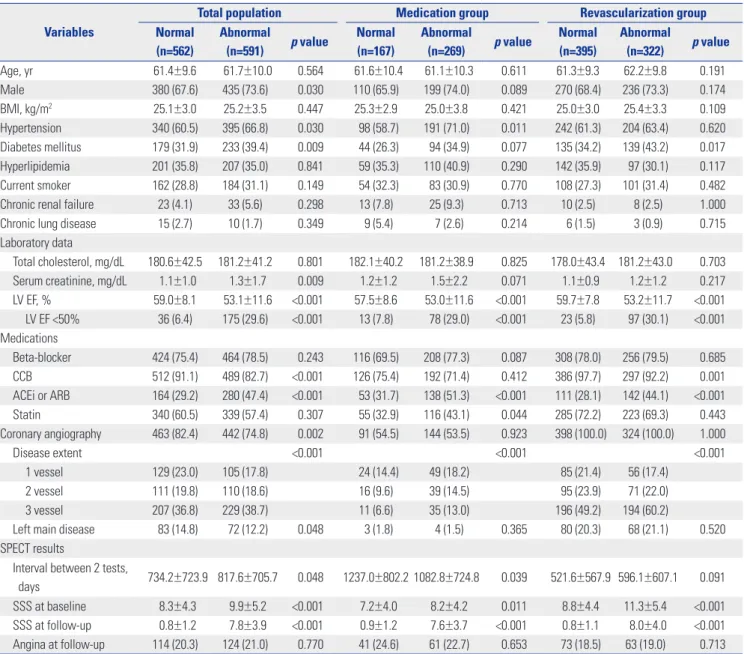
Table 1. Baseline Characteristics of the Study Patients with Normal and Abnormal Follow-Up SPECT Results Variables
Total population Medication group Revascularization group
Normal (n=562)
Abnormal
(n=591) p value Normal (n=167)
Abnormal
(n=269) p value Normal (n=395)
Abnormal
(n=322) p value
Age, yr 61.4±9.6 61.7±10.0 0.564 61.6±10.4 61.1±10.3 0.611 61.3±9.3 62.2±9.8 0.191
Male 380 (67.6) 435 (73.6) 0.030 110 (65.9) 199 (74.0) 0.089 270 (68.4) 236 (73.3) 0.174
BMI, kg/m2 25.1±3.0 25.2±3.5 0.447 25.3±2.9 25.0±3.8 0.421 25.0±3.0 25.4±3.3 0.109
Hypertension 340 (60.5) 395 (66.8) 0.030 98 (58.7) 191 (71.0) 0.011 242 (61.3) 204 (63.4) 0.620
Diabetes mellitus 179 (31.9) 233 (39.4) 0.009 44 (26.3) 94 (34.9) 0.077 135 (34.2) 139 (43.2) 0.017 Hyperlipidemia 201 (35.8) 207 (35.0) 0.841 59 (35.3) 110 (40.9) 0.290 142 (35.9) 97 (30.1) 0.117 Current smoker 162 (28.8) 184 (31.1) 0.149 54 (32.3) 83 (30.9) 0.770 108 (27.3) 101 (31.4) 0.482
Chronic renal failure 23 (4.1) 33 (5.6) 0.298 13 (7.8) 25 (9.3) 0.713 10 (2.5) 8 (2.5) 1.000
Chronic lung disease 15 (2.7) 10 (1.7) 0.349 9 (5.4) 7 (2.6) 0.214 6 (1.5) 3 (0.9) 0.715
Laboratory data
Total cholesterol, mg/dL 180.6±42.5 181.2±41.2 0.801 182.1±40.2 181.2±38.9 0.825 178.0±43.4 181.2±43.0 0.703 Serum creatinine, mg/dL 1.1±1.0 1.3±1.7 0.009 1.2±1.2 1.5±2.2 0.071 1.1±0.9 1.2±1.2 0.217 LV EF, % 59.0±8.1 53.1±11.6 <0.001 57.5±8.6 53.0±11.6 <0.001 59.7±7.8 53.2±11.7 <0.001 LV EF <50% 36 (6.4) 175 (29.6) <0.001 13 (7.8) 78 (29.0) <0.001 23 (5.8) 97 (30.1) <0.001 Medications
Beta-blocker 424 (75.4) 464 (78.5) 0.243 116 (69.5) 208 (77.3) 0.087 308 (78.0) 256 (79.5) 0.685
CCB 512 (91.1) 489 (82.7) <0.001 126 (75.4) 192 (71.4) 0.412 386 (97.7) 297 (92.2) 0.001
ACEi or ARB 164 (29.2) 280 (47.4) <0.001 53 (31.7) 138 (51.3) <0.001 111 (28.1) 142 (44.1) <0.001
Statin 340 (60.5) 339 (57.4) 0.307 55 (32.9) 116 (43.1) 0.044 285 (72.2) 223 (69.3) 0.443
Coronary angiography 463 (82.4) 442 (74.8) 0.002 91 (54.5) 144 (53.5) 0.923 398 (100.0) 324 (100.0) 1.000
Disease extent <0.001 <0.001 <0.001
1 vessel 129 (23.0) 105 (17.8) 24 (14.4) 49 (18.2) 85 (21.4) 56 (17.4)
2 vessel 111 (19.8) 110 (18.6) 16 (9.6) 39 (14.5) 95 (23.9) 71 (22.0)
3 vessel 207 (36.8) 229 (38.7) 11 (6.6) 35 (13.0) 196 (49.2) 194 (60.2)
Left main disease 83 (14.8) 72 (12.2) 0.048 3 (1.8) 4 (1.5) 0.365 80 (20.3) 68 (21.1) 0.520 SPECT results
Interval between 2 tests,
days 734.2±723.9 817.6±705.7 0.048 1237.0±802.2 1082.8±724.8 0.039 521.6±567.9 596.1±607.1 0.091 SSS at baseline 8.3±4.3 9.9±5.2 <0.001 7.2±4.0 8.2±4.2 0.011 8.8±4.4 11.3±5.4 <0.001 SSS at follow-up 0.8±1.2 7.8±3.9 <0.001 0.9±1.2 7.6±3.7 <0.001 0.8±1.1 8.0±4.0 <0.001 Angina at follow-up 114 (20.3) 124 (21.0) 0.770 41 (24.6) 61 (22.7) 0.653 73 (18.5) 63 (19.0) 0.713 ACEi, angiotensin converting enzyme inhibitor; ARB, angiotensin receptor blocker; BMI, body-mass index; CCB, calcium channel blocker; LV EF, left ventricular ejection fraction; SPECT, single-photon emission computed tomography; SSS, summed stress score.
Values are presented as a n (%) or mean±SD.
Statistical analysis
The continuous and categorical covariates are summarized as a mean±standard deviation or count (%). According to the fol- low-up myocardial perfusion SPECT results, all patients were divided into normal and abnormal groups. The baseline patient characteristics were compared between the two groups using the t test or Fisher exact test for continuous and categorical vari- ables, respectively. The cumulative incidence of MACE for the normal and the abnormal groups was obtained using the Kaplan- Meier method and compared between the two groups using the log-rank test. To examine the effect of abnormal results on MACE and its individual events, the unadjusted and adjusted Cox proportional hazards regression models were fitted. Co- variates that were statistically significant in univariate analysis and/or those that were clinically relevant were considered candidate variables for multivariate models. In the Cox model, the proportionality assumptions were assessed using the Scho- enfeld residual test, and no relevant violations were detected.
To reduce treatment selection bias and potential confound- ing, propensity score (PS)-matching analysis was performed.
The PS of obtaining the abnormal myocardial perfusion SPECT results was estimated using the nearest-neighbor matching me- thod with a caliper width of 0.2. The considered variables for the PS were age, sex, body mass index, hypertension, diabetes mellitus, current smoking, hyperlipidemia, prior revasculariza- tion treatment, chronic pulmonary disease, chronic renal fail- ure, creatinine, total cholesterol, left ventricular (LV) ejection fraction <50%, and the use of beta blockers, calcium channel blockers (CCB), angiotensin converting enzyme inhibitor (ACEi), angiotensin receptor blocker (ARB) agents, or statins, which are listed in Table 1. In general, covariate balancing was consid- ered to be achieved as long as the absolute standardized dif-
ference of the means or proportions was <0.25. In the PS anal- yses, no violations of covariate balancing were detected (Sup- plementary Fig. 1, only online). For the PS-matched cohorts, continuous variables were compared using the paired t test or the Wilcoxon signed-rank test, as appropriate, and the categori- cal variables were compared using the McNemar’s or Bowker’s test of symmetry, as appropriate. A subgroup analysis was per- formed according to the treatment groups. Furthermore, uni- variate and multivariate logistic regression analyses were per- formed to identify independent clinical predictors of having ab- normal results on follow-up myocardial perfusion SPECT. In the multivariable logistic regression, we employed a backward variable selection approach based on the p values. The signifi- cance level for staying in the model was set to 0.05. All statisti- cal analyses were performed using SPSS (version 19.0 software;
IBM Corp., Armonk, NY, USA) and R software (version 2.13; R Foundation for Statistical Computing, Vienna, Austria; http://
www.r-project.org). Additionally, the R package MatchIt was used to conduct the PS analysis.21 All tests were two-tailed, and p<0.05 was considered statistically significant.
RESULTS
Overall population Baseline characteristics
The median follow-up interval between the index and follow- up myocardial perfusion SPECT procedures was 474 days [in- terquartile range (IQR)=243–1107 days]. Abnormal results on follow-up myocardial perfusion SPECT were noted in 591 pa- tients (51.3%). The baseline clinical characteristics and myo- Table 2. Clinical Outcomes in Patients with Abnormal Follow-Up SPECT in Comparison with Normal SPECT in the Overall Population
Variables Normal Abnormal Unadjusted HR (95% CI) p value Adjusted HR (95% CI)* p value Overall population†
MACE 111 (19.8) 191 (32.3) 1.735 (1.373−2.193) <0.001 1.595 (1.249−2.038) <0.001
Death 74 (13.2) 114 (19.3) 1.472 (1.098−1.972) 0.010 1.235 (0.907−1.681) 0.180
Myocardial infarction 22 (3.9) 48 (8.1) 2.114 (1.276−3.502) 0.004 1.697 (0.997−2.888) 0.051
Unplanned revascularization 37 (6.6) 56 (9.5) 1.477 (0.975−2.237) 0.066 1.634 (1.060−2.517) 0.026 Medication group‡
MACE 36 (21.6) 87 (32.3) 1.492 (1.012−2.201) 0.044 1.472 (0.979−2.211) 0.063
Death 32 (19.2) 54 (20.1) 0.974 (0.629−1.509) 0.907 0.978 (0.616−1.550) 0.923
Myocardial infarction 5 (3.0) 23 (8.6) 2.667 (1.013−7.021) 0.047 2.134 (0.770−5.915) 0.145
Unplanned revascularization 5 (3.0) 20 (7.4) 2.309 (0.864−6.168) 0.095 2.118 (0.764−5.872) 0.149 Revascularization group§
MACE 75 (19.0) 104 (32.3) 1.772 (1.316−2.384) <0.001 1.662 (1.218−2.269) 0.001
Death 42 (10.6) 60 (18.6) 1.720 (1.159−2.552) 0.007 1.409 (0.930−2.133) 0.106
Myocardial infarction 17 (4.3) 25 (7.8) 1.791 (0.967−3.317) 0.064 1.613 (0.847−3.072) 0.146 Unplanned revascularization 32 (8.1) 36 (11.2) 1.414 (0.878−2.277) 0.154 1.602 (0.980−2.620) 0.060 ACEi, angiotensin converting enzyme inhibitor; ARB, angiotensin receptor blocker; CI, confidence interval; HR, hazard ratio; MACE, major adverse cardiac events;
SPECT, single-photon emission computed tomography.
*The adjusted covariates included age, diabetes mellitus, chronic renal failure, chronic lung disease, use of ACEi or ARB, use of statins, and left ventricular ejec- tion <50%, †Nomal: n=562, abnormal: n=591, ‡Nomal: n=167, abnormal: n=269, §Nomal: n=395, abnormal: n=322.
100 80 60 40 20 00
562 591
2
488 500
4
384 387
6
279 265
8
185 167
MACE free survival (%)
Time (years) No. at risk
Normal group Abnormal group
Normal Abnormal
p<0.001
100 80 60 40 20 00
167 269
2
136 225
4
101 158
6
68 106
8
36 61
MACE free survival (%)
Time (years) No. at risk
Normal group Abnormal group
Normal Abnormal
p=0.042
100 80 60 40 20 00
295 322
2
353 275
4
284 229
6
212 159
8
150 107
MACE free survival (%)
Time (years) No. at risk
Normal group Abnormal group
Normal Abnormal
p=0.001
Fig. 2. Kaplan-Meier curves of the cumulative incidence of MACE in pa- tients with normal follow-up SPECT (solid line) versus abnormal follow- up SPECT (dashed line) in the (A) overall population, (B) medication group, and (C) revascularization group. MACE, major adverse cardiac events; SPECT, single-photon emission computed tomography.
100 80 60 40 20 00
872 153 128
2
753 130 105
4
603 98 71
6
434 68 42
8
286 42 26
MACE free survival (%)
Time (years) No. at risk
Improved No change Worsened
Improved No change Worsened
p<0.001
Fig. 3. Kaplan-Meier curves of the cumulative incidence of MACE in pa- tients with improved (black solid line), no change (dashed line), and worsened (gray solid line) in the result of serial SPECT. MACE, major adverse cardiac events; SPECT, single-photon emission computed to- mography.
A
B
C
cardial perfusion SPECT results, according to the results of the follow-up myocardial perfusion SPECT procedures and treat- ment strategy, are presented in Table 1. The patients in the ab-
normal group were more likely to be male and have a higher incidence of hypertension, diabetes mellitus, and a low ejection fraction. On myocardial perfusion SPECT, the abnormal group had greater baseline perfusion defects than the normal group.
The revascularization therapy group was older and more likely to have diabetes mellitus, greater extent of CAD, and high per- fusion defect on the initial myocardial perfusion SPECT (Sup- plementary Table 1, only online).
Clinical outcomes
Patients were followed for a median of 6.3 years (IQR=3.7–9.1 years) after the follow-up myocardial perfusion SPECT. During the follow-up period, 188 patients died, 70 patients developed nonfatal MI, and 93 patients underwent unplanned revascular- ization (Table 2). The incidence of MACE was significantly high- er in the abnormal group in the overall population and both treatment groups (Fig. 2), and there was also a significant differ- ence in the clinical outcomes of patients according to the result of serial SPECT (Fig. 3). There was also a tendency for a higher risk of events in patients with abnormal follow-up SPECT in com- parison with normal SPECT in all subgroups after adjustment using the multivariate Cox model, as indicated in Table 2.
Propensity-matched population Baseline characteristics
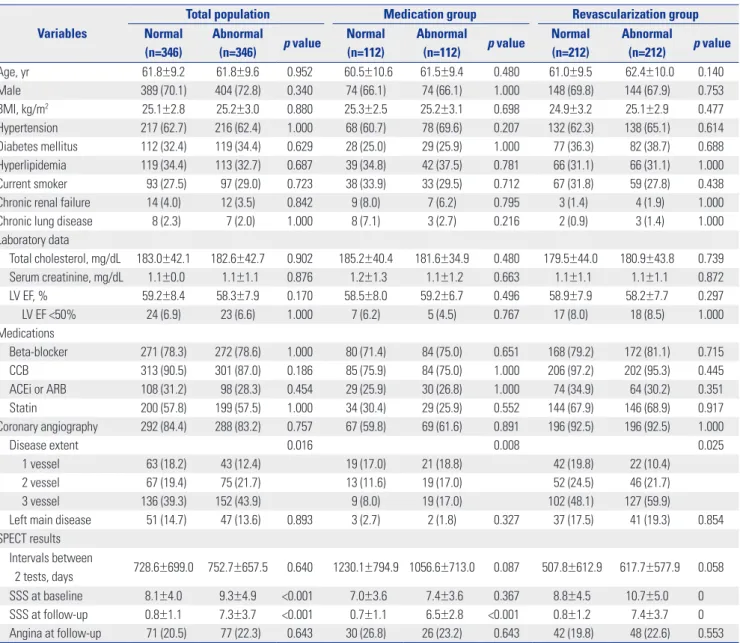
After performing PS matching, 346, 112, and 212 matched pairs of patients in the overall population, medication alone, and re- vascularization groups were created, respectively (Table 3).
There were no significant differences in the baseline clinical characteristics of the PS-matched patients, except the extent of CAD and the results of SPECT.
Clinical outcomes
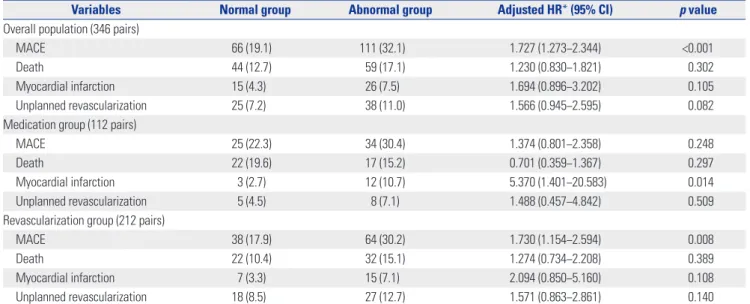
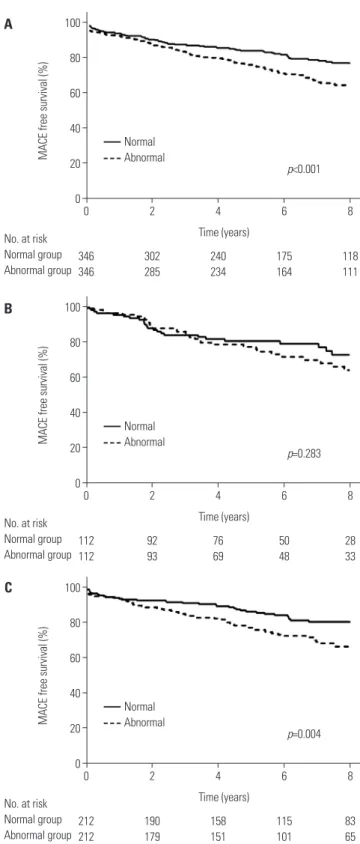
In the matched patients, there were 177 MACE events within the median follow-up period of 6.6 years. With respect to the MACE in the matched cohorts, the abnormal group was asso- ciated with worse clinical outcomes in the overall population and the revascularization groups (Fig. 4). We noted a consistent pattern in that the abnormal follow-up SPECT group was at a higher risk of MACE and its individual events than the normal group in PS-matched overall patients, medication alone and revascularization groups (Table 4).
Predictors of abnormal follow-up SPECT
Table 5 lists the independent predictors of abnormal results on follow-up SPECT. The variables considered for inclusion in
the multivariate models were sex, hypertension, diabetes mel- litus, body mass index ≥25 kg/m2, current smoking, chronic kidney disease, history of previous revascularization therapy, LV ejection fraction <50%, treatment with CCB, ACEi, or ARB, and the treatment method. Low ejection fraction was a pre- dictor of abnormal follow-up SPECT, the overall population, medication alone and revascularization groups. Revascular- ization therapy was a protective factor of abnormal SPECT.
DISCUSSION
In the present study, we evaluated the long-term clinical impli- cations of follow-up SPECT during CAD treatment with com- Table 3. Baseline Characteristics between the Patients with Normal and Abnormal Follow-Up SPECT Results in the Propensity Score-Matched Popu- lation
Variables
Total population Medication group Revascularization group
Normal (n=346)
Abnormal
(n=346) p value Normal (n=112)
Abnormal
(n=112) p value Normal (n=212)
Abnormal
(n=212) p value
Age, yr 61.8±9.2 61.8±9.6 0.952 60.5±10.6 61.5±9.4 0.480 61.0±9.5 62.4±10.0 0.140
Male 389 (70.1) 404 (72.8) 0.340 74 (66.1) 74 (66.1) 1.000 148 (69.8) 144 (67.9) 0.753
BMI, kg/m2 25.1±2.8 25.2±3.0 0.880 25.3±2.5 25.2±3.1 0.698 24.9±3.2 25.1±2.9 0.477
Hypertension 217 (62.7) 216 (62.4) 1.000 68 (60.7) 78 (69.6) 0.207 132 (62.3) 138 (65.1) 0.614
Diabetes mellitus 112 (32.4) 119 (34.4) 0.629 28 (25.0) 29 (25.9) 1.000 77 (36.3) 82 (38.7) 0.688 Hyperlipidemia 119 (34.4) 113 (32.7) 0.687 39 (34.8) 42 (37.5) 0.781 66 (31.1) 66 (31.1) 1.000 Current smoker 93 (27.5) 97 (29.0) 0.723 38 (33.9) 33 (29.5) 0.712 67 (31.8) 59 (27.8) 0.438
Chronic renal failure 14 (4.0) 12 (3.5) 0.842 9 (8.0) 7 (6.2) 0.795 3 (1.4) 4 (1.9) 1.000
Chronic lung disease 8 (2.3) 7 (2.0) 1.000 8 (7.1) 3 (2.7) 0.216 2 (0.9) 3 (1.4) 1.000
Laboratory data
Total cholesterol, mg/dL 183.0±42.1 182.6±42.7 0.902 185.2±40.4 181.6±34.9 0.480 179.5±44.0 180.9±43.8 0.739 Serum creatinine, mg/dL 1.1±0.0 1.1±1.1 0.876 1.2±1.3 1.1±1.2 0.663 1.1±1.1 1.1±1.1 0.872
LV EF, % 59.2±8.4 58.3±7.9 0.170 58.5±8.0 59.2±6.7 0.496 58.9±7.9 58.2±7.7 0.297
LV EF <50% 24 (6.9) 23 (6.6) 1.000 7 (6.2) 5 (4.5) 0.767 17 (8.0) 18 (8.5) 1.000
Medications
Beta-blocker 271 (78.3) 272 (78.6) 1.000 80 (71.4) 84 (75.0) 0.651 168 (79.2) 172 (81.1) 0.715
CCB 313 (90.5) 301 (87.0) 0.186 85 (75.9) 84 (75.0) 1.000 206 (97.2) 202 (95.3) 0.445
ACEi or ARB 108 (31.2) 98 (28.3) 0.454 29 (25.9) 30 (26.8) 1.000 74 (34.9) 64 (30.2) 0.351
Statin 200 (57.8) 199 (57.5) 1.000 34 (30.4) 29 (25.9) 0.552 144 (67.9) 146 (68.9) 0.917
Coronary angiography 292 (84.4) 288 (83.2) 0.757 67 (59.8) 69 (61.6) 0.891 196 (92.5) 196 (92.5) 1.000
Disease extent 0.016 0.008 0.025
1 vessel 63 (18.2) 43 (12.4) 19 (17.0) 21 (18.8) 42 (19.8) 22 (10.4)
2 vessel 67 (19.4) 75 (21.7) 13 (11.6) 19 (17.0) 52 (24.5) 46 (21.7)
3 vessel 136 (39.3) 152 (43.9) 9 (8.0) 19 (17.0) 102 (48.1) 127 (59.9)
Left main disease 51 (14.7) 47 (13.6) 0.893 3 (2.7) 2 (1.8) 0.327 37 (17.5) 41 (19.3) 0.854 SPECT results
Intervals between
2 tests, days 728.6±699.0 752.7±657.5 0.640 1230.1±794.9 1056.6±713.0 0.087 507.8±612.9 617.7±577.9 0.058
SSS at baseline 8.1±4.0 9.3±4.9 <0.001 7.0±3.6 7.4±3.6 0.367 8.8±4.5 10.7±5.0 0
SSS at follow-up 0.8±1.1 7.3±3.7 <0.001 0.7±1.1 6.5±2.8 <0.001 0.8±1.2 7.4±3.7 0
Angina at follow-up 71 (20.5) 77 (22.3) 0.643 30 (26.8) 26 (23.2) 0.643 42 (19.8) 48 (22.6) 0.553 ACEi, angiotensin converting enzyme inhibitor; ARB, angiotensin receptor blocker; BMI, body-mass index; CCB, calcium channel blocker; LV EF, left ventricular ejection fraction; SPECT, single-photon emission computed tomography; SSS, summed stress score.
Values are presented as a n (%) or mean±SD.
parisons of the clinical outcomes between patients with normal and abnormal follow-up SPECT results. The major findings of this study included the following: 1) abnormal results on fol- low-up SPECT were associated with worse clinical outcomes, as indicated by an increased risk of death, MI, or unplanned revascularization in the overall study population, and 2) low ejection fraction and medical treatment were independent clinical predictors of having an abnormal result on follow-up SPECT.
Previous randomized studies of serial myocardial perfusion SPECT demonstrated significant reductions in myocardial ischemia after diverse interventions, including the administra- tion of medical therapy or coronary revascularization.22,23 In the COURAGE sub-study, residual ischemia was an unadjusted predictor of events, although the noted association was not sig- nificant when adjusted for the treatment arm.10 Recent studies have further suggested that a reduction in ischemia on myocar- dial perfusion SPECT with either medical or coronary revascu- larization therapy may identify a patient at lower risk for a sub-
sequent cardiac event.10,24 Despite the potential advantages of follow-up myocardial perfusion SPECT, clinical practice guide- lines and appropriate use criteria do not recommend routine serial testing due to the lack of evidence that supports the ben- efit of follow-up myocardial perfusion SPECT.13,25 A report sug- gested that >5% worsening ischemia is an independent predic- tor of death or MI, irrespective of the treatment arm, such as me- dical therapy or revascularization.26 However, these previous studies were limited by small study populations or case-con- trol designs. Our study, despite its retrospective, single-center, observational study design, is relatively stronger, because it in- cludes a larger study population that was treated at a real-world practice with a longer follow-up period.
The present study demonstrates that follow-up ischemia is associated with adverse outcomes, such as death, MI, and un- planned revascularization. The association between mortality and follow-up ischemia is in line with a previous study that re- ported that revascularization reduces mortality in patients with an ischemic burden ≥10% on baseline myocardial perfusion Table 4. Clinical Outcomes in Patients with Abnormal Follow-Up SPECT Compared with Normal SPECT in a Propensity-Matched Population
Variables Normal group Abnormal group Adjusted HR* (95% CI) p value
Overall population (346 pairs)
MACE 66 (19.1) 111 (32.1) 1.727 (1.273−2.344) <0.001
Death 44 (12.7) 59 (17.1) 1.230 (0.830−1.821) 0.302
Myocardial infarction 15 (4.3) 26 (7.5) 1.694 (0.896−3.202) 0.105
Unplanned revascularization 25 (7.2) 38 (11.0) 1.566 (0.945−2.595) 0.082
Medication group (112 pairs)
MACE 25 (22.3) 34 (30.4) 1.374 (0.801−2.358) 0.248
Death 22 (19.6) 17 (15.2) 0.701 (0.359−1.367) 0.297
Myocardial infarction 3 (2.7) 12 (10.7) 5.370 (1.401−20.583) 0.014
Unplanned revascularization 5 (4.5) 8 (7.1) 1.488 (0.457−4.842) 0.509
Revascularization group (212 pairs)
MACE 38 (17.9) 64 (30.2) 1.730 (1.154−2.594) 0.008
Death 22 (10.4) 32 (15.1) 1.274 (0.734−2.208) 0.389
Myocardial infarction 7 (3.3) 15 (7.1) 2.094 (0.850−5.160) 0.108
Unplanned revascularization 18 (8.5) 27 (12.7) 1.571 (0.863−2.861) 0.140
ACEi, angiotensin converting enzyme inhibitor; ARB, angiotensin receptor blocker; CI, confidence interval; HR, hazard ratio; MACE, major adverse cardiac events;
SPECT, single-photon emission computed tomography.
*Adjusted covariates included age, diabetes mellitus, chronic renal failure, chronic lung disease, use of ACEi or ARB, use of statin, and left ventricular ejection
<50%; adjusted HRs represent the risk of each clinical outcome comparing abnormal follow-up SPECT with normal follow-up SPECT.
Table 5. Independent Predictors of an Abnormal Follow-Up SPECT*
Variables Total population Medication group Revascularization group
OR 95% CI p value OR 95% CI p value OR 95% CI p value
Male 1.342 0.968−1.860 0.077 2.147 1.133−4.069 0.019 1.161 0.788−1.710 0.449
BMI ≥25 kg/m2 1.124 0.851−1.486 0.410 0.854 0.499−1.464 0.567 1.262 0.905−1.759 0.170
LV EF <50% 5.330 3.393−8.374 <0.001 3.499 1.462−8.373 0.005 6.041 3.558−10.256 <0.001
ACEi or ARB 1.240 0.905−1.699 0.181 1.352 0.735−2.485 0.332 1.234 0.847−1.796 0.273
Medical therapy 2.683 1.934−3.721 <0.001 - - - -
ACEi, angiotensin converting enzyme inhibitor; ARB, angiotensin receptor blocker; BMI, body-mass index; CI, confidence interval; LV EF, left ventricular ejection fraction; OR, odds ratio; SPECT, single-photon emission computed tomography.
*Adjusted covariates included male sex, hypertension, diabetes mellitus, current smoking, chronic renal failure, BMI ≥25 kg/m2, LV EF <50%, treatment with ACEi or ARB, and medication therapy.
100 80 60 40 20 00
346 346
2
302 285
4
240 234
6
175 164
8
118 111
MACE free survival (%)
Time (years) No. at risk
Normal group Abnormal group
Normal Abnormal
p<0.001
100 80 60 40 20 00
112 112
2
92 93
4
76 69
6
50 48
8
28 33
MACE free survival (%)
Time (years) No. at risk
Normal group Abnormal group
Normal Abnormal
p=0.283
100 80 60 40 20 00
212 212
2
190 179
4
158 151
6
115 101
8
83 65
MACE free survival (%)
Time (years) No. at risk
Normal group Abnormal group
Normal Abnormal
p=0.004
Fig. 4. Kaplan-Meier curves of the cumulative incidence of MACE in pa- tients with normal follow-up SPECT (solid line) versus abnormal follow- up SPECT (dashed line) in the (A) overall population, (B) medication group, and (C) revascularization group in the PS-matched population.
MACE, major adverse cardiac events; SPECT, single-photon emission computed tomography; PS, propensity score.
C B A
SPECT.7,27 In our study, among the overall population and the revascularization group, abnormal results on follow-up SPECT demonstrated an increased risk of MACE, death, and MI. In
the medical group, abnormal SPECT was also associated with a higher risk of MACE and unplanned revascularization. Due to the observational study design, unfavorable clinical factors, such as male sex and lower LV ejection fraction, may contribute to worse clinical outcomes in patients with abnormal follow- up SPECT. However, consistent findings after rigorous adjust- ment with PS matching support our hypothesis that the prog- nostic benefit of baseline myocardial perfusion SPECT could be applied to follow-up perfusion SPECT in order to predict long-term clinical prognosis. These results indicate that serial myocardial SPECT after receiving either medication alone or revascularization therapy may be helpful for predicting prog- nosis and subsequently determining the need for more aggres- sive treatment.
According to current guidelines, myocardial perfusion SPECT is considered appropriate when symptom recurrence, suspect- ed incomplete revascularization, or ≥5 years after CABG.13,28 Therefore, it is of interest to select appropriate patients who can receive myocardial SPECT as a risk assessment modality when they demonstrate the ambiguous presentation of symptoms.
Our present findings indicate that abnormal myocardial SPECT results are common in patients with low LV ejection fraction and treatment with medication only. These factors may be indi- rectly associated with abnormal follow-up SPECT due to the risk of revascularization or decompensated symptoms of CAD.29,30 Therefore, our analysis implies that patients with the risk fac- tors for abnormal SPECT are potential candidates who could benefit from receiving follow-up SPECT in order to determine the appropriate treatment strategy.
Our study had some limitations. This was a single-center, ob- servational, retrospective study with the biases that are inher- ent to this type of analysis. There were also significant baseline differences between patients with normal and abnormal fol- low-up myocardial SPECT. In addition, patients did not routine- ly receive serial myocardial perfusion SPECT; rather SPECT was performed at the discretion of the individual physician. Even after statistical adjustment therefore, unobserved confound- ers might have influenced the results. However, the patients in this study may be representative of a real-world population in daily clinical practice. Finally, due to the small study popula- tion, an ischemic threshold on follow-up SPECT for determin- ing clinical prognosis was not evaluated.
In conclusion, abnormal follow-up SPECT results appear to have prognostic implications during CAD treatment in patients receiving either medication alone or revascularization therapy.
ACKNOWLEDGEMENTS
This study was partly supported by a grant from the Korea Health- care Technology R&D Project, Ministry of Health and Welfare, Republic of Korea (HI14C0517 and HI15C1790).
REFERENCES
1. Shaw LJ, Hage FG, Berman DS, Hachamovitch R, Iskandrian A.
Prognosis in the era of comparative effectiveness research: where is nuclear cardiology now and where should it be? J Nucl Cardiol 2012;19:1026-43.
2. Hachamovitch R, Hayes SW, Friedman JD, Cohen I, Berman DS.
Stress myocardial perfusion single-photon emission computed to- mography is clinically effective and cost effective in risk stratifica- tion of patients with a high likelihood of coronary artery disease (CAD) but no known CAD. J Am Coll Cardiol 2004;43:200-8.
3. Fihn SD, Gardin JM, Abrams J, Berra K, Blankenship JC, Dallas AP, et al. 2012 ACCF/AHA/ACP/AATS/PCNA/SCAI/STS guideline for the diagnosis and management of patients with stable ischemic heart disease: a report of the American College of Cardiology Foun- dation/American Heart Association task force on practice guide- lines, and the American College of Physicians, American Association for Thoracic Surgery, Preventive Cardiovascular Nurses Associa- tion, Society for Cardiovascular Angiography and Interventions, and Society of Thoracic Surgeons. Circulation 2012;126:e354-471.
4. Hachamovitch R, Berman DS, Kiat H, Cohen I, Cabico JA, Fried- man J, et al. Exercise myocardial perfusion SPECT in patients without known coronary artery disease: incremental prognostic value and use in risk stratification. Circulation 1996;93:905-14.
5. Hachamovitch R, Berman DS, Shaw LJ, Kiat H, Cohen I, Cabico JA, et al. Incremental prognostic value of myocardial perfusion single photon emission computed tomography for the prediction of car- diac death: differential stratification for risk of cardiac death and myocardial infarction. Circulation 1998;97:535-43.
6. Farzaneh-Far A, Borges-Neto S. Ischemic burden, treatment allo- cation, and outcomes in stable coronary artery disease. Circ Car- diovasc Imaging 2011;4:746-53.
7. Hachamovitch R, Hayes SW, Friedman JD, Cohen I, Berman DS.
Comparison of the short-term survival benefit associated with re- vascularization compared with medical therapy in patients with no prior coronary artery disease undergoing stress myocardial perfu- sion single photon emission computed tomography. Circulation 2003;107:2900-7.
8. Hachamovitch R, Rozanski A, Hayes SW, Thomson LE, Germano G, Friedman JD, et al. Predicting therapeutic benefit from myocar- dial revascularization procedures: are measurements of both rest- ing left ventricular ejection fraction and stress-induced myocar- dial ischemia necessary? J Nucl Cardiol 2006;13:768-78.
9. Dagenais GR, Lu J, Faxon DP, Bogaty P, Adler D, Fuentes F, et al.
Prognostic impact of the presence and absence of angina on mor- tality and cardiovascular outcomes in patients with type 2 diabetes and stable coronary artery disease: results from the BARI 2D (By- pass Angioplasty Revascularization Investigation 2 Diabetes) trial.
J Am Coll Cardiol 2013;61:702-11.
10. Shaw LJ, Berman DS, Maron DJ, Mancini GB, Hayes SW, Hartigan PM, et al. Optimal medical therapy with or without percutaneous coronary intervention to reduce ischemic burden: results from the clinical outcomes utilizing revascularization and aggressive drug evaluation (COURAGE) trial nuclear substudy. Circulation 2008;
117:1283-91.
11. Zellweger MJ, Fahrni G, Ritter M, Jeger RV, Wild D, Buser P, et al.
Prognostic value of “routine” cardiac stress imaging 5 years after percutaneous coronary intervention: the prospective long-term observational BASKET (Basel Stent Kosteneffektivitäts Trial) LATE IMAGING study. JACC Cardiovasc Interv 2014;7:615-21.
12. Schepis T, Benz K, Haldemann A, Kaufmann PA, Schmidhauser C, Frielingsdorf J. Prognostic value of stress-gated 99m-techne-
tium SPECT myocardial perfusion imaging: risk stratification of patients with multivessel coronary artery disease and prior coro- nary revascularization. J Nucl Cardiol 2013;20:755-62.
13. Fox K, Garcia MA, Ardissino D, Buszman P, Camici PG, Crea F, et al.
Guidelines on the management of stable angina pectoris: executive summary: the task force on the management of stable angina pec- toris of the European Society of Cardiology. Eur Heart J 2006;27:
1341-81.
14. Hendel RC, Berman DS, Di Carli MF, Heidenreich PA, Henkin RE, Pellikka PA, et al. ACCF/ASNC/ACR/AHA/ASE/SCCT/SCMR/
SNM 2009 appropriate use criteria for cardiac radionuclide imag- ing: a report of the American College of Cardiology Foundation Appropriate Use Criteria Task Force, the American Society of Nu- clear Cardiology, the American College of Radiology, the American Heart Association, the American Society of Echocardiography, the Society of Cardiovascular Computed Tomography, the Soci- ety for Cardiovascular Magnetic Resonance, and the Society of Nuclear Medicine. J Am Coll Cardiol 2009;53:2201-29.
15. Zellweger MJ, Kaiser C, Jeger R, Brunner-La Rocca HP, Buser P, Bader F, et al. Coronary artery disease progression late after suc- cessful stent implantation. J Am Coll Cardiol 2012;59:793-9.
16. Kim YH, Ahn JM, Park DW, Song HG, Lee JY, Kim WJ, et al. Impact of ischemia-guided revascularization with myocardial perfusion imaging for patients with multivessel coronary disease. J Am Coll Cardiol 2012;60:181-90.
17. Aepfelbacher FC, Johnson RB, Schwartz JG, Chen L, Parker RA, Parker JA, et al. Validation of a model of left ventricular segmenta- tion for interpretation of SPET myocardial perfusion images. Eur J Nucl Med 2001;28:1624-9.
18. Cerqueira MD, Weissman NJ, Dilsizian V, Jacobs AK, Kaul S, Laskey WK, et al. Standardized myocardial segmentation and nomencla- ture for tomographic imaging of the heart. A statement for health- care professionals from the Cardiac Imaging Committee of the Council on Clinical Cardiology of the American Heart Association.
Circulation 2002;105:539-42.
19. Levine GN, Bates ER, Blankenship JC, Bailey SR, Bittl JA, Cercek B, et al. 2011 ACCF/AHA/SCAI guideline for percutaneous coronary intervention: executive summary: a report of the American College of Cardiology Foundation/American Heart Association Task Force on Practice Guidelines and the Society for Cardiovascular Angi- ography and Interventions. Circulation 2011;124:2574-609.
20. Hillis LD, Smith PK, Anderson JL, Bittl JA, Bridges CR, Byrne JG, et al. 2011 ACCF/AHA guideline for coronary artery bypass graft surgery: a report of the American College of Cardiology Founda- tion/American Heart Association Task Force on Practice Guide- lines. Circulation 2011;124:e652-735.
21. Ho D, Imai K, King G, Stuart EA. MatchIt: nonparametric prepro- cessing for parametric causal inference. J Stat Softw 2011;42:1-28.
22. Mahmarian JJ, Dakik HA, Filipchuk NG, Shaw LJ, Iskander SS, Rud- dy TD, et al. An initial strategy of intensive medical therapy is com- parable to that of coronary revascularization for suppression of scintigraphic ischemia in high-risk but stable survivors of acute myocardial infarction. J Am Coll Cardiol 2006;48:2458-67.
23. Dakik HA, Kleiman NS, Farmer JA, He ZX, Wendt JA, Pratt CM, et al. Intensive medical therapy versus coronary angioplasty for sup- pression of myocardial ischemia in survivors of acute myocardial infarction: a prospective, randomized pilot study. Circulation 1998;
98:2017-23.
24. Schwartz RG, Pearson TA, Kalaria VG, Mackin ML, Williford DJ, Awasthi A, et al. Prospective serial evaluation of myocardial perfu- sion and lipids during the first six months of pravastatin therapy:
coronary artery disease regression single photon emission com- puted tomography monitoring trial. J Am Coll Cardiol 2003;42:
600-10.
25. Klocke FJ, Baird MG, Lorell BH, Bateman TM, Messer JV, Berman DS, et al. ACC/AHA/ASNC guidelines for the clinical use of cardiac radionuclide imaging--executive summary: a report of the Ameri- can College of Cardiology/American Heart Association Task Force on Practice Guidelines (ACC/AHA/ASNC Committee to Revise the 1995 Guidelines for the Clinical Use of Cardiac Radionuclide Imaging). J Am Coll Cardiol 2003;42:1318-33.
26. Farzaneh-Far A, Phillips HR, Shaw LK, Starr AZ, Fiuzat M, O’Connor CM, et al. Ischemia change in stable coronary artery disease is an independent predictor of death and myocardial infarction. JACC Cardiovasc Imaging 2012;5:715-24.
27. Zellweger MJ, Hachamovitch R, Kang X, Hayes SW, Friedman JD, Germano G, et al. Threshold, incidence, and predictors of prognos- tically high-risk silent ischemia in asymptomatic patients without prior diagnosis of coronary artery disease. J Nucl Cardiol 2009;16:
193-200.
28. Gibbons RJ, Abrams J, Chatterjee K, Daley J, Deedwania PC, Doug-
las JS, et al. ACC/AHA 2002 guideline update for the management of patients with chronic stable angina--summary article: a report of the American College of Cardiology/American Heart Associa- tion Task Force on practice guidelines (Committee on the Manage- ment of Patients With Chronic Stable Angina). J Am Coll Cardiol 2003;41:159-68.
29. Yancy CW, Jessup M, Bozkurt B, Butler J, Casey DE Jr, Drazner MH, et al. 2013 ACCF/AHA guideline for the management of heart failure: executive summary: a report of the American College of Cardiology Foundation/American Heart Association Task Force on practice guidelines. Circulation 2013;128:1810-52.
30. McMurray JJ, Adamopoulos S, Anker SD, Auricchio A, Böhm M, Dickstein K, et al. ESC guidelines for the diagnosis and treatment of acute and chronic heart failure 2012: the Task Force for the Diag- nosis and Treatment of Acute and Chronic Heart Failure 2012 of the European Society of Cardiology. Developed in collaboration with the Heart Failure Association (HFA) of the ESC. Eur Heart J 2012;33:1787-847.