Original Article
Differing prognosis of cervical cancer patients with high risk of treatment failure after radical hysterectomy warrants trial
treatment modification
Woo-Young Kim1,*, Suk-Joon Chang1,*, Ki-Hong Chang1, Seung-Chul Yoo1, Mison Chun2, Hee-Sug Ryu1
Departments of 1Obstetrics and Gynecology, 2Radiation Oncology, Ajou University Hospital, Suwon, Korea
Objective: The aim of this study was to ascertain whether all cervical cancer patients who received adjuvant concurrent chemoradiation (CCRT) for high risk of treatment failure after radical hysterectomy are at the same risk of treatment failure, and if not, to propose trial treatment modification.
Methods: Between January 1999 and December 2007, 58 patients with FIGO stage Ib-IIa cervical cancer received adjuvant CCRT due to high risk factors such as positive lymph nodes or positive parametrium, or positive vaginal resection margins. Patients were divided into two Groups. Group A were patients with negative parametrium, negative vaginal resection margins, and only unilateral lymph node metastasis (involved L/N≤2). Group B were those with either bilateral pelvic lymph node involvement, or more than 2 lymph node involvement, or positive parametrium with lymph node involvement.
Results: During a median follow-up period of 34 months (range, 6 to 102 months), 9 patients (15.5%) experienced recurrence; among whom 2 patients (2/28, 7.1%) were Group A, and 7 patients (7/30, 23.3%) were Group B. At 3 years, the estimated progression-free survival rate of all 58 patients was 78.3%, and the overall survival rate was 89.7%. Patients in Group A had significantly better progression-free survival (88.2% vs. 68.2%, p=0.042) and overall survival rate (100% vs. 78.8%, p=0.034) than Group B.
Conclusion: Treatment modifications such as consolidation chemotherapy after CCRT may be considered based on the poor prognosis of very high risk patients such as those patients in Group B.
Key Words: Concurrent chemoradiation, High risk factor, Treatment modification, Consolidation chemotherapy
Received August 21, 2008, Revised October 6, 2008, Accepted October 9, 2008
*Kim WY and Chang SJ, two authors contributed equally to this paper.
Address reprint requests to Hee-Sug Ryu
Department of Obstetrics and Gynecology, Ajou University Hospital, San 5, Wonchon-dong, Yeongtong-gu, Suwon 443-721, Korea Tel: 82-31-219-5252, Fax: 82-31-219-5245
E-mail: [email protected]
INTRODUCTION
Since the randomized study by the Gynecologic Oncology Group (GOG) in 1991, adjuvant concurrent chemoradiation (CCRT) after radical hysterectomy for cervical cancer has been shown to improve survival of patients with high-risk fac- tors for treatment failure, such as pelvic lymph node meta- stasis, parametrial invasion, and positive surgical margins.
The results published in 1999 by Peters et al.1 showed that in 268 high-risk patients after surgery, the 4-year progression- free survival was significantly greater in the adjuvant con- current chemoradiotherapy group compared to adjuvant ra- diotherapy alone group (80% vs. 63%, respectively).
However, several questions still remain regarding the opti- mal CCRT treatment, such as the regimen, dose, and schedul- ing of chemotherapy and radiation. Moreover, identification of more specified high-risk group in CCRT-candidate patients would be helpful to improve survival by trial of a new adjuvant treatment modality.
At present, there are several known risk factors associated with high risk for treatment failure. Bilateral positive pelvic lymph nodes portend a less favorable prognosis (22-40%) sur- vival rate than the presence of unilateral pelvic nodes (59- 70%).2,3 The presence of more than three positive lymph nodes is accompanied by a 68% recurrence rate, compared with 30%
to 50% when three or fewer lymph nodes are positive.4,5 In ad- dition, patients with parametrial spread have a better 5-year survival rate compared to those with negative parametrium.
When the parametrium is involved and pelvic lymph nodes are also positive, the 5-year survival rate falls from 39% to 42%.6,7 In the present study, we divided the patients into two risk Groups, because disparate prognosis has been observed among the above subcategories. In each Group, prognosis and patterns of recurrence were compared, and the efficacy of ad-
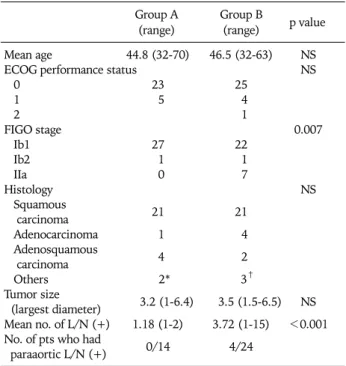
Table 1. Patients characteristics (N=58)
Group A Group B
p value(range) (range)
Mean age 44.8 (32-70) 46.5 (32-63) NS
ECOG performance status NS
0 23 25
1 5 4
2 1
FIGO stage 0.007
Ib1 27 22
Ib2 1 1
IIa 0 7
Histology NS
Squamous 21 21
carcinoma
Adenocarcinoma 1 4
Adenosquamous 4 2
carcinoma
Others 2* 3†
Tumor size 3.2 (1-6.4) 3.5 (1.5-6.5) NS (largest diameter)
Mean no. of L/N (+) 1.18 (1-2) 3.72 (1-15) <0.001
No. of pts who had 0/14 4/24
paraaortic L/N (+)
ECOG: Eastern Cooperative Oncology Group, FIGO: International Federation of Gynecology and Obstetrics, L/N: lymph node, NS: not singnificant, pts: patients
*squamous cell+adenocarcinoma, squamous cell+small cell neuro- endocrine, †squmaous cell+adenosquamous
juvant chemoradiotherapy was evaluated.
MATERIALS AND METHODS 1. Patient selection
Between January 1999 and December 2007, 255 patients with histologically confirmed with invasive carcinoma of the uterine cervix underwent radical hysterectomy and pelvic lymphadenectomy with or without paraaortic lymphadenec- tomy at the Department of Obstetrics and Gynecology, Ajou University School of Medicine. Eligible patients were those with FIGO stage Ib-IIa with high risk factors such as positive lymph nodes or positive parametrium, or positive vaginal re- section margins. A total of 58 patients were eligible for this study. The Institutional Review Board approved this study.
Patients were divided into two Groups according to risk factors. The Group A were patients with negative para- metrium, negative vaginal resection margins, and only unilat- eral lymph node metastasis, which numbered not more than two. The Group B had either bilateral pelvic lymph node in- volvement or more than 2 lymph node8 involvement, or pos- itive PM with lymph node involvement. The recurrence and survival rates of the two Groups of patients were compared.
2. Treatment
All 58 patients underwent radical hysterectomy with bilateral pelvic lymphadenectomy with or without paraaortic lymphade- nectomy, and all patients received concurrent chemoradiation.
The first anticancer chemotherapy cycle was initiated within 2-3 weeks after surgery and then repeated for a total of four cy- cles at 4-week intervals. Each chemotherapy cycle consisted of cisplatin (70 mg/m2) on day 1 of each cycle, continuous infusion of 5-FU (1000 mg/m2/day) from days 2 to 5, and concurrent chemotherapy and radiotherapy during the second and third cycles. Radiotherapy of the pelvis did not commence at the be- ginning of the first chemotherapy cycle but at the beginning of the second cycle in order to avoid wound disruption. Each pa- tient received external beam radiation therapy (EBRT), utiliz- ing a 15MV linear accelerator (CLINAC 2000C/D, Varian), to the whole pelvis for a total dose of 45 Gy. The daily fraction size was 1.8 Gy, administered 5 times per week. Four-field box tech- nique was used to spare the small bowel anterior to the iliac nodes. The superior border of the pelvic portal was at the L4-L5 interspace to include all the external iliac and hypogastric lymph nodes. The fields were extended to the T12-L1 interspace for coverage of the paraaortic nodes in cases with high pelvic nodes involvement or paraaortic node involvement. For pa- tients with positive parametria and/or positive surgical mar- gins, barchytherapy of 28 Gy, with 4 Gy per fraction, was ad- ministered to boost doses to the upper vaginal or parametrial tissues. After completion of all whole treatment, the patients were followed every 3 months during the first 2 years, and every 6 months thereafter. Clinical examination, vaginal stump cytol- ogy (and/or biopsy), chest x-ray, and abdominopelvic MRI were
performed. Patients with recurrent disease were managed with cisplatin-based salvage chemotherapy.
3. Evaluation of treatment
Overall survival was measured from the date of radical hys- terectomy to the date of death, or for living patients, to the date of last follow up. Disease-free survival was measured from the date of radical hysterectomy to the date of detection of recurrence. Side effects during chemotherapy were as- sessed according to the GOG toxicity criteria. Late toxicity of radiation was assessed using the Late Radiation Morbidity Scoring Scheme of the Radiation Therapy Oncology Group.
4. Statistical analysis
Statistical analysis was performed by linear association and independent sample test. The overall and progression-free survival curves were calculated by the Kaplan-Meier method.
p values less than 0.05 were considered statistically signifi- cant. Analyses were performed using SPSS ver. 12.0k (SPSS Inc., Chicago, USA).
RESULTS
Between January 1999 to December 2007, 58 patients with early stage cervix cancer received postoperative adjuvant concurrent chemoradiation after radical hysterectomy and were enrolled
Table 3. Patients’ characteristics who had disease recurrence (N=9)
Patient No.* Age Stage Pathology PM No. of pelvic L/N (+) Site of recurrence DFS Status 1
2 3 4 5 6 7 8 9
44 57 38† 52‡ 39 34 57 41 39
Ib Ib Ib Ib Ib Ib Ib Ib Ib
SCC SCC SCC SCC
Adenocarcinoma SCC
Adenocarcinoma Adenosquamous Adenosquamous
0 0 0 0 + + 0 + +
1 1 3 1 1 9 4 15 5
Spine, neck L/N Vaginal stump, lung Supraclavicular L/N Lung
Bowel serosa Pelvic sidewall Lung, pelvic sidewall Pelvic sidewall Intrabdominal seeding
37 23 7 35 6 4 6 9 18
ALD ALD DOD NED§ DOD DOD DOD ALD ALD PM: parametrium, L/N: lymph node, DFS: disease free suvival, SCC: squamous cell carcinoma, DOD: dead of disease, NED: no evidence of disease, ALD: alive with disease
*patient no.1, 2 in group A; patient no.3-9 in group B, †paraaortic L/N (+), ‡resection margin (+), §s/p lung segmentectomy
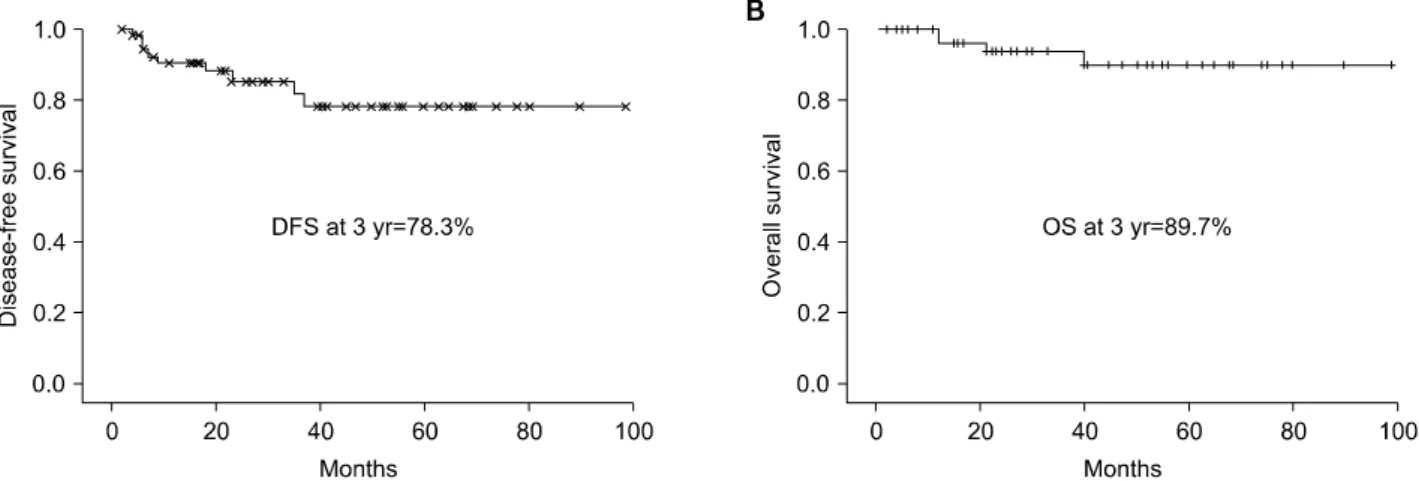
Fig. 1. (A) Kaplan-meier estimates of disease-free survival curve for all the 58 patients who were treated with adjuvant concurrent chemo- radiation after radical hysterectomy. (B) Kaplan-Meier estimates of overall survival curve for all the 58 patients who were treated with ad- juvant concurrent chemoradiation after radical hysterectomy.
Table 2. Patients who had at least one episode of grade 3/4 toxicity
Group A Group B
p value(N=28) (N=30)
Hematologic NS
Anemia 2 2
Neutropenia 2 1
Thrombocytopenia 1 2
Non-hematologic NS
Nausea/Vomiting 3 3
Diarrhea 1 0
Neuropathy 0 1
in this study. Table 1 shows the patients’ characteristics.
The median age was 45 years (range, 32 to 70 years). The number of patients according to each FIGO stage was 49 in stage IB1 (84.5%), 2 in stage IB2 (3.5%), and 7 in stage IIA (12%). The histology was squamous cell carcinoma in 42 pa- tients (72.4%) and other cell types in 16 patients (27.6%).
The number of patients in Group A was 28, and that of Group
B was 30. There was no statistical difference in terms of age, histopathologic distribution, and tumor size when compared each other. But patients with stage IIa were all in Group B (Table 1).
A total of 53 (91.3%) patients completed 4 cycles of planned chemotherapy, while 3 patients completed 3 cycles and 2 pa- tients completed 2 cycles only. Reasons for discontinuation of chemotherapy were severe leukopenia, severe nausea and vomiting, poor performance status, and refusal of further che- motherapy by the patient (Table 2).
Seven (12.1%) out of the 58 patients developed grade 2 gas- trointestinal toxicity induced by radiotherapy, and responded to conservative management such as diet modification or cor- ticosteroid therapy.
During a median follow-up period of 34 months (range, 6 to 102 months), 9 patients (15.5%) experienced recurrence, of whom 2 patients (7.1%) were in Group A, and 7 patients (23.3%) were in Group B (all 9 patients with Stage Ib disease).
The sites of failure were mainly distant recurrences (Table 3).
At 3 years, the estimated progression-free survival rate of all
Fig. 2. (A) Comparison of Kaplan-Meier estimates of disease-free survival curve between Group A and B (88.2% vs. 68.2%, p=0.042). (B) Comparison of Kaplan-Meier estimates of overall survival curve between Group A and B (100% vs. 78.8%, p=0.034).
58 patients was 78.3% (95% CI, 65-91) (Fig. 1A), and the over- all survival rate was 89.7% (95% CI, 79-99)(Fig. 1B). Group A had significantly better 3-year progression-free survival than Group B (88.2% vs. 68.2%, p=0.042) (Fig. 2A), and 3- year overall survival rate (100% vs. 78.8%, p=0.034) (Fig. 2B).
DISCUSSION
Concurrent chemoradiation is the standard adjuvant treat- ment of choice in early stage disease with high risk for re- currence such as positive pelvic lymph nodes, positive para- metrial extension, or positive vaginal resection margins at the completion of radical hysterectomy.1 It is also a primary treat- ment of choice in locally advanced stage disease.9 The in- clusion of 3 cycles of cisplatin plus 5-FU chemotherapy sub- stantially reduced both local and distant recurrences of cer- vical cancer, leading to higher overall and disease-free survival rates. Although chemotherapy increased the hematologic tox- icity, this effect was reversible and the incidence of late side ef- fects was similar in the chemoradiation and radiation only groups. We also reported manageable side effects in our pre- vious report.10
Among several high risk factors, lymph node metastasis has been one of the strongest prognostic factors in patients with cervical cancer.11,12 Lymph node status is an important factor when deciding which treatment is appropriate. As for the number of positive nodes, the prognostic significance of this factor is controversial. Some reports did not find that it corre- lated significantly with prognosis7,13 while others reported contrasting results.8,14,15 Also, other nodal characteristics, such as laterality of positive nodes, common iliac node in- volvement, and paraaortic lymph node metastasis, were found to be independent prognostic factors in several reports.11,16 With regard to results of adjuvant CCRT, an intergroup trial involving the Gynecologic Oncologic Group, the Southwest- ern Oncology Group, and the Radiation Therapy Oncology Group reported that postoperative concurrent chemradiation
had 4-year disease free survival (DFS) of 81%.17 In this study, DFS of the total 58 patients was 78.3%, which corresponds to the interGroup result. But when the patients were divided in- to two groups, the DFS was significantly different (Group A 88.2% vs. Group B 68.2%, p=0.042). Five patients in Group B had disease recurrence within 9 months, and the sites of re- currence were mainly distant recurrences. The survival differ- ence observed in the present study may be possibly due to more prominent micrometastases in the Group B patients.
This hypothesis can be supported from a report that observed pelvic lymph node involvement persisted in about 16% of pa- tients after primary chemoradiation for locally advanced cer- vical cancer.18
Recently Choi et al.19 reported a phase II study of con- solidation chemotherapy after concurrent chemoradiation in locally advanced cervical cancer, based on Wong et al’s hy- pothesis that too short a duration of chemotherapy may not effectively eradicate micrometastases.20 The aim of the con- solidation chemotherapy was the complete eradication of po- tential undetected micrometastases. Thirty patients (30/32, 94%) received 3 more cycles of consolidation chemotherapy (5-FU+ cisplatin, total 6 cycles). Consolidation chemo- therapy after CCRT was well tolerated in general and led to an encouraging survival rate.19 Compared with a 3 year PFS rate of 58-69% with CCRT alone,21-23 the trials by Choi et al.19 showed a 3 year PFS of 83%. Although 3 more cycles of con- solidation chemotherapy after CCRT has not yet been vali- dated in randomized controlled trial, it is our opinion that this may be applicable for such patients as in Group B for enhanc- ing the survival rate.
Although there are some limitations in this study due to the small number of patients and its retrospectiveness, the sur- vival difference observed in this study suggests that we should pursue more effective treatment for the patients with higher risk for treatment failure (bilateral pelvic lymph node involve- ment, more than 2 lymph node involvement, positive PM with lymph node involvement). For enhancement of survival of pa-
tients with very high risk Group such as those in Group B of our study, it is our opinion that the concept of consolidation chemotherapy (such as 2-3 more cycles of 5-FU+cisplatin) af- ter primary CCRT for locally advanced cervical cancer may be extended to the area of adjuvant treatment after radical hysterectomy. This hypothesis would be worthy of a pro- spective phase II study for confirmation.
REFERENCES
1. Peters WA 3rd, Liu PY, Barrett RJ 2nd, Stock RJ, Monk BJ, Berek JS, et al. Concurrent chemotherapy and pelvic radiation therapy compared with pelvic radiation therapy alone as adjuvant ther- apy after radical surgery in high-risk early-stage cancer of the cervix. J Clin Oncol 2000; 18: 1606-13.
2. Piver MS, Chung WS. Prognostic significance of cervical lesion size and pelvic node metastases in cervical carcinoma. Obstet Gynecol 1975; 46: 507-10.
3. Hsu CT, Cheng YS, Su SC. Prognosis of uterine cervical cancer with extensve lymph node metastases: special emphasis on the value of pelvic lymphadenectomy in the surgical treatment of uterine cervical cancer. Am J Obstet Gynecol 1972; 114: 954-62.
4. Nahhas WA, Sharkey FE, Whitney CW, Husseinzadeh N, Ch- ung CK, Mortel R. The prognostic significance of vascular chan- nel involvement and deep stromal penetration in early cervical carcinoma. Am J Clin Oncol 1983; 6: 259-64.
5. Martimbeau PW, Kjorstad KE, Iversen T. Stage IB carcinoma of the cervix, the Norwegian Radium hospital: II. Results when pelvic nodes are involved. Obstet Gynecol 1982; 60: 215-8.
6. Van Nagel JR Jr, Donaldson ES, Parker JC, Van Dyke AH, Wood EG. The prognostic significance of cell type and lesion size in pa- tients with cervical cancer treated by radical surgery. Gynecol Oncol 1977; 5: 142-51.
7. Delgado G, Bundy B, Zaino R, Sevin BU, Creasman WT, Major F.
Prospective surgical-pathological study of disease-free interval in patients with stage IB squamous cell carcinoma of the cervix:
a Gynecologic Oncology Group study. Gynecol Oncol 1990; 38:
352-7.
8. Inoue T, Morita K. The prognostic significance of number of pos- itive nodes in cervical carcinoma stages IB, IIA, and IIB. Cancer 1990; 65: 1923-7.
9. Morris M, Eifel PJ, Lu J, Grigsby PW, Levenback C, Stevens RE, et al. Pelvic radiation with concurrent chemotherapy compared with pelvic and para-aortic radiation for high-risk cervical cancer. N Engl J Med 1999; 340: 1137-43.
10. Ryu HS, Chun M, Chang KH, Chang HJ, Lee JP. Postoperative adjuvant concurrent chemoradiotherapy improves survival rates for high-risk, early stage cervical cancer patients. Gynecol Oncol 2005; 96: 490-5.
11. Morice P, Castaigne D, Pautier P, Rey A, Haie-Meder C, Leblanc M, et al. Interest of pelvic and paraaortic lymphadenectomy in patients with stage IB and II cervical carcinoma. Gynecol Oncol 1999; 73: 106-10.
12. Michel G, Morice P, Castaigne D, Leblanc M, Rey A, Duvillard P.
Lymphatic spread in stage Ib and II cervical carcinoma: anatomy and surgical implications. Obstet Gynecol 1998; 91: 360-3.
13. Samlal RA, van der Velden J, Schilthuis MS, Gonzalez Gonzalez D, Ten Kate FJ, Hart AA, et al. Identification of high-risk Groups among node-positive patients with stage IB and IIA cervical carcinoma. Gynecol Oncol 1997; 64: 463-7.
14. Tinga DJ, Timmer PR, Bouma J, Aalders JG. Prognostic sig- nificance of single versus multiple lymph node metastases in cervical carcinoma stage IB. Gynecol Oncol 1990; 39: 175-80.
15. Stock RG, Chen AS, Flickinger JC, Kalnicki S, Seski J. Node- positive cervical cancer: impact of pelvic irradiation and pat- terns of failure. Int J Radiat Oncol Biol Phys 1995; 31: 31-6.
16. Lin HH, Cheng WF, Chan KW, Chang DY, Chen CK, Huang SC.
Risk factors for recurrence in patients with stage IB, IIA, and IIB cervical carcinoma after radical hysterectomy and post- operative pelvic irradiation. Obstet Gynecol 1996; 88: 274-9.
17. Wertheim MS, Hakes TB, Daghestani AN, Nori D, Smith DH, Lewis JL Jr. A pilot study of adjuvant therapy in patients with cer- vical cancer at high risk of recurrence after radical hysterectomy and pelvic lymphadenectomy. J Clin Oncol 1985; 3: 912-6.
18. Houvenaeghel G, Lelievre L, Rigouard AL, Buttarelli M, Jacqu- emier J, Viens P, et al. Residual pelvic lymph node involvement after concomitant chemoradiation for locally advanced cervical cancer. Gynecol Oncol 2006; 102: 74-9.
19. Choi CH, Lee JW, Kim TJ, Kim WY, Nam HR, Kim BG, et al.
Phase II study of consolidation chemotherapy after concurrent chemoradiation in cervical cancer: preliminary results. Int J Radiat Oncol Biol Phys 2007; 68: 817-22.
20. Wong LC, Choo YC, Choy D, Sham JS, Ma HK. Long-term fol- low-up of potentiation of radiotherapy by cis-platinum in ad- vanced cervical cancer. Gynecol Oncol 1989; 35: 159-63.
21. Eifel PJ, Winter K, Morris M, Levenback C, Grigsby PW, Cooper J, et al. Pelvic irradiation with concurrent chemotherapy versus pelvic and para-aortic irradiation for high-risk cervical cancer: an update of radiation therapy oncology Group trial (RTOG) 90-01.
J Clin Oncol 2004; 22: 872-80.
22. Whitney CW, Sause W, Bundy BN, Malfetano JH, Hannigan EV, Fowler WC Jr, et al. Randomized comparison of fluorouracil plus cisplatin versus hydroxyurea as an adjunct to radiation therapy in stage IIB-IVA carcinoma of the cervix with negative para-aortic lymph nodes: a Gynecologic Oncology Group and Southwest Oncology Group study. J Clin Oncol 1999; 17: 1339-48.
23. Rose PG, Bundy BN, Watkins EB, Thigpen JT, Deppe G, Mai- man MA, et al. Concurrent cisplatin-based radiotherapy and chemotherapy for locally advanced cervical cancer. N Engl J Med 1999; 340: 1144-53.