• 검색 결과가 없습니다.

Traditional Korean Medical Treatment for Dizziness and Gait Instability due to Cerebellar Infarction: A Case Report

N/A
N/A
Protected

Academic year: 2021

Share "Traditional Korean Medical Treatment for Dizziness and Gait Instability due to Cerebellar Infarction: A Case Report"

Copied!
6
0
0

로드 중.... (전체 텍스트 보기)

전체 글

(1)

This case study reports the effect of Korean medicine treatments on a 73 year-old female who had a cerebellar infarction. She was hospitalized for 120 days (without visiting Western medicine hospital) where she was treated with acupuncture, herbal decoction, pharmacopuncture, chuna, moxibustion and physiotherapy.

Following treatment, her symptoms of dizziness were evaluated using the numeric rating scale and showed pain had reduced (3 to 0). The K-Modified Barthel, showed that life performance had improved (15 to 74), and the Berg balance scale showed an improved balance (2 to 32). Steps per minute and gait posture at stance phase for ataxia also showed improvement. This case report shows that Korean medicine treatment is effective in alleviating dizziness and improved gait instability caused by cerebellar infarction.

©2020 Korean Acupuncture & Moxibustion Medicine Society. This is an open access article under the CC BY- NC-ND license (http://creativecommons.org/licenses/by-nc-nd/4.0/).

Article history:

Submitted: April 18, 2020 Revised: May 01, 2020 Accepted: June 01, 2020 Keywords:

cerebellar ataxia, cerebral infarct, dizziness, gait, Korean traditional medicine

https://doi.org/10.13045/jar.2020.00101 pISSN 2586-288X eISSN 2586-2898

Case Report

Traditional Korean Medical Treatment for Dizziness and Gait Instability due to Cerebellar Infarction: A Case Report

You Jung Lee 1 , Jae Eun Jeong 1 , Yeon Ah Choi 1 , Jang Mi Park 2 , Seung Min Lee 2 , Eun Yong Lee 2 , Cham Kyul Lee 2 , Na Young Jo 1 , Jeong Du Roh 1, *

1 Department of Acupuncture and Moxibustion Medicine, Jecheon Hospital of Korean Medicine, Semyung University, Jecheon, Korea 2 Department of Acupuncture and Moxibustion Medicine, Chungju Hospital of Korean Medicine, Semyung University, Chungju, Korea

ABSTRACT

Journal of Acupuncture Research

Journal homepage: http://www.e-jar.org

Introduction

Cerebellar infarction is relatively rare and accounts for only 1.5%

to 4.2% of all brain infarctions [1]. Diagnosis is difficult because presentation is nonspecific with symptoms such as dizziness or systemic weakness. However, prompt diagnosis and treatment is critical in reducing serious complications such as cardiopulmonary dysfunction [2].

The cerebellum, located behind the brainstem, and separated from the cerebrum by the tentorium cerebelli, is involved in balance, regulation of posture, and movement control. The cerebellum is supplied by the superior cerebellar arteries (SCA), anterior inferior cerebellar arteries (AICA) and posterior inferior cerebellar arteries (PICA) originating from the vertebral artery.

Abnormalities these blood vessels produce varied symptoms [3].

Central vertigo is a particularly common condition in disorders of the spinal cord-basal artery circulation that supplies blood to the brainstem, cerebellum, and vestibular organs. In addition,

dizziness may be caused by isolated lesions of a vestibular nucleus, acute cerebellar infarction or infarction of the AICA, Wallenberg’s syndrome, and subclavian arterial syndrome associated with infarction of the PICA. In ataxia due to cerebellar infarction, the Romberg’s sign is negative, with the ability to maintain stability when standing, walking, or even sitting with balance. The body shows an irregular shape, sometimes tilting in one direction, and twisting in the other direction [4,5].

In most Korean medicine studies, patients with dizziness and ataxia due to cerebellar infarction were initially treated with Western medicine [6-10]. Further, dizziness and gait instability were evaluated subjectively. There were few objective evaluations of walking speed or posture although in cerebellar infarction patients, all muscle movements slow down, and walking speed decreases due to a decreased cerebellar function [11]. In this cerebellar infarction case, the symptoms of dizziness, cerebellar ataxia, right facial paralysis, and hearing loss were objectively evaluated during the course of Korean medicine treatment.

* Corresponding author. Jeong Du Roh

Department of Acupuncture and Moxibustion Medicine, Jecheon Hospital of Korean Medicine, Semyung University, Jecheon, Korea E-mail: [email protected]

ORCID: You Jung Lee https://orcid.org/0000-0003-2471-6743, Jae Eun Jeong https://orcid.org/0000-0001-9365-4991, Yeon Ah Choi https://orcid.org/0000-0003-1075-5119, Jang Mi Park https://orcid.org/0000-0002-2211-053X, Seung Min Lee https://orcid.org/0000-0002-3870-3102, Eun Yong Lee https://orcid.org/0000-0001-5819-1602, Cham Kyul Lee https://orcid.org/0000-0002-0156-310X, Na Young Jo https://orcid.org/0000-0003-2802-2626, Jeong-Du Roh https://orcid.org/0000-0002-5512-6765

©2020 Korean Acupuncture & Moxibustion Medicine Society. This is an open access article under the CC BY-NC-ND license (http://creativecommons.org/licenses/by-nc-

nd/4.0/).

(2)

Case Report Patient

Ο Ο Ο (F/73) Chief complaint

The patient suffered from rotational dizziness and had a numeric rating scale (NRS) score of 3, and was unable to stand up or sit because of the decline of her balance. The patient also suffered from right facial palsy, which was a House-Brackmann scale (HBs) grade of 3/4, and reported that only 10% of sound was heard.

Onset

November 19 th , 2019.

CT result: Localized right inferior cerebellar infarction, probably recent (Fig. 1).

History

1. Hypertension was diagnosed in 1989 and medication was prescribed.

2. Cardiovascular was diagnosed in 1991, and medication was started.

3. Lumbar herniated nucleus pulposus was diagnosed in 2017 and she was operated on.

Presenting illness

The patient visited the Semyung University Korean Medicine Hospital on November 20 th , 2019 due to sudden right facial paralysis and persistent dizziness.

Duration of treatment

From November 20 th , 2019 to February 29 th , 2020 Patient protection policy on patient information use

This was a retrospective study where the patient’s chart was reviewed. The study was exempt from deliberation by the Institutional Review Board of Semyung University Korean Medicine Hospital (IRB No.: SMJOH-EX-2020-02).

Treatments Acupuncture

A Korean medicine doctor with 2 years of clinical experience, performed acupuncture at the acupoints that the patient responded strongly based on the Textbook of Acupuncture and Moxibusition Medicine: Baekhoe (GV20), Sasinchong (EX-HN1), Joksamni (ST36), Yepung (TE17), Sajukgong (TE23), Yangbaek (GB14), Cheonggung (SI19), Jichang (ST4), Hyeopgeo (ST6), Sabaek (ST2), Georyo (ST3), Daeyeong (ST5), Ashihul,. Disposable 0.25

× 30 mm, stainless-steel needles (Dongbang Acupuncture Inc., Boryeong, Korea) were used. Acupuncture was performed twice a day and each session duration was about 15 minutes (Table 1).

Herbal medicine

Ligigeopoongsan was prescribed from November 20 th , 2019 to November 21 st , 2019. Gami-yijin-tang was prescribed November 22 nd , 2019. Sipjeondaebo-tang was prescribed from November 23 th , 2019 to January 19 th , 2020. Samchulkunbi-tang was prescribed from January 20 th , 2020 to January 29 th , 2020. One packet was consumed 3 times a day, after meals (Table 2).

Item Detail Details

1. Acupuncture rationale 1a) Style of acupuncture Traditional Korean acupuncture

1b) Reasoning for treatment provided Historical context, literature sources and expert’s opinion 2. Details of needling 2a) Number of needle insertions per subject per session 20-30

2b) Name of points used GV20, Ex-HN1, ST36, Rt. ST2, ST4, ST6, TE17, TE21, TE23, LI20, BL2, GB1, GB2, GB14, SI19, CV24, GV26, GB7, GB21, LI11, GB31, GB39

Painfull points of both gastrocnemius and glutaeus medius

2c) depth of insertion 15-25 mm

2d) Response sought De qi response

2e) Needle stimulation Manual

2f) Needle retention time 0/15 min

2g) Needle type 0.25 (diameter) × 30 (length) mm

Dongbang stainless steel disposable acupuncture needle

3. Treatment regimen 3a) Number of treatment sessions 168

3b) Frequency and duration of treatment sessions Twice daily for 102 days 4 Other components of treatment 4a) Details of other interventions administered to the

acupuncture group Pharmacopucture, Herbal decoction, IR, Chuna, Moxibustion,

ICT, SSP, FES, Physiotherapy, Western medicine treatment 5. Practitioner background 5a) Description of participating acupuncturists

(qualification of professional affiliation, years in acupuncture practice, other relevant experience)

Resident of department of Acupuncture and Moxibustion with more than 2 years of experience

6. Control of comparator interventions 6a) Not applicable Not applicable

Table 1. Revised Standard for Reporting Interventions in Clinical Trials of Acupuncture (STRICTA).

(3)

Pharmacopucture

Pharmacopuncture was performed from November 20 th , 2019 to February 29 th , 2020, where Cervi Pantortichum Cornu (CC) (AJ pharmacopuncture, Seoul, Korea) was injected at Yepung (TE17), Sajukgong (TE23), Yangbaek (GB14), Cheonggung (SI19), Jichang (ST4), Hyeopgeo (ST6), Sabaek (ST2), Georyo (ST3), Daeyeong (ST5), and in the painful points of both lower limbs. The volume injected at each acupoint during pharmacopuncture was about 0.1 mL and an insulin syringe (Shina Corporation, Seoul, Korea) was used.

Chuna

The Korean medicine doctor performed myofascial release technique and muscle energy technique (MET) every evening, Monday to Friday. Each session was performed for about 10-15 minutes during the period from January 16 th , 2020 to February 27 th , 2020. The doctor pressed the trigger points of the patient’s lower limbs, maintained compression for 5 seconds, released the trigger points for 2-3 seconds, and repeated the process for 2 minutes. The doctor then pressed the same trigger point with more strength than the first and second application of pressure.

The Korean medicine doctors performed the MET 3-4 times a day, for 7 seconds on the plantar flexors (gastrocnemius, soleus). In

the supine position, the doctor positioned the ankle on each foot for flexing and tested for resistance whilst flexing the ankle. The doctor gave the patient the same force in the opposite direction to point the foot and instructed the patient to exhale for 7 seconds.

With 20% of the maximum force, the patient could point and flex the foot whilst inhaling. This was repeated 4-5 times.

Moxibustion

Indirect moxibustion (Dongbang Medical, Boryeong, Korea) was performed for 10 minutes per day for 5 days on the right side of the face at Gwanwon (CV4). The treatment was performed during the hospitalization period from November 21 st , 2019 to February 27 th , 2020.

Physiotherapy

Hot packs, transcutaneous electrical nerve stimulation, inter- current therapy, functional electrical stimulation, and rehabilitation exercise for 20 minutes were performed from November 21 st , 2019 to February 27 th , 2020.

Western medicine treatment

Western medication previously prescribed including treatment for hypertension, preventing heart attacks and angina were

Ligigeopoongsan Gamiyjin-tang Sipjundaebo-tang Samchulkunbi-tang

Pueraria thunbergiana 8 Uncaria sinensis 8 Bombyx mori L 8

Atractylodes chinensis 6 Panax ginseng 4

Citrus sunki 6 Glycyrrhiza glabra 5 Artractylodes japonica 4

Schizonepeta tenuifolia 6 Angelica gigas 5 Poria cocos 4

Pinellia pedatisecta 4 Pinellia ternate 8 Zizyphus jujube 4 Magnolia officinalis 4

Arisaema amurense 4 Citrus sunki 4 Poria cocos 5 Citrus sunki 4

Crataegus pinnatifida 4 Poria cocos 4 Paeonia albiflora 5 Crataegus pinnatifida 4

Citrus aurantium 4 Artractylodes japonica 4 Artractylodes japonica 5 Poncirus trifoliate 3.2

Ostericum koreanum 4 Inula helenium 2 Zingiber officinale 4 Paeonia albiflora 3.2

Saposhnikovia divaricate 4 Syzygium aromaticum 2 Rehmannia glutinosa 5 Amomum villosum 2

Citrus reticulate 4 Amomum villosum 2 Cinnamomum cassia 4 Triticum aestivum 2

Platycodon grandiflorum 4 Glycyrrhiza glabra 2 Panax ginseng 5 Hordeum vulgare 2

Scutellaria baicalensis 4 Cnidium officinale 5 Glycyrrhiza glabra 2

Angelica dahurica 3 Astragalus membranaceus 4 Zingiber officinale 4

Cnidium officinale 3 Zizyphus jujube 4

Glycyrrhiza glabra 3 Aconitum carmichaeli 2

Vitex rotundifolia 2

Table 2. Herbal Decoction Prescribed to the Patient.

(4)

continued during the hospital admission period (Table 3).

Additional Western medicine was prescribed on the 23 rd January for glycemic control in Type 2 diabetes.

Evaluation and progress

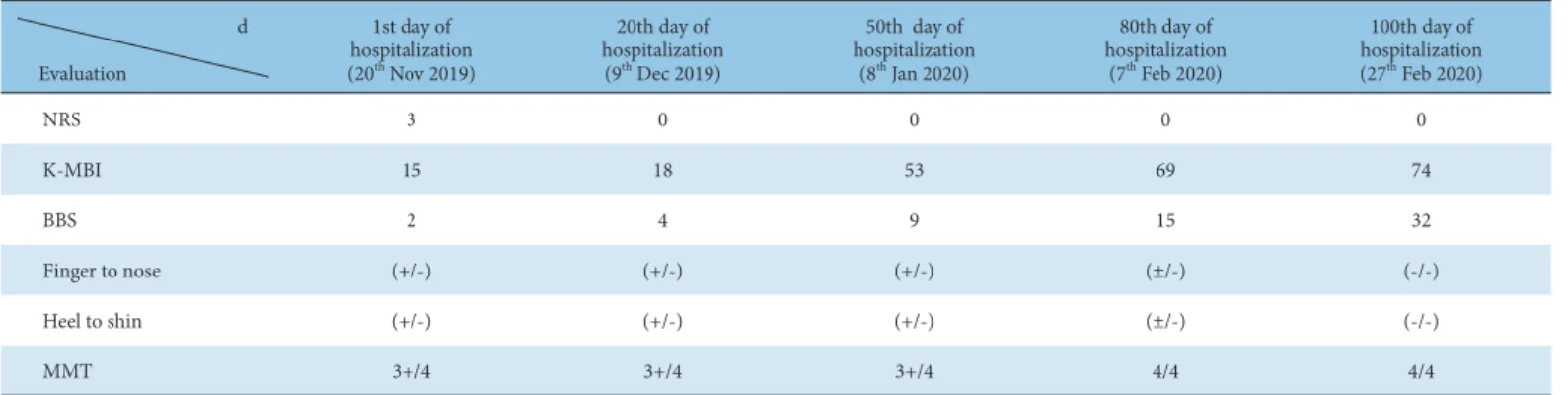
NRS The NRS was used to assess the patient’s dizziness and was used every day. A score of 0 indicated no pain, and a score of 10 indicated unacceptable pain. The patient was continuously aware of rotational dizziness resulting in a NRS score of 3 at the time of hospitalization. The NRS score reduced to 0 by the 20 th day of hospitalization. There was no dizziness experienced from Day 20 onwards (Table 4).

K-Modified Barthel index

The K-Modified Barthel index (K-MBI) is a widely used tool for evaluating life performance. The assessment items consist of 10 items including personal hygiene, bathing, eating, stool treatment, climbing stairs, dressing, stool control, urine control, walking, and chair to bed movement [12]. The patient had a K-MBI score of 15 on admission where she required aid with personal hygiene, going to the toilet, and eating. On hospitalization Day 20 (K-MBI: 18) the patient was able to eat with minimal assistance. On Day 50,

Medication Date

Normal saline 1L vitamin B1, C1 mix IV 10 gtt 20

th

to 21

st

Nov 2019 5% Dextrose 1L vitamin B1, C1 mix IV10 gtt 22

nd

to 27

th

Nov 2019 Saeronamin injection 250 mL vitamin B1,

C1 mix 10 gtt 28

th

Nov to 2

nd

Dec 2019

Aspirin protect tablet 1T q.d Previously prescribed drugs

Isotril ER tablet 60 mg 1T q.d Emdipin tablet 1T q.d Trajenta-duo tablet 1T q.d

Previously prescribed drugs

Previously prescribed drugs

23

rd

Jan 2020 IV, intra-venous injection; gtt, quttae; q.d, quaque die.

Table 3. Western Medication.

d Evaluation

1st day of hospitalization (20

th

Nov 2019)

20th day of hospitalization

(9

th

Dec 2019)

50th day of hospitalization

(8

th

Jan 2020)

80th day of hospitalization

(7

th

Feb 2020)

100th day of hospitalization (27

th

Feb 2020)

NRS 3 0 0 0 0

K-MBI 15 18 53 69 74

BBS 2 4 9 15 32

Finger to nose (+/-) (+/-) (+/-) (±/-) (-/-)

Heel to shin (+/-) (+/-) (+/-) (±/-) (-/-)

MMT 3+/4 3+/4 3+/4 4/4 4/4

BBS, Berg balance scale; K-MBI, K-modified Barthel index; MMT, manual muscle testing; NRS, numeric rating scale.

Table 4. Evaluation During the Days of Hospitalization.

Fig. 1. CT of the localized right inferior cerebellar infarction (Semyung University Korean Medicine hospital on November 20th, 2019). The CT scan shows a localized right inferior cerebellar infarction which is probably recent.

CT, computerized tomography.

Fig.1. CT of the localized right inferior cerebellar infarction (Semyung University Korean Medicine hospital on November 20th, 2019) The CT scan shows a localized right inferior cerebellar infarction which is probably recent.
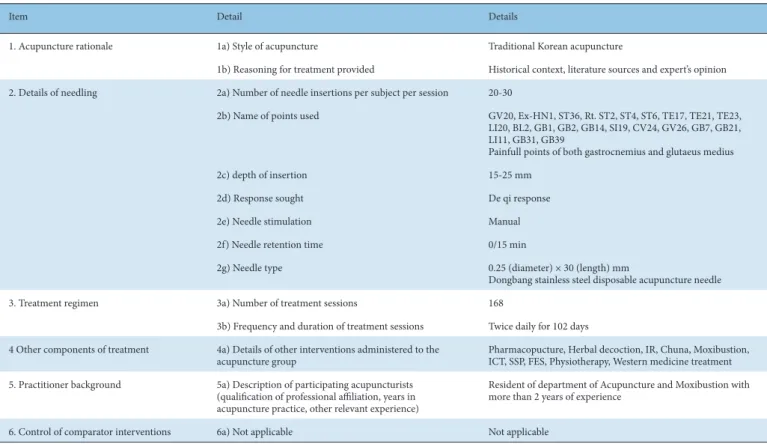
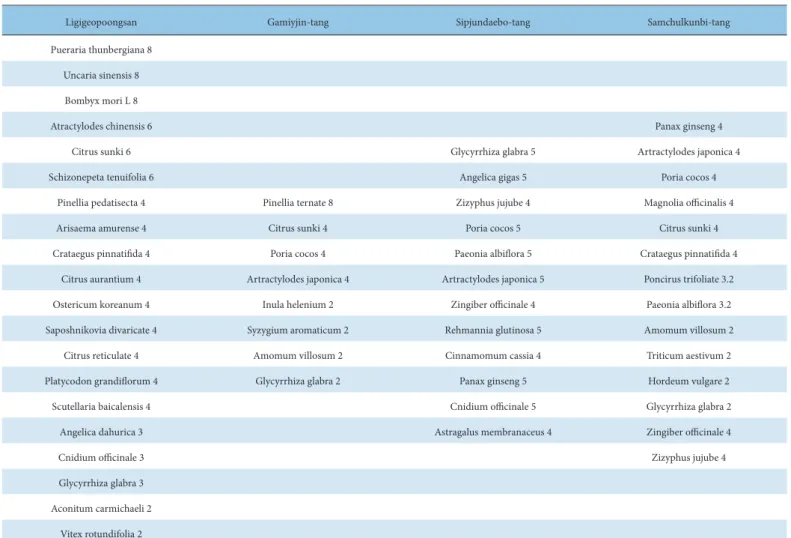
Fig. 2. Improvements over time in the K-MBI and BBS scores.

K-MBI, K-modified Barthel index ; BBS, Berg balance scale.

Fig.2. Improvements over time in the K-MBI and BBS scores.

K-MBI, K-modified Barthel index ; BBS, Berg balance scale 0

10 20 30 40 50 60 70 80

K-MBI

K-MBI 0 5 10 15 20 25 30 35

BBS

BBS

Fig.2. Improvements over time in the K-MBI and BBS scores.

K-MBI, K-modified Barthel index ; BBS, Berg balance scale 0

10 20 30 40 50 60 70 80

K-MBI

K-MBI 0 5 10 15 20 25 30 35

BBS

BBS

the patient achieved bladder control and her score improved to

53 points. On Day 80 (K-MBI: 69) the patient was able to gargle

and wash her face with moderate help. On Day 100 (K-MBI: 74)

the patient was able to wash her face, brush her teeth, and eat

independently (Table 4; Fig. 2).

(5)

Berg balance scale

Berg balance scale (BBS) is a tool for evaluating balance including standing, moving, picking up objects off the floor, and rotating which are related to performing daily life movements. It can be used to assess the balance and gait of stroke patients [12].

Upon admission to the hospital, the patient was unable to sit independently and the BBS score was 2 points. On Day 20 (BBS score 4) the patient was able to sit unaided. On Day 50 (BBS score 9) she continued to support herself with both feet on the floor, had improvement in sitting without support, and was able stand independently. She began using a walker with supervision on Day 58. On Day 80 (BBS score 15) the patient was able to turn her head whilst standing, to see an object behind her, and make a 360-degree turn under supervision. On Day 100 (BBS score 32), the patient was able to sit from a standing position using her arms for support, and was able to confidently lift her arm over 90 degrees with a reach of 25 cm or more in the standing position (Table 4; Fig. 2).

Evaluation of cerebellar function (finger to nose, heel to shin tests)

At the time of admission, both finger to nose and heel to shin evaluations as a measure of smooth coordination, were positive on the right hand side, but on Day 80, accuracy was observed (80%) compared with her performance at admission. On Day 100, the finger to nose and heel to shin test was negative (Table 4).

Manual muscle testing

This test was performed to evaluate the strength of the right- hand side hemiplegic area. As a result of evaluation of right hemiplegia at the time of admission, the manual muscle testing score improved and was observed to be Gr 3+ / Gr 4, but from the 80th day of admission, the manual muscle testing score was observed to be Gr 4/ Gr 4 (Table 4).

Walking speed and gait posture evaluation

The number of steps (minutes) per minute were measured when

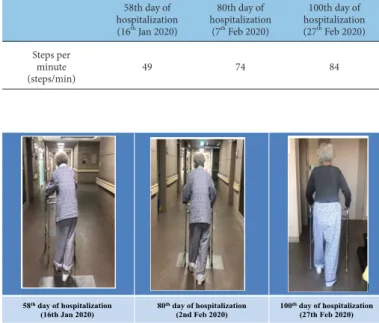
walking using a walker where the posture whilst walking and at stance phase was also observed. Once the patient was able to use the walker with supervision the number of steps per minute were measured. The walking speeds on Days 58, 80, and 100 were 49, 74, and 84 steps / minute, respectively (Table 5). Initially, she was unstable and tended to veer to the right. Photographs taken on Days 58, 80, and 100 show progressive improvement in the gait cycle and less unintended right-sided movement (Fig.

3). In addition, a HBs grade 3/4 was observed at the time of hospitalization on the right-hand side, but on the 100th day of hospitalization, a slight improvement was observed (HBs grade 3).

Discussion

There have been various Korean medicine studies on dizziness and gait abnormality due to cerebellar infarction, but most used subjective evaluation tools such as a visual analogue scale (VAS) and NRS, and more specific tools such as the Scale for the Assessment Rating of Ataxia or BBS were used only in a small number of studies [6-10]. This case is unique in that the patient presented to a Korean medicine hospital rather than a Western hospital for treatment of cerebellar infarction. An objective evaluation of her progress documented her recovery using Korean medicine treatment.

Patients with cerebellar infarction may present with dizziness but no other neurological symptoms, so cerebellar infarction can easily be mistaken for peripheral disorders such as vestibular neuritis [13].

In addition, 25% of patients who visited the emergency room with dizziness and no other symptoms had a cerebellum infarction, and 21.9% of patients presented with acute dizziness without other symptoms [14].

There are 3 types of blood vessels that supply specific parts of the cerebellum: the PICA, AICA, and SCA. Symptoms of lateral medullary syndrome in the PICA include hemifacial analgesia, unilateral absent gag reflex, palatal palsy, vocal cord palsy, Horner’s syndrome, body hemi analgesia, limb hemiataxia, and dysmetria.

The core cerebellar syndrome associated with the PICA is isolated acute vestibular syndrome without auditory symptoms. In case of AICA, it results in hemifacial sensory loss, facial palsy (lower motor neuron type), Horner’s syndrome, body hemi analgesia, and lateral pontine syndrome dysmetria. In contrast, the core cerebellar syndrome is isolated acute vestibular syndrome with auditory symptoms [3].

Ataxia after stroke may result from lesions in the parietal lobe, internal capsule, thalamus white matter, thalamus, basal ganglia, brain stem, and most commonly in the cerebellum. Gait instability occurs in 75% of the PICA or SCA cerebellar infarctions [15]. In a study of 293 cerebellar infarctions, 258 (88%) cases occurred in the PICAs, AICAs, or SCAs, and cerebellum infarctions that occurred in both the AICA and PICA were observed occasionally [3]. In this case study the patient’s symptoms indicated a combined infarction of the PICA and AICA. Quantitative evaluation of ataxia is essential to assess treatment effectiveness, but ataxia are neurological signs that are irregular, making development of evaluation tools difficult.

One feature for quantitative analysis is walking speed. In a patient with ataxia, the walking speed is reduced compared to a healthy person, and the number of minutes taken is defined as the number of steps per minute, which is the decisive factor of reduced walking speed. In addition to cerebellar lesions, the stance phase time increased by about 8% compared to healthy individuals [11]. There are many studies on the pathophysiology and genetic pathogenesis of ataxia, but there is no treatment [16].

The patient was aware of severe dizziness, right facial paralysis, reduced right side hearing (to about 10% of the left side) at

Fig. 3. Changes in the tendency of the stance tilting to the right side after treatment.

Fig.3. Changes in the tendency of the stance tilting to the right side after treatment.

58

th

day of hospitalization

(16th Jan 2020) 80

th

day of hospitalization

(2nd Feb 2020) 100

th

day of hospitalization (27th Feb 2020)

58th day of hospitalization (16

th

Jan 2020)

80th day of hospitalization

(7

th

Feb 2020)

100th day of hospitalization (27

th

Feb 2020) Steps per

minute

(steps/min) 49 74 84

Table 5. Changes in Walking Speed.

(6)

admission to hospital, and was unable to stand by herself due to core instability. Diagnosis of a cerebellar infarction was made with the results from a computerized tomography scan. After dizziness was alleviated the patient’s walking instability was addressed. Since this patient was negative on the Romberg test (performed after self-standing was possible), it was judged that the patient did not have ataxia of the spinal cord, but had ataxia of the cerebella.

Treatment in this case included acupuncture, pharmacopuncture, chuna, and herbal medicine. Baekhoe (GV20), and Joksamni (ST36) acupoints are used extensively to alleviate dizziness [17], so these points were used in addition to the 7 acupoints of CVA.

Core-strengthening exercises were also thought to have helped increase the patients walking speed and reduce gait instability by improving the patient’s balance. Since Cervi Pantortichum Cornu (CC) pharmacopuncture relieves the manifestation of pain and plays a role in delaying the progression of muscular atrophy [18], it was used to help relieve muscle ache resulting from exercise.

Chuna is a muscle/fascia compression technique that prevents ischemia caused by blocked circulation in the local area. After compression the muscle/fascia relaxes and the oxygen supply is restored. It is also thought to relieve pain by disrupting slow pain messages travelling through “c” fibers allowing rapid conduction through “a” fibers.

MET uses the patient’s isometric exercise and the resistance of the operator to relax muscles and induce strengthening [12]. MET was therefore used in this case to relieve the patient’s post-exercise pain and strengthen lower extremity muscles after core exercise or walking practice. Exercise and MET improved bilateral lower extremity balance, and the patient had a noticeable increase in the speed of walking with less tendency to tilt toward the right side.

In this patient, Ligigeopoongsan was prescribed for the treatment of dizziness and facial paralysis for 2 days, but the patient complained of persistent severe dizziness, so Gami-yijin- tang which is used to treat acute dizziness was used from the third day of hospitalization. However, the patient was underweight, pale, weak, and complained of constipation; she was diagnosed as having a deficiency of energy and blood, and was prescribed Sipjundaebo-tang. In the Kyungakjunsu, dizziness is mainly caused by wind, anger, toxicity, and deficiency, with 80% of the case due to deficiency, and only 10% due to excess [4]. One study reported that Sipjundaebo-tang improved unstable cerebral blood flow in rats with induced cerebral ischemia [19]. Sipjundaebo-tang was considered effective in alleviating the patient’s dizziness, which was attributed to energy and blood deficiency.

Samchulkunbi-tang was administered to strengthen the spleen and treat the patient’s lack of appetite. An animal study has shown a significant decrease in gastric juice secretion and acidity, pepsin activity, and a significant increase in intestinal transport capacity after administration of Samchulgeonbi-tang extract acid applied directly to the duodenum of white rats [20].

The enhanced gastrointestinal function and appetite in this case helped improve the patient’s main symptoms which recovered with Korean medicine treatment plus nutrients, fluids, and bed rest, but no additional cardiovascular medicines. Evaluations such as the BBS, K-MBI, patient walking speed, and observation of stance gait posture objectively documented the patient’s recovery. Additional clinical cases with an objective evaluation of dizziness, and ataxia due to cerebellar infarction, are needed to further demonstrate the efficacy of Korean medicine treatment.

Conflicts of Interest

The authors have no conflicts of interest to declare.

References

[1] Macdonell RA, Kalnins RM, Donnan GA. Cerebellar infarction: Natural history, prognosis, and pathology. Stroke 1987;18:849-855.

[2] Kim SE, Jang HY, Eo EK, Kim YJ, Cheon YJ, Jung KY. Clinical Analysis of Cerebellar Infarctions Diagnosed via the Emergency Department. J Korean Soc Emerg Med 2002;13;269-274. [in Korean].

[3] Eldow JA, Newman-Toker DE, Savitz SI. Diagnosis and initial management of cerebellar infarction. Lancet Neurol 2008;7:951-964.

[4] Asssciation of Korean Medicine Professors for Cardiovascular and Neurological Medicine. Cardiovascular and Neurological Medicine Ι, Revision. Seoul (Korea): WOORI Medical Book; 2018. p. 82, 226-27, 238. [in Korean].

[5] Lindsay KW, Bone I. Neurology and Neurosurgery Illustrated, 4th ed. Seoul (Korea): Epublic; 2006. p. 233, 243-248, 331-352.

[6] Sun SH, Lee JE, Han DY, Lee SW, Lee SL, Ko SG. The Two Case Reports of Taeumin with Central Dizziness and Cerebellar Ataxia. Korean J Orient Int Med 2004; 25:335-343. [in Korean].

[7] Kim SM, Sun JJ, Jung JH, Choi CM, Shin WJ, Rhee JW et al. A Case of Vertigo Patient after cerebellar infarction improved by Oriental medical Treatment. J Korean Orient Chronic Dis 2005;10:62-68. [in Korean].

[8] Choi KS, Lee HH, Shin YS, Kim JS, Kim YS, Han YH et al. Case Studies of Central Vertigo Patients Diagnosed as Cerebellar infarction. J Physiol Pathol Korean Med 2008;22:1589-1593. [in Korean].

[9] Choi JS, Lee JY, Bae NY, Ahn TW. Three Cases of Cerebellar Infarction Patients with Dizzeness and Ataxia who were Evaluated using Equilibrium Function Test. J Sasang Constitut Med 2010;22:113-123. [in Korean].

[10] Cho YY, Shin JH, Baik TH, Park HM, Sun SH. A Case Study of a Patient with a Cerebellar Infarction, Dizziness, and Ataxia Who Was Treated with Traditional Korean Medicine. Korean J Orient Int Med 2017;38:270-275. [in Korean].

[11] Kim DY. Ataxia Gait. J Stroke 2006;8:49-55. [in Korean].

[12] Han TR, Bang MS. Rehabilitation Medicine, 5th ed. Seoul (Korea): Gunja publisher; 2014. p. 30, 364, 661. [in Korean].

[13] Lee H, Sohn SI, Cho YW, Lee SR, Ahn BH, Park BR et al. Cerebellar infarction presenting

Isolated vertigo frequency and vascular topographical patterns. Neurology 2006;67:1178-1183.

[14] Norrving B, Magnusson M, Holtas S. Isolated acute vertigo in the elderly;

vestibular or vascular disease? Acta Neurol Scand 1995;91:43-48.

[15] Kase CS, Norrving B, Levine SR, Babikian VL, Chodosh EH, Wolf PA et al.

Cerebellar infarction. Clinical and anatomic observations in 66 cases. Stroke 1993;24:76-83.

[16] Park YG, Lee MS, Bae NY. A Case Study of Soeumin Greater Yin Symptomatology Patient Diagnosed as Cerebellar Ataxia. J Sasang Constitut Med 2014;26:194-204. [in Korean].

[17] The Korean Acupuncture and Moxibustion Society Textbook Publishing community. The Text Book of Acupuncture and Moxibiustion, Vol. 2. Seoul (Korea): Jipmoondang; 2014. p. 773-774. [in Korean].

[18] Ahn HL, Yang MS, Shin MS, Choi JB, Kim SJ. The experimental study of Electroacupuncture and Cervi Pantortichum Cornu Pharmacopuncture on pain decrease and nerve regeneration after crush injury of sciatic nerve. J Orient Rehabil Med 2009;19:39-55. [in Korean].

[19] Lee SY, Jeong HW. Experimental Effects of Sibjeondaebo-tang and Gamy- Sibjeondaebo-tang on Cerebral Hemodynamaics on Cereberal Ischemai Rats. J Physiol Pathol Korean Med 2013;27:173-182. [in Korean].

[20] Son JY, Yoon HJ, Lee SG, Lee KS. Clinical study on 1 case of Functional

Gastrointestinal Disturbance. J Physiol Pathol Korean Med 2006;20:1369-

1373. [in Korean].

수치

Table 1. Revised Standard for Reporting Interventions in Clinical Trials of Acupuncture (STRICTA).
Table 2. Herbal Decoction Prescribed to the Patient.
Fig. 2. Improvements over time in the K-MBI and BBS scores.
Fig. 3. Changes in the tendency of the stance tilting to the right side after treatment.

참조

관련 문서

A Study on the Education Institution of Korean Traditional Music: Centering around

Therefore, students just acquire the ore tical education of Korean traditional music based on text book and so Korean traditional music classes make progress of

Utility of T1-and T2-weighted high-resolution vessel wall imaging for the diagnosis and follow up of isolated posterior inferior cerebellar artery dissection with

To review the distinctive features and potential problems of Korean government plans this report analyzes the case of Power Development Plan and Housing Development Plan. In

I constructed this paper to identify the right meaning of today's tea culture by way of fully understanding Choeui's viewpoint of the traditional Korean

This certificate will be highly appreciated in the process of selection of Korean Government Scholarship recipients and the admissions to a Korean university. Please

• The supply and demand curves cross at the equilibrium price and quantity.. • You can read off approximate equilibrium values

This study selected Korea University for South Korean university and the University of Pennsylvania and the University of Chicago, US for foreign