Effects of Facilitative Nurse-Patient Interaction using an Informational Leaflet on Emergency Care
Kim, Hyojin
1)· Kang, Hee-Young
2)1) Graduate, Department of Nursing, Graduate school, Chosun University, Gwangju 2) Professor, Department of Nursing, Chosun University, Gwangju, Korea
Purpose: The purpose of this study was to develop an informational leaflet on emergency care and to explore effects of facilitative nurse-patient interaction behavior using an informational leaflet on patient satisfaction with nurse-pa- tient interaction behavior, patient anxiety, and patient satisfaction with use of emergency care. Methods: This study was a quasi-experimental study that applied a nonequivalent control-group posttest-only design. The participants were 81 patients who visited the emergency department of a hospital in Korea; the experimental group (n=40) re- ceived facilitative nurse-patient interaction behavior using an informational leaflet, and the control group (n=41) re- ceived care under routine protocols without an information leaflet. The effects of the two groups were analyzed using an independent t-test with SPSS computer program. Results: Patient satisfaction with nurse-patient interaction be- havior and use of emergency care in the experimental group were significantly higher than in the control group.
Patient anxiety related to using emergency care in the experimental group was significantly lower than the control group. Conclusion: Therefore, facilitative nurse-patient interaction behavior using an informational leaflet to the patient may be useful interventions that are easily implemented by nurses in emergency settings.
Key Words: Nurse-patient relations; Emergency nursing; Patient satisfaction; Anxiety
*This article is a revision of the first author ’ s master ’ s thesis from Chosun University.
Received Mar 18, 2019 Revised May 14, 2019 Accepted May 14, 2019 Corresponding author: Kang, Hee-Young
Department of Nursing, Chosun University 309 Pilmun-daero, Dong-gu, Gwangju 61452, Korea
Tel: +82-62-230-6323, Fax: +82-62-230 6329, E-mail: [email protected]
J Korean Acad Fundam Nurs Vol. 26 No. 2, 127-135, May, 2019
INTRODUCTION
Emergency medical services (EMS) are basic medical care services of high public interest provided to guarantee people’s right to life [1]. Due to changes in lifestyle and ill- ness structure, the number of emergency patients in South Korea needing EMS increased from 7,470,000 in 2005 to 10,400,538 in 2017, and their demands and expectations for professional and high-quality emergency care are being raised in accordance with changes in economic standards and lifestyle [1,2].
However, the level of patient satisfaction with emer- gency care was still low despite the increase in the number of users [3]. The increase in emergency care users led to overcrowding of emergency rooms, and the provision of medical care and treatments in emergency rooms was de- layed in many cases; therefore, patients complained about the waiting time [4] while strongly demanding prompt and satisfactory treatment and care [5]. In addition, pa- tients demanded that any explanation or guidance con- cerning such a situation should be offered in emergency rooms where treatments and medical care were being de- layed [6]. Patients go to emergency departments (EDs) be- cause they are worried about their health; often, they do not know what is wrong with them or whether it is some- thing serious. Delays followed by complicated tests, pro- cedures, and treatment processes intensify their anxiety [7]. Therefore, emergency nurses must often choose be- tween prioritizing patient satisfaction and nursing care ef- ficiency [8]. It has been shown that nursing interventions to relieve patient fear and anxiety are useful, and offering information to emergency patients can help relieve anxi- ety [9]. Study has shown that, when nurses provided pa- tients with exact information and communicated with them about emergency care, patient understanding and satisfaction increased, and anxiety was reduced [10].
Nurse interaction behaviors are an essential part of the ED visit, since it is the nurses who have the first, most meaningful interactions with patients in ED [7,11]. During nurse-patient interaction, patients need to be encouraged to express their needs and be provided with enough rele- vant information so that treatment and recovery from ill- ness are optimized [12].
Although ED patients need nurses’ care due to physical pain and emotional anxiety, nurses usually prioritize tak- ing care of physical pain [11,13], so the dynamics of the nurse interaction behavior in EDs differ from those in oth- er clinical fields. Kim [11] divided four nurse-patient inter- action patterns in EDs based on Roter’s interaction analy- sis system [14]. Type I is a closed nurse-patient interaction
pattern characterized by orientation and negative talk.
Type II is a positive nurse-patient interaction pattern char- acterized by positive affective talk. Type III is an infor- mative and directing nurse-patient interaction pattern characterized by task-focused behavior. Type IV is a facili- tative nurse-patient interaction pattern characterized by balancing information exchange and psychosocial ex- change and patient-centered behavior. The Type IV, facili- tative nurse-patient interaction leads to higher levels of patient satisfaction than Types I-III [12]. Type IV was used in the present study.
As for patient satisfaction, providing patients with rele- vant information and informing them of how much longer they had to wait was more effective in improving their satisfaction than actually reducing the waiting time [15].
Additionally, patient satisfaction was improved when staff made an effort to explain the situation causing patient delays and interacted with waiting patients occasionally [16]. A previous study on offering information to a patient in ED and nurse-patient interaction revealed that patient satisfaction was improved when a nurse provided the patient with individual information, including an ex- planation of the clinical characteristics of the presenting condition [17], and when an information leaflet about the process of using the emergency room and treatment, which had been explained verbally, was given to the pa- tient [18].
Few studies have examined the effects of interventions using informational leaflets to improve patient satisfaction with use of emergency care in South Korea, with only two studies by Kim et al. [18] and An [19]. There was also a study researching patient satisfaction with use of emer- gency care after providing patients with an intervention offering information [16], but no study of patient anxiety related to using emergency care and patient satisfaction with nurse interaction behavior was found.
The aim of this study was to determine whether a spe- cific intervention by emergency nurses could reduce pa- tients’ anxiety and increase patients’ satisfaction with use of emergency care. The intervention involved facilitative nurse-patient interaction behavior using an informational leaflet (Appendix 1) with an explanation of what to expect in an emergency setting. The detailed objectives were as follows: (a) to develop an informational leaflet on emer- gency care; (b) to compare patient satisfaction with nurse interaction behavior between two groups; (c) to compare patient anxiety related to using emergency care between two groups; and (d) to compare patient satisfaction with use of emergency care between two groups.
METHODS 1. Study Design
This was a quasi-experimental study that applied a non- equivalent control-group posttest-only design. No pre-test data could be collected since the nature of an emergency means it is unplanned.
2. Participants
The participants were patients who visited a hospital in Korea, understood the goals of this study, and agreed to participate. The inclusion criteria for participants were as follows: aged 19 or older, visited the ED between 9 a.m.
and 5 p.m., understood the contents of the questionnaire with clear consciousness, had no physical and mental dif- ficulties completing a questionnaire, and were able to dis- charge from ED after receiving emergency care. The par- ticipants were assigned to the control and experimental groups based on whether their medical record numbers ended with even or odd numbers, respectively. However, this study could not reflect the differences in the triage lev- el of participants in the ED.
Analysis to determine desired sample size was done us- ing G*Power 3.1.2 program. The minimum sample size needed for this study was calculated to be 36 people in- dividually on significance level (⍺=.05), power (1-
β
=.80), and effect size (d=.60) in an independent t-test. Effect size was based on the medium effect size suggested by a pre- vious study [20]. The actual sample was 81 people with 40 in the experimental group and 41 in the control group.Participants were assigned via allocation concealment to prevent selection bias.
3. Measurements
1) Patient satisfaction with nurse-patient interaction behavior
Patient satisfaction with nurse-patient interaction behav- ior was measured using a self-reported questionnaire de- veloped by Heavey, Layne, and Christensen [20]. The in- strument was translated into Korean and amended by Lim [21], and then further modified in the emergency care con- text by Kim [7]. The instrument consists of nine items from three content areas: nurse attitude, interaction anxiety, and problem-solving level, and contains on a five-point Likert scale (1=“highly unsatisfactory” through 5=“highly satisfactory”) ranging from 9 to 45 total points. Higher scores indicate higher levels of patient satisfaction with nurse-patient interaction behavior. The reliability of theinstrument indicated by the Cronbach’s ⍺, was .80 for Heavey, Layne, and Christensen [20], and .87 for Kim [7].
The Cronbach’s ⍺ in this study was .93.
2) Anxiety related to using emergency care
Anxiety related to using emergency care was measured using a self-reported questionnaire developed by Spiel- berger and colleagues [22]. The instrument was translated into Korean and used by Kim and Shin [23]. In this study, content validity of the questionnaire was verified by four experts (one emergency medical doctor, one nursing pro- fessor, and two emergency nurses). The questionnaire con- tains 20 items on a four-point Likert scale (1=“absolutely not” through 4=“absolutely”) ranging from 20 to 80 total points. Higher scores indicate higher levels of anxiety. The reliability of the instrument indicated by the Cronbach’s
⍺, was .83 for Spielberger et al. [22], and .87 for Kim and Shin [23]. The reliability in this study was .94.
3) Patient satisfaction with the use of emergency care
Patient satisfaction with the use of emergency care was measured using a self-reported questionnaire developed by Kim et al.[18]. The content validity of the questionnaire was verified by four experts (one emergency medical doc- tor, one nursing professor, and two emergency nurses) in this study. This instrument is composed of 14 questions covering the reception and guidance procedures (2), treat- ment process (10), and environment (2). There are 14 items on a five-point Likert scale (1=“highly unsatisfactory”through 5=“highly satisfactory”) ranging from 14 to 70 points. Higher scores indicate higher levels of patient sat- isfaction with the use of emergency care. When the instru- ment was developed, the reliability was Cronbach’s ⍺ of .93; the reliability in this study was ⍺=.97.
4. Treatment
1) Development of an informational leaflet on emergency care
The first step in this study was to develop the informa- tional leaflet. To create this leaflet, 10 patients in ED were given a survey requesting information about treatment processes, the facility, and the environment, and were asked to answer open-ended questions about what proc- esses they found unsatisfactory or what information the considered inadequate with respect to using emergency care. An analysis of the completed surveys showed that 7 of the 10 participants suggested an explanation regarding the procedures for using emergency care and medical treatment. The remaining three patients answered that they had experienced trouble with using emergency careowing to the lack of information about amenities of the hospital and the ED. Based on the results the patients’ sur- vey suggestions in ED and other relevant literature [19,20], the researchers created and informational leaflet on emer- gency care for this study that covered the following con- tent: the procedure for using the ED; the priority in which patients receive emergency medical treatment; expenses for emergency care; standard emergency signs and symp- toms; the process of examination and treatment; the proc- ess of surgery and procedures, injections, and medica- tions; the process of admission and discharge; the process of documentation; the layout of facility; additional ser- vices and amenities of the hospital; inquiry about using the ED; and the emergency exit route. The leaflet also in- cluded pictures and maps showing the treatment process, the floor plan of the facilities, and the emergency exit route. The nurse gave the informational leaflet to the ex- perimental group of patients to promote interaction, and explained the content to ensure the patients’ understand- ing. Finally, to confirm how much each patient under- stood about the information leaflet, a nurse explained the leaflet to four other patients who used emergency care, identified their level of understanding through an inter- view, and amended and revised incomprehensible phras- es in the leaflet. Ten experts (one nursing professor, two emergency medical doctors, one ED head nurse, one charge nurse, and five nurses who had more than five years of experience) evaluated the composition and con- tent validity of the informational leaflet on using emer- gency care. After providing each expert with an informa- tional leaflet, the authors asked them to evaluate the in- formational leaflet by answering four questions on a four- point scale. The questions asked whether the leaflet con- tents were consistent with its purpose, whether the con- tents described objective information accurately, whether the composition was brief, and whether it was proper for emergency care users to understand the contents or not.
The content validity index was .92, showing high con- gruence among the experts. Authors produced the vali- dated informational leaflet on emergency care in the form of a trifold brochure so that it could be easily distributed in the ED (Figure 1).
2) Application of the facilitative nurse-patient interaction be- havior with an informational leaflet on emergency care
The first researcher administered the intervention to the experimental group, providing facilitative nurse-patient interaction behavior using the informational leaflet in the emergency triage room before medical treatment. The re- searcher conducted patient-centered interaction, balanc-ing information and psychosocial exchange. The inter- action behavior involved facilitative talk to encourage pa- tients’ participation by using empathy, showing concern, and providing assurance, and included participants’ ques- tions and nurses’ answers. Subsequently, the patient was given medical treatment in the ED. The control group was provided with treatment under the routine protocols of the ED without an informational leaflet.
5. Data Collection
The data of this study were collected from August 17 through December 31, 2015. To prevent the cross-conta- mination of treatment, the authors collected data from the experimental group after doing so from the control group.
The data were collected by a research assistant who helped any participant who did not understand the question- naires to complete them and sometimes read the contents to the person. It took 15 minutes for each participant to complete the questionnaire, and the authors offered a nominal gift to each participant.
6. Data Analysis
The SPSS/WIN 21.0 program was used for data analy- sis. The authors analyzed general and medical-related characteristics of the experimental and control groups by frequency, percentage, mean, and standard deviation. x2 and Fisher’s exact tests were performed to test character- istic homogeneity in the two groups. The effect of the two groups was analyzed using an independent t-test.
7. Ethical Consideration
Approval was obtained from the institutional review board (IRB) (IRB No. KCHIRB-M-2014-035) and nursing department of a hospital in Korea. Participants were re- cruited from the ED and were informed about the aim and method of data collection of the study. Informed consent forms were presented, and participants were asked to vol- untarily complete the forms and study questionnaires. The authors explained that participants could withdraw at any time without needing to explain their reasons.
RESULTS
1. General and Medical-related Characteristics of Participants and Homogeneity Test
A total of 81 patients who visited the ED participated in
Table 1. Homogeneity Test for General and Medical-related Characteristics of Participants
(N=81)Characteristics Categories Total (n=81) Exp. (n=40) Cont. (n=41)
n (%) or M±SD n (%) or M±SD n (%) or M±SD p
Gender
†Men
Women
37 (45.7) 44 (54.3)
15 (37.5) 25 (62.5)
22 (53.7) 19 (46.3)
.183
Age (year) ≤30
31~40
≥41~50
31 (38.3) 21 (25.9) 29 (35.8) 37.16±13.31
16 (40.0) 11 (27.5) 13 (32.5) 36.64±13.68
15 (36.6) 10 (24.4) 16 (39.0) 38.75±13.93
.828
Marital state
†Married
Not married
46 (56.8) 35 (43.2)
22 (55.0) 18 (45.0)
24 (58.5) 17 (41.5)
.824
Educational level
†High school or under College or higher
39 (48.1) 42 (51.9)
17 (42.5) 23 (57.5)
22 (53.7) 19 (46.3)
.377
Medical Insurance
†Yes No
73 (90.1) 8 (9.9)
39 (97.5) 1 (2.5)
34 (82.9) 7 (17.1)
.057
Main symptoms Fever and cold
Abdominal pain External injury
Allergic reaction and others
25 (30.9) 24 (29.6) 24 (29.6) 8 (9.9)
15 (37.5) 11 (27.5) 11 (27.5) 3 (7.5)
10 (24.4) 13 (31.7) 13 (31.7) 5 (12.2)
.610
Treatment departments Emergency medicine Medicine
Surgery
20 (24.7) 26 (32.1) 34 (42.0)
7 (17.5) 17 (42.5) 16 (40.0)
13 (31.7) 10 (24.4) 18 (43.9)
.156
Length of stay
†(minutes)
≤60
>60
17 (21.0) 64 (79.1) 151.25±67.80
7 (17.5) 33 (82.5) 155.25±68.91
10 (24.4) 31 (75.6) 147.34±67.31
.587
Referral routes of emergency department
†Direct admission Transfer or outpatient
department
68 (84.0) 13 (16.0)
36 (90.0) 4 (10.0)
32 (78.0) 9 (22.0)
.226
Transportations
†Car and on foot Ambulance
59 (72.8) 22 (27.2)
30 (75.0) 10 (25.0)
29 (70.7) 12 (29.3)
.804
Frequency of visit
†(times)
≤1
≥2
44 (54.3) 37 (45.7) 1.72±0.94
20 (50.0) 20 (50.0) 1.85±1.03
24 (58.5) 17 (41.5) 1.59±0.84
.507
Reasons for selecting this emergency department
Regular clients Near distance General hospital Recommendation
16 (19.8) 18 (22.2) 40 (49.4) 7 (8.6)
12 (30.0) 10 (25.0) 16 (40.0) 2 (5.0)
4 (9.8) 8 (19.5) 24 (58.5) 5 (12.2)
.069
Findings after medical care
†Discharge Hospitalization
60 (75.3) 21 (24.7)
32 (80.0) 8 (20.0)
28 (68.3) 13 (31.7)
.312 Exp.=experimental group; Cont.=control group;
†Fisher's exact test.
this study. The gender component ratio was 45.7% (male) and 54.3% (female). The mean age of participants was 37.16 years; 56.8% were married, and 43.2% were not married.
For education, 51.9% had college or higher educational level, and. 90.1% had medical insurance. On medical-re- lated characteristics, the main types of symptoms when they visited the ED were fever and cold (30.9%), abdomi- nal pain (29.6%), trauma (29.6%), allege reaction, and
others (9.9%). The mean time spent in the ED was 151.25 minutes. Referral routes were by direct admission (84.0%) and by transfer or outpatient department (16.0%). The ge- neral and medical-related characteristics of the experi- mental and control group are shown in Table 1. There were no statistically significant differences between the two groups in general and medical-related characteristics, meaning the two groups were homogeneous.
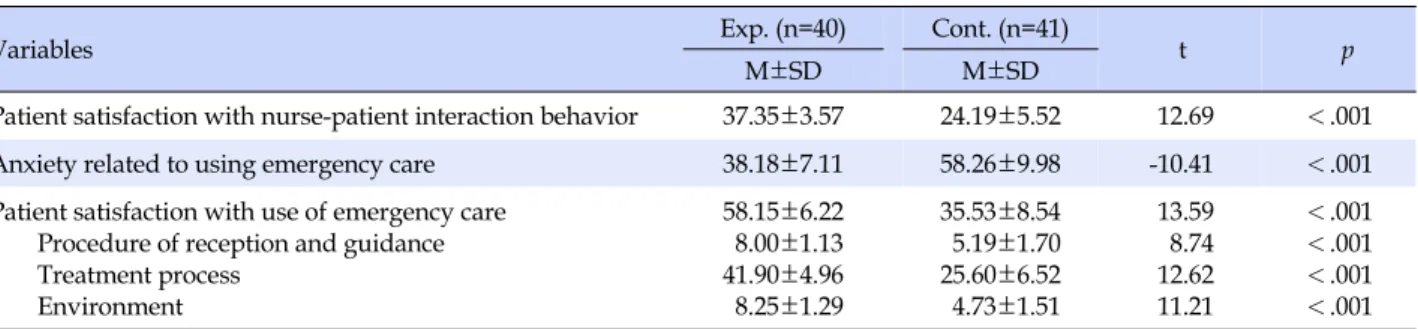
Table 2. Differences in Dependent Variables between the Experimental and Control Groups
(N=81)Variables Exp. (n=40) Cont. (n=41)
t p
M±SD M±SD
Patient satisfaction with nurse-patient interaction behavior 37.35±3.57 24.19±5.52 12.69 <.001
Anxiety related to using emergency care 38.18±7.11 58.26±9.98 -10.41 <.001
Patient satisfaction with use of emergency care Procedure of reception and guidance Treatment process
Environment
58.15±6.22 8.00±1.13 41.90±4.96 8.25±1.29
35.53±8.54 5.19±1.70 25.60±6.52 4.73±1.51
13.59 8.74 12.62 11.21
<.001
<.001
<.001
<.001 Exp.=experimental group; Cont.=control group.
2. Patient Satisfaction with Nurse-Patient Inter- Action Behavior
The authors analyzed the level of patient satisfaction with nurse-patient interaction behavior. A statistically sig- nificant difference was found between the experimental and control groups (t=12.69, p<.001). This result indicates that the experimental group that received facilitative nurse -patient interaction behavior with an informational leaflet and explanation in an emergency setting showed a higher level of patient satisfaction with nurse interaction behav- ior compared to the control group (Table 2).
3. Anxiety related to Using Emergency Care
The authors analyzed the level of anxiety related to us- ing emergency care. A statistically significant difference was found between the experimental and control groups (t=-10.41, p<.001). This result indicates that the experimen- tal group showed a lower level of anxiety related to using emergency care compared to the control group (Table 2).4. Patient Satisfaction with Use of Emergency Care
The authors analyzed the level of patient satisfaction with the use of emergency care. A statistically significant difference was found between the experimental and con- trol groups (t=13.59, p<.001). Therefore, the experimental group that received facilitative nurse interaction behavior with an information leaflet and explanation in an emer- gency setting showed a higher level of patient satisfaction with use of emergency care compared to the control group (Table 2).DISCUSSION
Our findings showed that the experimental group that received facilitative nurse-patient interaction behavior using an informational leaflet in an emergency setting
showed a higher level of patient satisfaction with nurse in- teraction behavior, a lower level of anxiety related to using emergency care, and higher patient satisfaction with use of emergency care compared to the control group.
The researchers performed facilitative nurse-patient in- teraction behavior using the informational leaflet. The in- teraction behavior included facilitative talk to encourage the patient to participate in the talk by using empathy, showing concern, and providing assurance. This type of nurse-patient interaction behavior is one of four types identified in a previous study [11]. The experimental group showed a significantly higher level of patient satisfaction with nurse interaction behavior compared to the control group. It is difficult to directly compare these findings with previous ones, however, since this is the first study to examine an intervention of facilitative nurse-patient inter- action behavior that focused on providing informational leaflets to patients in ED. Nevertheless, this result was similar to that of Kim’s study [7], which analyzed data col- lected by videotaping 63 patients in an ED for four hours of their stay, reported identified improved patient sat- isfaction following interaction with an ED nurse. It was also similar to a study by Nielsen [16], which found that patient satisfaction was improved when the triage nurses tried to explain the reasons for the wait, waiting periods, any unusual situation, and interacted with patients during waiting room rounds every half hour on their shifts. In a previous study [11, facilitative interaction led to the high- est level of patient satisfaction with ED nurses’ interaction behavior, meaning that it reflects the needs of emergency care users very effectively. Accordingly, it is thought that the facilitative interaction featuring patient-centered inter- action pattern applied in this study, in which a nurse of- fered and explained an informational leaflet to a patient, contributed to improving patient satisfaction with nurse interaction behavior. A close look at the subjective re- actions of participants in this study revealed that they felt relieved emotionally and psychologically when a nurse explained emergency care (showing concern) to them in-
dividually. Patients tended to express anxious feelings while maintaining eye contact and to converse with the nurse who was offering and explaining the information leaflet to them in a triage room, and their anxiety decrea- sed when a nurse supported and relieved their anxiety.
Following the interaction behavior, through which the nurse came to understand and sympathize with patients, the patients showed more cooperative and stable attitudes while receiving medical treatment because they under- stood the ED situation and recognized the nurses’ efforts to help them. Considering that patients in ED gain emo- tional and psychological stability due to a nurse’s verbal and nonverbal positive attitude, this suggests that it is ad- vantageous for nurses to use this strategy with patients in ED, and further suggests that such facilitative nurse-pa- tient interaction behavior should be encouraged in the ED field.
The experimental group showed a significantly lower level of anxiety related to using emergency care compared to the control group. This finding was similar to the results of two studies: Park, Park, and Yoon [24] identified de- creased patient anxiety after conducting a supportive nurs- ing intervention through explanation including physical, emotional, and informational support for patients in ED;
Ekwall [10] found that patient anxiety was lowered when a nurse had a conversation with patients waiting for their turns in an ED. This indicates that the nurse was able to re- duce the anxiety of the patients, who felt uneasy in an un- familiar and busy emergency room, by providing infor- mation and explaining emergency care using the leaflet.
The experimental group showed a significantly higher level of patient satisfaction with use of emergency care compared to the control group. Additionally, the level of patient satisfaction with subcategories such as reception and guidance, medical treatment process, and environ- ment showed significantly higher scores in the experi- mental group than in the control group, revealing that of- fering information about the procedure of reception and guidance and the treatment process subcategory in ad- vance contributed to improving the level of patient sat- isfaction with use of emergency care. Likewise, guidance for the layout of facilities in the environment category was revealed to be effective as well, decreasing patient anxiety caused by an unfamiliar environment. This result was similar to a study by An [19], which found that the level of satisfaction was improved when users in ED were given an information pamphlet related to using EDs and the treatment process, and a study by Thompson et al. [15], whose survey via telephone of 1631 patients who had used EDs found that the level of satisfaction was improved
when users in ED were informed about treatment proc- esses and reasons for delayed treatment. On the other hand, according to a study by Kim et al. [18], which sur- veyed the level of patient satisfaction related to emergency care of patients in ED, there was no meaningful difference in the level of satisfaction related to using emergency care between the experimental group provided with an ED guidance paper and the control group not provided with it, revealing that just offering a guidance paper to a patient without explanation fails to help patients understand the utilization of emergency room and does not affect the level of patient satisfaction. Additionally, according to a study by Roper [25], patient satisfaction related to using EDs was improved by doctors’ quick medical treatment rather than by offering information. However, since it is realistically difficult to change the emergency medical system, it is im- portant to note that, despite the shortage of manpower in emergency medical teams, patient satisfaction with nurses and with the ED can be increased, and patients’ anxiety reduced, by distributing and explaining an information leaflet.
On the implications for nursing practice, the use of facil- itative nurse-patient interaction behavior with the infor- mative ED leaflet was demonstrated to improve patient satisfaction and anxiety in an emergency setting.
This study had some limitations, including these. First, because participants in this study were selected from only one hospital in city, there is a limitation on generalizability of the study results. Second, this study could not reflect the differences in patient satisfaction with use of emergency care according to the triage level of participants. Third, this study could not reflect the characteristics of patients in ED who had rejected participating in the study. Fourth, this study could not compare the effects on patient anxiety before and after the completed ED visit no pre-visit anxi- ety evaluation could be performed. Lastly, this study could not rule out the possibility of involvement of a third variable by not having simultaneously collected data from the experimental and the control group.
Based on the findings, the authors suggest the following.
First, further study should be done to compare the change of effects according to the various ways of offering in- formation other than written leaflets, such as developing video clips or waiting room signage and displays. Second, it is necessary to conduct further studies to develop vari- ous nursing interventions to facilitate nurse-patient inter- action in EDs, decrease patient anxiety, and improve pa- tient satisfaction related to using emergency care. Third, emergency rooms need to designate a nurse for each shift to be in charge of giving explanations to patients.
CONCLUSION
This study developed an informational leaflet reflecting the actual needs of emergency care users and turned it into a printed trifold brochure for convenient distribution and reference in ED. Also, the first author performed facili- tative nurse-patient interaction behavior, explaining the informational leaflet to patients in an emergency setting.
The interaction behavior involved facilitative talk to en- courage the patient to participate in the talk by using em- pathy, showing concern, and providing assurance and al- so included participants’ questions and nurses’ answers.
Based on the finding of this study, the authors identified that patient satisfaction with nurse interaction behavior was improved, patient anxiety was lowered, and patient satisfaction with use of emergency care was improved when a nurse conducted facilitative interaction, confirm- ing that it can be used as effective nursing intervention.