The Effects of Dynamic Functional Electrical Stimulation With Treadmill Gait Training on Functional Ability, Balance
Confidence and Gait in Chronic Stroke Patients
Young-ki Cho1,2,3, MSc, PT, Jun-su Ahn1, MSc, PT, Yong-wan Park1, BHSc, PT, Jung-wha Do1, MSc, PT, Nam-hyun Lee1, BHSc, PT, Oh-yun Kwon2,4,5, PhD, PT
1Dept. of Rehabilitation Medicine, Asan Medical Center, University of Ulsan College of Medicine
2Kinetic Ergocise Based on Movement Analysis Laboratory
3Dept. of Physical Therapy, The Graduate School, Yonsei University
4Dept. of Physical Therapy, College of Health Science, Yonsei University
5Dept. of Ergonomic Therapy, The Graduate School of Health and Environment, Yonsei University
Abstract
1)The aim of this study was to evaluate the effects of walking on a treadmill while using dynamic functional electrical stimulation (Dynamic FES) on functional ability and gait in chronic stroke patients.
This was a prospective, randomized controlled study. Twelve patients with chronic stroke (>24 months) who were under grade 3 in dorsiflexor strength with manual muscle test were included and randomized into intervention (Dynamic FES) (n1=7) and control (FES) (n2=5). Both the Dynamic FES group and FES group were given a neuromuscular development treatment. The Dynamic FES group has implemented a total of 60 minutes of exercise treatment and gait training with Dynamic FES application. The FES group, with the addition of applying FES while sitting, has also implemented a total of 90 minutes of gait training on treadmill after the exercise treatment. Both two groups accomplished the program, twice a week, for a total of 24 times in a 12-week period. Exercise treatment, gait training on treadmill, and both Dynamic FES and FES were implemented for 30 minutes each. Korean version activities-specific balance confidence scale (K-ABC) was measured to determine self-efficacy in balance function. Timed up and go (TUG) test was performed to evaluate the physical performance. K-ABC, TUG, Berg balance scale (BBS), modified physical performance test (mPPT) and G-walk were evaluated at baseline and at 12 weeks. After 12 weeks, statistically significant differences (p<.05) were apparent in the Dynamic FES group in the changes in K-ABC and BBS. mPPT, TUG, gait speed, stride length and stance phase duration (%) were compared with the FES group. K-ABC had higher correlation to BBS, along with mPPT to TUG. Our results suggest that walking with Dynamic FES in chronic stroke patients may be beneficial for improving their balance confidence, functional ability and gait.
Key Words: Balance confidence; Chronic stroke patients; Dynamic functional electrical stimulation;
Gait.
Introduction
Regaining the ability to walk independently is a major goal during the neurological rehabilitation of patients with stroke. Furthermore, an efficient gait is one of the major goals of patients with stroke (Duncan et al, 2007). Stroke patients have motor
control problems such as muscle weakness, abnormal muscle tone and movement pattern, disability of weight shifting, and loss of fine motor skills (Bobath, 1990; Carr et al, 1985). Also, Perry (1992) has re- ported that hemiplegic patients often shows abnormal gait pattern, especially equinus (an excessive ankle plantarflexion and pronation) and foot drop (an ex- Corresponding author: Oh-yun Kwon [email protected]
cessive ankle plantarflexion) pattern due to impair- ment in the selective control of foot. This gait pat- tern allows the great toe and lateral toe to contact the ground leading patients to a continuous ankle sprain and a risk of other ankle injuries. Ankle foot orthosis (AFO) and functional electrical stimulation (FES) have been suggested as alternatives to mini- mize these risks (Cozean et al, 1988; Lehmann et al, 1987).
FES is one of methods to help denervated muscle to do functional activation by electrical stimulation (Gracanin et al, 1967), dividing its action mechanism into peripheral mechanism and central mechanism.
The peripheral mechanism involves the improvement of muscle power and endurance, elongation of mus- cle length and soft tissue, and decrease of spasticity, with the central mechanism being the cortical and segmental reorganization of supraspinal portion in- volving the cerebral cortex (Shimada et al, 2005).
Liberson et al (1961) who applied the FES system to hemiplegia first reported that the FES system used electrical signs to activate peripheral nerves and control functional movements. Also, Bogataj et al (1989) reported that there was an increase of lower extremity muscle activation and an improve- ment of gait performance in patients who couldn’t walk by an intervention using multi-channel elec- trical stimulation for 3 weeks. Furthermore, van Swigchem et al (2012) reported that FES applied group had more increase in ability to avoid falling obstacles on the treadmill than the AFO applied group. These results show that there was more freedom of ankle movement in the FES applied group than in the AFO.
Recently, task-specific repetitive approach with treadmill gait training and FES application studies were being accomplished. Activation of the dorsi- flexors during swing is typically triggered by a foot switch placed under the heel of the paretic leg. A foot switch determines the on-and-off switching of the stimulation. Hesse et al (1995a) reported gait speed and increase of gait linear var-
iable of hemiparesis patient using partial weight support treadmill training with several FES channels. Liepert et al (2000) reported that task-specific repetitive approach using FES for hemiplegic patient has influenced cortical plasticity.
This study reported that the standard sensory in- put was the most important factor of inducing plasticity in the spinal circuit for reciprocal in- hibition (Perez et al, 2003). Daly et al (2006) re- ported the improvement of gait and knee flexion coordination in a stroke patient group applied with FES on the neuromuscular system. However, Prado-Mederios et al (2011) reported that there were no significant differences in motor function, gait linear variation, and kinematic variation in comparison between FES and non-FES application in 12 chronic stroke patients who performed gait training with partial weight support through harness. They reported that 41.7 months of disease period patients were in a chronic recovery stage where their gait patterns were already too late to change. Also, The Korean Health Insurance Review and Assessment Service (2012) also noti- fied that FES, in approval standards of professional rehabilitation enforced for a long time to patients with brain damage (stroke, traumatic brain injury etc.), was a rehabilitation treatment for functional improvement approved 2 times a day for two years after the onset but approved FES 2 times a day only for 6 months with patients showing no increase in muscle power and functional improve- ment, progressing to once a day after 6 months and to not approving FES treatment at all after 2 years. However, there are few studies related to the effect of FES on patients with stroke after 24 months of onset. The purpose of this study were as follows: First, to determine the effects of Dynamic FES application on the functional ability of achievement, balance confidence and gait of pa- tients with stroke after 24 months of onset.
Second, to compare the effect of Dynamic FES and FES application.
Methods
Subjects
Twelve university-affiliated hospital out-patient department patients with chronic stroke (>24 months) were studied. The inclusion criteria were considered in the selection of the subjects.
Dorsiflexor strength was classified above grade 2 (trace) and under grade 3 (fair) in muscle manual test (MMT); spasticity was classified under level 3 according to the Modified Ashworth Spasticity Scale and an interval of greater than 24 months after stroke. Patients who were able to gait over 10 m without any support of assistive devices, who under- stood and followed instruction and those whose edu- cational standard average was above 24 points in the Mini Mental Examination (Korean version) were also considered in the selection of the subjects. The ex- clusion criteria were those with low cognitive func- tion (scoring below 23 in the Mini Mental State Examination), severe visual and perception dis- turbance, high-risk cardiovascular disorders and se- vere medical disease, and orthopedic diseases in low- er extremities. In addition, patients unable to get treatment for 3 consecutive sessions or unable to re- ceive 80% of the treatment were excluded in the study. 20 patients were enrolled. 8 participants dis- continued due to exclusion or them being declined caused by distance to the hospital. 12 patients were randomized. After being given a thorough explanation of the study, participants gave their informed consent prior to participating in the study.
Measurement tool
Assessors were composed of three physical thera- pists with more than 10 years’ experience for all measurements, and all measurements were done un- der the same evaluator in all pre- and post- measurements. Thorough explanations of the evalua- tion were given to the participants prior to the measurement. The evaluation was carried out in a separate space excluded from all noises and external
disturbances with a fatigue-reduced state after an adequate amount of rest. The assessment was stop- ped immediately if the patient appealed dizziness or fatigue during the evaluation.
Korean version activities-specific balance confidence (K-ABC)
An activities-specific balance confidence is an as- sessment tool that evaluates self- effectiveness through a direct interview with the examiner which is composed of 16 specific activities. Activities-spe- cific balance confidence holds a high reliability by assessing how much of a difficulty is felt in activ- ities of daily living such as changing positions or movements by marking on a number ranging from zero (no confidence) to a hundred (very confident) (ICC=.86) (Powell and Myers, 1995). This study used K-ABC translated by the research of Hwang et al (2007). They had high reliability (ICC=.90) and used an average of 16 tasks in their analysis.
Berg balance scale (BBS)
This Berg balance scale test, which takes in con- sideration 3 sides-postural maintenance, postural control on volitional movement, and external dis- turbance-were used for dynamic balance control of high risk fall adults and central nervous system patients. The task was comprised of a set of 14 simple balance and easy activities of daily living-re- lated tasks. The score added up to a total of 56, comprised of a five-point scale ranging from zero to four in three-domains of sitting, standing, and pos- tural change. The balance degree was assessed as good as the BBS score rose. A score above 45 was needed for independent and safe transfer (Bogle Thorbahn and Newton, 1996). The inter-rater reli- ability was .98 and the intra-rater reliability was .97 on a stroke patient basis (Berg et al, 1995).
Modified physical performance test (mPPT)
Modified physical performance test is a functional
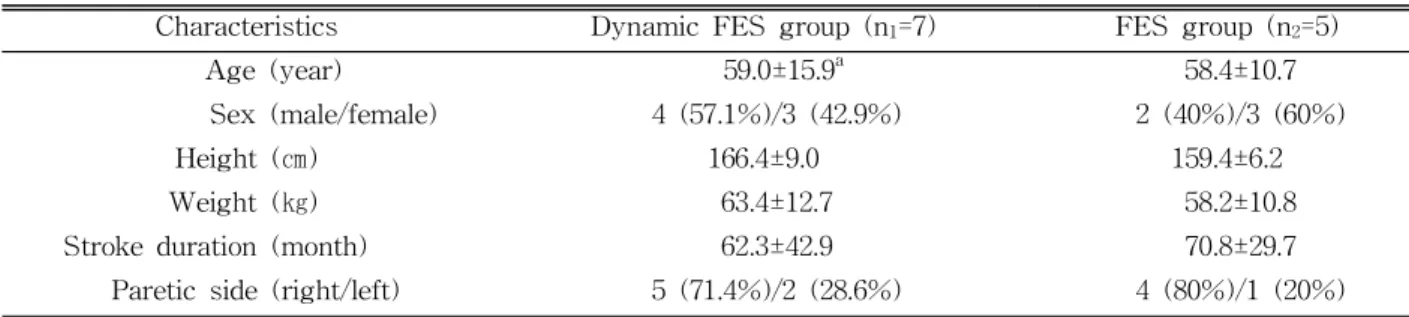
Figure 2. Dynamic FES (WalkAide2).
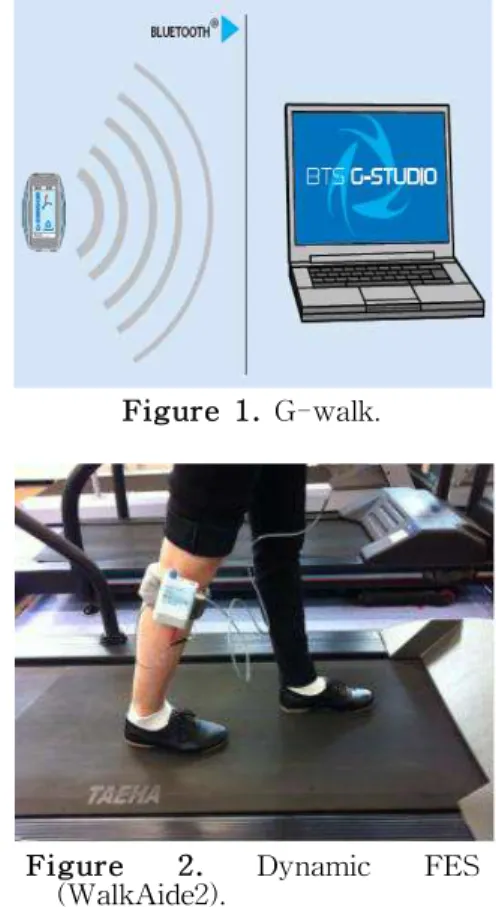
Figure 1. G-walk.
assessment test method for adults with diseases such as stroke, Parkinson’s, etc., which evaluates various domains of body functions by observing di- verse activities of daily living. This test is comprised of a total of nine items consisting of a five-point scale ranging from zero to four which adds up to a total of 36. The higher score shows better physical function. The inter-rater reliability of mPPT is .99 and its intra-rater reliability is .90 (Paschal et al, 2006; Reuben and Siu, 1990).
Timed up and go (TUG) test
Timed up and go test is a test method of basic motility and locomotion which measures the time of one starting from a sitting position to stand up and walking 3 meters forward and passing the halfway point to come back and sit to the starting position (Podsiadlo and Richardson, 1991). This study in- structed patients to pass the halfway point with their uninvolved side. The evaluator used a stopwatch to measure three times and record its average. The in- ter-rater and intra-rater reliability of TUG were both .99 (Morris et al, 2001).
G-walk
G-walk (BTS G-walkⓇ, BTS Bioengineering, Garbagnate Milanese, Italy) uses a wireless system, G-sensor, equipped with triaxial accelerometer, mag- netic sensor, and triaxial gyroscope that makes it possible to easily measure spatio-temporal gait pa- rameters, which is required to diagnose a patient and determine exercise strategy. G-walk can be attached on a waist (L5) area, where functional gait analysis is possible, using a belt which then analyzes the pa- tient’s ambulation using a wireless software program (Figure 1). This study only used gait speed, affected limb’s stride length and stance phase duration (%) values out of various measurable parameters (Figure 1) (Figure 2). A single wireless inertial sensing device is easy to use and does not interrupt natural walking. And these devices are no statistically sig- nificant differences with generally used gait analysis
methods (Bugane et al, 2012; Pau et al, 2014).
Dynamic functional electrical stimulation (Dynamic FES): WalkAide2
WalkAide2 (Innovative Neurotronics, Austin, USA) is a FES device designed to minimize foot drop by stimulating dorsiflexor muscles through the peroneal nerve. This device can be connected through the use of Velcro cuff in the infra patellar area. The stim- ulation can be triggered by the change of pressure on the heel or a vertical orientation on the leg.
However, this study only uses the spark on the ver- tical orientation of all participants, instructing to walk on the speed the participant thinks is most comfortable above the treadmill. The device is pro- grammed to start stimulating, transferring 25 ㎐ and 100 sec pulse width asymmetric biphasic wave on the time when the foot is lifted up the floor and maintaining it throughout the swing phase in any circumstances (Figure 2).
Characteristics Dynamic FES group (n1=7) FES group (n2=5)
Age (year) 59.0±15.9a 58.4±10.7
Sex (male/female) 4 (57.1%)/3 (42.9%) 2 (40%)/3 (60%)
Height (㎝) 166.4±9.0 159.4±6.2
Weight (㎏) 63.4±12.7 58.2±10.8
Stroke duration (month) 62.3±42.9 70.8±29.7
Paretic side (right/left) 5 (71.4%)/2 (28.6%) 4 (80%)/1 (20%)
amean±standard deviation.
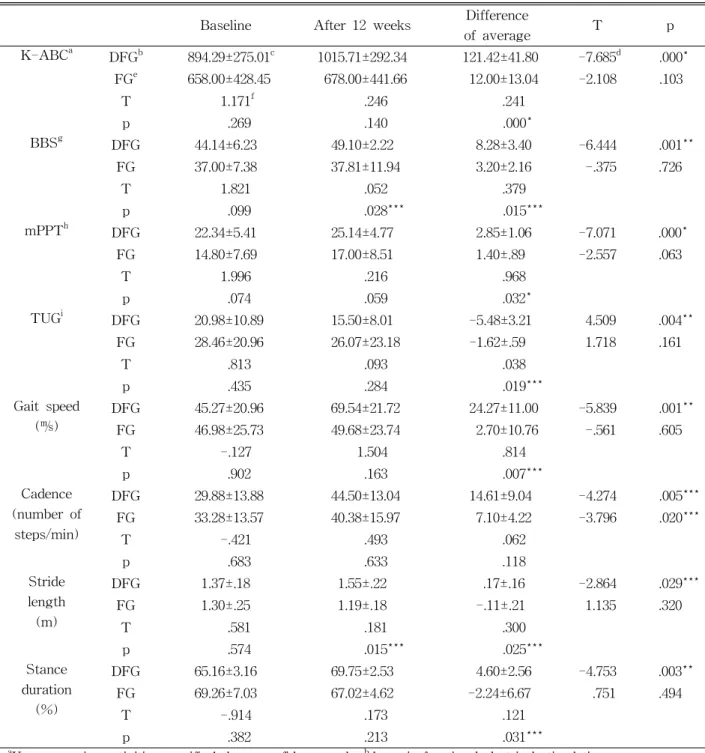
Table 1. Descriptive characteristics of participants (N=12) Functional electrical stimulation (FES)
FES (Microstim, MEDEL Medizinische Elektronik Handelsgesellschaft mbH, Hamburg, Germany) has provided a stimulus with the intensity that allows ankle dorsiflexion by attaching two electrode pads on the tibialis anterior muscle of the patient sitting down before gait training. The patients were told to purposely contract tibialis anterior to make ankle dorsiflexion when they received FES electric current.
We have instructed the patient to observe the move- ment of the foot in order for them to get visual feedback.
Application methods and procedures of FES
Both the Dynamic FES group and FES group were given an general exercise treatment that in- cludes neuromuscular developmental therapy. Dynamic FES group each has implemented 30 minutes, for a total of 60 minutes of gait training in a day with the application of Dynamic FES on the tibialis anterior after general exercise treatment. The FES group has implemented gait training on treadmill after the gen- eral exercise treatment, which was also given to the Dynamic FES group, and additionally applying FES on tibialis anterior muscle while sitting on a chair. A total of 90 minutes, 30 minutes each, was im- plemented on a day. Both two groups accomplished the program, twice a week, for a total of 24 times in a 12-week period. The gait speed on treadmill was set to the speed where the participant felt most comfortable. Physical therapists with professional
knowledge supervised all the programs including treatment and gait training in order for participants to participate in the experiment with the right pos- ture and movement.
Data analysis
All data analysis was performed using SPSS ver.
18.0 (SPSS Inc., Chicago, IL, USA) to examine the general features of the Dynamic FES and FES group by analyzing the mean and standard deviation.
Spearman coefficient applied correlation analysis was used to know correlations between clinical scales.
The Kolmogorov-Smirnov Z-test was performed to investigate whether continuous data approximated a normal distribution. Paired t-test was implemented to find out comparisons between pre- and post-test to find out the significance on each of the groups’
exercise. The changes of pre- and post-test were compared between the two groups using independent t-test and the statistical significance level was set to p<.05.
Results
Descriptive characteristics of participants The descriptive characteristics of participants are shown in Table 1. The average age of the Dynamic FES group was 59.0 and that of the FES group was 58.4. The Dynamic FES group consisted of 4 men and 3 women, and 2 men and 3 women were in FES group. The average height in the Dynamic FES
group was 166.4 ㎝, and the FES group’s was 159.4 ㎝.
The average weight in the Dynamic FES group was 62.3 ㎏, and the FES group’s was 58.2 ㎏, with the stroke duration on the Dynamic FES group being 62.3 months and the FES group being 70.9 months.
The paretic side of the Dynamic FES group was 5 on right and 2 on left, while that of the FES group was 4 on right and 1 on left.
Correlation between each clinical scales The comparison result of each clinical scale showed a highly significant correlation in the corre- lation analysis between the K-ABC, BBS, mPPT and TUG (R=.772, R=.782, R=-7.798, p<.005).
Comparison of K-ABC, BBS, mPPT, TUG, gait speed, cadence, stride length, and stance duration between the Dynamic FES group and FES group
There were no significant differences in K-ABC, BBS, mPPT, TUG, all linear parameters such as gait speed, cadence, stride length, and stance duration be- fore the intervention was given on the Dynamic FES group and FES group. The Dynamic FES group showed significant changes in K-ABC, BBS, mPPT, TUG, gait speed, cadence, stride length, and stance duration after the intervention was given (p=.000, p=.001, p=.000, p=.004, p=.001, p=.005, p=.029, p=.003);
however, the FES group did not show significant difference (p>.05) except in cadence (p=.020) in the comparison of pre- and post-intervention. The varia- tion of the change in the difference of average in K-ABC, BBS, mPPT, TUG, gait speed, stride length, and stance duration showed a statistically significant difference (p=.000, p=.015, p=.032, p=.019, p=.007, p=.025, p=.031) except in cadence (p=.118) between the two groups after intervention (Table 2).
Discussion
This study focused on the effects of Dynamic FES
on balance control, balance confidence, functional ability and gait to chronic stroke patients passing 24 months after onset of illness. The results showed that the Dynamic FES group showed a significant increase over the FES group in functional ability, dynamic balance control, and balance confidence.
These results may be seen as increase in trunk con- trol capability through increase in ankle stability.
Bobath (1990) stated that increase in trunk control capability is an important key to increase dynamic balance control. Robertson et al (2010) reported physical enhancement and increase in balance control after applying FES on the tibialis anterior of stroke patients, while Lyons et al (2002) reported that FES application on ankle dorsiflexor enhance ankle stabil- ity which increases trunk control capability and bal- ance control.
This study shows that higher scores in K-ABC showed greater score in BBS. This accorded with the research findings which reported that BBS bal- ance control and balance confidence had a positive correlation (Botner et al, 2005). In the study of walking with an AFO, the BBS showed significant relationship with gait speed, step length of the af- fected side, and stride length in patients with chronic stroke (Kobayashi et al, 2014). The correlation be- tween self-efficacy and physical capacity has been regarded. Therefore, low ability levels may lead to low self-efficacy, and low self-efficacy may result in less activities (Gecas, 1989). Furthermore, since FES was reported to re-educate normal movement on a paralyzed area due to upper motor neuron damage like stroke which helps functional recovery by de- creasing rigidity causing abnormal movements (Shimada et al, 2005). Further, Dynamic FES appli- cation according to various therapeutic environments is necessary for effective motor system stimulation.
This study showed a significant increase in gait speed, affected limb’s stride length and stance phase duration (%) more on the Dynamic FES group com- pared to the FES group. FES helps ambulation with ankle dorsiflexion by blocking foot drop during swing
Baseline After 12 weeks Difference
of average T p
K-ABCa DFGb 894.29±275.01c 1015.71±292.34 121.42±41.80 -7.685d .000*
FGe 658.00±428.45 678.00±441.66 12.00±13.04 -2.108 .103
T 1.171f .246 .241
p .269 .140 .000*
BBSg DFG 44.14±6.23 49.10±2.22 8.28±3.40 -6.444 .001**
FG 37.00±7.38 37.81±11.94 3.20±2.16 -.375 .726
T 1.821 .052 .379
p .099 .028*** .015***
mPPTh DFG 22.34±5.41 25.14±4.77 2.85±1.06 -7.071 .000*
FG 14.80±7.69 17.00±8.51 1.40±.89 -2.557 .063
T 1.996 .216 .968
p .074 .059 .032*
TUGi DFG 20.98±10.89 15.50±8.01 -5.48±3.21 4.509 .004**
FG 28.46±20.96 26.07±23.18 -1.62±.59 1.718 .161
T .813 .093 .038
p .435 .284 .019***
Gait speed
(㎧) DFG 45.27±20.96 69.54±21.72 24.27±11.00 -5.839 .001**
FG 46.98±25.73 49.68±23.74 2.70±10.76 -.561 .605
T -.127 1.504 .814
p .902 .163 .007***
Cadence (number of
steps/min)
DFG 29.88±13.88 44.50±13.04 14.61±9.04 -4.274 .005***
FG 33.28±13.57 40.38±15.97 7.10±4.22 -3.796 .020***
T -.421 .493 .062
p .683 .633 .118
Stride length (m)
DFG 1.37±.18 1.55±.22 .17±.16 -2.864 .029***
FG 1.30±.25 1.19±.18 -.11±.21 1.135 .320
T .581 .181 .300
p .574 .015*** .025***
Stance duration
(%)
DFG 65.16±3.16 69.75±2.53 4.60±2.56 -4.753 .003**
FG 69.26±7.03 67.02±4.62 -2.24±6.67 .751 .494
T -.914 .173 .121
p .382 .213 .031***
aKorean version activities-specific balance confidence scale, bdynamic functional electrical stimulation group,
cmean±standard deviation, dpaired t-test, efunctional electrical stimulation group, findependent t-test, gBerg balance scale, hmodified physical performance test, itimed up and go, *p<.001, **p<.005, ***p<.05.
Table 2. Comparison of K-ABC, BBS, mPPT, TUG, gait speed, cadence, stride length, stance duration be-
tween Dynamic FES group and FES group (N=12)
phase in the gait cycle of hemiplegic stroke patients (Shimada et al, 2005). We conclude that this study
showed significant increase in stride length had a greater influence that significant increase in gait
speed when in comparison of two experiments. There were no significant difference in cadence due to Dynamic FES group showing more increase in dy- namic balance, stance duration and stride length than in FES group. In addition, it is reported that FES application during gait training provides functional benefit to stroke patients by increasing walking speed (Hakansson et al, 2011). Furthermore, task specific repetitive approaches such as treadmill train- ing focused on ambulation after stroke enhances functional performance capability and ambulatory ability among patients with neurological deficits (Hesse et al, 1995b; Richards et al, 1993; Visintin et al, 1998), improves damaged movements through re- petitive motion, and provides positive influence on increased endurance (Hesse, 2008). Perhaps it is be- lieved that the simultaneous application of Dynamic FES has helped improve ambulatory ability during treadmill training on the Dynamic FES group.
Laufer et al (2001) reported hemiplegic stroke pa- tients lack balance control, and are vulnerable to fear of falling. Hemiplegic stroke patients, with addition to their weak muscles, cause the patient and thera- pist to face difficulties in stroke rehabilitation when enforcing treadmill gait training without proper sup- port (Laufer et al, 2001).
Even if weakened muscle strength in chronic stroke patients is one of the factors limiting func- tional performance, psychological factors may have a greater effect on their ability. As a psychological factor, patient’s self-confidence, in particular, can lead to a fall due to a limitation in daily activities. It is credited to a loss of balance and decrease of functional independence (Whitney et al, 1998). Thus, in the aspect of improving confidence, psychological factor contributes to an increase in physical performance.
Treadmill training with Dynamic FES is perhaps believed to block foot drop which contributes to an increase in balance confidence through decreased ab- normal gait pattern and fear of falling with ankle stability. Also, conducting a task-specific repetitive approach is believed to bring improvement in balance
confidence through motivation towards training and achievement of goals.
South Korea is not clinically implementing FES to hemiplegic stroke patients after 2 years of onset.
This study has showed an improvement of balance control, balance confidence, functional performance and gait in the Dynamic FES group than in the FES group. Therefore, it is necessary to develop and en- force various gait training programs in the clinical field where it applies Dynamic FES during gait training on patients who have experienced chronic stroke since the last two years.
The limitation of this study was that it was hard to create a generalization due to the small number of participants. Also, there were some difficulties in ex- plaining ankle stability and trunk control capability due to lack of measurements in ankle movements.
Moreover, this study was not able to have a fol- low-up after 3 months on FES effects which limits our knowing whether Dynamic FES aided motor learning transfer. Thus, further studies are needed, with a larger sample size, a longer duration, and more diverse gait training program on patients with chronic stroke, which can be determine the optimal treatment protocol.
Conclusion
Walking with Dynamic FES training for chronic stroke patients improves balance, balance confidence, functional ability and gait after 3 months. In the group comparison, the group of Dynamic FES im- proves in K-ABC, mPPT, BBS, TUG, gait speed, stance phase duration (%), stride length.
Our results demonstrate that K-ABC and mPPT have higher correlation to BBS and TUG, respectively.
Our results suggest that Dynamic FES in chronic stroke patients may be beneficial for improving bal- ance, balance confidence, functional ability and gait.
More long term follow-up studies and various type of walking studies are needed to determine the opti-
mal treatment protocol. A large sample study may also clarify our findings. However, we expected that these results may contribute in the application of Dynamic FES for chronic stroke patients in the future.
References
Berg K, Wood-Dauphinee S, Williams JI. The bal- ance scale: Reliability assessment with elderly residents and patients with an acute stroke.
Scand J Rehabil Med. 1995;27(1):27-36.
Bobath B. Adult Hemiplegia Evaluation and Treatment: Evaluation and treatment. 3rd ed.
London, Butterworth-Heinemann, 1990:11-19.
Bogataj U, Gros N, Malezic M, et al. Restoration of gait during two to three weeks of therapy with multichannel electrical stimulation. Phys Ther. 1989;69(5):319-327.
Bogle Thorbahn LD, Newton RA. Use of the berg bal- ance test to predict falls in elderly persons. Phys Ther. 1996;76(6):576-583; discussion 584-585.
Botner EM, Miller WC, Eng JJ. Measurement prop- erties of the activities-specific balance con- fidence scale among individuals with stroke.
Disabil Rehabil. 2005;27(4):156-163.
Bugané F, Benedetti MG, Casadio G, et al.
Estimation of spatial-temporal gait parameters in level walking based on a single accel- erometer: Validation on normal subjects by standard gait analysis. Comput Methods Programs Biomed. 2012;108:129-137. http://dx.
doi.org/10.1016/j.cmpb.2012.02.003
Carr JH, Shepherd RB, Nordholm L, et al.
Investigation of a new motor assessment scale for stroke patients. Phys Ther. 1985;65(2):
175-180.
Cozean CD, Pease WS, Hubbell SL. Biofeedback and functional electric stimulation in stroke rehabilitation. Arch Phys Med Rehabil. 1988;69 (6):401-405.
Daly JJ, Roenigk K, Holcomb J, et al. A random- ized controlled trial of functional neuromuscular stimulation in chronic stroke subjects. Stroke.
2006;37(1):172-178.
Duncan PW, Sullivan KJ, Behrman AL, et al.
Protocol for the locomotor experience applied post-stroke (LEAPS) trial: A randomized con- trolled trial. BMC Neurol. 2007;7:39.
Gecas V. The social-psychology of self-efficacy.
Ann Rev Sociol. 1989;15:291-316.
Gracanin F, Prevec F, Trontelj J. Evaluation of use of functional electronic peroneal brace in hemi- paretic patients. Belgrade, Yugoslav Committee for Electronics and Automation, 1967:198-205.
Hakansson NA, Kesar T, Reisman D, et al. Effects of fast functional electrical stimulation gait training on mechanical recovery in poststroke gait. Artif Organs. 2011;35(3):217-220. http://
dx.doi.org/10.1111/j.1525-1594.2011.01215.x Hesse S. Treadmill training with partial body weight
support after stroke: A review. NeuroRehabilitation.
2008;23(1):55-65.
Hesse S, Bertelt C, Jahnke MT, et al. Treadmill training with partial body weight support com- pared with physiotherapy in nonambulatory hemiparetic patients. Stroke. 1995a;26(6):
976-981.
Hesse S, Malezic M, Schaffrin A, et al. Restoration of gait by combined treadmill training and multichannel electrical stimulation in non-am- bulatory hemiparetic patients. Scand J Rehabil Med. 1995b;27(4):199-204.
Hwang SJ, Yi CH, Park SY. Application of rasch analysis to the activities-specific balance con- fidence (ABC) scale. Phys Ther Korea. 2007;14 (1):37-45.
Kobayashi T, Leung AK, Akazawa Y, et al.
Correlations between Berg balance scale and gait speed in individuals with stroke wearing ankle-foot orthoses-a pilot study. Disabil Rehabil Assist Technol. 2014;23:1-4.
Laufer Y, Dickstein R, Chefez Y, et al. The effect
of treadmill training on the ambulation of stroke survivors in the early stages of re- habilitation: A randomized study. J Rehabil Res Dev. 2001;38 (1):69-78.
Lehmann JF, Condon SM, Price R, et al. Gait ab- normalities in hemiplegia: their correction by ankle-foot orthoses. Arch Phys Med Rehabil.
1987; 68(11):763-771.
Liberson WT, Holmquest HJ, Scot D, et al.
Functional electrotherapy: Stimulation of the peroneal nerve synchronized with the swing phase of the gait of hemiplegic patients. Arch Phys Med Rehabil. 1961;42:101-105.
Liepert J, Bauder H, Wolfgang HR, et al.
Treatment-induced cortical reorganization after stroke in humans. Stroke. 2000;31(6):1210-1216.
Lyons GM, Sinkjaer T, Burridge JH, et al. A re- view of portable FES-based neural orthoses for the correction of drop foot. IEEE Trans Neural Syst Rehabil Eng. 2002;10(4):260-279.
Morris S, Morris ME, Iansek R. Reliability of measurements obtained with the timed “up &
go” test in people with parkinson disease.
Phys Ther. 2001;81(2):810-818.
Paschal K, Oswald A, Siegmund R, et al. Test-re- test reliability of the physical performance test for persons with parkinson disease. J Geriatr Phys Ther. 2006;29(3):82-86.
Pau M, Leban B, Collu G, et al. Effect of light and vigorous physical activity on balance and gait of older adults. Arch Gerontol Geriatr. 2014;59 (3):568-573. http://dx.doi.org/10.1016/j.archger.2014.
07.008
Perez MA, Field-Fote EC, Floeter MK. Patterned sensory stimulation induces plasticity in recip- rocal ia inhibition in humans. J Neurosci.
2003;23(6):2014-2018.
Perry J. Gait Analysis: Normal and pathological function. New York, NY, McGraw-Hill, 1992:
185-220.
Podsiadlo D, Richardson S. The timed “up & go”:
A test of basic functional mobility for frail
elderly persons. J Am Geriatr Soc. 1991;39 (2):142-148.
Powell LE, Myers AM. The activities-specific bal- ance confidence (ABC) scale. J Gerontol A Biol Sci Med Sci. 1995;50A(1):M28-M34.
Prado-Medeiros CL, Sousa CO, Souza AS, et al.
Effects of the addition of functional electrical stimulation to ground level gait training with body weight support after chronic stroke. Rev Bras Fisioter. 2011;15(6):436-444.
Reuben DB, Siu AL. An objective measure of physical function of elderly outpatients. The physical performance test. J Am Geriatr Soc.
1990;38(10): 1105-1112.
Richards CL, Malouin F, Wood-Dauphinee S, et al.
Task-specific physical therapy for optimization of gait recovery in acute stroke patients. Arch Phys Med Rehabil. 1993;74(6):612-620.
Robertson JA, Eng JJ, Hung C. The effect of func- tional electrical stimulation on balance function and balance confidence in community-dwelling individuals with stroke. Physiother Can. 2010;62 (2):114-119. http://dx.doi.org/10.3138/physio.62.2.
114
Shimada Y, Ando S, Matsunaga T, et al. Clinical application of acceleration sensor to detect the swing phase of stroke gait in functional elec- trical stimulation. Tohoku J Exp Med. 2005;207 (3):197-202.
The Korean Health Insurance Review and Assessment Service. Brain damage (stroke, traumatic brain injury, etc.) recognized stand- ards of professional rehabilitation therapy to patients that underwent a long period of time [Internet]. Seoul, 2012 Jun 1 [Cited 2014 Mar 15]. Available from: http://www.hira.or.kr/rf/
medicine/getStandardInfo.do?pgmid=HIRAA 030035040000&mtgHmeDd=20120601&sno=2&mt gMtrRegSno=1
van Swigchem R, van Duijnhoven HJ, den Boer J, et al. Effect of peroneal electrical stimulation versus an ankle-foot orthosis on obstacle
This article was received September 24, 2014, was reviewed September 24, 2014, and was accepted November 6, 2014.
avoidance ability in people with stroke-related foot drop. Phys Ther. 2012;92(3):398-406.
http://dx.doi.org/ 10.2522/ptj.20100405
Visintin M, Barbeau H, Korner-Bitensky N, et al.
A new approach to retrain gait in stroke pa- tients through body weight support and tread- mill stimulation. Stroke. 1998;29(6):1122-1128.
Whitney SL, Poole JL, Cass SP. A review of bal- ance instruments for older adults. Am J Occup Ther. 1998;52(8):666-671.