PGHN
Original Article
Nutrient Intakes and Hair Mineral Contents of Young Children
Hye Young Kim, Ji Young Lee, and Hye Ran Yang*
,†Department of Food and Nutrition, Yongin University, Yongin, *Department of Pediatrics, Seoul National University Bundang Hospital, Seongnam, †Department of Pediatrics, Seoul National University College of Medicine, Seoul, Korea
Purpose: This study was performed to evaluate the dietary nutrient intake status and hair mineral content of Korean young children.
Methods: Fifty-five children who visited Seoul National University Bundang Hospital were divided into three groups by age: infants, toddlers, and preschoolers. The 24-hour recall method was used to collect the food intake data of the subjects. Hair mineral analysis was conducted using a Mass Spectrometer. Serum iron, ferritin, and calcium were also measured.
Results: The mean energy intakes of the subjects were 730.3 kcal, 994.3 kcal, and 1,482.9 kcal for each age group.
The mean percentage of energy intake compared to recommendation was 101.4% and was not different by age group. Toddlers of 37.8% and preschoolers of 54.5% consumed less than the Estimated Average Requirement (EAR) of calcium. Infants of 28.6%, toddlers of 10.8% and preschoolers of 9.1% consumed less than the EAR of iron. In the case of zinc, copper, and selenium, only 0% to 5% of toddlers and none of the preschoolers consumed less than the EAR of those minerals. The hair calcium, iron and copper concentrations were lower in toddlers and pre- schoolers than those in infants. Serum calcium levels of preschoolers were significantly lower than those of infants, whereas serum iron and ferritin levels were not.
Conclusion: Hair calcium, iron, and copper concentrations were significantly lower in toddlers and preschoolers than in infants. Insufficient dietary intake of calcium and iron seems to be related with decreased hair mineral contents in young children.
Key Words: Nutrient, Hair, Mineral, Child
Received:September 25, 2015, Revised:January 13, 2016, Accepted:February 25, 2016
Corresponding author: Hye Ran Yang, Division of Pediatric Gastroenterology and Hepatology, Department of Pediatrics, Seoul National University Bundang Hospital, 82 Gumi-ro 173beon-gil, Bundang-gu, Seongnam 13620, Korea. Tel: +82-31-787-7285, Fax: +82-31-787-4054, E-mail: [email protected]
Copyright ⓒ 2016 by The Korean Society of Pediatric Gastroenterology, Hepatology and Nutrition
This is an openaccess article distributed under the terms of the Creative Commons Attribution NonCommercial License (http://creativecommons.org/licenses/by-nc/4.0/) which permits unrestricted noncommercial use, distribution, and reproduction in any medium, provided the original work is properly cited.
INTRODUCTION
It is necessary to properly supply nutrients accord- ing to the developmental stage of children [1].
Parents should pay attention to supply enough nu- trients for children especially during the supple- mental feeding and early childhood period.
Adequate supply of essential minerals should also be
paralleled for proper growth and development of children [2].
Several minerals such as calcium, iron, zinc, cop- per, and selenium are particularly important for the normal growth of young children. Calcium is neces- sary for the formation of the skeleton, muscle con- traction, blood coagulation and membrane integrity [3,4]. Iron deficiency is common in children and can have negative consequences in terms of mental, mo- tor and behavioral development as well as anemia [5-8]. Zinc deficiency is related with growth falter- ing, increased risk of infection and delayed motor de- velopment [9,10]. Copper plays a role in iron metab- olism through ceruloplasmin, a copper-dependent enzyme that oxidizes iron to be transported to the body tissues [11]. Selenium is an intrinsic compo- nent of antioxidant enzyme glutathione peroxidase that works as a cell membrane protector against lipid peroxidation [12].
In order to evaluate the body mineral status of children, collection and analysis of blood or hair of the children are needed. Hair mineral analysis has the advantage of being easy to store and collect sam- ples, but has not been used much in children [13-16]. In this study, a dietary intake and hair min- eral analysis of Korean young children were con- ducted to evaluate mineral nutrition status of the children.
MATERIALS AND METHODS
Subjects
A total of 55 children (31 male and 24 female) who newly visited the Pediatric Nutrition Clinic at the Seoul National University Hospital between January 2012 and December 2013 for nutritional counselling, regardless of the growth status, were included. The subjects were divided into three age groups; infants (6 months to 1 year), toddlers (1 to 2 years), and pre- schoolers (3 to 5 years). Weight for age z-scores and weight for height z-scores were calculated using the least mean square method adjusted for age and sex according to the 2007 Korean National Growth Charts [17]. Underweight was defined as weights for
age z-scores below -2 standard deviations.
Children with underlying organic diseases or those who had taken multivitamin or iron or zinc supplements in the past 3 months were excluded from the study.
The study was conducted with the approval of the Institutional Review Board of Seoul National University Bundang Hospital (B-1503-292-110).
Physical measurements and dietary intake survey
Height was determined using a fixed scale meas- uring device and was measured to the nearest 0.1 cm.
Weight was measured to the nearest 0.1 kg using a digital scale calibrated prior to each measurement.
Children’s dietary intake data were estimated using one-day 24-hour recall method by an interview with their mothers. The dietary data were assessed using a computerized nutrient-intake assessment soft- ware program (CAN-Pro 4.0; Korean Nutrition Society, Seoul, Korea). Calcium, iron, zinc, copper and selenium intake data were compared with the Estimated Average Requirements (EAR) of the 2010 Korean Dietary Reference Intake (KDRI) [18].
Laboratory analysis
The hair mineral analysis was performed by Trace Elements Inc. (Dallas, TX, USA) with hair samples sent through the Korean branch. After washing the samples with acetone, water, and extran (1% v/v), aliquots of the samples were wet-ashed with HNO3. The hair solution was analyzed by a Perkin-Elmer Mass Spectrometer (Sciex Elan 6100; Perkin-Elmer Corp., Foster City, CA, USA) [19]. All hair mineral levels were reported in percent of milligrams (mg%, milligrams per 100 grams of hair). Serum samples were analyzed for ferritin by the immunoradiometric assay (Diagnostic Products Inc., Los Angeles, CA, USA) and for calcium and iron by atomic absorption spectrophotometry (Perkin Elmer 300 Instrument).
Statistical analysis
The data were analyzed using PASW Statistics ver- sion 18.0 (IBM Co., Armonk, NY, USA). They were
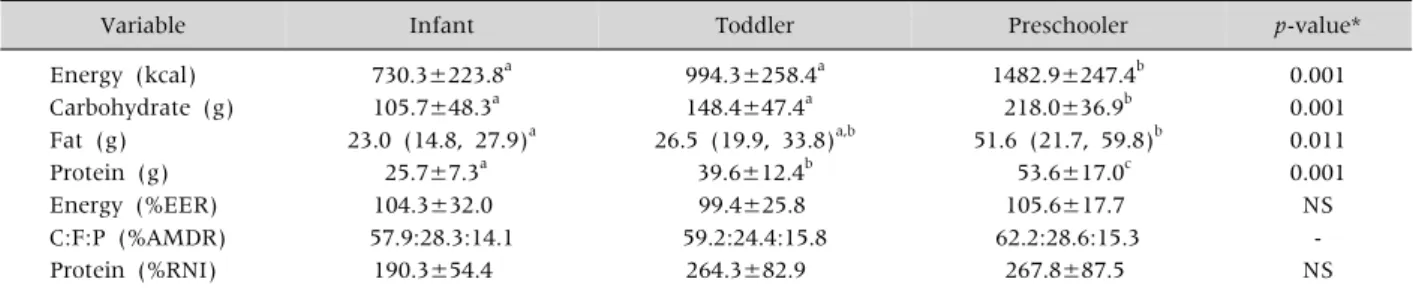
Table 2.Macro-nutrient Intakes of the Subjects
Variable Infant Toddler Preschooler p-value*
Energy (kcal) 730.3±223.8a 994.3±258.4a 1482.9±247.4b 0.001
Carbohydrate (g) 105.7±48.3a 148.4±47.4a 218.0±36.9b 0.001
Fat (g) 23.0 (14.8, 27.9)a 26.5 (19.9, 33.8)a,b 51.6 (21.7, 59.8)b 0.011
Protein (g) 25.7±7.3a 39.6±12.4b 53.6±17.0c 0.001
Energy (%EER) 104.3±32.0 99.4±25.8 105.6±17.7 NS
C:F:P (%AMDR) 57.9:28.3:14.1 59.2:24.4:15.8 62.2:28.6:15.3 -
Protein (%RNI) 190.3±54.4 264.3±82.9 267.8±87.5 NS
Data are presented as mean±standard deviation for normally distributed variables, median (percentile 25, percentile 75) for non-normally distributed variables.
Infant: 6 months-1 year old, toddler: 1-2 years old, preschooler: 3-5 years old.
EER: estimated energy requirement, C:F:P: carbohydrate, fat, and protein ratio, AMDR: acceptable macronutrient distribution ranges, RNI: recommended nutrient intake, NS: not significant.
*By one-way ANOVAfor normally distributed variables and Kruskal-Wallis nonparametric test for non-normally distributed variables.
a,bDifferent alphabets at same row are different by Scheffe’s test for normally distributed variables and Scheffe’s test using ranks for non-normally distributed variables (p<0.05).
Table 1.General Characteristics of the Subjects
Variable Infant (n=7) Toddler (n=37) Preschooler (n=11) p-value*
Age (yr) 0.8 (0.7, 0.8)a 1.5 (1.2, 2.0)b 4.7 (4.0, 5.0)c 0.001
Height (cm) 67.6 (64.5, 71.1)a 77.5 (72.9, 83.1)b 98.0 (93.8, 100.1)c 0.001
Weight (kg) 7.0 (6.5, 8.0)a 9.1 (8.3, 10.8)b 13.9 (13.2, 14.8)c 0.001
Height-z score −1.7 (−1.9, −0.8) −1.4 (−1.7, −0.5) −1.9 (−2.0, −0.8) NS
Weight-z score −1.8 (−2.4, −0.8) −1.7 (−2.3, −1.2) −1.8 (−2.6, −1.4) NS
Data are presented as median (percentile 25, percentile 75) for non-normally distributed variables.
Infant: 6 months-1 year old, toddler: 1-2 years old, preschooler: 3-5 years old.
NS: not significantly different.
*By Kruskal-Wallis nonparametric test for non-normally distributed variable.
a-cDifferent alphabets are different by Scheffe’s test using ranks for non-normally distributed variables (p<0.05).
checked for normality using Kolmogorov-Smirnov test and residual data plots were examined for deter- mination of the homogeneity of variance. The data were expressed as mean and standard deviation for normally distributed variable and median (percentile 25, percentile 75) for non-normally distributed variable. Comparisons among groups were done by ANOVA or Kruskal-Wallis nonparametric test.
Scheffe’s test with means or ranks was used as a post-hoc test. The value of p<0.05 was chosen as the level of statistical significance.
RESULTS
General characteristics and macro-nutrient intakes of the subjects
The general characteristics of the 55 subjects are
listed in Table 1. The median ages of the children were 0.82 (infants), 1.46 (toddlers) and 4.66 (pre- schoolers) years old for each age group. The median heights and weights were 67.6 cm and 7.0 kg in in- fants, 77.5 cm and 9.1 kg in toddlers, and 98.0 cm and 13.9 kg in preschoolers, respectively. Under- weight was noted in 42.9% of infants, 35.1% of tod- dlers, and 36.4% of preschoolers in this study. The median z-scores of the children’s height and weight were −1.4 and −1.8, which were not significantly different among the age groups.
Macro-nutrient intakes of the subjects are listed in Table 2. The mean energy intakes of the subjects were 730.3 kcal (infants), 994.3 kcal (toddlers), and 1,482.9 kcal (preschoolers) for each age group.
Energy intake was significantly higher in pre- schoolers than in infants and toddlers. Carbohyd-
Table 3.Mineral Intakes of the Subjects
Mineral Infant Toddler Preschooler p-value*
Calcium (mg) 548.1±238.4 464.9±228.3 472.2±217.1 NS
Iron (mg) 6.5 (4.7, 7.9)a 7.3 (6.2, 9.3)a,b 10.7 (6.2, 15.1)b 0.029
Zinc (mg) 5.5±1.4a 6.0±1.8a,b 7.8±2.6b 0.018
Copper (mg) 0.4±0.2a 0.6±0.2a,b 0.8±0.4b 0.004
Selenium (μg) 20.3±17.4a 50.5±23.0b 79.1±25.0c 0.001
Data are presented as mean±standard deviation for normally distributed variables, median (percentile 25, percentile 75) for non-normally distributed variables.
Infant: 6 months-1 year old, toddler: 1-2 years old, preschooler: 3-5 years old.
*By one-way ANOVA for normally distributed variables and Kruskal-Wallis nonparametric test for non-normally distributed variables.
NS: not significant
a-cDifferent alphabets at same row are different by Scheffe’s test for normally distributed variables and Scheffe’s test using ranks for non-normally distributed variables (p<0.05).
Table 4. Percentage of Children Who Consume Minerals Less than the EAR of the Nutrient
Mineral % of children less than the EAR intake Infant Toddler Preschooler Calcium (mg) - 37.8 (390.0) 54.5 (470.0) Iron (mg) 28.6 (5.0) 10.8 (4.8) 9.1 (5.4)
Zinc (mg) 0 (2.3) 0 (2.4) 0 (3.2)
Copper (mg) - 2.7 (220.0) 0 (250.0)
Selenium (μg) - 5.4 (17.0) 0 (19.0)
Data are presented as % of children less than the EAR intake (EAR).
Infant: 6 months-1 year old, toddler: 1-2 years old, preschooler:
3-5 years old.
EAR: Estimated Average Requirement of the 2010 Korean Dietary Reference Intake.
rate, protein and fat intake also increased with the energy intake increment. The mean energy intake percentage was 104.3%, 99.4%, and 105.6%, re- spectively, and was not different by the age group.
The ratio of carbohydrate-eneray:fat-energy:protein- energy was 57.9%:28.3%:14.1% among infants, 59.2%:24.4%:15.8% among toddlers, and 62.2%:
28.6%:15.3% among preschoolers, respectively.
Mineral intakes of the subjects
Mineral intakes of the subjects are listed in Table 3. Calcium intakes of the children were not different by age group. Meanwhile, iron, zinc, copper, and se- lenium intakes increased with age.
Percentages of children who consume minerals less than the EAR of the age are listed in Table 4. For infants, only the EAR of iron and zinc are established by the KDRI committee. In this study, 28.6% of in- fants showed the intake of iron less than the EAR, but the intake of zinc were all above the EAR. For toddlers and preschoolers, 37.8% of toddlers and 54.5% of preschoolers had the intake of calcium less than the EAR, and 10.8% of toddlers and 9.1% of pre- schoolers had the intake of iron less than the EAR. In the cases of zinc, copper, and selenium, only 0-5% of toddlers and none of the preschoolers consumed less than the EAR.
Hair mineral content of the subjects
Hair mineral content are listed in Table 5. Median
hair calcium was significantly lower in toddlers than in infants. Median hair iron and copper contents of toddlers and preschoolers were significantly lower than those of infants. Median zinc and selenium contents were not different by age.
Serum parameters of the subjects
Serum parameters of the subjects are listed in Table 6. Serum calcium levels of the preschoolers were significantly lower than those of infants.
Ferritin, the storage form of iron, and serum iron lev- els were not different among the age groups, but se- rum ferritin levels were relatively lower in toddlers and preschoolers than in infants.
Table 5.Hair Mineral Levels of the Subjects
Hair (mg%) Infant Toddler Preschooler p-value*
Calcium 44 (37, 46)a 33 (27, 39)b 36 (32, 41)a,b 0.033
Iron 1.0 (1.0, 1.2)a 0.8 (0.6, 0.9)b 0.7 (0.6, 0.9)b 0.003
Zinc 5.0 (4.0, 9.0) 5.0 (4.0, 7.5) 7.0 (4.0, 7.0) NS
Copper 2.8 (1.8, 3.8)a 1.1 (1.0, 1.8)b 1.3 (0.8, 1.9)b 0.009
Selenium 0.05 (0.05, 0.07) 0.05 (0.04, 0.06) 0.06 (0.05, 0.06) NS
Data are presented as median (percentile 25, percentile 75) for non-normally distributed variables.
Infant: 6 months-1 year old, toddler: 1-2 years old, preschooler: 3-5 years old.
NS: not significant.
*By Kruskal-Wallis nonparametric test.
a,bDifferent alphabets at same row are different by Scheffe’s test using ranks for non-normally distributed variables (p<0.05).
Table 6.Serum Mineral Levels of the Subjects
Serum Infant Toddler Preschooler p-value*
Calcium (mg/dL) 10.2±0.3a 9.8±0.5a,b 9.6±0.5b 0.045
Iron (μg/dL) 67.0 (39.0, 71.0) 58.0 (41.0, 75.0) 60.0 (33.0, 79.0) NS
Ferritin (ng/mL) 40.7 (38.0, 60.5) 31.4 (23.8, 54.4) 33.6 (20.0, 44.9) NS
Data are presented as mean±standard deviation for normally distributed variables, median (percentile 25, percentile 75) for non-normally distributed variables.
Infant: 6 months-1 year old, toddler: 1-2 years old, preschooler: 3-5 years old.
NS: not significant.
*By one-way ANOVA for normally distributed variables and Kruskal-Wallis nonparametric test for non-normally distributed variables.
a,bDifferent alphabets at same row are different by Scheffe’s test for normally distributed variables (p<0.05).
DISCUSSION
Energy requirements of young children are diffi- cult to analyze due to the large variation in individual growth rate and body composition. Mean energy in- takes of children in this study were within the nor- mal intake range of the estimated energy require- ment for each age (99.4-105.6%). Mean carbohy- drate-, protein-, and fat-energy percentages were 58-62%, 14-16%, and 24-29%, respectively. It was within the proper proportion (55-70% carbohydrate, 7-20% protein, and 15-35% fat) recommended by the KDRI [18].
The mean daily calcium intake of Korean children from Korean National Health and Nutrition Examination Survey (KNHANES) 2007 to 2010 was 446.2 mg at 1-2 years of age, and 428.3 mg at 3-5 years of age [20]. The mean daily calcium intake in the present study was 548.1 mg at 6 months-1 year of age, 464.9 mg at 1-2 years of age, and 472.2 mg at 3-5
years of age. Therefore, children from this study had a little bit higher calcium intake than the national sample. The proportion of children who eat less cal- cium than the EAR was 37.8% for toddlers and the proportion increased to 54.5% for preschoolers in this study. The report of the KNHANES 2007 to 2010 also showed similar results with this study in that the proportion of children who ate less calcium than the EAR were 53.9%, 55.2%, and 65.6% at 1-, 2-, and 3-years of age, respectively [20].
It is essential to consume a sufficient amount of calcium in childhood for maximum accumulation of bone mass, as well as for height growth [4]. In this study, median hair calcium level was significantly lower in toddlers than in infants. Therefore, it may be necessary to promote consumption of more dairy products from the supplemental period to improve calcium status of children.
The daily iron intake in the present study was 6.5 mg at 6 months-1 year of age, 7.3 mg at 1-2 years of
age, and 10.7 mg at 3-5 years of age. The daily iron in- take of children from KNHANES 2007 to 2010 was 5.5 mg, 5.9 mg, and 6.1 mg at 1-, 2- and 3- years of age, respectively [21]. Therefore, children from this study had higher iron intake than the Korean na- tional sample. The proportion of infants who con- sume less than the EAR of iron in this study was 28.6% for 6 months-1 year old infants, 10.8% for tod- dlers and 9.1% for preschoolers. Meanwhile, the 2007 to 2010 KNHANES report showed that 52.0%, 48.7%, and 48.4% of the 1-, 2-, and 3-year old chil- dren did not meet the Korean EAR of iron [21].
Iron-deficiency anemia is one of the most com- mon nutritional disorders worldwide [5,6]. Young children are especially vulnerable to iron deficiency because their diet is low in iron and the required amount of iron is high due to rapid growth [22]. Iron is also important for a normal brain development, the immune system, body temperature regulation, the prevention of stroke and thrombosis and social and emotional development [6-8,23,24].
In this study, hair iron content of toddlers and pre- schoolers were significantly lower than that of infants. In addition, serum ferritin concentrations of toddlers and preschoolers also showed a decreasing tendency compared to infants. It is assumed that the lack of iron intake during supplemental feeding peri- od (6 months-1 year of age) might have decreased iron storage, hence resulted in a lower accumulation of iron in hair. Gürgöze et al. [13] also showed that hair and serum iron content were lower in children with iron deficiency. Therefore, it is important to em- phasize the supply of iron-rich foods to children from early supplemental period to improve their iron status.
Copper is involved in the metabolism of iron be- cause ceruloplasmin is involved in the oxidation of iron [11]. A previous study in children showed that the concentration of hair copper was lower in person with iron deficiency [13]. In this study, copper in- take of the children was normal, but the hair copper content of toddlers and preschoolers were sig- nificantly lower than that of the infants. It is possible that the decreased hair copper level in older children
is related with copper deficiency secondary to iron deficiency, but further studies are necessary to clar- ify the reasons of decreased hair copper level in these children.
The hair mineral content of the children in this study was within the normal range of reference val- ues for the Korean children suggested by Park et al.
[25]. Song et al. [14] also measured the hair iron, zinc, copper and selenium from Korean autistic chil- dren and the values were similar to our results.
There were some limitations in our study because we recruited small numbers of the subjects and col- lected only one-day dietary recalls instead of two or more inconsecutive days of dietary intake to esti- mate usual individual intake [26]. Despite these lim- itations, we propose that the current study provides meaningful data regarding dietary intake and hair mineral status of young Korean children.
In summary, hair calcium, iron, and copper con- centrations were lower in toddlers and preschoolers than in infants. Insufficient dietary intake of cal- cium and iron seems to be related with decreased hair mineral contents in young children. Further studies are necessary to clarify the mineral nutrition status of the children.
REFERENCES
1. Brown JE. Nutrition through the life cycle. Belmont:
Wadsworth/Thomson Learning, 2002:242-68.
2. Dewey KG, Chaparro CM. Session 4: mineral metabo- lism and body composition iron status of breast-fed infants. Proc Nutr Soc 2007;66:412-22.
3. Cauwenbergh RV, Robberecht H, Bosscher D, Deelstra H. Daily dietary calcium and magnesium intakes of tod- dlers up to 3 years of age, living in the Antwerp region, Belgium. Eur Food Res Technol 2003;216:2-5.
4. Greer FR, Krebs NF; American Academy of Pediatrics Committee on Nutrition. Optimizing bone health and calcium intakes of infants, children, and adolescents.
Pediatrics 2006;117:578-85.
5. Kim BY, Choi EH, Kang SK, Jun YH, Hong YJ, Kim SK.
Weaning food practice and assessment in children with iron deficiency anemia. Korean J Pediatr Gastroenterol Nutr 2009;12:215-20.
6. Paoletti G, Bogen DL, Ritchey AK. Severe iron-defi- ciency anemia still an issue in toddlers. Clin Pediatr
(Phila) 2014;53:1352-8.
7. Beri S, Khan A, Hussain N, Gosalakkal J. Severe ane- mia causing cerebral venous sinus thrombosis in an infant. J Pediatr Neurosci 2012;7:30-2.
8. Maguire JL, deVeber G, Parkin PC. Association be- tween iron-deficiency anemia and stroke in young children. Pediatrics 2007;120:1053-7.
9. Han YH, Yon M, Han HS, Johnston KE, Tamura T, Hyun T. Zinc status and growth of Korean infants fed human milk, casein-based, or soy-based formula:
three-year longitudinal study. Nutr Res Pract 2011;
5:46-51.
10. Schneider JM, Fujii ML, Lamp CL, Lönnerdal B, Zidenberg-Cherr S. The prevalence of low serum zinc and copper levels and dietary habits associated with se- rum zinc and copper in 12- to 36-month-old children from low-income families at risk for iron deficiency. J Am Diet Assoc 2007;107:1924-9.
11. Linder MC, Hazegh-Azam M. Copper biochemistry and molecular biology. Am J Clin Nutr 1996;63:797S-811S.
12. Kim HH, Yang HR, Kim HY. Selenium status and gluta- thione peroxidase activity in Korean infants. Korean J Nutr 2011;44:112-8.
13. Gürgöze MK, Olçücü A, Aygün AD, Taskin E, Kiliç M.
Serum and hair levels of zinc, selenium, iron, and copper in children with iron-deficiency anemia. Biol Trace Elem Res 2006;111:23-9.
14. Song WY, Hong JH, Park EJ, Lee HW, Choi JH. Effect of antioxidative vitamin supplementation on mineral contents in the hair and autistic related behaviors in au- tistic children. J Korean Soc Food Sci Nutr 2010;39:
237-43.
15. Razi CH, Akelma AZ, Akin O, Kocak M, Ozdemir O, Celik A, et al. Hair zinc and selenium levels in children with recurrent wheezing. Pediatr Pulmonol 2012;47:
1185-91.
16. Kim G, Song HJ. Hair mineral analysis of normal
Korean children. Korean J Dermatol 2002;40:1518-26.
17. Moon JS, Lee SY, Nam CM, Choi JM, Choe BK, Seo JW, et al. 2007 Korean National Growth Charts: review of developmental process and an outlook. Korean J Pediatr 2008;51:1-25.
18. The Korean Nutrition Society. Dietary reference in- takes for Koreans 2010. Seoul: The Korea Nutrition Society, 2010:335-497.
19. Miekeley N, de Fortes Carvalho LM, Porto da Silveira CL, Lima MB. Elemental anomalies in hair as in- dicators of endocrinologic pathologies and deficiencies in calcium and bone metabolism. J Trace Elem Med Biol 2001;15:46-55.
20. Kim YH, Lee SG, Kim SH, Song YJ, Chung JY, Park MJ.
Nutritional status of Korean toddlers: from the korean national health and nutrition examination survey 2007∼2009. Korean J Pediatr Gastroenterol Nutr 2011;14:161-70.
21. Ministry of Health and Welfare, Korea Centers for Disease Control and Prevention. Korea health statis- tics. 2007-2010: Korean National Health and Nutrition Examination Survey. Cheongwon: Korea Centers for Disease Control and Prevention, 2010.
22. Ziegler EE. Consumption of cow's milk as a cause of iron deficiency in infants and toddlers. Nutr Rev 2011;69 Suppl 1:S37-42.
23. Lozoff B, Beard J, Connor J, Barbara F, Georgieff M, Schallert T. Long-lasting neural and behavioral effects of iron deficiency in infancy. Nutr Rev 2006;64:S34-43;
discussion S72-91.
24. Lozoff B, Georgieff MK. Iron deficiency and brain development. Semin Pediatr Neurol 2006;13:158-65.
25. Park HS, Shin KO, Kim JS. Assessment of reference values for hair minerals of Korean preschool children.
Biol Trace Elem Res 2007;116:119-30.
26. Willett W. Nutritional epidemiology. New York: Oxford University Press, 2013:49-69.