• 검색 결과가 없습니다.

Pro-inflammatory Cytokines and Their Receptors: Expression and Regulation in the Uterine Endometrium during the Estrous Cycle in Pigs

N/A
N/A
Protected

Academic year: 2021

Share "Pro-inflammatory Cytokines and Their Receptors: Expression and Regulation in the Uterine Endometrium during the Estrous Cycle in Pigs"

Copied!
11
0
0

로드 중.... (전체 텍스트 보기)

전체 글

(1)

http://dx.doi.org/10.12750/JET.2016.31.4.323

Pro-inflammatory Cytokines and Their Receptors: Expression and Regulation in the Uterine Endometrium during the Estrous Cycle in Pigs

Inkyu Yoo

1

, Minjeong Kim

1

, Jisoo Han

1

, Hwanhee Jang

1

, Sun-Ho Choi

2

, and Hakhyun Ka

1

1

Department of Biological Science and Technology, Yonsei University, Wonju, 220-710, Republic of Korea;

2

Swine Science Division, National Institute of Animal Science, Rural Development Administration, Cheonan, 330-801, Republic of Korea

ABSTRACT

Pro-inflammatory cytokines, interleukin-1  (IL1B), IL6, and tumor necrosis factor-alpha (TNF), are known to play important roles in regulating the endometrial function in the uterus during the estrous cycle and pregnancy in several species. However, the expression and function of these cytokines and their receptors in the uterine endometrium during the estrous cycle have not been studied in pigs. Thus, this study determined the expression and regulation of IL1B, IL6, TNF and their respective receptors, IL1R1, IL1RAP, IL6R, GP130, TNFRSF1A, and TNFRSF1B during the estrous cycle in pigs. To analyze levels of each gene expression in the uterine endometrium we obtained from endometrial tissues on Days 0, 3, 6, 9, 12, 15, and 18 of the estrous cycle. Real-time RT-PCR analysis showed that levels of IL1B, IL1RAP, IL6R, GP130, TNF, TNFRSF1A, and TNFRSF1B mRNAs were highest on Day 15 or 18 of the estrous cycle, which corresponds to the proestrus period. Levels of IL1R1 were highest on Day 0, while levels of IL6 were biphasic with high levels on Day 6 and Day 15. The abundance of IL1B, IL6, IL6R, and TNF mRNAs was decreased by progesterone, while levels of GP130 were increased by progesterone in endometrial tissue explants. These results showed that expression of pro-inflammatory cytokines and their receptors changed stage-specifically during the estrous cycle and regulated by progesterone in the uterine endometrium in pigs, suggesting that these pro-inflammatory cytokines may be involved in the regulation endometrial function during the estrous cycle in pigs.

(Key words: pig, estrous cycle, pro-inflammatory cytokine)

†This study was supported by the Next Generation BioGreen 21 Program (#PJ01110903), Rural Development Administration, Republic of Korea.

* Correspondence: Hakhyun Ka

Tel: +82-33-760-2369, +Fax: 82-33-760-2186 E-mail address: [email protected]

INTRODUCTION

Pro-inflammatory cytokines interleukin-1  (IL1B), IL6, and tumor necrosis factor-  (TNF) play important roles in various physiological processes, including inflammation, immunity, metabolism, hematopoiesis, angiogenesis, and reproduction (Hunt et al.,, 1997; Hunter and Jones 2015; Prins et al.,, 2012). It has been shown that these cytokines and their receptors are expressed in various cell types, including leukocyte, keratinocyte, fibroblast, and epithelial cell (Hirano et al.,, 1990). The expression and function of these pro-inflammatory cytokines in the uterus during the reproductive cycle and pregnancy and in conceptus during pregnancy have been studied in several species.

In primates, IL1B is produced by blastocyst and acts on uterine receptivity (Simon et al., 1997; Simon et al., 1998). Mouse blastocysts express Il1b and Il1r1 during early pregnancy

(Choudhuri and Wood 1993). In pigs, the implanting conceptuses express IL1B2 (Mathew et al., 2015), which is suggested to play important roles in regulation of gene expression associated with prostaglandin (PG) synthesis and transport (Seo et al., 2012;

Seo et al., 2014). The receptor for IL1B is composed of IL1 receptor type 1 (IL1R1), IL1R2, and IL1 receptor accessory protein (IL1RAP) (Subramaniam et al., 2004). By binding to IL1RAP, IL1R1 transduces the signal intracellularly, while IL1R2 is a decoy receptor which is not involved in signal transduction (Subramaniam et al., 2004). Although the expression and function of IL1B and its receptors in the uterus during pregnancy have been studied in pigs (Ross et al., 2003; Seo et al., 2012; Seo et al., 2014), the expression and function of IL1B and its receptor family in the uterine endometrium during the estrous cycle have not been well determined in pigs.

IL6 and its receptors IL6R and glycoprotein 130 (GP130)

(2)

are expressed in the uterine endometrium and placental tissues in several species (De et al., 1992; Diehl and Rincon 2002;

Hondo et al., 2005; Lim et al., 1998; Tabibzadeh et al., 1995).

In the human uterine endometrium decreased levels of IL6 are associated with infertility, suggesting the importance of IL6 during pregnancy (Laird et al., 2000). In mice, Il6 is detected in non-pregnant uterus and its expression is regulated by steroid hormones (Jacobs et al., 1992). In cows, secretion of IL6 has been shown in endometrial epithelial cells (Healy et al., 2015). Expression of IL6 and its receptors is detected in uterine endometrium and conceptus during early pregnancy in pigs (Anegon et al., 1994; Blitek et al., 2012; Mathialagan et al., 1992). It has been suggested that IL6 affects trophoblast attachment (Anegon et al., 1994; Modric et al., 2000), and that IL6 and IL1B stimulate secretion of estrogen from the uterine endometrium during the estrous cycle and early pregnancy in pigs (Franczak et al., 2013).

The expression of TNF and its receptors, TNF receptor superfamily 1A (TNFRSF1A) and TNFRSF1B, in the uterine endometrium and placentas has also been shown in some species (Correia-Alvarez et al., 2015; Tabibzadeh et al., 1995;

Woodward et al., 2013). In humans and rats, TNF is expressed in glandular epithelia and decidualized stromal cells (Chen et al., 1991; Yelavarthi et al., 1991). Uterine neutrophils produce IL1B and TNF in response to lipopolysaccharide treatment, resulting in placental hemorrhage and fetal death in mice (Zhao et al., 2015). In pigs, TNF and other pro-inflammatory cytokines including IL1B and IL6 stimulate secretion of PGF

2

α and PGE

2

from chorioamniotic membrane during mid-pregnancy (Jana et al., 2008), indicating that pro-inflammatory cytokines may have a role in placentation and fetal development. However, the role of TNF and its receptors in the uterine endometrium during the estrous cycle is not clearly understood in pigs.

The expression and function of IL1B, IL6, and TNF in the uterine endometrium under the normal and disease conditions have been reported in many species, but the precise role of these cytokines in the uterine endometrium during the estrous cycle has not been well understood. Thus, to initiate the study on the role of IL1B, IL6, and TNF in the uterine endometrium during the estrous cycle in pigs, this study determined the expression of pro-inflammatory cytokine IL1B, IL6, TNF and their receptors in the uterine endometrium during the estrous cycle and the effects of ovarian steroid hormones on endometrial expression of these molecules in pigs.

MATERIALS and METHODS

1. Animals and Tissue Preparation

All the experimental procedures involving animals were conducted in accordance with the Guide for Care and Use of Research Animals in Teaching and Research and approved by the Institutional Animal Care and Use Committee of National Institute of Animal Science. Sexually mature crossbred female gilts were assigned randomly to cyclic status. Endometrial tissues were obtained immediately after slaughter on Days 0, 3, 6, 9, 12, 15, or 18 (n = 3-4/day) of the estrous cycle. Endometrium, dissected free of myometrium, was collected from two different areas of the middle portion of each uterine horn, snap-frozen in liquid nitrogen, and stored at - 80°C for RNA extraction.

2. Explant Cultures

Endometrium of sexually immature female gilts from the local slaughterhouse was dissected from the myometrium and placed into warm phenol red-free Dulbecco modified Eagle medium/F-12 culture medium (DMEM/F-12; Sigma, St. Louis, MO) containing penicillin G (100 IU/ml) and streptomycin (0.1 mg/ml) as described previously (Ka et al., 2001), with some modifications. The endometrium was minced with scalpel blades into small pieces (2-3 mm

3

), and aliquots of 500 mg were placed into T25 flasks with serum-free modified DMEM/F-12 containing 10 µg/ml insulin (Sigma), 10 ng/ml transferrin (Sigma), and 10 ng/ml hydrocortisone (Sigma). To determine the effects of steroid hormones on expression of endometrial genes, explant tissues were treated with 0, 5, 50, 500, or 5000 pg/ml estradiol-17  (E

2

; Sigma) or 0, 0.3, 3, 30 or 300 ng/ml progesterone (P

4

; Sigma) for 24 h with rocking in an atmosphere of 5% CO

2

in air at 37°C. Explant tissues were then harvested and total RNA was extracted for real-time RT-PCR analysis to determine expression levels for IL1B, IL6, TNF and their receptor mRNAs. These experiments were conducted using endometria from eight immature gilts.

3. Total RNA Extraction and RT-PCR for IL1B, IL6, TNF and Their Receptors cDNAs

Total RNA was extracted from endometrial tissues using

TRIzol reagent (Invitrogen) according to the manufacturer’s

recommendations. The quantity of RNA was assessed

spectrophotometrically, and integrity of RNA was validated

following electrophoresis in 1% agarose gel.

(3)

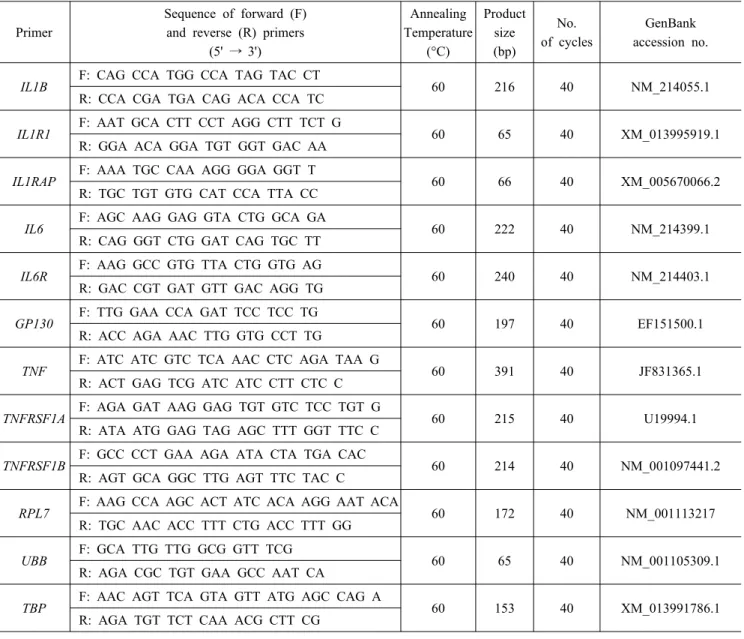
Table 1. Summary of PCR primer sequences and expected product sizes Primer

Sequence of forward (F) and reverse (R) primers

(5' → 3')

Annealing Temperature

(°C)

Product size (bp)

No.

of cycles

GenBank accession no.

IL1B F: CAG CCA TGG CCA TAG TAC CT

60 216 40 NM_214055.1

R: CCA CGA TGA CAG ACA CCA TC IL1R1 F: AAT GCA CTT CCT AGG CTT TCT G

60 65 40 XM_013995919.1

R: GGA ACA GGA TGT GGT GAC AA IL1RAP F: AAA TGC CAA AGG GGA GGT T

60 66 40 XM_005670066.2

R: TGC TGT GTG CAT CCA TTA CC IL6 F: AGC AAG GAG GTA CTG GCA GA

60 222 40 NM_214399.1

R: CAG GGT CTG GAT CAG TGC TT IL6R F: AAG GCC GTG TTA CTG GTG AG

60 240 40 NM_214403.1

R: GAC CGT GAT GTT GAC AGG TG GP130 F: TTG GAA CCA GAT TCC TCC TG

60 197 40 EF151500.1

R: ACC AGA AAC TTG GTG CCT TG

TNF F: ATC ATC GTC TCA AAC CTC AGA TAA G

60 391 40 JF831365.1

R: ACT GAG TCG ATC ATC CTT CTC C TNFRSF1A F: AGA GAT AAG GAG TGT GTC TCC TGT G

60 215 40 U19994.1

R: ATA ATG GAG TAG AGC TTT GGT TTC C TNFRSF1B F: GCC CCT GAA AGA ATA CTA TGA CAC

60 214 40 NM_001097441.2

R: AGT GCA GGC TTG AGT TTC TAC C

RPL7 F: AAG CCA AGC ACT ATC ACA AGG AAT ACA

60 172 40 NM_001113217

R: TGC AAC ACC TTT CTG ACC TTT GG UBB F: GCA TTG TTG GCG GTT TCG

60 65 40 NM_001105309.1

R: AGA CGC TGT GAA GCC AAT CA

TBP F: AAC AGT TCA GTA GTT ATG AGC CAG A

60 153 40 XM_013991786.1

R: AGA TGT TCT CAA ACG CTT CG Four micrograms of total RNA from endometrial tissues were treated with DNase I (Promega, Madison, WI) and reverse transcribed using SuperScript II Reverse Transcriptase (Invitrogen) to obtain cDNAs. The cDNA templates were then diluted 1:4 with nuclease-free water and amplified by PCR using Taq polymerase (Takara Bio, Shiga, Japan), and specific primers based on porcine IL1B, IL6, TNF and their receptor mRNA sequences. The PCR conditions, sequences of primer pairs for IL1B, IL6, TNF and their receptors and expected product sizes are listed in Table 1. The PCR products were separated on 2%

agarose gel and visualized by ethidium bromide staining. The identity of each amplified PCR product was verified by sequence analysis after cloning into the pCRII vector (Invitrogen).

4. Quantitative Real-time RT-PCR

To analyze levels of IL1B, IL6, TNF and their receptor mRNAs

in the uterine endometrial tissues, real-time RT-PCR was

performed using the Applied Biosystems StepOnePlus System

(Applied Biosystems, Foster City, CA) using the SYBR Green

method. Complementary DNAs were synthesized from 4 µg total

RNA isolated from different uterine endometrial tissues, and newly

synthesized cDNAs (total volume of 21 μl) were diluted 1:4

with nuclease-free water and then used for PCR. The Power

SYBR Green PCR Master Mix (Applied Biosystems) was used

for PCR reactions. The final reaction volume of 20 μl included

2 μl of cDNA, 10 μl of 2X Master mix, 2 μl of each primer

(100 nM), and 4 μl of dH

2

O. PCR conditions and sequences

(4)

Fig. 1. Expression of IL1B (A), IL1R1 (B) and IL1RAP (C) mRNAs in porcine uterine endometria during the estrous cycle. Endometrial tissue samples from cyclic gilts were analyzed by real-time RT-PCR and data are reported as expression relative to that detected on Day 0 of the estrous cycle after normalization of the transcript amount to the endogenous RPL7, UBB and TBP control. Data are presented as means with standard error.

Fig. 2. Expression of IL6 (A), IL6R (B) and GP130 (C) mRNAs in porcine uterine endometria during the estrous cycle. Endometrial tissue samples from cyclic gilts were analyzed by real-time RT-PCR and data are reported as expression relative to that detected on Day 0 of the estrous cycle after normalization of the transcript amount to the endogenous RPL7, UBB and TBP control. Data are presented as means with standard error.

of primer pairs are listed in Table 1. The results are reported as expression relative to the level detected on Day 12 of the estrous cycle after normalization of the transcript amount to the endogenous RPL7, UBB and TBP control by the 2

-ΔΔCT

method (Livak and Schmittgen 2001).

5. Statistical Analysis

Data from real-time RT-PCR for IL1B, IL6, TNF and their receptor expression during the estrous cycle and from explant cultures were subjected to regression analysis using the General Linear Models procedures of SAS (Cary, NC). As sources of variation, the model included day to evaluate steady-state levels of IL1B, IL6, TNF and their receptor mRNAs during the estrous cycle and dose to evaluate effects of steroid hormones in explant cultures. Data are presented as means with SEM. A P value of 0.05 or less was considered

significant, whereas a P value of 0.05 to 0.10 was considered a trend toward significance.

RESULTS

1. Expression of IL1B, IL6, TNF and Their Receptors mRNA in the Uterine Endometrium during the Estrous Cycle in Pigs

To determine the expression levels of mRNAs for the IL1B,

IL6, TNF and their receptors in the porcine uterine endometrium,

we performed real-time RT-PCR analysis. As shown in Fig. 1,

the expression of IL1B (quadratic effect of day, P < 0.01) and

IL1RAP (linear effect of day, P < 0.05) mRNAs, but not IL1R1 mRNA

was changed during the estrous cycle with highest levels at

proestrus stage. The expression of IL6 was not changed during the

estrous cycle, but the expression of IL6 receptors IL6R and GP130

(5)

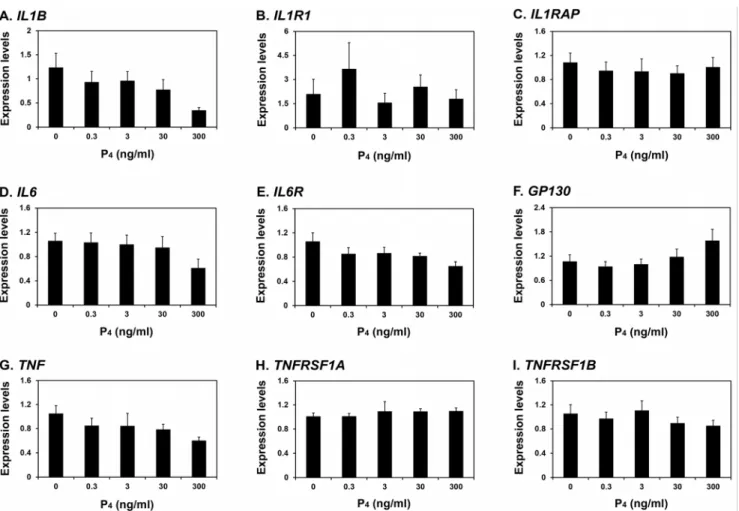
Fig. 5. Effect of progesterone on expression of pro-inflammatory cytokines and their receptors IL1B (A), IL1R1 (B), IL1RAP (C), IL6 (D), IL6R (E), GP130 (F), TNF (G), TNFRSF1A (H) and TNFRSF1B (I) mRNAs in endometrial explant cultures. Endometrial explants from immature gilts were cultured in DMEM/F-12 with increasing doses (0, 0.3, 3, 30, and 300 ng/ml) of at 37°C for 24 h. Experiments were conducted using endometrial tissues from eight immature gilts. Abundance of mRNA expression based on real-time RT-PCR analyses is relative to that for each mRNAs in the control group of endometrial explants after normalization of transcript amounts to RPL7, UBB and TBP mRNA. Data are presented as means with standard errors.

mRNAs was changed with highest levels on Day 15 of the estrous cycle (linear effect of day, P < 0.01 for IL6R; P = 0.051 for GP130) (Fig. 2). Levels of all TNF (quadratic effect of day, P < 0.01), TNFRSF1A (linear effect of day, P < 0.01), and TNFRSF1B mRNAs (linear effect of day, P = 0.0647) changed with the highest levels at proestrus stage of the estrous cycle (Fig. 3).

2. Effects of E

2

and P

4

on IL1B, IL6, TNF and Their Receptors Expression in the Uterine Endometria from Sexually Immature Gilts Because the expression of most IL1B, IL6, TNF and their receptor mRNAs increased at proestrus of the estrous cycle, we wanted to determine if the steroid hormones, E

2

or P

4

, affected the expression of IL1B, IL6, TNF and their receptors in the uterine endometrium. Since the uterine endometrium of mature

cycling gilts is under the influence of steroid hormones during the estrous cycle, which cause the changes in the expression patterns of estrogen and progesterone receptors, we took advantage of the explant cultures using uterine endometrial tissues from immature gilts. As shown in Fig. 4, increasing doses of E

2

did not affect the expression of IL1B, IL6, TNF and their receptor mRNAs in explant tissues. Interestingly, however, increasing doses of P

4

decreased the levels of IL1B, IL6, IL6R, and TNF mRNAs (linear effect of dose, P < 0.01 for IL1B;

P < 0.05 for IL6, IL6R, and TNF), whereas increasing doses

of P

4

increased GP130 in endometrial tissue explants (linear

effect of dose, P < 0.05) (Fig. 5).

(6)

Fig. 3. Expression of TNF (A), TNFRSF1A (B) and TNFRSF1B (C) mRNAs in porcine uterine endometria during the estrous cycle.

Endometrial tissue samples from cyclic gilts were analyzed by real-time RT-PCR and data are reported as expression relative to that detected on Day 0 of the estrous cycle after normalization of the transcript amount to the endogenous RPL7, UBB and TBP control.

Data are presented as means with standard error.

Fig. 4. Effect of estradiol-17  on expression of pro-inflammatory cytokines and their receptors IL1B (A), IL1R1 (B), IL1RAP (C), IL6

(D), IL6R (E), GP130 (F), TNF (G), TNFRSF1A (H) and TNFRSF1B (I) mRNAs in endometrial explant cultures. Endometrial explants

from immature gilts were cultured in DMEM/F-12 with increasing doses (0, 5, 50, 500, and 5000 pg/ml) of estradiol-17  (E

2

) at 37°C

for 24 h. Experiments were conducted using endometrial tissues from eight immature gilts. Abundance of mRNA expression based on

real-time RT-PCR analyses is relative to that for each mRNAs in the control group of endometrial explants after normalization of transcript

amounts to RPL7, UBB and TBP mRNA. Data are presented as means with standard errors.

(7)

DISCUSSION

The significant findings of this study in pigs are that 1) the expression of pro-inflammatory cytokines and their receptors, IL1B, IL1RAP, IL6R, GP130, TNF, TNFRSF1A, and TNFRSF1B changes in the uterine endometrium with the highest levels during proestrus of the estrous cycle, and 2) P

4

regulates expression of IL1B, IL6, IL6R, GP130, and TNF in the uterine endometrial explant tissues.

The uterine endometrium undergoes cyclical change of morphology and function during the estrous cycle, and the change is mediated by various factors including hormones, growth factors, prostaglandins, and cytokines (Clark and Kruger 2016; Gray et al., 2001; Soede et al., 2011). Ovarian hormones regulate various endometrial functions such as gene expression and secretory activity, which, in turn, affect ovarian function. Among many factors known to be involved in regulation of endometrial function during the estrous cycle and pregnancy, pro-inflammatory cytokines IL1B, IL6, and TNF are shown to be expressed in the uterine endometrium in humans (Hunt et al., 1992), mice (Robertson and Seamark 1990), mares (Fumuso et al., 2003; Palm et al., 2008), pigs (Franczak et al., 2013; Jana et al., 2008; Seo et al., 2012).

However, the expression and function of these cytokines in the uterine endometrium during the estrous cycle has not been fully understood in pigs.

In this study we evaluated the expression of pro- inflammatory cytokines and their receptors in the uterine endometrium during the estrous cycle in pigs. Result of this study showed that the expression of pro-inflammatory cytokines IL1B and TNF mRNAs, but not IL6 mRNAs, changed in the uterine endometrium during the estrous cycle with higher levels at proestrus than diestrus. Levels of cytokine receptors IL1RAP, IL6R, GP130, TNFRSF1A, and TNFRSF1B mRNAs were also highest at proestrus phase during the estrous cycle. Since the endometrial function is regulated by the ovarian steroid hormones during the estrous cycle and there is a transition in steroid hormone dominance between progesterone and estrogen at around Day 15 of pregnancy in pigs (Soede et al., 2011), we postulate that the high levels of pro-inflammatory cytokine expression at proestrus phase are closely related to the levels of steroid hormones. Interestingly, levels of IL6 mRNAs during the estrous cycle were biphasic with high levels on Day 6 and

Day 15 of pregnancy. It has been shown that IL6 levels in the uterine endometrium are high on Day 16 between Days 10 and 18 of the estrous cycle in pigs (Blitek et al., 2012). This finding suggest that high levels of IL6 expression is also related to decreased progesterone and increased estrogen levels at proestrus, similar to other pro-inflammatory cytokines and their receptors. The reason why IL6 levels were increased on Day 6 of the estrous cycle is not clear.

It has been shown that the expression of IL1B, IL6, TNF and their receptors in the uterine endometrium during pregnancy has been shown in several species, including rodents (Hunt et al., 1997; Robertson et al., 1992) and pigs (Blitek et al., 2012; Seo et al., 2012) and indicated that conceptus-derived factors affect the expression of these molecules in the endometrium. It also has been shown that administration of steroid hormone promotes expression of Il6 in ovariectomized mice (Robertson et al., 1992; Sanford et al., 1992), and TNF mRNA and protein are produced in the murine endometrium by estrogen and progesterone (Roby and Hunt 1994).

In this study, our results showed that the expression of most IL1B, IL6, TNF and their receptors was changed in the uterine endometrium with higher levels at proestrus of the estrous cycle, which corresponds to the follicular phase of the ovarian cycle. The expression pattern of the pro-inflammatory cytokines and their receptors in this study made us to hypothesize that the transition of dominance of steroid hormones estrogen and progesterone during the estrous cycle is a critical factor for expression of the pro-inflammatory cytokines and their receptors. Thus, we took advantage of the explant cultures using uterine endometrial tissues from immature gilts to examine the effect of steroid hormones on cytokine expression and found that increasing doses of P

4

decreased the levels of IL1B, IL6, IL6R, and TNF mRNAs and

increased GP130 mRNA levels. However, estrogen did not

have any effect on IL1B, IL6, TNF and their receptors in

explant cultures. These data suggest that the endometrial

expression of IL1B, IL6, IL6R, and TNF during the estrous

cycle is regulated by progesterone rather than estrogen; during

metestrus to diestrus, the progesterone-dominant period,

progesterone down-regulates IL1B, IL6, IL6R, and TNF

expression, while progesterone-mediated down-regulation of

IL1B, IL6, IL6R, and TNF expression during late diestrus to

proestrus is released due to the decreased levels of

(8)

progesterone during this period. In pigs, infiltration and distribution of leukocytes in the uterine endometrium change during the estrous cycle depending on the levels of steroid hormones with the high number of lymphocytes and macrophages at diestrus and neutrophils at proestrus (Kaeoket et al., 2002). Since that those immune cells produce pro-inflammatory cytokines or affect cytokine production in other cell types, it is possible that the immune cells may affect endometrial expression of pro-inflammatory cytokines.

Even though endometrial expression of IL1RAP were not affected by estrogen, our previous study has shown that estrogen increased IL1RAP in the uterine endometrial tissues derived from Day 12 of the estrous cycle (Seo et al., 2012), suggesting that endometrial responsiveness to estrogen may different depending on maturity of gilt and the stage of estrous cycle. In spite that levels of GP130 mRNA were highest on Day 15 of pregnancy during the estrous cycle, the reason why GP130 is increased by the increasing doses of progesterone is not clear. Also, the mechanism regulating other cytokine and their receptor expression in the endometrium during the cycle is yet to be clarified.

It has been reported that IL1B and TNF act on the process of implantation and cervical ripening and dilation at term in human (Fumuso et al., 2003; Kelly 2002). In rodents, IL6 induces endometrial production of PGE

2

and PGF

2

and myometrial expression of PTGFR (PGF

2

receptor) and OXTR (oxytocin receptor) to regulate the timing of parturition by in the uterus (Prins et al., 2012; Robertson et al., 2010).

IL6 also induces endometrial E

2

and PGF

2

production during early pregnancy and attachment and proliferation of trophoblast cells in vitro in pigs (Blitek et al., 2012; Franczak et al., 2012). TNF family members expressed at the maternal-fetal interface induce apoptosis, syncytialization, and trophoblast proliferation and invasion in normal conditions, and are also involved in recurrent spontaneous abortion, preterm labor, pre-eclampsia, and intrauterine growth restriction in humans (Haider and Knofler 2009).

Although the expression and function of pro-inflammatory cytokines at the maternal-fetal interface have been reported, their function in the uterine endometrium during the estrous cycle is very limited. In this study, the finding that several pro-inflammatory cytokines and their receptor were highly expressed in the uterine endometrium at late diestrus and proestrus indicates that these cytokines may play a critical role

in endometrial remodeling during this period. In primates, dramatic endometrial remodeling occurs at menstruation and is associated with TNF. Although the dramatic change as observed in primates is not evident in the uterine endometrium during the cycle in pigs, it is well known that there are morphological and functional alterations of endometrial cells during the estrous cycle in pigs (Spencer et al., 1993; Tarleton et al., 1999), and this process may be related with the expression of pro-inflammatory cytokines. It is also possible that these pro-inflammatory cytokines are directly involved in endometrial production of PG synthesis for luteolysis.

However, detailed function of pro-inflammatory cytokines during the estrous cycle in pigs needs to be further investigated.

In conclusion, this study showed that pro-inflammatory cytokine IL1B, IL6, TNF, and their receptors are expressed in the uterine endometrium with high levels during proestrus of the estrous cycle and progesterone decreases the expression of some of cytokines in pigs. These results indicate that the expression of endometrial pro-inflammatory cytokines is regulated depending the stage of the estrous cycle and pro-inflammatory cytokines may play an important role in regulation of endometrial function during the estrous cycle in pigs.

REFERENCES

Anegon I, Cuturi MC, Godard A, Moreau M, Terqui M, Martinat-Botte F and Soulillou JP. 1994. Presence of leukaemia inhibitory factor and interleukin 6 in porcine uterine secretions prior to conceptus attachment. Cytokine 6(5):493-499.

Blitek A, Morawska E and Ziecik AJ. 2012. Regulation of expression and role of leukemia inhibitory factor and interleukin-6 in the uterus of early pregnant pigs. Theriogenology 78(5):951-964.

Chen HL, Yang YP, Hu XL, Yelavarthi KK, Fishback JL and Hunt JS. 1991. Tumor necrosis factor alpha mRNA and protein are present in human placental and uterine cells at early and late stages of gestation. Am. J. Pathol. 139(2):

327-335.

Choudhuri R and Wood GW. 1993. Production of

interleukin-1, interleukin-6, and tumor necrosis factor alpha

(9)

in the uterus of pseudopregnant mice. Biol. Reprod.

49(3):596-603.

Clark AR and Kruger JA. 2016. Mathematical modeling of the female reproductive system: from oocyte to delivery. Wiley Interdiscip. Rev. Syst. Biol. Med.

Correia-Alvarez E, Gomez E, Martin D, Carrocera S, Perez S, Peynot N, Giraud-Delville C, Caamano JN, Balseiro A, Sandra O, Duranthon V and Munoz M. 2015. Early embryonic and endometrial regulation of tumor necrosis factor and tumor necrosis factor receptor 2 in the cattle uterus. Theriogenology 83(6):1028-1037.

De M, Sanford TH and Wood GW. 1992. Detection of Interleukin-1, Interleukin-6, and Tumor-Necrosis-Factor- Alpha in the Uterus during the 2nd-Half of Pregnancy in the Mouse. Endocrinology 131(1):14-20.

Diehl S and Rincon M. 2002. The two faces of IL-6 on Th1/Th2 differentiation. Mol. Immunol. 39(9):531-536.

Franczak A, Wojciechowicz B, Zmijewska A, Kolakowska J and Kotwica G. 2013. The effect of interleukin 1beta and interleukin 6 on estradiol-17beta secretion in the endometrium of pig during early pregnancy and the estrous cycle. Theriogenology 80(2):90-98.

Franczak A, Zmijewska A, Kurowicka B, Wojciechowicz B, Petroff BK and Kotwica G. 2012. The effect of tumor necrosis factor alpha (TNFalpha), interleukin 1beta (IL1beta) and interleukin 6 (IL6) on endometrial PGF2alpha synthesis, metabolism and release in early-pregnant pigs. Theriogenology 77(1):155-165.

Fumuso E, Giguere S, Wade J, Rogan D, Videla-Dorna I and Bowden RA. 2003. Endometrial IL-1beta, IL-6 and TNF-alpha, mRNA expression in mares resistant or susceptible to post-breeding endometritis. Effects of estrous cycle, artificial insemination and immunomodulation. Vet. Immunol.

Immunopathol. 96(1-2):31-41.

Gray CA, Bartol FF, Tarleton BJ, Wiley AA, Johnson GA, Bazer FW and Spencer TE. 2001. Developmental biology of uterine glands. Biol. Reprod. 65(5):1311-1323.

Haider S and Knofler M. 2009. Human tumour necrosis factor:

physiological and pathological roles in placenta and endometrium. Placenta 30(2):111-123.

Healy LL, Cronin JG and Sheldon IM. 2015. Polarized Epithelial Cells Secrete Interleukin 6 Apically in the Bovine Endometrium. Biol. Reprod. 92(6):151.

Hirano T, Akira S, Taga T and Kishimoto T. 1990. Biological

and clinical aspects of interleukin 6. Immunol. Today 11(12):443-449.

Hondo E, Kokubu K, Kato K and Kiso Y. 2005. Localization of interieukin-6 receptor rnRNA in the pregnant and non-pregnant mouse uterus. J. Reprod. Develop. 51(6):777-781.

Hunt JS, Chen HL, Hu XL and Tabibzadeh S. 1992. Tumor necrosis factor-alpha messenger ribonucleic acid and protein in human endometrium. Biol. Reprod. 47(1):141-147.

Hunt JS, Miller L, Roby KF, Huang J, Platt JS and DeBrot BL. 1997. Female steroid hormones regulate production of pro-inflammatory molecules in uterine leukocytes. J.

Reprod. Immunol. 35(2):87-99.

Hunter CA and Jones SA. 2015. IL-6 as a keystone cytokine in health and disease. Nat. Immunol. 16(5):448-457.

Jacobs AL, Sehgal PB, Julian J and Carson DD. 1992. Secretion and hormonal regulation of interleukin-6 production by mouse uterine stromal and polarized epithelial cells cultured in vitro.

Endocrinology 131(3):1037-1046.

Jana B, Kozlowska A, Andronowska A and Jedlinska- Krakowska M. 2008. The effect of tumor necrosis factor-alpha (TNF-alpha), interleukin (IL)-1 beta and IL-6 on chorioamnion secretion of prostaglandins (PG)F 2 alpha and E2 in pigs. Reprod. Biol. 8(1):57-68.

Ka H, Jaeger LA, Johnson GA, Spencer TE and Bazer FW.

2001. Keratinocyte growth factor is up-regulated by estrogen in the porcine uterine endometrium and functions in trophectoderm cell proliferation and differentiation.

Endocrinology 142(6):2303-2310.

Kaeoket K, Persson E and Dalin AM. 2002. Corrigendum to

"The sow endometrium at different stages of the oestrus cycle: studies on morphological changes and infiltration by cells of the immune system." [Anim. Reprod. Sci. 65 (2001) 95-114]. Anim. Reprod. Sci. 73(1-2):89-107.

Kelly RW. 2002. Inflammatory mediators and cervical ripening. J. Reprod. Immunol. 57(1-2):217-224.

Laird SM, Tuckerman EM, Cork BA and Li TC. 2000.

Expression of nuclear factor kappa B in human endometrium; role in the control of interleukin 6 and leukaemia inhibitory factor production. Mol. Hum. Reprod.

6(1):34-40.

Lim KJ, Odukoya OA, Ajjan RA, Li TC, Weetman AP and Cooke ID. 1998. Profile of cytokine mRNA expression in peri-implantation human endometrium. Mol. Hum. Reprod.

4(1):77-81.

(10)

Livak KJ and Schmittgen TD. 2001. Analysis of relative gene expression data using real-time quantitative PCR and the 2(-Delta Delta C(T)) Method. Methods 25(4):402-408.

Mathew DJ, Newsom EM, Guyton JM, Tuggle CK, Geisert RD and Lucy MC. 2015. Activation of the transcription factor nuclear factor-kappa B in uterine luminal epithelial cells by interleukin 1 Beta 2: a novel interleukin 1 expressed by the elongating pig conceptus. Biol. Reprod.

92(4):107.

Mathialagan N, Bixby JA and Roberts RM. 1992. Expression of interleukin-6 in porcine, ovine, and bovine preimplantation conceptuses. Mol. Reprod. Dev. 32(4):324-330.

Modric T, Kowalski AA, Green ML, Simmen RC and Simmen FA. 2000. Pregnancy-dependent expression of leukaemia inhibitory factor (LIF), LIF receptor-beta and interleukin-6 (IL-6) messenger ribonucleic acids in the porcine female reproductive tract. Placenta 21(4):345-353.

Palm F, Walter I, Budik S, Kolodziejek J, Nowotny N and Aurich C. 2008. Influence of different semen extenders and seminal plasma on PMN migration and on expression of IL-1beta, IL-6, TNF-alpha and COX-2 mRNA in the equine endometrium. Theriogenology 70(5):843-851.

Prins JR, Gomez-Lopez N and Robertson SA. 2012.

Interleukin-6 in pregnancy and gestational disorders. J.

Reprod. Immunol. 95(1-2):1-14.

Robertson SA and Seamark RF. 1990. Granulocyte macrophage colony stimulating factor (GM-CSF) in the murine reproductive tract: stimulation by seminal factors. Reprod.

Fertil. Dev. 2(4):359-368.

Robertson SA, Mayrhofer G and Seamark RF. 1992. Uterine Epithelial-Cells Synthesize Granulocyte-Macrophage Colony- Stimulating Factor and Interleukin-6 in Pregnant and Nonpregnant Mice. Biol. Reprod. 46(6):1069-1079.

Robertson SA, Christiaens I, Dorian CL, Zaragoza DB, Care AS, Banks AM and Olson DM. 2010. Interleukin-6 is an essential determinant of on-time parturition in the mouse.

Endocrinology 151(8):3996-4006.

Roby KF and Hunt JS. 1994. Mouse endometrial tumor necrosis factor-alpha messenger ribonucleic acid and protein: localization and regulation by estradiol and progesterone. Endocrinology 135(6):2780-2789.

Ross JW, Malayer JR, Ritchey JW and Geisert RD. 2003.

Characterization of the interleukin-1beta system during porcine trophoblastic elongation and early placental

attachment. Biol. Reprod. 69(4):1251-1259.

Sanford TR, De M and Wood GW. 1992. Expression of colony-stimulating factors and inflammatory cytokines in the uterus of CD1 mice during days 1 to 3 of pregnancy.

J. Reprod. Fertil. 94(1):213-220.

Seo H, Choi Y, Shim J, Choi Y and Ka H. 2012. Regulatory mechanism for expression of IL1B receptors in the uterine endometrium and effects of IL1B on prostaglandin synthetic enzymes during the implantation period in pigs. Biol. Reprod.

87(2):31.

Seo H, Choi Y, Shim J, Yoo I and Ka H. 2014. Comprehensive analysis of prostaglandin metabolic enzyme expression during pregnancy and the characterization of AKR1B1 as a prostaglandin F synthase at the maternal-conceptus interface in pigs. Biol. Reprod. 90(5):99.

Simon C, Gimeno MJ, Mercader A, O'Connor JE, Remohi J, Polan ML and Pellicer A. 1997. Embryonic regulation of integrins beta 3, alpha 4, and alpha 1 in human endometrial epithelial cells in vitro. J. Clin. Endocrinol. Metab.

82(8):2607-2616.

Simon C, Valbuena D, Krussel J, Bernal A, Murphy CR, Shaw T, Pellicer A and Polan ML. 1998. Interleukin-1 receptor antagonist prevents embryonic implantation by a direct effect on the endometrial epithelium. Fertil. Steril. 70(5):896-906.

Soede NM, Langendijk P and Kemp B. 2011. Reproductive cycles in pigs. Anim. Reprod. Sci. 124(3-4):251-258.

Spencer TE, Wiley AA and Bartol FF. 1993. Neonatal age and period of estrogen exposure affect porcine uterine growth, morphogenesis, and protein synthesis. Biol. Reprod.

48(4):741-751.

Subramaniam S, Stansberg C and Cunningham C. 2004. The interleukin 1 receptor family. Dev. Comp. Immunol.

28(5):415-428.

Tabibzadeh S, Kong QF, Babaknia A and May LT. 1995.

Progressive rise in the expression of interleukin-6 in human endometrium during menstrual cycle is initiated during the implantation window. Hum. Reprod. 10(10):2793-2799.

Tarleton BJ, Wiley AA and Bartol FF. 1999. Endometrial development and adenogenesis in the neonatal pig: effects of estradiol valerate and the antiestrogen ICI 182,780. Biol.

Reprod. 61(1):253-263.

Woodward EM, Christoffersen M, Campos J, Betancourt A, Horohov D, Scoggin KE, Squires EL and Troedsson MH.

2013. Endometrial inflammatory markers of the early immune

(11)

response in mares susceptible or resistant to persistent breeding-induced endometritis. Reproduction 145(3):289-296.

Yelavarthi KK, Chen HL, Yang YP, Cowley BD, Jr., Fishback JL and Hunt JS. 1991. Tumor necrosis factor-alpha mRNA and protein in rat uterine and placental cells. J. Immunol.

146(11):3840-3848.

Zhao H, Kalish F, Schulz S, Yang Y, Wong RJ and Stevenson DK. 2015. Unique roles of infiltrating myeloid cells in the murine uterus during early to midpregnancy. J. Immunol.

194(8):3713-3722.

Received November 30 2016, Revised December 27, 2016,

Accepted December 28, 2016

수치

Table 1. Summary of PCR primer sequences and expected product sizes Primer
Fig. 2. Expression of IL6  (A),  IL6R  (B)  and  GP130  (C) mRNAs in porcine uterine endometria during the estrous cycle
Fig. 5. Effect of progesterone on expression of pro-inflammatory cytokines and their receptors IL1B (A), IL1R1  (B),  IL1RAP  (C),  IL6 (D),  IL6R  (E),  GP130  (F),  TNF  (G),  TNFRSF1A  (H)  and  TNFRSF1B  (I) mRNAs in endometrial explant cultures
Fig. 3. Expression of TNF  (A),  TNFRSF1A  (B)  and  TNFRSF1B  (C) mRNAs in porcine uterine endometria during the estrous cycle.

참조

관련 문서

Modern Physics for Scientists and Engineers International Edition,

Ross: As my lawfully wedded wife, in sickness and in health, until

glen plaids 글렌 플레이드와 캐시미어 카디건, 캐리지 코트, 그리고 케이프 -&gt; 격자무늬의 캐시미어로 된 승마용 바지, 마부용 코트, 말 그림이 수

다양한 번역 작품과 번역에 관한 책을 읽는 것은 단순히 다른 시대와 언어, 문화의 교류를 넘어 지구촌이 서로 이해하고 하나가

The index is calculated with the latest 5-year auction data of 400 selected Classic, Modern, and Contemporary Chinese painting artists from major auction houses..

The key issue is whether HTS can be defined as the 6th generation of violent extremism. That is, whether it will first safely settle as a locally embedded group

The “Asset Allocation” portfolio assumes the following weights: 25% in the S&amp;P 500, 10% in the Russell 2000, 15% in the MSCI EAFE, 5% in the MSCI EME, 25% in the

1 John Owen, Justification by Faith Alone, in The Works of John Owen, ed. John Bolt, trans. Scott Clark, &#34;Do This and Live: Christ's Active Obedience as the