©The Korean Society of Plant Pathology
ccThis is an open access article distributed under the terms of the Creative Commons Attribution Non-Commercial License (http://creativecommons.org/
licenses/by-nc/4.0/), which permits unrestricted non-commercial use, distribution, and reproduction in any medium, provided the original work is properly cited.
Research Article Open Access
대계근에서 분리한 Polyacetylene계 화합물을 이용한 밀 이삭마름병 방제
Biological Control of Fusarium Head Blight on Wheat by Polyacetylenes Derived from Cirsium japonicum Roots
*Corresponding author Tel: +82-62-530-2132 Fax: +82-62-530-2139 E-mail: [email protected]
김지인1ㆍ김기현1ㆍ박애란1ㆍ최경자2ㆍ박해웅3ㆍ김인선1ㆍ김진철1*
1전남대학교 농화학과, 2한국화학연구원 친환경신물질연구센터,
3세계김치연구소 신공정발효연구단
Ji-In Kim1, Kihyun Kim1, Ae Ran Park1, Gyung Ja Choi2, Hae Woong Park3, In Seon Kim1, and Jin-Cheol Kim1*
1Department of Agricultural Chemistry, Institute of Environmentally Friendly Agriculture, College of Agriculture and Life Sciences, Chonnam National University, Gwangju 61186, Korea
2Center for Eco-friendly New Materials, Korea Research Institute of Chemical Technology, Daejeon 34114, Korea
3Advanced Process Technology and Fermentation Research Group, World Institute of Kimchi an Annex of Korea Food Research Institute, Gwangju 61755, Korea
Received August 12, 2016 Revised August 22, 2016 Accepted August 22, 2016
Chemical fungicides have reduced Fusarium head blight (FHB) severity. However, by the effects of fungicide residues, they can only be used up to 30 days before time of harvest. Therefore, the development of new biofungicides that are applicable until harvest is required. In order to select plant extracts having antifungal activity against Fusarium graminearum for the control of FHB, we investigated the inhibitory effects of 225 medicinal plant extracts on spore germination of F.
graminearum. Of these plant extracts, the methanol extract of Cirsium japonicum (CJ) roots showed the strongest antifungal activity. Through solvent partitioning, repeated column chromatography, and spore germination bioassay, two chemicals were purified and then their chemical structures were identified as ciryneol C (CC) and 1-heptadecene-11,13-diyne-8,9,10-triol (HD-ol) which are polyacetylene substances. Two active compounds effectively inhibited the germination of F.
graminearum macroconidia; HD-ol (IC50 of 3.17 μg/ml) showed stronger spore germination inhibitory activity than that of CC (IC50 of 28.14 μg/ml). In addition, the wettable powder type formulation of ethyl acetate extract of CJ roots suppressed the development of FHB in dose-dependent manner, with control values of 78.92% and 31.56% at 250- and 500-fold dilutions, respectively. Combining these findings suggest that the crude extract of CJ roots containing polyacetylene compounds could be used as botanical fungicide for the control of FHB.
Keywords: Cirsium japonicum roots, Fusarium graminearum, Fusarium head blight, Polyacetylenes
Research in Plant Disease pISSN 1598-2262, eISSN 2233-9191 www.online-rpd.org
145
서 론
Fusarium graminearum은 밀, 보리, 벼 등에 이삭마름병을, 옥수수에는 이삭썩음병을 일으키는 원인균으로 곡물의 수 확량을 감소시킬 뿐만 아니라 인간과 가축에 해로운 곰팡이 독소인 trichothecenes와 zearalenone을 생성하여 식품과 사 료의 안정성을 위협하는 것으로도 알려져 있다(Desjardins, 2006; Marasas 등, 1984). F. graminearum은 경제적으로 막대 한 피해를 입히는 식물병원균으로 아시아, 북미, 유럽, 남미 등 곡물이 재배되는 전지역에서 F. graminearum에 의한 병 발 생이 보고되고 있다. 우리나라에서도 1963년 맥류 수확기 에 이삭마름병이 남부지방에 대발생하여 맥류 수확량이 평 균적으로 40%–60%, 심한 지역은 80%–100% 감소하였으며, 1998년에도 대발생하여 전북 98%, 전남 25% 보리수확량에 큰 피해를 유발하였다(Chung, 1975; Ryu 등, 2011).
F. graminearum에 의한 이삭마름병의 방제는 살균제 사용, 저항성 품종의 도입, 윤작과 같은 종합적인 전략에 의해 이 루어지고 있으나 살균제의 옆면살포만이 작물의 생육기 간에 효과적으로 사용할 수 있는 유일한 방제방법으로 알 려져 있다. 이러한 이유로 지난 수십 년 동안 F. graminearum 에 의한 이삭마름병 방제에 화학농약이 지속적으로 사용되 어 왔다. 하지만 과도한 합성농약의 사용은 농약 잔류로 인 해 인축에 독성 문제뿐만 아니라 환경오염, 생태계 교란, 저 항성 병원균의 증가 등 여러 가지 문제를 야기시키고 있다 (Barnard 등, 1997; Steffens 등, 1996). 또한 안전한 농작물에 대 한 소비자의 선호도가 증가함에 따라 우리나라를 포함한 OECD 가입국들을 중심으로 합성농약의 사용량을 감축하고 자 친환경농업정책을 시행 중이며 식물추출물, 길항미생물, 광물질 등을 이용한 친환경적인 농약개발에 대한 연구도 활 발히 진행되고 있다.
식물추출물은 다양한 생리활성물질을 보유하고 있으며 직접적으로 이용할 수 있기 때문에 생태계에 안전하고, 부 가가치가 높은 친환경농산물 생산에 사용할 수 있다는 장 점을 가지고 있다(Copping과 Menn, 2000). MilsanaTM는 식물 추출물을 이용해 상품화에 성공하여 전 세계적으로 시판 되는 대표적인 친환경살균제로, 왕호장근 추출물을 이용하 였으며 그 밖에도 Macleaya속 식물추출물, cinnamaldehyde, hohoba oil 등이 식물병원균에 항진균활성을 가지고 있다 고 보고되고 있다. 국내의 경우 항균성 식물추출물에 대한 연구는 대부분이 민간요법에서 사용하는 식물이나 한약재 를 대상으로 수행되었다. 이러한 추출물은 예전부터 의학, 식품 분야에서 항균제로 이용되고 있었으며, 작물에 병을
유발하는 병원균에 대한 항균효과도 다양하게 보고되었다 (Kim 등, 2011; Yoon 등, 2011a, 2011b).
엉겅퀴(Cirsium japonicum)는 국화과에 속하는 초본식물로 어린 순은 식용으로 사용되고 성숙한 뿌리는 약용으로 사 용된다. 엉겅퀴의 뿌리가 대계근이라는 한약명으로 류마티 스관절염, 종기치료 및 지혈에 사용되고 있으며 엉겅퀴의 용도와 관련하여 미백 화장료 조성물, 피부외용제 조성물 및 피의 발아억제 조성물 등이 보고되어 있다(Liao 등, 2010;
Yin 등, 2008). 대계근은 ciryneol A-E, 1-heptadecene-11,13- diyne-8,9,10-triol 등의 polyacetylene계 화합물 및 licoricidin, pectolinarin 등의 플라보노이드 화합물을 포함하고 있다고 알려져 있다(Kim과 Kim, 2010). Polyacetylene계 화합물은 생 체 외 배양시험에서의 항암활성이 보고되었고 식물병원균 인 벼 도열병, 벼 잎집무늬마름병, 토마토 잿빛곰팡이병, 토 마토 역병, 밀 붉은녹병, 보리 흰가루병 및 고추 탄저병에 대 해 방제활성을 가진다고 보고되어 있으나(Yoon 등, 2011a), F. graminearum에 대한 항균활성에 대해서는 아직 보고된 바 가 없다.
이에 본 연구는 polyacetylene계 화합물 또는 이를 포함하 는 대계근 추출물이 이삭마름병에 대하여 우수한 방제활성 을 나타냄을 발견하였고, ciryneol C와 1-heptadecene-11,13- diyne-8,9,10-triol이 F. graminearum에 대한 항균물질임을 밝 혔다. 더욱이 본 연구를 통하여 대계근 추출물을 제형화하 고 밀 이삭마름병에 대한 방제효과를 조사함으로써 천연물 농약 후보물로서의 가능성을 제시하고자 한다.
재료 및 방법
식물시료. 한국식물추출물은행으로부터 분양 받은 한 약재 225종의 ethanol 추출물이 F. graminearum에 대한 항균 활성 시험에 사용되었다(Table 1). 또한 F. graminearum에 항 진균활성을 갖는 물질을 분리하기 위하여 광주 한약재도매 시장에서 대계근(Dongkyeong Corp., China)을 건조상태로 구 입하여 사용하였다.
사용균주. F. graminearum 야생종 Z-3639 (Bowden과 Leslie, 1999)를 식물추출물과 대계근 추출물의 항균활성을 조사 하기 위한 병원균으로 사용하였다. 시험 균주의 생육배지 는 potato dextrose agar를 사용하였으며, 병원성 검정시험 을 위한 포자를 생성하기 위하여 carboxymethylcellulose 배 지(CMC, carboxymethylcellulose 15 g, NH4NO3 1 g, KH2PO4 1 g, MgSO4 · 7H2O 0.5 g, yeast extract 1 g/l)를 사용하였다(Cappellini
와 Peterson, 1965; Leslie 등, 2006). F. graminearum은 장기보관 을 위해 균사체를 20% glycerol 용액에 현탁하여 –70oC에 보 관하였다.
225종 한약재 추출물의 항진균 활성 검색. CMC 배 지에 F. graminearum을 접종하고 3일 동안 25oC에서 200 rpm 으로 진탕 배양한 후 멸균한 4겹 거즈로 걸러 포자 현탁액을 얻었다. 4oC에서 10,000 rpm으로 15분간 포자현탁액을 원심 분리한 후 상층액은 버리고, 침전물에 potato dextrose broth 를 가하여 포자를 회수하였다. 포자는 hemocytometer로 계 수하여 1×10⁶ macroconidia/ml의 농도로 제조하였고 96 well plate의 각 well에 198 μl씩 넣은 후, dimethyl sulfoxide (DMSO) 로 녹인 225종 한약재 ethanol 추출물 2 μl를 첨가하여 한약 재 ethanol 추출물의 최종 농도가 100, 50, 25 μg/ml가 되도록 처리하였다. 한약재 추출물의 항진균 활성은 25oC에서 24시 간 정치 배양한 후에 균생육 저해 여부를 육안으로 관찰하 여 측정하였다. 무처리구에는 1% DMSO를 처리하였고, 3반 복으로 실험하였다.
대계근 추출 및 용매별 분획물 활성 확인. 대계근 (400 g)은 광주 한약재도매시장에서 건조한 상태로 구입하 여 마쇄한 후 methanol (1 l)에 하루 동안 실온에서 침지시켜
추출하였다. Methanol 추출물을 여과지에 거른 후, residue에 다시 1 l의 methanol을 가하여 한 번 더 추출하였다. 두 번에 거쳐 추출하여 확보한 methanol 추출물을 수합한 후 rotary evaporator를 이용하여 감압 농축하였다. Methanol 추출물 (23.77 g)을 500 ml의 멸균수와 동량의 ethyl acetate (EtoAc)로 2회 분획하였다. EtOAc 추출물에 anhydrous sodium sulfate를 가하여 물을 완전히 제거한 후 rotary evaporator를 이용해서 감압 농축하였다. 남아 있는 물층에 400 ml의 butanol을 2회 첨가하여 분획한 후 얻어진 butanol층과 물층을 각각 감압 농축하였다.
이와 같이 얻어진 EtOAc층(4.52 g), butanol층(2.93 g), 물층 (12.13 g), 그리고 대계근 methanol 추출물의 F. graminearum macroconidia에 대한 포자발아 억제 활성 여부를 225종 한약 재 추출물의 항진균 활성 검색에 기술한 동일한 방법으로 조사하였다. EtOAc층은 acetone으로, butanol층은 methanol 로, 물층은 10% ethanol을 사용하여 용해한 후 추출물의 최 종 농도가 1,000, 500, 250, 125, 62.5, 31.25, 15.625, 7.8125 μg/
ml가 되도록 처리하였다. 처리당 3반복으로 실험하였으며, 25oC에서 정치배양하여 무처리구의 포자가 모두 발아한 시 간(7–8시간)에 포자발아 여부를 관찰하였다. 각 well에 있는 배양액을 micropipette로 10 μl씩 취하여 hemocytometer에 옮겨 포자발아 여부를 현미경(100배, Harris Swift M1000-D;
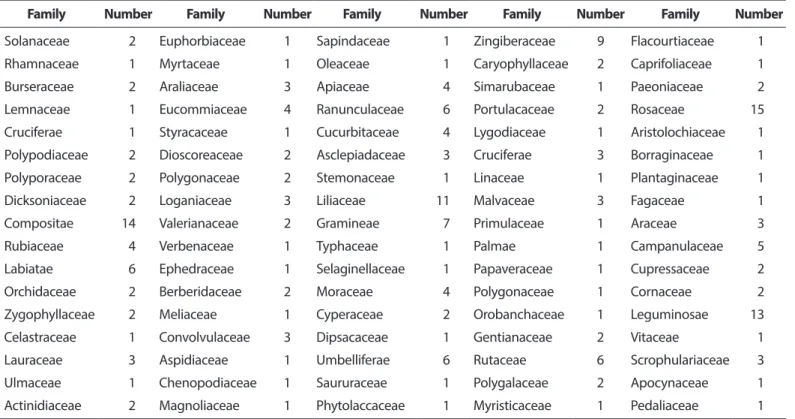
Table 1. Plant extracts (85 families, 225 samples) used in this study
Family Number Family Number Family Number Family Number Family Number
Solanaceae 2 Euphorbiaceae 1 Sapindaceae 1 Zingiberaceae 9 Flacourtiaceae 1
Rhamnaceae 1 Myrtaceae 1 Oleaceae 1 Caryophyllaceae 2 Caprifoliaceae 1
Burseraceae 2 Araliaceae 3 Apiaceae 4 Simarubaceae 1 Paeoniaceae 2
Lemnaceae 1 Eucommiaceae 4 Ranunculaceae 6 Portulacaceae 2 Rosaceae 15
Cruciferae 1 Styracaceae 1 Cucurbitaceae 4 Lygodiaceae 1 Aristolochiaceae 1
Polypodiaceae 2 Dioscoreaceae 2 Asclepiadaceae 3 Cruciferae 3 Borraginaceae 1
Polyporaceae 2 Polygonaceae 2 Stemonaceae 1 Linaceae 1 Plantaginaceae 1
Dicksoniaceae 2 Loganiaceae 3 Liliaceae 11 Malvaceae 3 Fagaceae 1
Compositae 14 Valerianaceae 2 Gramineae 7 Primulaceae 1 Araceae 3
Rubiaceae 4 Verbenaceae 1 Typhaceae 1 Palmae 1 Campanulaceae 5
Labiatae 6 Ephedraceae 1 Selaginellaceae 1 Papaveraceae 1 Cupressaceae 2
Orchidaceae 2 Berberidaceae 2 Moraceae 4 Polygonaceae 1 Cornaceae 2
Zygophyllaceae 2 Meliaceae 1 Cyperaceae 2 Orobanchaceae 1 Leguminosae 13
Celastraceae 1 Convolvulaceae 3 Dipsacaceae 1 Gentianaceae 2 Vitaceae 1
Lauraceae 3 Aspidiaceae 1 Umbelliferae 6 Rutaceae 6 Scrophulariaceae 3
Ulmaceae 1 Chenopodiaceae 1 Saururaceae 1 Polygalaceae 2 Apocynaceae 1
Actinidiaceae 2 Magnoliaceae 1 Phytolaccaceae 1 Myristicaceae 1 Pedaliaceae 1
Swift Optical Instruments, Schertz, TX, USA)으로 관찰하였다.
각 well당 2회 현미경으로 포자발아 여부를 관찰하였으며, 각 회당 100개의 포자를 관찰하였다.
활성 물질의 분리 정제 및 구조 동정. EtOAc층(4.52 g)으로부터 F. graminearum에 대하여 항균활성을 보이는 물 질을 분리하기 위하여 Silica gel column (Merck, Darmstadt, Germany)과 Sephadex LH-20 column chromatography (Sigma- Aldrich, Vienna, Austria)를 이용하였으며, 분리한 물질의 화학 구조를 밝히기 위하여 Yoon 등(2011a)의 방법에 따라 기기분 석을 실시하였다.
분리한 물질의 F. graminearum 포자 발아 억제 활 성. 대계근으로부터 분리한 두 개의 polyacetylene계 물질 의 F. graminearum 포자발아 억제활성 실험을 수행하였다. 두 물질을 DMSO로 100 mg/ml 농도로 용해한 다음 2 μl씩 넣어 최종 농도가 1,000, 500, 250, 125, 62.5, 31.25, 15.625, 7.8125 μg/
ml가 되도록 처리하였으며, 포자발아 여부를 상술한 바와 같이 현미경으로 관찰하였다.
대계근 추출물의 밀 이삭마름병에 대한 방제효 과. 온실에서 대계근 추출물의 밀 이삭마름병에 대한 방 제효과를 조사하였다. 밀 종자(은파밀)를 상토로 채운 비닐 포트(지름 5 cm, 높이 5 cm)에 5–7개씩 넣고 상토로 덮어 4oC 의 cool chamber에서 3주 동안 저온 처리하였다. 싹이 튼 밀 을 5포트씩 배치하여 큰 포트(지름 20 cm, 높이 17 cm)에 계 대하고 이삭이 맺히고 꽃밥이 보이는 시기에 난괴법 3반복 으로 실험하였다. 시험에 사용한 제제는 분말 수화제로, 대 계근 EtOAc 분획물(2 g)을 소량의 acetone으로 녹인 후 white carbon (1.5 g)에 섞어준 뒤 acetone이 증발하도록 hood 안 에 잠시 넣어두었다. Sodium dodecyl sulfate (CR-SDS, 0.5 g)와 sodium poly (naphthalene formaldehyde) sulfonate (CR-WP100, 0.5 g), kaoline 5.5 g을 차례로 섞어 조제하였다(Yoon 등, 2010).
이렇게 조제된 분말수화제는 500배와 250배로 희석하여 밀 이삭에 분무기를 이용하여 약제가 이삭에서 흐를 때까 지 분무하고 2시간 정치시킨 후 2×10⁵ macrocondia/ml의 F.
graminearum 포자현탁액을 분무하였다. 습윤한 상태를 유 지시켜주기 위해 비닐로 이삭을 덮고 2일 후에 제거하였고 8일 후 이삭을 관찰하였다. 대조약제로는 difenoconazole과 propiconazole 성분이 각각 13% 함유된 알무리를 사용하였 으며, 동일한 방법으로 실험을 수행하였고 다음의 식에 대 입하여 발병도와 발병률, Fusarium head blight (FHB) index 값
을 계산하였다.
발병률(% disease incidence)=100×
[
발병 이삭의 수전체 이삭의 수]
발병도(% disease severity)=100×
[
이삭의 발병 낱알 개수이삭의 전체 낱알 개수]
FHB index=발병률×발병도/100
결과 및 고찰
한약재로 사용되는 식물에는 여러 가지 생리활성물질이 함유되어 있는데 이들 물질은 항산화 작용, 해독 작용, 면역 기능증강 작용, 호르몬 조절작용, 항균 또는 항바이러스 작 용 등 다양한 기능을 가지고 있다고 보고되고 있다(Kim과 Kim, 2010; Ujváry, 2002). 특히 식물추출물의 약 80% 정도가 항 균활성을 가지는 것으로 연구되었으며, 지방산과 플라보노 이드 등의 phenol성 물질, 정유 등의 terpenoid, alkaloid 및 배 당체 등이 관여하는 것으로 알려져 있다(Kang 등, 2010; Kim 등, 2011; Yoon 등, 2011b). 본 연구는 환경친화적인 항진균 활 성물질을 이용한 식물유래 농약소재 개발에 중점을 두었고 특히 심각한 경제적 손실을 야기시키는 곡류의 이삭마름병 을 방제하고자 수행하였다.
한 약 재 추 출 물 의 항 진 균 활 성 . 한 약 재 로 부 터 F.
graminearum에 대하여 높은 항균활성을 보이는 시료를 선 발하기 위하여 한국식물추출물은행으로부터 85과에 속 하는 225종 한약재의 ethanol 추출물을 분양 받았다(Table 1). 분양 받은 ethanol 추출물을 100, 50, 25 μg/ml의 농도로 F.
graminearum 포자에 처리하여 포자발아 저해능을 조사한 결과, 101개의 시료가 처리한 농도에서 F. graminearum 포자 발아 저해능을 보였다. 그 중 대계근을 포함한 10개 시료의 경우 25 μg/ml의 농도에서도 높은 포자발아 저해능을 보여 F. graminearum에 대하여 우수한 항균활성을 나타냄을 발견 하였다. 포자발아를 저해함으로서 F. graminearum에 의한 식 물병 방제를 위한 천연물 유래 항균제로의 가능성을 보여준 10개의 한약재 중 시료의 구입이 안정적이고 경제적으로 저 렴하며 F. graminearum에 대한 항진균 활성이 알려지지 않은 대계근을 천연물 살균제 소재로서 선택하여 항균물질에 대 한 연구를 진행하였다.
대계근 유기용매 추출물들의 F. graminearum에 대한 항진균활성. 항균물질을 분리하기 위한 기초단계로, 대계
근의 methanol 추출물로부터 분획과정을 통하여 획득한 3 개의 분획층에 대하여 포자발아 억제활성을 조사하였다. 그 결과, Fig. 1에서와 같이 대계근의 methanol 추출물과 EtOAc 층이 F. graminearum의 포자발아를 농도의존적으로 저해하 였고, butanol층과 물층은 전혀 활성을 보이지 않았다. 또 한 EtOAc층이 methanol 추출물보다 더 강한 활성을 보였다.
이러한 결과를 바탕으로 대계근의 활성물질은 거의 모두 EtOAc층으로 분획되었다고 판단되었고, EtOAc층으로부터 F. graminearum의 포자발아 저해 검정을 통하여 두 개의 항진 균활성 물질을 분리하였다.
항진균활성 물질 분리, 구조동정 및 F. graminearum 포자 발아 억제활성. 분리된 대계근의 F. graminearum 의 포자발아 저해활성 물질은 질량분석과 핵자기공명분 석 결과, 두 개의 polyacetylene계 화합물, 즉 ciryneol C와 1-heptadecene-11,13-diyne-8,9,10-triol로 밝혀졌다(Fig. 2) (Yoon 등, 2011a). 두 물질의 F. graminearum 포자 발아에 대 한 IC50은 1-heptadecene-11,13-diyne-8,9,10-triol이 3.17 μg/ml 이고, ciryneol C는 28.14 μg/ml로 1-heptadecene-11,13-diyne- 8,9,10-triol의 포자발아 저해활성이 더 강한 것으로 나타났다 (Fig. 3).
Yoon 등 (2011a)은 생물검정법을 이용하여 벼 도열병, 벼 잎집무늬마름병, 토마토 잿빛곰팡이병, 토마토 역병, 밀 붉 은녹병, 보리 흰가루병 및 고추 탄저병 등 7가지 식물병에 대한 in vivo 항균활성을 분석하고, 3개의 polyacetylene계 물 질들(ciryneol A, ciryneol C, 1-heptadecene-11,13-diyne-8,9,10-
triol)을 대계근으로부터 분리하였다. 또한 다양한 식물병원 성 진균의 균사생육저해활성과 7가지 식물병에 대한 in vivo 활성을 비교하였을 때 전체적으로 ciryneol C가 가장 효과가 우수한 것으로 나타났고, ciryneol A와 1-heptadecene-11,13- diyne-8,9,10-triol은 서로 비슷한 것으로 나타났다. 하지만 본 연구에서는 ciryneol A는 F. graminearum의 포자발아에 대한 효과는 전혀 없는 것으로 나타났다. 또한 F. graminearum의 포자발아에 대한 효과도 1-heptadecene-11,13-diyne-8,9,10- triol이 ciryneol C보다 우수한 것으로 나타나, Yoon 등 (2011a) 이 보고한 결과와 상이하였다.
대계근 추출물의 밀 이삭마름병 방제효과. 밀 이삭마 름병에 대한 방제효과를 조사하기 위하여 대계근 EtOA 분획 물을 분말수화제 형태로 유효성분이 20% 함유되게 제제(CJ- WP20)를 제조하였다. CJ-WP20의 250배와 500배 희석액 처리 시 각각 78.92%와 31.56%의 밀 이삭마름병 방제효과를 보였 고, 알무리는 2,000배에서 84.73% 방제효과를 보였다(Table 2). CJ-WP20의 250배 희석액 처리 시 78.92%의 방제효과를 보 여 알무리와 거의 유사한 방제효과를 보임에 따라 이후 추
7.8125 15.625 31.25 62.5 125 250 500 1,000 100
90 80 70 60 50 40 30 20 10
Inhibitionvalue(%)
Concentration ( g/ml) 0
MeOH EtoAc Butanol Aqueous
Fig. 1. Effects of methanol (MeOH) extract, ethyl acetate (EtoAc), butanol, and aqueous layers obtained from Cirsium japonicum roots on the spore germination of Fusarium graminearum. Each value represents mean±standard deviation of two runs with three replicates.
R1 OH
OH
Fig. 2. Chemical structures of two compounds isolated from Cirsi- um japonicum roots having antifungal activities against Fusarium graminearum. Ciryneol C, R1=Cl; 1-heptadecene-11,13-diyne- 8,9,10-triol, R1=OH.
7.8125 15.625 31.25 62.5 125 250 500 1,000 100
90 80 70 60 50 40 30 20 10
Inhibitionvalue(%)
Concentration ( g/ml) 0
Ciryneol C
1-Heptadecene-11,13-diyne-8,9,10-triol
Fig. 3. Effects of ciryneol C and 1-heptadecene-11,13-diyne- 8,9,10-triol isolated from Cirsium japonicum roots on the spore germination of Fusarium graminearum. Each value represents mean±standard deviation of two runs with three replicates.
출공정 개선, 제제 개선 등의 연구를 수행하면 포장에서 적 용 가능한 천연물 농약 제품을 개발할 수 있을 것으로 예상 된다.
대계근 EtOAc 분획물은 in vitro와 in vivo에서 F. graminearum 에 대하여 우수한 포자발아억제 효과를 보였으며, 이러한 효과는 ciryneol C와 1-heptadecene-11,13-diyne-8,9,10-triol에 의한 것으로 본 연구결과 밝혀졌다.
F. graminearum은 생육기간 동안 작물에 침입하여 이삭 마름병을 일으키고 수확량 감소를 일으킬 뿐만 아니라, 수 확 후 보관 중에도 병진전이 계속되어 심각한 경제적 손실 과 더불어 사료나 식품의 안정성을 위협하고 있다. 특히 밀 과 보리와 같은 경우 출수 개화기에 주로 F. graminearum 이 침입하여 20일 내지 30일 정도의 등숙기 과정에 이삭 마름병이 점점 심해지면서 trichothecenes와 zearalenone 이 F. graminearum에 의해 생산되어 곡물을 오염시킨다(Del Ponte 등, 2007; Leonard와 Bushnell, 2003). 관행농에서는 이 삭마름병을 방제하기 위하여 metconazole, propiconazole, prothioconazole, tebuconazole+prothioconazole, tebuconazole 등의 demethylation inhibitor 계열의 살균제를 주로 사용한 다. 그러나, 국소적 침투이행능과 일부 약제의 경우 잔류문 제 때문에 수확 전 30일 이전까지만 사용이 가능하다는 문 제점으로 인하여 포장에서의 방제가는 50% 이하로 약효가 우수하지 못한 실정이다(Bai와 Shaner, 1994). 하지만 식물추 출물을 이용한 천연물농약의 경우 잔류의 문제가 거의 없 어 인축과 생태계에 안전하기에 수확 직전까지 사용이 가 능하다는 장점을 가지고 있다. 따라서 대계근에서 분리한 polyacetylene계 화합물을 이용한 천연물농약은 이삭마름
병 방제를 위해 수확 직전까지 적용이 가능하여, 실제 현장 에서는 친환경 농가뿐만 아니라 관행농가에서도 화학농약 과 교호살포를 통하여 방제효과를 극대화시킬 수 있다는 장 점을 가지고 있다. 추후, 포장에서 적용 가능한 천연물 농약 제품으로 개발하기 위하여 대계근 추출물 내의 ciryneol C와 1-heptadecene-11,13-diyne-8,9,10-triol 함량을 높이거나 제제 개선에 대한 연구를 수행할 예정이다.
요 약
이삭마름병은 지금까지 화학살균제에 의해 방제되어 왔 지만 잔류농약 문제로 인하여 합성농약의 사용은 곡류 수확 30일 전까지로 그 처리기간이 제한되어 있다. 따라서 수확 직전까지 처리가 가능한 새로운 생물농약의 개발이 필요하 다. 본 연구에서는 이삭마름병 방제를 위하여 F. graminearum 에 대하여 항균활성을 보이는 식물추출물을 선발하기 위하 여 총 85과에 속하는 225 한약재 시료의 ethanol 추출물을 대 상으로 F. graminearum 포자발아 억제효과를 조사하였다. 그 결과 높은 억제활성을 가진 대계근을 선발한 후, 용매 분획, 컬럼 크로마토그래피와 생물검정을 거쳐 F. graminearum 포 자발아 억제활성을 가진 두 개의 화합물을 분리하였다. 두 물질은 질량분석과 핵자기공명분석을 통하여 ciryneol C와 1-heptadecene-11,13-diyne-8,9,10-triol의 polyacetylene계 화 합물로 동정되었다. F. graminearum의 포자발아 저해활성을 나타내는 IC50은 1-heptadecene-11,13-diyne-8,9,10-triol이 3.17 μg/ml, ciryneol C는 28.14 μg/ml로 1-heptadecene-11,13-diyne- 8,9,10-triol의 저해활성이 ciryneol C보다 더 높았다. 또한 온 실에서의 대계근 EtoAc 추출물 분말수화제의 밀 이삭마름 병 방제효과는 250배와 500배 희석액 처리 시 각각 78.92%와 31.56%로 유효성분의 농도가 높을수록 방제효과도 높아졌 다. 본 연구결과는 polyacetylene계 화합물을 함유하는 대계 근의 조추출물이 이삭마름병 방제를 위한 식물유래 천연물 살균제로 사용이 가능하다는 것을 제시하고 있다.
Conflicts of Interest
No potential conflict of interest relevant to this article was reported.
Acknowledgement
This work was supported by the Cooperative Research Pro- Table 2. Biological control efficacy of the wettable powder type
for mulation of ethyl acetate layer of Cirsium japonicum roots against Fusarium head blight (FHB) on wheat under greenhouse con dition*
Treatment Dilution Disease
incidence (%) Disease severity (%) FHB
index Control value (%)
Control - 100 80.35±7.51 80.35C -
CJ-WP20† ×250 64.79±15.51 26.45±3.42 16.94A 78.92 CJ-WP20 ×500 87.03±5.50 63.19±7.38 54.99B 31.56 Almuri ×2,000 65.37±12.30 18.77±3.30 12.27A 84.73
*Seedlings were inoculated with macroconidia suspension of Fu- sarium graminearum 2 hours after treatment of chemical solutions.
Each value represents mean±standard deviation of three re plicates.
Means with the same capital letter in FHB index are not significant- ly different (P<0.05) according to Duncan’s multiple range test.
†CJ-WP20, wettable powder type formulation of the ethyl acetate extract of C. japonicum roots.
gram for Agricultural Science and Technology Development (Project PJ01085602), Rural Development Administration, Re- public of Korea.
References
Bai, G. and Shaner, G. 1994. Scab of wheat: prospects for control.
Plant Dis. 78: 760-766.
Barnard, C., Padgitt, M. and Uri, N. D. 1997. Pesticide use and its measurement. Int. Pest Control 39: 161-164.
Bowden, R. L. and Leslie, J. F. 1999. Sexual recombination in Gib- berella zeae. Phytopathology 89: 182-188.
Cappellini, R. A. and Peterson, J. L. 1965. Macroconidium forma- tion in submerged cultures by a non-sporulating strain of Gib- berella zeae. Mycologia 57: 962-966.
Chung, H. S. 1975. Cereal scab causing mycotoxicoses in Korea and present status of mycotoxin researches. Korean J. Mycol. 3:
31-36.
Copping, L. G. and Menn, J. J. 2000. Biopesticides: a review of their action, applications and efficacy. Pest Manag. Sci. 56: 651-676.
Del Ponte, E. M., Fernandes, J. M. C. and Bergstrom, G. C. 2007. In- fluence of growth stage on Fusarium head blight and deoxyni- valenol production in wheat. J. Phytopathol. 155: 577-581.
Desjardins, A. E. 2006. Fusarium Mycotoxins: Chemistry, Genetics, and Biology. APS Press, St. Paul, MN, USA. 260 pp.
Kang, M. A., Kim, M. B., Kim, J. H., Ko, Y. H. and Lim, S. B. 2010. Inte- gral antioxidative capacity and antimicrobial activity of pres- surized liquid extracts from 40 selected plant species. J. Korean Soc. Food Sci. Nutr. 39: 1249-1256. (In Korean)
Kim, B. R. and Kim, K. J. 2010. The effect of silibinin extracted from Cirsium Japonicum on allergic inflammation. J. Korean Orient.
Med. Ophthalmol. Otolaryngol. Dermatol. 23: 44-58. (In Korean) Kim, J. Y., Yoon, W. J., Yim, E. Y., Park, S. Y., Kim, Y. J. and Song, G. P.
2011. Antioxidative and antimicrobial activities of Castanopsis cuspidata var. sieboldii extracts. Korean J. Plant Res. 24: 200-207.
(In Korean)
Leonard, K. J. and Bushnell, W. 2003. Fusarium Head Blight of Wheat and Barley. APS Press, St. Paul, MN, USA.
Leslie, J. F., Summerell, B. A. and Bullock, S. 2006. The Fusarium Laboratory Manual. Blackwell Publishing, Ames, IA, USA.
Liao, Z., Chen, X. and Wu, M. 2010. Antidiabetic effect of flavones from Cirsium japonicum DC in diabetic rats. Arch. Pharm. Res.
33: 353-362.
Marasas, W. F. O., Nelson, P. E. and Toussoun, T. A. 1984. Toxigenic Fusarium Species. Identity and Mycotoxicology. Pennsylvania State University Press, University Park, PA, USA.
Ryu, J. G., Lee, S., Lee, S. H., Son, S. W., Nam, Y. J., Kim, M., Lee, T. and Yun, J. C. 2011. Natural occurrence of Fusarium head blight and its mycotoxins in 2010-harvested barley and wheat grains in Korea. Res. Plant Dis. 17: 272-279. (In Korean)
Steffens, J. J., Pell, E. J. and Tien, M. 1996. Mechanisms of fungicide resistance in phytopathogenic fungi. Curr. Opin. Biotechnol. 7:
348-355.
Ujváry, I. 2002. Transforming natural products into natural pes- ticides-experience and expectations. Phytoparasitica 30: 439- 442.
Yin, J., Heo, S. I. and Wang, M. H. 2008. Antioxidant and antidia- betic activities of extracts from Cirsium japonicum roots. Nutr.
Res. Pract. 2: 247-251.
Yoon, M. Y., Choi, G. J., Choi, Y. H., Jang, K. S., Cha, B. and Kim, J. C.
2011a. Antifungal activity of polyacetylenes isolated from Cir- sium japonicum roots against various phytopathogenic fungi.
Ind. Crops Prod. 34: 882-887.
Yoon, M. Y., Choi, G. J., Choi, Y. H., Jang, K. S., Park, M. S., Cha, B. and Kim, J. C. 2010. Effect of polyacetylenic acids from Prunella vul- garis on various plant pathogens. Lett. Appl. Microbiol. 51: 511- 517.
Yoon, M. Y., Kim, Y. S., Choi, G. J., Jang, K. S., Choi, Y. H., Cha, B. J.
and Kim, J. C. 2011b. Antifungal activity of decursinol angelate isolated from Angelica gigas roots against Puccinia recondita.
Res. Plant Dis. 17: 25-31. (In Korean)