ORIGINAL ARTICLE
MEPC. 227(64) 수질기준에 의한 SBR 및 MBR 복합공정 적용 가능성 평가
정진희 이승철 이슬기 한영립 윤영내1) 최영익*
동아대학교 환경공학과,
1)ESSA
Applicability of SBR and MBR Combined Process Meets the Water Quality Standards of MEPC. 227(64)
Jin-Hee Jung, Seung-Chul Lee, Seul-Kee Lee, Young-Rip Han, Young-Nea Youn1), Young-Ik Choi*
Department of Environmental Engineering, Dong-A University, Busan 604-714, Korea
1)
ESSA, Gyeongju, 780-934, Korea
Abstract
The objective of this study was to make a SBR+MBR complex process to evaluate the possible use of the advanced water treatment system for ships (SBR+MBR complex process) in accordance with the amendments MAPOL 73/78 that went into effect. The conditions 1 and 2 did not show the quick reduction in anaerobic condition while in the precipitation and stirring stages of the SBR treatment which was determined to be ineffective denitrification, same as with the ORP. Removal of organic matters such as BOD
5and COD
Crin the SBR treatment was observed to happen smoothly and going through the MBR treatment as well would provide a stable water quality. However, the results were not satisfactory in accordance with BOD
525 mg/L and COD
Cr125 mg/L. Thus, the operating conditions improvement is deemed necessary. Likewise for the nutrients (T-N and T-P), the nitrification in bioreactor, denitrification and phosphorus absorption in aerobic tank due to phosphorus release in anaerobic tank had not been proceeded effectively. It was concluded that the improved operating conditions and structural changes would provide more effective treatments since the removal rates of T-N and T-P were less than 70% and 80%, respectively, which were standards specified by the MEPC. 227(64).
Key words : IMO, MEPC. 227(64), MARPOL, SBR, MBR, DO, ORP, T-N
1. 서론
1)
우리나라는 세계 제1의 조선대국, 세계 제6의 해양대 국으로 선박의 보유량은 세계 제6위의 해양강국이지만 그러나 근해지역을 중심으로 해마다 증가되는 선박의 물 동량 증가는 다양한 오염물질을 증가시키고 있으며, 이
로 인해 양식장과 어장에 큰 피해를 입히고 더 나아가 생 태계가 파괴되는 등 피해규모가 증가하고 있다(Kim, 2008).
또한 세계적으로 삶의 질이 향상됨에 따라 선박이 고 급화되고 여행객의 증가로 대형 여객선이 출현하게 되어, 오폐수에 대한 해양오염의 방지 및 통제의 필요성이 국
Received 1 October, 2015; Revised 29 October, 2015;
Accepted 2 November, 2015
*
Corresponding author : Young-Ik Choi, Department of Enviro -nmental Engineering, Dong-A University, Busan 604-714, Korea
Phone: +82-51-200-7675 E-mail: [email protected]
ⓒ The Korean Environmental Sciences Society. All rights reserved.
This is an Open-Access article distributed under the terms of the Creative Commons Attribution Non-Commercial License (http://
creativecommons.org/licenses/by-nc/3.0) which permits unrestricted
non-commercial use, distribution, and reproduction in any medium,
provided the original work is properly cited.
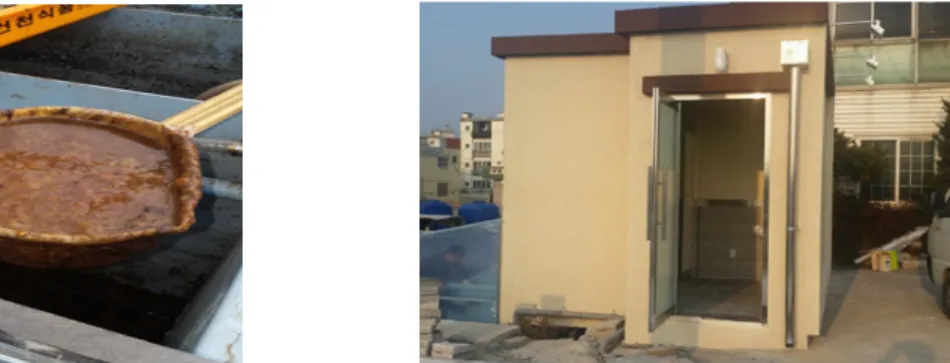
Fig. 1. A raw water and built toilet for this experiment.
제해사기구(IMO, International Maritime Organization) 해양환경보호위원(MEPC, Marine Environment Protec -tion Committee) 등에 의해 제기되어 왔다. 1973년에 채택된 선박으로부터의 오수에 의한 오염방지를 위한 규 칙(부속서 4)은 29년 동안이나 발효되지 못하다가 지난 2002년 9월 26일 노르웨이가 비준함으로써 협약 발효 요건이 충족되어 2003년 9월에 발효하게 되었다. 그동 안 협약이 발효되지 못한 가장 주요한 이유는 오수에 대 한 육상시설이 부적절 하였던 것으로 판단된다. MEPC 에서는 조기발효를 위하여 MARPOL 73/78 부속서 의 개정을 위한 통신작업반을 운영하였다(Jang et al., 2003). 그 결과 선박에서 발생되는 오수를 관리하고 처 리하기 위한 MARPOL 73/78의 부속서 를 2003년 9 월 27 일부터 국제적으로 발효하였고 국내에서도 2004 년 협약을 발효하였다(Kim, 2010). 이러한 국제적 협의 에 의해 우리나라의 국토해양부에서는 2008년 5월 26일 선박에서 발생되는 분뇨를 처리하기 위한 “해양오염 방 지설비 형식승인을 위한 성능시험 및 검증기준”을 Res.
MEPC.159(55) 기준으로 개정하여 2010년 1월 1일 이 후에 건조되는 선박에 탑재되는 생물학적 분뇨처리장치 에 적용시켰다(Han et al., 2010; Ministry of Oceans and Fisheries, 2008). 따라서 IMO의 Res. MERP.
159(55)의 기준을 만족하면서 선박의 특수성에 부합하 고, 향후 규제 항목으로 추가될 가능성이 유력한 질소, 인의 고도처리까지 가능한 크루즈선용 오수처리 장치의 개발이 필요한 실정이다(Grace et al., 1994). SBR (Sequencing batch reactor)은 유기물과 함께 질소, 인의 제거가 한 반응조에서 이루어짐으로 장치가 간단하고 선 박이라는 제한적 환경에 적용 가능하다는 장점이 있으며,
호기 및 무산소 조건을 임의로 조절해 선택적으로 질소 및 인을 제거 할 수 있는 장점이 있다(Norcross, 1992).
평막은 구조가 간단하고 충진 밀도가 높으며, 장치의 단순화가 가능하다. 조립과 분리가 쉬워 보수(교체) 및 확장이 용이한 장점을 가지고 있으며, 부상 공기로 유도 되는 상승 수류에 의해 주로 막 표면을 물리적으로 세정 하는 원리를 이용 한다(Kim et al., 2003). 또한 중공사 막에 비해 막 면적은 작지만 중공사막의 단점 보완 및 막 의 취급이 편리하다(Kim et al., 2003).
선박의 오수처리는 선상에서 오수를 처리하여 배출해 야 한다는 점에서, 육상에서 오수처리 시 고려되어야 하 는 요건 외에도 선박이라는 특수한 환경에서 요구되는 요건들이 추가적으로 충족되어야 한다. 선박에는 많은 기기들이 한정된 공간에 밀집되어 있기 때문에 우선 오 수처리장치의 크기가 최소한으로 작아야 하고, 선박용 오수처리장치는 전문가가 아닌 선원들에 의해 운영되어 야 하므로 간단하고 운전의 자동화가 필수적이다(Lee, 2011).
본 연구에서는 소형화 및 영양염류의 높은 처리효율 을 동시에 도모할 수 있는 SBR 및 MBR 복합공정 장치 를 제작하여 MAPOL 73/78 개정발효에 따른 선박용 고 도수처리장치(SBR 및 MBR 복합공정)의 사용 가능성 평가에 그 목적이 있다.
2. 재료 및 분석방법
2.1. 실험재료
본 연구에 사용할 원수를 얻기 위해 실제 40명 내외의 인원이 사용할 수 있는 화장실을 자체적으로 설계 및 제
Parameters Units Measured value Guidelines of artificial wastewater in MEPC. 159(55)
Minimum Maximum Average
Influent flow rate m
3/day 0.91 1.01 0.96
Temperature 7.2 9.8 9.2
pH - 7.1 7.4 7.2
BOD
5Conc. mg/L 1,214 2,501 1,854 BOD
5200 mg/L
Load kg/day 1.10 2.52 1.78
COD
CrConc. mg/L 2,727 4,280 3,595
Load kg/day 2.47 4.31 3.44
SS Conc. mg/L 2,731 7,449 4,634 TSS 500 mg/L
Load kg/day 2.48 7.51 4.44
T-N Conc. mg/L 181.938 526.943 325.236
Load kg/day 0.17 0.53 0.31
T-P Conc. mg/L 21.631 54.640 33.215
Load kg/day 0.02 0.04 0.03
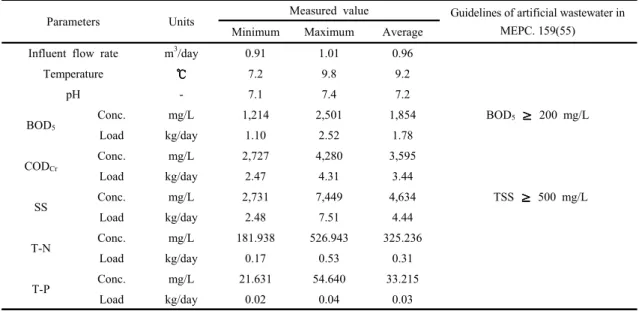
Table 1. The characteristics of the raw water and operation conditions for this experiment
Fig. 2. Schematic diagram of the advanced shipboard sewage treatment plant.
작 하였으며, 화장실에서 배출된 오수는 직접 Pilot Plant 의 혐기성조로 바로 유입 되도록 유도해 장치를 제작하 였다. 본 연구는 동절기(1월 및 2월)에 실시하였으며, 원 수의 평균 수온은 9.2 로 타나났다.
또한 연구에 사용된 평균 원수 수질의 경우 BOD5, CODCr, T-N, T-P 및 SS의 경우 각각 1,854 mg/L, 3,595 mg/L, 4,634 mg/L, 300.959 mg/L 및 28,178
mg/L으로 나타나 일반적인 분뇨폐수 농도와 매우 유사 하게 나타났으며, MEPC. 159(55)에서 제시된 선급인증 용 인공폐수 농도보다 월등히 높은 것으로 나타났다.
2.2. 실험장치 및 방법 2.2.1. 실험장치
본 연구에서 사용한 장치는 고도처리를 위한 SBR +
Parameters Unit Condition 1 Condition 2
Anaerobic tank Drain flow L/min Auto Auto
Anaerobic phase
SBR reactor
MLSS mg/L 3,500 3,500
Aeration min 90 150
Air flow L/min 40
Sedimentation min 30 45
Mixing min 15 15
Sedimentation min 15 15
Media O O
MBR(only aeration period)
Drain flow L/min 1.5 1.5
Drain (On/Off) min/min 7/3 7/3
Air flow L/min 121
HRT min 150 225
Flow m
3/day 0.91 1.01
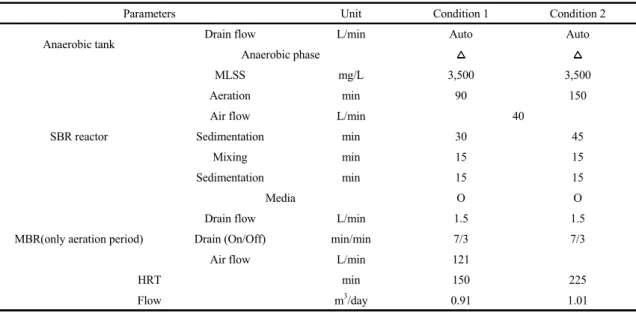
Table 2. Operating conditions of the advanced shipboard sewage treatment plant
Parameters Methods Note
DO Portable DO meter, Direct Measurement YSI 550A
ORP Portable ORP meter, Direct Measurement RM-30P
BOD
5Incubator, Standard Method 20 , 5 Day
COD
CrHach DR 2800, Method 8000(Dichromate) COD DIGESTION VIAL,HR
SS GF/C, Dry oven, Standard Method Gravimetric Method
T-N Hach DR 2800, Method 10072 TNT HR TOTAL NITROGEN
T-P Hach DR 2800, Method 10127 TNT KIT TOTAL PHOSPHATE HR
Table 3. Analysis of the water samples for this experiment
MBR공정으로 MARPOL 73/78 IMO Res MEPC.
227(64)에 기준해 40인용 장치로, 처리용량은 1 ton/day, 규격은 W 1,322 mm × L 1,022 mm × H 1,200 mm로 제작하였으며, 전체공정은 저류 및 혐기성 조, 생물 반응조 및 막분리조로 구성하여 실험을 진행 하 였다.
2.2.2. 실험방법
혐기조의 경우 스크린에서 SBR 공정으로 자연유하를 유도하였으며, 생물 SBR 반응조의 경우 생물학적 반응 의 효율을 증대하기 위해 Media를 사용하였다. 초기 MLSS 농도를 3,500 mg/L로 유지하도록 해 SBR 공정 cycle을 폭기 침전 교반 침전 순으로 운전하였으며, MBR 공정을 거친 최종 생산수는 SBR 공정 중 폭기로
제시된 시간에만 가동하게 하여 막 표면에 미생물 부착 및 Fouling의 최소화 유도를 위해 7분 가동/3분 정지 순 으로 운전하였으며, 세부적 운전 조건을 Table 2에 제시 하였다.
2.2.3. 분석방법
수질오염공정시험법, DO meter, pH meter, ORP meter 및 Hach사 수질분석 kit를 이용하여 분석하였으 며 세부 방법은 Table 3에 제시하였다.
3. 결과 및 고찰
3.1. DO 분석결과
폭기시간 중 DO 농도가 1.3 ~ 2 mg/L이상일 때 생물
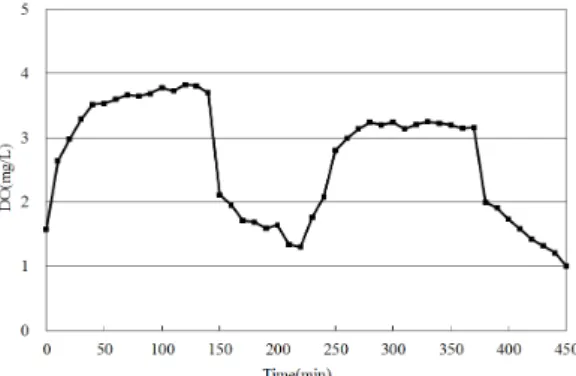
Fig. 3. Variations of DO by time for condition 1. Fig. 4. Variations of DO by time for condition 2.
Fig. 5. Variations of ORP by time for Condition 1. Fig. 6. Variations of ORP by time for Condition 2.
학적 질산화가 무리 없이 진행될 수 있으나, DO 농도가 1 mg/L이하일 경우 산소섭취를 둘러싼 질산화 미생물과 종속영양미생물간의 경쟁에서 질산화 미생물이 타격을 받으므로, 원활한 질산화를 위해서는 2 mg/L이상의 DO 를 확보하여야 한다.(Wild et al., 1971) 본 연구에서 SBR 반응조 내의 운영을 파악하기 위해 측정한 결과 Condition 1의 DO 평균농도는 2.3 mg/L(1.1 ~ 3.4 mg/L)의 범위로 나타났으며, Condition 2의 DO 평균농 도는 2.6 mg/L(3.8 ~ 1.0 mg/L)의 범위로 나타났다.
Condition 1에 비하면 Condition 2의 평균농도가 다소 높게 나타났으며, 침전 및 교반 단계에서 농도 감소는 Condition 1과 비슷하게 나타났다.
3.2. ORP 분석결과
ORP는 일반적인 산화환원전위에 해당하는 수질지표 이지만 생물학적 처리에 있어서는 질산화 및 탈질화의
정도를 나타내는 좋은 지표로 여러 연구자들(Koch et al., 1985; Ra et al., 1997; 山本 et al., 1994)의 실험결 과에 의하면 탈질이 종료되는 점, 즉 NO3--N의 농도가 zero인 시점에서 ORP의 변곡점(Bending Point; Nitrate Breakpoint)이 나타났다고 한다. Condition 1의 ORP 평균농도는 208.7 mV(159.6 ~ 249.2 mV)의 범위로 나 타났으며, Condition 2의 ORP 평균농도는 206.0 mV(119.2 ~ 248.0 mV)의 범위로 나타나 NO3 N를 별 도로 측정 하지 않아도 2조건 모두 변곡점은 명확하게 나 타난 것으로 판단된다.
3.3. 유기물(BOD
5및 COD
Cr) 분석결과
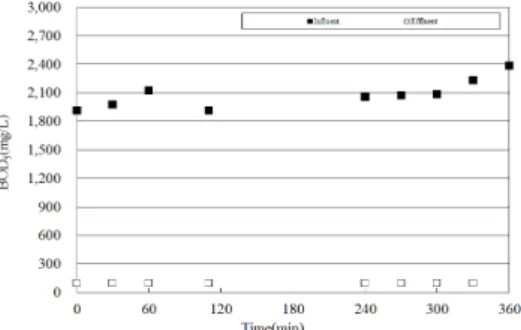
Condition 1의 BOD5 분석결과 원수의 경우 2,153 mg/L(1,749 ~ 2,501 mg/L)로 나타내었으며, 최종 생산 수의 경우 58 mg/L(27~114 mg/L)로 나타났다.
Condition 2의 BOD5 분석결과 원수의 경우 2,085
Fig. 7. Variations of BOD
5by time for Condition 1. Fig. 8. Variations of BOD
5by time for Condition 2.
Fig. 9. Variations of COD
Crby time for Condition 1. Fig. 10. Variations of COD
Crby time for Condition 2.
Fig. 11. Variations of T-N by time for condition 1. Fig. 12. Variations of T-N by time for Condition 2.
Fig. 13. Variations of T-P by time for Condition 1. Fig. 14. Variations of T-P by time for Condition 2.
mg/L(1,916 ~ 2,384 mg/L)로 나타내었으며, 최종 생산 수의 경우 60 mg/L(37 ~ 98 mg/L)로 나타났다.
Condition 1의 CODCr 분석결과 원수의 경우 3,435 mg/L(2,938 ~ 3,844 mg/L)로 나타내었으며, 최종 생산 수의 경우 139 mg/L(74 ~ 269 mg/L)로 나타났다.
Condition 2의 CODCr 분석결과 원수의 경우 4,074 mg/L(3,776 ~ 4,280 mg/L)로 나타내었으며, 최종 생산 수의 경우 188 mg/L(160 ~ 240 mg/L)로 나타났다.
3.4. 영양염류(T-N 및 T-P) 분석결과
Condition 1의 T-N 분석결과 원수의 경우 340.153 mg/L(314.190 ~ 375.714 mg/L)로 나타내었으며, 최종 생산수의 경우 187.985 mg/L(150.164~227.433 mg/L) 로 나타났다. Condition 2의 T-N 분석결과 원수의 경우 256.044 mg/L(209.749 ~ 300.174 mg/L)로 나타내었 으며, 최종 생산수의 경우 133.809 mg/L(95.337
~164.053 mg/L)로 나타났다. Condition 1의 T-P 분석 결과 원수의 경우 28.237 mg/L(24.161 ~ 33.347 mg/L) 로 나타내었으며, 최종 생산수의 경우 15.898 mg/L (13.341 ~ 16.941 mg/L)로 나타났다. Condition 2의 T-P 분석결과 원수의 경우 24.571 mg/L(21.631 ~ 26.654 mg/L)로 나타내었으며, 최종 생산수의 경우 12.205 mg/L(10.031 ~ 13.183 mg/L)로 나타났다.
4. 결 론
본 연구에서는 SBR 및 MBR 복합공정 장치를 제작 하여 MARPOL 73/78 개정발효에 따른 선박용 고도수 처리장치(SBR 및 MBR 복합공정)의 사용 가능성 평가 에 그 목적이 있으며, DO 및 ORP의 경우 일반적으로 하 수처리 시 생물 반응조 내 DO 농도는 일반적으로 2.0 ~ 3.0 mg/L 정도가 효율적이라 알려져 있으며, Condition 1 및 Conditions 2 조건에서도 유사한 것으로 나타났다.
위 결과로 미루어 Condition 1 및 Condition 2는 SBR 공정 중 침전 및 교반단계에서 무산소 조건으로 빠르게 감소하지 않는 것으로 보여지며, 이는 ORP와 마찬가지 로 탈질이 효과적으로 이루어지지 않는 것으로 판단된다.
유기물(BOD5 및 CODCr)의 경우 SBR 공정에서 유기 물 제거가 원활히 이루어지고, 더불어 MBR 공정을 거치 며 안정적인 수질을 나타낸 것으로 판단된다. 하지만 목
표수질인 BOD5 25 mg/L 및 CODCr 125 mg/L를 만족 하지 못한 것으로 나타나 운전조건의 개선이 필요한 것 으로 나타났다. 또한 영양염류(T-N 및 T-P)의 경우도 마 찬가지로 생물반응조 내에서 효과적인 질산화, 탈질공정 및 혐기성조에서의 인 방출에 의한 호기성조에서의 인 흡수가 효과적으로 진행되지 않는 것으로 판단되며, MEPC. 227(64)기준인 T-N 및 T-P 제거율인 70% 및 80%에 미치지 못해 운영조건 개선 및 구조 변경 이루어 진다면 좀 더 효율적인 공정이 될 것으로 판단된다.
감사의 글
이 논문은 2014년 해양수산부 재원으로 한국해양과 학기술진흥원의 지원을 받아 수행된 연구임(선박오수처 리를 위한 친환경 복합 고도수처리장치 개발).
REFERENCES