• 검색 결과가 없습니다.

A New Species of Arca L., 1758 (Bivalvia: Arcidae) from New Caledonia, with Comments on the Genus

N/A
N/A
Protected

Academic year: 2021

Share "A New Species of Arca L., 1758 (Bivalvia: Arcidae) from New Caledonia, with Comments on the Genus"

Copied!
10
0
0

로드 중.... (전체 텍스트 보기)

전체 글

(1)

A New Species of Arca L., 1758 (Bivalvia:

Arcidae) from New Caledonia, with Comments on the Genus

Konstantin A. Lutaenko and Philippe Maestrati

1

A.V. Zhirmunsky Institute of Marine Biology, Far East Branch of the Russian Academy of Sciences, Vladivostok 690041, Russia

1

Muséum National d’Histoire Naturelle, 55 Rue de Buffon, 75231 Paris, France

Received September 30, 2007; Accepted November 8, 2007 Corresponding author: Lutaenko, Konstantin A.

Tel: +7 (4232) 317-111 email: [email protected] 1225-3480/23201

7 The Malacological Society of Korea

ABSTRACT

A new species, Arca koumaci Lutaenko et Maestrati n. sp. (Bivalvia: Arcidae), is described from New Caledonia. The species is characterized by the small size, the convex shell with a strong posterior umbonal ridge covered by spikes, the widely curved ventral margin, and presence of cancellate sculpture and convergent marginal teeth. Presence of spikes on the posterior ridge is a unique morphological feature recorded for the first time in the genus. It is proposed that the only subgenus, namely Pliocene A.

(Arcoptera) Heilprin, 1887, apart from nominative, can be recognized in the genus. Three morphological types are distinguished within the genus based on shell shape and sculpture. Bathymetric analysis shows that representatives of Arca inhabit water depths down to 175 m, and more than half of Recent species were found below 50 m. Types of A. bouvieri P. Fischer, 1874, Arca boucardi Jousseaume, 1894, Arca avellana Lamarck, 1819, and Arca retusa Lamarck, 1819 are illustrated.

Keywords: Arcidae, Arca, Taxonomy, Morphological variability, Depth ranges.

INTRODUCTION

The living bivalves of the genus Arca L., 1758 (Arcidae) are not numerous in the number of species, and 16 species are known worldwide. They are typical

sessile, byssally attached bivalves occurring mainly in tropical and subtropical seas. The fossil record of the Arca seems goes back to the Late Cretaceous (Newell, 1969). Although a majority of the Arca species was described in the 18th-19th centuries (Lamy, 1907), still some new species and subspecies were recently recorded from the Arabian Sea and tropical West Africa (Oliver and Cosel, 1992; Oliver and Chesney, 1994).

When sorting a collection of bivalve mollusks taken at two sites in New Caledonia (Koumac and Touho) and in Baie du Santal – Lifou (Loyalty Islands) (Bouchet et al., 2002), we segregated four species of the genus. Three of them are common Indo-Pacific species – Arca navicularis Bruguiére, 1789, Arca ventricosa Lamarck, 1819 and Arca avellana Lamarck, 1819 however, the fourth species with some unusual morphological features appeared to be a new species.

Below is given a description of this species along with some comments on the morphological diversity of the genus Arca.

Abbreviations

MNHN: Muséum National d’Histoire Naturelle, Paris;

ZMFUL: Zoological Museum, Far East National University, Vladivostok.

SYSTEMATICS

Family Arcidae Lamarck, 1809 Subfamily Arcinae Lamarck, 1809 Genus Arca Linne, 1758

Type species. - Arca noae Linnaeus, 1758 (SD

Schmidt, 1818; ICZN Opinion 189, 1944).

(2)

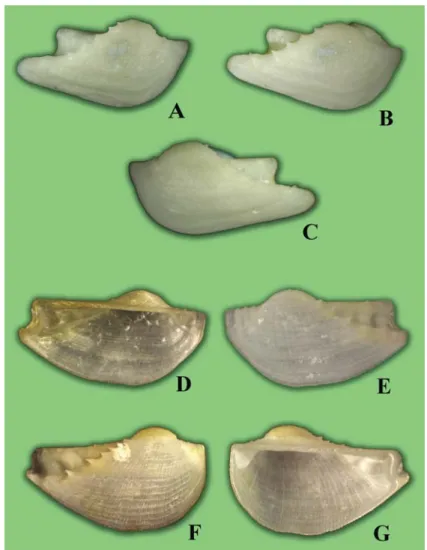
Fig. 1. A-C. Arca (Arca) koumaci Lutaenko et Maestrati n. sp. Holotype.

New Caledonia, secteur de Koumac, Grand Récif de Koumac, 20º 40'-40.6' S, 164º 11.2' - 164º 12.1' E, depth 55-57 m. External views of the shell; Fig. 1A and Fig. 1B are differently turned shell images to show spikes on the postero-ventral ridge. Length 6.1 mm.

MNHN. D, E. Arca (Arca) koumaci Lutaenko et Maestrati n. sp.

Paratype. New Caledonia, secteur de Koumac, Grand Récif de Koumac, 20º40'-40.6' S, 164º 11.2' - 164º 12.1' E, depth 55-57 m.

Internal (D) and external (E) views of the same valve. Length 6.5 mm. MNHN. Arca (Arca) koumaci Lutaenko et Maestrati n. sp. F, G.

Paratype. New Caledonia, secteur de Koumac, Grand Récif de Koumac, 20º 40'-40.6' S, 164º 11.2' - 164º 12.1' E, depth 55-57 m.

External (F) and internal (G) views of the same valve. Length 4.3 mm. MNHN.

Arca ( Arca ) koumaci Lutaenko et Maestrati n. sp.

(Fig. 1A-G)

Type material. - Holotype: New Caledonia, Secteur de Koumac, Grand Récif de Koumac, 20° 40'-40.6'S, 164°

11.2'-164° 12.1'E, depth 55-57 m, sta. 1331, expedition Montrouzier, October 1993, length 6.1 mm, height 3.0 mm, width 3.3 mm (MNHN); paratypes: same locality (8 MNHN).

Other material examined. - Iles Loyaute, Lifou, Baie

(3)

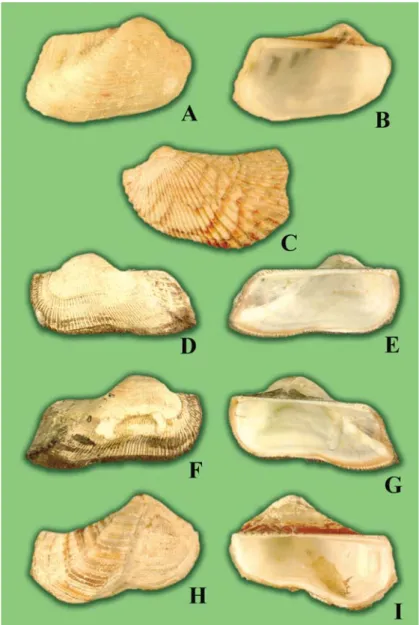
Fig. 2. A-C. Arca (Arca) angulata King et Broderip, 1831. Juan Fernandez.

Length 47.3 mm. Internal (A), external (B) and ventral (C) views of the same shell. MNHN. D, E. Arca (Arca) navicularis Bruguière, 1789.

Djibouti. Length 36.8 (D), length 36.1 mm (E). External (D) and internal (E) views. MNHN (coll. E. Lamy). F, G. Arca (Arca) navicularis Bruguière, 1789 (as Arca linter Jonas, 1845 in label). China. Length 63.7 mm. External (F) and internal (G) views of the same shell. MNHN (coll. E. Lamy). H, I. Arca (Arca) pacifica (G.B. Sowerby I, 1833). St.

Elena. Length 43.1 mm. Internal (H) and external (I) views of the same shell. MNHN (coll. E. Lamy). J, K. Arca (Arca) truncata (G.B.

Sowerby I, 1833). Galápagos Islands. Length 58.1 mm. Internal (G) and external (K) views of the same shell. MNHN.

du Santal, 20° 50.8'S–167° 09.7'E, depth 10-12 m, sta.

1445, atelier Lifou, November 16, 2000 (2 MNHN);

Iles Loyaute, Lifou, Baie du Santal, au nord du Cap

Aimé Martin [=Acadro], 20° 45.8' S – 167° 01.65'E,

depth 20 m, sta. 1448, atelier Lifou, November 17,

2000 (2 MNHN); Iles Loyaute, Lifou, Baie du Santal:

(4)

Fig. 4. A, B. Arca (Arca) avellana Lamarck, 1819. Indo-China. External (A) and internal (B) views of the same valve. Length 27.8 mm. MNHN (coll. E. Lamy). C. Arca (Arca) bouvieri P. Fischer, 1874. Paratype (according to Oliver and Cosel, 1992, p. 297). "Cōtes de Guinée"

on the original label. External view of the left valve. Length 43.8 mm. MNHN. D-G. Arca (Arca) boucardi Jousseaume, 1894.

Syntype.External (D, F) and internal (E, G) views of the same shell.

Length 58.1 mm. MNHN. H, I. Arca (Arca) imbricata Bruguière, 1789. Martinique. External (H) and internal (I) views of the same valve. Length 44.8 mm. MNHN.

devant Peng tombant, 20° 53.8' S – 167° 07.3' E, depth 48-52 m, sta. 1443, atelier Lifou, November 14, 2000 (1 MNHN).

Type locality. New Caledonia, Secteur de Koumac.

Etymology. - The species name derives from Koumac, a locality in New Caledonia.

Distribution. The species is known New Caledonia and

neighboring Loyalty Islands.

(5)

Fig. 5. A-D. Arca (Arca) avellana Lamarck, 1819. Syntype. "Iles St. Pierre et St.

François" [on the cardboard to which shells were originally glued]. External (A, C) and internal (B, D) views of the same shell. Fig. 5B, C were first published by Lamy (1904, pl. 5, figs. 1, 2). MNHN. E-H. Arca (Arca) avellana Lamarck, 1819. Syntype. "Iles St. Pierre et St. François" [on the cardboard to which shells were originally glued]. Internal (E, G) and external (F, H) views of the same shell. Length 17.7 mm. MNHN.

Diagnosis. Small size, convex, with a strong posterior umbonal flexure (ridge) covered by spikes, widely curved ventral margin, cancellate surface sculpture, convergent marginal teeth.

Description. Shell small, convex, moderately thick,

angular-ovate, inaequilateral, with extended posterior

margin white, sometimes yellowish, especially in

near-umbonal area. Anterior margin curved and

(6)

Fig. 3. A-D. Arca (Arcoptera) wagneriana Dall, 1898. USA, south Florida, between Tampa and St.-Petersburg, Sarasota rock pits, Calloosahatchee Formation. External (A, C) and internal (B, D) views of the same shell.

Length 60.4 mm. ZMFU no. 10680/Bv-947. E-H. Arca (Arca) mutabilis (G.B. Sowerby III, 1833). West Central America, Costa Rica – El Salvador area. External (F, G) and internal (E, H) views of the same shell. Length 36.1 mm. ZMFU no. 12331/Bv-1583. I-L. Arca (Arca) navicularis Bruguière, 1789. Cambodia, Gulf of Thailand, Kampong Bay, 10º 51' N, 103º 09' E.

External (I, K) and internal (J, L) views of the same shell. Length 61.7 mm.

ZMFU no. 8925/Bv-26.

smoothly passing into ventral margin, but meets straight hinge line at a nearly 90º angle. Ventral margin widely curved, sometimes nearly straight and

subparallel to dorsal margin. Posterior margin with a

depressed area (sulcus) corresponding to posterior

umbonal flexure. Beaks high, inclined anteriorly. Shell

(7)

surface covered with numerous riblets giving in combination with commarginal lines cancellate sculpture. Growth lines gross. A series of spikes (5-7) located on posterior ridge. Interiorly, radial lines clearly corresponding to outer riblets. Inner margin smooth or with weak crenulations. Ligamental area wide, assymetrical and triangular in shape, smooth, without grooves or shevrons; widest behind the beaks.

Based on ligament fragments, the ligament does not cover the ligamental area completely, but only its anterior part. Teeth transverse in middle part, but clearly convergent at margins, especially posteriorly.

Maximum length up to 12-13 mm.

Remarks. This species is clearly differentiated from all known species of the genus by its small size, presence of spikes on posterior ridge, and lack of ventral sulcus. In shell shape, it is somewhat close to some varieties of A. navicularis (Fig. 2F, G). Some specimens of A. koumaci are similar in shell shape to European/West African Arca tetragona Poli, 1795 and north-western Pacific Arca boucardi Jousseaume, 1894.

DISCUSSION

Recent representatives of the genus Arca show significant morphological variability within a single species. This fact and presence of sibling species were the reasons why so many species names were introduced in the 19th century and thus led to a complicated synonymy (Lamy, 1907). Most likely, there are 17 Recent species and subspecies of Arca (some are shown in Fig. 2-6): four in eastern Atlantic ( A. noae L., 1758, A. bouvieri P. Fischer, 1874, A.

avellana turbatrix Oliver et Cosel, 1992, and A.

tetragona Poli, 1795), two in Western Atlantic [ A.

zebra (Swainson, 1833), and A. imbricata Bruguière, 1789], four in Eastern Pacific [ A. mutabilis (G.B.

Sowerby I, 1833), A. pacifica (G.B. Sowerby I, 1833), A. truncata (G.B. Sowerby I, 1833), and A. angulata King et Broderip, 1831)], and seven are known in Indo-Pacific and Western Pacific ( A. navicularis, A.

avellana avellana, A. ventricosa, A. symphenacis Oliver et Chesney, 1994, A. boucardi Jousseaume, 1894, A. acuminata acuminata Krauss, 1848, A.

acuminata dayi Oliver et Chesney, 1994, and A.

koumaci) ; thus, in total, 16 species. Despite intraspecific variability, attempts to subdivide the genus into subgenera were not successful due to uniformity of the most important arcine features.

Newell (1969) recognized, except for nominal subgenus Arca ( Arca ), Jurassic Arca ( Eonavicula ) Arkell, 1929 (type species – Arca quadrisulcata J.C. Sowerby, 1824) on the basis that its median teeth are more elongate than in Arca ( Arca ) converging strongly downward toward a point below beaks. In an earlier classification of arcids by Reinhart (1935), there are four subgenera: A. ( Arca ), A. ( Litharca ) Gray, 1842, A.

( Arcoptera ) Heilprin, 1887, and A. ( Eonavicula ).

Monotypic Litharca is now recognized as a separate genus within Arcinae representing a case of unusual adaptation to the rock-boring mode of life (Nicol and Jones, 1986); Frizzel (1946) even erected a subfamily, Litharcinae for Litharca lithodomus (G.B. Sowerby I, 1833) although this did not find wide acceptance.

Reihart (1935) noted that some species are gradational between Arca s.s. and Eonavicula, and that some Tertiary species unquestionably belonging to Arca s.s . also have inclined teeth. So, the status of Eonavocula is not clear. Although in various true Arca the posterodorsal "wing" is extended to varying degrees, the extremely developed wing and unusual attenuation of the anterior end of the shell of Arcoptera (Fig. 3A-D) make this taxon sufficiently distinct morphologically from Arca s.s . and it should be taken as a subgenus of the latter. According to L.

Campbell (e-mail, Dec. 3, 2005), Arcoptera developed in the Lower Pliocene of southern Florida, was common in the Middle and Upper Pliocene of southern Florida, was very rare in the Upper Pliocene of north and south Carolina, and became extinct by 1.6 million years before present. Nothing in its niche suggests adaptive value for its peculiar form. Finally, Tetrarca Nordsieck, 1969 (type species – Arca tetragona Poli, 1795) is an obvious synonym of Arca although Oliver and Chesney (1994) used it at the subgeneric level for A. acuminata. Thus, probably, Arcopterais the only good subgenus of Arca.

Nevertheless, morphological variability of the Arca

(8)

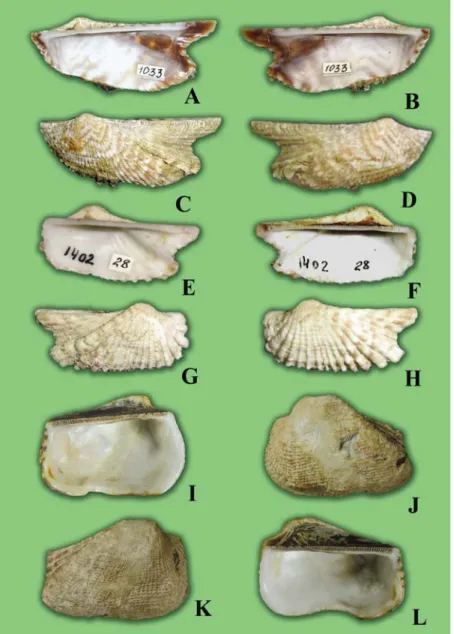
Fig. 6. A-D. Arca (Arca) zebra (Swainson, 1833). USA, Florida, Key Largo, depth 30 m. External (C, D) and internal (A, B) views of the same shell.

Length 43.1 mm. ZMFU no. 10788/Bv-1033. E-H. Arca (Arca) cf.

navicularis Bruguière, 1789. Australia. External (G, H) and internal (E, F) views of the same shell. Length 29.9mm. ZMFU no. 8927/Bv-28. I-L.

Arca (Arca) avellana Lamarck, 1819. Syntype of Arca retusa Lamarck, 1819. "Mèditerranèe" [on the cardboard to which shell was originally glued]. Internal (I, L) and external (J, K) views of the same shell. Length 38.4 mm. Fig. 6K was first published by Lamy (1904, pl. 5, fig. 12).

MNHN.

might be summarized as below although functional significance of used characters needs special investigation. Some species (e.g. A. angulata, A.

bouvieri ) can be regarded as intermediate between Types 1 and 2.

Type 1. Species without postero-dorsal "wing" and

(9)

without posterior sulcus, but with ventral sulcus.

Anterior margin is more or less rounded. Sculpture consists of riblets rather than ribs. Postero-ventral point is more prominent as compared to postero-dorsal point. Examples: A. avellana, A. boucardi, A.

mutabilis, A. truncata, A. imbricata, A. tetragona (Fig.

2-6).

Type 2. Species with a well-expressed protruded postero-dorsal "wing". As a rule, anterior margin is acute. Sulcus in the posterior area is always well-marked. Ventral sulcus is present. The "wing" is either longer than lower prominence of the sulcus or both are equal in length. Sculpture with usually gross, clearly seen ribs rather than riblets. The most extreme example is A. wagneriana. Other examples: A.

navicularis, A. pacifica, A. zebra (Fig. 2, 3, 6).

Type 3. Species with an expressed postero-dorsal

"wing" and a posterior sulcus, but with a widely curved or nearly straight ventral margin and without ventral sulcus. Clearly convergent teeth at margins and presence of spikes on the posterior ridge also differentiate this type from Types 1-2. The only known example is A. koumaci.

Oliver and Holmes (2006) developed another classification of morphotypes within the genus Arca highlighting overlooked characters such as presence of a myophoric flange (in A. tetragona ), degree of coverage of ligament, etc. They (l.c.) proposed to distinguish three morphotypes: A. noae group, A.

avellana group and A. tetragona group, but above authors did not define precisely the groups and did not include into the consideration such strange fossil arcines as Arcoptera.

An interesting morphological feature of Arca koumaci, i.e., presence of spikes on the posterior ridge, requires further observations of animals in nature to be explained in terms of habit and functional morphology. Usually, arcoids are characterized by simple surface patterns, lacking divaricate sculpture, spines and other specialized structures (Thomas, 1978). Many of them (e.g., anadarines) have strong radial ribs, whilst nestling species ( Arca, Barbatia ) possess finer ribs which increase friction between the shell and the crevice the

mollusk occupies (l.c.). However, nestling species do not show any examples of complicated sculpture of the shell.

Arca koumaci was found at a depth of 10-57 m although it is generally believed that representatives of the genus are shallow-water bivalves often living in the intertidal zone (Tatishvili, 1966). However, compilation of available literature data on bathymetric ranges for 10 species of Arca ( A. avellana, A. boucardi, A. bouvieri, A. mutabilis, A. navicularis, A. noae, A.

pacifica, A. tetragona, A. tetragona, A. zebra ) occurring in different geographic areas (Rost, 1955;

Kuroda et al., 1971; Keen, 1971; Rios, 1985; Oliver and Cosel, 1992; Poppe and Goto, 1993; Kubo and Kurozumi, 1995; Hrs-Brenko and Legac, 1996;

Lamprell and Healy, 1998; Higo et al., 1999;

Lutaenko, 1999; Peharda et al., 2002; Robba et al., 2002; Li, 2004 Krylova, 2006) surprisingly revealed that many of them are rather "deep-water" mollusks:

nine species live below 50 m and at least five species were found below 100 m with maximum known depth of 175 m in the Pacific Ocean ( A. boucardi in Sagami Bay, Japan) and even 1557 m in the Atlantic Ocean ( A. tetragona near the Azores). Actually, some of these records represent empty shells which can be easily moved downslope due to wave and current actions and precise taphonomic analysis of shallow-water environments is needed to prove such bathymetric distribution of Arca however, these data show general trend of wide depth ranges for species of the genus.

Thus, A. koumaci is not a unique example with regard to its bathymetric distribution.

ACKNOWLEDGEMENTS

We express our appreciation to Prof. Ph. Bouchet (MNHN) for consultations and comments on the manuscript, and to V. Hèros and D. Brabant for their invaluable help. We are grateful to E.V. Coan (California Academy of Sciences, San Francisco) and L. Campbell (University of South Carolina, Spartanburg) for their comments on the genus Arca.

Digital plates were prepared by K.S. Sundukov,

English text was improved by T.N. Koznova.

(10)

REFERENCES

Bouchet, P., Lozouet, P., Maestrati, P. and Heros, V.

(2002) Assessing the magnitude of species richness in tropical marine environments: exceptionally high numbers of molluscs at a New Caledonia site.

Biological Journal of the Linnean Society, 75:

421-436.

Frizzell, D.L. (1946) A study of two arcid pelecypod species from western South America. Journal of Paleontology, 20: 38-51.

Higo, S., Callomon, P. and Goto, Y. (1999) Catalogue and Bibliography of the Marine Shell-Bearing Mollusca of Japan. 749 pp. Elle Scientific Publications, Osaka.

Hrs-Brenko, M. and Legac, M. (1996) A review of bivalve species in the eastern Adriatic Sea. II.

Pteriomorphia (Arcidae and Noetidae). Natura Croatica , 5(3): 221-247.

Keen, A.M. (1971) Sea Shells of Tropical West America. Marine Mollusks from Baja California to Peru. 1064 pp. Stanford University Press, Stanford.

Krylova, E.M. (2006) Bivalves of seamounts of the north-eastern Atlantic. Part 1. In : Biogeography of the North Atlantic Seamounts (ed. by Mironov, A.N., Gebruk, A.V. and Southward, A.J.), pp.

76-95. KMK Scientific Press. Moscow.

Kubo, H. and Kurozumi, T. (1995) Molluscs of Okinawa. 263 pp. Okinawa Shuppan Co., Urasoe. [in Japanese]

Kuroda, T., Habe, T. and Oyama, K. (1971) The Sea Shells of Sagami Bay, Collected by His Majesty the Emperor of Japan. 741 pp. + 489 pp. Maruzen, Tokyo. [in Japanese and English]

Lamprell, K. and Healy, J. (1998) Bivalves of Australia.

Volume 2. 288 pp. Backhuys Publishers, Leiden.

Lamy, E. (1904) Liste des arches conservées avec étiquettes de Lamarck dans les collections du Muséum de Paris. Journal de Conchyliologie, 52:

132-167. [in French]

Lamy, E. (1907) Révision des Arca vivants du Muséum d' Histoire Naturelle de Paris. Journal de Conchyliologie , 55: 1-111. [in French]

Li, F. (2004) Order Arcoida. In : Seashells of China (ed.

by Qi, Z.), pp. 213-234. China Ocean Press.

Beijing.

Lutaenko, K.A. (1999) Additional data on the fauna of bivalve mollusks of the Russian continental coast of

the Sea of Japan: middle Primorye and Nakhodka Bay. Publications of the Seto Marine Biological Laboratory , 38(5/6): 255-286.

Newell, N.D. (1969) Superfamily Arcacea Lamarck, 1809. In : Treatise on Invertebrate Paleontology.

Part N. Volume 1 (of 3). Mollusca 6. Bivalvia (ed.

by Moore, R.C.), pp. N250-N264. The Geological Society of Americaand the University of Kansas.

Boulder and Lawrence.

Nicol, D. and Jones, D.S. (1986) Litharca lithodomus and adaptive radiation in arcacean pelecypods.

Nautilus, 100(3): 105-109.

Oliver, P.G. and Chesney, H.C.G. (1994) Taxonomy of Arabian bivalves. Part 1. Arcoidea. Journal of Conchology, 35: 17-31.

Oliver, P.G. and Cosel, R., von (1992) Taxonomy of tropical West African bivalves. IV. Arcidae. Bulletin du Muséum National d’Histoire Naturelle, Paris, Series 4, Section A , 14(2): 293-381.

Oliver, P.G. and Holmes, A.M. (2006) The Arcoidea (Mollusca: Bivalvia): a review of the current phonetic-based systematics. Zoological Journal of the Linnean Society , 148: 237-251.

Peharda, M., Richardson, C.A., Onofri, V., Bratoš, A.

and Grnčević, M. (2002) Age and growth of the bivalve Arca noae L. in the Croatian Adriatic Sea.

Journal of Molluscan Studies , 68: 307-310.

Poppe, G.T. and Goto, Y. (1993) European Seashells.

Volume II (Scaphopoda, Bivalvia, Cephalopoda). 221 pp. Verlag Christa Hemmen, Wiesbaden.

Reinhart, P.W. (1935) Classification of the pelecypod family Arcidae. Bulletin du Musée Royal d’Histoire Naturelle de Belgique , 11(13): 1-68.

Rios, E.C. (1985) Seashells of Brazil. Fundacão 328 pp.

Universidade do Rio Grande, Rio Grande.

Robba, E., Di Geronimo, I., Chaimanee, N., Negri, M.P.

and Sanfilippo, R. (2002) Holocene and recent shallow soft-bottom mollusks from the northern Gulf of Thailand area: Bivalvia. Bolletino Malacologico, Roma , 38(5-8): 49-132.

Rost, H. (1955) A report on the family Arcidae. Allan Hancock Pacific Expeditions, 20(2): 177-248.

Tatishvili, K.G. (1966) The genus Arca . In : Reference Book on Ecology of Marine Bivalves (ed. by Davitashvili, L.Sh. and Merklin, R.L.), pp. 30-33.

Nauka. Moscow. [in Russian]

Thomas, R.D.K. (1978) Shell form and the ecological

range of living and extinct Arcoida. Paleobiology,

4(2): 181-191.

수치

Fig. 1. A-C.  Arca  (Arca)  koumaci Lutaenko et Maestrati n. sp. Holotype.
Fig. 2. A-C.  Arca  (Arca)  angulata King et Broderip, 1831. Juan Fernandez.
Fig. 4. A, B. Arca (Arca) avellana Lamarck, 1819. Indo-China. External (A)  and internal (B) views of the same valve
Fig. 5. A-D.  Arca  (Arca) avellana Lamarck, 1819. Syntype. "Iles St. Pierre et St
+3

참조

관련 문서

Since every classical or virtual knot is equivalent to the unknot via a sequence of the extended Reidmeister moves together with the forbidden moves, illustrated in Section 2,

웹 표준을 지원하는 플랫폼에서 큰 수정없이 실행 가능함 패키징을 통해 다양한 기기를 위한 앱을 작성할 수 있음 네이티브 앱과

_____ culture appears to be attractive (도시의) to the

Needham with an introduction by E.E.Evance-Pritchard, Death and the Right Hand (New York : Free Press. Keane, The childhood of man (New York :

The Dusky Lory ( Pseudeos fuscata ) is a monotypic species of parrot in the Psittaculidae family, and the only species of the genus Pseudeos... platyrhynchos

The key issue is whether HTS can be defined as the 6th generation of violent extremism. That is, whether it will first safely settle as a locally embedded group

r-CoCoAna 기반으로 계획부터 생산 현장까지 모든 Data를 연결한 분석 가능한 Data Set 을 활용하여 기업의 문제를 빠르게 해결하여 Operation

SigmaNEST 펀칭 파워팩 제품 관리, 자동 다이나믹™ 배 열 및 펀칭 툴 관리를 갖춘 터렛 펀칭 프로그래밍을 위한 가장 완벽하고 최적화된