
D I A B E T E S & M E T A B O L I S M J O U R N A L D I A B E T E S & M E T A B O L I S M J O U R N A L
This is an Open Access article distributed under the terms of the Creative Commons Attribution Non-Commercial License (http://creativecommons.org/licenses/by-nc/4.0/) which permits unrestricted non-commercial use, distribution, and reproduction in any medium, provided the original work is properly cited.
Efficacy and Safety of Pioglitazone versus Glimepiride after Metformin and Alogliptin Combination Therapy:
A Randomized, Open-Label, Multicenter, Parallel-Controlled Study
Jeong Mi Kim1,2,*, Sang Soo Kim1,2,*, Jong Ho Kim1,2,†, Mi Kyung Kim3, Tae Nyun Kim3, Soon Hee Lee4, Chang Won Lee5, Ja Young Park5, Eun Sook Kim6, Kwang Jae Lee7, Young Sik Choi8, Duk Kyu Kim9, In Joo Kim1,2
1Department of Internal Medicine, Pusan National University Hospital, Pusan National University School of Medicine, Busan,
2Biomedical Research Institute, Pusan National University Hospital, Busan,
3Department of Internal Medicine, Inje University Haeundae Paik Hospital, Inje University College of Medicine, Busan,
4Department of Internal Medicine, Inje University Busan Paik Hospital, Inje University College of Medicine, Busan,
5Department of Internal Medicine, Busan St. Mary’s Hospital, Catholic University of Pusan, Busan,
6Department of Internal Medicine, Ulsan University Hospital, University of Ulsan College of Medicine, Ulsan,
7Department of Internal Medicine, Daedong Hospital, Busan,
8Department of Internal Medicine, Kosin University Gospel Hospital, Kosin University College of Medicine, Busan,
9Department of Internal Medicine, Dong-A Medical Center, Dong-A University College of Medicine, Busan, Korea
Background: There is limited information regarding the optimal third-line therapy for managing type 2 diabetes mellitus (T2DM) that is inadequately controlled using dual combination therapy. This study assessed the efficacy and safety of piogli- tazone or glimepiride when added to metformin plus alogliptin treatment for T2DM.
Methods: This multicenter, randomized, active-controlled trial (ClinicalTrials.gov: NCT02426294) recruited 135 Korean patients with T2DM that was inadequately controlled using metformin plus alogliptin. The patients were then randomized to also receive pioglitazone (15 mg/day) or glimepiride (2 mg/day) for a 26-week period, with dose titration was permitted based on the investi- gator’s judgement.
Results: Glycosylated hemoglobin levels exhibited similar significant decreases in both groups during the treatment period (pio- glitazone: –0.81%, P<0.001; glimepiride: –1.05%, P<0.001). However, the pioglitazone-treated group exhibited significantly higher high density lipoprotein cholesterol levels (P<0.001) and significantly lower homeostatic model assessment of insulin re- sistance values (P<0.001). Relative to pioglitazone, adding glimepiride to metformin plus alogliptin markedly increased the risk of hypoglycemia (pioglitazone: 1/69 cases [1.45%], glimepiride: 14/66 cases [21.21%]; P<0.001).
Conclusion: Among patients with T2DM inadequately controlled using metformin plus alogliptin, the addition of pioglitazone provided comparable glycemic control and various benefits (improvements in lipid profiles, insulin resistance, and hypoglycemia risk) relative to the addition of glimepiride.
Keywords: Dipeptidyl-peptidase IV inhibitors; Drug therapy, combination; Sulfonylurea compounds; Thiazolidinediones; Treat- ment failure
Corresponding author: In Joo Kim https://orcid.org/0000-0003-1307-6146 Division of Endocrinology and Metabolism, Department of Internal Medicine and Biomedical Research Institute, Pusan National University Hospital, Pusan National University School of Medicine, 179 Gudeok-ro, Seo-gu, Busan 49241, Korea E-mail: [email protected]
*Jeong Mi Kim and Sang Soo Kim contributed equally to this study as first authors.
https://doi.org/10.4093/dmj.2018.0274 pISSN 2233-6079 · eISSN 2233-6087
INTRODUCTION
When medical treatment is necessary for type 2 diabetes melli- tus (T2DM), physicians and patients prefer oral antidiabetic drugs [1]. However, it can be difficult to achieve and maintain glycemic control using a single antidiabetic agent. Thus, to achieve glycemic goals and reduce the risk of chronic diabetic complications, combinations of antidiabetic drugs are required for most patients [2-4]. Nevertheless, the combination therapy must be carefully selected to achieve an additive effect on gly- cemic control, and this approach is guided by the drugs’ mech- anisms of action and side effects [5]. Furthermore, social fac- tors and insurance coverage can strongly influence the drugs that are selected for combination therapy [6].
Metformin is widely used as the initial antidiabetic agent [2,3], and dipeptidyl peptidase-4 (DPP-4) inhibitors are be- coming increasingly common as a second agent that is com- bined with metformin [7-9]. For example, the number of American patients receiving metformin plus DPP-4 inhibitors has increased sharply [7]. This combination therapy is also prescribed for the overwhelming majority of Korean patients with T2DM [8,9]. Unfortunately, many patients cannot achieve or maintain their glycemic goals using only metformin plus DPP-4 inhibitors [10], and it can be difficult to select an appro- priate third-line therapy for these patients. In Korea, the cur- rent health insurance system covers sulfonylurea (SU) or thia- zolidinedione (TZD) as common third-line agents [11].
In East Asia, β-cell dysfunction has traditionally been recog- nized as the main etiological factor for T2DM [12]. However, recent evidence supports the importance of insulin resistance as the main pathogenic mechanism for T2DM in Korea [13,14]. Therefore, it would be useful to compare the efficacies of SU or TZD when combined with metformin plus DPP-4 in- hibitors in the third-line setting. The present study evaluated the efficacy and safety of adding pioglitazone or glimepiride for patients with T2DM that was inadequately controlled using metformin plus alogliptin.
METHODS
Study design
This multicenter, randomized, open-label, parallel design, phase IV trial (ClinicalTrials.gov: NCT02426294) was con- ducted between March 2015 and April 2018 at eight Korean centers. The study consisted of a 2-week screening period, a
26-week treatment period, and a 4-week follow-up period.
The study protocol and other related documents were re- viewed and approved by the Institutional Review Board (IRB No.: 1412-001-037) at each center. All patients provided writ- ten informed consent before their enrolment. The study com- plied with the Declaration of Helsinki, the Guidelines for Good Clinical Practice, and the applicable local laws and regu- lations.
Patients and eligibility
Patients with inadequately controlled T2DM (glycosylated he- moglobin [HbA1c] of 7.5% to <10%) were considered eligible if they had consistently received metformin plus alogliptin for
≥3 months before randomization, were 19 to 80 years old, and had a body mass index (BMI) of 18.5 to 35 kg/m2. The key ex- clusion criteria were type 1 diabetes mellitus, heart failure or history of heart failure (New York Heart Association Class III or IV), major cardiovascular disorders (e.g., myocardial infarc- tion, cardiovascular intervention, stroke, and transient isch- emic attack) during the last 6 months, renal or hepatic dys- function (creatinine clearance <50 mL/min or elevated levels of aspartate aminotransferase [AST], alanine aminotransferase [ALT], alkaline phosphatase, or total bilirubin to ≥2.5×the upper normal limit), and pregnancy, breastfeeding, or unwill- ingness to use appropriate contraceptive measures (for women of reproductive age).
Data collection
The baseline and follow-up examinations included a physical examination, laboratory testing, medical review, and an in- person interview to collect information regarding medical conditions. Self-reported historical data (“yes” or “no”) regard- ing diabetic retinopathy and diabetic neuropathy were collect- ed at the screening. The conventional method was used to cal- culate BMI (kg/m2). Serum specimens were typically collected after an 8-hour overnight fast and stored at –70°C after pro- cessing.
Treatments
Participants were randomly assigned to receive either piogli- tazone (15 mg/day) or glimepiride (2 mg/day) in addition to their current treatment using metformin plus alogliptin. After 12 weeks of treatment, the doses could be adjusted to 30 mg/day for pioglitazone or 4 mg/day for glimepiride, based on the in- vestigator’s decision.
Study outcome
The primary efficacy outcome was defined as the change in HbA1c levels from baseline to the end of treatment using pio- glitazone or glimepiride. The secondary efficacy outcomes measures included the 26-week changes in lipid profiles, ho- meostatic model assessment of insulin resistance (HOMA-IR), and homeostatic model assessment β-cell function (HOMA-β), as well as the 12-week change in HbA1c levels (baseline to 12 weeks).
At each visit, all adverse events (AEs) were recorded and as- sessed for severity and possible relationship to the study medi- cations. Participants performed self-monitored blood glucose (SMBG) testing at least once per day, or at any time when they experienced hypoglycemic symptoms. A hypoglycemic event was defined as confirmed hypoglycemia based on related symptoms and a SMBG result of <60 mg/dL, or any episode requiring intervention regardless of blood glucose levels. Other AEs were obtained via participant self-reporting.
Statistical analyses
The required sample size (154 patients divided evenly between the two groups) was calculated to achieve 90% power to detect a difference of 0.5% in HbA1c (σ2Δ=1.71% and a two-sided α=
0.05) between the baseline and 26-week measurements. The assumed drop-out rate was 20%.
Analyses of the primary efficacy outcome and safety were performed based on the intention-to-treat (ITT) population, which was defined as participants who were exposed to at least one dose and then underwent at least one post-baseline assess- ment, and based on the per-protocol (PP) population, which was defined as participants who completed the study without any major protocol violation. The PP population was also used to analyze secondary efficacy outcomes and to compare effica- cy outcomes between the two groups. The independent t-test was used to compare continuous variables between the two groups, while the paired t-test was used to compare the pre- and post-efficacies. The chi-square test or Fisher’s exact test were used to compare categorical variables between the groups. All tests were two-tailed, and significance was set at P=0.05. All statistical analyses were performed using SAS software version 9.3 (SAS Institute Inc., Cary, NC, USA).
RESULTS
Baseline characteristics
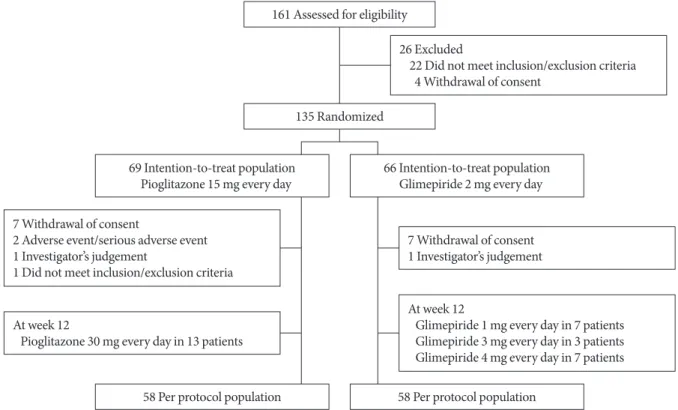
Fig. 1 shows the study flowchart. A total of 161 patients were
Fig. 1. Study flowchart.
161 Assessed for eligibility
135 Randomized
69 Intention-to-treat population Pioglitazone 15 mg every day
58 Per protocol population
66 Intention-to-treat population Glimepiride 2 mg every day
58 Per protocol population 26 Excluded
22 Did not meet inclusion/exclusion criteria 4 Withdrawal of consent
7 Withdrawal of consent 1 Investigator’s judgement
At week 12
Glimepiride 1 mg every day in 7 patients Glimepiride 3 mg every day in 3 patients Glimepiride 4 mg every day in 7 patients 7 Withdrawal of consent
2 Adverse event/serious adverse event 1 Investigator’s judgement
1 Did not meet inclusion/exclusion criteria At week 12
Pioglitazone 30 mg every day in 13 patients
screened for this study, and 135 patients (the ITT population) were randomized to receive pioglitazone (n=69) or glimepiri- de (n=66). After randomization, 19 patients dropped out and 116 patients (the PP population) completed the 26-week treat- ment using pioglitazone (n=58) or glimepiride (n=58). The most common reason for discontinuation was withdrawal of consent (seven patients in each group).
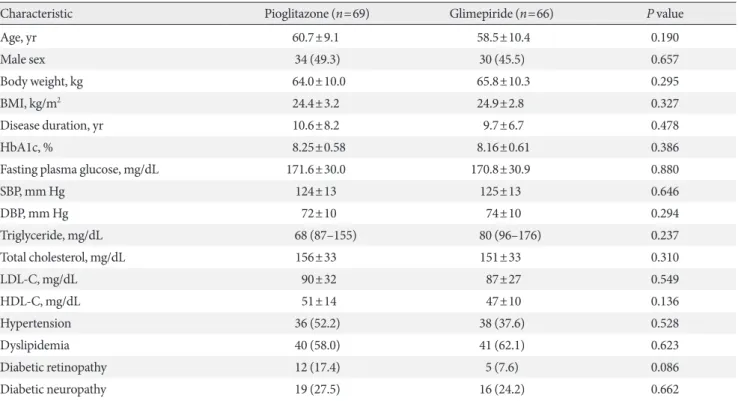
The baseline demographic and clinical characteristics were similar between the two groups in the ITT population (Table 1) and the PP population (data not shown). The mean duration of diabetes was approximately 10 years and the baseline HbA1c level was approximately 8.2%. The drug compliance rates during the study period were 95.5% for pioglitazone and 96.4% for glimepiride. At the 12-week evaluation, the treatment doses were adjusted for 13 patients in the pioglitazone group (to 30 mg/day) and for 17 patients in the glimepiride group (to 1 mg/day for seven patients, 3 mg/day for three patients, and 4 mg/day for seven patients).
Primary efficacy outcomes
Between baseline and the end of treatment, the HbA1c levels
decreased significantly in both groups of the ITT population (P<0.001). The baseline HbA1c levels were 8.25%±0.58% in pioglitazone group and 8.16%±0.61% in glimepiride group.
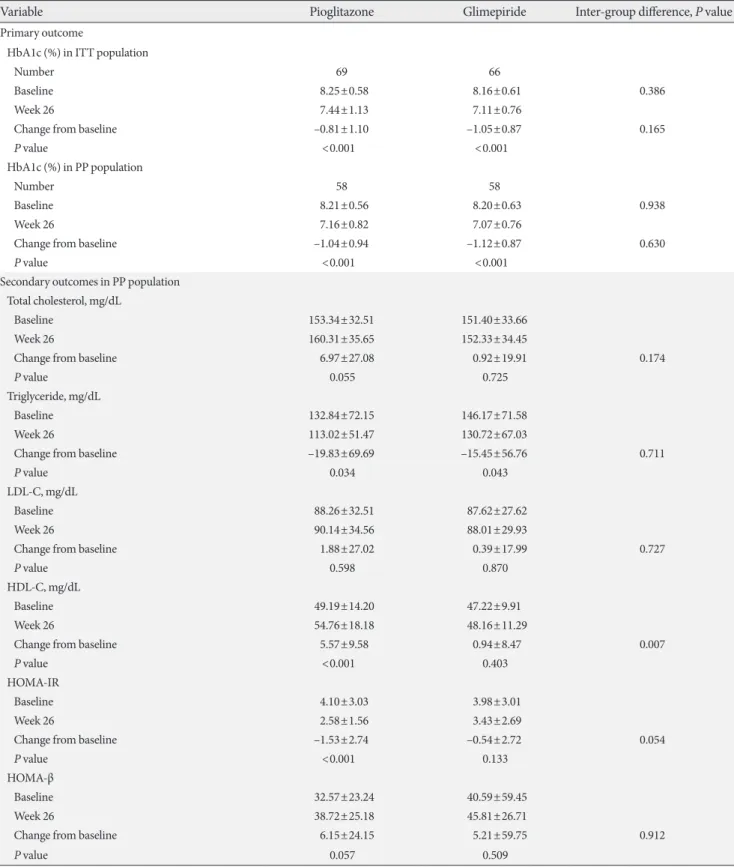
The corresponding changes in the HbA1c levels after 26 weeks were –0.81%±1.1% and –1.05%±0.87%, and no significant in- ter-group difference was observed (P=0.165) (Table 2).
In the PP population, the baseline HbA1c levels were not different between the pioglitazone group (8.21%±0.56%) and the glimepiride group (8.20%±0.63%). Similar to in the ITT population, the HbA1c levels in the PP population had de- creased significantly by week 26 (P<0.001), although the inter- group difference was also not significant (pioglitazone: –1.04%±
0.94%, glimepiride: –1.12%±0.87%; P=0.630). The proportion of participants achieving HbA1c <7.0% at the end of treatment was 48.3% with glimepiride (28/58) and 44.8% with piogli- tazone (26/58) in the PP population (data not shown).
Secondary efficacy outcomes
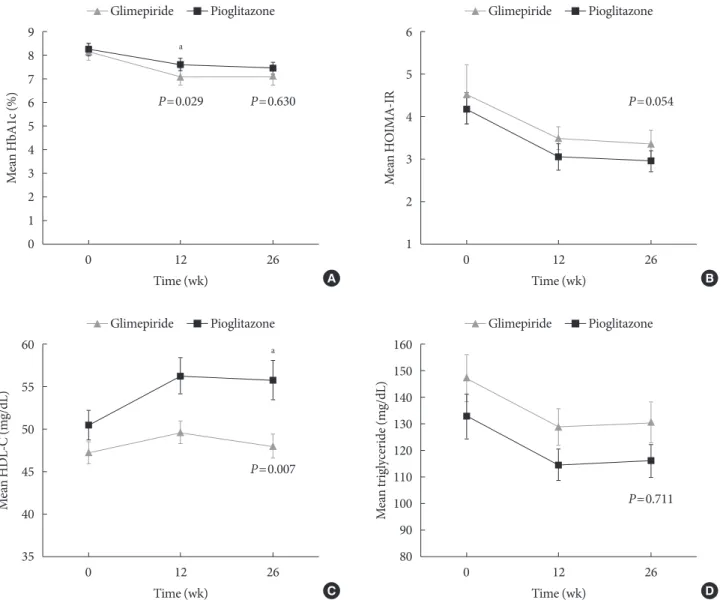
The decreases in HbA1c levels between baseline and week 12 exhibited similar patterns to the changes between baseline and week 26. However, significant differences were observed be-
Table 1. Baseline demographic and clinical characteristics (ITT population)
Characteristic Pioglitazone (n=69) Glimepiride (n=66) P value
Age, yr 60.7±9.1 58.5±10.4 0.190
Male sex 34 (49.3) 30 (45.5) 0.657
Body weight, kg 64.0±10.0 65.8±10.3 0.295
BMI, kg/m2 24.4±3.2 24.9±2.8 0.327
Disease duration, yr 10.6±8.2 9.7±6.7 0.478
HbA1c, % 8.25±0.58 8.16±0.61 0.386
Fasting plasma glucose, mg/dL 171.6±30.0 170.8±30.9 0.880
SBP, mm Hg 124±13 125±13 0.646
DBP, mm Hg 72±10 74±10 0.294
Triglyceride, mg/dL 68 (87–155) 80 (96–176) 0.237
Total cholesterol, mg/dL 156±33 151±33 0.310
LDL-C, mg/dL 90±32 87±27 0.549
HDL-C, mg/dL 51±14 47±10 0.136
Hypertension 36 (52.2) 38 (37.6) 0.528
Dyslipidemia 40 (58.0) 41 (62.1) 0.623
Diabetic retinopathy 12 (17.4) 5 (7.6) 0.086
Diabetic neuropathy 19 (27.5) 16 (24.2) 0.662
Values are presented as mean±standard deviation, number (%), or median (interquartile range).
ITT, intention-to-treat; BMI, body mass index; HbA1c, glycosylated hemoglobin; SBP, systolic blood pressure; DBP, diastolic blood pressure;
LDL-C, low density lipoprotein cholesterol; HDL-C, high density lipoprotein cholesterol.
Table 2. Primary and secondary outcomes, according to treatment group at 26 weeks
Variable Pioglitazone Glimepiride Inter-group difference, P value
Primary outcome
HbA1c (%) in ITT population
Number 69 66
Baseline 8.25±0.58 8.16±0.61 0.386
Week 26 7.44±1.13 7.11±0.76
Change from baseline –0.81±1.10 –1.05±0.87 0.165
P value <0.001 <0.001
HbA1c (%) in PP population
Number 58 58
Baseline 8.21±0.56 8.20±0.63 0.938
Week 26 7.16±0.82 7.07±0.76
Change from baseline –1.04±0.94 –1.12±0.87 0.630
P value <0.001 <0.001
Secondary outcomes in PP population Total cholesterol, mg/dL
Baseline 153.34±32.51 151.40±33.66
Week 26 160.31±35.65 152.33±34.45
Change from baseline 6.97±27.08 0.92±19.91 0.174
P value 0.055 0.725
Triglyceride, mg/dL
Baseline 132.84±72.15 146.17±71.58
Week 26 113.02±51.47 130.72±67.03
Change from baseline –19.83±69.69 –15.45±56.76 0.711
P value 0.034 0.043
LDL-C, mg/dL
Baseline 88.26±32.51 87.62±27.62
Week 26 90.14±34.56 88.01±29.93
Change from baseline 1.88±27.02 0.39±17.99 0.727
P value 0.598 0.870
HDL-C, mg/dL
Baseline 49.19±14.20 47.22±9.91
Week 26 54.76±18.18 48.16±11.29
Change from baseline 5.57±9.58 0.94±8.47 0.007
P value <0.001 0.403
HOMA-IR
Baseline 4.10±3.03 3.98±3.01
Week 26 2.58±1.56 3.43±2.69
Change from baseline –1.53±2.74 –0.54±2.72 0.054
P value <0.001 0.133
HOMA-β
Baseline 32.57±23.24 40.59±59.45
Week 26 38.72±25.18 45.81±26.71
Change from baseline 6.15±24.15 5.21±59.75 0.912
P value 0.057 0.509
Values are presented as mean±standard deviation. P<0.05 was considered significant.
HbA1c, glycosylated hemoglobin; ITT, intention-to-treat; PP, per-protocol; LDL-C, low density lipoprotein cholesterol; HDL-C, high density lipoprotein cho- lesterol; HOMA-IR, homeostasis model assessment as an index of insulin resistance; HOMA-β, homeostatic model assessment β-cell function.
tween the pioglitazone and glimepiride groups in both the ITT population and the PP population (ITT: –0.64%±0.95% vs.
–1.08%±0.73%, P=0.003; PP: –0.86%±0.76% vs. –1.16%±
0.70%, P=0.029) (Fig. 2A).
The baseline HOMA-IR values were 4.10±3.03 in the piogli- tazone group and 3.98±3.01 in the glimepiride group. At week 26, the HOMA-IR values had only decreased significantly in the pioglitazone group (2.58±1.56, P<0.001). However, there was no significant difference in the HOMA-IR changes of the two groups (pioglitazone: –1.53±2.74, glimepiride: –0.54±
2.72; P=0.054) (Table 2, Fig. 2B). The absolute HOMA-β val- ues, and the 26-week changes, were not significantly different between the two groups.
In the pioglitazone group of the PP population, the high density lipoprotein cholesterol (HDL-C) levels increased sig- nificantly from 49.19±14.20 mg/dL at baseline to 54.76±18.18 mg/dL at week 26 (P<0.001). However, no significant change in the HDL-C levels was observed in the glimepiride group (47.22±9.91 mg/dL at baseline and 48.16±11.29 mg/dL at week 26, P=0.403). There was a significant difference in the
Fig. 2. Changes in the measured variables at 12 weeks and 26 weeks. Mean±standard error values at baseline, 12 weeks, and 26 weeks were calculated for (A) glycosylated hemoglobin (HbA1c), (B) homeostatic model assessment of insulin resistance (HOMA-IR), (C) high density lipoprotein cholesterol (HDL-C), and (D) triglycerides during 26-week treatments using glimepiride (closed triangles) or pioglitazone (closed quadrangles) for patients with type 2 diabetes mellitus who were concur- rently receiving combination therapy using alogliptin and metformin. aP<0.05.
9 8 7 6 5 4 3 2 1 0
60 55 50 45 40 35
6 5 4 3 2 1
160 150 140 130 120 110 100 90 80
Mean HbA1c (%)Mean HDL-C (mg/dL) Mean HOIMA-IRMean triglyceride (mg/dL)
0 12 26
0 12 26
0 12 26
0 12 26
P=0.029
a
a
P=0.630
P=0.007
P=0.054
P=0.711 Time (wk)
Time (wk)
Time (wk)
Time (wk) Glimepiride Pioglitazone
Glimepiride Pioglitazone
Glimepiride Pioglitazone
Glimepiride Pioglitazone A
C
B
D
magnitude of the change in HDL-C levels when we compared the pioglitazone and glimepiride groups in the PP population (5.57±9.58 mg/dL vs. 0.94±8.47 mg/dL, P=0.007) (Table 2, Fig. 2C).
Triglyceride levels also decreased significantly in both groups (pioglitazone: 132.84±72.15 mg/dL to 113.02±51.47 mg/dL, P=
0.034; glimepiride: 146.17±71.58 mg/dL to 130.72±67.03 mg/dL, P=0.043). However, there was no significant inter-group differ- ence in the magnitude of these changes (–19.83±69.69 mg/dL vs. –15.45±56.76 mg/dL, P=0.711) (Table 2, Fig. 2D).
Safety
Table 3 shows the safety outcomes for each treatment. A total of 122 patients (90.4%) reported at least one treatment-emer- gent AE (pioglitazone: 64/69 patients [92.75%], glimepiride:
58/66 patients [87.88%]; P=0.504). The most frequent AEs were
upper respiratory tract infection (10/69, 14.49%) in the piogli- tazone group and hypoglycemia (16/66, 24.24%) in the glimepiride group. The glimepiride group was more likely than the pioglitazone group to experience AEs that were rated as be- ing possibly/probably/definitely related to the study drug (i.e., adverse drug reactions) (pioglitazone: eight patients [11.59%], glimepiride: 23 patients [34.85%]; P=0.003). The most fre- quently reported adverse drug reaction was hypoglycemia, which was significantly more common in the glimepiride group (pioglitazone: 1/69 [1.45%], glimepiride: 14/66 [21.21%]; P=
0.001). Two patients in the pioglitazone group discontinued the study because of AEs. Two patients in the pioglitazone group reported experiencing trauma-related fractures (serious AEs), with one case involving a femoral fracture after a fall from second-floor stairs and the second case involving a toe fracture after unintentionally kicking a table leg. A third pa- Table 3. Adverse events summary
Variable Pioglitazone (n=69) Glimepiride (n=66) P value
Adverse eventa 64 (92.8) 58 (87.9) 0.504
Hypoglycemia 3 (4.4) 16 (24.2) 0.002
Upper respiratory infection 10 (14.5) 6 (9.1) 0.481
Dizziness 5 (7.3) 5 (7.6) 1.000
Headache 3 (4.4) 2 (3.0) 1.000
Weight gain 4 (5.8) 0 0.120
Dyspepsia 0 4 (6.1) 0.055
Acute diarrhea 2 (2.9) 1 (1.5) 1.000
Itching 3 (4.4) 0 0.245
Edema 3 (4.4) 0 0.245
Abdominal pain 2 (2.9) 0 0.497
Ache 2 (2.9) 0 0.497
Myalgia 2 (2.9) 0 0.497
Palpitation 0 2 (3.0) 0.237
Serious adverse event 3 (4.4) 0 0.245
Fractureb 2 (2.9) 0 1.000
Acute pyelonephritis 1 (1.5) 0 1.000
Adverse drug reaction 8 (11.6) 23 (34.9) 0.003
Hypoglycemia 1 (1.5) 14 (21.2) 0.001
Dizziness 1 (1.5) 3 (4.6) 0.358
Weight gain 2 (2.9) 0 0.497
Edema 2 (2.9) 0 0.497
Values are presented as number (%).
aOccurring in frequencies of ≥2% in either treatment group, bFractures of cuneiform bone of foot and intertrochanteric section of femur after falling.
tient in the pioglitazone group experienced acute pyelonephri- tis as a serious AE. The investigators judged that these three events were not related to the study medication. The other AEs were generally considered mildly to moderately severe.
DISCUSSION
Among patients with inadequately controlled T2DM receiving metformin plus alogliptin, the addition of glimepiride or pio- glitazone for 26 weeks significantly improved glycemic control.
Relative to glimepiride, pioglitazone provided similar efficacy of glycemic control with fewer episodes of hypoglycemia. Fur- thermore, pioglitazone improved the patients’ lipid profiles and HOMA-IR values. The addition of both drugs to metfor- min plus alogliptin provided a good safety profile with no pre- viously unknown safety concerns.
The Thiazolidinediones Or Sulfonylureas Cardiovascular Accidents Intervention Trial (TOSCA.IT) aimed to compare the long-term effects of second-line pioglitazone or SUs, given in addition to metformin monotherapy, on cardiovascular events in patients with T2DM [15]. The results indicate that both SUs and pioglitazone had similar effects, when combined with metformin, on the incidence of total cardiovascular events. However, relative to metformin plus SUs, metformin plus pioglitazone provided better durability of glycemic con- trol and a lower frequency of hypoglycemia. Similarly, our re- sults indicate that adding pioglitazone to metformin plus alo- gliptin provided similar glycemic control but a lower risk of hypoglycemia compared to adding glimepiride. The TOSCA.
IT trial was focused on second-line treatment for T2DM while our study suggests that pioglitazone was suitable alternatives as add-on treatment to metformin plus alogliptin combination treatment.
Various pathophysiological factors contribute to hyperglyce- mia, which inevitably requires combining antidiabetic agents with different mechanisms of action to successfully manage T2DM [2-4]. Metformin remains the first-line agent for treat- ing T2DM, although recent recommendations have suggested patient-centered glycemic management, albeit without specific recommendations regarding the optimal second-line and third-line antidiabetic agents. In this context, insulin resistance is a major pathophysiological factor that influences T2DM, and improving insulin sensitivity is extremely important in the management of T2DM [16,17]. Although metformin is usually classified as an insulin sensitizer [18-20], its efficacy as an insu-
lin sensitizer is very limited, while TZD has been recognized as a true insulin sensitizer [21-23]. However, safety concerns were raised regarding the use of rosiglitazone, which has led to TZD being used infrequently [24].
The disadvantages of DPP-4 inhibitors include a modest glu- cose-lowering effect and an increased risk of hospitalization for heart failure [25,26]. However, DPP-4 inhibitors are also associated with a markedly reduced risk of hypoglycemia [27], which has led to DPP-4 inhibitors typically being selected as the second-line agent after metformin monotherapy fails. Fur- thermore, there is an increasing number of patients who are receiving combination therapy using metformin plus a DPP-4 inhibitor [7-9], with >50% of Korean patients receiving this combination [9]. However, metformin plus a DPP-4 inhibitor provides unsatisfactory glycemic control, which inevitably leads to the addition of a third-line agent.
Pioglitazone is a well-recognized insulin sensitizer with sim- ilar glucose-lowering power to glimepiride, albeit with a slower response [28]. The findings of the present study also validate this point. For example, there was a significant difference be- tween the pioglitazone and glimepiride groups at 12 weeks in terms of their changes in HbA1c levels, although this differ- ence disappeared at the 26-week measurement. A slow-onset but durable glycemic control is a well-established characteristic of TZD treatment, and the rarity of hypoglycemia is another well-known benefit of pioglitazone treatment [29]. As expect- ed, the addition of glimepiride was associated with more hypo- glycemic events than after the addition of pioglitazone. Ap- proximately 24% of patients in the glimepiride group experi- enced hypoglycemia, although severe hypoglycemic events were not observed in both treatment groups.
Pioglitazone improves the function of β-cells and adipose tissue [30-32], with elevated production of adipokines (e.g., adiponectin and leptin) stimulating fatty acid uptake that helps protect non-adipose tissue from abnormal lipid accumulation [33]. However, the present study failed to detect significant in- creases in HOMA-β after the addition of glimepiride or piogli- tazone to the patients’ treatment. Nevertheless, the onset of di- abetes is preceded by impaired insulin secretion, and we noted that most patients had an approximately 10-year history of dia- betes, which may explain the lack of improvement in β-cell function. Furthermore, Korean patients with T2DM more commonly exhibit an insulin secretory defect leading to the development of diabetes, relative to Caucasian patients with a similar duration of diabetes [12]. Therefore, we conclude that
glimepiride and pioglitazone were both unable to alter the pa- tients’ insulin secretory function in this study.
A recent study revealed that pioglitazone was safely used for 18 months in 101 patients with prediabetes or T2DM, as well as biopsy-proven non-alcoholic steatohepatitis, with 51% of the patients experiencing resolution of the non-alcoholic ste- atohepatitis [34]. In the present study, the pioglitazone group exhibited significant 26-week decreases in the values for HOMA-IR (–1.53±2.74, P<0.001), AST (–2.6±8.4 IU/L, P=
0.012), and ALT (–6.4±11.8 IU/L, P<0.001). In addition, the magnitude of the decreases in the liver enzyme levels from baseline were significantly larger in the pioglitazone group than in the glimepiride group (P=0.011 for AST, P=0.01 for ALT). An increase in HDL-C and a decrease in triglyceride lev- els are well-known effects of pioglitazone treatment [35,36], and the present study revealed similar findings. After 26 weeks of treatment, the pioglitazone group exhibited a significant in- crease in HDL-C, while both groups exhibited similar decreas- es in triglycerides, and neither group exhibited changes in low density lipoprotein cholesterol levels.
Weight gain and edema are frequently reported during TZD treatment [37,38], although the present study revealed mini- mal incidences of these events, and none of the patients dis- continued treatment because of these events. These findings might be explained by the fact that metformin has anorexic properties and is associated with an increase in gastrointestinal side effects [39]. Thus, any TZD-related weight gain might be minimized when it is added to a treatment regimen that in- cludes metformin. An increased risk of fracture is a recently emerged adverse effect of TZD treatment [40], and we identi- fied two fracture cases in the pioglitazone group. The first case involved a femoral fracture after a fall off from second-floor stairs and the second case involved a toe fracture after acciden- tally kicking a table leg. The investigators judged these frac- tures to not be related to the study medication, and we con- clude that both pioglitazone and glimepiride were well tolerat- ed throughout the study period.
In conclusion, the addition of pioglitazone to metformin plus alogliptin for patients with inadequately controlled T2DM resulted in a similar decrease in HbA1c levels to that induced by the addition of glimepiride. However, in addition to the comparable level of glycemic control, pioglitazone provided several better outcomes (improvements in lipid control, insulin resistance, and hypoglycemia risk). Therefore, pioglitazone can be used effectively and safely as a third-line agent for managing
patients whose T2DM is not adequately controlled using met- formin plus a DPP-4 inhibitor.
CONFLICTS OF INTEREST
This study was funded by Takeda Pharmaceuticals Korea Co.
AUTHOR CONTRIBUTIONS
Conception or design: S.S.K., I.J.K.
Acquisition, analysis, or interpretation of data: J.M.K., S.S.K., J.H.K., M.K.K., T.N.K., S.H.L., C.W.L., J.Y.P., E.S.K., K.J.L., Y.S.C., D.K.K., I.J.K.
Drafting the work or revising: J.M.K., S.S.K., I.J.K.
Final approval of the manuscript: J.M.K., S.S.K., J.H.K., M.K.K., T.N.K., S.H.L., C.W.L., J.Y.P., E.S.K., K.J.L., Y.S.C., D.K.K., I.J.K.
ORCID
Jeong Mi Kim https://orcid.org/0000-0003-1250-9835 Sang Soo Kim https://orcid.org/0000-0002-9687-8357 In Joo Kim https://orcid.org/0000-0003-1307-6146
ACKNOWLEDGMENTS
None
REFERENCES
1. Kim SG, Kim NH, Ku BJ, Shon HS, Kim DM, Park TS, Kim YS, Kim IJ, Choi DS. Delay of insulin initiation in patients with type 2 diabetes mellitus inadequately controlled with oral hy- poglycemic agents (analysis of patient- and physician-related factors): a prospective observational DIPP-FACTOR study in Korea. J Diabetes Investig 2017;8:346-53.
2. American Diabetes Association. 8. Pharmacologic approaches to glycemic treatment: standards of medical care in diabe- tes-2018. Diabetes Care 2018;41:S73-85.
3. Garber AJ, Abrahamson MJ, Barzilay JI, Blonde L, Bloomgar- den ZT, Bush MA, Dagogo-Jack S, DeFronzo RA, Einhorn D, Fonseca VA, Garber JR, Garvey WT, Grunberger G, Handels- man Y, Hirsch IB, Jellinger PS, McGill JB, Mechanick JI, Rosen- blit PD, Umpierrez GE. Consensus statement by the American Association of Clinical Endocrinologists and American College
of Endocrinology on the comprehensive type 2 diabetes man- agement algorithm: 2018 executive summary. Endocr Pract 2018;24:91-120.
4. Ko SH, Hur KY, Rhee SY, Kim NH, Moon MK, Park SO, Lee BW, Kim HJ, Choi KM, Kim JH; Committee of Clinical Prac- tice Guideline of Korean Diabetes Association. Antihypergly- cemic agent therapy for adult patients with type 2 diabetes mellitus 2017: a position statement of the Korean Diabetes As- sociation. Diabetes Metab J 2017;41:337-48.
5. van Baar MJB, van Ruiten CC, Muskiet MHA, van Bloemendaal L, IJzerman RG, van Raalte DH. SGLT2 inhibitors in combina- tion therapy: from mechanisms to clinical considerations in type 2 diabetes management. Diabetes Care 2018;41:1543-56.
6. Zhang Y, McCoy RG, Mason JE, Smith SA, Shah ND, Denton BT. Second-line agents for glycemic control for type 2 diabetes:
are newer agents better? Diabetes Care 2014;37:1338-45.
7. Montvida O, Shaw J, Atherton JJ, Stringer F, Paul SK. Long- term trends in antidiabetes drug usage in the U.S.: real-world evidence in patients newly diagnosed with type 2 diabetes. Di- abetes Care 2018;41:69-78.
8. Ko SH, Kim DJ, Park JH, Park CY, Jung CH, Kwon HS, Park JY, Song KH, Han K, Lee KU, Ko KS; Task Force Team for Diabe- tes Fact Sheet of the Korean Diabetes Association. Trends of antidiabetic drug use in adult type 2 diabetes in Korea in 2002- 2013: nationwide population-based cohort study. Medicine (Baltimore) 2016;95:e4018.
9. Korean Diabetes Association: Diabetes fact sheet in Korea.
2018. Available from: http://www.diabetes.or.kr/pro/news/ad- min.php?category=A&code=admin&number=1546&mode=v iew (updated 2018 May 14).
10. Lipska KJ, Yao X, Herrin J, McCoy RG, Ross JS, Steinman MA, Inzucchi SE, Gill TM, Krumholz HM, Shah ND. Trends in drug utilization, glycemic control, and rates of severe hypogly- cemia, 2006-2013. Diabetes Care 2017;40:468-75.
11. Suk JH, Lee CW, Son SP, Kim MC, Ahn JH, Lee KJ, Park JY, Shin SH, Kwon MJ, Kim SS, Kim BH, Lee SH, Park JH, Kim IJ;
Relationship between Cardiovascular Disease and Brachial- Ankle Pulse Wave Velocity (baPWV) in Patients with Type 2 Diabetes (REBOUND) Study Group. Current status of pre- scription in type 2 diabetic patients from general hospitals in Busan. Diabetes Metab J 2014;38:230-9.
12. Yabe D, Seino Y. Type 2 diabetes via β-cell dysfunction in east Asian people. Lancet Diabetes Endocrinol 2016;4:2-3.
13. Ha KH, Park CY, Jeong IK, Kim HJ, Kim SY, Kim WJ, Yoon JS, Kim IJ, Kim DJ, Kim S. Clinical characteristics of people with
newly diagnosed type 2 diabetes between 2015 and 2016: dif- ference by age and body mass index. Diabetes Metab J 2018;42:
137-46.
14. Kim JD, Lee WY. Insulin secretory capacity and insulin resis- tance in Korean type 2 diabetes mellitus patients. Endocrinol Metab (Seoul) 2016;31:354-60.
15. Vaccaro O, Masulli M, Nicolucci A, Bonora E, Del Prato S, Maggioni AP, Rivellese AA, Squatrito S, Giorda CB, Sesti G, Mocarelli P, Lucisano G, Sacco M, Signorini S, Cappellini F, Perriello G, Babini AC, Lapolla A, Gregori G, Giordano C, Corsi L, Buzzetti R, Clemente G, Di Cianni G, Iannarelli R, Cordera R, La Macchia O, Zamboni C, Scaranna C, Boemi M, Iovine C, Lauro D, Leotta S, Dall’Aglio E, Cannarsa E, Tonutti L, Pugliese G, Bossi AC, Anichini R, Dotta F, Di Benedetto A, Citro G, Antenucci D, Ricci L, Giorgino F, Santini C, Gnasso A, De Cosmo S, Zavaroni D, Vedovato M, Consoli A, Calabrese M, di Bartolo P, Fornengo P, Riccardi G; Thiazolidinediones Or Sulfonylureas Cardiovascular Accidents Intervention Trial (TOSCA.IT) study group; Italian Diabetes Society. Effects on the incidence of cardiovascular events of the addition of piogli- tazone versus sulfonylureas in patients with type 2 diabetes in- adequately controlled with metformin (TOSCA.IT): a ran- domised, multicentre trial. Lancet Diabetes Endocrinol 2017;5:
887-97.
16. DeFronzo RA. Pathogenesis of type 2 diabetes; metabolic and molecular implication for identifying diabetes genes. Diabetes Rev 1997;5:177-269.
17. DeFronzo RA. Pathogenesis of type 2 diabetes mellitus. Med Clin North Am 2004;88:787-835.
18. Cusi K, Consoli A, DeFronzo RA. Metabolic effects of metfor- min on glucose and lactate metabolism in noninsulin-depen- dent diabetes mellitus. J Clin Endocrinol Metab 1996;81:4059- 67.
19. DeFronzo RA, Goodman AM. Efficacy of metformin in pa- tients with non-insulin-dependent diabetes mellitus. The Mul- ticenter Metformin Study Group. N Engl J Med 1995;333:541- 9.
20. Cusi K, DeFronzo RA. Metformin: a review of its metabolic ef- fects. Diabetes Rev 1998;6:89-131.
21. Stumvoll M, Haring HU. Glitazones: clinical effects and molec- ular mechanisms. Ann Med 2002;34:217-24.
22. Bays H, Mandarino L, DeFronzo RA. Role of the adipocyte, free fatty acids, and ectopic fat in pathogenesis of type 2 diabe- tes mellitus: peroxisomal proliferator-activated receptor ago- nists provide a rational therapeutic approach. J Clin Endocri-
nol Metab 2004;89:463-78.
23. Yki-Jarvinen H. Thiazolidinediones. N Engl J Med 2004;351:
1106-18.
24. Nissen SE, Wolski K. Effect of rosiglitazone on the risk of myo- cardial infarction and death from cardiovascular causes. N Engl J Med 2007;356:2457-71.
25. Scirica BM, Bhatt DL, Braunwald E, Steg PG, Davidson J, Hirshberg B, Ohman P, Frederich R, Wiviott SD, Hoffman EB, Cavender MA, Udell JA, Desai NR, Mosenzon O, McGuire DK, Ray KK, Leiter LA, Raz I; SAVOR-TIMI 53 Steering Com- mittee and Investigators. Saxagliptin and cardiovascular out- comes in patients with type 2 diabetes mellitus. N Engl J Med 2013;369:1317-26.
26. Li L, Li S, Deng K, Liu J, Vandvik PO, Zhao P, Zhang L, Shen J, Bala MM, Sohani ZN, Wong E, Busse JW, Ebrahim S, Malaga G, Rios LP, Wang Y, Chen Q, Guyatt GH, Sun X. Dipeptidyl peptidase-4 inhibitors and risk of heart failure in type 2 diabe- tes: systematic review and meta-analysis of randomised and observational studies. BMJ 2016;352:i610.
27. Kawalec P, Mikrut A, Lopuch S. The safety of dipeptidyl pepti- dase-4 (DPP-4) inhibitors or sodium-glucose cotransporter 2 (SGLT-2) inhibitors added to metformin background therapy in patients with type 2 diabetes mellitus: a systematic review and meta-analysis. Diabetes Metab Res Rev 2014;30:269-83.
28. Miyazaki Y, Mahankali A, Matsuda M, Glass L, Mahankali S, Ferrannini E, Cusi K, Mandarino LJ, DeFronzo RA. Improved glycemic control and enhanced insulin sensitivity in type 2 dia- betic subjects treated with pioglitazone. Diabetes Care 2001;24:
710-9.
29. Leonard CE, Han X, Brensinger CM, Bilker WB, Cardillo S, Flory JH, Hennessy S. Comparative risk of serious hypoglyce- mia with oral antidiabetic monotherapy: a retrospective cohort study. Pharmacoepidemiol Drug Saf 2018;27:9-18.
30. DeFronzo RA, Burant CF, Fleck P, Wilson C, Mekki Q, Pratley RE. Efficacy and tolerability of the DPP-4 inhibitor alogliptin combined with pioglitazone, in metformin-treated patients with type 2 diabetes. J Clin Endocrinol Metab 2012;97:1615-22.
31. Gastaldelli A, Ferrannini E, Miyazaki Y, Matsuda M, Mari A, DeFronzo RA. Thiazolidinediones improve beta-cell function
in type 2 diabetic patients. Am J Physiol Endocrinol Metab 2007;292:E871-83.
32. Defronzo RA, Tripathy D, Schwenke DC, Banerji M, Bray GA, Buchanan TA, Clement SC, Gastaldelli A, Henry RR, Kitabchi AE, Mudaliar S, Ratner RE, Stentz FB, Musi N, Reaven PD;
ACT NOW Study. Prevention of diabetes with pioglitazone in ACT NOW: physiologic correlates. Diabetes 2013;62:3920-6.
33. Kintscher U, Law RE. PPARgamma-mediated insulin sensiti- zation: the importance of fat versus muscle. Am J Physiol En- docrinol Metab 2005;288:E287-91.
34. Cusi K, Orsak B, Bril F, Lomonaco R, Hecht J, Ortiz-Lopez C, Tio F, Hardies J, Darland C, Musi N, Webb A, Portillo-Sanchez P. Long-term pioglitazone treatment for patients with nonalco- holic steatohepatitis and prediabetes or type 2 diabetes melli- tus: a randomized trial. Ann Intern Med 2016;165:305-15.
35. Filipova E, Uzunova K, Kalinov K, Vekov T. Effects of piogli- tazone therapy on blood parameters, weight and BMI: a meta- analysis. Diabetol Metab Syndr 2017;9:90.
36. Boyle PJ, King AB, Olansky L, Marchetti A, Lau H, Magar R, Martin J. Effects of pioglitazone and rosiglitazone on blood lip- id levels and glycemic control in patients with type 2 diabetes mellitus: a retrospective review of randomly selected medical records. Clin Ther 2002;24:378-96.
37. Guan Y, Hao C, Cha DR, Rao R, Lu W, Kohan DE, Magnuson MA, Redha R, Zhang Y, Breyer MD. Thiazolidinediones ex- pand body fluid volume through PPARgamma stimulation of ENaC-mediated renal salt absorption. Nat Med 2005;11:861-6.
38. Seki G, Endo Y, Suzuki M, Yamada H, Horita S, Fujita T. Role of renal proximal tubule transport in thiazolidinedione-in- duced volume expansion. World J Nephrol 2012;1:146-50.
39. Strowig SM, Aviles-Santa ML, Raskin P. Improved glycemic control without weight gain using triple therapy in type 2 dia- betes. Diabetes Care 2004;27:1577-83.
40. Viscoli CM, Inzucchi SE, Young LH, Insogna KL, Conwit R, Furie KL, Gorman M, Kelly MA, Lovejoy AM, Kernan WN;
IRIS Trial Investigators. Pioglitazone and risk for bone fracture:
safety data from a randomized clinical trial. J Clin Endocrinol Metab 2017;102:914-22.
![Table 3 shows the safety outcomes for each treatment. A total of 122 patients (90.4%) reported at least one treatment-emer-gent AE (pioglitazone: 64/69 patients [92.75%], glimepiride:](https://thumb-ap.123doks.com/thumbv2/123dokinfo/5220592.123331/7.892.76.817.520.1031/outcomes-treatment-patients-reported-treatment-pioglitazone-patients-glimepiride.webp)
