Prophylactic versus Early Rescue Surfactant Treatment in Preterm Infants Born at Less than 30 Weeks Gestation or with Birth Weight Less than or Equal 1,250 Grams
Prophylactic surfactant is known to be effective to reduce chronic lung disease in preterm infants compared with rescue surfactant treatment. In Korea, early prophylactic surfactant therapy was introduced in 2011. However, recently, the increased utilization of antenatal steroids and early stabilization through continuous positive airway pressure (CPAP) in the delivery room may have changed the risks and benefits of prophylactic surfactant therapy of infants at high risk of respiratory distress syndrome (RDS). We compared the effects and safety of prophylactic surfactant therapy (within 30 minutes after birth) and early selective surfactant therapy (within 3 hours after birth) in preterm infants born at < 30 weeks gestation or with birth weight ≤ 1,250 g. The clinical data of 193 infants in period 1 (from 2008 to 2010, early selective surfactant therapy group) were collected retrospectively;
those of 191 infants in period 2 (from 2012 to 2014, prophylactic surfactant therapy group) were collected prospectively. Compared to period 1, the rate of intubation and surfactant use were significantly increased in period 2. The use of multiple doses of surfactant in period 2 was significantly increased compared with period 1. Despite more invasive and aggressive management in period 2, there was no difference in the duration of mechanical ventilation, the incidence of bronchopulmonary dysplasia (BPD) or death, and the risk of other adverse neonatal outcomes between the 2 groups. In conclusion, the benefit of prophylactic surfactant therapy in infants treated under current practices is no longer clear compared to early selective surfactant therapy.
Keywords: Surfactant; Respiratory Distress Syndrome; Premature Infant Jiyoung Chun,1* Se In Sung,2*
Yo Han Ho,2 Jisook Kim,2 Ga Young Park,3 Shin Ae Yoon,4 So Yoon Ahn,2
Yun Sil Chang,2 and Won Soon Park2
1Department of Pediatrics, Hallym University Kangnam Sacred Heart Hospital, Hallym University School of Medicine, Seoul, Korea; 2Department of Pediatrics, Samsung Medical Center, Sungkyunkwan University School of Medicine, Seoul, Korea;
3Department of Pediatrics, Soonchunhyang University Bucheon Hospital, Soonchunhyang University School of Medicine, Bucheon, Korea;
4Department of Pediatrics, Chungbuk National University Hospital, Cheongju, Korea
* Jiyoung Chun and Se In Sung contributed equally to this work.
Received: 18 January 2017 Accepted: 24 April 2017 Address for Correspondence:
Won Soon Park, MD, PhD
Department of Pediatrics, Samsung Medical Center, Sungkyunkwan University School of Medicine, 81 Irwon-ro, Gangnam-gu, Seoul 06351, Korea
E-mail: [email protected], [email protected] Funding: This study was supported by grants from Yuhan Corporation (PHO1125565) and from the 20 by 20 Project (Best #3, GFO1150091) of Samsung Medical Center.
https://doi.org/10.3346/jkms.2017.32.8.1288 • J Korean Med Sci 2017; 32: 1288-1294
INTRODUCTION
Respiratory distress syndrome (RDS), a clinical condition of pulmonary insufficiency due to lack of surfactant, is the most important factor in mortality and morbidity of preterm infants.
Due to the common use of exogenous pulmonary surfactant as the treatment for RDS, there has been a significant reduction in mortality, pneumothorax, pulmonary interstitial emphysema (PIE), and the combined outcome of bronchopulmonary dys- plasia (BPD) or death in preterm infants (1-3). However, there are still controversies on the strategy of surfactant treatment, especially regarding the optimal timing of surfactant adminis- tration. The results of a recent meta-analysis showed that early surfactant treatment was more effective compared with delayed selective surfactant treatment with regard to the risk of pneu- mothorax, PIE, neonatal mortality, and chronic lung disease (4). Furthermore, many studies have shown that prophylactic
surfactant administration to infants born at less than 30 weeks gestation could reduce mortality, the frequency and severity of RDS, air leak, and the combined outcome of BPD and death compared with infants who receive placebo or rescue surfac- tant (5-8).
According to these references, prophylactic surfactant replace- ment therapy was approved by the national health insurance in 2011 in Korea, to the preterm infants born at < 30 weeks of ges- tation or with birth weight ≤ 1,250 g within 2 hours after birth regardless of respiratory status. From 2011 onward, many neo- natal intensive care units (NICUs) in Korea have used prophy- lactic surfactant for preterm infants born at < 30 weeks of ges- tation or with birth weight ≤ 1,250 g.
On the contrary, prophylactic surfactant administration has a disadvantage in that it requires intubation and can lead to over- treatment of preterm infants who may not be prone to develop- ing RDS. According to increased utilization of antenatal steroids ORIGINAL ARTICLE
Pediatrics
2017-03-16 https://crossmark-cdn.crossref.org/widget/v2.0/logos/CROSSMARK_Color_square.svg
and early stabilization on continuous positive airway pressure (CPAP) in the delivery room, an updated meta-analysis report- ed that the benefit of prophylactic surfactant administration is no longer clear (9). Thus, we compared neonatal outcomes of preterm infants in the period of prophylactic surfactant therapy with those of preterm infants in the period of early selective sur- factant therapy to evaluate the advantages and disadvantages of prophylactic surfactant therapy.
MATERIALS AND METHODS Study population and study design
Inclusion criteria were infants born at gestational age of 25–30 weeks or with birth weight ≤ 1,250 g who were born and ad- mitted to the NICU at Samsung Medical Center (SMC) from June 2008 to October 2014. We excluded the infants born in 2011 because, although prophylactic surfactant treatment was performed in Korea from 2011 on, it was applied in practice at SMC from 2012. Patients were divided into 2 groups based on the study period: period 1 (from June 2008 to December 2010) and period 2 (from January 2012 to October 2014). Data collec- tion was conducted retrospectively in period 1, and the Institu- tional Review Board (IRB) allowed a waiver of informed con- sent for this retrospective chart review. On the contrary, in peri- od 2, data were prospectively collected, and informed consent was obtained from both parents per the requirement of the IRB.
Exclusion criteria were as follows: 1) infants who expired in the delivery room; 2) infants having potentially life-threatening congenital malformation; and 3) infants whose parents did not provide consent in period 2. Antenatal steroid exposure was de- fined as maternal receipt of betamethasone at least once during the admission for delivery.
Surfactant policies
In period 1, the surfactant was administered to infants who met all of the following criteria: 1) clinical evidence of respiratory difficulties; 2) radiologic evidence of RDS (diffuse granular opac- ities or air bronchogram in both lung fields); and 3) need for me- chanical ventilation with fraction of inspired oxygen (FiO2) ex- ceeding 40% to sustain optimal blood O2 saturation (50–80 mmHg).
Early selective surfactant administration was performed within the first 3 hours of life.
In period 2, prophylactic surfactant was administered to all preterm infants born at < 30 weeks of gestation or with birth weight ≤ 1,250 g in the delivery room immediately after birth regardless of respiratory status. Newborns whose body weight was not clear at birth or who were born in an emergency situa- tion without enough time to prepare the surfactant received prophylactic surfactant as soon as possible after admission to the NICU.
In both groups, Newfactan® (Yuhan Corporation, Seoul, Ko-
rea) at a dose of 120 mg/kg was administered after endotrache- al intubation. The tube position was confirmed by chest X-ray in period 1 and by auscultation in period 2. The surfactant was administered via a plastic catheter loaded in an endotracheal tube. During surfactant administration, infants were manually ventilated. After administration, patients were supported with mechanical ventilation. Utilization of CPAP in the delivery room was not done in our unit during study period.
Outcomes
The primary outcome was BPD or death. BPD was defined by Jobe and Bancalari criteria (10) as a need for supplemental oxy- gen or positive pressure ventilator including nasal CPAP at a post- menstrual age of 36 weeks. Secondary outcomes were the num- ber of infants who received surfactant or were intubated, num- ber of surfactant doses, duration of mechanical ventilation in- cluding CPAP, duration of endotracheal intubation, duration of oxygen supplement by nasal cannula after extubation or remov- al of CPAP, the rate of early extubation, the rate of extubation fail- ure, use of postnatal steroids, and pneumothorax.
We defined early extubation as extubation within 2 hours af- ter intubation and extubation failure as reintubation within 48 hours after extubation for any reason. Pneumothorax was diag- nosed using chest radiography, and only cases that required chest tube insertion were identified, while those that occurred associated with surgery were excluded.
We also compared the incidence of mortality and common complications of prematurity including BPD, intraventricular hemorrhage (IVH), periventricular leukomalacia (PVL), retino- pathy of prematurity (ROP), necrotizing enterocolitis (NEC), patent ductus arteriosus (PDA), and sepsis. IVH was defined as a diagnosis of higher than grade III on cranial ultrasonography by classification according to Papile et al. (11), and PVL was de- fined as cranial ultrasound findings of increased echogenicity and cystic lesions in the periventricular white matter. PDA was evaluated by echocardiography within 10 days of age. ROP was defined as higher than stage III according to international clas- sification (12). NEC was defined as a diagnosis of higher than stage II according to the modified Bell’s staging criteria (13). Sep- sis was defined by clinical findings and the presence of bacteria or fungus in the blood culture.
Statistical analysis
Comparisons of categorical variables were performed using the χ2 test, and comparisons of continuous variables were evaluated using Student’s t-test. Logistic regression analysis was performed to compare risk factors and morbidities of the study groups. Odds ratio (OR) with 95% confidence intervals (95% CIs) for compos- ite morbidity were calculated. SPSS version 19 (SPSS Inc., Chi- cago, IL, USA) was used for all statistical analyses, and P < 0.05 was considered statistically significant.
Ethics statement
The present study protocol was reviewed and approved by the IRB of Samsung Medical Center (IRB No. 2011-10-106). Data collection was conducted retrospectively in period 1, and the IRB allowed a waiver of informed consent for this retrospective chart review. On the contrary, in period 2, data were prospec- tively collected, and informed consent was obtained from both parents per the requirement of the IRB.
RESULTS
Baseline characteristics
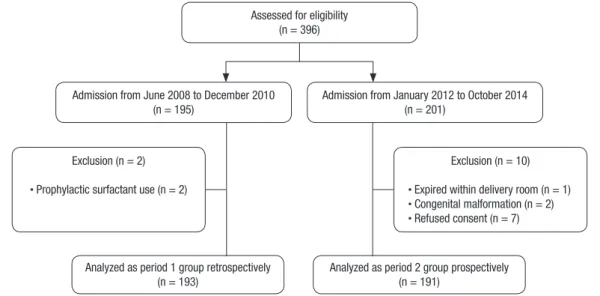
A total of 396 preterm infants at more than 25 weeks and less than 30 weeks of gestation or with birth weight ≤ 1,250 g were born and admitted to the NICU at SMC from June 2008 to Octo- ber 2014, excluding those in year 2011. In period 1, 193 infants were enrolled; in period 2, 191 infants were enrolled (Fig. 1). Dur- ing the period from June 2008 to December 2010, despite accep- tance of a rescue surfactant treatment protocol, surfactant was administered as prophylaxis in the delivery room in 2 patients who were expected to develop severe RDS after birth. These cas- es were excluded from this study.
Because there were more small for gestational age (SGA) in- fants in period 2 (P = 0.031), the mean birth weight of the infants in period 2 (978 ± 260 g) was significantly lower than that of the infants in period 1 (1,042 ± 237 g) (P = 0.011), although the ges- tational ages of the 2 groups were similar. There were more male infants in period 2 than period 1 (P = 0.014). The rate of prema- ture rupture of membrane (PROM) > 24 hours was higher in period 1 than period 2 (P = 0.049), but the rate of pathologic cho- rioamnionitis was not different between the 2 groups. Other de- mographics and population characteristics were similar in the 2 groups (Table 1).
Surfactant administration
Time from birth to the first surfactant administration was 59.3
± 41.7 minutes in period 1 and 7.7 ± 15.4 minutes in period 2 (P < 0.001). In period 1, 34 (17.6%) infants managed without in- tubation, and 51 infants (26.4%) did not receive any surfactant.
These numbers are significantly higher compared to those in period 2, when all infants were intubated and administered pro- phylactic surfactant (P < 0.001). Even though surfactant was used as a prophylaxis in period 2, the use of multiple doses of surfac- tant in period 2 was significantly higher than in period 1 (28.8%
Table 1. Demographic and baseline characteristics of the study population
Parameters Period 1
(n = 193)
Period 2
(n = 191) P value
Gestational age, wk 27.5 ± 1.9 27.6 ± 2.1 0.640
Distribution by gestational age (%)
25–26 59 (30.6) 66 (34.6)
27–28 78 (40.4) 61 (31.9)
Over 29 56 (29.0) 64 (33.5)
Birth weight, g 1,042 ± 237 978 ± 260 0.011
SGA 27 (14.0) 43 (22.5) 0.031
Male 87 (45.1) 110 (57.6) 0.014
Cesarean section 142 (73.6) 156 (81.7) 0.057
Multiple pregnancies 68 (35.2) 66 (34.6) 0.889
Antenatal steroid 171 (88.6) 171 (89.5) 0.771
PROM > 24 hr 64 (33.2) 46 (24.2) 0.049
Chorioamnionitis 104 (53.9) 96 (50.3) 0.477
1 min Apgar score 5.5 ± 1.7 5.2 ± 1.7 0.120
5 min Apgar score 7.7 ± 1.5 7.4 ± 1.4 0.082
Time of first surfactant administration, min 59.3 ± 41.7 7.7 ± 15.4 < 0.001
25–26 wk 40.7 ± 34.5 4.7 ± 5.6 < 0.001
27–28 wk 63.1 ± 35.0 4.6 ± 6.1 < 0.001
Over 29 wk 88.3 ± 48.8 13.7 ± 24.3 < 0.001
Data are shown as mean ± SD or number (%).
SGA = small for gestational age, PROM = premature rupture of membrane, SD = standard deviation.
Fig. 1. Flowchart of the study population.
Admission from June 2008 to December 2010 (n = 195)
Analyzed as period 2 group prospectively (n = 191)
Admission from January 2012 to October 2014 (n = 201)
Exclusion (n = 2)
· Prophylactic surfactant use (n = 2)
Exclusion (n = 10)
· Expired within delivery room (n = 1)
· Congenital malformation (n = 2)
· Refused consent (n = 7)
Analyzed as period 1 group retrospectively (n = 193)
Assessed for eligibility (n = 396)
vs. 15.0%, P = 0.001) (Table 2, Fig. 2).
In the subgroup analysis of infants in period 1 according to gestational age, in the infants at 25 to 26 weeks gestation, there were no infants who managed without intubation and only 2 infants (3.4%) did not receive any surfactant. The use of multi- ple doses of surfactant in period 1 was significantly lower than that in period 2 (15.3% vs. 36.4%, P = 0.008). On the other hand, in the infants at 27 to 28 weeks gestation, 13 (16.7%) managed
without intubation, and 22 (28.2%) did not receive any surfac- tant. The use of multiple doses of surfactant in period 1 was sig- nificantly lower than that in period 2 (17.9% vs. 34.4%, P = 0.026) (Table 2, Fig. 2). Of infants born at or later than 29 weeks gesta- tion, 21 (37.5%) managed without intubation, and only 29 (51.8%) received surfactant. In the infants born at or later than 27 weeks gestation, the rate of intubation and surfactant use showed a sta- tistically significant difference between the 2 groups (P < 0.001) (Table 2, Fig. 2).
Neonatal outcomes
There was no significant difference in duration of mechanical ventilation (including CPAP) between the 2 groups, even though Table 2. Intubation and surfactant use in accordance with gestational age
Intubation and surfactant use
Period 1 Period 2
Gestational age, wk Gestational age, wk
25–26 27–28 Over 29 Total 25–26 27–28 Over 29 Total
No intubation 0 13 (16.7)* 21 (37.5)* 34 (17.6)* 0 0 0 0
Intubation but no surfactant use 2 (3.4) 9 (11.5)* 6 (10.7)* 17 (8.8)* 0 0 0 0
Surfactant use 57 (96.6) 56 (71.8)* 29 (51.8)* 142 (73.6)* 66 (100.0) 61 (100.0) 64 (100.0) 191 (100.0) Multiple surfactant use 9 (15.3)* 14 (17.9)* 6 (10.7) 29 (15.0)* 24 (36.4) 21 (34.4) 10 (15.6) 55 (28.8)
Total 59 78 56 193 66 61 64 191
Values are presented as number (%).
*P < 0.05 when compared with corresponding group of period 2.
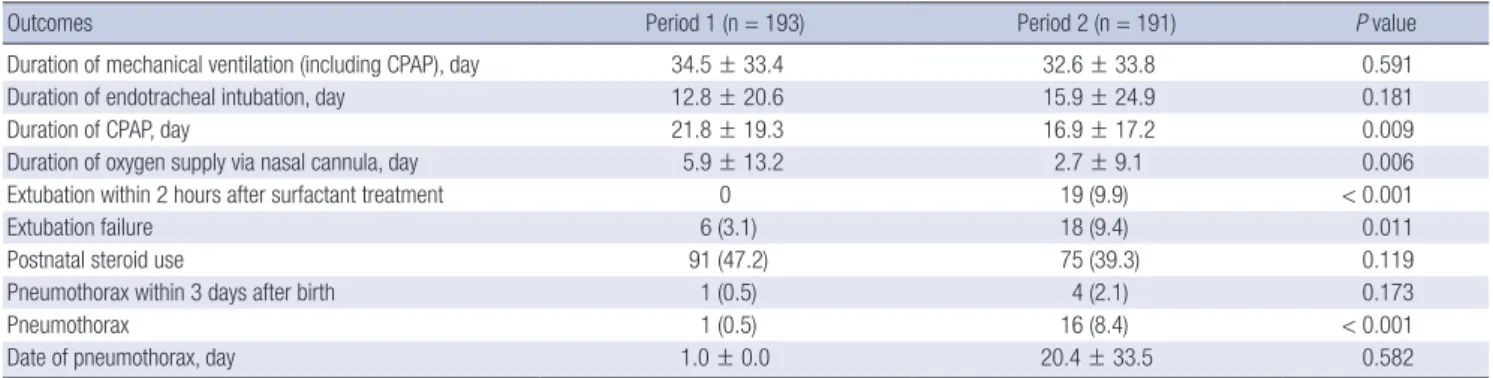
Table 3. Comparison of respiratory outcomes between period 1 and period 2
Outcomes Period 1 (n = 193) Period 2 (n = 191) P value
Duration of mechanical ventilation (including CPAP), day 34.5 ± 33.4 32.6 ± 33.8 0.591
Duration of endotracheal intubation, day 12.8 ± 20.6 15.9 ± 24.9 0.181
Duration of CPAP, day 21.8 ± 19.3 16.9 ± 17.2 0.009
Duration of oxygen supply via nasal cannula, day 5.9 ± 13.2 2.7 ± 9.1 0.006
Extubation within 2 hours after surfactant treatment 0 19 (9.9) < 0.001
Extubation failure 6 (3.1) 18 (9.4) 0.011
Postnatal steroid use 91 (47.2) 75 (39.3) 0.119
Pneumothorax within 3 days after birth 1 (0.5) 4 (2.1) 0.173
Pneumothorax 1 (0.5) 16 (8.4) < 0.001
Date of pneumothorax, day 1.0 ± 0.0 20.4 ± 33.5 0.582
Data are shown as mean ± SD or number (%).
CPAP = continuous positive airway pressure, SD = standard deviation.
Fig. 2. Distribution of the study population with regard to intubation and surfactant use in accordance with gestational age.
GA = gestational age.
*P < 0.05.
Period 1 Period 2
GA 25–26 weeks Period 1 Period 2
GA 27–28 weeks Period 1 Period 2
Over 29 weeks Period 1 Period 2 All patients 100
90 80 70 60 50 40 30 20 10 0 (%)
* *
*
*
*
*
*
*
* Surfactant multiple dose
Surfactant single dose
Intubation + No surfactant
No intubation + No surfactant Table 4. Comparison of neonatal morbidity between period 1 and period 2 Outcomes Period 1 (n = 193) Period 2 (n = 191) P value
Mortality 15 (7.8) 7 (3.7) 0.080
IVH (grade ≥ 3) 12 (6.3) 10 (5.3) 0.670
PVL 9 (4.7) 17 (8.9) 0.101
ROP (stage ≥ 3) 14 (7.7) 21 (11.5) 0.220
PDA 120 (65.9) 137 (73.7) 0.107
PDA with surgical operation 58 (30.1) 2 (1.1) < 0.001
NEC (stage ≥ 2) 17 (8.8) 10 (5.2) 0.171
Sepsis 30 (15.5) 20 (10.5) 0.140
Values are presented as number (%).
IVH = intraventricular hemorrhage, PVL = periventricular leukomalacia, ROP = retino
pathy of prematurity, PDA = patent ductus arteriosus, NEC = necrotizing enterocolitis.
the length of CPAP was significantly shorter in period 2 than pe- riod 1 (P = 0.009). Duration of oxygen supply by nasal cannula after extubation or removal of CPAP was shorter in period 2 than period 1 (P = 0.006). There was no infant in period 1 who could be extubated within 2 hours after intubation. On the other hand, significantly more infants (n = 19, 9.9%) in period 2 could be extubated within 2 hours (P < 0.001). However, the rate of rein- tubation within 48 hours after extubation was also higher in pe- riod 2 than period 1 (9.4% vs. 3.1%, P = 0.011). The incidence of pneumothorax was significantly higher in period 2 compared with period 1 (5.2% vs. 0.5%, P < 0.001), but that occurred with- in 3 days after birth had no statistically difference between the 2 groups (0.5% vs. 2.1%, P = 0.173) (Table 3).
Other outcomes including grade 3 or 4 IVH, cystic PVL, ROP, PDA, NEC, and sepsis were comparable between the groups.
Although the rate of PDA with surgical treatment decreased sig- nificantly in period 2 compared with period 1 (P < 0.001) (Table 4).
After adjustment for gender, SGA, Cesarean section, the num- ber of surfactant doses, and PDA with surgical treatment, BPD or death was not significantly different between the 2 groups.
After subgroup analysis, according to gestational age, the result did not change. On the other hand, PDA treatment with surgi- cal ligation revealed an increasing factor of BPD or death (OR, 3.90; 95% CI, 1.83–8.33) (Table 5).
DISCUSSION
Several meta-analyses have shown that prophylactic surfactant treatment is preferable to selective surfactant treatment for re- ducing mortality, pneumothorax, PIE, and the need for mechan- ical ventilation (5,6). Contrary to these studies, our study showed that prophylactic surfactant administration to preterm infants born at < 30 weeks of gestation or with birth weight ≤ 1,250 g immediately after birth was not superior to early selective sur- factant treatment in reducing BPD or death or in improving oth- er clinical outcomes. As in our study, the efficacy of combining prophylactic Curosurf® (poractant alfa; Chiesi USA, Inc., Cary,
NC, USA) with early nasal CPAP in delivery room (CURPAP) tri- al (14), an international randomized controlled trial to evaluate the efficacy of combining prophylactic surfactant and early na- sal CPAP in very preterm infants, concluded that prophylactic surfactant was not superior to nasal CPAP or early selective sur- factant in decreasing the incidence of main morbidities of pre- maturity in spontaneously breathing very preterm infants. The reason for this difference is that previous studies of meta-analy- ses were performed when prenatal steroid use was very low (–30%) compared with 90% in our study and 96% to 98% in the CUR- PAP trial. This increased use of prenatal steroids may be one of the reasons why there was no difference between prophylactic surfactant treatment and early selective surfactant treatment.
Other surfactant trials that compared prophylaxis and selec- tive treatment during an era of high antenatal steroid use have shown that 40% to 50% of infants born at 29 to 30 weeks gesta- tion, 20% to 35% of infants born at 27 to 28 weeks gestation, and 8% to 10% of infants born at or earlier than 26 weeks gestation could be managed with no surfactant replacement (1,15). Our data demonstrating that 48.2% infants born at over 29 weeks gestation and 28.2% of infants born at 27 to 28 weeks gestation managed with no surfactant replacement in period 1 is compa- rable to those studies. But only 3.4% of infants born at 25 to 26 weeks gestation could be managed with no surfactant replace- ment. A possible reason why our study showed a higher rate of surfactant replacement in infants born at 25 to 26 weeks gesta- tion than other studies is that utilization of CPAP in the delivery room was not common in our unit in this study period.
Unlike previous studies in which prophylactic surfactants pro- vided a decreased risk of pneumothorax and PIE (6), our study showed that pneumothorax was significantly increased with prophylactic surfactant treatment. It is thought that intubation and positive pressure ventilation through an endotracheal tube in infants with normal compliant lung rather than surfactant administration, contributed pulmonary injury and the devel- opment of pneumothorax. And because this study was performed over a long period of time, there may have been unmeasured Table 5. Death or BPD at 36 weeks
Gestational age Period 1 (n = 193) Period 2 (n = 191) Unadjusted OR (95% CI) Adjusted OR (95% CI)
Death or BPD at 36 wk
All patients 48 (24.9) 39 (20.4) 0.76 (0.46–1.20) 0.86 (0.42–1.74)
25–26 wk 25 (42.5) 19 (28.8) 0.47 (0.23–0.99) 0.76 (0.24–2.42)
27–28 wk 16 (20.5) 14 (23.0) 1.15 (0.51–2.60) 1.01 (0.34–3.02)
At or later than 29 wk 7 (12.5) 6 (9.4) 0.72 (0.23–2.30) 1.38 (0.18–10.36)
BPD at 36 wk
All patients 40 (21.7) 32 (17.3) 0.71 (0.42–1.19) 1.08 (0.49–2.40)
25–26 wk 21 (38.2) 17 (26.6) 0.52 (0.24–1.12) 0.90 (0.26–3.10)
27–28 wk 13 (17.6) 11 (19.0) 1.10 (0.45–2.67) 1.39 (0.38–5.14)
At or later than 29 wk 6 (10.9) 4 (6.3) 0.55 (0.15–2.07) 1.29 (0.17–9.95)
Adjusted OR was adjusted for SGA, gender, Cesarean section, number of surfactant doses, and PDA with surgical treatment.
BPD = bronchopulmonary dysplasia, OR = odds ratio, CI = confidence interval, SGA = small for gestational age, PDA = patent ductus arteriosus.
changes in ventilator management that could have affected the rate of pneumothorax.
In the comparison of neonatal morbidity between the 2 groups, only PDA treatment with surgical ligation was significantly de- creased in period 2, while other outcomes revealed no difference between groups. It may be that prophylactic surfactant treatment decreased the development of hemodynamically significant PDA that needed surgical ligation. However, during the long study period, the PDA management protocol of our unit changed to a less aggressive strategy. Therefore, the rate of PDA treatment with surgical ligation was decreased in period 2 not because of prophylactic surfactant treatment, but rather because of chang- es in protocol to treat PDA with conservative management and medical management. In the multivariable regression analysis to identify predicting factors affecting BPD or death, PDA treat- ment with surgical ligation was revealed as a risk factor. Recent studies have shown that surgical intervention to close the duc- tus arteriosus is an independent risk factor for the development of BPD and mortality (16-18). The main limitation of this study is that the intention to reduce surgical ligation in period 2 would act as a confounder on the respiratory outcome.
According to the common use of antenatal corticosteroids in women at risk of preterm labor and greater utilization of CPAP in the delivery room to stabilize infants, recent studies have not demonstrated the benefits of prophylactic surfactant and sug- gest that stabilization using CPAP and surfactant treatment only for preterm infants who develop respiratory problems may be more effective than a more aggressive approach (9). Updated European guidelines suggest that CPAP should be preferentially started from birth in all babies at risk of RDS (babies usually < 30 weeks gestation) until their clinical status can be assessed. In addition, they recommend suspending prophylactic surfactant to babies at earlier gestational ages and administering early sur- factant based on gestational age and FiO2 requirement (babies
< 26 weeks with > 0.3 FiO2 and > 26 weeks with > 0.4 FiO2) (19).
Kim et al. (20) previously reported a retrospective multi-cen- ter study comparing the outcomes of early prophylactic vs. late selective pulmonary surfactant therapy in preterm infants born at < 30 weeks of gestation or with birth weight ≤ 1,250 g in Ko- rea. They reported a significant decrease in overall mortality and the occurrence of morbidities including PIE, PDA, BPD, persis- tent pulmonary hypertension of newborn (PPHN), pneumonia, and cholestasis with use of early prophylactic surfactant treat- ment. However, these findings were not observed in our study.
The cause for this discrepancy is considered to be the difference between the times when the surfactant was administered. In that study, early prophylactic surfactant was administered at 0.6 ± 0.0 hours after birth, and late selective surfactant was ad- ministered at 2.9 ± 0.2 hours after birth. However, in our study, prophylactic surfactant was administered at 7.7 ± 15.4 minutes after birth, and selective surfactant was administered at 59.3 ± 41.7
minutes after birth. As our results show, if selective surfactant is used as soon as possible, there will be no difference in neonatal mortality and morbidities between prophylactic surfactant treat- ment and early selective rescue treatment.
There are some limitations to our study. The study was con- ducted over a relatively long period of time, and some other fac- tors in addition to the different management strategies, such as the trend toward less aggressive management of neonatal care during the study period, might have influenced the incidence of mortality and morbidity between the periods.
In conclusion, the benefit of prophylactic surfactant therapy in infants treated under current practices is no longer clear com- pared to early selective surfactant therapy in preterm infants born at < 30 weeks gestation or with birth weight ≤ 1,250 g. Tailored surfactant strategies are required to achieve the benefit of early treatment and simultaneously avoid the risk of unnecessary in- tubation and invasive mechanical ventilation.
DISCLOSURE
The authors have no potential conflicts of interest to disclose.
AUTHOR CONTRIBUTION
Conceptualization: Sung SI, Yoon SA, Ahn SY, Chang YS, Park WS. Data curation: Ho YH, Kim J, Park GY. Investigation: Chun J, Ho YH, Kim J, Park GY. Writing - original draft: Chun J, Ho YH, Kim J, Park GY. Writing - review & editing: Chun J, Sung SI, Ho YH, Kim J, Park GY, Yoon SA, Ahn SY, Chang YS, Park WS.
ORCID
Jiyoung Chun https://orcid.org/0000-0003-3509-6391 Se In Sung https://orcid.org/0000-0002-8717-6142 Yo Han Ho https://orcid.org/0000-0001-7517-955X Jisook Kim https://orcid.org/0000-0002-0100-5845 Ga Young Park https://orcid.org/0000-0002-9095-6457 Shin Ae Yoon https://orcid.org/0000-0001-7892-5853 So Yoon Ahn https://orcid.org/0000-0002-1821-3173 Yun Sil Chang https://orcid.org/0000-0001-9201-2938 Won Soon Park https://orcid.org/0000-0002-8245-4692 REFERENCES
1. Polin RA, Carlo WA; Committee on Fetus and Newborn; American Acad- emy of Pediatrics. Surfactant replacement therapy for preterm and term neonates with respiratory distress. Pediatrics 2014; 133: 156-63.
2. Halliday HL. Surfactants: past, present and future. J Perinatol 2008; 28 Suppl 1: S47-56.
3. Engle WA; American Academy of Pediatrics Committee on Fetus and New- born. Surfactant-replacement therapy for respiratory distress in the pre-
term and term neonate. Pediatrics 2008; 121: 419-32.
4. Bahadue FL, Soll R. Early versus delayed selective surfactant treatment for neonatal respiratory distress syndrome. Cochrane Database Syst Rev 2012; 11: CD001456.
5. Stevens TP, Harrington EW, Blennow M, Soll RF. Early surfactant admin- istration with brief ventilation vs. selective surfactant and continued me- chanical ventilation for preterm infants with or at risk for respiratory dis- tress syndrome. Cochrane Database Syst Rev 2007: CD003063.
6. Soll RF, Morley CJ. Prophylactic versus selective use of surfactant in pre- venting morbidity and mortality in preterm infants. Cochrane Database Syst Rev 2001: CD000510.
7. Kresch MJ, Clive JM. Meta-analyses of surfactant replacement therapy of infants with birth weights less than 2000 grams. J Perinatol 1998; 18: 276- 83.
8. Kendig JW, Notter RH, Cox C, Reubens LJ, Davis JM, Maniscalco WM, Sinkin RA, Bartoletti A, Dweck HS, Horgan MJ, et al. A comparison of sur- factant as immediate prophylaxis and as rescue therapy in newborns of less than 30 weeks’ gestation. N Engl J Med 1991; 324: 865-71.
9. Rojas-Reyes MX, Morley CJ, Soll R. Prophylactic versus selective use of surfactant in preventing morbidity and mortality in preterm infants. Co- chrane Database Syst Rev 2012: CD000510.
10. Jobe AH, Bancalari E. Bronchopulmonary dysplasia. Am J Respir Crit Care Med 2001; 163: 1723-9.
11. Papile LA, Burstein J, Burstein R, Koffler H. Incidence and evolution of subependymal and intraventricular hemorrhage: a study of infants with birth weights less than 1,500 gm. J Pediatr 1978; 92: 529-34.
12. The Committee for the Classification of Retinopathy of Prematurity. An international classification of retinopathy of prematurity. Arch Ophthal-
mol 1984; 102: 1130-4.
13. Walsh MC, Kliegman RM. Necrotizing enterocolitis: treatment based on staging criteria. Pediatr Clin North Am 1986; 33: 179-201.
14. Sandri F, Plavka R, Ancora G, Simeoni U, Stranak Z, Martinelli S, Mosca F, Nona J, Thomson M, Verder H, et al. Prophylactic or early selective sur- factant combined with nCPAP in very preterm infants. Pediatrics 2010;
125: e1402-9.
15. St John EB, Carlo WA. Respiratory distress syndrome in VLBW infants:
changes in management and outcomes observed by the NICHD Neona- tal Research Network. Semin Perinatol 2003; 27: 288-92.
16. Chang LY, McCurnin D, Yoder B, Shaul PW, Clyman RI. Ductus arteriosus ligation and alveolar growth in preterm baboons with a patent ductus ar- teriosus. Pediatr Res 2008; 63: 299-302.
17. Clyman R, Cassady G, Kirklin JK, Collins M, Philips JB 3rd. The role of pat- ent ductus arteriosus ligation in bronchopulmonary dysplasia: reexam- ining a randomized controlled trial. J Pediatr 2009; 154: 873-6.
18. Mirea L, Sankaran K, Seshia M, Ohlsson A, Allen AC, Aziz K, Lee SK, Shah PS; Canadian Neonatal Network. Treatment of patent ductus arteriosus and neonatal mortality/morbidities: adjustment for treatment selection bias. J Pediatr 2012; 161: 689-694.e1.
19. Sakonidou S, Dhaliwal J. The management of neonatal respiratory distress syndrome in preterm infants (European Consensus Guidelines--2013 update). Arch Dis Child Educ Pract Ed 2015; 100: 257-9.
20. Kim SM, Park YJ, Chung SH, Choi YS, Kim CH, Bae CW. Early prophylac- tic versus late selective use of surfactant for respiratory distress syndrome in very preterm infants: a collaborative study of 53 multi-center trials in Korea. J Korean Med Sci 2014; 29: 1126-31.