Efficacy of Ginseng Supplements on Fatigue and Physical Performance: A Meta-analysis
We conducted a meta-analysis to investigate the efficacy of ginseng supplements on fatigue reduction and physical performance enhancement as reported by randomized controlled trials (RCTs). RCTs that investigated the efficacy of ginseng supplements on fatigue reduction and physical performance enhancement compared with placebos were included. The main outcome measures were fatigue reduction and physical performance enhancement. Out of 155 articles meeting initial criteria, 12 RCTs involving 630
participants (311 participants in the intervention group and 319 participants in the placebo group) were included in the final analysis. In the fixed-effect meta-analysis of four RCTs, there was a statistically significant efficacy of ginseng supplements on fatigue reduction (standardized mean difference, SMD = 0.34; 95% confidence interval [CI] = 0.16 to 0.52).
However, ginseng supplements were not associated with physical performance enhancement in the fixed-effect meta-analysis of eight RCTs (SMD = -0.01; 95% CI = -0.29 to 0.27).
We found that there was insufficient clinical evidence to support the use of ginseng supplements on reducing fatigue and enhancing physical performance because only few RCTs with a small sample size have been published so far. Further lager RCTs are required to confirm the efficacy of ginseng supplements on fatigue reduction.
Keywords: Ginseng Supplements; Fatigue; Physical Performance; Randomized Controlled Trial; Meta-analysis
Hoang Viet Bach,1* Jeongseon Kim,1,2* Seung-Kwon Myung,1,2,3
and Young Ae Cho2
1Department of Cancer Control and Policy, Graduate School of Cancer Science and Policy, National Cancer Center, Goyang, Korea; 2Molecular Epidemiology Branch, Research Institute, National Cancer Center, Goyang, Korea; 3Department of Family Medicine, Center for Cancer Prevention and Detection, National Cancer Center, Goyang, Korea
* Hoang Viet Bach and Jeongseon Kim contributed equally to this work as co-first author.
Received: 15 April 2016 Accepted: 20 August 2016 Address for Correspondence:
Seung-Kwon Myung, MD
Department of Cancer Control and Policy, Graduate School of Cancer Science and Policy, Molecular Epidemiology Branch, Research Institute, and Department of Family Medicine, Center for Cancer Prevention and Detection, National Cancer Center, 323, Ilsan-ro, Ilsandong-gu, Goyang 10408, Republic of Korea E-mail: [email protected]
Funding: This work was supported by a research grant from the National Cancer Center of Korea (1510040).
https://doi.org/10.3346/jkms.2016.31.12.1879 • J Korean Med Sci 2016; 31: 1879-1886
INTRODUCTION
Fatigue, which is a lack of energy and motivation, can be a nor- mal and important response to physical activity, emotional stress, boredom, or lack of sleep (1). For the purpose of relieving fati- gue, other than conventional medical treatments, approximate- ly 80% of people with chronic fatigue use alternative and com- plementary therapies such as massage or herbal supplements in the United States (2).
Physical performance relates to the ability to complete cer- tain physical tasks with higher intensity, faster, or with a higher power output (3). In general, the various ginseng supplements currently available in market are claimed to increase energy lev- els, relieve stress, enhance athletic performance and immune system functions, control blood sugar levels, improve mental functions, and promote general well-being.
According to a review, Panax ginseng, the most attractive prod- uct of the ginseng markets in South Korea, accounts for approx- imately 59% in the entire Korean market, and its consumption has continuously risen (4). Extracts of P. ginseng C.A. Meyer, more commonly known as Chinese or Korean Ginseng, have a
long history of use in traditional medicine in several Asian coun- tries (5). They also have become readily accepted in many West- ern countries where people often consume these preparations, expecting that they may offer relief and protection in the fight against stress, disease, and fatigue (5,6). The wide spread use of ginseng had led researchers to assess its efficacy as therapeutic and ergogenic nutritional supplements for combating fatigue and enhancing physical performance (7).
There are two major species of ginseng, Korean ginseng (P.
ginseng) and American ginseng (P. quinquefolius) with various amounts and ingredients. They mainly includes ginsenosides, which are the most important ingredients (8). To date, numer- ous active compounds (including approximately 40 ginsenosi- des) have been identified in P. ginseng with various pharmaco- logical activities, such as effects on chemical stress, immune modulation in animal studies, antitumor activities, as well as glucose metabolism and enhancement of cognitive performance (9-11). However, those effects are not clinically established.
To date, several randomized controlled trials (RCTs) have re- ported the efficacy of ginseng supplements on fatigue reduc- tion (12-15) and physical performance enhancement (16-23).
However, those findings remain inconsistent. Also, no meta- analysis has been published on this topic, so far.
This study aimed to investigate the efficacy of ginseng sup- plements on fatigue relief and physical performance enhance- ment by using a meta-analysis of RCTs.
MATERIALS AND METHODS Literature search
In October 2015, PubMed, EMBASE, and Cochrane Library were searched by using keywords related ginseng supplements and fatigue or physical performance. Also, we searched the bibliog- raphies of relevant articles in order to locate additional studies.
We used the following keywords for the literature search: ‘gin- seng,’ ‘red ginseng,’ ‘P. ginseng,’ ‘Korean ginseng,’ ‘American gin- seng,’ ‘P. quinquefolius’ and ‘fatigue,’ ‘lethargy,’ ‘exhaustion,’ ‘tired- ness,’ ‘weariness,’ ‘physical performance,’ and ‘exercise perfor- mance.’
Selection criteria
We included RCTs that investigated the efficacy of ginseng sup- plements on fatigue reduction or physical performance enhance- ment compared with placebos. There was no restriction on types of populations (e.g., patients with underlying diseases or healthy people) or study periods. The first published or larger study was included in the final analysis, if data were duplicated or shared in more than one study. There was no language restriction.
Selection of relevant studies
Two of the authors independently evaluated the eligibility of all studies retrieved from the databases based on the pre-determin- ed criteria. Disagreements between evaluators were resolved by discussion. From the trials included in the final analysis, we extracted the following data: study name, journal, species of
ginseng supplements, funding and ginseng supplements source of studies, geographic location, duration of intervention, dose of ginseng supplements, tool name used to measure the effica- cy of ginseng supplements, the number of participants, and main results.
Assessment of methodological quality
We assessed the methodological quality of the included studies using a validated scale for RCTs developed by Jadad and col- leagues (24). This 5-point quality scale allocates points for ran- domization (1 point if study is described as randomized, addi- tional 1 point if table of random numbers or computer-generat- ed randomized was used), double-blind (1 point if described as double-blind, additional 1 point if masking such as identical placebo was used), and follow-up (1 point if the numbers and reasons of withdrawal are described for each group) in the re- port of an RCT. Trials having scores of 2 or less were considered as low-quality and scores of 3 to 5 as high-quality (24).
Main and subgroup analyses
We investigated the overall efficacy of ginseng supplements on relieving fatigue and enhancing physical performance. Also, we conducted subgroup analyses by funding source, ginseng sup- plements source, species of ginseng supplements, duration of ginseng supplements, geographic location of studies, and dose of intervention.
Statistical analyses
We investigated the efficacy of ginseng supplements on reliev- ing fatigue and enhancing physical performance before and af- ter intervention compared with placebo. Because of the differ- ent scales for fatigue reduction or physical performance enhan- cement across the studies, we used standardized mean differ- ence (SMD) as a main effect size to calculate those differences Identified studies from the databases using keywords and bibliographies of relevant articles (n = 155)
PubMed (n = 36), EMBASE (n = 59), and Cochrane Library (n = 60)
Articles remaining after excluding duplicates (n = 124)
Remaining articles (n = 25), full text review
Trials included in the final analysis (n = 12): Fatigue reduction (n = 4) and Physical performance (n = 8) Exclude duplicate articles (n = 31)
Exclude according to selection criteria (n = 99)
Excluded articles (n = 13):
Insufficient data (n = 13)
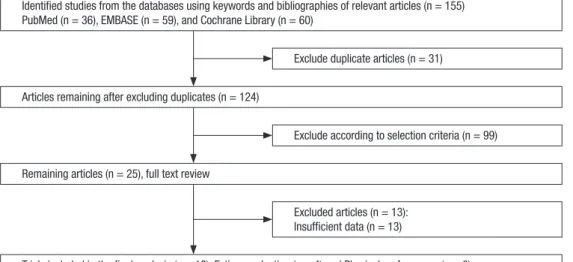
Fig. 1. Flow diagram for identification of relevant clinical trials.
between the intervention and control groups. SMD is a differ- ence in means between the two groups divided by standard de- viation (SD). SMD was calculated as follows:
SMD = (M1 - M2)/pooled SD
Where M1 is a mean of fatigue reduction in the intervention group, M2 is a mean of fatigue reduction in the control group, and pooled SD is a pooled intervention specific standard devia- tion (25). If the intervention group has a higher fatigue relief than the control group, SMD will have a positive value. In order to estimate heterogeneity across studies, we used Higgins I2, which measures the percentage of total variation across studies. Nega- tive values of I2 are set at zero; I2 ranges between 0% (no observ- ed heterogeneity) and 100% (maximal heterogeneity). An I2 val- ue greater than 50% is considered as having substantial hetero- geneity (26). The SMD with 95% confidence intervals (CI) was
calculated on the basis of either the fixed- or random-effects models. When substantial heterogeneity was not observed, the SMD calculated based on the fixed-effects model was reported.
When substantial heterogeneity was observed, the SMD based on the random-effects model was reported. Stata SE version 12.1 software package (StataCorp, College Station, TX, USA) was used for statistical analysis.
RESULTS Selection of trials
A total of 155 articles were retrieved after searching three data- bases and relevant bibliographies (Fig. 1). After excluding du- plicated articles and reviewing articles based on those title and abstracts, we reviewed 25 articles with full texts and then includ-
Table 1. General characteristics of studies in the final analysis (n = 12) No. Source (proj-
ect name) Country
location Participants
(follow-up period) Intervention vs. Control Type of
ginseng Main outcome
measures used Measurement tools
Mean ± SD (baseline/follow-up) Intervention Placebo 1 Engels 1996 USA 19 healthy adult
females (8 wk) 1,000 mg/day (n = 10) vs.
placebo (n = 9) Panax ginseng Recovery oxygen
uptake (VO2) Incremental Bi- cycle Ergome- ter Exercise
4 ± 0.2/3.9 ± 0.3
(mL/kg per min) 4.1 ± 0.3/4 ± 0.2 (mL/kg per min) 2 Engels 1997 USA 31 healthy adult
males (8 wk) 2,000 mg/day (n = 10) vs.
1,000 mg/day (n = 11) vs. Placebo (n = 10)
Panax ginseng Maximal oxygen uptake (VO2
max)
Incremental Bi- cycle Ergome- ter Exercise
42.3 ± 1.6/
41.4 ± 1.5 (mL/kg per min)
42.3 ± 3.1/
42.9 ± 2.9 (mL/kg per min) 3 Ziemba 1999 Poland 15 healthy people
(6 wk) 350 mg/day (n = 7) vs.
placebo (n = 8) Panax ginseng Maximal oxygen uptake (VO2
max)
Incremental Bi- cycle Ergome- ter Exercise
3.9 ± 0.09/
3.8 ± 0.14 (L/min) 3.8 ± 0.15/
3.8 ± 0.15 (L/min) 4 Engels 2001 USA 20 healthy women
(8 wk) 2,000 mg/day (n = 12) vs.
placebo (n = 12) Panax ginseng Rate of fatigue Wingate test 47.89 ± 6.73/
45.5 ± 8.4 47.68 ± 8.18/
48.04 ± 6.31 5 Engels 2003 USA 27 healthy students
(8 wk) 2,000 mg/day (n = 15) vs.
placebo (n = 12) Panax ginseng Mean power
output Wingate test -0.13 ± 0.07 W/kg (Change score be-
tween before and after intervention)
-0.08 ± 0.08 W/kg (Change score be-
tween before and after intervention) 6 Liang 2005 USA 29 healthy people
(4 wk) 1,350 mg/day (n = 13) vs.
placebo (n = 16) Panax notogin-
seng Exercise time to exhaustion (Tmax)
Incremental Bi- cycle Ergome- ter Exercise
30.5 ± 12.8/
37.6 ± 10.2 (min) 30 ± 12.6/
33.6 ± 10.5 (min) 7 Kulaputana
2007 Thailand 57 health males
(8 wk) 500 mg/day (n = 28) vs.
placebo (n = 29) Panax ginseng Total exercise
time Incremental Bi- cycle Ergome- ter Exercise
18.6 ± 2.8/
19.7 ± 2.6 (min) 17.2 ± 2.6/
18.3 ± 2 (min) 8 Yoon 2008 Korea 14 healthy students
(8 wk) 3,000 mg/day (n = 10) vs.
placebo (n = 10) Panax ginseng Oxygen uptake (VO2)/Maximal oxygen uptake (VO2 max)
Wingate test 48.6 ± 2.3/
50.1 ± 2.6 (%) 48.5 ± 1.8/
49.9 ± 2.7 (%)
9 Kim 2011 USA 47 health partici-
pants (6 wk) 100 mg/day in the 1st week, 200 mg/day in the 2nd week, 400 mg/
day in the following 4 weeks for intervention group vs. placebo (Crossover study)
Panax quinque-
folius Fatigue score Modified Fatigue
Impact Scale 47 ± 15/
42.7 ± 15.7 47 ± 15/
43.7 ± 16.7
10 Barton 2013 USA 271 men and wom- en with cancer-re- lated fatigue de- fined as a score of 4 or more (8 wk)
2,000 mg of American ginseng/day (n = 183) vs. Placebo (n = 181)
Panax quinque-
folius The subjective experience of fatigue
The Multidimen- sional Fatigue Symptom In- ventory-Short Form.
20 ± 27 (Change score be-
tween before and after intervention)
10.3 ± 26.1 (Change score be-
tween before and after intervention) 11 Etemadifar
2013 Iran 52 female multiple sclerosis patients (12 wk)
500 mg of Korean gin- seng/day (n = 26) vs.
Placebo (n = 26)
Panax ginseng Fatigue score Modified Fatigue
Impact Scale 31.69 ± 14.9/
23.65 ± 12.8 22.23 ± 13.21/
23.69 ± 12.94 12 Kim 2013 Korea 88 participants with
idiopathic chronic fatigue (ICF) (4 wk)
2,000 mg/day (n = 29) vs.
1,000 mg/day (n = 29) vs. Placebo (n = 30)
Panax ginseng Fatigue severity Numerical
Rating Scale 60.8 ± 10.3/
41.8 ± 13.2 59.3 ± 10.6/
48.8 ± 7.3
Table 2. Methodological quality of trials based on the Jadad scale (n = 12)
No. Study Randomization Description of
randomization methods Double-blind Using identical
placebo Follow-up
reporting Total score
1 Engels et al. 1996 1 0 1 1 1 4
2 Engels et al. 1997 1 1 1 1 1 5
3 Ziemba et al. 1999 1 0 1 1 1 4
4 Engels et al. 2001 1 0 1 1 1 4
5 Engels et al. 2003 1 0 1 1 1 4
6 Liang et al. 2005 1 1 1 1 1 5
7 Kulaputana et al. 2007 1 0 1 1 1 4
8 Yoon et al. 2008 0 0 1 1 1 3
9 Kim et al. 2011 1 1 1 1 1 5
10 Barton et al. 2013 1 1 1 1 1 5
11 Etemadifar et al. 2013 1 1 1 1 1 5
12 Kim et al. 2013 1 1 1 0 1 4
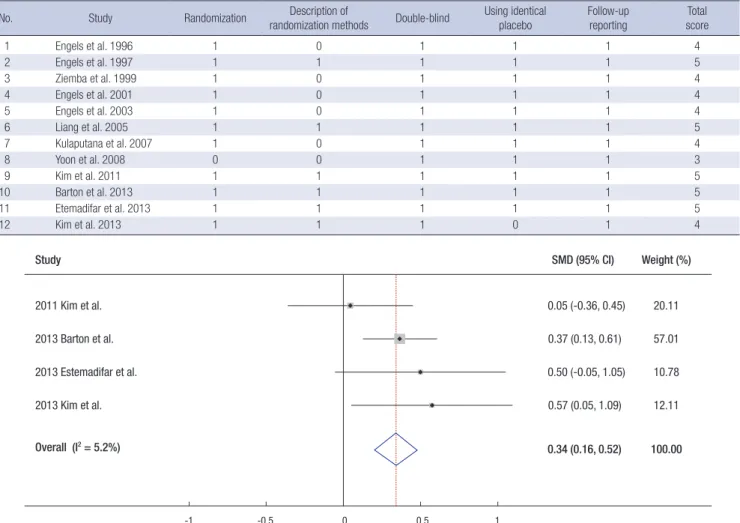
Fig. 2. Efficacy of ginseng supplements on fatigue reduction in the meta-analysis of RCTs (n = 4)*.
SMD = standardized mean difference, CI = confidence interval.
*Fixed-Effect Model.
Study
-1 -0.5 0 0.5 1
SMD (95% CI) Weight (%)
20.11 0.05 (-0.36, 0.45)
2011 Kim et al.
57.01 0.37 (0.13, 0.61)
2013 Barton et al.
10.78 0.50 (-0.05, 1.05)
2013 Estemadifar et al.
12.11 0.57 (0.05, 1.09)
2013 Kim et al.
100.00 0.34 (0.16, 0.52)
Overall (I2 = 5.2%)
ed 12 trials in the final analysis. We excluded 13 articles because of insufficient data (n = 13).
General characteristics of the included trials
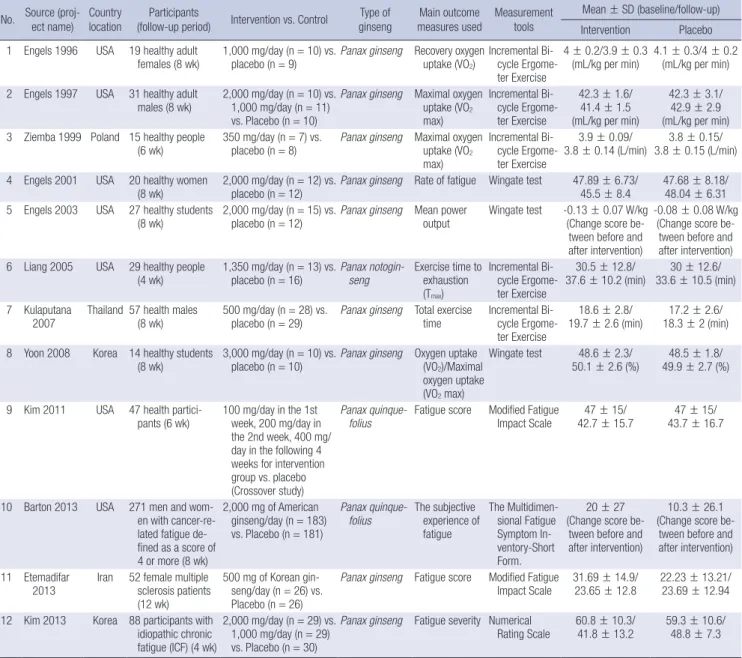
Table 1 illustrates general characteristics of the 12 articles in- cluded in the final analysis. The included trials involved a total of 659 participants. The intervention periods ranged from 4 weeks to 12 weeks. They were published from 1996 through 2013 and conducted in America (n = 7), Korea (n = 2), Iran (n = 1), Thai- land (n = 1), and Poland (n = 1). They used Korean ginseng (14- 20. 22, 23), P. notoginseng (21), and American Ginseng (12, 13).
Six different measurement tools were used in the studies. The questionnaires used for the assessment of fatigue were the Mul- tidimensional Fatigue Symptom Inventory-Short Form (MFSI- SF), Modified Fatigue Impact Scale (MFIS), Numerical Rating Scale (NRS), and the Short Form 36 Health Survey Version 2 (SF-36v2). The tests used for the assessment of physical perfor- mance were the Incremental Bicycle Ergometer Exercise and Wingate test.
Methodological quality of trials
Table 2 illustrates the methodological quality of all 12 RCTs in- cluded in the final analysis based on the Jadad scale. All of them have 3, 4, and 5 points, which implies that all trials have a low risk of bias.
Efficacy of ginseng supplements on fatigue reduction and physical performance enhancement
In the fixed-effects meta-analysis, ginseng supplements showed a statistically significant efficacy on fatigue reduction (SMD = 0.34; 95% CI = 0.16 to 0.52, n = 4) (Fig. 2). However, there was no significant association between ginseng supplements and physical performance enhancement (SMD = -0.01; 95% CI = -0.29 to 0.27, n = 8) (Fig. 3).
Subgroup meta-analysis by various factors
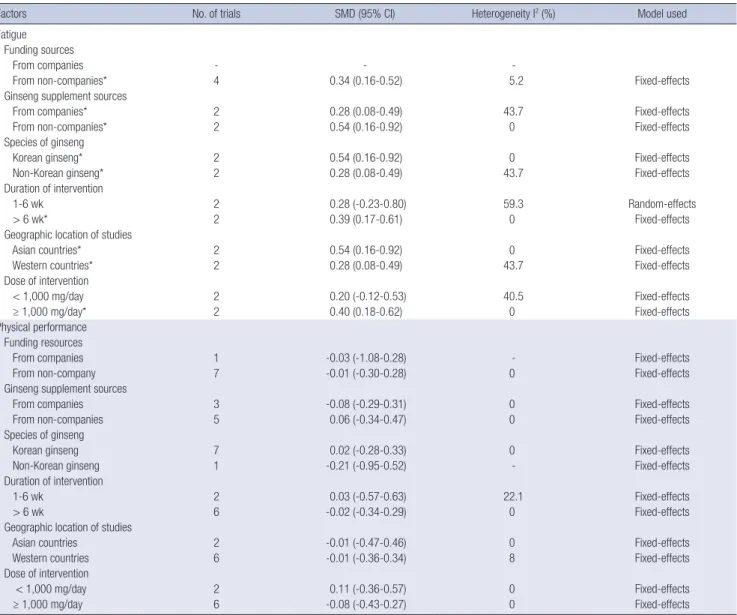
Table 3 shows the findings from the subgroup meta-analysis by various factors for both fatigue reduction and physical perfor- mance enhancement. Overall, subgroup meta-analysis by vari-
ous factors showed that ginseng supplements had an efficacy on fatigue reduction. However, the use of ginseng supplements with short duration (< 6 weeks) and lower dose (< 1,000 mg/
day) showed no significant efficacy. Regarding physical perfor- mance enhancement, overall there was no efficacy of ginseng supplements.
DISCUSSION
In this meta-analysis of RCTs, we found that the use of ginseng supplements had the efficacy on fatigue reduction, but not phys- ical performance enhancement. Specifically, the effect size on the efficacy of ginseng supplements on fatigue reduction (SMD
= 0.34) was between the small (SMD = 0.20) and medium lev- els (SMD = 0.50) based on Cohen’s rule of thumb (27). Howev- er, we found that only four relevant RCTs have been published regarding fatigue reduction, and the total number of the study participants included in those trials was only 429. Thus, there was no sufficient clinical evidence to support the use of ginseng supplements on reducing fatigue and enhancing physical per- formance.
There are some possible biological mechanisms for the effi- cacy of ginseng supplements on mental and physical fatigue re- duction and physical performance enhancement. Regarding mental fatigue, although a human study indicated that ginseng increases cognitive performance (28), its mechanisms remain not known, but may be related to the ginseng’s glycemic prop- erties (29,30). Ginseng affects brain activity, specifically by in- creasing cortical levels of dopamine, noradrenalin, serotonin,
and cyclic adenosine monophosphate (cAMP) (31). An in vitro study suggested that ginseng increases energy produced aero- bically in the brain (32). Ginseng saponins showed moderate depressant actions on the electroencephalogram and the be- havior in cats (33). As for physical fatigue and physical perfor- mance, ergogenic aids are believed to increase performance by some of the following mechanisms: renewing or increasing en- ergy stores in the body, facilitating the biochemical reactions that yield energy, reducing or neutralizing performance-inhib- iting metabolic by products, and facilitating recovery (34,35).
Although the mechanism on the ergogenicity of ginseng on physical performance has not been fully identified, theories in- clude stimulation of the hypothalamic-pituitary-adrenal cortex axis and increased resistance to the stress of exercise, enhanced myocardial metabolism, increased hemoglobin levels, vasodi- latation, increased oxygen extraction by muscles, and improved mitochondrial metabolism in the muscle, all of which theoreti- cally could enhance physical performance (36-39). A clinical experimental study reported that the use of ginseng supplements before exhaustive aerobic exercise can reduce creatine kinase leakage during exercise, possibly due to ginseng’s ability to re- duce cellular and muscle damage (40).
However, although there are some possible biological mech- anisms on the efficacy of ginseng supplements on physical per- formance enhancement in in vivo animal or in vitro laboratory studies, our meta-analysis of eight randomized controlled trials found that there was no sufficient evidence on the efficacy. Sev- eral explanations could be considered for this inconsistence.
First, preclinical studies, including in vivo laboratory studies Fig. 3. Efficacy of ginseng supplements on physical performance enhancement in the meta-analysis of RCTs (n = 8)*.
SMD = standardized mean difference, CI = confidence interval.
*Fixed-Effect Model.
Study
-1 -0.5 0 0.5 1
SMD (95% CI)
1996 Engels et al. 0.00 (-0.90, 0.90) 9.66
9.92 7.33 9.56 12.82 14.53 29.04 7.13 100.00 0.44 (-0.44, 1.33)
0.52 (-0.51, 1.55) 0.28 (-0.63, 1.18) -0.67 (-1.45, 0.11) -0.21 (-0.95, 0.52) 0.00 (-0.52, 0.52) -0.03 (-1.08, 1.02) -0.01 (-0.29, 0.27) 1997 Engels et al.
1999 Ziemba et al.
2001 Engels et al.
2003 Engels et al.
2005 Liang et al.
2007 Kulaputana et al.
2008 Yoon et al.
Overall (I2 = 0.0%)
Weight (%)
Table 3. Efficacy of ginseng supplements on fatigue reduction and physical performance enhancement in the subgroup meta-analysis of RCTs by various factors
Factors No. of trials SMD (95% CI) Heterogeneity I2 (%) Model used
Fatigue Funding sources
From companies - - -
From non-companies* 4 0.34 (0.16-0.52) 5.2 Fixed-effects
Ginseng supplement sources
From companies* 2 0.28 (0.08-0.49) 43.7 Fixed-effects
From non-companies* 2 0.54 (0.16-0.92) 0 Fixed-effects
Species of ginseng
Korean ginseng* 2 0.54 (0.16-0.92) 0 Fixed-effects
Non-Korean ginseng* 2 0.28 (0.08-0.49) 43.7 Fixed-effects
Duration of intervention
1-6 wk 2 0.28 (-0.23-0.80) 59.3 Random-effects
> 6 wk* 2 0.39 (0.17-0.61) 0 Fixed-effects
Geographic location of studies
Asian countries* 2 0.54 (0.16-0.92) 0 Fixed-effects
Western countries* 2 0.28 (0.08-0.49) 43.7 Fixed-effects
Dose of intervention
< 1,000 mg/day 2 0.20 (-0.12-0.53) 40.5 Fixed-effects
≥ 1,000 mg/day* 2 0.40 (0.18-0.62) 0 Fixed-effects
Physical performance Funding resources
From companies 1 -0.03 (-1.08-0.28) - Fixed-effects
From non-company 7 -0.01 (-0.30-0.28) 0 Fixed-effects
Ginseng supplement sources
From companies 3 -0.08 (-0.29-0.31) 0 Fixed-effects
From non-companies 5 0.06 (-0.34-0.47) 0 Fixed-effects
Species of ginseng
Korean ginseng 7 0.02 (-0.28-0.33) 0 Fixed-effects
Non-Korean ginseng 1 -0.21 (-0.95-0.52) - Fixed-effects
Duration of intervention
1-6 wk 2 0.03 (-0.57-0.63) 22.1 Fixed-effects
> 6 wk 6 -0.02 (-0.34-0.29) 0 Fixed-effects
Geographic location of studies
Asian countries 2 -0.01 (-0.47-0.46) 0 Fixed-effects
Western countries 6 -0.01 (-0.36-0.34) 8 Fixed-effects
Dose of intervention
< 1,000 mg/day 2 0.11 (-0.36-0.57) 0 Fixed-effects
≥ 1,000 mg/day 6 -0.08 (-0.43-0.27) 0 Fixed-effects
SMD = standardized mean difference, CI = confidence interval.
*Statistically significant association.
and animal studies might not represent the biological mecha- nism in the human body. Therefore, although preclinical stud- ies showed an efficacy of ginseng supplements on physical per- formance enhancement, clinical circumstances could report no benefit of ginseng supplements. Second, the sample size of the final meta-analysis is a limitation to evaluate the efficacy.
We only included eight RCTs with 212 participants due to a pau- city of data. Third, there was heterogeneity in the participants in each trial. While two American studies including 39 participants were conducted in healthy adult females (16,19), American (17) and Thailand (22) studies including 88 participants were con- ducted in health adult males. Finally, the dose and duration of the intervention in each trial varied from 350 mg/day/person to 3,000 mg/day/person and 4 weeks to 8 weeks among included studies.
We have limitations in the current meta-analysis. Although
we found that there was a significant efficacy of ginseng supple- ments on fatigue reduction, no sufficient RCTs were published in order to confirm this finding. The number of the study par- ticipants was not enough to draw conclusions. Specifically, out of a total of 429 study participants from all four RCTs, 271 par- ticipants were from Barton’s study (13), which indicated a sig- nificant efficacy. Also, many RCTs were excluded from the final analysis because of insufficient data.
To the best of our knowledge, this meta-analysis is thought to be the first meta-analysis of RCTs about this issue. Although there is no sufficient clinical evidence about the efficacy of ginseng supplements for health, in some countries, especially Korea, some sellers promote the sale of ginseng supplements as if these are clinically approved effective against fatigue or some diseas- es, and also many people have consumed ginseng supplements in the belief that these prevent diseases and improve their health.
In summary, we found that there was insufficient clinical evi- dence to support the use of ginseng supplements on reducing fatigue and enhancing physical performance because only a few RCTs with a small sample size were published so far. Fur- ther lager RCTs are needed to confirm the efficacy of ginseng supplements for fatigue reduction and physical performance enhancement.
DISCLOSURE
The authors have no potential conflicts of interest to disclose.
AUTHOR CONTRIBUTION
Study design: Myung SK, Kim J. Database search and study se- lection: Bach HV, Cho YA. Data management and Statistical anal- ysis: Myung SK, Bach HV. Interpretation of the findings: Myung SK, Kim J. Drafting of the manuscript: Myung SK, Bach HV. Re- vision of manuscript: Myung SK, Bach HV, Kim J. Final approv- al: all authors.
ORCID
Hoang Viet Bach http://orcid.org/0000-0001-8155-5435 Jeongseon Kim http://orcid.org/0000-0002-0889-2686 Seung-Kwon Myung http://orcid.org/0000-0001-8911-1345 Young Ae Cho http://orcid.org/0000-0001-6076-916X
REFERENCES
1. U.S. National Library of Medicine. MedlinePlus: fatigue [Internet]. Avail- able at https://www.nlm.nih.gov/medlineplus/ency/article/003088.htm [accessed on 9 November 2015].
2. Jones JF, Maloney EM, Boneva RS, Jones AB, Reeves WC. Complementa- ry and alternative medical therapy utilization by people with chronic fa- tiguing illnesses in the United States. BMC Complement Altern Med 2007;
7: 12.
3. EFSA Panel on Dietetic Products, Nutrition and Allergies (NDA). Scientif- ic opinion on the substantiation of a health claim related to beta-alanine and increase in physical performance during short-duration, high-inten- sity exercise pursuant to Article 13(5) of Regulation (EC) No 1924/2006.
EFSA J 2014; 12: 3755.
4. Baeg IH, So SH. The world ginseng market and the ginseng (Korea). J Gin- seng Res 2013; 37: 1-7.
5. Sticher O. Biochemical, pharmaceutical, and medical perspectives of gin- seng. In: Lawson LD, Bauer R, editors. Phytomedicines of Europe: Chem- istry and Biological Activity. Washington, D.C.: American Chemical Soci- ety, 1998, p221-40.
6. Blumenthal M, Busse WR. The Complete German Commission E Mono- graphs: Therapeutic Guide to Herbal Medicines. Austin, TX: American Botanical Council, 1998.
7. Vuksan V, Sievenpiper JL, Xu Z, Wong EY, Jenkins AL, Beljan-Zdravkovic U, Leiter LA, Josse RG, Stavro MP. Konjac-Mannan and American gins-
ing: emerging alternative therapies for type 2 diabetes mellitus. J Am Coll Nutr 2001; 20: 370S-380S.
8. Allergy Research Group. Natural standard monographs: Panax ginseng.
Available at http://www.allergyresearchgroup.com/monographs [acce- ssed on 10 November 2015].
9. Lee NH, Son CG. Systematic review of randomized controlled trials eval- uating the efficacy and safety of ginseng. J Acupunct Meridian Stud 2011;
4: 85-97.
10. Shim JY, Kim MH, Kim HD, Ahn JY, Yun YS, Song JY. Protective action of the immunomodulator ginsan against carbon tetrachloride-induced liv- er injury via control of oxidative stress and the inflammatory response.
Toxicol Appl Pharmacol 2010; 242: 318-25.
11. Suh SO, Kroh M, Kim NR, Joh YG, Cho MY. Effects of red ginseng upon postoperative immunity and survival in patients with stage III gastric can- cer. Am J Chin Med 2002; 30: 483-94.
12. Kim E, Cameron M, Lovera J, Schaben L, Bourdette D, Whitham R. Amer- ican ginseng does not improve fatigue in multiple sclerosis: a single cen- ter randomized double-blind placebo-controlled crossover pilot study.
Mult Scler 2011; 17: 1523-6.
13. Barton DL, Liu H, Dakhil SR, Linquist B, Sloan JA, Nichols CR, McGinn TW, Stella PJ, Seeger GR, Sood A, et al. Wisconsin Ginseng (Panax quin- quefolius) to improve cancer-related fatigue: a randomized, double-blind trial, N07C2. J Natl Cancer Inst 2013; 105: 1230-8.
14. Etemadifar M, Sayahi F, Abtahi SH, Shemshaki H, Dorooshi GA, Goodarzi M, Akbari M, Fereidan-Esfahani M. Ginseng in the treatment of fatigue in multiple sclerosis: a randomized, placebo-controlled, double-blind pilot study. Int J Neurosci 2013; 123: 480-6.
15. Kim HG, Cho JH, Yoo SR, Lee JS, Han JM, Lee NH, Ahn YC, Son CG. Anti- fatigue effects of Panax ginseng C.A. Meyer: a randomised, double-blind, placebo-controlled trial. PLoS One 2013; 8: e61271.
16. Engels H, Said JM, Wirth JC. Failure of chronic ginseng supplementation to affect work performance and energy metabolism in healthy adult fe- males. Nutr Res 1996; 16: 1295-305.
17. Engels HJ, Wirth JC. No ergogenic effects of ginseng (Panax ginseng C.A.
Meyer) during graded maximal aerobic exercise. J Am Diet Assoc 1997;
97: 1110-5.
18. Ziemba AW, Chmura J, Kaciuba-Uscilko H, Nazar K, Wisnik P, Gawronski W. Ginseng treatment improves psychomotor performance at rest and during graded exercise in young athletes. Int J Sport Nutr 1999; 9: 371-7.
19. Engels HJ, Kolokouri I, Cieslak TJ 2nd, Wirth JC. Effects of ginseng supple- mentation on supramaximal exercise performance and short-term re- covery. J Strength Cond Res 2001; 15: 290-5.
20. Engels HJ, Fahlman MM, Wirth JC. Effects of ginseng on secretory IgA, performance, and recovery from interval exercise. Med Sci Sports Exerc 2003; 35: 690-6.
21. Liang MT, Podolka TD, Chuang WJ. Panax notoginseng supplementation enhances physical performance during endurance exercise. J Strength Cond Res 2005; 19: 108-14.
22. Kulaputana O, Thanakomsirichot S, Anomasiri W. Ginseng supplemen- tation does not change lactate threshold and physical performances in physically active Thai men. J Med Assoc Thai 2007; 90: 1172-9.
23. Yoon SJ, Kim KH, Kim CJ, Park HC, Kang KH, Kim MJ, Kang SM, Kwak UH, Kim HJ. Effects of red ginseng supplementation on aerobic · anaero- bic performance, central and peripheral fatigue. J Ginseng Res 2008; 32:
210-9.
24. Jadad AR, Moore RA, Carroll D, Jenkinson C, Reynolds DJ, Gavaghan DJ, McQuay HJ. Assessing the quality of reports of randomized clinical trials:
is blinding necessary? Control Clin Trials 1996; 17: 1-12.
25. Higgins JP, Green S. Cochrane handbook for systematic reviews of inter- ventions: version 5.1.0. Avaiable at http://handbook.cochrane.org/ [up- dated March 2011; accessed on 9 November 2015].
26. Higgins JP, Thompson SG. Quantifying heterogeneity in a meta-analysis.
Stat Med 2002; 21: 1539-58.
27. Cohen J. A power primer. Psychol Bull 1992; 112: 155-9.
28. Scholey AB, Kennedy DO. Acute, dose-dependent cognitive effects of Ginkgo biloba, Panax ginseng and their combination in healthy young volunteers: differential interactions with cognitive demand. Hum Psy- chopharmacol 2002; 17: 35-44.
29. Reay JL, Kennedy DO, Scholey AB. Single doses of Panax ginseng (G115) reduce blood glucose levels and improve cognitive performance during sustained mental activity. J Psychopharmacol 2005; 19: 357-65.
30. Reay JL, Kennedy DO, Scholey AB. Effects of Panax ginseng, consumed with and without glucose, on blood glucose levels and cognitive perfor- mance during sustained ‘mentally demanding’ tasks. J Psychopharmacol 2006; 20: 771-81.
31. Itoh T, Zang YF, Murai S, Saito H. Effects of Panax ginseng root on the ver- tical and horizontal motor activities and on brain monoamine-related substances in mice. Planta Med 1989; 55: 429-33.
32. Samira MM, Attia MA, Allam M, Elwan O. Effect of the standardized Gin-
seng Extract G115 on the metabolism and electrical activity of the rabbit’s brain. J Int Med Res 1985; 13: 342-8.
33. Kaku T, Miyata T, Uruno T, Sako I, Kinoshita A. Chemico-pharmacologi- cal studies on saponins of Panax ginseng C. A. Meyer. II. Pharmacologi- cal part. Arzneimittelforschung 1975; 25: 539-47.
34. Lawrence ME, Kirby DF. Nutrition and sports supplements: fact or fiction.
J Clin Gastroenterol 2002; 35: 299-306.
35. Maughan RJ, King DS, Lea T. Dietary supplements. J Sports Sci 2004; 22:
95-113.
36. Kim DH, Moon YS, Jung JS, Min SK, Son BK, Suh HW, Song DK. Effects of ginseng saponin administered intraperitoneally on the hypothalamo-pi- tuitary-adrenal axis in mice. Neurosci Lett 2003; 343: 62-6.
37. Zhang HG, Li XH, Yang ZC. Effects of Panax notoginseng saponins on myocardial Gsalpha mRNA expression and ATPase activity after severe scald in rats. Burns 2003; 29: 541-6.
38. Bae JW, Lee MH. Effect and putative mechanism of action of ginseng on the formation of glycated hemoglobin in vitro. J Ethnopharmacol 2004;
91: 137-40.
39. Li Z, Chen X, Niwa Y, Sakamoto S, Nakaya Y. Involvement of Ca2+ -acti- vated K+ channels in ginsenosides-induced aortic relaxation in rats. J Car- diovasc Pharmacol 2001; 37: 41-7.
40. Hsu CC, Ho MC, Lin LC, Su B, Hsu MC. American ginseng supplementa- tion attenuates creatine kinase level induced by submaximal exercise in human beings. World J Gastroenterol 2005; 11: 5327-31.